Inquire: Call 0086-755-23203480, or reach out via the form below/your sales contact to discuss our design, manufacturing, and assembly capabilities.
Quote: Email your PCB files to Sales@pcbsync.com (Preferred for large files) or submit online. We will contact you promptly. Please ensure your email is correct.
Notes: For PCB fabrication, we require PCB design file in Gerber RS-274X format (most preferred), *.PCB/DDB (Protel, inform your program version) format or *.BRD (Eagle) format. For PCB assembly, we require PCB design file in above mentioned format, drilling file and BOM. Click to download BOM template To avoid file missing, please include all files into one folder and compress it into .zip or .rar format.
From a PCB engineering perspective, a heater resistor (commonly referred to in automotive contexts as a blower motor resistor) is a critical power-dissipating component. It isn’t just a simple resistor; it is a thermal management assembly designed to regulate high-current DC motors through a stepped voltage ladder.
If your vehicle’s fan only works on “High” or has stopped blowing air entirely, you are likely dealing with a failure in this resistive network. In this guide, we will break down the engineering behind these components, how to diagnose them like a pro, and the steps for replacement.
At its core, a heater resistor is a series of resistive elements used to control the speed of a blower motor. In an electrical circuit, the motor speed is proportional to the voltage applied. By switching different resistor values into the circuit, the system “drops” voltage across the resistor, leaving less for the motor and thus slowing it down.
The Engineering Perspective
For a PCB or hardware engineer, this is a classic power electronics challenge. These components must dissipate significant heat (I²R losses) while sitting in an environment prone to vibration and thermal cycling. This is why they are almost always mounted directly inside the HVAC ducting—the airflow from the fan acts as a forced-convection heat sink to prevent the resistive coils from melting.
Types of Heater Resistors
Depending on the age and complexity of the vehicle’s HVAC system, you will encounter three primary designs:
1. Wire-Wound (Open Coil) Resistors
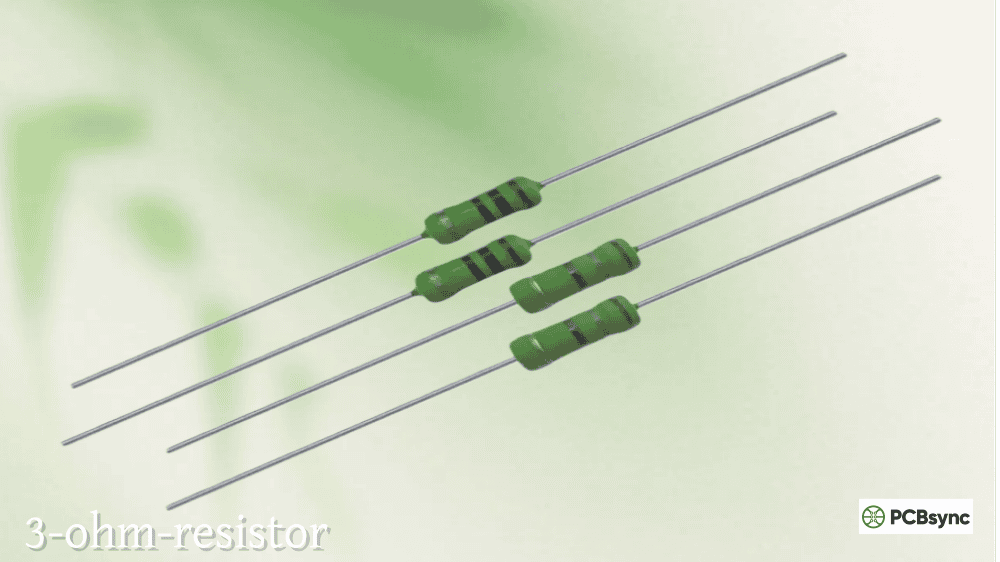
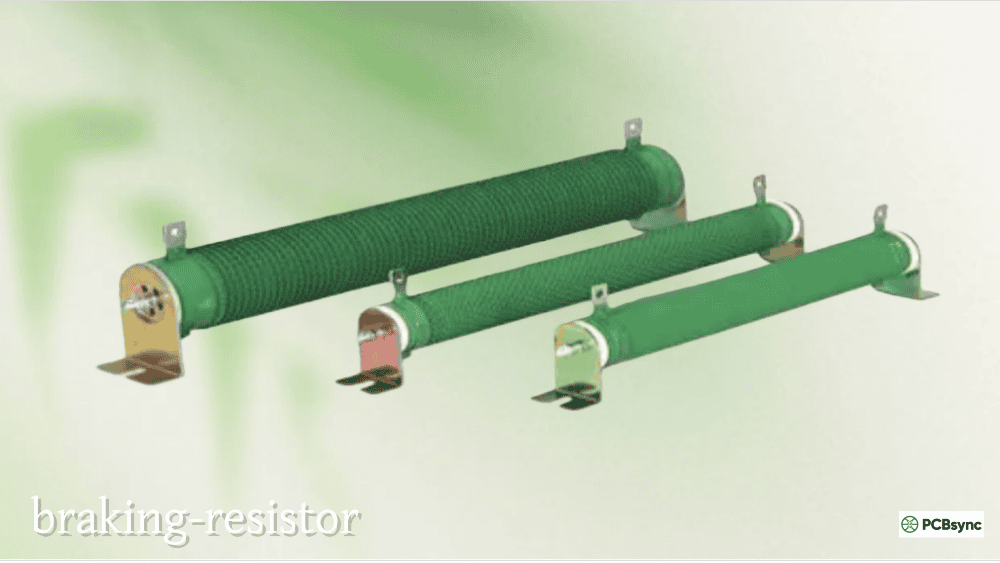
These are the “old school” variety. They consist of nichrome wire coils wound around a ceramic or mica core.
Pros: Cheap, high heat tolerance.
Cons: Prone to corrosion and mechanical failure due to vibration.
Failure Mode: Usually an “open” circuit where the wire physically breaks.
2. Ceramic Encapsulated Resistors
These use resistive traces or wires embedded within a ceramic block.
Pros: Better protection against moisture and debris.
Cons: Can crack under extreme thermal shock.
Failure Mode: Internal thermal fuse failure or cracked ceramic housing.
3. Electronic PWM Modules (Solid-State)
Found in modern “Automatic Climate Control” systems. These aren’t actually resistors in the traditional sense; they use MOSFETs (Metal-Oxide-Semiconductor Field-Effect Transistors) to pulse the power on and off rapidly (Pulse Width Modulation).
Pros: Infinite speed control, highly efficient.
Cons: Expensive and sensitive to voltage spikes.
Failure Mode: MOSFET short-circuit (fan stuck on High even with the car off).
Comparison of Resistor Types
Feature
Wire-Wound
Ceramic Block
PWM Module
Control Type
Discrete Steps (1, 2, 3)
Discrete Steps
Continuous/Infinite
Efficiency
Low (Heat Waste)
Low
High
Durability
Moderate
High
High (but sensitive)
Cost
$
$$
$$$
Common Symptoms of a Failing Heater Resistor
If you suspect your heater resistor is failing, look for these “Red Flags”:
Fan Only Works on High: This is the most common sign. On the highest setting, the resistor is usually bypassed by a relay, sending a full 12V to the motor. If the lower speeds (which rely on the resistor) are dead, the resistor pack is open.
Missing Speed Settings: If Speed 1 works but Speed 2 doesn’t, a specific “rung” on the resistor ladder has burned out.
Burning Smell: High contact resistance at the connector often leads to “thermal runaway,” melting the plastic housing.
Fan Runs with Ignition Off: Typically a sign of a shorted MOSFET in a PWM-style module.
Troubleshooting & Testing: A Step-by-Step Guide
Before buying parts, you should verify the failure using a Digital Multimeter (DMM).
1. Visual Inspection
Remove the resistor and look for:
Corrosion on the pins.
A “blown” or discolored thermal fuse (the small silver cylinder).
Identify the “Common” pin (usually connected to the motor).
Measure the resistance between the common pin and each input pin.
Expected Results: You should see low resistance values (typically $0.5\Omega$ to $5.0\Omega$).
Failure: If the meter reads “OL” (Open Loop), that specific circuit is dead.
3. Checking the Thermal Fuse
The thermal fuse is a safety device designed to “pop” if the resistor gets too hot (usually due to a clogged cabin filter or a seizing motor). Test for continuity across the fuse. No continuity = dead resistor.
How to Replace a Heater Resistor
Replacing a heater resistor is a straightforward DIY task that takes about 20–30 minutes.
Tools Needed:
Socket set (usually 5.5mm, 7mm, or 8mm) or Torx drivers.
Flashlight.
New heater resistor (match your VIN/Model).
Step-by-Step Replacement:
Locate the Unit: Usually found behind the glovebox or under the passenger-side dashboard, mounted into the black plastic HVAC duct.
Disconnect the Battery: Always a safe bet when working with high-current DC circuits.
Unplug the Harness: Press the tab and pull the connector. Inspect the plug for melt marks. If it’s melted, you must replace the connector pigtail as well.
Remove Screws: Most resistors are held by two small screws.
Swap the Part: Slide the old unit out and the new one in. Ensure the gasket is seated correctly to prevent air leaks.
Test: Reconnect the battery and test all fan speeds before putting the dashboard back together
As an engineer, I can tell you: Resistors rarely die of old age. They are usually “murdered” by external factors:
Clogged Cabin Air Filter: This restricts airflow. Since the resistor relies on that air for cooling, it overheats and pops the thermal fuse.
Worn Blower Motor: As motor bearings age, they create friction. This increases the current draw ($I$). Since Power ($P$) = $I^2R$, a small increase in current leads to a massive increase in heat.
Moisture: Water entering the intake duct causes the nichrome wire to rust and thin out, increasing its resistance until it burns.
Useful Resources & Databases
RockAuto / PartsGeek: Great for finding specific OEM part numbers.
Charm.li: A fantastic free database for factory service manuals and wiring diagrams.
Technically, yes, you could jump the wires to make the fan run on one speed, but this is a fire hazard. The resistor includes a thermal fuse for a reason. Do not bypass it permanently.
2. Is a blower motor resistor the same as a heater resistor?
Yes. In the automotive world, these terms are used interchangeably.
3. How much does a replacement cost?
Standard resistor packs usually cost between $15 and $50. Electronic PWM modules for luxury cars can cost $100 to $200.
4. Why did my new resistor burn out immediately?
You likely have a failing blower motor that is drawing too much current. Use a DC clamp meter to check the motor’s amperage. If it exceeds 15-20 Amps on High, the motor is bad.
5. Can I just replace the thermal fuse?
Some DIYers solder in a new thermal fuse ($2 part). However, if you aren’t experienced with high-temperature soldering, the heat of the soldering iron can pop the new fuse instantly, or a “cold joint” can lead to further overheating.
Inquire: Call 0086-755-23203480, or reach out via the form below/your sales contact to discuss our design, manufacturing, and assembly capabilities.
Quote: Email your PCB files to Sales@pcbsync.com (Preferred for large files) or submit online. We will contact you promptly. Please ensure your email is correct.
Notes: For PCB fabrication, we require PCB design file in Gerber RS-274X format (most preferred), *.PCB/DDB (Protel, inform your program version) format or *.BRD (Eagle) format. For PCB assembly, we require PCB design file in above mentioned format, drilling file and BOM. Click to download BOM template To avoid file missing, please include all files into one folder and compress it into .zip or .rar format.