Inquire: Call 0086-755-23203480, or reach out via the form below/your sales contact to discuss our design, manufacturing, and assembly capabilities.
Quote: Email your PCB files to Sales@pcbsync.com (Preferred for large files) or submit online. We will contact you promptly. Please ensure your email is correct.
Notes: For PCB fabrication, we require PCB design file in Gerber RS-274X format (most preferred), *.PCB/DDB (Protel, inform your program version) format or *.BRD (Eagle) format. For PCB assembly, we require PCB design file in above mentioned format, drilling file and BOM. Click to download BOM template To avoid file missing, please include all files into one folder and compress it into .zip or .rar format.
The 250 ohm resistor holds a special place in industrial electronics that most hobbyists never encounter. While you won’t find this value in basic Arduino starter kits, it’s absolutely essential in process control systems worldwide. If you’ve worked with 4-20mA current loops or HART communication protocols, you’ve likely seen this resistor doing its critical job of converting current signals to voltage.
I’ve specified thousands of 250 ohm resistors over the years for industrial control panels, and the math behind this specific value is elegant in its simplicity. Push 20mA through 250 ohms and you get exactly 5 volts. That clean conversion makes this resistor the industry standard for signal conditioning in process automation.
A 250 ohm resistor provides exactly 250 ohms of electrical resistance. This value belongs to the E48 series of preferred values rather than the more common E12 or E24 series, which explains why you won’t find it in typical resistor assortment kits. Its primary purpose in electronics is converting 4-20mA current loop signals into proportional 1-5V voltage signals.
The ANSI/ISA-50.1 standard specifically designates 250Ω as the recommended load resistance for industrial process instruments. This isn’t arbitrary—it’s calculated to produce voltage ranges that match the input specifications of PLCs, data acquisition systems, and industrial controllers.
Key Specifications of 250 Ohm Resistors
Parameter
Standard Value
Precision Industrial
Resistance
250 Ω
250 Ω
Common Tolerances
±5%, ±1%
±0.1%, ±0.05%
Power Ratings
1/4W, 1/2W
1/2W, 1W, 2W
Temperature Coefficient
100-250 ppm/K
5-25 ppm/K
Voltage Rating
200-350V
Varies by package
Operating Temperature
-55°C to +155°C
-55°C to +125°C
250 Ohm Resistor Color Code
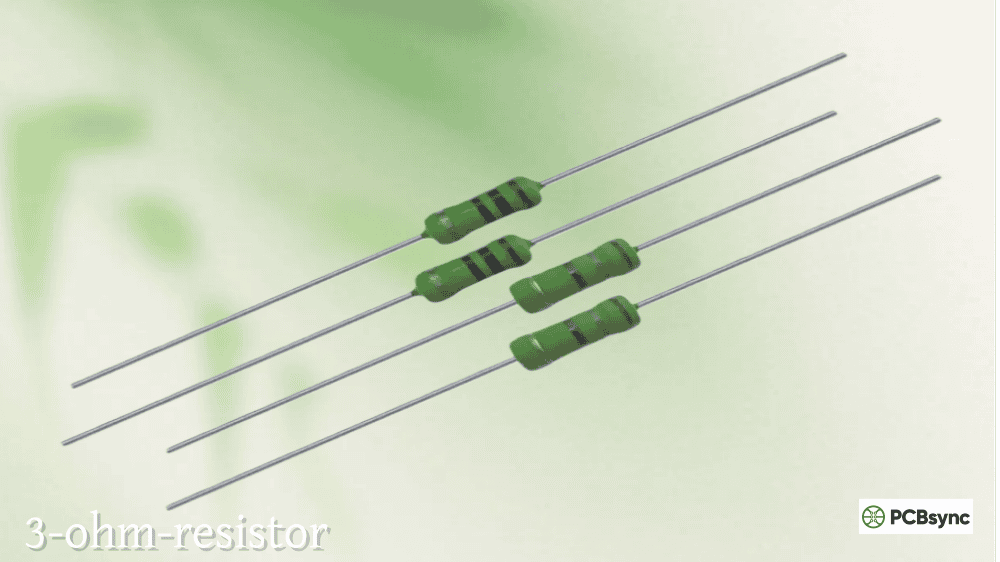
Identifying a 250 ohm resistor by its color bands is straightforward once you recognize the Red-Green-Brown pattern. This combination is distinctive and rarely confused with other common values.
4-Band 250 Ohm Resistor Color Code
The standard 4-band configuration found on most carbon and metal film resistors:
Band Position
Color
Value
Meaning
1st Band
Red
2
First significant digit
2nd Band
Green
5
Second significant digit
3rd Band
Brown
×10
Multiplier
4th Band
Gold
±5%
Tolerance
Reading it: Red-Green-Brown-Gold gives you 25 × 10 = 250Ω with ±5% tolerance.
The ±5% tolerance means actual resistance falls between 237.5Ω and 262.5Ω. For general applications, this range works fine, but industrial 4-20mA loops typically demand much tighter tolerances.
5-Band 250 Ohm Resistor Color Code
For precision applications requiring tighter tolerance:
Band Position
Color
Value
Meaning
1st Band
Red
2
First significant digit
2nd Band
Green
5
Second significant digit
3rd Band
Black
0
Third significant digit
4th Band
Black
×1
Multiplier
5th Band
Brown
±1%
Tolerance
The 5-band code Red-Green-Black-Black-Brown represents 250 × 1 = 250Ω with ±1% tolerance.
6-Band 250 Ohm Resistor Color Code
When temperature stability matters in industrial environments:
Band Position
Color
Value
Meaning
1st Band
Red
2
First significant digit
2nd Band
Green
5
Second significant digit
3rd Band
Black
0
Third significant digit
4th Band
Black
×1
Multiplier
5th Band
Brown
±1%
Tolerance
6th Band
Brown
100 ppm/K
Temperature coefficient
Complete Color Code Reference
Color
Digit Value
Multiplier
Tolerance
Black
0
×1
–
Brown
1
×10
±1%
Red
2
×100
±2%
Orange
3
×1,000
–
Yellow
4
×10,000
–
Green
5
×100,000
±0.5%
Blue
6
×1,000,000
±0.25%
Violet
7
–
±0.1%
Gray
8
–
±0.05%
White
9
–
–
Gold
–
×0.1
±5%
Silver
–
×0.01
±10%
SMD 250 Ohm Resistor Markings
Surface mount 250 ohm resistors use numerical marking systems. Understanding these codes prevents costly assembly errors.
3-Digit SMD Code
A 250 ohm resistor in standard 3-digit format is marked 251.
Breaking it down:
First two digits (25) = significant figures
Third digit (1) = number of zeros to add
Result: 25 + one zero = 250Ω
Critical Warning: The SMD code 250 represents 25Ω (25 with zero zeros added), NOT 250 ohms. This mistake has caused real problems on production lines.
4-Digit SMD Code
Precision SMD resistors use 2500 for 250 ohms:
First three digits (250) = significant figures
Fourth digit (0) = multiplier = ×1
Result: 250 × 1 = 250Ω
EIA-96 Code
For 1% tolerance SMDs, the EIA-96 system marks values using a two-digit code plus letter multiplier. The closest E96 value to 250Ω is 249Ω, marked as 05B.
SMD Marking System
Code for 250Ω
Typical Tolerance
3-Digit
251
±5%
4-Digit
2500
±1%
EIA-96
05B (249Ω)
±1%
SMD Package Sizes for Industrial Applications
Package
Dimensions (mm)
Power Rating
Industrial Use
0402
1.0 × 0.5
1/16W
Space-constrained
0603
1.6 × 0.8
1/10W
General industrial
0805
2.0 × 1.25
1/8W
Standard industrial
1206
3.2 × 1.6
1/4W
Higher power
2010
5.0 × 2.5
1/2W
Process control
2512
6.3 × 3.2
1W
High reliability
Industrial Applications of 250 Ohm Resistors
This is where the 250 ohm resistor truly earns its reputation. In industrial process control, this specific value is standardized for signal conversion applications.
4-20mA Current Loop Signal Conversion
The 4-20mA current loop is the dominant analog signaling standard in industrial automation. A 250 ohm resistor serves as the load resistor that converts current signals into proportional voltage signals.
The mathematics are elegant:
Loop Current
Voltage Across 250Ω
Signal Interpretation
4 mA
1.0 V
Zero / minimum
8 mA
2.0 V
25% of range
12 mA
3.0 V
50% of range
16 mA
4.0 V
75% of range
20 mA
5.0 V
Full scale / maximum
This 1-5V output range matches the input specifications of most analog-to-digital converters, PLCs, and industrial controllers. The ANSI/ISA-50.1 standard specifically recommends 250Ω for this application.
Why 250 Ohms Specifically?
The value wasn’t chosen arbitrarily. Here’s the engineering rationale:
Design Requirement
Calculation
Result
5V at 20mA
R = V/I = 5V ÷ 0.020A
250Ω
1V at 4mA
V = I×R = 0.004A × 250Ω
1V ✓
Power at 20mA
P = I²×R = (0.020)² × 250
100mW
Standard voltage range
1-5V DC
Matches ADC inputs
HART Communication Protocol Support
HART (Highway Addressable Remote Transducer) protocol superimposes digital communication on the 4-20mA analog signal. The 250 ohm resistor plays a critical role:
Function
Requirement
250Ω Role
Analog signal
4-20mA → 1-5V
Load resistor
HART modulation
FSK superimposed
Signal impedance
Minimum loop resistance
230Ω per HART spec
Compliant
Maximum loop resistance
600Ω per HART spec
Compliant
The HART specification requires loop resistance between 230Ω and 600Ω for reliable digital communication. A 250 ohm resistor sits perfectly within this range while providing clean 1-5V analog conversion.
Selecting the right 250 ohm resistor for industrial applications requires attention to power dissipation and tolerance.
Power Dissipation Calculations
Current Level
Voltage Drop
Power Dissipated
Minimum Rating
4 mA (zero)
1.0 V
4 mW
1/8W
12 mA (mid)
3.0 V
36 mW
1/8W
20 mA (full)
5.0 V
100 mW
1/4W
With 2× margin
–
200 mW
1/2W
For continuous industrial operation, I always specify at least 1/2W rating. The extra margin handles temperature variations and ensures decades of reliable service.
Precision Requirements for Process Control
Application Type
Recommended Tolerance
Temperature Coefficient
General monitoring
±1%
±100 ppm/K
Process control
±0.1%
±25 ppm/K
Custody transfer
±0.05%
±10 ppm/K
Calibration equipment
±0.01%
±5 ppm/K
Resistor Types for Industrial Use
Type
Tolerance Range
TCR
Best For
Carbon film
±5%
±400 ppm/K
Not recommended
Metal film
±1%
±50-100 ppm/K
General industrial
Precision metal film
±0.1%
±15-25 ppm/K
Process control
Foil resistor
±0.01-0.05%
±2-5 ppm/K
Precision instrumentation
Wirewound
±0.1-1%
±20 ppm/K
High power applications
Comparing 250 Ohm to Neighboring Values
Understanding when a 250 ohm resistor is specifically required versus when alternatives work:
The 4-band 250 ohm resistor color code is Red-Green-Brown-Gold. Red represents 2, Green represents 5, Brown is the ×10 multiplier, and Gold indicates ±5% tolerance. Calculate: 25 × 10 = 250 ohms. For 5-band precision resistors with ±1% tolerance, the code is Red-Green-Black-Black-Brown, representing 250 × 1 = 250Ω.
Why is 250 ohms used in 4-20mA current loops?
A 250 ohm resistor converts the 4-20mA current signal into a 1-5V voltage signal. This specific value is chosen because the math works out perfectly: 4mA × 250Ω = 1V at zero signal, and 20mA × 250Ω = 5V at full scale. This 1-5V range matches the standard input specifications of most industrial PLCs, ADCs, and controllers. The value is specified by the ANSI/ISA-50.1 industrial standard.
What is the SMD code for a 250 ohm resistor?
A 250 ohm resistor in SMD format uses the 3-digit code 251 (25 with one zero added). The code 250 actually means 25Ω, not 250 ohms—this is a common mistake. For 4-digit precision SMD resistors, look for 2500 (250 × 1). The EIA-96 code for the nearest standard value (249Ω) is 05B.
What tolerance should I use for industrial 4-20mA applications?
For industrial 4-20mA current loop applications, a 250 ohm resistor with ±0.1% or better tolerance is recommended for precision process control. General monitoring applications may accept ±1% tolerance. The resistor’s tolerance directly affects signal accuracy—a 1% resistor error produces a 1% signal error. Temperature coefficient is equally important; choose resistors with 25 ppm/K or better for stable operation across temperature variations.
Can I use a 220 ohm or 270 ohm resistor instead of 250 ohm?
While possible in some situations, using values other than 250Ω changes your output voltage range. A 220Ω resistor produces 0.88-4.4V instead of the standard 1-5V range, while 270Ω produces 1.08-5.4V, which may exceed some controllers’ input specifications. The 250 ohm resistor value is specifically standardized for 4-20mA applications because it produces the exact 1-5V range that industrial equipment expects. Using non-standard values can cause calibration issues and may not support HART communication requirements properly.
Summary
The 250 ohm resistor serves a specialized but critical role in industrial process control. While general electronics projects rarely call for this E48 series value, process automation systems worldwide depend on it. The clean 4-20mA to 1-5V conversion makes this resistor the industry standard specified by ANSI/ISA-50.1.
When selecting a 250 ohm resistor for industrial applications, prioritize tolerance and temperature coefficient over cost. A precision metal film or foil resistor with ±0.1% tolerance ensures your process measurements remain accurate across temperature variations and over time.
Remember the critical SMD marking: code 251 equals 250Ω, while code 250 equals only 25Ω. This distinction has caused expensive assembly errors on more production lines than I care to remember.
Inquire: Call 0086-755-23203480, or reach out via the form below/your sales contact to discuss our design, manufacturing, and assembly capabilities.
Quote: Email your PCB files to Sales@pcbsync.com (Preferred for large files) or submit online. We will contact you promptly. Please ensure your email is correct.
Notes: For PCB fabrication, we require PCB design file in Gerber RS-274X format (most preferred), *.PCB/DDB (Protel, inform your program version) format or *.BRD (Eagle) format. For PCB assembly, we require PCB design file in above mentioned format, drilling file and BOM. Click to download BOM template To avoid file missing, please include all files into one folder and compress it into .zip or .rar format.