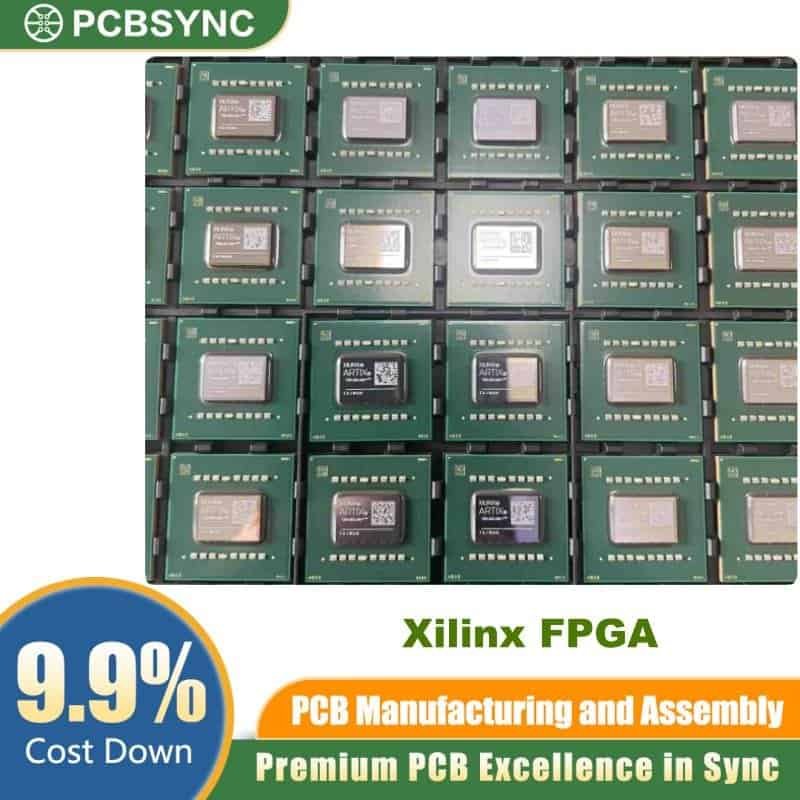
Overview of XCS30-3TQG144CI Field Programmable Gate Array
The XCS30-3TQG144CI represents a powerful solution in the Spartan series of field programmable gate arrays, manufactured by AMD (formerly Xilinx). This industrial-grade FPGA delivers exceptional performance for applications requiring reliable operation in harsh environments while maintaining cost-effectiveness for high-volume production.
As part of the renowned Xilinx FPGA family, the XCS30-3TQG144CI offers designers a proven platform for implementing complex digital logic designs with confidence.
Key Technical Specifications
Core FPGA Architecture Details
| Specification |
Value |
| Logic Gates |
30,000 gates |
| Logic Elements |
1,368 |
| Configurable Logic Blocks (CLBs) |
576 |
| I/O Pins |
113 |
| Embedded RAM |
18,432 bits |
| Maximum Frequency |
125 MHz |
| Package Type |
144-TQFP (Thin Quad Flat Pack) |
Electrical and Environmental Characteristics
| Parameter |
Specification |
| Supply Voltage Range |
4.75V to 5.25V (5V nominal) |
| Operating Temperature |
-40°C to +100°C (Industrial Grade) |
| Package Dimensions |
20mm x 20mm |
| Mounting Type |
Surface Mount Technology (SMT) |
| Speed Grade |
-3 (High Performance) |
XCS30-3TQG144CI Applications and Use Cases
Industrial Control Systems
The XCS30-3TQG144CI excels in industrial automation environments where reliability and temperature stability are critical. Its industrial temperature range makes it ideal for factory floor equipment, process control systems, and manufacturing automation.
Telecommunications Infrastructure
With 125 MHz maximum operating frequency and substantial logic resources, this FPGA supports various telecommunications protocols and signal processing applications in base stations, network equipment, and communication interfaces.
Consumer Electronics Design
The cost-effective nature of the Spartan architecture combined with adequate logic resources makes the XCS30-3TQG144CI suitable for consumer products requiring custom digital logic, including audio processing, video interfaces, and control systems.
Embedded System Development
Engineers choose this FPGA for embedded applications requiring custom peripheral interfaces, motor control, sensor integration, and real-time processing capabilities.
Advanced Features and Capabilities
Configurable Logic Resources
The device features 576 configurable logic blocks providing maximum design flexibility. Each CLB contains multiple logic elements that can be programmed to implement various combinational and sequential logic functions.
On-Chip Memory Architecture
With 18,432 bits of distributed RAM, designers can implement buffers, FIFOs, and small memory arrays directly within the FPGA fabric, reducing external memory requirements and improving system performance.
I/O Capabilities
The 113 user I/O pins support multiple voltage standards and can be configured for various signaling requirements, enabling direct interface with diverse components and systems without external level translation.
Design Implementation Considerations
Development Tools Compatibility
| Tool Category |
Compatible Software |
| Design Entry |
Xilinx ISE Design Suite |
| Synthesis |
XST (Xilinx Synthesis Technology) |
| Simulation |
ModelSim, ISim |
| Programming |
Xilinx iMPACT |
| Constraints |
UCF (User Constraints File) |
Power Management Features
The XCS30-3TQG144CI implements several power optimization features allowing designers to balance performance with power consumption based on application requirements.
Programming and Configuration Options
| Configuration Mode |
Description |
| JTAG |
In-system programming via standard JTAG interface |
| Serial PROM |
Boot from external serial configuration memory |
| Slave Serial |
Configuration from external controller |
| Boundary Scan |
IEEE 1149.1 compliant for testing |
Performance Optimization Strategies
Timing Closure Techniques
Achieving optimal performance requires attention to placement, routing, and timing constraints. The -3 speed grade indicates this device’s high-performance capabilities, suitable for demanding timing requirements.
Resource Utilization Guidelines
Efficient use of the 1,368 logic elements and 576 CLBs requires careful architectural planning. Designers should partition designs appropriately and leverage the embedded RAM for data buffering operations.
Quality and Reliability Standards
Manufacturing Process
The XCS30-3TQG144CI is manufactured using proven semiconductor processes ensuring consistent quality and long-term reliability for commercial and industrial applications.
Temperature Testing
The industrial temperature range qualification (-40°C to +100°C) ensures reliable operation across extreme environmental conditions encountered in automotive, industrial, and outdoor installations.
Comparison with Related Products
XCS30 Family Variants
| Part Number |
Package |
Temperature |
Key Difference |
| XCS30-3TQG144CI |
144-TQFP |
Industrial (-40°C to +100°C) |
Extended temperature |
| XCS30-3TQ144C |
144-TQFP |
Commercial (0°C to +85°C) |
Standard temperature |
| XCS30-4TQ144I |
144-TQFP |
Industrial |
Lower speed grade |
Package and Physical Characteristics
144-TQFP Package Benefits
The thin quad flat pack configuration offers excellent thermal performance, reliable soldering characteristics, and compact board footprint. The 20mm x 20mm package size provides high pin density while remaining compatible with standard PCB manufacturing processes.
Pin Configuration Overview
The 144 pins include dedicated configuration pins, power and ground connections, and 113 user-configurable I/O pins arranged for optimal signal routing and board layout flexibility.
System Integration Guidelines
PCB Design Recommendations
When incorporating the XCS30-3TQG144CI into your design, consider proper decoupling capacitor placement, power plane design, and signal integrity requirements for high-speed signals.
Interface Considerations
The device supports multiple I/O standards including LVTTL, LVCMOS, and other common signaling levels, simplifying integration with various components and subsystems.
Procurement and Availability Information
Industry Standard Part Number
The complete part number XCS30-3TQG144CI identifies specific characteristics: XCS30 (device family), -3 (speed grade), TQG144 (package type and pin count), C (commercial temperature), I (industrial temperature range).
Package Options and Ordering Codes
| Order Code Suffix |
Package Format |
Quantity |
| Standard |
Trays |
Production quantities |
| Reel |
Tape & Reel |
Automated assembly |
Technical Support and Resources
Documentation Access
Comprehensive datasheets, application notes, and reference designs are available through AMD’s technical documentation portal, providing detailed specifications and implementation guidance.
Design Community Support
The extensive Xilinx FPGA community offers forums, knowledge bases, and peer support for troubleshooting and optimization assistance during development.
Why Choose XCS30-3TQG144CI for Your Project
Cost-Effective Solution
The Spartan architecture philosophy delivers essential FPGA capabilities at competitive pricing, making it ideal for cost-sensitive applications without sacrificing quality or reliability.
Proven Track Record
As part of the established Spartan family, this device benefits from years of field deployment, extensive characterization, and mature development tools.
Flexible Implementation
The combination of adequate logic resources, embedded memory, and comprehensive I/O options provides flexibility to implement diverse applications without overspecifying device capabilities.
Frequently Asked Questions
Q: What is the difference between XCS30-3TQG144CI and XCS30-3TQ144C? The “I” suffix indicates industrial temperature range (-40°C to +100°C) versus commercial range (0°C to +85°C) for the “C” version.
Q: What development tools are required? The Xilinx ISE Design Suite provides complete design entry, synthesis, implementation, and programming tools for this device.
Q: Can this FPGA be reprogrammed? Yes, the XCS30-3TQG144CI is fully reprogrammable through JTAG or other supported configuration modes.
Q: What applications is this FPGA best suited for? Industrial control, telecommunications, embedded systems, and consumer electronics requiring up to 30,000 gates of logic.
Q: Does this device support modern high-speed interfaces? While suitable for many applications, designers requiring high-speed serial transceivers should consider newer FPGA families.
Conclusion
The XCS30-3TQG144CI delivers reliable FPGA performance for industrial and commercial applications. Its combination of adequate logic resources, industrial temperature operation, and cost-effective implementation makes it an excellent choice for projects requiring programmable logic solutions with proven reliability. Whether developing industrial equipment, telecommunications systems, or embedded controllers, this Spartan FPGA provides the flexibility and performance needed for successful product development.