Inquire: Call 0086-755-23203480, or reach out via the form below/your sales contact to discuss our design, manufacturing, and assembly capabilities.
Quote: Email your PCB files to Sales@pcbsync.com (Preferred for large files) or submit online. We will contact you promptly. Please ensure your email is correct.
Notes: For PCB fabrication, we require PCB design file in Gerber RS-274X format (most preferred), *.PCB/DDB (Protel, inform your program version) format or *.BRD (Eagle) format. For PCB assembly, we require PCB design file in above mentioned format, drilling file and BOM. Click to download BOM template To avoid file missing, please include all files into one folder and compress it into .zip or .rar format.
If you’ve spent any time designing RF or microwave circuits, you’ve probably run into the limitations of standard FR4 pretty quickly. Signal losses pile up, impedance drifts with temperature, and suddenly your carefully simulated design performs nothing like it should on the bench. That’s where materials like RT/Duroid 6002 PCB come into play.
I’ve worked with this laminate on everything from phased array antennas to aerospace radar modules, and I can tell you it’s one of the most reliable PTFE-based substrates available for high-frequency work. In this guide, I’m going to walk you through everything you need to know about RT/Duroid 6002—from its core material properties to fabrication quirks that can make or break your build.
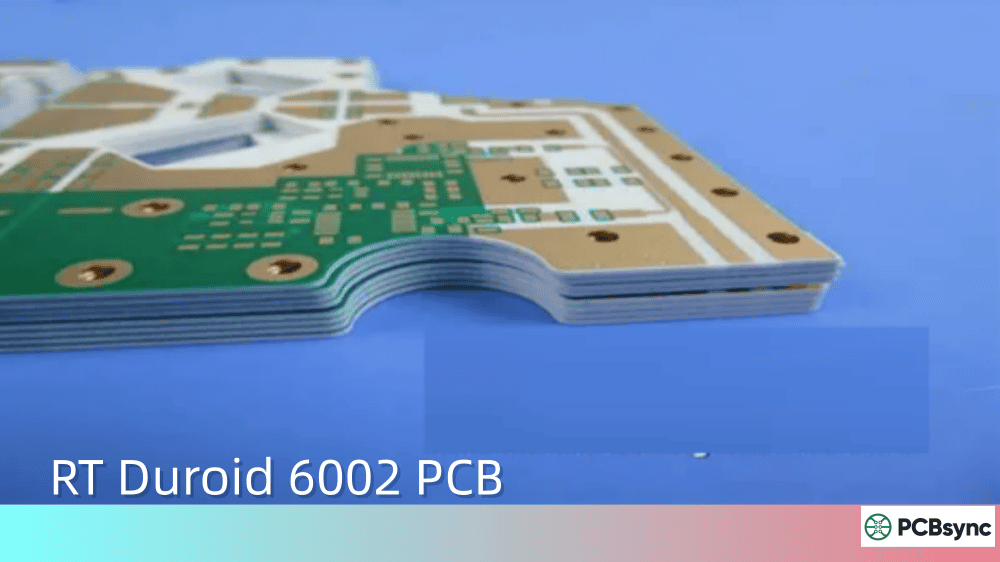
RT/Duroid 6002 is a ceramic-filled PTFE (polytetrafluoroethylene) composite laminate developed by Rogers Corporation specifically for microwave and RF printed circuit board applications. Unlike standard FR4 boards that start degrading electrically above a few hundred megahertz, RT/Duroid 6002 PCB maintains stable performance well into the gigahertz range—making it a go-to choice for complex microwave structures.
The material was actually one of the first low-loss, low dielectric constant laminates to combine excellent electrical properties with the mechanical reliability needed for demanding applications. Rogers reinforces the PTFE matrix with glass microfibers and loads it with ceramic particles, which gives you the best of both worlds: the electrical stability of PTFE and enhanced mechanical properties that pure Teflon can’t deliver.
What sets RT/Duroid 6002 PCB apart from other Rogers materials is its ceramic filler composition. This results in an extremely low thermal coefficient of dielectric constant—meaning your circuit’s electrical behavior stays rock-solid whether you’re testing on a lab bench at room temperature or the board is cycling through harsh aerospace thermal environments.
Key Electrical Properties of RT/Duroid 6002
The electrical specifications are what draw most engineers to this material in the first place. Here’s what you’re working with:
Dielectric Constant and Stability
RT/Duroid 6002 PCB features a dielectric constant (Dk) of 2.94 ± 0.04 when measured at 10 GHz. That tight tolerance is critical—when you’re designing impedance-controlled transmission lines, even small Dk variations translate directly into impedance errors.
More importantly, the thermal coefficient of dielectric constant is extremely low across the operating range of -55°C to +150°C. This makes RT/Duroid 6002 PCB ideal for filters, oscillators, and delay lines where frequency stability is paramount.
Loss Characteristics
The dissipation factor (Df) runs around 0.0012 at 10 GHz—that’s genuine low-loss performance. For context, standard FR4 typically shows losses an order of magnitude higher at these frequencies, which translates to significant signal attenuation in any circuit with appreciable trace lengths.
Table 1: RT/Duroid 6002 Electrical Properties
Property
Value
Test Condition
Test Method
Dielectric Constant (Dk)
2.94 ± 0.04
10 GHz, 23°C
IPC-TM-650 2.5.5.5
Dissipation Factor (Df)
0.0012
10 GHz, 23°C
IPC-TM-650 2.5.5.5
Design Dk
2.94
10 GHz
Process Dk
Thermal Coefficient of Dk
12 ppm/°C
-55°C to +150°C
—
Volume Resistivity
2 × 10⁷ MΩ·cm
C-96/35/90
IPC-TM-650 2.5.17.1
Surface Resistivity
3 × 10⁷ MΩ
C-96/35/90
IPC-TM-650 2.5.17.1
Mechanical and Thermal Properties
Electrical performance means nothing if your board can’t survive assembly and field deployment. RT/Duroid 6002 PCB handles both remarkably well.
Dimensional Stability
One of the biggest headaches with PTFE materials is dimensional instability—the stuff wants to move around during processing. Rogers addressed this by matching the X and Y coefficient of thermal expansion (CTE) to copper at 16 ppm/°C. This accomplishes two important things:
It eliminates the need for double-etching to hit tight positional tolerances
It dramatically improves surface mount reliability by reducing stress on solder joints
The Z-axis CTE of 24 ppm/°C is also well-controlled, which translates to excellent plated through-hole reliability. Rogers reports successful temperature cycling of RT/Duroid 6002 materials through more than 5,000 cycles (-55°C to +125°C) without a single via failure.
Thermal Management
With a thermal conductivity of 0.60 W/m/K, RT/Duroid 6002 PCB dissipates heat more effectively than unreinforced PTFE materials. The ceramic loading is largely responsible for this improvement. For designs that need even better thermal performance, you might look at materials like RT/Duroid 6035HTC, but for most microwave applications, 6002 handles thermal demands adequately.
Table 2: RT/Duroid 6002 Mechanical and Thermal Properties
Property
Value
Direction
Test Method
Tensile Modulus
1103 MPa (160 kpsi)
X direction
ASTM D638
Tensile Strength
17.2 MPa (2500 psi)
X direction
ASTM D638
Compressive Modulus
2482 MPa (360 kpsi)
Z direction
—
CTE
16 ppm/°C
X, Y axes
IPC-TM-650 2.4.41
CTE
24 ppm/°C
Z axis
IPC-TM-650 2.4.41
Thermal Conductivity
0.60 W/m/K
—
ASTM C518
Decomposition Temperature (Td)
500°C
—
TGA
Moisture Absorption
0.02%
—
IPC-TM-650 2.6.2.1
Available Thickness and Copper Cladding Options
RT/Duroid 6002 PCB comes in a wide range of configurations to match different design requirements.
Standard and Non-Standard Thicknesses
Rogers offers standard thicknesses of 10, 20, 30, and 60 mil with tight tolerances. If your design needs something different, non-standard thicknesses from 5 mil up to 125 mil (in 5-mil increments) are available. The thickness tolerance depends on the nominal value—thinner cores obviously can’t maintain the same absolute tolerance as thicker ones.
Table 3: Available Thickness Options
Standard Thickness
Metric Equivalent
Tolerance
10 mil (0.010″)
0.254 mm
± 0.0007″
20 mil (0.020″)
0.508 mm
± 0.001″
30 mil (0.030″)
0.762 mm
± 0.001″
60 mil (0.060″)
1.524 mm
± 0.002″
Non-standard: 5 mil to 125 mil
0.127 mm to 3.18 mm
Contact Rogers
Copper Foil Options
You can specify electrodeposited copper from ½ oz to 2 oz per square foot, reverse-treated electrodeposited copper from ½ oz to 1 oz, or rolled copper from ½ oz to 2 oz. For specialized applications, RT/Duroid 6002 PCB is also available with aluminum, brass, or copper plate cladding, as well as resistive foils.
Panel Sizes
Standard panel sizes include 18″ × 12″ (457 mm × 305 mm) and 18″ × 24″ (457 mm × 610 mm). Custom sizes may be available for volume orders.
Choosing between high-frequency laminates often comes down to trade-offs between performance, processability, and cost. Here’s how RT/Duroid 6002 PCB stacks up against common alternatives.
RT/Duroid 6002 vs RT/Duroid 5880
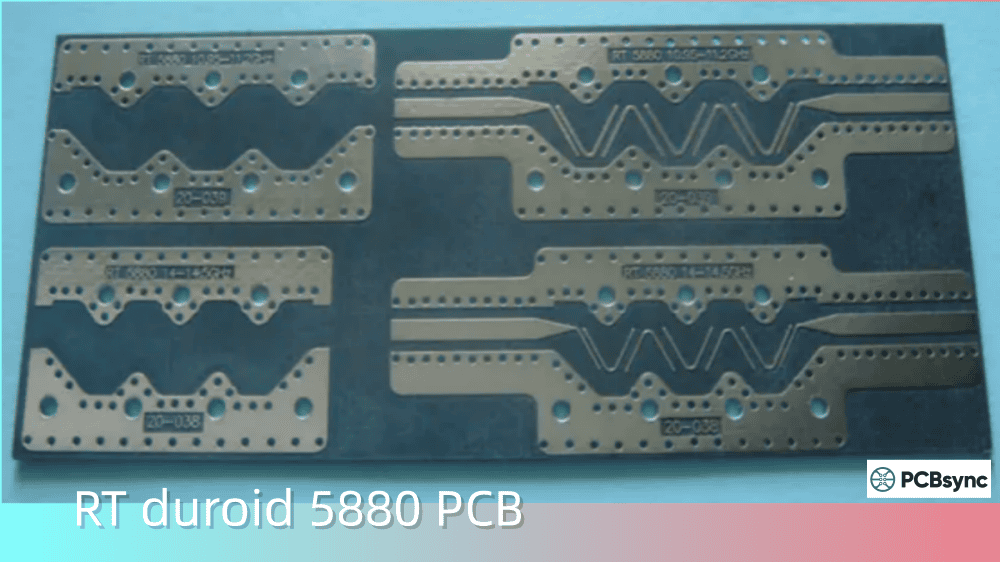
Both are PTFE-based Rogers materials, but they serve slightly different niches. RT/Duroid 5880 has a lower Dk (2.20 versus 2.94) and allows finer lines and spaces, making it popular for precision stripline and microstrip work. RT/Duroid 6002 PCB offers slightly lower loss and better dimensional stability due to its ceramic loading—making it the better choice for mechanically demanding applications or designs requiring tight Dk tolerance across temperature.
RT/Duroid 6002 vs RO4003C
RO4003C is a hydrocarbon/ceramic laminate that processes like FR4 without requiring the specialized surface treatments that PTFE materials demand. If your design operates below about 10 GHz and you want to keep fabrication costs down, RO4003C is worth considering. However, for frequencies approaching Ku-band or applications where you need the lowest possible loss, RT/Duroid 6002 PCB generally delivers better electrical performance.
RT/Duroid 6002 vs FR4
This isn’t really a fair comparison—FR4 simply can’t compete at microwave frequencies. The Dk of FR4 varies significantly with frequency and isn’t tightly controlled, its loss tangent is roughly 10× higher than RT/Duroid 6002, and its moisture absorption can cause unpredictable performance drift. FR4 works fine for digital circuits and lower-frequency analog, but for serious RF work above a few hundred MHz, you need proper high-frequency material.
Table 4: Material Comparison Summary
Property
RT/Duroid 6002
RT/Duroid 5880
RO4003C
FR4
Dk @ 10 GHz
2.94
2.20
3.38
~4.5
Df @ 10 GHz
0.0012
0.0009
0.0027
0.02
Thermal Coefficient of Dk
12 ppm/°C
-125 ppm/°C
40 ppm/°C
High
CTE (X/Y)
16 ppm/°C
31 ppm/°C
11 ppm/°C
14 ppm/°C
Moisture Absorption
0.02%
0.02%
0.06%
0.15%
Processing
PTFE methods
PTFE methods
FR4-like
Standard
Relative Cost
High
High
Medium
Low
Typical Applications for RT/Duroid 6002 PCB
The unique combination of electrical stability, low loss, and mechanical reliability makes RT/Duroid 6002 PCB well-suited for demanding applications across multiple industries.
Aerospace and Defense
This is where RT/Duroid 6002 really shines. The material’s low outgassing characteristics meet requirements for space applications, while its thermal stability handles the extreme temperature cycling of airborne and space-based systems. Common aerospace applications include:
The defense sector particularly values RT/Duroid 6002 PCB for its proven reliability record. When you’re building systems where failure isn’t an option—whether that’s a radar module on a fighter jet or a communication system on a satellite—you need materials with demonstrated long-term stability. The 5,000+ thermal cycle performance without via failures gives program managers the confidence they need for mission-critical applications.
Commercial RF Systems
Beyond defense work, RT/Duroid 6002 PCB finds extensive use in commercial high-frequency systems where performance requirements approach those of military specifications:
GPS antenna elements requiring precise phase control
Commercial airline collision avoidance systems (TCAS)
Beam forming networks for cellular infrastructure
Point-to-point microwave links for telecommunications
Automotive radar modules (though RO4000 series is more common here for cost reasons)
5G infrastructure components operating at mmWave frequencies
Weather radar systems requiring stable frequency response
The telecommunications industry increasingly demands materials that can maintain consistent performance across varying environmental conditions. Base station equipment, for instance, often operates in outdoor enclosures where temperature swings of 60°C or more are common. RT/Duroid 6002 PCB’s exceptional Dk stability ensures that filter responses and antenna patterns remain within specification regardless of ambient conditions.
Complex Circuit Structures
The material’s mechanical properties make it particularly well-suited for advanced circuit architectures:
Complex multilayer microwave circuits with inner-layer connections
Flat and non-planar antenna structures (conformal antennas)
Power backplanes requiring high reliability
Filters, oscillators, and delay lines requiring frequency stability
Hybrid assemblies combining active and passive RF components
Feed networks for large antenna arrays
Conformal antennas represent a particularly interesting application space. When antenna structures need to conform to curved surfaces—like aircraft fuselages or vehicle body panels—you need a substrate that can handle the mechanical stress of forming while maintaining electrical performance. The combination of PTFE flexibility with ceramic reinforcement makes RT/Duroid 6002 PCB workable for these demanding geometries.
PCB Fabrication Guidelines for RT/Duroid 6002
Working with PTFE-based materials requires some adjustments to your normal PCB fabrication processes. Here are the key considerations.
Drilling Considerations
The ceramic filler in RT/Duroid 6002 is highly abrasive to carbide drill bits. Standard drill parameters that work fine for FR4 will chew through bits much faster and potentially degrade hole quality. Key recommendations:
Use carbide drill bits specifically designed for PTFE/ceramic composites
Reduce spindle speeds compared to FR4 (typical range: 15-60 KRPM depending on hole size)
Maintain chip loading around 0.002″/revolution
Establish tool life based on hole quality requirements rather than bit breakage
Stack heights should be limited to prevent excessive heat buildup
Surface Preparation for Plating
This is probably the biggest difference from FR4 processing. PTFE surfaces are inherently non-wettable, so you must activate the surface before electroless copper deposition. Two common approaches:
Sodium Treatment: Highly reactive sodium naphthalene compounds in glycol ether solution make the PTFE surface wettable. Critical point—exposure time must not exceed 30 seconds to prevent absorption of chemicals into the dielectric. After treatment, bake cores at 125°C for 60 minutes before metallization.
Plasma Treatment: An alternative to wet chemistry. A 70/30 H₂/N₂ blend, NH₃, or N₂ plasma at appropriate conditions (100 mtorr, ~4000W, 40 kHz) activates the PTFE surface for metal adhesion.
Skipping proper surface activation will result in poor metal adhesion or plated voids—guaranteed.
Etching and Imaging
Standard photoresist and etch procedures work fine with RT/Duroid 6002 PCB. Common etchants like ferric chloride, ammonium persulfate, and cupric chloride all work. The main consideration is preserving the as-etched dielectric surface for subsequent processing.
Surface Finishes
All standard surface finishes are compatible with RT/Duroid 6002 PCB:
One caution: exposure time to fluxes should be less than 30 seconds before HASL or reflow. If the dielectric gets exposed to water-insoluble solvents, you’ll need a thorough solvent rinse (methanol, ethanol, or isopropyl alcohol for 15 minutes) followed by baking at 125°C for 30-60 minutes.
Multilayer Construction
RT/Duroid 6002 PCB can be used in multilayer constructions using either thermoplastic or thermoset adhesive systems:
Thermoplastic Options: DuPont FEP film (Dk 2.1, Df 0.0007) or Rogers 3001 film (Dk 2.28, Df 0.003) work when the electrical properties of adhesive layers are critical.
Direct Bonding: Since PTFE is thermoplastic, homogeneous multilayer constructions can be achieved through direct fusion bonding without intermediate adhesive layers.
Hybrid Constructions: RT/Duroid 6002 layers can be interleaved with FR4 prepregs to create hybrid multilayer boards, though large Dk differences between layers aren’t recommended.
Design Tips for RT/Duroid 6002 PCB
After working with this material on numerous projects, here are some practical design considerations that can save you time and prevent costly respins.
Impedance Control
Use the design Dk value (2.94) rather than specification Dk for impedance calculations. The design Dk is an average from multiple tested lots and thicknesses, giving you more accurate predictions. Still, prototype verification is essential for critical designs.
For microstrip designs, be aware that the effective dielectric constant will be somewhat lower than the bulk Dk due to fringing fields through air. Use a proper microstrip calculator or field solver rather than simple approximations. Rogers provides the MWI calculator specifically for this purpose, and it accounts for the actual material properties correctly.
Line width tolerances also matter more at microwave frequencies than they might in digital designs. Work with your fabricator to understand what etch tolerance they can hold, and design your impedance structures with that tolerance in mind. A ±0.5 mil variation might be acceptable for 50-ohm lines on thick substrates but could be problematic on thin cores where trace widths are already narrow.
Thermal Management
While RT/Duroid 6002 handles thermal cycling well, you should still consider several factors for robust designs:
Thermal via patterns under high-power components to conduct heat through the board
Metal backing for improved heat spreading if board-level dissipation is inadequate
Adequate copper pours for thermal paths to heat sinks or chassis
Component placement that avoids concentrating heat sources
Airflow considerations if forced convection is available
For high-power applications, remember that while RT/Duroid 6002’s thermal conductivity (0.60 W/m/K) exceeds unreinforced PTFE, it’s still lower than alumina or aluminum nitride ceramics. If thermal management is your primary challenge, consider hybrid approaches using metal-backed substrates or dedicated thermal spreaders.
Via Reliability
The low Z-axis CTE and copper-matched X/Y expansion means you can generally trust plated through-holes more than with other PTFE materials. Still, for high-reliability applications, consider:
Via aspect ratios under 8:1 for best plating coverage
Thermal relief patterns for high-current vias to prevent heat damage during soldering
Filled and capped vias where surface mounting requires flat pads
Back-drilling for blind vias in thick multilayer constructions
For aerospace and defense work, you may need to specify additional via testing (microsection analysis, thermal stress testing) to verify process capability with your fabricator.
SMT Assembly
The low tensile modulus of RT/Duroid 6002 PCB actually helps SMT reliability—the laminate’s flexibility reduces stress on solder joints during thermal cycling. Combined with the copper-matched CTE, you get a substrate that’s actually quite forgiving for surface mount components.
However, some assembly considerations specific to PTFE materials include:
Solder mask adhesion can be challenging—use masks specifically validated for PTFE surfaces
Cleaning processes should avoid prolonged exposure to aggressive solvents
Bake boards before assembly to drive out any absorbed moisture (even at 0.02% absorption, it’s good practice)
Component placement accuracy requirements are similar to FR4—the material machines well
Layout Best Practices
A few additional layout guidelines specific to microwave design on RT/Duroid 6002 PCB:
Maintain continuous ground planes under transmission lines for controlled impedance
Use via stitching along edges of grounded coplanar waveguide structures
Account for launch transitions from connectors to board transmission lines
Consider skin effect at your operating frequency when selecting copper weight
Model discontinuities (bends, T-junctions, step impedances) in your RF simulation
Sourcing and Cost Considerations
RT/Duroid 6002 is a premium material, and it’s priced accordingly. A few things to keep in mind:
Material Cost
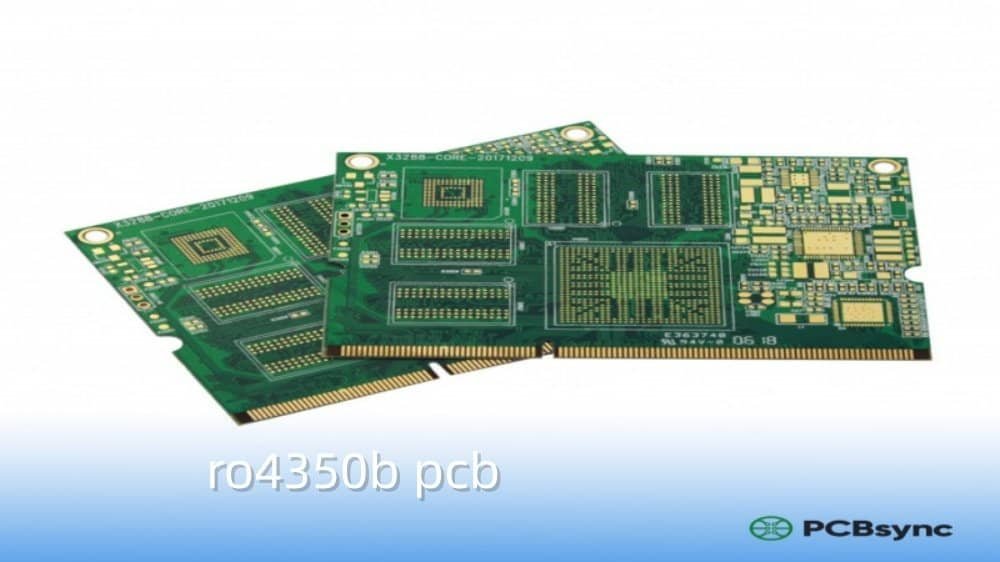
Expect to pay significantly more than FR4 or even RO4000 series materials. The ceramic-filled PTFE composition and tight tolerances command a premium. For cost-sensitive applications where ultimate performance isn’t required, consider whether RO4003C or RO4350B might meet your needs at lower cost.
Lead Times
Rogers materials are generally available through authorized distributors, but lead times can vary depending on the specific thickness and copper configuration you need. Standard configurations are typically stocked; non-standard thicknesses may require longer lead times.
Fabrication Costs
PTFE processing adds cost at the fabricator level too. The specialized surface treatments, potentially slower drill cycles, and additional handling requirements mean higher per-board costs compared to FR4-processable materials. Make sure your fabricator has actual experience with PTFE materials—not all shops are equipped for this work.
Storage
Good news here: RT/Duroid 6002 has indefinite shelf life at room temperature with no special storage requirements. Unlike some materials that need refrigeration or have limited shelf life, you can stock this material without worry.
Useful Resources and Downloads
For detailed engineering data and processing information, these resources are invaluable:
For a broader understanding of high-frequency PCB materials and their applications, check out this comprehensive guide to Rogers PCB materials covering the full range of Rogers laminate options.
Frequently Asked Questions
What frequency range is RT/Duroid 6002 PCB suitable for?
RT/Duroid 6002 PCB performs well from UHF through Ku-band and beyond. The material maintains stable electrical properties up to frequencies exceeding 30 GHz, with some sources indicating usable performance up to 90 GHz for appropriate circuit designs. The key advantage is the stability of the dielectric constant across both frequency and temperature, rather than an absolute frequency limit.
Can RT/Duroid 6002 be processed using standard FR4 fabrication methods?
Mostly, but with important differences. Standard etching, drilling, plating, and lamination techniques work, but PTFE materials require surface activation treatment (sodium or plasma) before metallization—skip this and you’ll get adhesion failures. Drilling parameters should also be adjusted for the abrasive ceramic filler. A fabricator experienced with PTFE materials won’t have trouble, but not every shop is equipped for this work.
Is RT/Duroid 6002 PCB suitable for space applications?
Yes—it’s one of the better choices for space applications. The low outgassing characteristics, combined with excellent dimensional stability and proven reliability through extensive thermal cycling, make RT/Duroid 6002 PCB appropriate for satellite and spacecraft electronics. The material has a long heritage in aerospace applications precisely because of these properties.
How does moisture affect RT/Duroid 6002 performance?
Moisture absorption is extremely low at 0.02% per IPC-TM-650 testing. This is one of the lowest moisture absorption rates among PCB laminates and means the electrical properties remain stable even in humid environments. Combined with excellent chemical resistance, the material performs consistently in challenging environmental conditions.
Can I create hybrid multilayer boards combining RT/Duroid 6002 with FR4?
Yes, hybrid constructions are possible and sometimes practical for cost optimization—using RT/Duroid 6002 PCB for RF signal layers while using FR4 for ground planes or lower-frequency sections. However, you need to carefully manage the Dk mismatch between layers and ensure compatible bonding processes. Large Dk differences between adjacent layers generally aren’t recommended as they can complicate impedance control and create unintended coupling effects.
Wrapping Up
RT/Duroid 6002 PCB remains one of the most reliable choices for high-frequency circuit design where performance, stability, and reliability can’t be compromised. The ceramic-filled PTFE composition delivers electrical properties that standard materials simply can’t match, while the mechanical characteristics support complex multilayer constructions and demanding environmental requirements.
The material does cost more than commodity laminates and requires proper processing knowledge, but for applications ranging from aerospace radar to commercial RF infrastructure, that investment pays dividends in consistent, reliable performance. If you’re designing circuits that operate at microwave frequencies or need rock-solid electrical stability across temperature extremes, RT/Duroid 6002 deserves serious consideration.
The key is working with fabricators who actually know PTFE materials and following Rogers’ processing guidelines carefully. Get those fundamentals right, and this laminate will deliver exactly the performance its specifications promise.
Inquire: Call 0086-755-23203480, or reach out via the form below/your sales contact to discuss our design, manufacturing, and assembly capabilities.
Quote: Email your PCB files to Sales@pcbsync.com (Preferred for large files) or submit online. We will contact you promptly. Please ensure your email is correct.
Notes: For PCB fabrication, we require PCB design file in Gerber RS-274X format (most preferred), *.PCB/DDB (Protel, inform your program version) format or *.BRD (Eagle) format. For PCB assembly, we require PCB design file in above mentioned format, drilling file and BOM. Click to download BOM template To avoid file missing, please include all files into one folder and compress it into .zip or .rar format.