Inquire: Call 0086-755-23203480, or reach out via the form below/your sales contact to discuss our design, manufacturing, and assembly capabilities.
Quote: Email your PCB files to Sales@pcbsync.com (Preferred for large files) or submit online. We will contact you promptly. Please ensure your email is correct.
Notes: For PCB fabrication, we require PCB design file in Gerber RS-274X format (most preferred), *.PCB/DDB (Protel, inform your program version) format or *.BRD (Eagle) format. For PCB assembly, we require PCB design file in above mentioned format, drilling file and BOM. Click to download BOM template To avoid file missing, please include all files into one folder and compress it into .zip or .rar format.
Meta:Discover whether Orange Pi delivers a real Raspberry Pi cheap alternative. Hardware specs, software support, pricing, and real-world performance compared.
Every few months, someone on the engineering forums asks if orange pi boards are finally good enough to replace the Raspberry Pi. I’ve deployed both platforms in commercial prototypes over the past eight years, and my answer has evolved from “absolutely not” to “it depends on what you’re building.”
The orange pi series offers compelling hardware specifications at prices that undercut Raspberry Pi significantly. But as any experienced engineer knows, specifications don’t tell the whole story. Software support, community resources, and long-term reliability matter just as much as raw performance numbers.
This guide examines whether Orange Pi delivers a genuine raspberry pi cheap alternative or whether the savings come with hidden costs that make the Raspberry Pi worth its premium.
Shenzhen Xunlong Software launched the first Orange Pi in 2014, positioning it directly against Raspberry Pi with similar form factors but lower prices. Since then, over thirty Orange Pi variants have hit the market, ranging from ultra-compact Zero boards to high-performance models rivaling mini desktop computers.
Orange Pi’s Design Philosophy
Orange Pi takes a different approach than Raspberry Pi. While the Raspberry Pi Foundation focuses on a carefully curated product line with extensive support, orange pi floods the market with options. This strategy provides something for nearly every use case but fragments software development efforts across dozens of board variants.
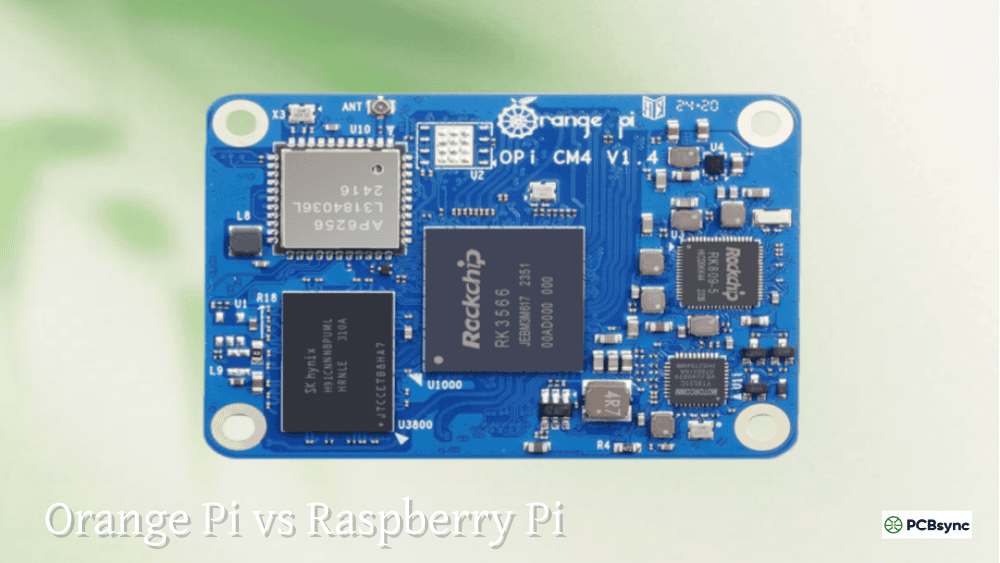
Current popular Orange Pi models include the Orange Pi 5 series with Rockchip RK3588S processors, the budget-friendly Zero 3 with Allwinner H618, and various specialized boards for specific applications like networking or AI workloads.
Hardware Comparison: Orange Pi vs Raspberry Pi
Raw specifications favor Orange Pi in many comparisons, particularly at similar price points.
The Orange Pi 5 delivers double the CPU cores, a more powerful GPU, and built-in NVMe support for less money than a Raspberry Pi 5 with equivalent capabilities. On paper, the value proposition looks overwhelming.
Budget Model Comparison
For cost-sensitive projects, the comparison shifts:
The Orange Pi Zero 3 edges ahead in nearly every specification at comparable pricing. The faster processor, more RAM, better wireless, and 4K video output make it objectively better hardware.
Where Orange Pi Falls Short
Despite impressive specifications, Orange Pi faces significant challenges that affect real-world usability.
Software Support Limitations
This represents Orange Pi’s Achilles heel. The Raspberry Pi Foundation maintains Raspberry Pi OS with regular updates, security patches, and optimization for their specific hardware. The community produces countless additional distributions, all thoroughly tested on Pi hardware.
Orange Pi provides official images for their boards, but support varies dramatically:
Aspect
Orange Pi
Raspberry Pi
Official OS Updates
Irregular
Regular monthly
Kernel Version
Often outdated
Current
GPU Driver Quality
Variable
Optimized
Third-Party OS Options
Limited
Extensive
Documentation Quality
Basic
Comprehensive
Bug Fix Response
Slow
Responsive
I’ve encountered situations where official Orange Pi images ship with kernel bugs that take months to address. The Armbian project provides better-maintained images for many Orange Pi boards, but this requires technical knowledge to set up properly.
Community Size Disparity
The Raspberry Pi community dwarfs Orange Pi’s user base. This matters practically:
Searching “Raspberry Pi project tutorial” yields millions of results. The equivalent Orange Pi search returns a tiny fraction. When you encounter a problem with your Pi project, someone has almost certainly solved it before and documented the solution. With Orange Pi, you may be pioneering solutions yourself.
Forums, YouTube tutorials, books, courses, and maker communities overwhelmingly focus on Raspberry Pi. Learning resources for orange pi remain sparse and often machine-translated from Chinese.
Hardware Quality Concerns
Some users report reliability issues with Orange Pi boards, particularly regarding power delivery and thermal management. Comments from experienced makers mention inconsistent power draw causing stability problems, thermal throttling without adequate cooling, and component quality variations between production batches.
These concerns don’t affect every board or user, but they appear frequently enough in community discussions to warrant consideration. Raspberry Pi boards, while not perfect, have established a stronger reputation for consistent quality.
When Orange Pi Makes Sense
Despite its limitations, orange pi serves certain use cases exceptionally well.
High-Performance Computing Projects
The Orange Pi 5 series with RK3588S processors delivers computational power that Raspberry Pi cannot match at any price point. For projects requiring serious CPU performance, multiple cores, or GPU acceleration, Orange Pi provides capabilities previously requiring much more expensive hardware.
Machine learning inference, video transcoding, emulation of demanding systems, and compilation workloads all benefit from the extra horsepower. The 6 TOPS NPU on RK3588S boards enables on-device AI processing that Raspberry Pi simply cannot perform.
Budget-Constrained Deployments
When deploying multiple boards for commercial projects or educational settings, the price difference compounds significantly:
Quantity
Orange Pi Zero 3 (1GB)
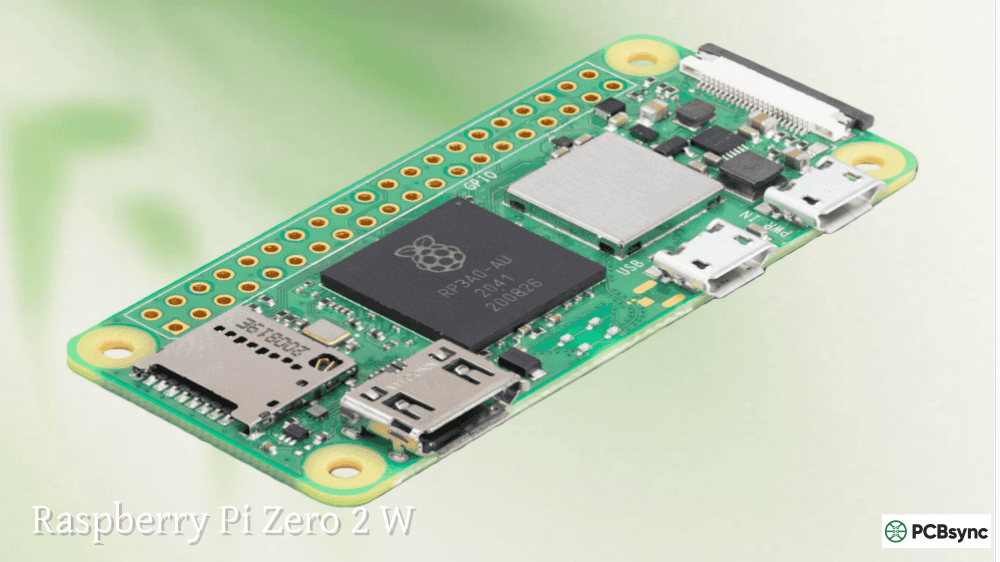
Raspberry Pi Zero 2 W
Savings
10 units
~$170
~$150
-$20
50 units
~$850
~$750
-$100
100 units
~$1,700
~$1,500
-$200
At higher RAM configurations, Orange Pi’s advantage increases:
Quantity
Orange Pi 5 (8GB)
Raspberry Pi 5 (8GB)
Savings
10 units
~$900
~$800
-$100
50 units
~$4,500
~$4,000
-$500
Wait, those numbers show Raspberry Pi as cheaper in some configurations. The reality is that pricing fluctuates, and Raspberry Pi’s broader availability often results in competitive pricing despite Orange Pi’s theoretical cost advantage.
Specific Hardware Requirements
Orange Pi boards with built-in NVMe slots, eMMC storage, or specific connectivity options sometimes provide exactly what a project needs without requiring additional HATs or adapters. This integrated approach can reduce total system cost and complexity.
The Orange Pi 5 Max, for example, includes dual 2.5G Ethernet ports, making it attractive for networking applications where a Raspberry Pi would require external adapters.
When Raspberry Pi Remains the Better Choice
For many projects, Raspberry Pi’s ecosystem advantages outweigh Orange Pi’s specification advantages.
Educational and Learning Projects
Beginners benefit enormously from Raspberry Pi’s documentation, tutorials, and community support. The frustration of debugging obscure hardware or software issues on less-supported platforms can derail learning entirely.
Raspberry Pi’s Thonny IDE, Scratch integration, and educational resources make it the clear choice for anyone learning programming or electronics.
Projects Requiring Reliability
For home automation, servers, or any application where uptime matters, Raspberry Pi’s proven track record provides confidence. Years of community testing have identified and resolved issues that might lurk undiscovered in newer Orange Pi releases.
Accessory and HAT Compatibility
The Raspberry Pi ecosystem includes thousands of HATs, cases, displays, and accessories designed specifically for Pi boards. While Orange Pi maintains similar GPIO headers on many models, physical compatibility and driver support aren’t guaranteed.
Long-Term Support Needs
Projects intended to run for years benefit from Raspberry Pi’s established support lifecycle. Raspberry Pi 3 boards from 2016 still receive software updates. Orange Pi’s track record for long-term support remains less certain.
Real-World Performance Testing
Benchmark numbers tell part of the story, but real-world performance depends on software optimization.
Benchmark Comparison
Test
Orange Pi 5 (8GB)
Raspberry Pi 5 (8GB)
Sysbench CPU (multi)
~15,000
~8,500
7-Zip Compression
~12,500 MIPS
~7,200 MIPS
Memory Bandwidth
~14 GB/s
~8 GB/s
Storage (NVMe)
~800 MB/s
~450 MB/s (via HAT)
Power Idle
~3W
~3W
Power Load
~8W
~7W
Orange Pi 5 consistently outperforms Raspberry Pi 5 in raw benchmarks, often by 50-80%. However, real applications may not reflect these differences due to software optimization disparities.
Application-Specific Results
Desktop browsing feels similar on both platforms despite benchmark differences. Video playback actually favors Raspberry Pi in some codecs due to better GPU driver optimization. Gaming emulation varies by title, with neither platform consistently superior.
Consider these factors when choosing between platforms:
Choose Orange Pi When
Your project demands maximum CPU or GPU performance, you’re comfortable troubleshooting software issues independently, budget constraints are primary and you’re deploying multiple units, specific hardware features (NVMe, NPU, multiple Ethernet) match your needs, or you have experience with embedded Linux and can adapt solutions from other platforms.
Choose Raspberry Pi When
You’re learning embedded systems or programming, project reliability and uptime are critical, you need extensive community resources and tutorials, accessory and HAT compatibility matters, or long-term software support is required.
Frequently Asked Questions
Is Orange Pi compatible with Raspberry Pi software?
No, Orange Pi uses different processors requiring different operating system images. Software compiled for Raspberry Pi won’t run on Orange Pi. However, many applications work on both platforms when installed from source or package repositories. GPIO libraries differ, so hardware interfacing code requires modification.
Can I use Raspberry Pi cases and accessories with Orange Pi?
Physical compatibility varies. Many Orange Pi boards share similar dimensions to Raspberry Pi, but port placement differs. GPIO headers are often compatible, but electrical specifications may vary. HATs designed for Raspberry Pi may physically fit but lack driver support on Orange Pi.
Which platform has better video playback for media centers?
Both platforms handle 4K video playback, but experience varies by codec. Raspberry Pi benefits from optimized Kodi and LibreELEC distributions. Orange Pi supports similar software but with less optimization. For media center use specifically, Raspberry Pi currently provides a smoother experience despite lower specifications.
Is Orange Pi reliable enough for 24/7 server use?
Many users run Orange Pi boards as servers successfully. However, adequate power supplies and cooling are essential. Some users report stability issues that Raspberry Pi avoids. For critical applications, Raspberry Pi’s proven reliability may justify its cost.
Will Orange Pi eventually match Raspberry Pi’s software support?
Unlikely in the near term. The Raspberry Pi Foundation’s dedicated software team and massive community create advantages that commercial pressures on Orange Pi cannot easily replicate. However, projects like Armbian continue improving Orange Pi support, narrowing the gap for technically capable users.
The Verdict: Are Cheaper Alternatives Worth It?
Orange Pi delivers genuine value for users who understand its limitations. The hardware specifications justify consideration, and the raspberry pi cheap alternative label fits for specific use cases.
However, “worth it” depends entirely on what you’re building and your technical capabilities. For beginners, educators, and projects where reliability trumps raw performance, Raspberry Pi remains the safer choice. The ecosystem advantages compound over time, reducing frustration and accelerating project completion.
For experienced makers comfortable adapting solutions and troubleshooting independently, orange pi offers capabilities that make certain projects feasible that wouldn’t be on Raspberry Pi. The performance ceiling is simply higher.
Power and Thermal Considerations
Power supply requirements differ between platforms and affect project design:
Aspect
Orange Pi 5
Raspberry Pi 5
Input Voltage
5V USB-C or DC jack
5V USB-C
Recommended Supply
5V/4A (20W)
5V/5A (27W)
Idle Power Draw
~3-4W
~2-3W
Maximum Power Draw
~10-12W
~8-10W
Official PSU Available
No
Yes ($12)
Orange Pi boards historically have been more sensitive to power supply quality. Inadequate or noisy power supplies cause stability issues more frequently than with Raspberry Pi. Using a quality USB-C PD power supply helps, but the Raspberry Pi’s official power supply eliminates guesswork.
Thermal management also differs. The RK3588S in Orange Pi 5 runs hotter than Raspberry Pi 5’s BCM2712 under sustained load. Both platforms throttle without adequate cooling, but Orange Pi reaches thermal limits faster. Active cooling (fan or heatsink with fan) is effectively mandatory for Orange Pi 5 in any demanding application.
Availability and Purchasing Considerations
Raspberry Pi’s supply chain challenges during 2021-2023 drove many users toward alternatives including Orange Pi. Supply has since normalized for most Raspberry Pi models, restoring competitive pricing.
Orange Pi boards are readily available through AliExpress and Amazon, though shipping from China adds time for direct purchases. Quality control on budget boards occasionally varies between batches, a concern multiple community members have raised.
For commercial projects requiring consistent supply, Raspberry Pi’s established distributor network and authorized reseller program provides advantages that Orange Pi lacks in Western markets.
My recommendation: start with Raspberry Pi to learn the ecosystem and understand what you need. When your projects demand more performance than Pi provides, you’ll have the knowledge to evaluate whether Orange Pi’s tradeoffs work for your specific requirements.
The best single-board computer is the one that lets you complete your project successfully. Sometimes that’s Orange Pi. More often, it’s Raspberry Pi. Understanding the difference helps you choose wisely.
The orange pi versus Raspberry Pi debate ultimately comes down to your priorities: raw performance and cost savings favor Orange Pi, while ecosystem strength and reliability favor Raspberry Pi. Neither choice is wrong, but matching the platform to your specific needs and capabilities ensures project success rather than frustration.
For those willing to invest time learning a less-supported platform, Orange Pi rewards patience with impressive capabilities at attractive prices. For everyone else, Raspberry Pi remains the gold standard for good reason.
Inquire: Call 0086-755-23203480, or reach out via the form below/your sales contact to discuss our design, manufacturing, and assembly capabilities.
Quote: Email your PCB files to Sales@pcbsync.com (Preferred for large files) or submit online. We will contact you promptly. Please ensure your email is correct.
Notes: For PCB fabrication, we require PCB design file in Gerber RS-274X format (most preferred), *.PCB/DDB (Protel, inform your program version) format or *.BRD (Eagle) format. For PCB assembly, we require PCB design file in above mentioned format, drilling file and BOM. Click to download BOM template To avoid file missing, please include all files into one folder and compress it into .zip or .rar format.