Inquire: Call 0086-755-23203480, or reach out via the form below/your sales contact to discuss our design, manufacturing, and assembly capabilities.
Quote: Email your PCB files to Sales@pcbsync.com (Preferred for large files) or submit online. We will contact you promptly. Please ensure your email is correct.
Notes: For PCB fabrication, we require PCB design file in Gerber RS-274X format (most preferred), *.PCB/DDB (Protel, inform your program version) format or *.BRD (Eagle) format. For PCB assembly, we require PCB design file in above mentioned format, drilling file and BOM. Click to download BOM template To avoid file missing, please include all files into one folder and compress it into .zip or .rar format.
So you’ve picked up a Xilinx Spartan 3E FPGA board and you’re staring at it wondering where to start. I’ve been there. After spending years designing PCBs and working with various FPGA platforms, I can tell you the Spartan-3E remains one of the most beginner-friendly entry points into the world of programmable logic. This guide walks you through everything you need to know about the XC3S500E chip, setting up your development environment, and building your first projects.
What Makes the Xilinx Spartan 3E FPGA Special for Beginners
The Xilinx Spartan 3E FPGA family was specifically designed for cost-sensitive applications while maintaining enough horsepower for meaningful projects. The XC3S500E sits at a sweet spot in the lineup, offering over 10,000 logic cells and up to 232 user I/O pins in a 320-pin FBGA package. For someone just learning FPGA development, that’s more than enough resources to build everything from simple LED blinkers to complex digital systems.
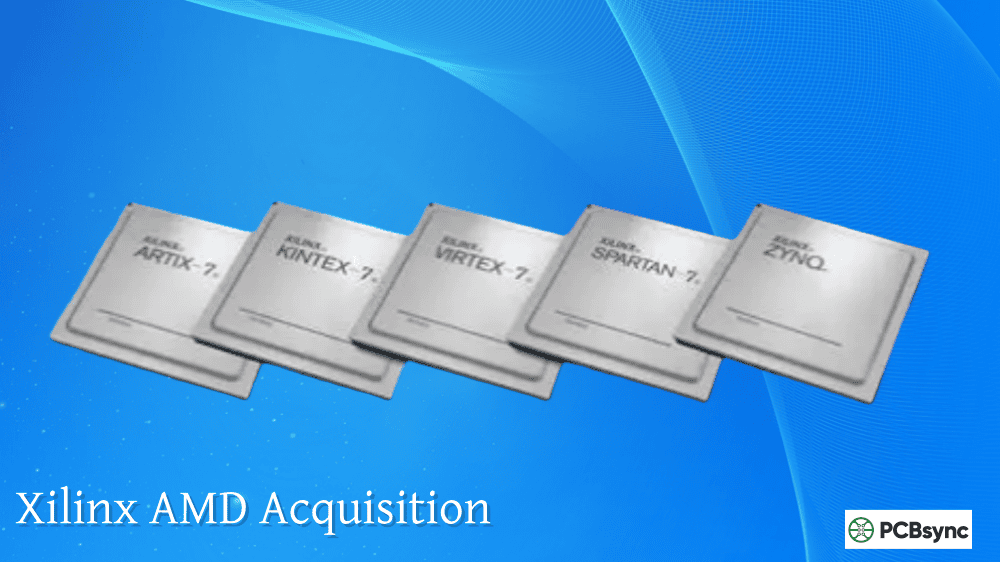
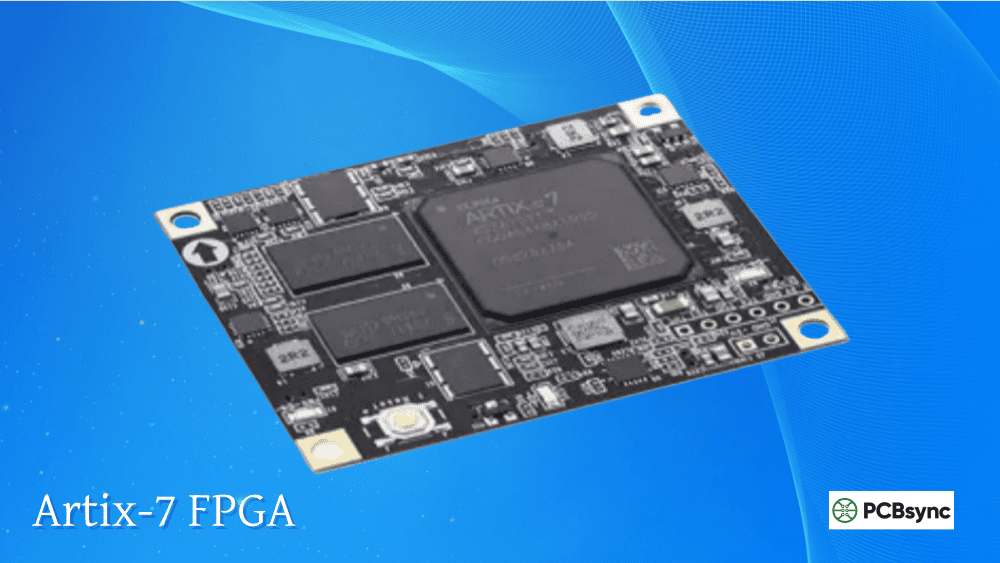
What I particularly appreciate about working with the Xilinx Spartan 3E FPGA board is the ecosystem. Yes, the chip is technically legacy at this point (Xilinx now recommends the Artix-7 or Spartan-7 for new designs), but that legacy status means massive community support, countless tutorials, and well-documented quirks. When you hit a wall at 2 AM debugging your VHDL code, you’ll find forum posts from 2008 that solve your exact problem.
XC3S500E Core Specifications
Feature
XC3S500E Specification
System Gates
500,000 equivalent gates
Logic Cells
10,476
CLB Slices
4,656
Distributed RAM (bits)
73Kb
Block RAM (bits)
360Kb
Dedicated Multipliers
20 (18×18)
DCMs
4
Maximum User I/O
232
Maximum Differential Pairs
92
Process Technology
90nm
Core Voltage
1.2V
The XC3S500E uses 90nm CMOS process technology, which was cutting-edge when it launched. The chip runs at a 1.2V core voltage with I/O banks supporting multiple voltage standards from 1.2V up to 3.3V. Those four Digital Clock Managers (DCMs) become incredibly useful once you start working with clock manipulation for more advanced projects.
Spartan-3E Starter Kit Board: What’s On Board
If you’re working with the official Xilinx Spartan-3E Starter Kit (or one of the many compatible third-party boards), you’ve got a substantial amount of peripheral hardware to experiment with:
For PCB designers transitioning to FPGA work, notice how the board integrates voltage regulation for the different I/O banks. The Spartan-3E requires 1.2V for VCCINT (core), 2.5V for VCCAUX (auxiliary), and the I/O banks can run at various voltages. The Starter Kit handles all this with on-board regulators, which is something you’ll need to consider if you ever design your own Spartan-3E carrier board.
Setting Up Your Development Environment
Here’s where things get slightly complicated. The Xilinx Spartan 3E FPGA isn’t supported by the modern Vivado toolchain. You’ll need Xilinx ISE 14.7, which is still available as a free download from AMD (who acquired Xilinx).
ISE 14.7 Installation Steps
Create an AMD/Xilinx account at the downloads page
Download ISE 14.7 – For Windows 10/11, there’s a dedicated version (roughly 15GB download)
Install as ISE WebPACK – This is the free license tier that supports Spartan-3E
Generate a WebPACK license through the Xilinx License Configuration Manager
Windows 10/11 fix: Navigate to \Xilinx\14.7\ISE_DS\ISE\lib\nt64\, rename libPortability.dll to libPortability.dll.orig, then copy libPortabilityNOSH.dll to the same folder and rename it to libPortability.dll. Repeat this in the \common\lib\nt64\ directory.
That last step addresses a SmartHeap memory allocator issue that causes ISE to crash on modern Windows versions. It’s an annoying quirk but takes about 30 seconds once you know about it.
Creating Your First ISE Project
When creating a new project, you’ll need to specify the exact device:
Setting
Value
Device Family
Spartan-3E
Device
XC3S500E
Package
FG320 (check your specific board)
Speed Grade
-4 or -5
HDL
VHDL or Verilog (your choice)
The package designation matters because it determines your pin mappings. FG320 is common for starter kit boards, but some third-party boards use PQ208 or other packages.
Each stage can throw errors, and understanding where things go wrong helps tremendously:
Synthesis errors: Usually HDL syntax or logic problems
Translation errors: Often UCF constraint issues or missing connections
Map errors: Resource conflicts or impossible routing requirements
PAR warnings: Timing constraints not met (sometimes acceptable for learning)
Bitgen errors: Configuration issues
The User Constraints File (UCF) deserves special attention. This file tells the tools which FPGA pins connect to which signals in your design. Without proper UCF constraints, your synthesized design won’t know where the LEDs, switches, or clock actually connect.
Sample UCF Constraints for Common Peripherals
# 50MHz Clock
NET “clk” LOC = “C9” | IOSTANDARD = LVCMOS33;
NET “clk” PERIOD = 20.0ns HIGH 50%;
# LEDs
NET “LED<0>” LOC = “F12” | IOSTANDARD = LVTTL | SLEW = SLOW | DRIVE = 8;
NET “LED<1>” LOC = “E12” | IOSTANDARD = LVTTL | SLEW = SLOW | DRIVE = 8;
NET “LED<2>” LOC = “E11” | IOSTANDARD = LVTTL | SLEW = SLOW | DRIVE = 8;
NET “LED<3>” LOC = “F11” | IOSTANDARD = LVTTL | SLEW = SLOW | DRIVE = 8;
# Slide Switches
NET “SW<0>” LOC = “L13” | IOSTANDARD = LVTTL | PULLUP;
NET “SW<1>” LOC = “L14” | IOSTANDARD = LVTTL | PULLUP;
NET “SW<2>” LOC = “H18” | IOSTANDARD = LVTTL | PULLUP;
NET “SW<3>” LOC = “N17” | IOSTANDARD = LVTTL | PULLUP;
# Push Buttons
NET “BTN_NORTH” LOC = “V4” | IOSTANDARD = LVTTL | PULLDOWN;
NET “BTN_SOUTH” LOC = “K17” | IOSTANDARD = LVTTL | PULLDOWN;
NET “BTN_EAST” LOC = “H13” | IOSTANDARD = LVTTL | PULLDOWN;
NET “BTN_WEST” LOC = “D18” | IOSTANDARD = LVTTL | PULLDOWN;
Beginner Project Ideas for Xilinx Spartan 3E FPGA Board
Project 1: LED Blinker (Your First FPGA Program)
Every FPGA journey starts with blinking an LED. It’s the “Hello World” of hardware design. The key concept here is clock division: your 50MHz clock ticks 50 million times per second, far too fast for visible LED blinking.
Verilog Implementation:
module blink(
input clk,
output reg led
);
reg [25:0] counter = 0;
always @(posedge clk) begin
counter <= counter + 1;
if(counter == 26’d50000000) begin
counter <= 0;
led <= ~led;
end
end
endmodule
This divides the 50MHz clock down to a 1-second toggle rate. Simple, but it teaches you the fundamental concept that everything in FPGA design runs in parallel, triggered by clock edges.
Project 2: Switch-to-LED Mapping
Before adding complexity, understand combinational logic by mapping slide switches directly to LEDs:
module switch_led(
input [3:0] sw,
output [3:0] led
);
assign led = sw;
endmodule
Then try adding logic: assign led = ~sw; for inverted output, or assign led[0] = sw[0] & sw[1]; for AND gate behavior.
Project 3: Binary Counter with Seven-Segment Display
If your board has seven-segment displays (or you add an external one through the expansion headers), build a binary counter that displays hexadecimal values. This teaches you:
Clock division
State machines
Display multiplexing
Seven-segment decoding
Project 4: UART Serial Communication
The Spartan-3E Starter Kit has two RS-232 ports, making serial communication projects straightforward. A basic UART transmitter at 9600 baud requires:
A baud rate generator (50MHz / 5208 ≈ 9600Hz × 16 for oversampling)
A shift register for parallel-to-serial conversion
Start/stop bit insertion
This project opens the door to communicating with your PC, which is invaluable for debugging more complex designs.
Project 5: VGA Display Controller
The VGA port on the Starter Kit lets you generate video output. Start with displaying colored bars, then progress to:
Static images stored in block RAM
Text display using character ROMs
Simple games like Pong (yes, you can implement Pong entirely in hardware)
VGA timing requires precise horizontal and vertical sync signal generation. The 50MHz clock works well for 640×480 @ 60Hz with a 25.175MHz pixel clock (achievable through a DCM).
Project 6: PWM Motor/LED Controller
Pulse Width Modulation is everywhere in embedded systems. The XC3S500E can generate multiple PWM channels simultaneously, controlling LED brightness or motor speed:
module pwm_generator(
input clk,
input [7:0] duty_cycle,
output pwm_out
);
reg [7:0] counter = 0;
always @(posedge clk)
counter <= counter + 1;
assign pwm_out = (counter < duty_cycle);
endmodule
Use the rotary encoder on the Starter Kit to adjust duty cycle in real-time.
Project 7: LCD Character Display
The 2×16 LCD on the Starter Kit uses a standard HD44780-compatible interface. Writing an LCD controller teaches you:
Timing-critical state machines
Interface protocols (4-bit vs 8-bit modes)
Initialization sequences
Several open-source Verilog and VHDL LCD controllers exist on GitHub specifically for the Spartan-3E.
Project 8: SPI Interface to DAC/ADC
The Starter Kit includes an SPI-based DAC (LTC2624) and ADC with programmable gain. Implementing SPI in hardware is an excellent intermediate project that combines shift registers with state machine control.
Advanced Project Ideas
Once you’ve mastered the basics, the Xilinx Spartan 3E FPGA board supports more ambitious projects:
Project
Key Learning
Difficulty
Digital Oscilloscope
ADC interfacing, VGA display, triggering
High
RISC-V Soft Processor
Computer architecture, instruction decoding
Very High
Ethernet Packet Generator
MAC layer, MII interface
High
Audio Synthesizer
DAC output, waveform generation
Medium-High
Logic Analyzer
High-speed capture, serial protocol decode
Medium-High
DDR SDRAM Controller
Memory interfaces, timing-critical design
Very High
The PicoBlaze 8-bit soft processor is also worth exploring. It’s a tiny microcontroller that fits inside the FPGA, useful for handling complex sequential tasks that would be tedious in pure HDL.
Common Beginner Mistakes and How to Avoid Them
After helping dozens of students and hobbyists with their first FPGA projects, I see the same issues repeatedly:
1. Forgetting the UCF File
Your design synthesizes successfully, but nothing works on the board. Always verify your pin constraints match your board’s actual connections.
2. Clock Domain Confusion
Signals crossing between different clock domains without proper synchronization cause intermittent, maddening bugs. For beginners, stick to a single clock domain.
3. Treating VHDL/Verilog Like Software
HDL describes hardware, not sequential instructions. Every always block runs simultaneously. This paradigm shift takes time to internalize.
4. Ignoring Timing Warnings
A design that works at room temperature might fail after the FPGA warms up if timing isn’t met. Take timing constraints seriously.
5. Not Using Simulation
ISim (included with ISE) or ModelSim can save hours of frustration. Simulate before programming the hardware.
Useful Resources and Downloads
Resource
URL/Location
Description
ISE 14.7 Download
AMD/Xilinx Archive Downloads
Development software
Spartan-3E Datasheet
DS312
Complete chip specifications
Starter Kit User Guide
UG230
Board schematics, UCF examples
Spartan-3E User Guide
UG331
Detailed architecture information
PicoBlaze Reference
KCPSM3 documentation
Soft processor guide
Digilent Reference
digilent.com/reference
Third-party board docs
Many universities publish their FPGA course materials online. Search for “Spartan-3E lab” to find structured tutorials with working code examples.
Frequently Asked Questions
Can I use Vivado with the Xilinx Spartan 3E FPGA?
No. Vivado doesn’t support Spartan-3 or Spartan-3E devices. You must use ISE 14.7, which remains available for free download from AMD’s website. The WebPACK license covers all Spartan-3E devices without cost.
Is the XC3S500E still worth learning in 2024?
Absolutely. The fundamental concepts of FPGA design (HDL coding, timing analysis, resource management, constraint files) transfer directly to modern devices. Many companies still use Spartan-3E in production products, and the extensive documentation makes it ideal for learning.
Why won’t my bitstream load onto the FPGA?
Common causes include incorrect JTAG cable connections, wrong device selection in iMPACT, or damaged cables. Verify your JTAG connection, ensure the board is powered, and check that you’re targeting the correct device in the programming chain.
What’s the difference between VHDL and Verilog for Spartan-3E?
The XC3S500E doesn’t care which language you use; both synthesize to the same hardware. VHDL is more verbose but catches more errors at compile time. Verilog is more concise and resembles C syntax. Choose based on what your school or employer uses, or personal preference.
How do I debug designs without an oscilloscope?
Use ChipScope Pro (included with ISE) to embed logic analyzers inside your FPGA. You can monitor internal signals through the JTAG connection and view waveforms on your PC. The Starter Kit also supports the ChipScope SoftTouch interface for non-intrusive debugging.
Moving Beyond Spartan-3E
After mastering the Xilinx Spartan 3E FPGA, you’ll find the transition to modern devices straightforward. The Spartan-7 and Artix-7 families offer more resources and faster speeds while using similar design principles. Vivado, though different from ISE, follows the same fundamental workflow.
The skills you develop on the XC3S500E, whether understanding timing closure, writing synthesizable HDL, or debugging hardware, will serve you throughout your FPGA career. The Spartan-3E remains a capable learning platform precisely because it forces you to understand the fundamentals without overwhelming you with complexity.
Now stop reading and go blink that LED. Your FPGA journey starts with one clock cycle.
Inquire: Call 0086-755-23203480, or reach out via the form below/your sales contact to discuss our design, manufacturing, and assembly capabilities.
Quote: Email your PCB files to Sales@pcbsync.com (Preferred for large files) or submit online. We will contact you promptly. Please ensure your email is correct.
Notes: For PCB fabrication, we require PCB design file in Gerber RS-274X format (most preferred), *.PCB/DDB (Protel, inform your program version) format or *.BRD (Eagle) format. For PCB assembly, we require PCB design file in above mentioned format, drilling file and BOM. Click to download BOM template To avoid file missing, please include all files into one folder and compress it into .zip or .rar format.