Inquire: Call 0086-755-23203480, or reach out via the form below/your sales contact to discuss our design, manufacturing, and assembly capabilities.
Quote: Email your PCB files to Sales@pcbsync.com (Preferred for large files) or submit online. We will contact you promptly. Please ensure your email is correct.
Notes: For PCB fabrication, we require PCB design file in Gerber RS-274X format (most preferred), *.PCB/DDB (Protel, inform your program version) format or *.BRD (Eagle) format. For PCB assembly, we require PCB design file in above mentioned format, drilling file and BOM. Click to download BOM template To avoid file missing, please include all files into one folder and compress it into .zip or .rar format.
Zybo Z7-10 vs Z7-20: Digilent Zynq Board Comparison
Choosing between the Zybo Z7-10 and Zybo Z7-20 isn’t as straightforward as picking the cheaper option and moving on. Having worked with both variants across multiple projects, I’ve learned that the $100 price difference hides some critical distinctions that can make or break your design halfway through development.
The Digilent Zybo Z7 line represents the second generation of Digilent’s popular Zybo board series, built around the Xilinx Zynq-7000 All Programmable SoC architecture. Both boards share the same PCB layout and most peripherals, but the silicon underneath differs substantially. Understanding exactly where those differences matter will save you from that frustrating moment when your design runs out of FPGA resources at 95% completion.
Before diving into the comparison, let’s establish what makes the Zybo board family special. The Zynq-7000 architecture combines a dual-core ARM Cortex-A9 processor (the Processing System, or PS) with 7-series FPGA fabric (the Programmable Logic, or PL) on a single chip. This integration enables designs where software running on ARM can seamlessly interact with custom hardware implemented in the FPGA.
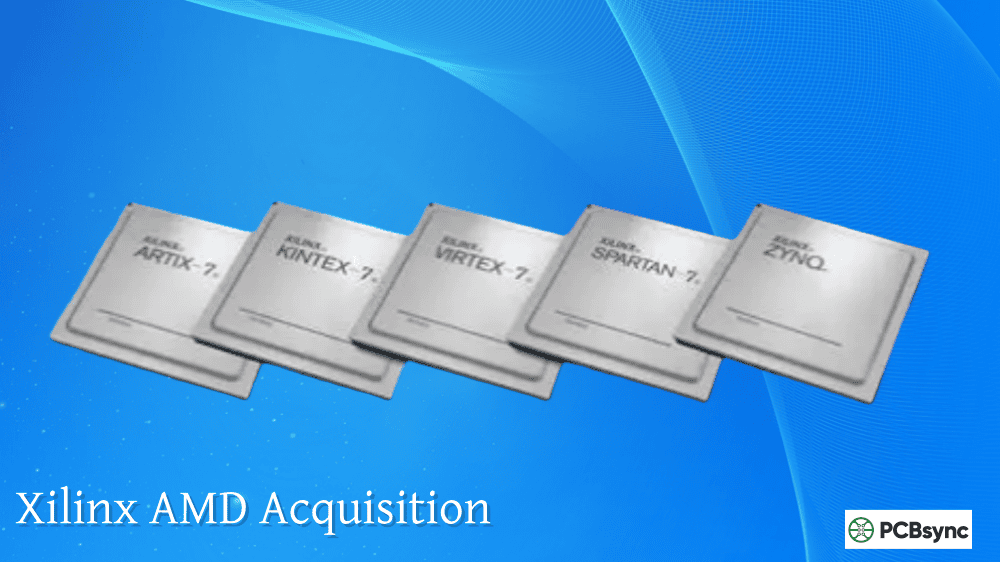
The Xilinx Zybo boards (now marketed under AMD following the acquisition) target embedded vision, audio processing, motor control, and general SoC prototyping applications. The platform supports Linux, FreeRTOS, bare-metal development, and everything in between.
Why Two Variants Exist
Digilent offers two variants to address different budget and capability requirements. The Zybo Z7010 uses the smaller Zynq XC7Z010, while the Zybo Z7020 uses the larger XC7Z020. Importantly, both variants share identical ARM processors—the difference lies entirely in the FPGA resources available for custom logic.
This means processor-heavy applications run identically on both boards. The distinction only matters when your design requires significant programmable logic resources.
Zybo Z7 7020 vs Zybo Z7010: Core Specifications Compared
Let’s examine the specifications that matter most for design decisions. The following table highlights every difference between the two variants.
FPGA Resource Comparison
Resource
Zybo Z7-10
Zybo Z7-20
Ratio
Logic Slices
4,400
13,300
3x
6-Input LUTs
17,600
53,200
3x
Flip-Flops
35,200
106,400
3x
Block RAM
270 KB
630 KB
2.3x
DSP Slices
80
220
2.75x
PLLs
2
4
2x
MMCMs
2
4
2x
The Zybo Z7 7020 provides roughly three times the logic resources of the Z7-10. For video processing pipelines, DSP algorithms, or complex state machines, this difference proves substantial.
Shared Specifications (Both Variants)
Feature
Specification
Processor
Dual-core ARM Cortex-A9 @ 667 MHz
DDR3L Memory
1 GB (32-bit bus @ 533 MHz)
Flash Storage
16 MB Quad-SPI
Ethernet
Gigabit (Realtek RTL8211F PHY)
USB
OTG 2.0 with Host/Device support
HDMI Output
Yes, with CEC
HDMI Input
Yes (CEC on Z7-20 only)
Audio Codec
SSM2603 with headphone, line-in, microphone
Pcam Connector
MIPI CSI-2 compatible
SD Card Slot
microSD
Clock
125 MHz external
Board-Level Differences
Feature
Zybo Z7-10
Zybo Z7-20
Pmod Connectors
5
6
RGB LEDs
1
2
HDMI RX CEC
Not connected
Connected
Heat Sink
Not included
Included
Fan Connector
No
Yes
Price (Digilent)
$299
$399
The Z7-20 includes Pmod JB, which the Z7-10 lacks due to insufficient PL I/O pins on the smaller Zynq device. If your design requires six Pmod ports, the Z7-20 becomes mandatory regardless of logic requirements.
Both variants feature identical Processing System specifications. The dual ARM Cortex-A9 cores run at 667 MHz with NEON SIMD extensions for accelerated signal processing in software. Each core includes 32 KB L1 instruction cache and 32 KB L1 data cache, sharing a 512 KB L2 cache.
The PS provides hardened peripherals including USB 2.0 OTG, Gigabit Ethernet MAC, two SD/SDIO controllers, two SPI controllers, two I2C controllers, two UARTs, two CAN controllers, and GPIO. These peripherals remain available regardless of which variant you choose.
The DDR3L memory controller supports the full 1 GB RAM on both boards with identical bandwidth. Memory-bound applications perform identically across variants.
Video Processing Capabilities
The Zybo Z7020 pulls ahead significantly for video applications. The HDMI input port includes CEC (Consumer Electronics Control) connectivity only on the Z7-20 variant. While CEC isn’t essential for basic video capture, it enables advanced integration with HDMI source devices.
More critically, video processing pipelines consume substantial FPGA resources. A basic 1080p video passthrough with minimal processing fits comfortably on the Z7-10. However, adding color space conversion, scaling, overlay graphics, or edge detection quickly exhausts available logic.
From my experience implementing embedded vision systems, the Zybo Z7010 works adequately for simple video demonstrations and learning projects. Anything approaching production video processing demands the Z7-20’s resources. Digilent’s reVISION platform specifically recommends the Z7-20 because the Z7-10 lacks sufficient resources to implement machine learning accelerators alongside video pipelines.
Audio Processing Features
Both boards include the same SSM2603 audio codec with stereo headphone output, stereo line input, and microphone input. The codec connects to the PS via I2S interface with I2C control. Sample rates up to 96 kHz at 24-bit resolution are supported.
Audio processing typically requires fewer FPGA resources than video. Multi-channel audio mixing, filtering, and effects processing fit comfortably on the Z7-10. Only designs implementing numerous parallel audio channels or complex algorithmic effects might need the Z7-20’s additional DSP slices.
Expansion and Connectivity
The Pmod connector situation deserves careful consideration. The Zybo Z7-20 provides six Pmod ports (JA, JB, JC, JD, JE, JF), while the Zybo Z7-10 has five (missing JB).
Pmod ports JC and JD connect to high-speed PL pins supporting differential signaling. Ports JA and JE connect to standard single-ended PL I/O. Port JF connects directly to PS MIO pins, enabling processor-controlled peripherals without consuming PL resources.
The missing Pmod JB on the Z7-10 occasionally forces design compromises. If you’ve planned a project assuming six expansion ports, discovering this limitation late causes headaches.
When to Choose the Zybo Z7-10
The Z7-10 makes sense for several scenarios where its lower price point provides real value without capability compromises.
Educational and Learning Projects
If you’re learning FPGA development, the Z7-10 provides more than enough resources for typical coursework. LED blinking, UART communication, simple state machines, basic AXI peripherals, and introductory video demonstrations all fit comfortably. The $100 savings can fund additional Pmod accessories or reference materials.
Processor-Centric Applications
Applications where most computation happens on the ARM cores benefit minimally from larger PL resources. Running Linux with software-defined networking, web servers, or database applications? The Z7-10 handles these identically to the Z7-20. You might implement a few custom peripherals in the PL, but they won’t approach resource limits.
Simple Control Systems
Motor controllers, sensor interfaces, and basic automation systems rarely require extensive FPGA fabric. PWM generators, encoder interfaces, and ADC controllers consume minimal logic. The Z7-10’s 80 DSP slices handle PID loops and basic signal conditioning without strain.
Budget-Constrained Development
When purchasing multiple boards for a classroom, development team, or personal lab inventory, the savings add up. Five Z7-10 boards cost roughly the same as four Z7-20 boards. For applications that don’t require the extra resources, this math favors the smaller variant.
When to Choose the Zybo Z7-20
The Z7-20 becomes necessary or strongly preferable in several situations.
Video Processing and Embedded Vision
Any serious video processing work benefits from the Z7-20’s resources. Video pipelines require frame buffers, color converters, scalers, and processing elements that consume block RAM and logic rapidly. The reVISION platform and Vitis AI accelerators specifically target the larger device.
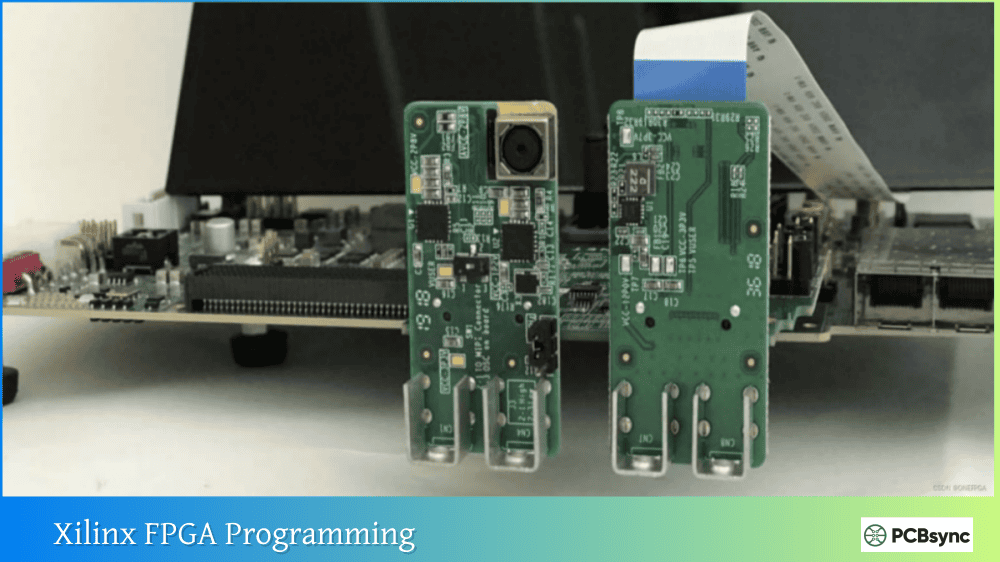
If you’re planning to use the Pcam 5C camera module for machine learning inference, start with the Z7-20. The Z7-10 technically supports camera input but lacks resources for meaningful processing beyond basic display.
Complex Digital Signal Processing
Designs requiring numerous parallel filters, FFT engines, or correlation functions benefit from the additional DSP slices. The Z7-20’s 220 DSP slices versus 80 on the Z7-10 represents nearly three times the dedicated multiplication capacity.
Software-defined radio applications, beamforming systems, and multi-channel audio processing often require this level of DSP capability.
Designs Requiring Six Pmod Ports
If your system architecture depends on six Pmod expansion ports, the Z7-10 simply won’t work. No amount of clever design can add the missing Pmod JB. Plan your I/O requirements carefully before purchasing.
Professional Prototyping
When developing products intended for eventual production on Zynq-7020 silicon, prototyping on the matching device prevents surprises during deployment. Resource utilization estimates translate directly to production boards.
Future-Proofing
If you’re uncertain about eventual requirements, the Z7-20 provides headroom for feature expansion. Discovering that your project needs additional logic after purchasing a Z7-10 means buying another board.
Both variants work identically with AMD’s Vivado Design Suite. The free WebPACK license fully supports both the XC7Z010 and XC7Z020 devices without limitations on design size or features.
Vivado Support
Vivado handles synthesis, implementation, and bitstream generation for hardware designs. The Integrated Logic Analyzer (ILA) and High-Level Synthesis (HLS) tools work with both variants. Board definition files from Digilent enable quick project creation with pre-configured pin assignments.
Vitis Platform
The Vitis Unified Software Platform handles ARM software development, debugging, and application deployment. Bare-metal, FreeRTOS, and Linux development all work identically across variants.
PetaLinux
AMD’s PetaLinux tools build custom Linux distributions for Zynq devices. Both variants support identical kernel configurations and root filesystems. The distinction between devices matters only for PL-side drivers and device tree configurations.
Useful Resources for Zybo Z7 Development
These resources will accelerate your development regardless of which variant you choose.
If you’re migrating from the original Zybo (not Z7), note that pin assignments changed significantly. Bitstreams created for the original Zybo will not work on Zybo Z7 variants. Digilent provides a migration guide covering the necessary changes.
Migrating between Z7-10 and Z7-20 is straightforward for designs that fit within Z7-10 resources. The board files handle pin differences automatically. However, designs utilizing Z7-20-specific features (Pmod JB, HDMI RX CEC, second RGB LED) require modification for Z7-10 deployment.
Real-World Performance Expectations
In practice, both boards perform admirably within their intended scope. The ARM processors handle embedded Linux with responsive performance. Boot times from SD card run approximately 15-20 seconds to a Linux command prompt.
FPGA programming times differ slightly due to bitstream size. The Z7-20 bitstream takes longer to load, though the difference measures in seconds rather than minutes.
Thermal behavior also differs. The Z7-20 includes a heat sink because the larger FPGA generates more heat under load. The Z7-10 typically runs cool enough without additional cooling for most applications. For designs pushing the Z7-20 hard, the optional fan connector enables active cooling.
Frequently Asked Questions
Can I upgrade from a Zybo Z7-10 to Z7-20 later?
Not on the same board—the Zynq device is soldered permanently. Upgrading means purchasing a second board. However, software and most hardware designs transfer with minimal changes. If budget is tight initially but future requirements are uncertain, starting with the Z7-10 and migrating later remains viable.
Is the Z7-20 worth the extra $100?
For video processing, embedded vision, or complex DSP applications, absolutely. The resource difference between devices justifies the price premium for designs that need it. For learning, simple control systems, or processor-centric applications, the Z7-10 delivers identical capability at lower cost. Evaluate your specific requirements before deciding.
Do both boards support the same Vivado versions?
Yes. Both variants work with identical Vivado versions and receive the same level of support. The free WebPACK license covers both devices fully. Board definition files are provided for both variants.
Can I run Linux on the Zybo Z7-10?
Absolutely. Linux runs on the ARM processors, which are identical between variants. The PL size doesn’t affect Linux kernel operation. You might have fewer custom PL peripherals available in Linux device trees due to resource constraints, but the operating system itself runs identically.
Which variant is better for beginners?
The Z7-10 is slightly better for absolute beginners due to lower cost and reduced complexity. The smaller device forces cleaner, more efficient designs—a useful discipline when learning. However, if your learning goals include video processing or you want maximum flexibility, starting with the Z7-20 avoids potential frustration with resource limitations.
Making Your Decision
The choice between Zybo Z7-10 and Zybo Z7-20 ultimately depends on your project requirements and budget constraints. Here’s a quick decision framework:
Choose the Z7-10 if:
Your project is primarily software-based (Linux applications, bare-metal ARM code)
You’re learning FPGA development with basic projects
Budget optimization matters more than resource headroom
You need simple hardware peripherals without complex processing
Choose the Z7-20 if:
Video processing or embedded vision is your target application
Your design requires substantial DSP resources
You need all six Pmod expansion ports
Future project requirements are uncertain
You’re prototyping for production on Zynq-7020 devices
Both boards deliver excellent value for Zynq-7000 development. The Digilent Zybo Z7 family provides a capable, well-documented platform for embedded systems development regardless of which variant you choose. The comprehensive peripheral set, quality construction, and strong community support make either board a solid foundation for your FPGA and SoC learning journey.
The most important advice: accurately assess your resource requirements before purchasing. A few hours spent estimating logic utilization prevents disappointment when your design outgrows its host board mid-project.
Inquire: Call 0086-755-23203480, or reach out via the form below/your sales contact to discuss our design, manufacturing, and assembly capabilities.
Quote: Email your PCB files to Sales@pcbsync.com (Preferred for large files) or submit online. We will contact you promptly. Please ensure your email is correct.
Notes: For PCB fabrication, we require PCB design file in Gerber RS-274X format (most preferred), *.PCB/DDB (Protel, inform your program version) format or *.BRD (Eagle) format. For PCB assembly, we require PCB design file in above mentioned format, drilling file and BOM. Click to download BOM template To avoid file missing, please include all files into one folder and compress it into .zip or .rar format.