Inquire: Call 0086-755-23203480, or reach out via the form below/your sales contact to discuss our design, manufacturing, and assembly capabilities.
Quote: Email your PCB files to Sales@pcbsync.com (Preferred for large files) or submit online. We will contact you promptly. Please ensure your email is correct.
Notes: For PCB fabrication, we require PCB design file in Gerber RS-274X format (most preferred), *.PCB/DDB (Protel, inform your program version) format or *.BRD (Eagle) format. For PCB assembly, we require PCB design file in above mentioned format, drilling file and BOM. Click to download BOM template To avoid file missing, please include all files into one folder and compress it into .zip or .rar format.
Versal AI Core & AI Edge: Hardware AI Acceleration Explained
The Versal AI Core and AI Edge series represent AMD’s most significant advancement in hardware AI acceleration. At the heart of these adaptive SoCs lies the AI Engine—a revolutionary vector processor array that delivers up to 133 INT8 TOPS on the flagship Xilinx VC1902 device. Unlike GPU-based solutions that struggle with memory bandwidth limitations, the AI Engine architecture provides near-zero dark silicon, achieving up to 90% of theoretical peak performance in real-world workloads.
Having deployed the Xilinx VCK5000 accelerator card in data center inference applications, I can confirm the performance claims hold up in production environments. The combination of ASIC-class compute efficiency with FPGA-like programmability creates a unique value proposition for AI workloads from edge to cloud.
The AI Engine is not a traditional FPGA accelerator or a GPU compute unit—it’s a purpose-built array of VLIW SIMD vector processors designed specifically for machine learning inference and digital signal processing.
AI Engine Tile Components
Each AI Engine tile contains multiple processing elements working in concert:
Component
Function
Specifications
Vector Processor
SIMD computation
512-bit datapath, up to 128 INT8 MACs/cycle
Scalar Processor
Control logic
32-bit RISC processor
Local Memory
Data storage
32 KB per tile (AIE) / 64 KB per tile (AIE-ML)
DMA Engines
Data movement
Dedicated stream channels
Interconnect
Tile communication
AXI4-Stream switches
The Xilinx VC1902 device contains 400 AI Engine tiles arranged in a 50×8 array, providing massive parallel compute capacity. Each tile operates independently, enabling true distributed computing across the array.
AIE vs AIE-ML Architecture Comparison
AMD offers two AI Engine variants optimized for different workloads:
Feature
AIE (AI Core Series)
AIE-ML (AI Edge Series)
Local Memory
32 KB
64 KB
INT8 MACs/Cycle
128
256
FP32 Support
Yes
No
BFloat16 Support
No
Yes
Memory Tiles
No
Yes (512 KB each)
Cascade Bus Width
384-bit
512-bit
Primary Target
DSP + ML inference
Power-efficient ML
The AIE architecture in the Xilinx VC1902 excels at signal processing applications requiring floating-point precision, while AIE-ML is optimized for quantized neural network inference where INT8 precision is sufficient.
Xilinx VC1902: The Flagship AI Core Device
The Xilinx VC1902 represents the most capable device in the Versal AI Core series, combining 400 AI Engine tiles with substantial programmable logic and processing system resources.
Xilinx VC1902 Device Specifications
Feature
Specification
AI Engine Tiles
400 (50×8 array)
Peak INT8 Performance
133 TOPS
Peak INT4 Performance
Up to 405 TOPS
System Logic Cells
1,968K
DSP58 Engines
1,968
Block RAM
34 Mb
UltraRAM
130 Mb
On-Die Memory
855 Mb total
Transistor Count
37 billion
Process Technology
TSMC 7nm FinFET
Xilinx VC1902 Performance Characteristics
The Xilinx VC1902 achieves exceptional compute efficiency through several architectural innovations:
Performance Metric
Value
AI Engine to PL Bandwidth
~1.0 TB/s aggregate
PL to AI Engine Bandwidth
~1.3 TB/s aggregate
NoC Aggregate Bandwidth
Multi-terabit
AI Engine Clock Speed
Up to 1.25 GHz
Power Efficiency
100× vs. server CPUs
The aggregate bandwidth between AI Engines and programmable logic enables data-intensive applications without the memory bandwidth bottlenecks that plague traditional accelerators.
Xilinx VC1902 Application Domains
The Xilinx VC1902 targets applications requiring both high AI compute and adaptable hardware:
Xilinx VCK5000 Development Card: Data Center AI Acceleration
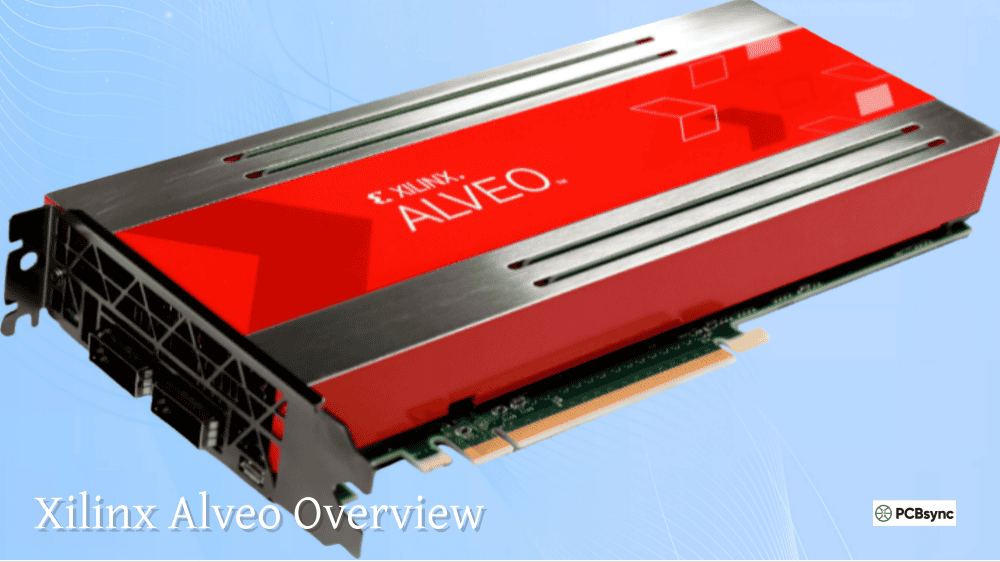
The Xilinx VCK5000 brings the power of the Xilinx VC1902 to data center environments through a PCIe-based accelerator card format.
Xilinx VCK5000 Hardware Specifications
Feature
Specification
Device
XCVC1902 (400 AI Engines)
AI Performance
Up to 145 INT8 TOPS
DSP Engines
1,968
On-Card Memory
16 GB DDR4
Host Interface
PCIe Gen4 x8
Power Consumption
Up to 225W
Form Factor
Full-height, half-length
Cooling
Active (requires airflow)
Price
~$2,745 USD
Xilinx VCK5000 Performance Benchmarks
The Xilinx VCK5000 has demonstrated impressive results in industry-standard benchmarks:
Benchmark
VCK5000 Performance
Notes
ResNet50 (MLPerf)
6,257 FPS offline
MLPerf Inference v1.0
ResNet50 (Server)
5,921 FPS
Server scenario
Compute Efficiency
~90% of peak TOPS
Near-zero dark silicon
vs. Nvidia T4
9% higher throughput
Same benchmark conditions
Power Efficiency
2× better TCO vs. GPUs
AMD claims
Xilinx VCK5000 vs GPU Accelerators
AMD positions the Xilinx VCK5000 directly against GPU-based inference accelerators:
Metric
Xilinx VCK5000
Nvidia T4
Nvidia A10
Peak TOPS (INT8)
145
130
250
Achieved TOPS %
~90%
~34-42%
~34-42%
Effective TOPS
~130
~44-54
~85-105
Power (TDP)
75-225W
70W
150W
Form Factor
FHHL
Low-profile
Full-height
Memory
16 GB DDR4
16 GB GDDR6
24 GB GDDR6
The “dark silicon” advantage refers to the Xilinx VCK5000‘s ability to keep processing elements active rather than waiting for memory transfers—a fundamental efficiency advantage of the AI Engine architecture.
Xilinx VCK5000 Software Ecosystem
The Xilinx VCK5000 integrates with multiple software frameworks:
Software
Function
Vitis AI
Model compilation, quantization, optimization
Vitis Unified Platform
System development, kernel creation
XRT (Xilinx Runtime)
Driver, APIs, device management
Mipsology Zebra
Drop-in GPU replacement
Aupera VMSS
Video AI pipeline builder
Vitis AI enables data scientists to deploy TensorFlow, PyTorch, and Caffe models without FPGA expertise. The DPU (Deep Learning Processing Unit) IP handles neural network execution on the AI Engine array.
AI Edge Series: Power-Efficient Edge Inference
The Versal AI Edge series targets power-constrained edge applications requiring real-time AI inference with functional safety capabilities.
AI Edge Series Device Comparison
Feature
VE2002
VE2302
VE2602
VE2802
AIE-ML Tiles
8
34
88
152
Logic Cells
117K
329K
593K
899K
DSP Engines
192
680
1,312
1,968
BRAM
5 Mb
14 Mb
27 Mb
34 Mb
UltraRAM
15 Mb
44 Mb
87 Mb
130 Mb
GTYP Transceivers
0
8
20
32
AI Edge vs AI Core: Choosing the Right Series
Criterion
AI Core Series
AI Edge Series
Primary Focus
Maximum performance
Power efficiency
AI Engine Type
AIE
AIE-ML
FP32 Support
Yes
No
BFloat16 Support
No
Yes
INT8 Efficiency
High
Very high
Video Codec
No
Yes (VDE)
Safety Certification
Limited
ISO 26262, IEC 61508
Target Markets
Cloud, 5G, data center
Automotive, industrial, edge
VEK280 Evaluation Kit
The VEK280 enables development on the AI Edge series VE2802 device:
Feature
Specification
Device
XCVE2802
AIE-ML Tiles
152
Memory
12 GB LPDDR4 (192-bit)
PCIe
Gen4 x16
Video I/O
HDMI 2.1 input/output
Networking
SFP28, 40G Ethernet MAC
Storage
MicroSD
Price
~$6,995 USD
The AI Edge series delivers 4× AI performance per watt compared to leading GPUs, making it ideal for thermally-constrained deployments.
Deep Learning Processing Unit (DPU) Architecture
The DPU is AMD’s neural network accelerator IP that runs on the AI Engine array, providing a high-level abstraction for deploying trained models.
DPU Variants by Platform
DPU Type
Target Platform
Primary Compute
DPUCZDX8G
Zynq UltraScale+ MPSoC
DSP slices in PL
DPUCVDX8H
Versal AI Core (VCK5000)
AI Engines
DPUCV2DX8G
Versal AI Edge (VEK280)
AIE-ML tiles
DPU Configuration Options
The DPU is highly configurable to balance performance and resource usage:
Parameter
Options
Impact
AI Engine Count
64-400
Throughput scaling
Batch Size
1-16
Latency vs throughput
Precision
INT8, INT4
Accuracy vs speed
Memory Interface
DDR4, LPDDR4
Bandwidth
Vitis AI Workflow
Deploying models on the DPU follows a straightforward flow:
Step
Tool
Output
1. Train
TensorFlow/PyTorch
FP32 model
2. Quantize
Vitis AI Quantizer
INT8 model
3. Compile
Vitis AI Compiler
XIR instructions
4. Deploy
VART (Vitis AI Runtime)
Running inference
The quantization step typically reduces model size by 4× while maintaining accuracy within 1% of the original FP32 model.
Practical AI Engine Development
Programming Models
The AI Engine supports multiple development approaches:
Approach
Language
Target Developer
Vitis AI + DPU
Python/C++
Data scientists
AI Engine Kernels
C/C++
Algorithm engineers
Vitis Model Composer
MATLAB/Simulink
DSP engineers
RTL + HLS
Verilog/VHDL/C++
Hardware engineers
Performance Optimization Techniques
Achieving peak performance on the AI Engine requires careful optimization:
Technique
Benefit
Data tiling
Maximize local memory utilization
Ping-pong buffering
Hide data transfer latency
Kernel vectorization
Exploit SIMD parallelism
Graph optimization
Minimize inter-tile communication
Memory placement
Reduce bank conflicts
Research has shown that proper optimization can achieve 70-85% of theoretical peak throughput for common operations like GEMM and convolution.
What is the difference between Xilinx VC1902 and VCK5000?
The Xilinx VC1902 is the Versal AI Core device (the silicon chip), while the Xilinx VCK5000 is a complete PCIe accelerator card that contains the VC1902 device along with 16 GB DDR4 memory, power delivery, and PCIe Gen4 interface. The VCK190 evaluation kit also uses the Xilinx VC1902 but in a board format designed for development rather than data center deployment. For data center AI inference, choose the Xilinx VCK5000; for embedded development and prototyping, choose the VCK190.
How does the Xilinx VCK5000 compare to Nvidia GPUs for AI inference?
The Xilinx VCK5000 achieves approximately 90% utilization of its theoretical 145 INT8 TOPS, compared to 34-42% utilization typical of Nvidia GPUs in real AI workloads. This “near-zero dark silicon” advantage translates to 2× better total cost of ownership (TCO) according to AMD benchmarks. However, GPUs excel at training workloads and have a more mature software ecosystem. The Xilinx VCK5000 is optimized specifically for inference deployment.
Can I run my existing TensorFlow or PyTorch models on Versal?
Yes. Vitis AI provides a complete workflow for deploying models from TensorFlow, PyTorch, and Caffe frameworks. The process involves quantizing your FP32 model to INT8, compiling it for the DPU target, and deploying using Python or C++ APIs. Models from the Vitis AI Model Zoo (ResNet, YOLO, SSD, BERT, and many others) work out-of-the-box. Custom models may require layer compatibility verification—most standard CNN, RNN, and transformer operations are supported.
When should I choose AI Core vs AI Edge series?
Choose the AI Core series (with Xilinx VC1902 and Xilinx VCK5000) for maximum AI performance in cloud, data center, 5G infrastructure, and applications requiring floating-point precision in the AI Engine. Choose the AI Edge series for power-constrained edge deployments, automotive applications requiring ISO 26262 certification, or applications where BFloat16 precision and video decoder integration provide advantages. The AI Edge series delivers better performance per watt but lower absolute performance than AI Core.
What is the learning curve for AI Engine development?
For AI inference using pre-built DPU configurations, the learning curve is minimal—data scientists can deploy models using Python APIs within days. For custom AI Engine kernel development, expect 2-4 weeks to become productive with C/C++ kernel coding. For full system optimization including custom DPU configurations and PL integration, plan for 1-3 months. AMD provides extensive tutorials, documentation, and reference designs to accelerate learning at each level.
Conclusion: Choosing Your AI Acceleration Path
The Versal AI Core and AI Edge series provide fundamentally different AI acceleration approaches compared to GPU-based solutions. The AI Engine architecture in the Xilinx VC1902 eliminates the memory bandwidth bottlenecks that limit GPU efficiency, achieving near-theoretical performance in production workloads.
For data center deployment, the Xilinx VCK5000 offers a compelling alternative to GPU accelerators with proven 2× TCO advantages. For edge applications requiring power efficiency and functional safety, the AI Edge series with AIE-ML tiles delivers optimal performance per watt.
The key is matching your application requirements—performance, power, precision, safety, and deployment environment—to the appropriate Versal series and platform. Both AI Core and AI Edge series share common development tools, enabling skills and IP to transfer between platforms as your requirements evolve.
Next-Generation: Versal AI Edge Series Gen 2
AMD has announced the Versal AI Edge Series Gen 2, introducing significant architectural improvements over the first generation.
Gen 2 Key Improvements
Feature
Gen 1
Gen 2
Improvement
Compute per Tile
512 INT8 ops/clock
1024 INT8 ops/clock
2×
TOPS per Watt
Baseline
Up to 3× higher
3×
Processing System
Cortex-A72 + R5F
Cortex-A78AE + R52
10× scalar compute
Memory Support
DDR4, LPDDR4
DDR5, LPDDR5X
Higher bandwidth
Data Types
INT8, INT4, BFloat16
+ MX6, MX9
Enhanced precision
Safety Target
ASIL B/C
ASIL D / SIL 3
Automotive-grade
The Gen 2 devices also include a hard image signal processor (ISP) and enhanced video codec unit (VCU) supporting HEVC and AVC 4K60 4:4:4 encoding—capabilities essential for vision AI applications.
Gen 2 Processing System
The enhanced processing system in Gen 2 devices provides substantial improvements:
Component
Gen 1
Gen 2
Application Cores
2× Cortex-A72
Up to 8× Cortex-A78AE
Real-Time Cores
2× Cortex-R5F
Up to 10× Cortex-R52
Total DMIPs
~20K
~200K
Safety Certification
Limited
ASIL D / SIL 3
GPU
Mali-400
Mali-G78AE (4 cores)
Real-World Deployment Considerations
Power and Thermal Management
Deploying Versal devices in production requires careful attention to power and thermal design:
Platform
Typical Power
Maximum Power
Thermal Solution
Xilinx VCK5000
75W
225W
Active cooling required
VCK190
50-100W
180W
Heatsink + airflow
VEK280
30-60W
100W
Passive possible
The AI Engine array can consume significant power under full load—monitor power consumption during development and budget appropriately for production deployments.
Memory Hierarchy Optimization
Effective AI Engine programming requires understanding the memory hierarchy:
Memory Level
Size
Latency
Access Pattern
AI Engine Local
32-64 KB
1 cycle
Tile-local only
Shared Tile Memory
128 KB addressable
2-4 cycles
Neighbor tiles
Memory Tiles (AIE-ML)
512 KB each
5-10 cycles
Array-wide
PL BRAM/URAM
34-130 Mb
10-20 cycles
Via streaming
External DDR
4-16 GB
100+ cycles
Via NoC
Maximizing local memory utilization while minimizing external memory access is critical for achieving peak performance. Research has demonstrated 100% local memory utilization is achievable with careful buffer placement strategies.
Model Deployment Best Practices
Consideration
Recommendation
Batch Size
Start with batch=1 for latency, increase for throughput
Quantization
Use PTQ first; fine-tune with QAT if accuracy drops >2%
Layer Support
Verify all layers compile before deployment
Profiling
Use Vitis Analyzer to identify bottlenecks
Testing
Validate accuracy on representative dataset
Integration with Existing Infrastructure
The Xilinx VCK5000 integrates with standard data center infrastructure:
Integration
Support
Operating System
Ubuntu 18.04/20.04, CentOS 7/8
Container Runtime
Docker, Kubernetes
Cloud Platforms
AWS, Azure (via VMs)
Management
XRT utilities, BEAM tool
Monitoring
Power, temperature, utilization APIs
For production deployments, AMD provides XRT (Xilinx Runtime) which handles device management, memory allocation, and kernel execution through standard APIs.
Inquire: Call 0086-755-23203480, or reach out via the form below/your sales contact to discuss our design, manufacturing, and assembly capabilities.
Quote: Email your PCB files to Sales@pcbsync.com (Preferred for large files) or submit online. We will contact you promptly. Please ensure your email is correct.
Notes: For PCB fabrication, we require PCB design file in Gerber RS-274X format (most preferred), *.PCB/DDB (Protel, inform your program version) format or *.BRD (Eagle) format. For PCB assembly, we require PCB design file in above mentioned format, drilling file and BOM. Click to download BOM template To avoid file missing, please include all files into one folder and compress it into .zip or .rar format.