Inquire: Call 0086-755-23203480, or reach out via the form below/your sales contact to discuss our design, manufacturing, and assembly capabilities.
Quote: Email your PCB files to Sales@pcbsync.com (Preferred for large files) or submit online. We will contact you promptly. Please ensure your email is correct.
Notes: For PCB fabrication, we require PCB design file in Gerber RS-274X format (most preferred), *.PCB/DDB (Protel, inform your program version) format or *.BRD (Eagle) format. For PCB assembly, we require PCB design file in above mentioned format, drilling file and BOM. Click to download BOM template To avoid file missing, please include all files into one folder and compress it into .zip or .rar format.
VCU108 vs VCU128: Which Virtex UltraScale+ Board to Choose?
Choosing between AMD/Xilinx development boards can be challenging, especially when you’re comparing platforms from different FPGA generations. The VCU108 and VCU128 represent two distinct approaches to high-performance FPGA development—one built around the proven 20nm Virtex UltraScale architecture, the other featuring the revolutionary HBM-enabled Virtex UltraScale+ family. Having designed systems around both platforms, I’ll break down exactly what each board offers and help you determine which EK-U1-VCU108-G or EK-U1-VCU128-G kit makes sense for your project.
Before diving into specifications, it’s important to understand the fundamental differences. The VCU108 features the XCVU095, a 20nm Virtex UltraScale FPGA optimized for massive data flow and packet processing. The VCU128 takes a completely different approach with the XCVU37P, a 16nm Virtex UltraScale+ device that integrates 8 GB of High Bandwidth Memory directly into the package.
Feature
VCU108
VCU128
FPGA Device
XCVU095-2FFVA2104E
XCVU37P-2FSVH2892E
Architecture
Virtex UltraScale
Virtex UltraScale+ HBM
Process Node
20nm
16nm FinFET+
Part Number
EK-U1-VCU108-G
EK-U1-VCU128-G
Status
Active
Discontinued
Primary Use
Data flow processing
Memory-bandwidth applications
One critical note: the VCU128 has been discontinued by AMD. While units may still be available through distributors, new designs should consider the VCU118 or newer Versal-based platforms for long-term availability.
VCU108 FPGA Specifications
The VCU108 is built around the XCVU095, the largest device in the Virtex UltraScale family. This FPGA delivers exceptional logic density and transceiver count at a relatively lower price point than the UltraScale+ devices.
XCVU095 Logic Resources
Resource
XCVU095 Specification
System Logic Cells
1,176,000
CLB Flip-Flops
537,600
CLB LUTs
67,200
Block RAM
60.8 Mb
Distributed RAM
10.4 Mb
DSP48E2 Slices
768
Clock Management Tiles
16
The XCVU095 uses a monolithic die design (not SSI technology), which means consistent timing characteristics across the entire device. For designs sensitive to inter-die crossing delays, this can simplify timing closure.
VCU108 Transceiver Architecture
Transceiver Type
Count
Maximum Rate
GTH
32
16.3 Gb/s
GTY
32
30.5 Gb/s
Total
64
—
The VCU108 provides exceptional transceiver density with both GTH (16.3 Gb/s) and GTY (30.5 Gb/s) transceivers. This makes it particularly well-suited for 100G and 400G networking applications where multiple high-speed serial channels are required.
VCU128 FPGA Specifications
The VCU128 showcases AMD’s HBM-enabled FPGA technology with the XCVU37P. This device integrates 8 GB of HBM2 memory directly adjacent to the FPGA die using stacked silicon interconnect (SSI) technology.
XCVU37P Logic Resources
Resource
XCVU37P Specification
System Logic Cells
2,852,000
CLB Flip-Flops
2,615,000
CLB LUTs
1,308,000
Block RAM
70.9 Mb
UltraRAM
270 Mb
DSP48E2 Slices
9,024
Clock Management Tiles
12
The XCVU37P nearly triples the logic capacity of the XCVU095 while adding UltraRAM—a feature not available on the original UltraScale architecture.
VCU128 HBM Memory Subsystem
The defining feature of the VCU128 is its integrated High Bandwidth Memory:
HBM Feature
Specification
HBM Capacity
8 GB
HBM Bandwidth
Up to 460 GB/s
AXI Ports
32
Power Efficiency
~7 pJ/bit
Compare this to DDR4 memory on the VCU108, which delivers approximately 85 GB/s bandwidth at ~27 pJ/bit. The VCU128’s HBM provides 5× the bandwidth at 4× better power efficiency.
EK-U1-VCU108-G Board Features
The EK-U1-VCU108-G evaluation kit provides comprehensive connectivity for evaluating the XCVU095:
VCU108 Memory Interfaces
Memory Type
Configuration
Capacity
DDR4
2× 80-bit interfaces
2× 2.5 GB
RLD3
36-bit interface
4 MB
BPI Flash
Linear
1 Gb
VCU108 High-Speed Connectivity
Interface
Specification
Transceiver Count
CFP2
4× 28 Gb/s
4 GTY
QSFP28
4× 28 Gb/s
4 GTY
PCIe Gen3
x8
8 GTY
FMC HPC
2× connectors
Multiple
GTY Bullseye
4 TX + 4 RX
4 GTY
The dual FMC HPC connectors provide excellent expansion capability—a feature the VCU128 lacks. For designs requiring custom daughter cards, the VCU108 offers more flexibility.
The EK-U1-VCU128-G kit was designed specifically to showcase HBM capabilities:
VCU128 Memory Interfaces
Memory Type
Configuration
Capacity
HBM2 (integrated)
32 AXI ports
8 GB
DDR4
72-bit interface
4.5 GB
RLD3
External
Variable
QDR-IV
External
Variable
The VCU128 includes multiple external memory options in addition to HBM, allowing designers to compare performance characteristics between different memory technologies.
VCU128 High-Speed Connectivity
Interface
Specification
Transceiver Count
QSFP28
4× 32 Gb/s
16 GTY
PCIe Gen3 x16 / Gen4 x8
Endpoint
16 GTY
FMC+ HSPC
1× connector
24 GTY
SMA
Differential clock
—
The VCU128 supports PCIe Gen4 x8 (compatibility mode) through its integrated hard blocks—a capability not available on the VCU108. However, the VCU128 only includes one FMC+ connector versus the VCU108’s two FMC HPC connectors.
VCU108 vs VCU128: Head-to-Head Comparison
FPGA Logic and Processing
Resource
VCU108 (XCVU095)
VCU128 (XCVU37P)
Advantage
Logic Cells
1,176K
2,852K
VCU128 (2.4×)
Flip-Flops
537K
2,615K
VCU128 (4.9×)
LUTs
67K
1,308K
VCU128 (19.5×)
Block RAM
60.8 Mb
70.9 Mb
VCU128
UltraRAM
None
270 Mb
VCU128
DSP Slices
768
9,024
VCU128 (11.8×)
The VCU128’s XCVU37P dramatically exceeds the VCU108’s XCVU095 in every logic metric. For compute-intensive applications, the nearly 12× DSP advantage is particularly significant.
Memory Bandwidth Comparison
Metric
VCU108
VCU128
Advantage
Peak Memory Bandwidth
~85 GB/s
460 GB/s
VCU128 (5.4×)
DDR4 Capacity
5 GB
4.5 GB
VCU108
HBM Capacity
None
8 GB
VCU128
Power Efficiency
~27 pJ/bit
~7 pJ/bit
VCU128 (4×)
Total On-Chip Memory
71 Mb
341 Mb
VCU128
For memory-bandwidth-limited applications like AI inference, database acceleration, or network packet buffering, the VCU128’s HBM delivers transformative performance gains.
Board Connectivity Comparison
Feature
VCU108
VCU128
FMC Connectors
2× HPC
1× FMC+ HSPC
QSFP Cages
1× QSFP28
4× QSFP28 (ganged)
CFP2
1× cage
None
PCIe
Gen3 x8
Gen3 x16 / Gen4 x8
GTY Transceivers (on board)
64 total
32
HDMI Output
Yes
No
The VCU108 provides more expansion options through dual FMC connectors and includes HDMI output for video applications. The VCU128 offers higher-bandwidth PCIe but fewer total transceivers accessible on the board.
Pricing and Availability
Factor
VCU108
VCU128
List Price
~$6,800 – $7,600
~$10,800 (when available)
Availability
Active, readily available
Discontinued
Long-Term Support
Expected through 2030+
Limited remaining inventory
The VCU108’s active status and lower price make it the practical choice for new designs requiring long-term availability.
When to Choose the VCU108
The EK-U1-VCU108-G is the better choice when your application requires:
High Transceiver Count: With 64 transceivers (32 GTH + 32 GTY), the VCU108 excels at networking applications requiring many high-speed serial channels. The CFP2 and QSFP28 cages provide direct connectivity to optical modules.
Multiple FMC Expansion: The dual FMC HPC connectors enable sophisticated expansion configurations. Add ADC/DAC modules, additional memory, or custom I/O through standard FMC daughter cards.
Video Processing: The HDMI output enables direct video display—useful for image processing and computer vision development.
Budget Constraints: At approximately $6,800-$7,600, the VCU108 costs significantly less than the VCU128 while still providing substantial FPGA capability.
Long-Term Production: For designs that will remain in production for years, the VCU108’s active status ensures ongoing availability.
When to Choose the VCU128
The EK-U1-VCU128-G makes sense for applications that are:
Memory-Bandwidth Limited: AI inference, machine learning training, database acceleration, and network analytics all benefit from HBM’s 460 GB/s bandwidth. No amount of DDR4 can match this performance.
Compute-Intensive: With 9,024 DSP slices and nearly 3 million logic cells, the VCU128 handles complex algorithms that would overflow the VCU108.
Power-Constrained: HBM’s 7 pJ/bit efficiency versus DDR4’s 27 pJ/bit can significantly reduce system power in memory-intensive designs.
Prototyping HBM Designs: If your production design targets the VU33P, VU35P, or VU37P, the VCU128 provides the appropriate development environment.
Note: Given the VCU128’s discontinued status, verify availability with distributors before committing to this platform.
Recommended Alternatives
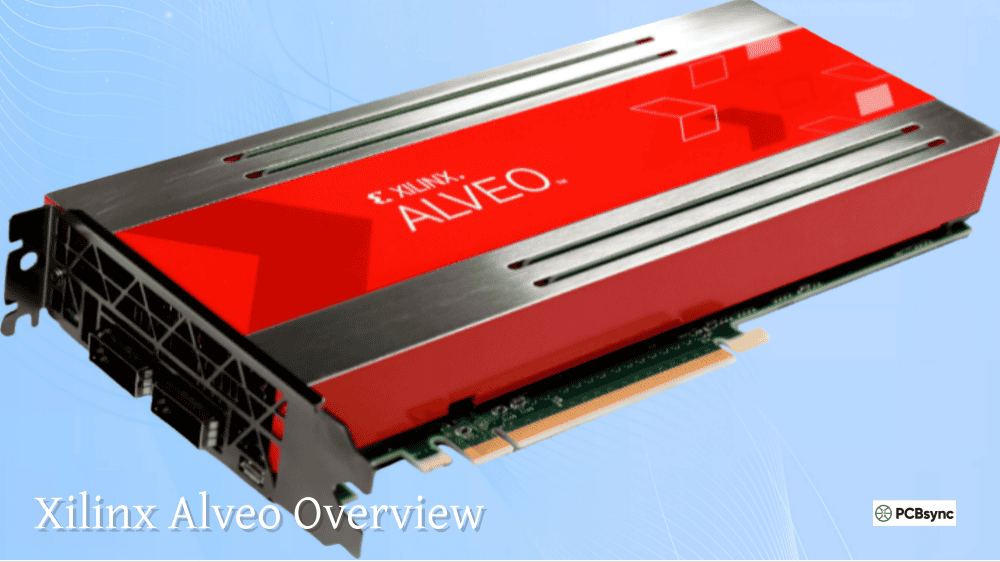
Since the VCU128 is discontinued, consider these alternatives for HBM-enabled development:
Board
FPGA
HBM
Status
Price
Alveo U280
XCU280 (VU37P)
8 GB
Active
~$15,000
Alveo U55C
XCU55C (VU37P)
8 GB
Active
~$10,000
VHK158
VH1582 (Versal HBM)
32 GB
Active
~$15,000
For applications not requiring HBM, the VCU118 provides the VCU9P with excellent logic density and remains actively supported.
What is the main difference between VCU108 and VCU128?
The VCU108 uses the XCVU095 (Virtex UltraScale, 20nm) optimized for high transceiver count and data flow processing. The VCU128 uses the XCVU37P (Virtex UltraScale+ HBM, 16nm) featuring 8 GB of integrated High Bandwidth Memory with 460 GB/s bandwidth. The VCU128 offers dramatically more logic (2.4× cells, 11.8× DSP slices) but fewer on-board transceivers.
Is the EK-U1-VCU128-G still available?
The VCU128 has been officially discontinued by AMD. While some units may remain in distributor inventory, new designs should consider alternatives like the Alveo U280 or U55C for HBM capability, or the VCU118 for high-performance development without HBM.
Can I use VCU108 for AI and machine learning applications?
Yes, but with limitations. The VCU108’s 768 DSP slices and DDR4 memory (85 GB/s) support modest AI inference workloads. For larger models or training applications, the VCU128’s 9,024 DSP slices and 460 GB/s HBM bandwidth provide significantly better performance.
What Vivado license comes with each kit?
Both the EK-U1-VCU108-G and EK-U1-VCU128-G include a Vivado Design Suite: Design Edition voucher. These licenses are node-locked (tied to your computer) and device-locked (only works with the specific FPGA). Licenses include one year of updates and must be redeemed within one year of purchase.
Which board should I choose for 100G networking development?
The VCU108 is typically better for networking applications requiring multiple independent 100G channels. Its 64 transceivers (including 32 GTY at 30.5 Gb/s) and CFP2/QSFP28 cages provide direct optical connectivity. The VCU128 has fewer transceivers but offers PCIe Gen4 support—choose based on whether you need more ports or higher PCIe bandwidth.
Conclusion
The choice between VCU108 and VCU128 ultimately depends on your application’s bottleneck. If you’re constrained by memory bandwidth and need maximum compute density, the VCU128’s HBM technology delivers transformative performance—though its discontinued status requires careful procurement planning.
For most new designs, the EK-U1-VCU108-G provides excellent value with its dual FMC expansion, 64 transceivers, and long-term availability. Its lower price point makes it accessible for development teams that need high-performance FPGA capability without HBM requirements.
Consider the VCU118 as a middle-ground option: it provides the 16nm UltraScale+ architecture with UltraRAM, more DSP slices than the VCU108, and remains actively supported. For HBM-specific applications, the Alveo accelerator cards offer production-ready platforms that will remain available for the foreseeable future.
Inquire: Call 0086-755-23203480, or reach out via the form below/your sales contact to discuss our design, manufacturing, and assembly capabilities.
Quote: Email your PCB files to Sales@pcbsync.com (Preferred for large files) or submit online. We will contact you promptly. Please ensure your email is correct.
Notes: For PCB fabrication, we require PCB design file in Gerber RS-274X format (most preferred), *.PCB/DDB (Protel, inform your program version) format or *.BRD (Eagle) format. For PCB assembly, we require PCB design file in above mentioned format, drilling file and BOM. Click to download BOM template To avoid file missing, please include all files into one folder and compress it into .zip or .rar format.