Inquire: Call 0086-755-23203480, or reach out via the form below/your sales contact to discuss our design, manufacturing, and assembly capabilities.
Quote: Email your PCB files to Sales@pcbsync.com (Preferred for large files) or submit online. We will contact you promptly. Please ensure your email is correct.
Notes: For PCB fabrication, we require PCB design file in Gerber RS-274X format (most preferred), *.PCB/DDB (Protel, inform your program version) format or *.BRD (Eagle) format. For PCB assembly, we require PCB design file in above mentioned format, drilling file and BOM. Click to download BOM template To avoid file missing, please include all files into one folder and compress it into .zip or .rar format.
Xilinx Programming Cables: Platform Cable USB II & Alternatives — The Complete Guide
If you’ve spent any time working with Xilinx (now AMD) FPGAs, you’ve probably wrestled with the question of which xilinx programmer to buy. After burning through countless hours debugging JTAG connections and trying various cables over the years, I wanted to put together a practical guide covering everything from the official Xilinx Platform Cable USB 2 to budget-friendly alternatives that actually work.
A xilinx programming cable serves as the bridge between your development PC and the FPGA or CPLD on your target board. These cables handle device configuration, bitstream downloads, flash programming, and in-system debugging through protocols like JTAG, SPI, and slave-serial.
The most common use cases include:
Programming FPGAs with bitstream files during development
Writing configuration data to external SPI or parallel flash memory
Debugging embedded processors using ChipScope or the Vivado Logic Analyzer
Running boundary-scan tests for board verification
Programming CPLDs and configuration PROMs
For professional development, having a reliable xilinx usb cable isn’t optional—it’s fundamental to your workflow.
The Official Option: Xilinx Platform Cable USB II (DLC10)
Technical Specifications
The Xilinx DLC10 (also known as HW-USB-II-G) remains AMD’s official programming solution for FPGA development. Here’s what it brings to the table:
Specification
Details
Model Number
DLC10 / HW-USB-II-G
USB Standard
USB 2.0 Hi-Speed (480 Mbps)
Target Voltage Range
1.5V to 5.0V (auto-sensing)
Programming Modes
JTAG, SPI, Slave-Serial
Power Supply
USB-powered (5V, 0.15A max)
Connector
14-pin 2mm pitch ribbon
Price Range
$225-$330 USD
What’s Inside the DLC10
A teardown of the Platform Cable USB II reveals some interesting hardware choices. The cable contains a Xilinx Spartan-3A FPGA (XC3S200AN) paired with a Cypress CY7C68013A USB controller. An XCF02S PROM stores the firmware, which updates automatically when you connect to newer versions of Vivado or ISE.
The tri-color LED on the cable provides useful diagnostic information:
Green: Target voltage detected (≥1.5V on VREF)
Amber: No target voltage or voltage too low
Red: Firmware update in progress
Off: USB disconnected or suspend mode
Supported Devices and Software
The xilinx platform cable usb 2 works with essentially every Xilinx device family:
Software compatibility includes ISE 14.x, Vivado (all versions), iMPACT, ChipScope Pro, and the Embedded Development Kit.
Why the Official Cable Costs What It Does
At $225 or more, the Platform Cable USB II isn’t cheap. But here’s why some engineers still reach for it:
Build quality matters. The official cable has robust ESD protection, proper signal buffering with 30.1Ω series damping resistors, and Schottky diode protection on all inputs. When you’re programming expensive UltraScale devices, you don’t want a $15 clone potentially damaging your hardware.
Guaranteed compatibility. Every Xilinx/AMD software release gets tested against this cable. You won’t find yourself troubleshooting driver issues when a critical deadline looms.
Flying leads included. The HW-USB-FLYLEADS-G accessory cable lets you connect to boards without a standard 14-pin header—useful for custom hardware or production test fixtures.
Digilent’s JTAG cables have become the go-to alternative for many engineers. They’re officially supported by Xilinx tools and cost a fraction of the Platform Cable.
Feature
JTAG-HS2
JTAG-HS3
Price
~$55 USD
~$65 USD
Max Speed
30 Mbit/sec
30 Mbit/sec
Target Voltage
1.8V – 5V
1.8V – 5V
Connector
6-pin 0.1″ + adapter
14-pin 2mm direct
Pin 14 Buffer
Standard
Open-drain (for Zynq)
ChipScope Support
Yes
Yes
Vivado Support
2013.3+
2014.1+
The HS3 added an open-drain buffer on pin 14 specifically for Zynq processor reset functionality. If you’re working with Zynq devices and need to debug software running on the ARM cores, the HS3 is the better choice.
Real-World Performance
In my testing, the Digilent cables often outperform the Platform Cable USB II for raw programming speed. The HS3 particularly shines when doing indirect flash programming—it’s noticeably faster for writing multi-megabit bitstreams to SPI flash.
The main trade-offs:
No SPI direct programming mode (must use JTAG)
Micro-USB connector can be fragile with repeated use
No flying leads for non-standard pinouts
Won’t work with legacy 5V-only devices without level shifting
Budget Alternatives: Clone Cables and FTDI-Based Solutions
Waveshare and Similar Clone Cables
The Waveshare Platform Cable USB clone runs about $25-30 and uses the same CY7C68013A + FPGA architecture as the genuine article. These clones work with ISE and Vivado for basic programming tasks.
Aspect
Clone Cables
Official DLC10
Price
$20-50
$225-330
iMPACT
Works
Works
Vivado
Usually works
Works
ChipScope
Hit or miss
Works
ESD Protection
Minimal
Full
Support
None
AMD support
Word of caution: Clone cables have been known to fail after firmware updates in newer tool versions. If you’re in production, this can be a significant risk.
DIY FTDI-Based Programmers
For hackers and budget-conscious developers, FTDI chips like the FT2232H offer a path to building your own xilinx programmer. Projects on GitHub provide PCB designs and EEPROM configurations that make these devices appear as Digilent cables to the Xilinx tools.
The typical approach:
Get an FT2232H breakout board ($15-25)
Flash the EEPROM with Digilent SMT1 signatures
Connect TDI, TDO, TCK, TMS to your target’s JTAG header
Add level shifting if needed for voltage compatibility
This works well for hobbyist projects and has the added benefit of being compatible with open-source tools like openFPGALoader and xc3sprog.
JTAG Header Pinout Reference
When designing your own boards, you’ll need to include a programming header. The standard Xilinx 14-pin 2mm header follows this pinout:
Pin
Signal
Pin
Signal
1
VGND/PGND
2
VREF
3
TMS
4
GND
5
TCK
6
GND
7
TDO
8
GND
9
TDI
10
GND
11
NC
12
GND
13
NC/PGND
14
NC/INIT
Design tips from the trenches:
Connect VREF to your I/O bank voltage (VCCO or VAUX), never to a resistor-limited supply
Keep JTAG traces short and away from high-speed signals
Add 100Ω series termination on TCK for long cable runs
Include test points for probing JTAG signals during debug
The Vivado installer should handle driver installation automatically, but Windows 10/11 sometimes requires manual intervention:
Open Device Manager
Find the unrecognized Xilinx device
Right-click and select “Update driver”
Browse to: <Vivado Install>\data\xicom\cable_drivers\nt64
Select the appropriate .inf file
If you’re still seeing “Cable connection failed” errors, check that the Windows Driver Signature Enforcement isn’t blocking unsigned drivers.
Linux Installation
Linux requires running the cable driver installer with root privileges after Vivado installation:
cd /opt/Xilinx/Vivado/<version>/data/xicom/cable_drivers/lin64/install_script/install_drivers
sudo ./install_drivers
You’ll also need to add your user to the dialout group for serial port access:
sudo usermod -a -G dialout $USER
Common Issues and Fixes
Problem
Likely Cause
Solution
Cable not detected
Driver issue
Reinstall drivers, check USB port
“No device found”
VREF not connected
Verify target is powered
Amber LED stays on
Low target voltage
Check VREF is ≥1.5V
Slow programming
USB 1.1 port
Use USB 2.0/3.0 port directly
Firmware update stuck
Corrupted PROM
Contact AMD support
Multiple cables conflict
Cable selection
Use Cable Setup dialog
Open-Source Programming Tools
openFPGALoader
For those who prefer command-line tools or need cross-platform compatibility, openFPGALoader has become the standard open-source solution. It supports Xilinx devices alongside Lattice, Intel, Gowin, and others.
Basic usage:
# Detect connected FPGA
openFPGALoader –detect
# Program SRAM
openFPGALoader -b arty bitstream.bit
# Write to flash
openFPGALoader -b arty -f bitstream.bit
xc3sprog
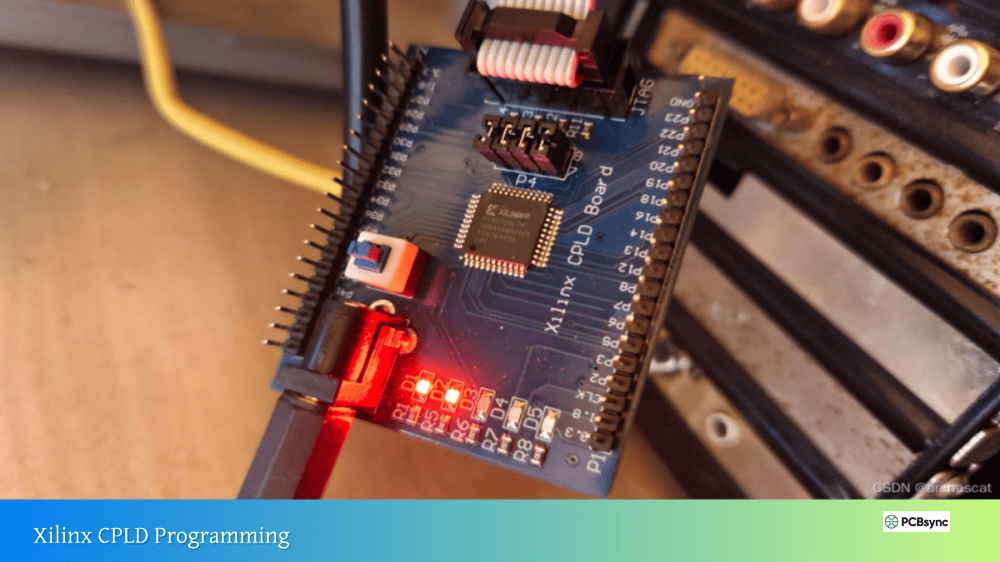
The venerable xc3sprog remains useful for older devices and unusual JTAG adapters. It supports Raspberry Pi GPIO bit-banging, making it possible to program Xilinx CPLDs without any commercial cable.
After using these cables across dozens of projects, here’s my honest assessment: the Digilent HS3 offers the best value for most developers. It’s fast, reliable, officially supported, and costs a quarter of the Platform Cable.
That said, I keep a genuine xilinx dlc10 in my toolkit for production work and when debugging weird issues where I need to eliminate the cable as a variable. The peace of mind is worth the premium.
For hobbyists and students, a Waveshare clone gets the job done. Just accept that you might need to troubleshoot driver issues occasionally, and don’t use it for anything mission-critical.
Frequently Asked Questions
Can I use a clone xilinx programming cable for professional work?
Clone cables work for basic programming but carry risks. They may fail after tool updates, lack proper ESD protection, and won’t receive any support if issues arise. For professional work where reliability matters, invest in the official Platform Cable USB II or a Digilent HS3.
What’s the difference between JTAG and SPI programming modes?
JTAG (IEEE 1149.1) is a serial debug interface that allows programming, debugging, and boundary scan testing. SPI programming directly writes to flash memory devices. The Platform Cable USB II supports both modes, while Digilent cables only support JTAG. For indirect flash programming via JTAG, both work fine.
Why does my xilinx usb cable LED stay amber?
An amber LED indicates the cable isn’t detecting proper target voltage on the VREF pin. Check that your target board is powered on, VREF is connected to the correct voltage rail (VCCO or VAUX), and the voltage is at least 1.5V. Also verify your ribbon cable orientation—it’s easy to flip it 180 degrees.
Will the Platform Cable USB II work with Vivado on Windows 11?
Yes, but you may need to manually install drivers. Navigate to the cable_drivers folder in your Vivado installation and run the installer, or manually point Windows Device Manager to the appropriate .inf file. Some users report needing to disable Secure Boot temporarily.
Can I program Xilinx FPGAs with a Raspberry Pi?
Yes, using tools like xc3sprog or openFPGALoader with the Pi’s GPIO pins as a JTAG interface. You’ll need level shifting for 3.3V targets and proper connections to TDI, TDO, TCK, and TMS. This approach works well for simple CPLDs but may struggle with larger FPGAs due to speed limitations.
Wrapping Up
Choosing the right xilinx programming cable depends on your specific needs, budget, and risk tolerance. The xilinx platform cable usb 2 remains the gold standard for professional work, while Digilent’s HS2 and HS3 offer excellent value. For tinkerers, FTDI-based solutions and open-source tools provide flexibility that vendor tools can’t match.
Whatever you choose, spend time getting your JTAG setup reliable before diving into complex designs. A flaky programming cable will waste more of your time than the cost difference between options.
Inquire: Call 0086-755-23203480, or reach out via the form below/your sales contact to discuss our design, manufacturing, and assembly capabilities.
Quote: Email your PCB files to Sales@pcbsync.com (Preferred for large files) or submit online. We will contact you promptly. Please ensure your email is correct.
Notes: For PCB fabrication, we require PCB design file in Gerber RS-274X format (most preferred), *.PCB/DDB (Protel, inform your program version) format or *.BRD (Eagle) format. For PCB assembly, we require PCB design file in above mentioned format, drilling file and BOM. Click to download BOM template To avoid file missing, please include all files into one folder and compress it into .zip or .rar format.