Inquire: Call 0086-755-23203480, or reach out via the form below/your sales contact to discuss our design, manufacturing, and assembly capabilities.
Quote: Email your PCB files to Sales@pcbsync.com (Preferred for large files) or submit online. We will contact you promptly. Please ensure your email is correct.
Notes: For PCB fabrication, we require PCB design file in Gerber RS-274X format (most preferred), *.PCB/DDB (Protel, inform your program version) format or *.BRD (Eagle) format. For PCB assembly, we require PCB design file in above mentioned format, drilling file and BOM. Click to download BOM template To avoid file missing, please include all files into one folder and compress it into .zip or .rar format.
Xilinx DDR Memory Controllers: DDR3, DDR4 & DDR5 IP Guide
Designing high-speed memory interfaces for AMD (Xilinx) FPGAs requires understanding the Memory Interface Generator (MIG) IP and the architectural differences across device families. Whether you’re implementing xilinx ddr3 on a 7 Series device or pushing xilinx ddr5 speeds on Versal, this guide covers the practical knowledge needed to get your memory interface running reliably.
Having spent considerable time debugging calibration failures and timing violations on DDR interfaces, I’ve learned that success depends heavily on understanding both the IP configuration and the PCB design constraints. This guide consolidates that experience with AMD’s official documentation to help you avoid common pitfalls.
AMD provides memory interface solutions through two primary mechanisms: the Memory Interface Generator (MIG) for programmable logic implementations, and hardened controllers integrated into certain device families. The choice between these depends on your target platform and performance requirements.
Memory Controller Options by FPGA Family
FPGA Family
DDR3
DDR4
LPDDR4
DDR5
Controller Type
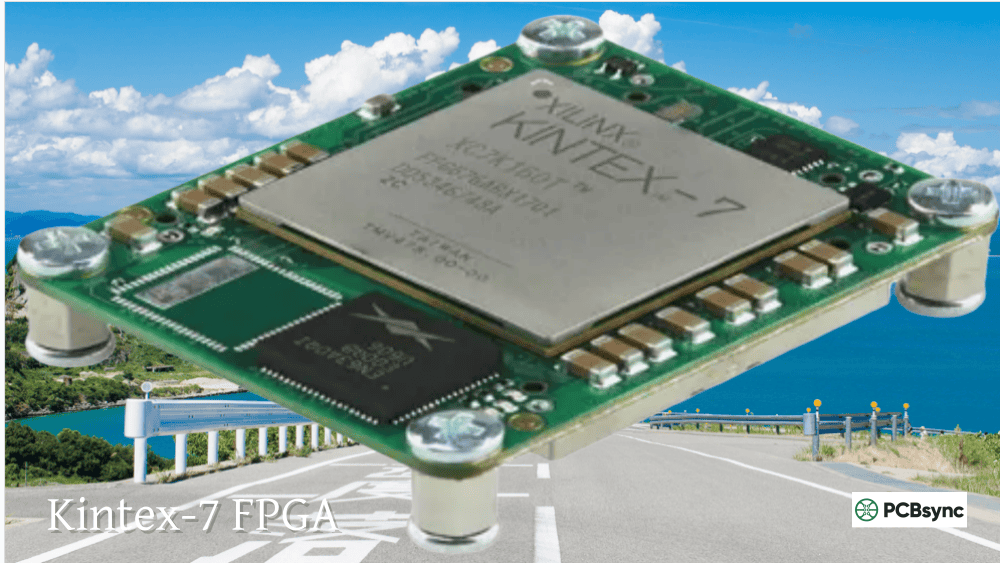
7 Series (Artix, Kintex, Virtex)
Yes
No
No
No
MIG (Soft)
UltraScale
Yes
Yes
No
No
MIG (Hard PHY)
UltraScale+
Yes
Yes
Yes*
No
MIG (Hard PHY)
Zynq-7000 PS
Yes
No
No
No
Hardened
Zynq UltraScale+ PS
Yes
Yes
Yes
No
Hardened
Versal
Yes
Yes
Yes
Yes**
Integrated DDRMC
*LPDDR4 available on PS side only for Zynq UltraScale+
**DDR5 support limited to specific Versal devices (VM2152)
MIG Architecture Components
The Memory Interface Generator creates two fundamental blocks that work together:
Component
Function
Implementation
Memory Controller
Command scheduling, bank management, refresh
Soft logic
Physical Layer (PHY)
Signal timing, calibration, I/O interface
Hard blocks + soft calibration
The PHY layer in UltraScale and newer architectures uses dedicated hard blocks (XIPHY) for signal timing, with soft logic handling calibration algorithms. This hybrid approach achieves higher data rates than pure soft implementations while maintaining flexibility.
Xilinx DDR3 Memory Interface Implementation
DDR3 Support Across Platforms
The xilinx ddr3 interface remains widely used, particularly on 7 Series devices where DDR4 isn’t supported. Understanding the configuration options helps maximize performance within platform constraints.
Parameter
7 Series
UltraScale
UltraScale+
Maximum Data Rate
1,866 Mb/s
2,133 Mb/s
2,400 Mb/s
Data Width
8-72 bits
8-80 bits
8-80 bits
Ranks Supported
1-4
1-4
1-4
ECC Support
Yes
Yes
Yes
Memory Types
Component, UDIMM, SODIMM, RDIMM
All + LRDIMM
All
DDR3 MIG Configuration Steps
Configuring MIG for xilinx ddr3 involves several critical decisions:
Configuration Option
Recommendation
Rationale
Clock Period
Match memory spec
DDR3-1600 = 1250 ps
PHY to Controller Ratio
4:1 typical
Balances logic speed with interface rate
Memory Part
Select exact part
Timing parameters are part-specific
Data Width
Match PCB routing
16, 32, or 64-bit common
Address Mirroring
Enable for DIMMs
Required for rank 1 on mirrored DIMMs
Ordering
Normal
Enables command reordering for efficiency
DDR3 Calibration Sequence
The MIG calibration process for DDR3 includes multiple stages that must complete successfully:
What is the difference between MIG and the integrated memory controller on Zynq?
MIG (Memory Interface Generator) creates a memory controller in programmable logic (PL), while the Zynq processing system (PS) includes a hardened controller. The PS controller on Zynq UltraScale+ supports xilinx ddr4 and xilinx lpddr4 with fixed configuration options but lower latency. PL-based MIG offers more flexibility in data width, addressing, and interface count but consumes logic resources. For Zynq designs, you can use either or both, depending on bandwidth and latency requirements.
Can I use DDR4 memory with a 7 Series FPGA?
No, 7 Series FPGAs (Artix-7, Kintex-7, Virtex-7) only support xilinx ddr3 and earlier memory types. The I/O architecture and MIG IP for 7 Series don’t include DDR4 support. If you need DDR4, you must upgrade to UltraScale or newer devices. Some designs work around this by using DDR3L at 1.35V, which provides a partial power reduction while remaining compatible with 7 Series.
Why does my DDR calibration fail intermittently across temperature?
DDR calibration is sensitive to voltage and temperature (VT) variations. The MIG includes VT tracking that periodically recalibrates timing during operation, but marginal designs may still fail at temperature extremes. Common causes include insufficient timing margin in PCB routing, inadequate power supply decoupling, or operation near the maximum supported data rate. Solutions include derating the interface speed by 10-15%, improving PCB signal integrity, and ensuring the memory operates within its specified temperature range with adequate airflow.
How do I add a custom memory part not listed in MIG?
MIG includes a database of common memory parts, but custom or newer devices often require manual entry. You can create a CSV file with timing parameters from the memory datasheet and import it as a “Custom Parts File” in the MIG configuration wizard. Required parameters include tRCD, tRP, tRAS, tRC, CL, CWL, and others specific to xilinx ddr3 or xilinx ddr4. Several community repositories on GitHub maintain custom part files for popular memory devices not in the standard MIG database.
What data width should I use for my DDR interface?
Data width selection balances bandwidth requirements against pin count and PCB complexity. For xilinx ddr4 at 2667 Mb/s, a 64-bit interface provides approximately 21 GB/s theoretical bandwidth. Consider: Does your application require ECC? (Add 8 bits for 72-bit total.) Can your FPGA package support the required pins? Is your PCB layer count sufficient for routing? For many applications, 32-bit or 64-bit widths offer the best trade-off between bandwidth and implementation complexity.
Making the Right Memory Choice
Selecting between xilinx ddr3, xilinx ddr4, xilinx lpddr4, or xilinx ddr5 depends on your specific requirements:
Priority
Recommended Memory
Legacy 7 Series support
DDR3
High bandwidth, mainstream
DDR4
Power efficiency, embedded
LPDDR4
Maximum performance
DDR5 (Versal)
Cost optimization
DDR3 or DDR4 components
The memory interface often determines system performance more than any other single design decision. Invest time in understanding the MIG configuration options, follow PCB design guidelines carefully, and use the debugging tools available in Vivado to ensure robust operation across all operating conditions. A well-designed DDR interface provides years of reliable service; a marginal one creates ongoing headaches that are difficult to resolve after board fabrication.
Inquire: Call 0086-755-23203480, or reach out via the form below/your sales contact to discuss our design, manufacturing, and assembly capabilities.
Quote: Email your PCB files to Sales@pcbsync.com (Preferred for large files) or submit online. We will contact you promptly. Please ensure your email is correct.
Notes: For PCB fabrication, we require PCB design file in Gerber RS-274X format (most preferred), *.PCB/DDB (Protel, inform your program version) format or *.BRD (Eagle) format. For PCB assembly, we require PCB design file in above mentioned format, drilling file and BOM. Click to download BOM template To avoid file missing, please include all files into one folder and compress it into .zip or .rar format.