Inquire: Call 0086-755-23203480, or reach out via the form below/your sales contact to discuss our design, manufacturing, and assembly capabilities.
Quote: Email your PCB files to Sales@pcbsync.com (Preferred for large files) or submit online. We will contact you promptly. Please ensure your email is correct.
Notes: For PCB fabrication, we require PCB design file in Gerber RS-274X format (most preferred), *.PCB/DDB (Protel, inform your program version) format or *.BRD (Eagle) format. For PCB assembly, we require PCB design file in above mentioned format, drilling file and BOM. Click to download BOM template To avoid file missing, please include all files into one folder and compress it into .zip or .rar format.
Xilinx DSP48E1 & DSP48E2: The Complete Hardware DSP Slice Guide for FPGA Engineers
If you’ve spent any time designing digital signal processing systems on Xilinx FPGAs, you’ve likely encountered the DSP48 slices. These dedicated hardware blocks are what make DSP FPGA implementations genuinely competitive with traditional DSP processors. After working with these primitives across dozens of projects, from radar systems to software-defined radios, I want to share what I’ve learned about getting the most out of the Xilinx DSP48E1 and Xilinx DSP48E2 slices.
The DSP48E1 and DSP48E2 are hardened silicon blocks embedded within Xilinx FPGAs that perform multiply-accumulate (MAC) operations at high speed with minimal power consumption. Unlike implementing MAC functionality in programmable logic (which consumes significant LUT and flip-flop resources), these dedicated blocks provide optimized datapaths specifically designed for signal processing workloads.
The fundamental operation these slices perform can be expressed as: P = (A+D) × B + C
This deceptively simple equation encompasses everything from basic multiplications to complex FIR filter implementations, FFT butterflies, and neural network inference engines.
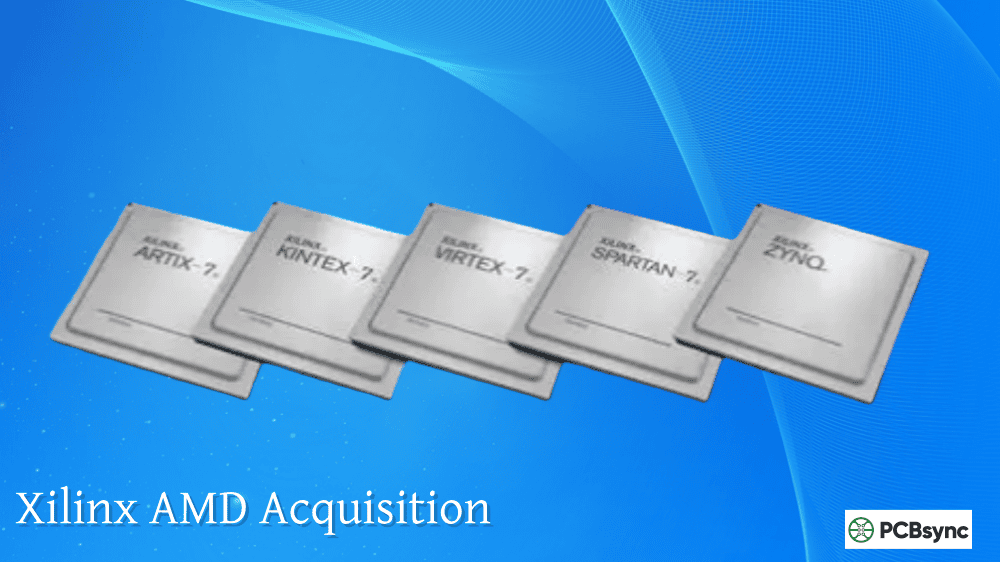
Which FPGA Families Use Which Slice?
FPGA Family
DSP Slice Type
Multiplier Size
DSP Slices Available
Artix-7
DSP48E1
25×18
10 to 740
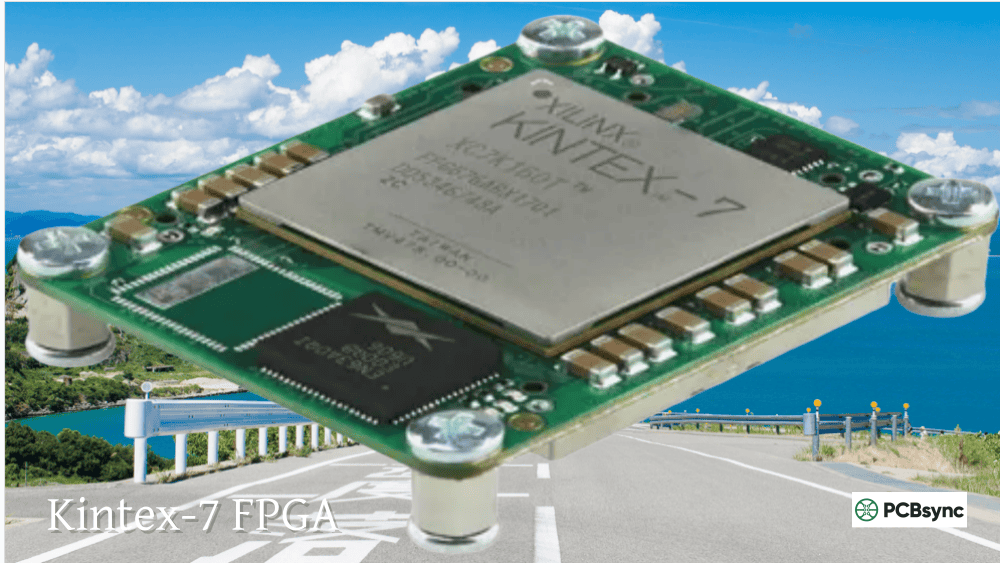
Kintex-7
DSP48E1
25×18
240 to 1,920
Virtex-7
DSP48E1
25×18
900 to 3,600
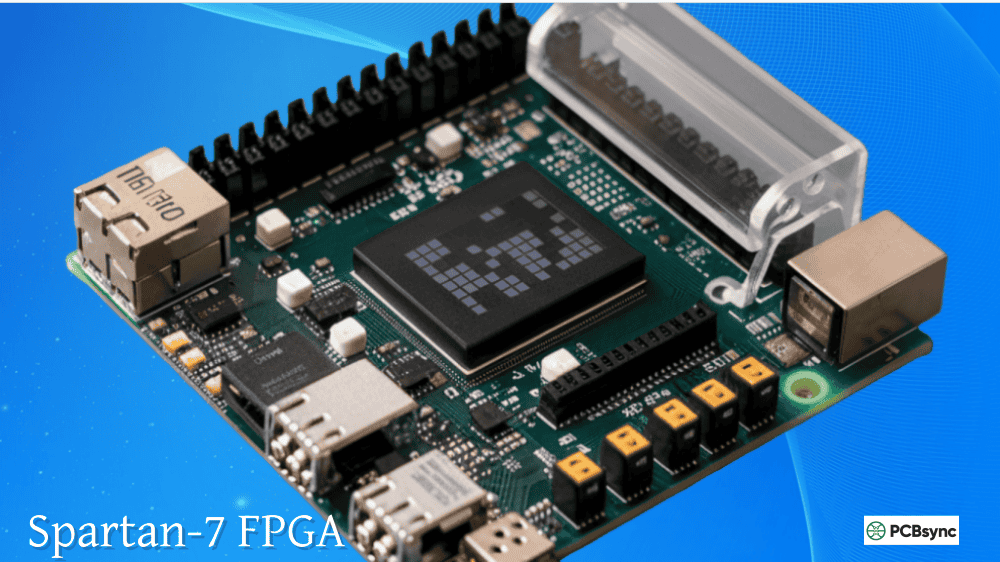
Spartan-7
DSP48E1
25×18
10 to 120
Kintex UltraScale
DSP48E2
27×18
768 to 5,520
Virtex UltraScale
DSP48E2
27×18
1,800 to 12,288
Kintex UltraScale+
DSP48E2
27×18
1,368 to 5,940
Virtex UltraScale+
DSP48E2
27×18
1,024 to 12,288
Zynq-7000
DSP48E1
25×18
80 to 2,020
Zynq UltraScale+
DSP48E2
27×18
216 to 4,272
Xilinx DSP48E1 Architecture Deep Dive
The DSP48E1 slice, found in 7 Series FPGAs, includes several key components that work together to deliver high-performance DSP functionality.
Key Components of the DSP48E1
The DSP48E1 consists of a 25-bit pre-adder, a 25×18-bit two’s complement multiplier, and a 48-bit accumulator/logic unit. Input A has a width of 30 bits, input B is 18 bits wide, input C spans 48 bits, and input D provides 25 bits for the pre-adder.
One detail that catches many engineers: although the A port accepts 30 bits, the pre-adder output is only 25 bits. This means your pre-adder calculations need to account for potential overflow when adding A and D operands.
Xilinx DSP48E1 Port Widths
Port
Width (bits)
Function
A
30
First multiplier input / Pre-adder input
B
18
Second multiplier input
C
48
Direct input to ALU
D
25
Pre-adder input
P
48
Output result
PCIN/PCOUT
48
Cascade connections between slices
ACIN/ACOUT
30
A cascade path
BCIN/BCOUT
18
B cascade path
Internal Pipeline Registers
The DSP48E1 includes multiple pipeline stages that you can enable or bypass depending on your latency and throughput requirements. For maximum clock frequency (which can exceed 600 MHz in fastest speed grades), you’ll want to enable all pipeline stages. However, this adds latency to your datapath, which matters in feedback systems like IIR filters or control loops.
The DSP48E2 slice in UltraScale and UltraScale+ architectures represents a significant evolution from the DSP48E1. Understanding the differences is crucial when migrating designs or starting new projects on these platforms.
Major Improvements in DSP48E2
The multiplier operand width increases from 25×18 to 27×18 bits. This additional precision means you can implement wider multiplications using fewer slices, which directly impacts resource utilization in filter-heavy designs.
The pre-adder also expands to 27 bits, and Xilinx added new control bits (AMULTSEL, BMULTSEL, PREADDINSEL) that provide more flexibility in routing data through the slice. The DSP48E2 attribute AMULTSEL has replaced the DSP48E1 attribute USE_DPORT, reflecting the increased routing options.
DSP48E1 vs DSP48E2 Comparison
Feature
DSP48E1 (7 Series)
DSP48E2 (UltraScale/UltraScale+)
Multiplier Size
25×18
27×18
Pre-adder Width
25 bits
27 bits
Number of Generics
25
46
Number of Ports
49
50
OPMODE Width
7 bits
9 bits
Max Clock Frequency
~600 MHz
~700+ MHz
SIMD Support
2×24 or 4×12-bit
2×24 or 4×12-bit
Wide XOR
No
Yes
Pattern Detector
Yes
Enhanced
Practical Applications for DSP FPGA Design
These DSP slices excel in applications where parallel computation provides significant performance advantages over sequential DSP processors.
FIR Filter Implementation
A 256-tap FIR filter that would require 256 clock cycles on a traditional Von Neumann DSP processor can execute in a single clock cycle when implemented using cascaded DSP48 slices. The pre-adder enables efficient implementation of symmetric filters, effectively doubling the filter length you can achieve with the same number of slices.
Complex Multiplication
Complex multiplications, essential for IQ signal processing in communications systems, can be implemented efficiently using just three DSP48 slices instead of the four required by the naive approach. The identity (a+bi)×(c+di) = ((c-d)×a + S) + ((c+d)×b + S)i, where S=(a-b)×d, enables this optimization.
Neural Network Inference
Modern neural network accelerators rely heavily on DSP slices for multiply-accumulate operations. The SIMD capability of DSP48 slices allows four parallel 12-bit operations or two 24-bit operations, which maps well to INT8 and INT16 quantized neural network inference.
There are two approaches to utilizing DSP slices in your designs, and each has its place.
Behavioral Inference
Writing standard HDL code and letting the synthesis tool infer DSP usage is the simplest approach. For basic multiplications and MAC operations, modern tools like Vivado do an excellent job of mapping to DSP48 resources.
// Simple multiply-accumulate – tool will infer DSP48
always @(posedge clk) begin
product <= $signed(a) * $signed(b);
accumulator <= accumulator + product;
end
Behavioral inference works with signed and unsigned operands of any size, produces compact code, and hides the complexity of the DSP48 primitive from the designer.
Direct Instantiation
When you need precise control over pipeline stages, OPMODE configurations, or cascade connections, direct instantiation becomes necessary. A single DSP48E2 instantiation requires roughly 100 lines of HDL code with 46 generics and 50 ports to configure.
The complexity of direct instantiation has led many experienced designers to create wrapper modules that provide sensible defaults while still exposing all DSP48 functionality when needed. I strongly recommend this approach for any project that requires multiple DSP48 instantiations.
Best Practices for DSP Inference
To ensure efficient DSP inference, follow these guidelines:
Use signed arithmetic in your HDL source to match the DSP48’s internal implementation
Pipeline your operations for maximum clock frequency and lower power consumption
Match operand widths to the DSP48 multiplier (25×18 for DSP48E1, 27×18 for DSP48E2)
Verify inference in the synthesis report to confirm DSP48 resources are being used as expected
Use Vivado Language Templates as reference implementations
Power Consumption Considerations
Power efficiency is one of the most compelling reasons to use DSP slices rather than implementing equivalent functionality in fabric logic. DSP48 slices consume significantly less power than equivalent operations implemented in LUTs and flip-flops.
When all pipeline stages are enabled, the dynamic power per DSP48 slice scales linearly with clock frequency. Disabling unused portions of the slice (like the pre-adder when not needed) reduces power further.
For battery-powered or thermally-constrained applications, strategic use of DSP slices can be the difference between a viable product and an overheating paperweight.
Migration Considerations
When migrating from 7 Series (DSP48E1) to UltraScale/UltraScale+ (DSP48E2), keep these points in mind:
Sign extension: Designs written for the 25×18 multiplier may need sign extension for the 27×18 multiplier
Column depth: The number of DSP slices per column varies between device families, affecting cascade designs
Attribute changes: AMULTSEL replaces USE_DPORT with expanded functionality
Backward compatibility: The DSP48E2 is effectively a superset of DSP48E1, so basic operations migrate cleanly
What is the difference between DSP48E1 and DSP48E2?
The DSP48E2 in UltraScale/UltraScale+ FPGAs offers a wider 27×18-bit multiplier compared to the DSP48E1’s 25×18-bit multiplier. It also includes additional control flexibility through new attributes like AMULTSEL and BMULTSEL, a 27-bit pre-adder (versus 25-bit), enhanced pattern detection, and wide XOR capability. The DSP48E2 has 46 generics and 50 ports compared to 25 generics and 49 ports in the DSP48E1.
How do I force Vivado to use DSP48 slices for my multiplication?
You can guide synthesis using the USE_DSP attribute. Set (* use_dsp = “yes” *) before your signal or module declaration. However, for multiplications within the DSP48 operand width, Vivado typically infers DSP usage automatically. Verify DSP utilization in the synthesis report to confirm proper inference.
Can DSP48 slices perform operations other than multiplication?
Yes. Beyond multiply-accumulate operations, DSP48 slices support addition, subtraction, accumulation, logic operations (AND, OR, XOR, XNOR), pattern detection, and SIMD operations. The 48-bit ALU provides considerable flexibility beyond simple MAC operations.
How many DSP slices do I need for a 64-tap FIR filter?
For a standard direct-form FIR filter, you need one DSP slice per tap, so 64 slices for 64 taps. However, if your filter coefficients are symmetric, you can use the pre-adder to combine samples and halve the required slices to 32. Time-multiplexing can reduce this further if your sample rate allows multiple clock cycles per sample.
What clock frequencies can DSP48 slices achieve?
DSP48E1 slices in 7 Series FPGAs can exceed 600 MHz in the fastest speed grades with all pipeline stages enabled. DSP48E2 slices in UltraScale+ can achieve over 700 MHz. Actual achievable frequency depends on your specific device, speed grade, routing congestion, and how many pipeline stages you enable.
Conclusion
The DSP48E1 and DSP48E2 slices represent some of the most powerful resources available in Xilinx FPGAs for signal processing applications. Whether you’re implementing a simple multiply-accumulate or a complex multi-channel filter bank, understanding these primitives lets you make informed tradeoffs between resource utilization, performance, and power consumption.
For new designs, I recommend starting with behavioral inference and verifying that synthesis produces the expected DSP utilization. Move to direct instantiation only when you need precise control over timing or cascade configurations. And always simulate your DSP48 instantiations thoroughly—the complex interactions between generics and ports can produce surprising results if misconfigured.
The evolution from DSP48E1 to DSP48E2 reflects Xilinx’s continued investment in DSP capability, and the recent introduction of DSP58 in Versal devices promises even more capability. Mastering these primitives is essential for any engineer serious about FPGA-based signal processing.
Inquire: Call 0086-755-23203480, or reach out via the form below/your sales contact to discuss our design, manufacturing, and assembly capabilities.
Quote: Email your PCB files to Sales@pcbsync.com (Preferred for large files) or submit online. We will contact you promptly. Please ensure your email is correct.
Notes: For PCB fabrication, we require PCB design file in Gerber RS-274X format (most preferred), *.PCB/DDB (Protel, inform your program version) format or *.BRD (Eagle) format. For PCB assembly, we require PCB design file in above mentioned format, drilling file and BOM. Click to download BOM template To avoid file missing, please include all files into one folder and compress it into .zip or .rar format.