Inquire: Call 0086-755-23203480, or reach out via the form below/your sales contact to discuss our design, manufacturing, and assembly capabilities.
Quote: Email your PCB files to Sales@pcbsync.com (Preferred for large files) or submit online. We will contact you promptly. Please ensure your email is correct.
Notes: For PCB fabrication, we require PCB design file in Gerber RS-274X format (most preferred), *.PCB/DDB (Protel, inform your program version) format or *.BRD (Eagle) format. For PCB assembly, we require PCB design file in above mentioned format, drilling file and BOM. Click to download BOM template To avoid file missing, please include all files into one folder and compress it into .zip or .rar format.
Alveo U25 & U30: SmartNIC FPGA Cards for Network Acceleration
Data center networking has fundamentally changed over the past few years. With CPU cores increasingly consumed by networking overhead, cloud providers and enterprises are turning to SmartNIC solutions to reclaim those cycles for revenue-generating workloads. Having deployed both the Xilinx Alveo U25 and Xilinx U30 cards in production environments, I can tell you these aren’t just incremental improvements. They represent a paradigm shift in how we architect network and media processing infrastructure.
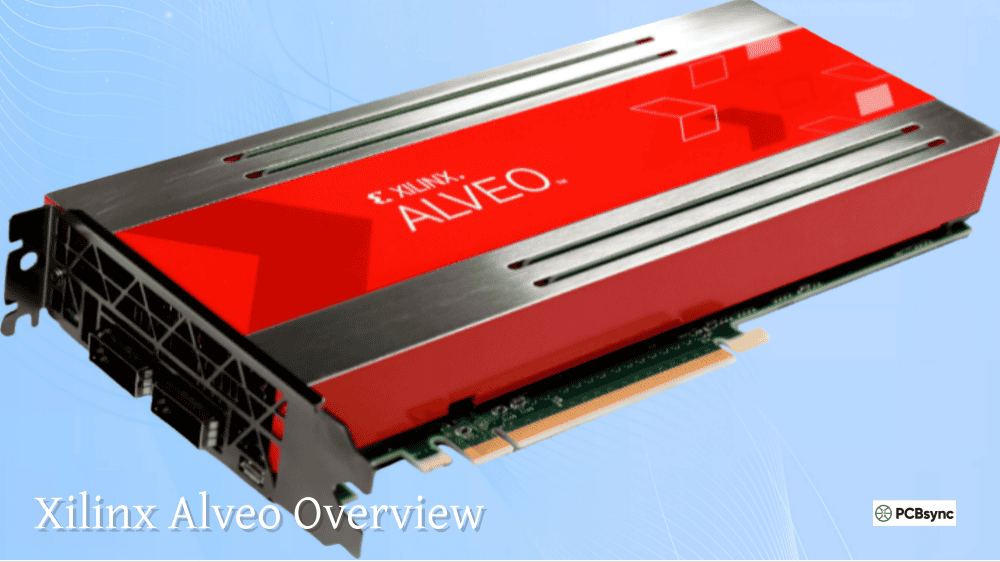
The Xilinx Alveo U25 targets network acceleration with programmable packet processing, while the Xilinx Alveo U30 focuses specifically on video transcoding at scale. Despite sharing the Alveo branding and low-profile form factor, these cards solve fundamentally different problems. Let me break down what makes each card tick and help you determine which fits your deployment scenario.
Before diving into specifications, it’s worth understanding why FPGA-based SmartNICs like the Xilinx U25 have gained traction. Traditional NICs evolved from simple packet forwarding to supporting features like checksum offload and segmentation. SmartNICs take this further by adding programmable compute capability inline with the network path.
The advantage of FPGA-based SmartNICs over fixed-function or ASIC-based alternatives comes down to adaptability. When OVS rules change, when new encryption standards emerge, or when your security requirements evolve, you reprogram the FPGA rather than replace hardware. This flexibility has made platforms like the Xilinx Alveo U25 attractive for cloud service providers who can’t afford to swap NICs every time their software-defined infrastructure changes.
Xilinx Alveo U25: The Programmable SmartNIC Platform
The Xilinx U25 was launched in 2020 as what Xilinx called the “industry’s first SmartNIC platform.” It’s built on a powerful FPGA architecture that handles network flows inline, enabling bump-in-the-wire acceleration without the overhead of moving data through the CPU.
Xilinx Alveo U25 Technical Specifications
Feature
Specification
Network Ports
2x 25GbE SFP28
PCIe Interface
Gen3 x16
FPGA Technology
UltraScale+
Form Factor
Half-Height, Half-Length
Thermal Design Power
~45W
Cooling
Passive
DDR4 Memory
6 GB
Timing Support
IEEE1588v2 PTP
Key Capabilities of the Xilinx U25
The U25 programming model supports both high-level network programming abstractions like HLS and P4, as well as compute acceleration frameworks like Vitis. This dual approach enables Xilinx and third-party developers to build accelerated applications that span networking and general compute workloads.
Network Acceleration Features: The host interface supports standard NIC drivers alongside the Onload kernel bypass technology. Onload provides both TCP and packet-based APIs for network application acceleration, dramatically improving performance for in-memory databases, software load balancers, and web servers. According to Xilinx, data centers can support 400% or more users while delivering improved QoS.
Precision Timing: IEEE1588v2 Precision Timing Protocol (PTP) provides synchronized timestamping with single-digit nanosecond accuracy. This is critical for financial trading applications and any workload requiring precise event correlation across distributed systems.
OVS Offload: The first turnkey application for the U25 platform was Open vSwitch offload and acceleration. The platform offloads over 90% of OVS processing from the CPU, improving packet throughput by more than 5x. This directly translates to reclaimed CPU cores for application workloads.
Xilinx U25N: The Enterprise-Focused Variant
The Xilinx U25N builds on the U25 platform by adding an integrated multi-core Arm processor and the proven XtremeScale X2 Ethernet Controller. This fusion of technologies creates a more complete SmartNIC solution for enterprise deployments.
The Xilinx U25N is specifically optimized for enterprise workload acceleration. The Match Action Engine (MAE) handles network flow classification, while dedicated hardware blocks manage IPsec encryption and firewall processing. Agent applications running on the Arm cores update tables used by these processing blocks in real-time without interrupting the data plane.
Security and Network Function Offloads
The U25N delivers true convergence of network and security acceleration functions. Key offloads include OVS (Open vSwitch) for virtual switching, IPsec for encrypted tunnels, distributed firewall for microsegmentation, and QoS for traffic prioritization.
Both the X2 controller and FPGA are designed to handle wire-rate traffic at 25Gbps per port. The X2 processes standard network tasks and Single Root I/O Virtualization (SR-IOV) requests, while the FPGA handles the programmable acceleration pipeline. This separation allows customers to leverage proven NIC functionality while adding custom acceleration logic.
Xilinx Alveo U30: Dedicated Media Acceleration
The Xilinx Alveo U30 takes a completely different approach than the U25 family. Rather than programmable general-purpose acceleration, the U30 provides dedicated video transcoding capability optimized for live streaming workloads.
Xilinx U30 Technical Specifications
Feature
Specification
Silicon
2x Zynq UltraScale+ MPSoC
Video Codec Units
H.264/H.265 VCU in each MPSoC
PCIe Interface
Gen3 x8
DDR4 Memory
4 GB
Form Factor
Half-Height, Half-Length
Thermal Design Power
~25W typical
Cooling
Passive (fanless)
Maximum Resolution
3840×2160 (4K)
Video Processing Capabilities
The Xilinx U30 is powered by two Zynq UltraScale+ MPSoC devices, each containing H.264/H.265 Video Codec Unit (VCU) cores. This dual-device architecture delivers impressive transcoding density in a remarkably small power envelope.
Codec Support: The VCUs support multi-standard encoding and decoding including ISO MPEG-4 Part 10 (H.264/AVC) and ISO MPEG-H Part 2 (HEVC/H.265). Both 8-bit and 10-bit color depths are supported in YCbCr 4:2:0 format. HDR10/10+ passthrough is handled automatically.
Stream Capacity: Each U30 card supports simultaneous encoding and decoding of up to 48 streams, with maximum aggregated bandwidth of 2x 4Kp60 per card. For real-world deployments, a single appliance populated with 7 U30 accelerators can handle 112 x 1080p30 transcodes in real-time.
ABR Scaling: The Xilinx ABR scaler generates up to 8 lower-resolution output images from a single input, supporting adaptive bitrate ladder creation for streaming applications. Up to 32 input streams can be scaled per device.
The Faster-than-Real-Time (FTRT) feature enables a 60-minute 1080p60 video to be transcoded in approximately 20 minutes on a single U30 accelerator. This is particularly valuable for video-on-demand preprocessing and batch encoding workflows.
Software Development and Integration
Both the U25 and U30 families benefit from mature software stacks that simplify integration into existing infrastructure.
U25 Development Environment
The Xilinx U25 supports development through the Vitis unified software platform for custom acceleration, P4 programming for network function development, and HLS for high-level synthesis. Standard NIC drivers provide baseline connectivity, while the Onload library enables kernel bypass for latency-sensitive applications.
U30 Video SDK
The Xilinx U30 Video SDK provides a complete software stack for video transcoding. It includes pre-compiled versions of FFmpeg and GStreamer with hardware acceleration plugins, enabling simple offload of compute-intensive video workloads. No FPGA development experience is required to use these tools.
Key components of the Video SDK include:
Component
Purpose
FFmpeg/GStreamer
Command-line video processing
XMA Library
Application integration API
XRM
Resource management across multiple cards
XRT
Runtime communication with accelerators
XCLBIN Tools
Card programming and status
The Xilinx Resource Manager (XRM) deserves special mention. It enables multiple video processing jobs to run across multiple U30 cards, providing seamless workload scaling. This is essential for production deployments where transcoding demand varies throughout the day.
The U25 family targets scenarios where programmable network acceleration provides value. Cloud service providers deploying SmartNIC fabrics for virtual switching and microsegmentation are primary users. The ability to offload OVS processing directly translates to higher server utilization.
Enterprise Data Centers: The U25N specifically targets enterprise workloads with its integrated Arm processor and X2 controller. Organizations deploying NFV infrastructure or requiring hardware-accelerated IPsec benefit from the turnkey security offloads.
Financial Trading: The IEEE1588v2 PTP support and Onload kernel bypass make the U25 attractive for low-latency trading applications. Xilinx notes that Onload technology already powers nearly every financial market and high-frequency trading application globally.
Telco and Edge: Network function virtualization at the edge demands both performance and flexibility. The U25’s programmable architecture supports evolving 5G and edge computing requirements.
When to Choose the Xilinx Alveo U30
The U30 is purpose-built for live streaming video transcoding. If your workload involves real-time video processing, the U30 offers a compelling value proposition.
Live Streaming Providers: Video service providers, OEMs, and CDNs benefit from the U30’s high-density transcoding capability. The 25W power envelope enables dense deployments that aren’t practical with GPU-based solutions.
Cloud Video Processing: Amazon EC2 VT1 instances are powered by U30 accelerators, providing up to 30% lower cost per stream compared to GPU-based G4dn instances and up to 60% lower cost compared to CPU-based C5 instances.
Broadcast and Media: The low-latency characteristics (32ms for 4Kp60) make the U30 suitable for live broadcast applications where delay affects viewer experience.
U25 vs U30: Quick Comparison
Aspect
Alveo U25/U25N
Alveo U30
Primary Function
Network acceleration
Video transcoding
Programmability
Fully programmable FPGA
Fixed video codec
Power Consumption
~45W
~25W
Network Ports
2x 25GbE
None
Video Processing
Via FPGA (custom)
Hardware VCU (H.264/H.265)
Typical Use Case
OVS, IPsec, firewall
Live streaming, VOD
Software Stack
Vitis, P4, Onload
FFmpeg, GStreamer, XMA
Installation Considerations for Hardware Engineers
Both cards use a half-height, half-length form factor with passive cooling, making them suitable for dense server deployments. However, there are important differences to consider.
U25/U25N Installation Notes
The U25 family requires a PCIe Gen3 x16 slot for full bandwidth. Ensure your server’s airflow meets the ~45W cooling requirement. The SFP28 ports accept standard 25GbE transceivers. For U25N deployments, coordinate with your network team on SR-IOV configuration and virtual function allocation.
U30 Installation Notes
The U30 requires PCIe bifurcation support to take advantage of both Zynq UltraScale+ devices on the card. Each device presents as a separate PCIe endpoint. Without bifurcation, you’ll only access half the transcoding capacity. Check your server BIOS settings before deployment.
The 25W TDP is remarkably low, but ensure adequate airflow for passive cooling. The card is designed for data center servers with controlled airflow environments.
Useful Resources for Alveo U25 and U30 Development
Official AMD/Xilinx Documentation
Resource
Purpose
U25 Product Brief
High-level specifications
U25N Product Brief
Architecture details
U30 Data Sheet
Complete specifications
U30 Installation Guide
Deployment procedures
Video SDK Documentation
FFmpeg/GStreamer integration
Onload User Guide
Kernel bypass configuration
Software Downloads
For U25/U25N software and technical documentation, AMD recommends contacting Alveo Product Specialists. The U30 Video SDK is available on GitHub with full documentation, tutorials, and demo videos.
Cloud Evaluation Options
Amazon EC2 VT1 instances provide an excellent way to evaluate U30 transcoding performance without hardware investment. This allows testing FFmpeg workflows and validating stream capacity before on-premises deployment.
FAQs About Xilinx Alveo U25 and U30
Can the Xilinx Alveo U25 perform video transcoding?
The U25 contains a programmable FPGA that could theoretically implement video codecs, but this isn’t its intended use case. For video transcoding, the Xilinx U30 provides dedicated, optimized hardware VCUs that deliver far better performance per watt. The U25 is optimized for network packet processing, not media workloads.
Does the Xilinx U30 support custom FPGA development?
No. Unlike the general-purpose Alveo cards (U200, U250, U280), the U30 is a turnkey media accelerator. Users don’t have access to the underlying FPGA logic resources. Development happens at the application level using FFmpeg, GStreamer, or the XMA C API.
What’s the difference between Xilinx U25 and Xilinx U25N?
The U25N adds an integrated Arm processor and XtremeScale X2 Ethernet Controller to the base U25 design. This fusion provides a more complete SmartNIC solution with better support for enterprise workloads. The Arm cores handle exception traffic and management tasks, while the X2 provides proven 25GbE drivers.
Can multiple Xilinx Alveo U30 cards work together?
Yes. The Xilinx Resource Manager (XRM) enables workload distribution across multiple U30 cards. This is essential for scaling transcoding capacity. A typical deployment might use 7 U30 cards per appliance to achieve 112 simultaneous 1080p30 transcodes.
Is the Alveo U25 suitable for high-frequency trading?
Absolutely. The U25 supports IEEE1588v2 PTP for nanosecond-accurate timestamping, and the Onload kernel bypass technology was specifically developed for financial market applications. Xilinx notes that Onload already powers most high-frequency trading infrastructure globally.
Conclusion
The Xilinx Alveo U25 and U30 represent Xilinx’s application-specific approach to data center acceleration. Rather than one-size-fits-all FPGA cards, these platforms deliver optimized solutions for their target workloads.
For network acceleration, the Xilinx U25 and U25N provide programmable SmartNIC functionality that can reclaim up to 30% of CPU cycles currently consumed by networking overhead. For video transcoding, the Xilinx U30 delivers industry-leading density at remarkably low power consumption.
Both cards reflect the broader trend toward workload-specific acceleration in modern data centers. As CPU scaling slows and workload demands increase, purpose-built accelerators like these will become increasingly important components of infrastructure architecture.
Specifications and features may vary by software release. Consult AMD’s official documentation for current capabilities.
Inquire: Call 0086-755-23203480, or reach out via the form below/your sales contact to discuss our design, manufacturing, and assembly capabilities.
Quote: Email your PCB files to Sales@pcbsync.com (Preferred for large files) or submit online. We will contact you promptly. Please ensure your email is correct.
Notes: For PCB fabrication, we require PCB design file in Gerber RS-274X format (most preferred), *.PCB/DDB (Protel, inform your program version) format or *.BRD (Eagle) format. For PCB assembly, we require PCB design file in above mentioned format, drilling file and BOM. Click to download BOM template To avoid file missing, please include all files into one folder and compress it into .zip or .rar format.