Inquire: Call 0086-755-23203480, or reach out via the form below/your sales contact to discuss our design, manufacturing, and assembly capabilities.
Quote: Email your PCB files to Sales@pcbsync.com (Preferred for large files) or submit online. We will contact you promptly. Please ensure your email is correct.
Notes: For PCB fabrication, we require PCB design file in Gerber RS-274X format (most preferred), *.PCB/DDB (Protel, inform your program version) format or *.BRD (Eagle) format. For PCB assembly, we require PCB design file in above mentioned format, drilling file and BOM. Click to download BOM template To avoid file missing, please include all files into one folder and compress it into .zip or .rar format.
Xilinx Spartan-7 FPGA: Low-Cost Solution for Embedded Design
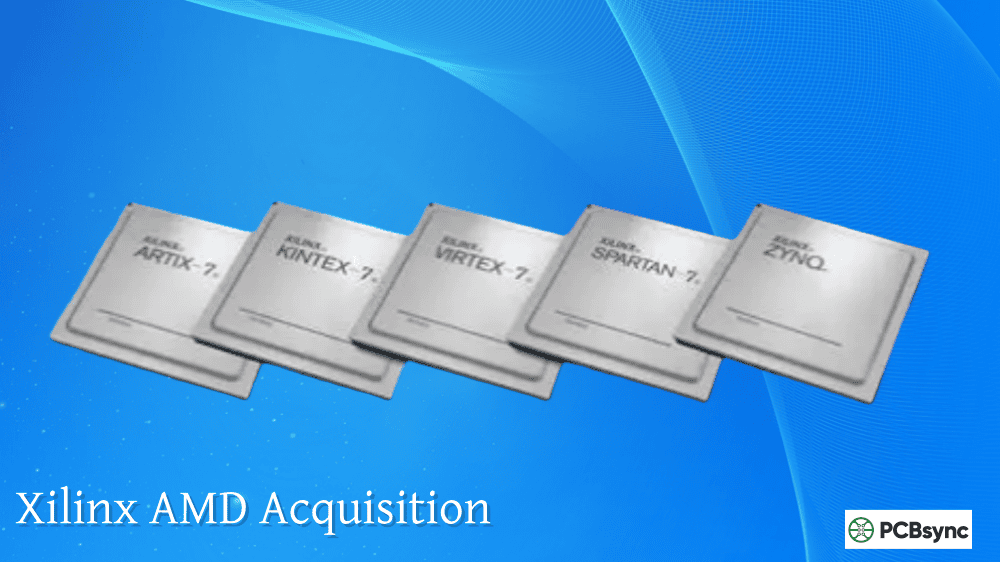
If you’ve been designing embedded systems for any length of time, you know the struggle of balancing cost, power consumption, and performance. After working with various FPGAs over the years, I’ve found the Xilinx Spartan-7 (now under AMD’s umbrella since the acquisition) to be one of the most practical choices for cost-sensitive projects where you still need real FPGA horsepower.
In this guide, I’ll walk through everything you need to know about the Spartan 7 family, from architecture and device selection to real-world applications and development tools. Whether you’re migrating from Spartan-6 or evaluating FPGAs for a new design, this should give you the technical foundation to make informed decisions.
The Spartan-7 family sits in AMD/Xilinx’s cost-optimized portfolio, built on the same proven 28nm HPL (High-Performance Low-power) process technology as the rest of the 7-series devices. This isn’t just marketing speak. The 28nm HKMG (High-K Metal Gate) process delivers roughly 50% lower total power compared to the 45nm Spartan-6 generation while providing about 30% better performance.
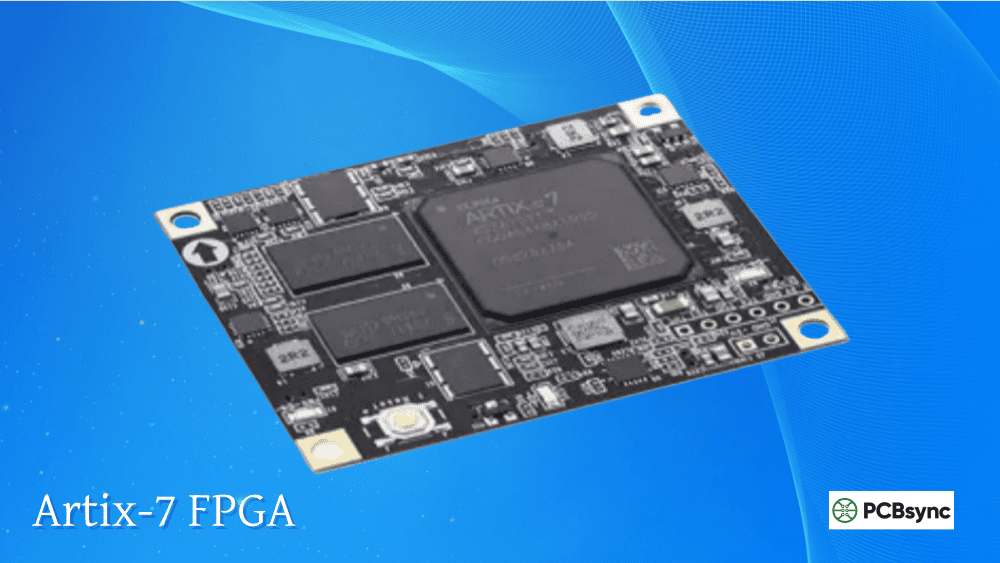
What this means practically is that you get modern FPGA capabilities without the price tag of higher-end families like Kintex or Virtex. The Spartan7 devices share the same device architecture as Artix-7, which gives you access to proven IP cores and development workflows.
Key Features at a Glance
Feature
Specification
Process Technology
28nm HPL
Logic Cells
6,000 to 102,400
Block RAM
Up to 4.32 Mb
DSP Slices
Up to 160 (DSP48E1)
Max User I/O
Up to 400
Core Voltage
1.0V (0.95V for -1L)
Memory Interface
800 Mb/s DDR3
On-chip ADC
Dual 12-bit, 1 MSPS
Operating Temp
-40°C to +125°C (Q-grade)
Smallest Package
8×8 mm (0.5mm pitch)
Spartan-7 Device Family Overview
The Spartan 7 lineup includes six devices that scale from small glue logic applications up to substantial embedded processing designs. Here’s the complete breakdown:
Device
Logic Cells
Slices
Block RAM (Kb)
DSP Slices
Max I/O
CMTs
XC7S6
6,000
938
180
10
100
2
XC7S15
12,800
2,000
360
20
100
2
XC7S25
23,360
3,650
1,620
80
150
3
XC7S50
52,160
8,150
2,700
120
250
5
XC7S75
76,800
12,000
3,240
140
338
8
XC7S100
102,400
16,000
4,320
160
400
8
The XC7S6 and XC7S15 are available in compact packages as small as 8x8mm, making them the only 28nm programmable devices in this form factor. This is significant for space-constrained designs like wearables, portable instruments, and dense industrial modules.
Architecture Deep Dive
Configurable Logic Blocks (CLBs)
The Xilinx Spartan-7 logic fabric uses the same CLB architecture as other 7-series devices. Each slice contains four 6-input LUTs and eight flip-flops. The LUTs can be configured as either one 6-input LUT with one output, or two 5-input LUTs with separate outputs sharing common addresses.
Between 25-50% of slices (depending on device) are SLICEM type, which means their LUTs can function as distributed RAM (64-bit each) or 32-bit shift registers (SRL32). This flexibility lets you implement small FIFOs, register files, and delay lines without consuming block RAM resources.
Block RAM Configuration
Spartan7 Block RAMs are 36Kb each, which can be configured as two independent 18Kb blocks. Compared to Spartan-6’s 18Kb blocks, this gives you more flexibility:
Built-in FIFO capabilities
Easy cascading between BRAMs
Built-in ECC (Error Correction Code)
Configurable width/depth ratios
The total Block RAM ranges from 180Kb on the XC7S6 to 4.32Mb on the XC7S100, which is substantial for buffering sensor data, implementing lookup tables, or storing coefficients for signal processing.
DSP48E1 Slices
The DSP architecture is where the Spartan-7 really steps up from Spartan-6. Each DSP48E1 slice includes:
Pre-adder (25-bit)
25×18 multiplier (compared to 18×18 in Spartan-6)
48-bit accumulator
Pattern detector
ALU functionality
These slices can run at 550 MHz or higher and deliver up to 176 GMAC of processing power on the larger devices. For applications like digital filtering, FFTs, or machine learning preprocessing, this makes the Spartan 7 quite capable despite being the entry-level family.
XADC: Integrated Analog-to-Digital Converter
One feature that sets the Xilinx Spartan 7 apart from many competing FPGAs is the integrated XADC. This dual-channel 12-bit ADC runs at 1 MSPS and includes:
Two dedicated analog input channels
Up to 17 auxiliary analog inputs via internal MUX
On-chip temperature sensor
Power supply monitoring for all rails
Autonomous track-and-hold amplifiers
This eliminates the need for external ADCs in many sensor fusion and monitoring applications. You can directly sample analog sensors, monitor system health, and implement mixed-signal designs without additional components.
Each CMT contains one MMCM (Mixed-Mode Clock Manager) and one PLL. The number of CMTs varies by device (2-8), giving you the clock generation and distribution resources for complex multi-clock designs.
The clocking structure supports:
BUFG: Global clock buffers (up to 32 global clock lines)
BUFH: Horizontal clock buffers with regional enable/disable
BUFR: Regional clock buffers
BUFIO: I/O clock buffers for high-speed interfaces
This hierarchical clocking lets you implement fine-grained power management by disabling clocks to inactive regions.
Power Efficiency
The Spartan-7 family offers exceptional performance-per-watt. The -1L speed grade devices operate at 0.95V core voltage, providing the lowest power option for battery-operated applications. Key power features include:
50% lower total power vs. Spartan-6
Multiple clock gating options
Power-optimized I/O standards
Sleep mode support
For PCB design, you’ll need to provide four main supply rails: VCCINT (1.0V), VCCBRAM (1.0V), VCCAUX (1.8V), and VCCO (1.2V-3.3V depending on I/O standard).
Security Features
Design protection is increasingly important, and Spartan7 devices include:
AES-256 bitstream encryption (CBC mode)
SHA-256 authentication
Unique Device DNA serial number
Secure boot capability
The Device DNA provides a unique identifier for each chip, useful for license enforcement, anti-counterfeiting, and secure key generation.
Target Applications for Spartan-7 FPGAs
Based on the architecture and capabilities, here’s where the Xilinx Spartan-7 makes the most sense:
Industrial Automation
Motor control with precise PWM generation
Industrial networking (EtherCAT, PROFINET)
Sensor fusion and data aggregation
PLC replacement for custom applications
Functional safety systems (with appropriate design practices)
Automotive Electronics
The XA7S automotive-grade variants support AEC-Q100 qualification for:
Advanced driver assistance systems (ADAS) preprocessing
Infotainment interfaces
V2X communication
Body electronics
Smart lighting control
Consumer and IoT
Display and camera interfacing
Edge computing nodes
Wireless base stations (small cells)
Smart home gateways
Wearable electronics
Embedded Vision
With integrated DSP resources and high-speed I/O, the Spartan 7 handles:
MIPI CSI/DSI interfaces
Real-time image preprocessing
Feature extraction
Lens distortion correction
Development Boards and Evaluation Kits
Several development platforms target the Xilinx Spartan-7:
Board
FPGA
Key Features
Use Case
SP701 Evaluation Kit
XC7S100
512MB DDR3, Dual Ethernet, MIPI, FMC
Professional prototyping
Arty S7-50
XC7S50
256MB DDR3, Arduino headers, Pmods
Hobbyist/Education
Arty S7-25
XC7S25
256MB DDR3, Arduino headers, Pmods
Entry-level learning
EDGE Spartan-7
XC7S15
WiFi, Bluetooth, LCD, VGA, ADC/DAC
Educational labs
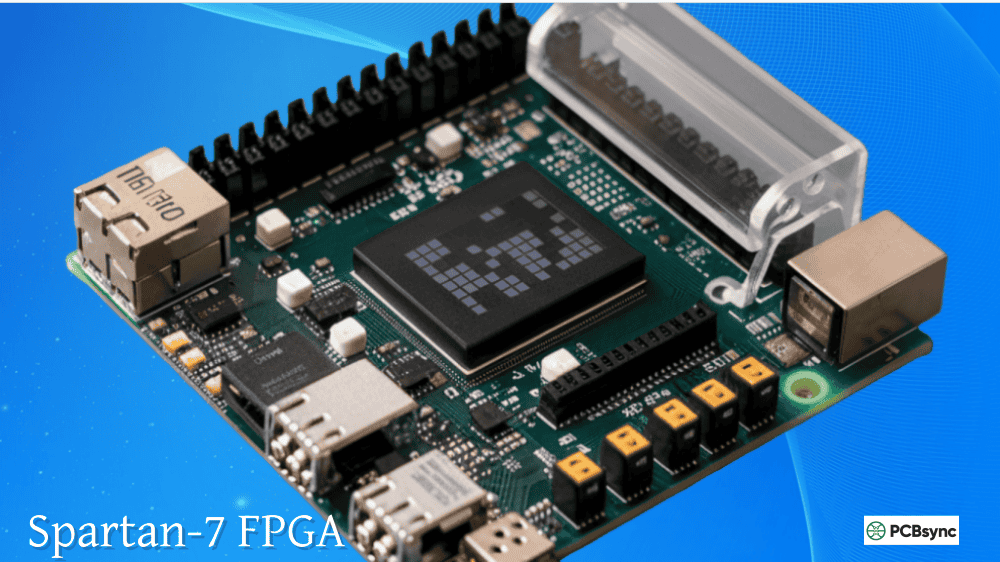
The SP701 kit includes the XC7S100 (largest Spartan-7 device) with comprehensive connectivity: dual Gigabit Ethernet, MIPI camera/display interfaces, HDMI output, and FMC expansion. It’s the most complete platform for evaluating Spartan 7 capabilities.
For getting started on a budget, the Arty S7 boards from Digilent offer excellent value with Arduino-compatible headers and Pmod expansion.
All Spartan-7 development uses Vivado, which is a significant consideration if you’re migrating from Spartan-6 (which used ISE). The free Vivado WebPACK edition supports all Spartan-7 devices with no restrictions.
Vivado provides:
High-level synthesis (HLS) for C/C++ to RTL
IP Integrator for block-based design
Advanced placement and routing (20% better utilization vs. ISE)
Integrated logic analyzer (ILA)
Comprehensive simulation support
MicroBlaze Soft Processor
The Spartan 7 fully supports MicroBlaze, Xilinx’s 32-bit RISC soft processor. With the right configuration, you can achieve:
Over 200 DMIPS performance
Linux support (with external DDR memory)
ARM Cortex-M1/M3 DesignStart compatibility
FreeRTOS for real-time applications
This makes the Xilinx Spartan 7 suitable for system-on-chip designs where you need both custom hardware acceleration and processor-based control.
Migrating from Spartan-6 to Spartan-7
If you have existing Spartan-6 designs, here are the key migration considerations:
What Transfers Easily
RTL code (Verilog/VHDL)
Most IP cores (with recompilation)
General design methodology
What Requires Work
Constraints: UCF files must be converted to XDC (Xilinx Design Constraints)
BRAM configurations: 36Kb vs. 18Kb blocks may require restructuring
DSP slice mapping: Wider multiplier (25×18 vs. 18×18)
Clock management: Different buffer types and primitives
I/O standards: Some SelectIO differences
Important Note on Transceivers
The Spartan-7 has no GTP transceivers. If your Spartan-6 design uses LXT variants with transceivers, you’ll need to migrate to Artix-7 instead, which offers 6.25 Gb/s GTP transceivers.
Tool Migration
The ISE-to-Vivado transition is the biggest hurdle for many teams. While Vivado is more capable, it has a different workflow. Budget time for learning the new environment, especially for IP Integrator and timing closure procedures.
PCB Design Considerations
When laying out a board with Spartan7 devices, keep these points in mind:
Power Supply Sequencing
The recommended sequence is: VCCINT → VCCBRAM → VCCAUX → VCCO
This ensures minimum current draw and proper I/O tri-stating during power-up. The datasheet specifies minimum ramp times and current requirements for reliable operation.
Package Selection
Spartan 7 comes in several package options:
Package Type
Pin Count
Ball Pitch
Notes
CPGA
196
0.8mm
Ceramic, for prototyping
CSGA
225/324
0.5mm
Small form factor
FTGB
196
0.5mm
Fine-pitch BGA
FGGA
484/676
1.0mm
Standard BGA
The CSGA packages in 8x8mm are particularly useful for space-constrained designs.
Configuration Storage
You’ll need external configuration memory, typically Quad SPI flash. The bitstream size varies by device:
XC7S6: ~2.3 Mb
XC7S50: ~17.5 Mb
XC7S100: ~30 Mb
Plan your flash size accordingly, with headroom for multiboot configurations if needed.
Useful Resources and Downloads
Here are the essential documents and tools for Xilinx Spartan-7 development:
Official Documentation
7 Series FPGAs Overview (DS180): Complete family reference
Spartan-7 DC and AC Switching Characteristics (DS189): Timing specifications
7 Series FPGAs Configuration User Guide (UG470): Configuration modes and requirements
7 Series FPGAs SelectIO Resources User Guide (UG471): I/O standards and interfaces
7 Series FPGAs Clocking Resources User Guide (UG472): Clock management details
7 Series FPGAs Memory Resources User Guide (UG473): Block RAM and distributed RAM
7 Series FPGAs Packaging and Pinout User Guide (UG475): Package drawings and pinouts
7 Series FPGAs and Zynq-7000 SoC XADC User Guide (UG480): Analog interface details
Development Tools
Vivado Design Suite: Download from AMD/Xilinx website (WebPACK is free)
Vitis Development Platform: For embedded software development
Xilinx Power Estimator (XPE): Spreadsheet tool for power analysis
Reference Designs
MicroBlaze example projects (included with Vivado)
Memory interface generator (MIG) for DDR3
SP701 board reference designs
Arty S7 example projects from Digilent
Frequently Asked Questions
What is the difference between Spartan-7 and Artix-7?
The Spartan-7 and Artix-7 share the same 28nm process and basic architecture, but Artix-7 includes GTP transceivers (up to 6.6 Gb/s), more logic resources, and higher I/O counts. Choose Spartan 7 for cost-sensitive designs without high-speed serial requirements; choose Artix-7 when you need transceivers or larger capacity.
Can I run Linux on a Spartan-7 FPGA?
Yes, using MicroBlaze with external DDR memory, you can run Linux on Xilinx Spartan-7 devices. The SP701 evaluation kit specifically supports this with preconfigured PetaLinux BSPs. Smaller devices like XC7S15 can run bare-metal or RTOS applications.
What programming language is used for Spartan-7 development?
Primary development uses hardware description languages (Verilog or VHDL). For embedded processing with MicroBlaze, you’ll also use C/C++. Vivado High-Level Synthesis (HLS) allows algorithmic development in C/C++ that compiles to RTL.
Is Spartan-7 suitable for HDMI or DisplayPort interfaces?
The Spartan-7 can handle HDMI 1.4 output through its SelectIO resources (not transceivers). The SP701 kit includes HDMI output capability. For DisplayPort, you’d typically need the GTP transceivers available in Artix-7 or higher families.
How long will Spartan-7 devices be available?
AMD has committed to supporting 7-series FPGAs through 2040, giving the Xilinx Spartan 7 family a long production lifespan. This makes it a safe choice for products with extended lifecycle requirements.
Conclusion
The Xilinx Spartan-7 family delivers a compelling combination of modern FPGA capabilities at entry-level pricing. With the 28nm process providing excellent power efficiency, integrated XADC for mixed-signal applications, and robust DSP resources, it handles a wide range of embedded design challenges.
For engineers working on industrial, automotive, consumer, or IoT applications where cost and power matter but you still need substantial programmable logic, the Spartan 7 deserves serious consideration. The free Vivado WebPACK support, long-term availability commitment, and extensive ecosystem make it a practical choice for both prototyping and production.
If you’re currently on Spartan-6, the migration effort is worthwhile given the performance improvements and the fact that ISE development has ended. For new designs, evaluate whether you need transceivers (go Artix-7) or can work within Spartan-7’s capabilities for a more cost-effective solution.
Inquire: Call 0086-755-23203480, or reach out via the form below/your sales contact to discuss our design, manufacturing, and assembly capabilities.
Quote: Email your PCB files to Sales@pcbsync.com (Preferred for large files) or submit online. We will contact you promptly. Please ensure your email is correct.
Notes: For PCB fabrication, we require PCB design file in Gerber RS-274X format (most preferred), *.PCB/DDB (Protel, inform your program version) format or *.BRD (Eagle) format. For PCB assembly, we require PCB design file in above mentioned format, drilling file and BOM. Click to download BOM template To avoid file missing, please include all files into one folder and compress it into .zip or .rar format.