Inquire: Call 0086-755-23203480, or reach out via the form below/your sales contact to discuss our design, manufacturing, and assembly capabilities.
Quote: Email your PCB files to Sales@pcbsync.com (Preferred for large files) or submit online. We will contact you promptly. Please ensure your email is correct.
Notes: For PCB fabrication, we require PCB design file in Gerber RS-274X format (most preferred), *.PCB/DDB (Protel, inform your program version) format or *.BRD (Eagle) format. For PCB assembly, we require PCB design file in above mentioned format, drilling file and BOM. Click to download BOM template To avoid file missing, please include all files into one folder and compress it into .zip or .rar format.
XC7K325T FPGA: High-Capacity Kintex-7 for Demanding Applications
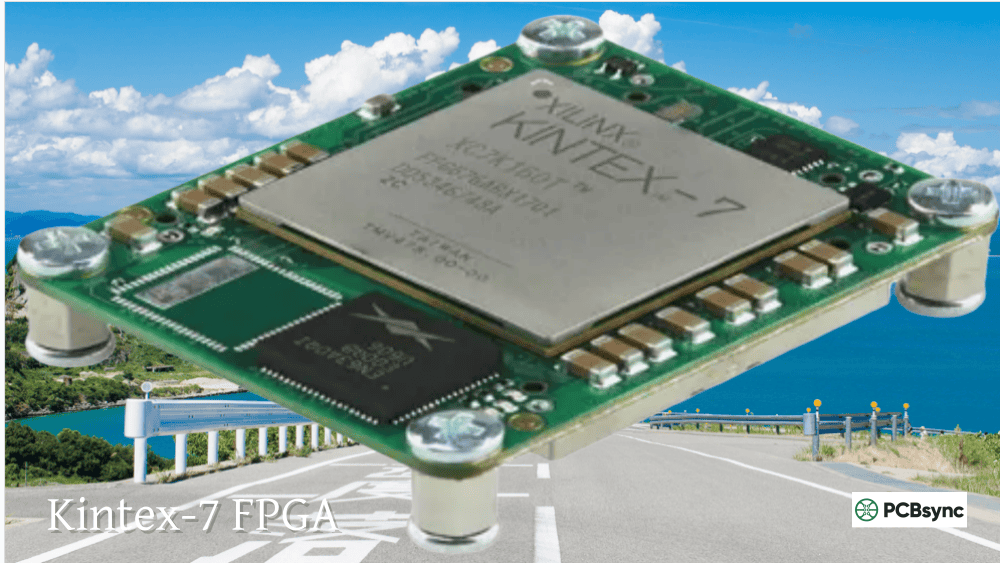
The XC7K325T has become the go-to device for engineers who need serious FPGA horsepower without stepping up to Virtex pricing. After designing multiple carrier boards and production systems around this chip, I can confirm it delivers on its promise of Virtex-6 performance at less than half the cost. This guide covers the XC7K325T specifications, package options, speed grade selection, and real-world implementation considerations that matter when you’re laying out a board or selecting parts for a new project.
The XC7K325T sits near the top of the Kintex-7 lineup, offering substantial logic resources while maintaining the price-performance advantage that defines the Kintex family. Built on Xilinx‘s 28nm High-Performance Low-Power (HPL) process with high-k metal gate (HKMG) technology, this device delivers impressive capability per watt.
Parameter
XC7K325T Specification
Logic Cells
326,080
CLB Slices
50,950
CLB Flip-Flops
407,600
Distributed RAM (Kb)
4,000
Block RAM (Kb)
16,020
Block RAM (36Kb each)
445
DSP48E1 Slices
840
CMTs (Clock Management Tiles)
10
MMCMs
10
PLLs
10
GTX Transceivers (max)
16
PCIe Hard Blocks
1 (Gen2 x8)
XADC Blocks
1
Max User I/O
500
Process Technology
28nm HKMG HPL
Core Voltage (VCCINT)
1.0V nominal
What makes the XC7K325T particularly attractive is the balance between resources. The 326K logic cells handle complex state machines and control logic, while 840 DSP slices provide genuine signal processing muscle—enough for sophisticated digital filtering, FFT implementations, or multi-channel communications processing. The 16Mb of block RAM stores frame buffers, coefficient tables, or deep FIFOs without external memory for many applications.
XC7K325T Package Options and I/O Capabilities
The XC7K325T comes in multiple package configurations, each optimized for different board constraints and I/O requirements. Package selection significantly impacts your PCB complexity, available transceivers, and thermal management approach.
Available XC7K325T Packages
Package
Ball Count
HP I/O
HR I/O
GTX Transceivers
Body Size
Ball Pitch
FBG676
676
150
250
8
27×27mm
1.0mm
FFG676
676
150
250
8
27×27mm
1.0mm
FBG900
900
150
350
16
31×31mm
1.0mm
FFG900
900
150
350
16
31×31mm
1.0mm
The distinction between FBG (wire-bond) and FFG (flip-chip) packages matters primarily for thermal performance. FFG packages position the die closer to the package surface, providing slightly better thermal dissipation. From a pinout perspective, FBG676/FFG676 are footprint compatible, as are FBG900/FFG900.
For designs requiring maximum transceiver count (16 GTX channels) or extensive I/O (up to 500 pins), the 900-ball packages are mandatory. The 676-ball packages work well for cost-sensitive applications where 8 transceivers and 400 I/O pins suffice.
XC7K325T I/O Banking Structure
The XC7K325T provides both High-Performance (HP) and High-Range (HR) I/O banks:
I/O Type
Voltage Range
Capabilities
HP Banks
1.2V – 1.8V
DDR3/DDR3L up to 1866Mb/s, DCI, ODELAY
HR Banks
1.2V – 3.3V
Wide voltage range, legacy interface support
HP banks are essential for DDR3 memory interfaces where the MIG (Memory Interface Generator) requires specific pin assignments for timing calibration. HR banks handle everything else—3.3V GPIO, legacy buses, and slower peripheral connections.
XC7K325T Speed Grade Selection
Speed grade selection directly impacts achievable clock frequencies, timing closure difficulty, and unit cost. The XC7K325T offers multiple speed grade options for different performance and power requirements.
Speed Grade Comparison
Speed Grade
Performance
VCCINT
Temperature Options
Use Case
-3
Highest
1.0V
C (Commercial)
Maximum performance
-2
High
1.0V
C, I (Industrial)
General high-performance
-1
Standard
1.0V
C, I
Cost-optimized
-2L
Low-power high
0.9V/1.0V
E (Extended)
Power-sensitive
-1L
Low-power standard
0.95V
I, M (Military)
Extended temp + low power
The -3 speed grade delivers approximately 15-20% better timing margins than -1, which translates to higher achievable clock frequencies. For designs with comfortable timing margins at -2 specifications, there’s little reason to pay the -3 premium. However, if timing analysis shows you’re cutting it close, upgrading speed grade is often cheaper than extensive architectural rework.
Temperature Grade Suffixes
Suffix
Temperature Range
Typical Application
C
0°C to +85°C
Commercial/Consumer
I
-40°C to +100°C
Industrial
Q
-40°C to +125°C
Automotive (XA parts)
M
-55°C to +125°C
Military (XQ parts)
Industrial-grade (-I suffix) parts cost modestly more than commercial but eliminate temperature-related field failures in uncontrolled environments. For any application outside a climate-controlled datacenter, the industrial grade is worth the premium.
Several development platforms target the XC7K325T, with the KC705 being the most comprehensive official option.
KC705 Evaluation Kit Features
Feature
Specification
FPGA
XC7K325T-2FFG900C
DDR3 Memory
1GB SODIMM
Configuration Storage
128MB BPI Flash, 16MB Quad SPI
PCIe
Gen2 x8 edge connector
Ethernet
Tri-mode 10/100/1000
High-Speed Serial
SFP+ connector
FMC Connectors
1x HPC (partial), 1x LPC
Video
HDMI output
Expansion
SMA pairs, GPIO headers
The KC705 includes pre-verified reference designs for PCIe, DDR3, and Ethernet, significantly accelerating development. The included Vivado license voucher adds considerable value for teams without existing tool licenses.
Alternative XC7K325T Development Boards
Board
Manufacturer
Key Features
Approximate Price
Genesys 2
Digilent
HDMI, DisplayPort, DDR3, Audio
~$999
AX7325B
ALINX
DDR3, SFP+, QSFP+, FMC
~$500
Nereid
Numato
PCIe x4, DDR3, compact form
~$599
XC7K325T Real-World Applications
The XC7K325T finds deployment across diverse industries where its balance of logic, DSP, and connectivity resources matches application requirements.
Wireless Infrastructure
The KC705’s heritage as a wireless development platform reflects the XC7K325T’s strength in this domain. Base station designs leverage the 840 DSP slices for digital up/down conversion, filtering, and MIMO processing. The GTX transceivers handle CPRI/OBSAI backhaul with line rates up to 12.5Gb/s, while the PCIe block enables integration with baseband processing units.
Broadcast and Video Processing
Triple-rate SDI bridging, EdgeQAM modulation, and video-over-IP transcoding benefit from the XC7K325T’s combination of high-speed transceivers and substantial logic resources. The 16Mb block RAM accommodates 1080p frame buffers for real-time processing pipelines.
Medical Imaging
MRI reconstruction, ultrasound beamforming, and CT processing systems utilize the DSP resources for computationally intensive algorithms. The industrial temperature variants (-I suffix) meet reliability requirements for medical equipment operating in clinical environments.
Aerospace and Defense
Radar signal processing, avionics data buses, and electronic warfare applications leverage both the computational resources and the availability of defense-grade (XQ7K325T) variants with extended temperature ranges and enhanced reliability screening.
High-Speed Data Acquisition
Test and measurement systems use the XC7K325T for high-speed ADC/DAC interfacing, real-time signal analysis, and protocol decoding. The SelectIO resources support a wide range of interface standards at speeds up to 1866Mb/s for DDR interfaces.
XC7K325T vs XC7K410T: Choosing Between Popular Variants
When XC7K325T resources prove insufficient, the XC7K410T provides the next step up. Understanding the differences helps determine which device fits your requirements.
Specification
XC7K325T
XC7K410T
Difference
Logic Cells
326,080
406,720
+25%
CLB Slices
50,950
63,550
+25%
Block RAM (Kb)
16,020
28,620
+79%
DSP Slices
840
1,540
+83%
GTX Transceivers
16
16
Same
Max User I/O
500
500
Same
The XC7K410T’s dramatic increases in block RAM (+79%) and DSP slices (+83%) make it the better choice for memory-intensive or DSP-heavy applications. For logic-dominated designs where memory and DSP utilization remains modest, the XC7K325T provides better value.
Reliable XC7K325T operation requires careful attention to power supply design. The device demands multiple voltage rails with specific sequencing requirements.
Supply Rail
Nominal Voltage
Tolerance
Typical Current (XC7K325T-2)
VCCINT
1.0V
±3%
2-6A (design dependent)
VCCBRAM
1.0V
±3%
0.2-0.5A
VCCAUX
1.8V
±5%
0.5-1.5A
VCCAUX_IO
1.8V/2.0V
±5%
0.1-0.4A
VCCO
1.2V-3.3V
Per standard
Varies by bank loading
MGTAVCC
1.0V
±3%
50-100mA per transceiver
MGTAVTT
1.2V
±3%
50-100mA per transceiver
Power Sequencing Requirements
The recommended power-on sequence minimizes inrush current and ensures proper device initialization:
VCCINT (can ramp with VCCBRAM)
VCCBRAM
VCCAUX, VCCAUX_IO (can ramp together)
VCCO banks
MGTAVCC, MGTAVTT (can ramp together after VCCINT)
Power-off reverses this sequence. PMICs designed for 7 Series FPGAs (like the TPS65400) handle sequencing automatically.
Essential XC7K325T Documentation
Document
Description
Document Number
DC and AC Switching Characteristics
Complete timing specifications
DS182
7 Series FPGAs Overview
Architecture and feature summary
DS180
Packaging and Pinout Guide
Package drawings, pin tables
UG475
SelectIO Resources Guide
I/O standard specifications
UG471
GTX Transceivers User Guide
High-speed serial design
UG476
Memory Interface Solutions Guide
DDR3/DDR4 implementation
UG586
KC705 User Guide
Development board reference
UG810
XC7K325T Frequently Asked Questions
What Vivado license is required for XC7K325T development?
The XC7K325T is NOT included in the free Vivado WebPACK edition. You need a Vivado Enterprise or HL Design license. However, AMD includes a device-locked license voucher with the KC705 evaluation kit, and many third-party boards include similar vouchers. For production design teams, enterprise licensing is typically already in place.
Can the XC7K325T support DDR4 memory?
No, the XC7K325T only supports DDR3 and DDR3L interfaces up to 1866Mb/s through HP I/O banks. DDR4 requires UltraScale architecture or newer. The MIG tool generates proven DDR3 controllers that achieve reliable operation at rated speeds with proper PCB design.
What is the maximum GTX transceiver speed on XC7K325T?
GTX transceivers support line rates from 500Mb/s to 12.5Gb/s in FFG packages. FBG packages limit maximum rates to 10.3Gb/s (FBG484) or 6.6Gb/s (FBG676/FBG900) due to package routing constraints. For 10G Ethernet or 10G backhaul applications, specify FFG packages.
How does XC7K325T compare to Artix-7 devices?
The XC7K325T provides approximately 2x the logic density of the largest Artix-7 (XC7A200T), faster GTX transceivers (12.5Gb/s vs 6.6Gb/s GTP), and higher memory interface speeds (DDR3-1866 vs DDR3-1066). Artix-7 costs less and consumes less power for designs that fit within its resources.
Is the XC7K325T still recommended for new designs?
Yes, AMD guarantees 7 Series FPGA support through 2040, making the XC7K325T viable for products with 15+ year lifecycles. The mature silicon, extensive documentation, and proven ecosystem reduce project risk. For designs requiring higher performance or lower power, evaluate Kintex UltraScale as well, but the XC7K325T remains a solid choice for many applications.
Conclusion
The XC7K325T delivers a compelling combination of logic density, DSP capability, and high-speed connectivity that handles demanding applications across industries. Its 326K logic cells, 840 DSP slices, and up to 16 GTX transceivers provide the resources for sophisticated digital systems, while the 28nm HPL process keeps power consumption reasonable.
For most applications, the XC7K325T-2FFG900I (industrial temperature, -2 speed grade, 900-ball package) represents the optimal starting point—providing full transceiver access, good performance margins, and reliability across industrial temperature ranges. From there, optimize package size, speed grade, or temperature range based on specific project constraints.
The extensive ecosystem of development boards, IP cores, and documentation accelerates time-to-market while the proven silicon reliability reduces deployment risk. When your design needs more than Artix-7 delivers but Virtex pricing isn’t justified, the XC7K325T consistently proves to be the right answer.
Inquire: Call 0086-755-23203480, or reach out via the form below/your sales contact to discuss our design, manufacturing, and assembly capabilities.
Quote: Email your PCB files to Sales@pcbsync.com (Preferred for large files) or submit online. We will contact you promptly. Please ensure your email is correct.
Notes: For PCB fabrication, we require PCB design file in Gerber RS-274X format (most preferred), *.PCB/DDB (Protel, inform your program version) format or *.BRD (Eagle) format. For PCB assembly, we require PCB design file in above mentioned format, drilling file and BOM. Click to download BOM template To avoid file missing, please include all files into one folder and compress it into .zip or .rar format.