Inquire: Call 0086-755-23203480, or reach out via the form below/your sales contact to discuss our design, manufacturing, and assembly capabilities.
Quote: Email your PCB files to Sales@pcbsync.com (Preferred for large files) or submit online. We will contact you promptly. Please ensure your email is correct.
Notes: For PCB fabrication, we require PCB design file in Gerber RS-274X format (most preferred), *.PCB/DDB (Protel, inform your program version) format or *.BRD (Eagle) format. For PCB assembly, we require PCB design file in above mentioned format, drilling file and BOM. Click to download BOM template To avoid file missing, please include all files into one folder and compress it into .zip or .rar format.
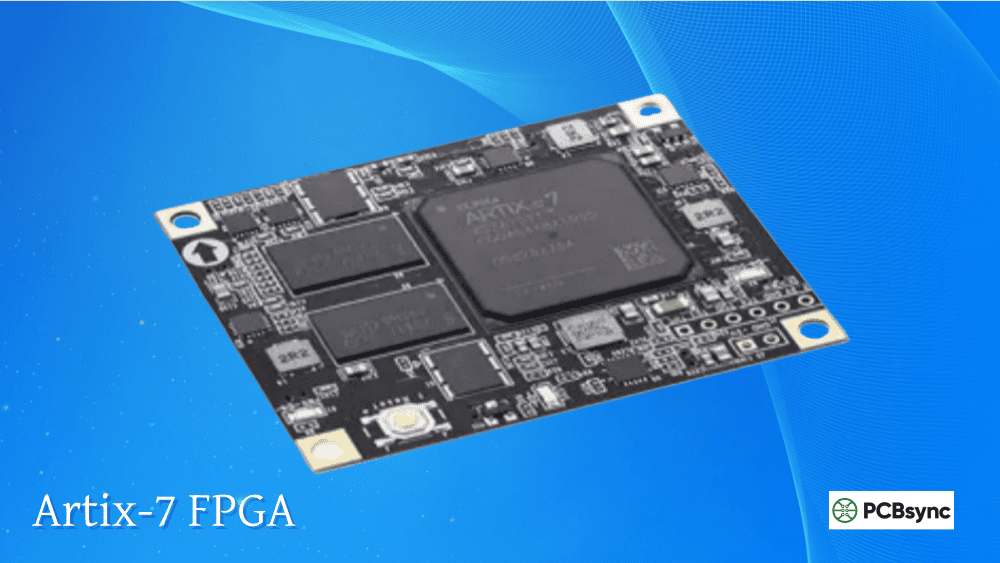
If you’ve been hunting for a cost-effective FPGA that doesn’t sacrifice performance, the Xilinx Artix-7 family deserves your attention. After working with various FPGA families over the years, I can tell you that the Artix 7 hits a sweet spot that’s hard to match—especially when budget constraints are real but your project still needs serious processing muscle.
Built on AMD’s (formerly Xilinx) 28nm high-performance low-power (HPL) process technology, the Xilinx Artix-7 FPGA series delivers what many engineers actually need: solid logic density, integrated transceivers, respectable DSP capability, and power consumption that won’t require exotic cooling solutions. Whether you’re prototyping a software-defined radio, building machine vision systems, or designing industrial controllers, these devices have proven themselves across countless production designs.
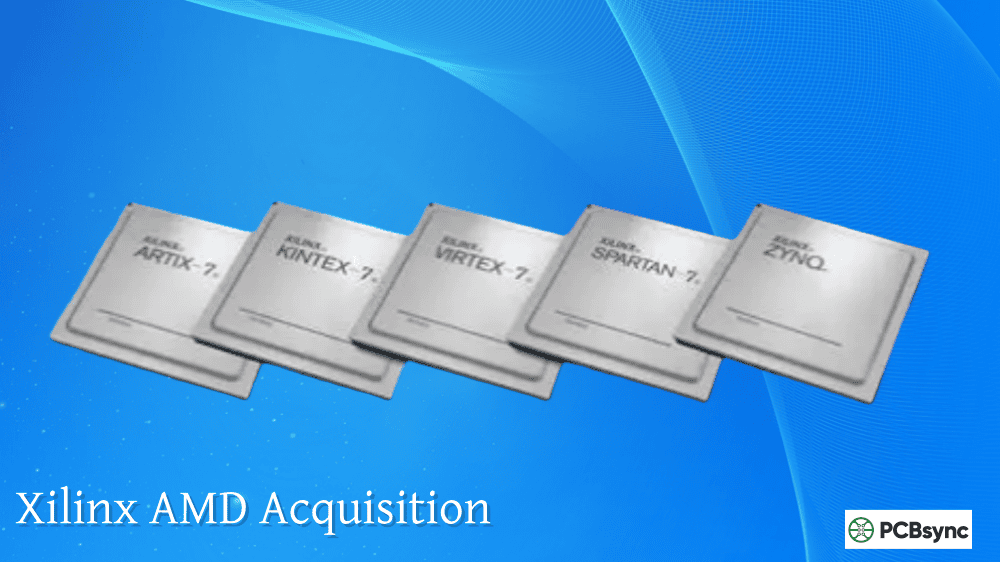
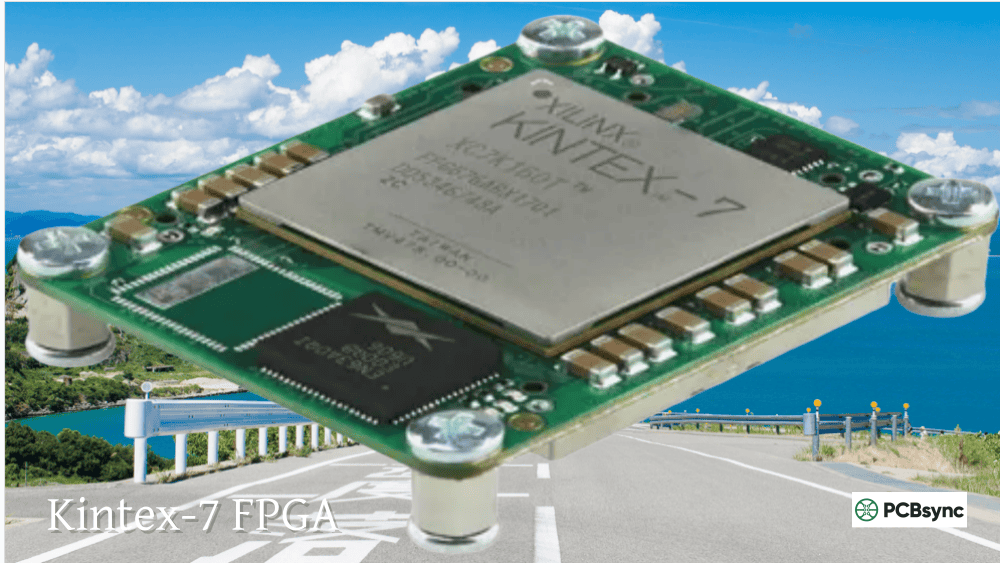
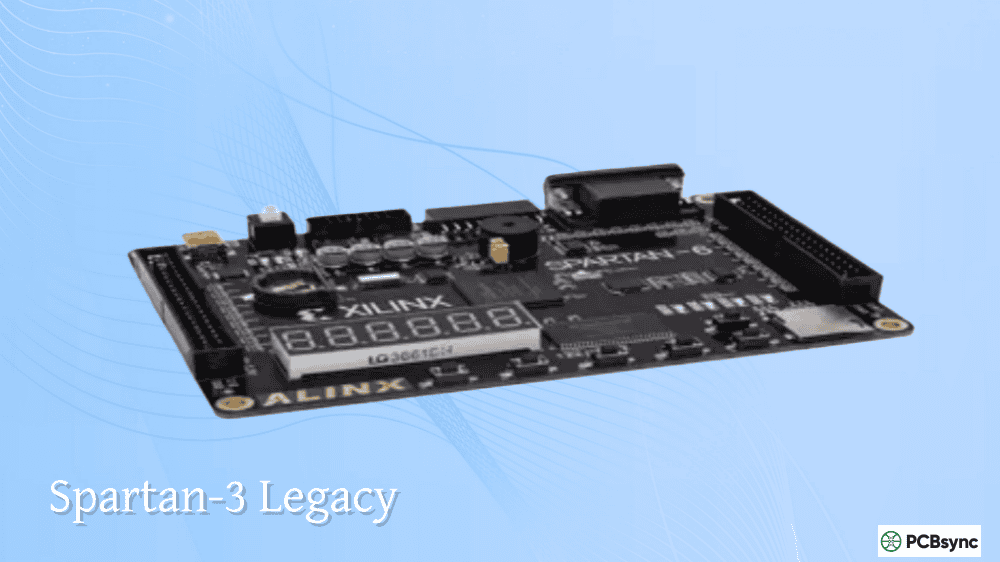
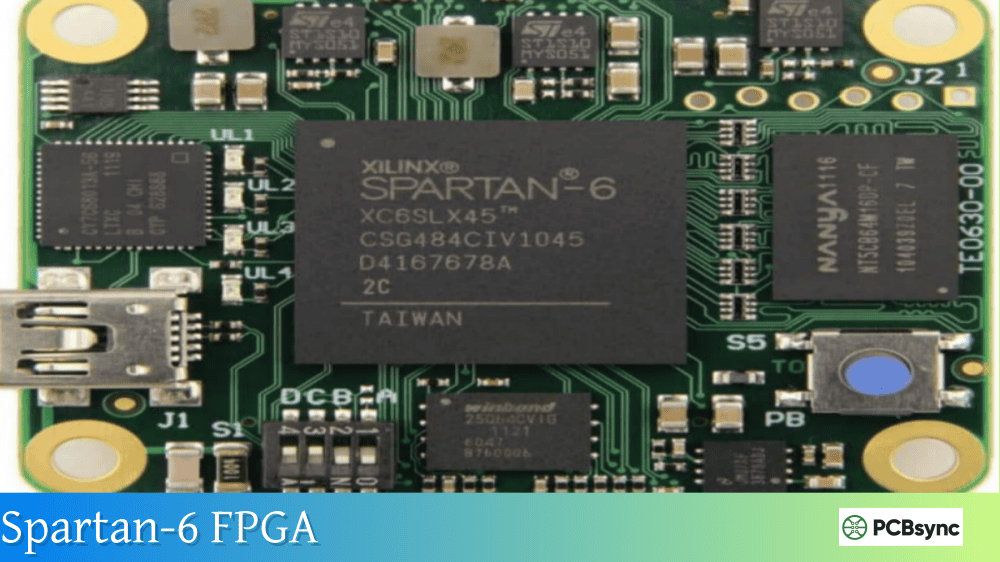
The Artix A7 family represents Xilinx’s cost-optimized solution within their 7 Series lineup. Compared to the previous-generation Spartan-6, the Artix-7 delivers approximately 50% lower power consumption and 35% cost reduction while maintaining the unified architecture shared across all 7 Series devices. That architectural consistency means your IP cores and design methodologies translate seamlessly if you need to scale up to Kintex-7 or Virtex-7 later.
Several key characteristics define what makes the Xilinx Artix 7 compelling for practical engineering work:
Power Efficiency: The 28nm HPL process enables static power reductions of up to 65% compared to 45nm generation devices. Dynamic power drops by approximately 50%. For battery-powered applications or designs with tight thermal budgets, this matters enormously.
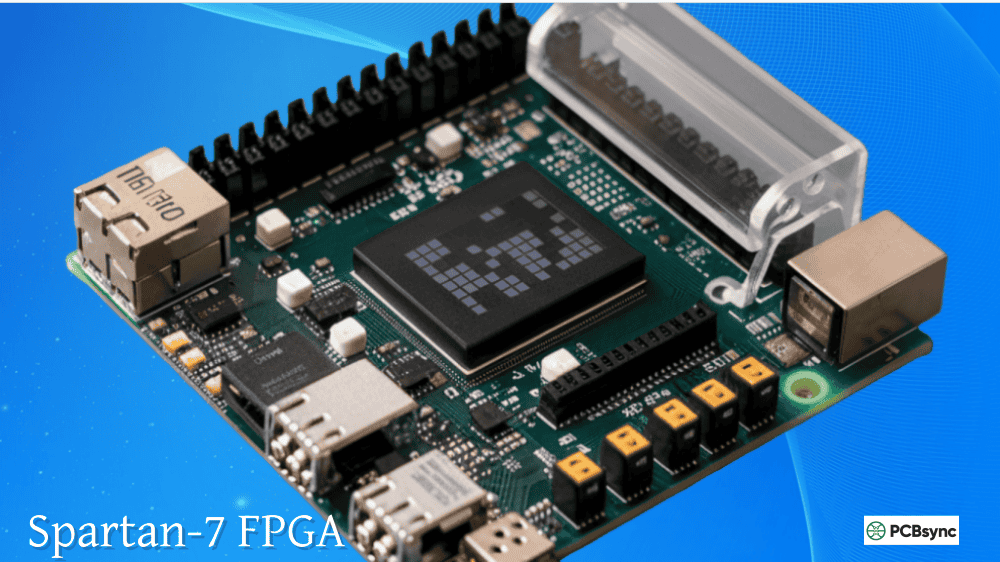
Integrated GTP Transceivers: Unlike the Spartan-7 family which lacks transceivers entirely, Artix-7 devices include GTP transceivers supporting up to 6.6 Gb/s line rates. These enable high-speed serial protocols without burning precious logic resources on SERDES implementations.
DSP Processing Muscle: Up to 740 DSP48E1 slices deliver serious signal processing capability—we’re talking 930 GMAC/s peak performance. Each slice contains a pre-adder, 25×18 multiplier, adder, and accumulator, making them highly efficient for filter implementations and mathematical operations.
Analog Mixed-Signal Integration: The integrated XADC (dual 12-bit, 1 MSPS analog-to-digital converters with 17 external channels) can save roughly $5 in external analog component costs while simplifying board design.
Artix-7 Device Specifications Comparison
The family spans from compact devices suitable for simple control applications to larger variants handling complex signal processing. Here’s how the main Xilinx Artix 7 FPGA devices stack up:
Device
Logic Cells
CLB Slices
Block RAM (Kb)
DSP Slices
Max User I/O
GTP Transceivers
XC7A12T
12,800
2,000
360
40
150
2
XC7A15T
16,640
2,600
450
45
250
4
XC7A25T
23,360
3,650
540
80
150
4
XC7A35T
33,280
5,200
1,800
90
250
4
XC7A50T
52,160
8,150
2,700
120
250
4
XC7A75T
75,520
11,800
3,780
180
300
8
XC7A100T
101,440
15,850
4,860
240
300
8
XC7A200T
215,360
33,650
13,140
740
500
16
The “T” suffix indicates transceiver-equipped variants. Logic cells represent the equivalent gate count using standard 4-input LUT methodology, though actual utilization depends heavily on your specific design.
Understanding Artix-7 Architecture
Configurable Logic Blocks (CLBs)
Each CLB contains two logic slices, and each slice packs four 6-input LUTs plus eight flip-flops. The LUTs can implement any 6-input boolean function or be split into two 5-input LUTs with shared inputs. Between 25-50% of slices (depending on device) support using LUTs as distributed RAM (64-bit) or shift registers (SRL32).
The practical implication? Your synthesis tools have flexibility to map designs efficiently. Complex combinational logic, state machines, and small FIFOs can utilize distributed resources rather than consuming dedicated block RAM.
Block RAM Resources
Block RAM on Artix 7 comes in 36Kb blocks, each configurable as a single 36Kb memory or dual independent 18Kb memories. Built-in FIFO controllers support both synchronous and asynchronous operation with programmable almost-full/almost-empty thresholds.
ECC logic is available for applications requiring data integrity—particularly useful when interfacing with external 64-72 bit wide memories where soft errors become a concern.
DSP48E1 Slices
The DSP slices deserve special attention for anyone doing signal processing work. Each DSP48E1 includes:
25×18 two’s complement multiplier
Pre-adder for symmetric filter implementations
48-bit accumulator
Pattern detector for convergent rounding
Cascading DSP slices enables efficient implementation of FIR filters, matrix operations, and other compute-intensive algorithms without consuming precious fabric routing resources.
GTP Transceivers
The integrated GTP transceivers support line rates from 500 Mb/s to 6.6 Gb/s, making them suitable for:
PCIe Gen1/Gen2 (x1, x2, x4 configurations)
SATA 1.5G/3G/6G
Gigabit Ethernet
DisplayPort
Various proprietary protocols
Each transceiver includes TX/RX equalization, clock data recovery, and 8b/10b encoding—features that would consume substantial logic if implemented in fabric.
Artix-7 Power Requirements and PCB Design Considerations
Getting power delivery right is critical with any FPGA design. The Artix-7 requires multiple voltage rails with specific sequencing requirements.
Voltage Rail Requirements
Rail
Typical Voltage
Purpose
VCCINT
1.0V (0.9V for -2L)
Core logic
VCCBRAM
1.0V
Block RAM
VCCAUX
1.8V
Auxiliary circuits
VCCO
1.2V – 3.3V
I/O banks (varies by standard)
VMGTAVCC
1.0V
Transceiver analog
VMGTAVTT
1.2V
Transceiver termination
Power-On Sequencing
The recommended power-up sequence matters: VCCINT first, then VCCBRAM (can be simultaneous if same voltage), followed by VCCAUX, and finally VCCO banks. Reverse this order for power-down. Getting this wrong won’t necessarily destroy the device, but it can cause configuration failures or erratic behavior.
For designs targeting lowest power, the -1LI and -2L speed grades operate at reduced core voltages (0.95V and 0.9V respectively), achieving significant static power reduction while maintaining acceptable performance for many applications.
PCB Layout Guidelines
From experience, these layout practices prevent common headaches:
Place bulk decoupling capacitors (100µF) near power entry points
Distribute 0.1µF ceramic capacitors across VCCINT pins (one per power pin cluster)
Add 0.01µF ceramics adjacent to critical pins
Keep power planes solid under the FPGA footprint
Route high-speed differential pairs with controlled impedance (typically 100Ω differential)
Maintain consistent trace lengths for memory interfaces
The Xilinx Power Estimator (XPE) tool provides accurate power consumption estimates for your specific design—use it early in the design cycle to size regulators appropriately.
Artix-7 Part Number Decoder
Xilinx part numbers encode significant information. Understanding the naming convention helps when specifying devices or evaluating alternatives.
Example: XC7A100T-2FGG484I
Segment
Value
Meaning
XC
XC
Standard commercial (XA = automotive, XQ = defense)
7A
7A
7 Series Artix family
100T
100T
~100K logic cells, with transceivers
-2
-2
Speed grade (-1 slowest, -3 fastest)
FGG
FGG
Fine-pitch BGA package
484
484
Pin count
I
I
Industrial temperature (-40°C to +100°C)
Temperature grade suffixes include: C (commercial, 0-85°C), I (industrial, -40 to +100°C), and Q (extended, -40 to +125°C for automotive).
Selecting the Right Artix-7 Device for Your Application
Choosing the optimal Artix 7 variant involves balancing resources, I/O requirements, package constraints, and budget. Here’s a practical selection framework:
For Entry-Level Applications
XC7A35T represents an excellent starting point for many designs. With 33,280 logic cells, 90 DSP slices, and 1.8Mb of block RAM, it handles:
Motor control applications
Basic video processing pipelines
Protocol conversion bridges
Educational platforms (Basys 3 board uses this device)
Typical single-unit pricing falls in the $25-50 range depending on package and speed grade.
For Mid-Range Requirements
XC7A100T delivers the sweet spot for many production designs. The 101K logic cells and 240 DSP slices support:
Software-defined radio implementations
Industrial automation controllers
Video encoding/decoding
Multi-channel sensor interfaces
Expect pricing around $100-200 for single quantities.
For Complex Signal Processing
XC7A200T brings the heavy artillery: 215K logic cells, 740 DSP slices, and 13Mb of block RAM. Applications include:
Advanced image processing pipelines
Multi-channel wireless baseband
Neural network inference engines
High-channel-count data acquisition
Single-unit pricing ranges from $300-500.
Selection Decision Matrix
Application Type
Recommended Device
Key Factors
Simple control logic
XC7A12T/XC7A15T
Minimal cost, low pin count
Protocol bridges
XC7A35T
GTP transceivers, moderate logic
Machine vision
XC7A75T/XC7A100T
DSP slices, block RAM
Software-defined radio
XC7A100T
Transceiver line rate, DSP capacity
Advanced signal processing
XC7A200T
Maximum resources
Xilinx Artix-7 vs Other 7 Series Families
Understanding where Artix-7 fits within the broader 7 Series helps make informed decisions:
Feature
Spartan-7
Artix-7
Kintex-7
Target market
Lowest cost
Cost-optimized performance
Balanced performance
Logic cells (max)
102K
215K
478K
Transceivers
None
Up to 16 GTP (6.6 Gb/s)
Up to 32 GTX (12.5 Gb/s)
DSP slices (max)
160
740
1,920
Block RAM (max Kb)
4,320
13,140
34,380
Process
28nm
28nm
28nm
Choose Spartan-7 when transceivers aren’t needed and cost absolutely dominates.
Choose Artix-7 when you need transceivers at modest line rates, significant DSP resources, or when power efficiency is paramount.
Choose Kintex-7 when Artix resources prove insufficient or you need higher transceiver speeds (GTX at 12.5 Gb/s vs GTP at 6.6 Gb/s).
Development Tools and Software Ecosystem
Vivado Design Suite
All Artix-7 development happens within AMD’s Vivado Design Suite. The free WebPACK edition supports all Artix-7 devices—no license fees required for synthesis, implementation, or simulation.
Key capabilities include:
RTL synthesis from Verilog, VHDL, SystemVerilog
High-Level Synthesis (HLS) for C/C++ based design
IP Integrator for block-based system design
Integrated logic analyzer (ILA) for on-chip debugging
Power analysis and optimization
MicroBlaze Soft Processor
For embedded applications, the MicroBlaze soft processor integrates seamlessly. This 32-bit RISC processor achieves over 200 DMIPS performance with optimized preset configurations for microcontroller, real-time, or application processor use cases. Driver-enabled peripherals (UART, SPI, I2C, GPIO, timers) accelerate embedded development.
IP Ecosystem
Xilinx provides extensive IP libraries including:
Memory interface generators (DDR3 support up to 1066 Mb/s)
PCIe endpoint/root complex
Ethernet MACs and PHYs
Video processing primitives
DSP building blocks
Third-party IP and reference designs further expand possibilities without starting from scratch.
Popular Artix-7 Development Boards
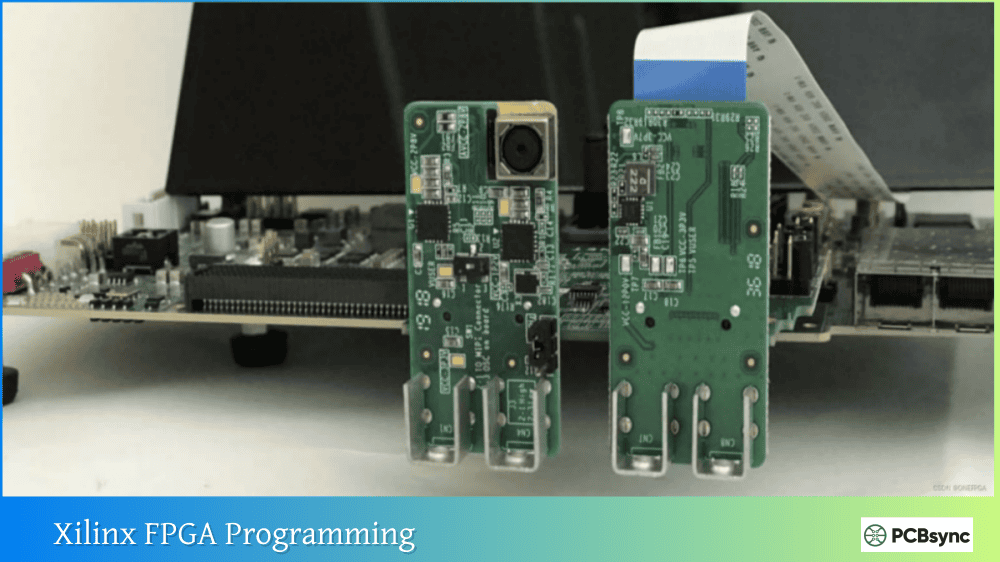
Getting hands-on with Artix-7 doesn’t require custom hardware. Several evaluation platforms provide immediate access:
The Xilinx Artix 7 FPGA finds deployment across diverse industries:
Software-Defined Radio
The combination of DSP slices, integrated transceivers, and low power consumption makes Artix-7 ideal for SDR platforms. Designers implement modulation/demodulation, channel coding, and protocol stacks while maintaining flexibility for field upgrades.
Machine Vision
Camera interfaces leverage LVDS I/O (up to 1.2 Gb/s) while image processing pipelines utilize DSP slices for filtering, feature extraction, and classification. Block RAM buffers frame data during processing stages.
Industrial Control
Programmable logic controllers benefit from real-time determinism, parallel processing capability, and extensive I/O options. The XADC handles sensor inputs directly, reducing external component count.
Medical Imaging
Portable ultrasound systems achieve 64-channel implementations with 35% lower cost and 57% smaller form factor compared to previous-generation solutions. DSP resources handle beamforming and image reconstruction.
Wireless Infrastructure
Small cell base stations, wireless backhaul equipment, and network timing modules leverage transceivers and signal processing resources for baseband functions.
Useful Resources and Downloads
Getting productive with Artix-7 requires access to quality documentation and tools:
What is the difference between Artix-7 and Spartan-7?
The primary distinction lies in transceiver integration. Artix-7 devices include GTP transceivers supporting up to 6.6 Gb/s, while Spartan-7 lacks transceivers entirely. Artix-7 also offers higher maximum logic density (215K vs 102K cells) and more DSP slices (740 vs 160). Choose Spartan-7 for absolute lowest cost when transceivers aren’t needed; choose Artix-7 when high-speed serial interfaces or maximum DSP performance are required.
Can I migrate designs between Artix-7 devices?
Yes, migration within the Artix-7 family is straightforward for devices sharing footprint-compatible packages. For example, FGG484 and FBG484 packages are footprint compatible, enabling you to prototype with a larger device then migrate to a smaller one for production. However, migration between 7 Series families (Artix to Kintex, for instance) requires re-targeting despite the shared architecture.
What software do I need to develop for Artix-7?
AMD’s Vivado Design Suite is the primary development environment. The free WebPACK edition supports all Artix-7 devices without license restrictions, including synthesis, implementation, simulation, and debugging tools. For older designs, ISE Design Suite supports some Artix-7 devices, though Vivado is the recommended path forward.
How do I estimate power consumption for my Artix-7 design?
Use the Xilinx Power Estimator (XPE) spreadsheet tool during early design phases for quick estimates. Once implementation completes, Vivado provides accurate post-implementation power analysis based on actual resource utilization and switching activity. The -1LI and -2L low-power speed grades offer reduced core voltage operation (0.95V and 0.9V respectively) for designs where power trumps maximum clock speed.
What’s the expected product lifecycle for Artix-7?
AMD has committed to supporting all 7 Series FPGAs through at least 2035, with recent announcements extending this to 2040 for the complete 7 Series portfolio. This long-term availability makes Artix-7 suitable for industrial, medical, and aerospace applications requiring extended production lifecycles.
Configuration and Programming Options
Understanding how to load your design into an Artix 7 device is essential for both development and production.
JTAG Programming
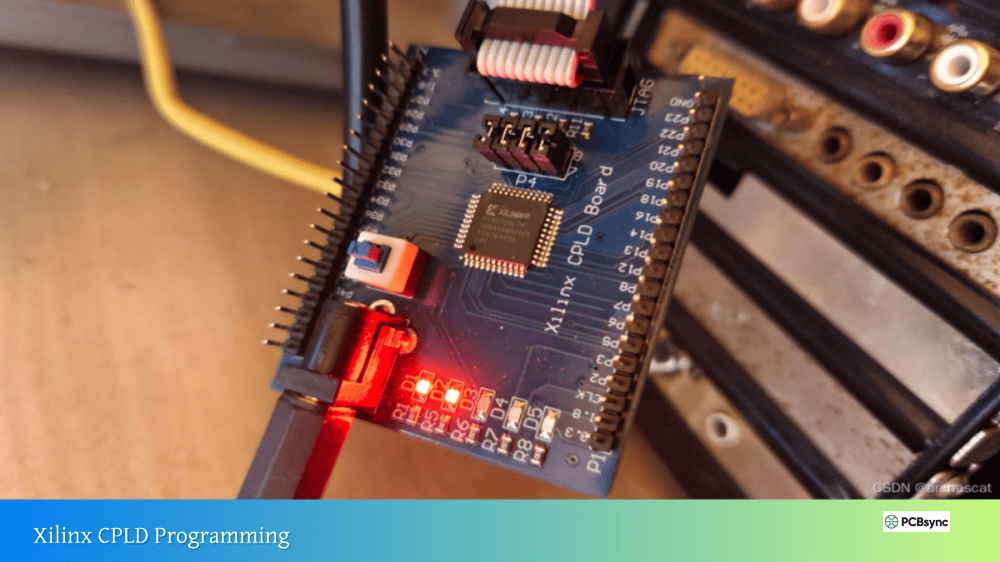
The most common development method uses JTAG (Joint Test Action Group) boundary scan. Connect a Xilinx Platform Cable USB II or compatible programmer (Digilent’s integrated USB-JTAG on many boards works perfectly) to download bitstreams directly to FPGA configuration memory. This approach enables rapid design iteration during development.
SPI Flash Configuration
For production systems requiring non-volatile configuration, external SPI flash stores the bitstream. Upon power-up, the Artix-7 automatically reads from flash and configures itself. Supported flash sizes depend on your bitstream size—compressed bitstreams for XC7A200T typically require 32Mbit or larger flash devices.
The configuration time varies by device size and flash interface width:
Device
Approximate Bitstream Size
Config Time (x1 SPI)
XC7A35T
~17 Mbit
~100 ms
XC7A100T
~30 Mbit
~180 ms
XC7A200T
~77 Mbit
~460 ms
Using x4 SPI mode reduces these times by roughly 4×.
BPI Flash Configuration
For even faster configuration or when interfacing with parallel flash already present in your system, BPI (Byte Peripheral Interface) mode reads from parallel NOR flash. Configuration times drop significantly compared to serial modes.
MultiBoot and Fallback
Artix-7 supports MultiBoot capability—storing multiple bitstreams in flash and selecting between them via internal logic or external inputs. Combined with golden image fallback, this enables field updates with fail-safe recovery. If a primary image fails to configure properly, the FPGA automatically loads a known-good backup.
Automotive-Grade XA Artix-7
For automotive applications, the XA Artix-7 family offers AEC-Q100 qualified devices with extended temperature support up to 125°C junction temperature. These devices undergo additional screening and testing appropriate for automotive environments.
These devices enable deployment in rugged environments where commercial-grade components cannot survive.
Tips for Optimizing Artix-7 Designs
Based on practical experience, these optimization strategies improve results:
Logic Utilization
Let synthesis tools infer RAMs and DSP operations rather than manually instantiating primitives—the tools often find more efficient mappings
Use pipelining liberally; flip-flops are abundant and improve timing closure
Minimize the use of both set and reset on flip-flops (they’re mutually exclusive in 7 Series)
Control signals (clock enable, set, reset) are shared across a slice; too many unique control signals fragments placement
Timing Closure
Register I/O signals at pad level when possible
Use dedicated clock routing (BUFG) rather than fabric routing for clocks
Constrain false paths and multicycle paths explicitly
The STA (Static Timing Analysis) report identifies critical paths—focus optimization effort there
Power Reduction
Clock-gate unused logic blocks
Use the -2L speed grade when timing permits
Enable power optimization in Vivado implementation settings
Consider dynamic voltage scaling for portions of your design with variable workloads
Wrapping Up
The Xilinx Artix-7 FPGA family occupies valuable territory in the FPGA landscape—delivering genuine processing capability at price points accessible to volume production. Whether you’re building your first FPGA-based product or optimizing an existing design for cost, the Artix 7 series provides the resources, tools, and ecosystem support to get the job done.
The unified 7 Series architecture means skills and IP developed on Artix-7 transfer directly to Kintex-7 or Virtex-7 when projects demand more horsepower. Meanwhile, extensive documentation, free development tools, and readily available evaluation platforms lower the barriers to getting started.
For PCB engineers specifically, the well-documented power requirements, comprehensive reference designs, and established supply chain make Artix-7 a predictable choice—you’re not pioneering new territory but rather leveraging years of accumulated design wisdom from the engineering community.
The extended product lifecycle support through 2040 provides confidence for designs requiring long-term production. Combined with the mature ecosystem of IP cores, development boards, and community knowledge, the Xilinx Artix-7 remains a compelling choice for cost-sensitive FPGA applications that demand real performance.
Inquire: Call 0086-755-23203480, or reach out via the form below/your sales contact to discuss our design, manufacturing, and assembly capabilities.
Quote: Email your PCB files to Sales@pcbsync.com (Preferred for large files) or submit online. We will contact you promptly. Please ensure your email is correct.
Notes: For PCB fabrication, we require PCB design file in Gerber RS-274X format (most preferred), *.PCB/DDB (Protel, inform your program version) format or *.BRD (Eagle) format. For PCB assembly, we require PCB design file in above mentioned format, drilling file and BOM. Click to download BOM template To avoid file missing, please include all files into one folder and compress it into .zip or .rar format.