Inquire: Call 0086-755-23203480, or reach out via the form below/your sales contact to discuss our design, manufacturing, and assembly capabilities.
Quote: Email your PCB files to Sales@pcbsync.com (Preferred for large files) or submit online. We will contact you promptly. Please ensure your email is correct.
Notes: For PCB fabrication, we require PCB design file in Gerber RS-274X format (most preferred), *.PCB/DDB (Protel, inform your program version) format or *.BRD (Eagle) format. For PCB assembly, we require PCB design file in above mentioned format, drilling file and BOM. Click to download BOM template To avoid file missing, please include all files into one folder and compress it into .zip or .rar format.
XC7A200T: Largest Artix-7 FPGA Specifications & Applications
Introduction to the XC7A200T FPGA
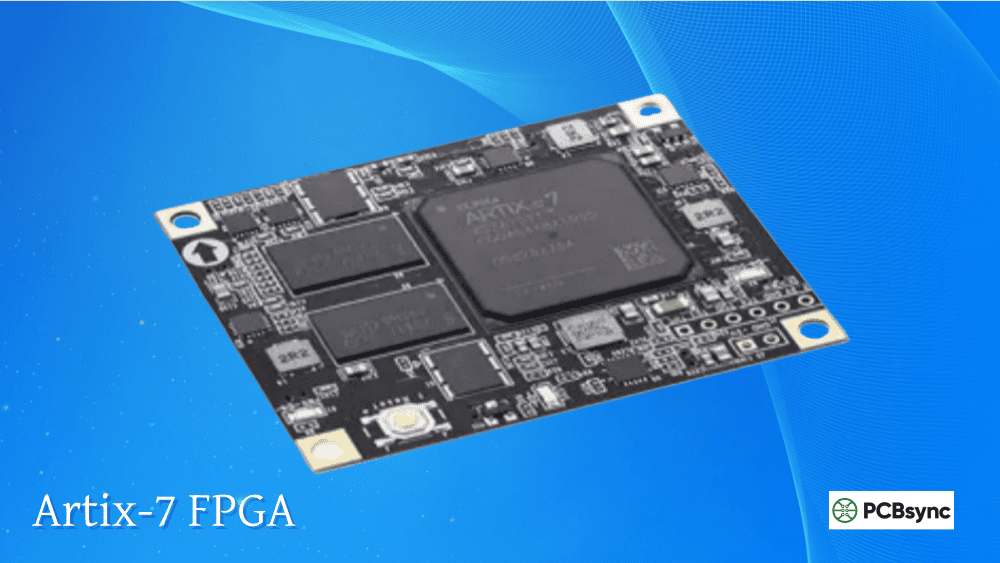
When you need serious FPGA horsepower without stepping up to Kintex-7 pricing, the XC7A200T is where you look. As the flagship device in AMD’s (formerly Xilinx) Artix-7 family, this chip packs over 215,000 logic cells into a cost-optimized package that’s become a favorite for video processing, telecommunications, and industrial applications.
I’ve worked with the Artix-7 XC7A200T on several production boards over the years, and what consistently impresses me is how AMD managed to deliver this much logic density while keeping power consumption reasonable. Built on a 28nm high-performance low-power (HPL) process, the XC7A200T consumes roughly 50% less power than equivalent capacity devices from the previous 45nm generation. That matters when you’re trying to keep your thermal budget under control.
The XC7A200T isn’t just a larger version of the XC7A100T—it’s architecturally optimized for high-throughput applications. With 740 DSP slices, over 13 Mb of block RAM, and up to 16 GTP transceivers depending on package, this device handles compute-intensive workloads that would choke smaller FPGAs. Whether you’re building a video encoder, a software-defined radio, or a high-speed data acquisition system, the XC7A200T provides the resources to get it done.
Let’s examine the complete resource breakdown for the XC7A200T. These numbers represent the maximum available in the Artix-7 family:
Parameter
XC7A200T Value
Logic Cells
215,360
Slices
33,650
6-Input LUTs
134,600
CLB Flip-Flops
269,200
Block RAM (36Kb blocks)
365 (13,140 Kb total)
Distributed RAM
2,888 Kb
DSP48E1 Slices
740
Clock Management Tiles (CMTs)
10 (each with 1 PLL + 1 MMCM)
GTP Transceivers
4-16 (package dependent)
Maximum Transceiver Speed
6.6 Gb/s
Process Technology
28nm HPL
XADC (Analog-to-Digital)
Dual 12-bit 1 MSPS ADC
PCIe Support
Gen2 x4
Maximum User I/O
500 (FFG1156 package)
I/O Banks
10
Core Voltage (VCCINT)
1.0V nominal
Comparison: XC7A200T vs Other Artix-7 Devices
To put the XC7A200T’s capabilities in perspective, here’s how it stacks up against other popular Artix-7 devices:
Resource
XC7A75T
XC7A100T
XC7A200T
Increase (100T→200T)
Logic Cells
75,520
101,440
215,360
2.1×
Slices
11,800
15,850
33,650
2.1×
Block RAM (Kb)
3,780
4,860
13,140
2.7×
DSP Slices
180
240
740
3.1×
Max User I/O
300
300
500
1.7×
GTP Transceivers
8
8
16
2.0×
The jump from XC7A100T to XC7A200T is substantial. You’re getting more than double the logic, nearly triple the DSP slices, and 2.7 times the block RAM. For designs that outgrow the XC7A100T, the XC7A200T often provides enough headroom to avoid jumping to the more expensive Kintex-7 family.
DSP Processing Capabilities
The 740 DSP48E1 slices in the Artix-7 XC7A200T deserve special attention. Each slice contains a 25×18 signed multiplier, a 48-bit accumulator, and a pre-adder for efficient filter implementations. At the -3 speed grade, these slices can operate at up to 628 MHz, delivering impressive throughput:
Speed Grade
Max Frequency
DSP Performance
-1
464 MHz
~686 GMAC/s
-2
550 MHz
~814 GMAC/s
-3
628 MHz
~929 GMAC/s
This DSP capability makes the XC7A200T particularly well-suited for signal processing applications like FIR/IIR filters, FFT implementations, video scaling algorithms, and baseband processing in software-defined radios.
Understanding Artix-7 XC7A200T Part Numbers
Decoding AMD part numbers is essential for specifying the correct device. Here’s how to interpret a typical XC7A200T part number:
Example: XC7A200T-2FBG676I
Segment
Value
Meaning
Family
XC7A
Xilinx 7-series Artix
Density
200T
~200K logic cells (largest Artix-7)
Speed Grade
-2
Performance level (1=standard, 2=high, 3=highest)
Package
FBG676
Flip-chip BGA, 676 balls
Temperature
I
Industrial (-40°C to +100°C)
Speed Grade Selection for XC7A200T
Choosing the right speed grade affects both performance and cost:
-1 Speed Grade: Entry-level performance suitable for designs under 464 MHz. Best choice when timing isn’t critical or when you’re optimizing for lowest unit cost in high-volume production.
-2 Speed Grade: The mainstream choice for most production designs. Supports internal clocks up to 550 MHz and provides a good balance between performance and cost. This is what you’ll find on most development boards.
-3 Speed Grade: Maximum performance at premium pricing. Required only when your design has critical timing paths that won’t meet requirements at -2 speeds. The additional 78 MHz headroom (628 MHz vs 550 MHz) can make the difference in demanding applications.
Temperature Grade Options
Grade
Suffix
Junction Temperature
Typical Applications
Commercial
C
0°C to +85°C
Consumer electronics, lab equipment
Industrial
I
-40°C to +100°C
Factory automation, outdoor systems
Defense
Q
-40°C to +125°C
Military, ruggedized equipment
For most industrial and professional applications, the I (Industrial) grade is the standard choice, offering the widest operating range while remaining cost-effective.
XC7A200T Package Options and Pin Compatibility
The XC7A200T is available in four BGA packages, each optimized for different design requirements:
Package
Size (mm)
Ball Pitch
User I/Os
GTP Transceivers
I/O Banks
SBG484
19 × 19
0.8mm
285
4
6
FBG484
23 × 23
1.0mm
285
4
6
FBG676
27 × 27
1.0mm
400
8
8
FFG1156
35 × 35
1.0mm
500
16
10
Package Selection Guidelines
SBG484 Package (19×19mm, 0.8mm pitch): The smallest XC7A200T option. The fine 0.8mm ball pitch requires HDI PCB technology with microvias for full signal breakout. Choose this when board space is severely constrained, but be prepared for higher PCB fabrication costs. The Nexys Video development board uses this package.
FBG484 Package (23×23mm, 1.0mm pitch): Same ball count as SBG484 but with friendlier 1.0mm pitch that works with standard 6-layer PCB stackups. This is often the sweet spot for production designs—you get the same I/O count in a package that’s easier to route. The “FB” designation indicates flip-chip construction with better thermal and electrical characteristics.
FBG676 Package (27×27mm, 1.0mm pitch): Mid-range option with 400 user I/Os and 8 GTP transceivers. Choose this when you need wide parallel buses (like dual DDR3 channels) or multiple high-speed serial links. An 8-layer PCB is typically sufficient for clean routing.
FFG1156 Package (35×35mm, 1.0mm pitch): Maximum I/O density with 500 user pins and all 16 GTP transceivers. This package is for designs requiring the most connectivity—multiple PCIe links, wide memory interfaces, and numerous external peripherals. Plan for a 10+ layer board and careful power integrity analysis.
Footprint Compatibility Notes
Unlike smaller Artix-7 devices where FGG and FBG packages share footprints with other family members, the XC7A200T’s packages are largely unique to this device. The SBG484 package is footprint compatible with the XQ7A200T (defense-grade variant), but there’s no migration path to smaller Artix-7 devices within the same footprint.
If you anticipate potentially needing to scale down to XC7A100T or XC7A75T, you’ll need to design for their package pinouts from the start. This is one trade-off of choosing the largest device in the family.
Power supply design becomes more critical as FPGA density increases. The XC7A200T has specific requirements that differ from smaller family members.
Supply Voltage Requirements
Rail
Voltage
Tolerance
Purpose
VCCINT
1.0V
±5%
Core logic, routing fabric
VCCBRAM
1.0V
±5%
Block RAM arrays
VCCAUX
1.8V
±5%
Auxiliary circuits, JTAG, PLLs
VCCO
1.2V to 3.3V
±5%
I/O banks (HR banks: 1.2V-3.3V)
VMGTAVCC
1.0V
±3%
GTP transceiver analog circuits
VMGTAVTT
1.2V
±3%
GTP TX/RX termination
VCCADC
1.8V
±5%
XADC analog supply
Quiescent Current Requirements
The XC7A200T draws more quiescent current than smaller devices due to its larger die size:
Supply
XC7A200T Quiescent Current
ICCINTQ
340 mA
ICCAUXQ
50 mA
ICCOQ
40 mA per bank
ICCBRAMQ
80 mA
Compare this to the XC7A100T’s 170 mA ICCINTQ—the XC7A200T requires twice the quiescent core current. Plan your power supply accordingly, especially for battery-powered applications.
Power Sequencing
AMD specifies the following power-on sequence for minimum current draw and proper initialization:
VCCINT (can ramp simultaneously with VCCBRAM)
VCCBRAM
VCCAUX
VCCO (all banks)
VMGTAVCC and VMGTAVTT (for GTP transceivers)
Timing constraints:
Ramp time: 0.2ms to 50ms from GND to 90% of target voltage
VCCO minus VCCAUX must not exceed 2.625V for more than 500ms
VMGTAVCC should not lag VCCINT by more than a few milliseconds
For the XC7A200T, I typically recommend a sequenced power solution using a dedicated PMIC or sequencer IC rather than relying on RC delays between regulators. The tighter timing requirements and higher currents make proper sequencing more critical than with smaller devices.
PCB Layout Guidelines for XC7A200T Designs
Routing a 200K+ logic cell FPGA successfully requires attention to signal integrity and power distribution. Here are practical guidelines based on production experience with the XC7A200T.
Layer Stack Recommendations
Package
Minimum Layers
Recommended Layers
Notes
SBG484
6
8
HDI required for 0.8mm pitch
FBG484
6
6-8
Standard multilayer sufficient
FBG676
8
8-10
Multiple power planes needed
FFG1156
10
12+
Complex power distribution required
A typical 8-layer stack for XC7A200T in FBG676 package:
Layer 1: Top signal (high-speed, controlled impedance)
Layer 2: Ground plane
Layer 3: Signal/power
Layer 4: Ground plane
Layer 5: VCCINT power plane
Layer 6: Signal
Layer 7: Ground plane
Layer 8: Bottom signal
Decoupling Capacitor Strategy
The XC7A200T requires more decoupling capacitance than smaller devices. AMD’s UG483 provides detailed guidance, but here’s a practical summary:
Bulk capacitors (within 1 inch of FPGA):
4× 47µF low-ESR ceramic or tantalum for VCCINT
2× 47µF for VCCAUX
2× 47µF for each VCCO bank
Mid-frequency decoupling (within 0.5 inch):
12-14× 4.7µF X5R ceramic for VCCINT
3× 4.7µF for VCCAUX
1× 4.7µF per VCCO bank
High-frequency decoupling (within 3mm of power pins):
12-14× 0.1µF for VCCINT
5× 0.1µF for VCCAUX
3-5× 0.1µF per VCCO bank
Additional 0.01µF capacitors for GTP supplies
Placement priorities:
Place 0.1µF and 0.01µF capacitors as close to power pins as physically possible
Use multiple vias per capacitor pad to reduce inductance
Distribute capacitors evenly around the device perimeter
Price: Approximately $480-500 (academic pricing available)
The Nexys Video is purpose-built for video processing development. Its combination of HDMI I/O, DisplayPort output, and the XC7A200T’s substantial block RAM (13+ Mb) makes it ideal for frame buffering, video encoding/decoding, and real-time image processing projects.
ALINX AC7A200 System-on-Module
For production-oriented development, ALINX offers the AC7A200 SoM featuring the XC7A200T:
FPGA: XC7A200T-2FBG484I
Memory: 1 GB DDR3 (32-bit bus)
Flash: 16 MB Quad-SPI
Transceivers: 4× GTP at 6.6 Gb/s
Form factor: 60×60mm module with board-to-board connectors
Temperature: Industrial grade (-40°C to +85°C)
This SoM approach lets you focus on your carrier board design while leveraging a proven FPGA module with DDR3 and configuration already validated.
Typical Applications for the XC7A200T
The XC7A200T’s combination of high logic density, substantial DSP resources, and abundant block RAM makes it suitable for demanding applications.
Video and Image Processing
This is where the Artix-7 XC7A200T truly excels. The 13+ Mb of block RAM can buffer multiple 1080p frames, while 740 DSP slices handle real-time filtering, scaling, and color processing:
4K video frame grabbers and capture cards
Real-time video encoding (H.264/H.265 assist)
Machine vision cameras with on-board preprocessing
Medical imaging systems (ultrasound, endoscopy)
Multi-channel video switchers and compositors
Image enhancement and noise reduction pipelines
Telecommunications and Networking
The available GTP transceivers enable high-speed serial protocols:
Software-defined radio (SDR) baseband processing
5G small cell base station implementations
CPRI/OBSAI fronthaul interfaces
Digital predistortion (DPD) and crest factor reduction (CFR)
Protocol conversion bridges
Packet processing and deep packet inspection
Industrial Automation and Control
High I/O count and deterministic timing support industrial applications:
Power electronics control (inverters, motor drives)
Test and Measurement
The XC7A200T provides the processing power for sophisticated instrumentation:
High-speed digitizers and oscilloscope front-ends
Arbitrary waveform generators
Protocol analyzers (PCIe, USB, SATA)
Automated test equipment (ATE)
RF signal analysis and generation
Aerospace and Defense
With proper screening (Q or M grade), the XC7A200T serves ruggedized applications:
Radar signal processing
Electronic warfare systems
Satellite communication modems
Avionics displays and processing
Unmanned vehicle control systems
Development Tools and Software Ecosystem
The XC7A200T is fully supported by AMD’s Vivado Design Suite, including the free WebPACK edition. This is a significant advantage—full development capability without licensing costs.
Vivado WebPACK Support
Feature
WebPACK (Free)
Design Edition
System Edition
Synthesis & Implementation
✓
✓
✓
Integrated Logic Analyzer (ILA)
✓
✓
✓
IP Integrator (Block Design)
✓
✓
✓
Memory Interface Generator (MIG)
✓
✓
✓
Partial Reconfiguration
—
✓
✓
High-Level Synthesis (HLS)
—
—
✓
Key IP Cores for XC7A200T
AMD provides validated IP cores that accelerate development:
MIG (Memory Interface Generator): DDR3/DDR3L controllers with calibration
PCIe IP: Gen2 x4 endpoint and root complex
Gigabit Ethernet MAC: 10/100/1000 Mbps with GMII/RGMII
AXI Interconnect: Standard bus infrastructure for SoC designs
Video Processing: Scaler, deinterlacer, color space converter
MicroBlaze: 32-bit soft processor for embedded applications
MicroBlaze Soft Processor
The XC7A200T’s logic resources easily accommodate MicroBlaze embedded processors. A typical configuration uses 2,000-4,000 LUTs depending on features enabled. With 215K logic cells available, you can implement multiple MicroBlaze cores alongside substantial custom logic—useful for complex SoC designs that need both hardware acceleration and software flexibility.
What makes the XC7A200T different from the XC7A100T?
The XC7A200T offers significantly more resources: 2.1× the logic cells (215K vs 101K), 3.1× the DSP slices (740 vs 240), 2.7× the block RAM (13.1 Mb vs 4.9 Mb), and double the maximum GTP transceivers (16 vs 8). However, the XC7A200T uses different package pinouts and requires more power, so it’s not a drop-in upgrade. If your design fits in the XC7A100T, it’s usually more cost-effective to stay there. The XC7A200T is for designs that genuinely need the additional resources.
Can the XC7A200T handle 4K video processing?
Yes, the XC7A200T is well-suited for 4K video applications. The 13+ Mb of block RAM can buffer approximately two full 1080p frames or significant portions of a 4K frame for processing pipelines. The 740 DSP slices handle computationally intensive tasks like scaling, color correction, and filtering at 4K resolutions. For 4K60 applications, you’ll need to carefully architect your datapath and may require external frame buffers via DDR3, but the FPGA has the processing horsepower for real-time 4K work.
What PCIe configurations does the XC7A200T support?
The Artix-7 XC7A200T supports PCI Express Gen2 with up to x4 lane configurations using the integrated PCIe hard block. This provides approximately 2 GB/s of bidirectional bandwidth. The hard block handles link training, LTSSM state machine, and physical layer functions, while you implement the transaction layer logic in fabric. Both endpoint and root complex modes are supported. PCIe Gen3 is possible using soft IP, but this consumes significant logic resources and is less common with Artix-7.
Is the XC7A200T suitable for production designs, or is it mainly for prototyping?
The XC7A200T is absolutely suitable for production. Many commercial products ship with this device, including video processing equipment, telecommunications infrastructure, industrial controllers, and test instruments. The key considerations are cost (it’s more expensive than smaller Artix-7 devices) and power consumption (plan for 3-6W typical in active designs). For volume production, verify your supply chain—the XC7A200T has been subject to allocation constraints at times, so establish relationships with authorized distributors early.
How does the XC7A200T compare to Kintex-7 devices?
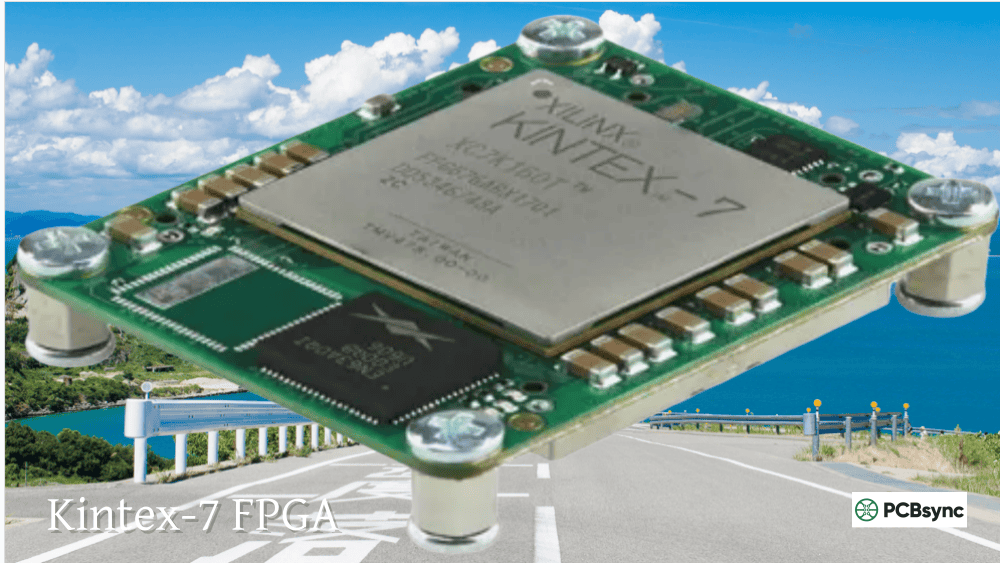
The XC7A200T bridges the gap between cost-optimized Artix-7 and performance-optimized Kintex-7. The smallest Kintex-7 (XC7K70T) has fewer logic cells but faster transceivers (GTX at 10.3+ Gb/s vs GTP at 6.6 Gb/s) and higher-performance I/O banks. If your design requires transceiver speeds above 6.6 Gb/s or needs HP (high-performance) I/O banks for source-synchronous interfaces above 1.2 Gb/s, Kintex-7 is the better choice. For cost-sensitive applications with moderate I/O speeds, the XC7A200T delivers more logic per dollar than entry-level Kintex-7 devices.
Conclusion
The XC7A200T stands as the most capable member of the Artix-7 family, offering a compelling combination of logic density, DSP horsepower, and connectivity options. With 215K logic cells, 740 DSP slices, 13+ Mb of block RAM, and up to 16 high-speed transceivers, it addresses applications that smaller Artix-7 devices simply cannot handle.
For engineers working on video processing, telecommunications, or high-channel-count industrial systems, the Artix-7 XC7A200T provides a cost-effective path to high-performance designs without stepping up to Kintex-7 pricing. The free Vivado WebPACK support, mature IP ecosystem, and proven silicon make it a low-risk choice for both prototyping and production.
Key recommendations for XC7A200T designs:
Select the FBG676 package for most applications—it balances I/O count and routing complexity
Use -2 speed grade unless timing analysis proves insufficient
Plan for 6-10W power budget in high-utilization designs
Budget adequate PCB layers (8 minimum for FBG676, 10+ for FFG1156)
Leverage the Nexys Video board for early prototyping before committing to custom hardware
When your design demands serious FPGA resources at a reasonable price point, the XC7A200T delivers. It’s the workhorse of the Artix-7 family for good reason.
Suggested Meta Descriptions
Option 1 (155 characters): XC7A200T complete guide: 215K logic cells, 740 DSP slices, 13Mb RAM. Specs, package options, PCB design tips & applications for the largest Artix-7 FPGA.
Inquire: Call 0086-755-23203480, or reach out via the form below/your sales contact to discuss our design, manufacturing, and assembly capabilities.
Quote: Email your PCB files to Sales@pcbsync.com (Preferred for large files) or submit online. We will contact you promptly. Please ensure your email is correct.
Notes: For PCB fabrication, we require PCB design file in Gerber RS-274X format (most preferred), *.PCB/DDB (Protel, inform your program version) format or *.BRD (Eagle) format. For PCB assembly, we require PCB design file in above mentioned format, drilling file and BOM. Click to download BOM template To avoid file missing, please include all files into one folder and compress it into .zip or .rar format.