Inquire: Call 0086-755-23203480, or reach out via the form below/your sales contact to discuss our design, manufacturing, and assembly capabilities.
Quote: Email your PCB files to Sales@pcbsync.com (Preferred for large files) or submit online. We will contact you promptly. Please ensure your email is correct.
Notes: For PCB fabrication, we require PCB design file in Gerber RS-274X format (most preferred), *.PCB/DDB (Protel, inform your program version) format or *.BRD (Eagle) format. For PCB assembly, we require PCB design file in above mentioned format, drilling file and BOM. Click to download BOM template To avoid file missing, please include all files into one folder and compress it into .zip or .rar format.
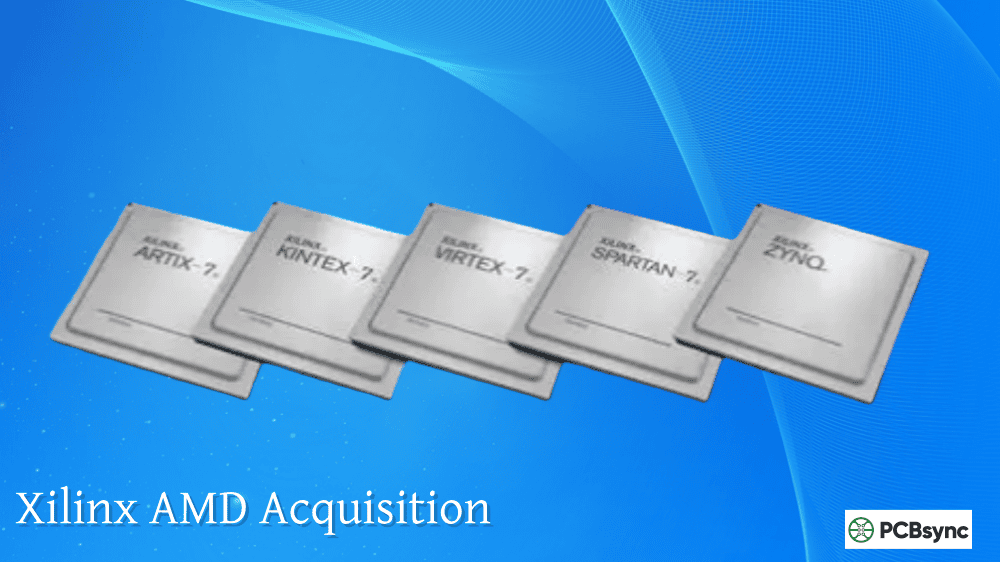
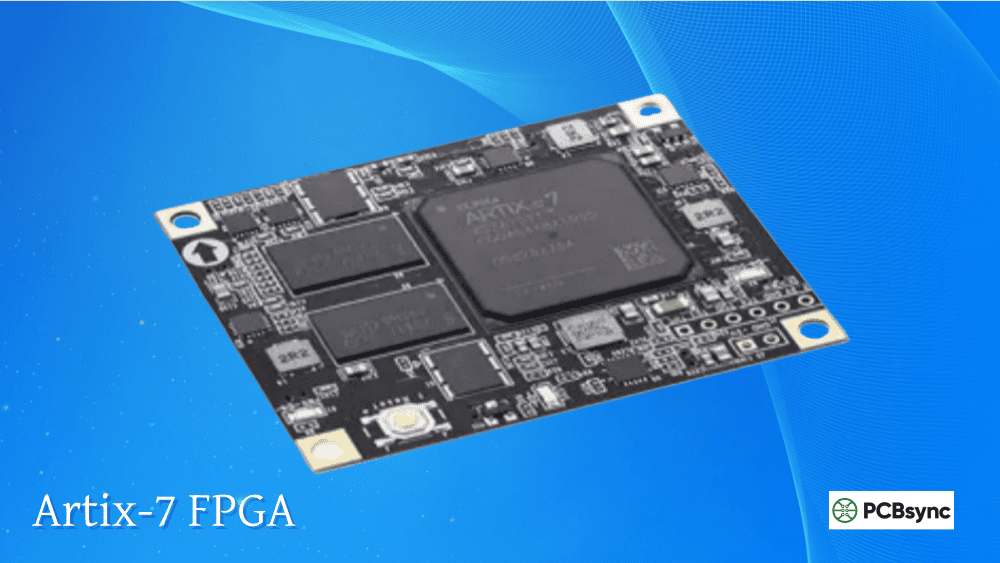
If you’ve been shopping for mid-range FPGAs that deliver solid performance without draining your budget, the XC7A100T probably landed on your shortlist. This chip from AMD’s (formerly Xilinx) Artix-7 family has become something of a workhorse in industrial control, communications equipment, and educational platforms. Having worked with this part across multiple board designs, I can tell you it strikes a practical balance between resource density and cost-effectiveness.
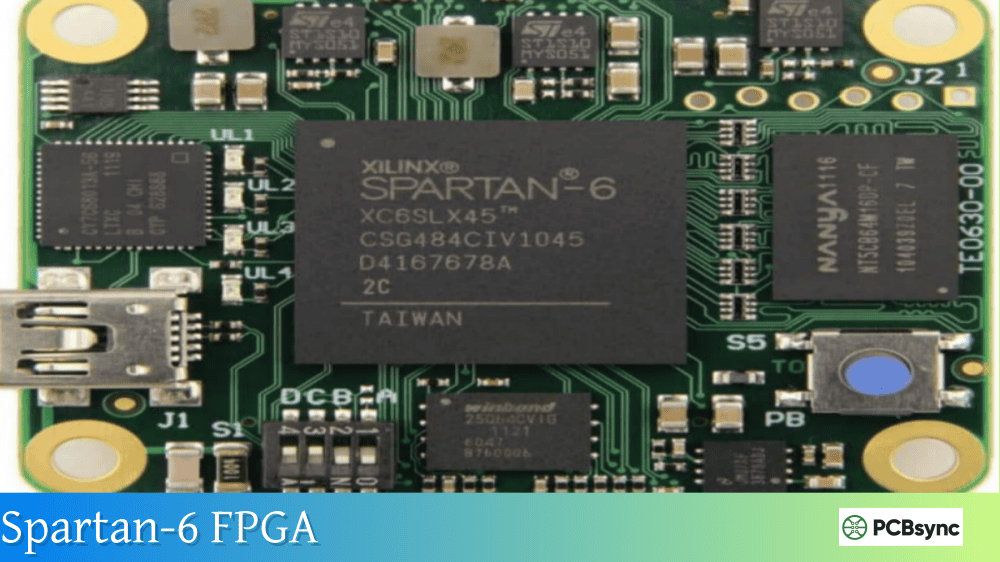
The Xilinx Artix-7 XC7A100T is built on a 28nm high-performance low-power (HPL) process, which translates to roughly 50% lower power consumption compared to previous-generation devices like the Spartan-6. Whether you’re building a software-defined radio, a machine vision camera, or prototyping an embedded processor design, this FPGA offers the logic density and I/O flexibility to get the job done.
Let’s cut to the numbers. The XC7A100T sits in the sweet spot of the Artix-7 lineup—more capable than the entry-level XC7A35T, but more affordable than the flagship XC7A200T. Here’s what you’re working with:
Parameter
XC7A100T Value
Logic Cells
101,440
Slices
15,850
6-Input LUTs
63,400
Flip-Flops
126,800
Block RAM (36Kb blocks)
135 (4,860 Kb total)
Distributed RAM (Kb)
1,188 Kb
DSP48E1 Slices
240
Clock Management Tiles (CMTs)
6 (each with 1 PLL + 1 MMCM)
GTP Transceivers
0-8 (package dependent)
Process Technology
28nm HPL (High-Performance Low-Power)
XADC (Analog-to-Digital)
Dual 12-bit 1 MSPS ADC
The 240 DSP slices deserve special mention. Each DSP48E1 slice includes a 25×18 multiplier, pre-adder, and accumulator—enough horsepower for serious signal processing work. For context, that translates to roughly 929 GMAC/s at the -3 speed grade.
Understanding Xilinx Artix-7 XC7A100T Part Numbers
When you see a part number like XC7A100T-2FGG484I, here’s how to decode it:
XC7A100T – The base device (Artix-7 with ~100K logic cells)
-2 – Speed grade (1=slowest, 2=middle, 3=fastest)
FGG484 – Package type (Fine-pitch BGA, 484 balls)
I – Temperature grade (C=Commercial 0-85°C, I=Industrial -40 to +100°C)
You’ll also encounter the -2L suffix for low-power variants that can operate at 0.9V or 0.95V VCCINT instead of the standard 1.0V. These are handy for battery-powered applications where every milliwatt counts.
XC7A100T Package Options and I/O Availability
Package selection is one of those decisions that can make or break your PCB layout. The XC7A100T comes in several BGA packages, each with different trade-offs:
Package
Size (mm)
Ball Pitch
User I/Os
GTP
CSG324
15 × 15
0.8mm
210
0
FTG256
17 × 17
1.0mm
170
0
FGG484
23 × 23
1.0mm
285
4
FGG676
27 × 27
1.0mm
300
8
Package Selection Guidelines
CSG324: Best for space-constrained designs. The 0.8mm pitch requires careful PCB design but fits in tight enclosures. No transceivers available.
FGG484: The most popular choice for production boards. Good I/O count, 4 GTP transceivers for PCIe Gen2 x4, and 1.0mm pitch simplifies routing.
FGG676: Maximum I/O and 8 transceivers. Choose this when you need multiple high-speed serial interfaces or extensive parallel buses.
Power Supply Design for the XC7A100T
Getting the power supply right is critical. I’ve seen boards fail EMC testing because engineers underestimated decoupling requirements or got the power-on sequence wrong. Here’s what you need to know:
Supply Voltage Requirements
Rail
Voltage
Purpose
VCCINT
1.0V ±5%
Core logic
VCCBRAM
1.0V ±5%
Block RAM
VCCAUX
1.8V ±5%
Auxiliary circuits, PLLs
VCCO
1.2V to 3.3V
I/O banks (HR banks support 3.3V)
VMGTAVCC
1.0V ±3%
GTP transceiver analog
VMGTAVTT
1.2V ±3%
GTP termination
Power Sequencing Requirements
AMD specifies this recommended power-on sequence for minimum current draw and proper I/O tri-stating:
VCCINT (can ramp simultaneously with VCCBRAM if at same voltage)
VCCBRAM
VCCAUX
VCCO
Ramp times should be between 0.2ms and 50ms from GND to 90% of target voltage. Power-off sequence should be the reverse. The voltage difference between VCCO and VCCAUX must not exceed 2.625V for longer than 500ms to maintain device reliability.
PCB Layout Tips for XC7A100T Designs
After routing a few boards with this chip, here are the lessons learned the hard way:
Layer Stack Recommendations
Minimum 4 layers: For simple designs with CSG324 package. Signal-Ground-Power-Signal stack.
6 layers recommended: For FGG484 with DDR3 memory. Provides adequate routing channels and impedance control.
8+ layers: For FGG676 with high-speed transceivers and complex memory interfaces.
Decoupling Strategy
AMD provides specific guidance on decoupling capacitor parameters. Follow these ESR and body size requirements:
Place 0.1µF and 0.01µF capacitors within 3mm of power pins
Use 4.7µF to 47µF bulk capacitors near regulators
Ensure ESR is within the specified range—too low can actually cause problems
Use vias to connect decoupling caps directly to power planes
DDR3 Memory Interface Layout
The XC7A100T supports DDR3/DDR3L at data rates up to 800 Mb/s. Key routing rules:
Keep total trace length under 4 inches from FPGA to DRAM
Match DQ/DQS traces within 10ps per byte group
Use 50Ω single-ended and 100Ω differential impedance
Add series termination resistors on address/control lines for fly-by topologies
Development Tools and Software Support
The XC7A100T is fully supported by AMD’s Vivado Design Suite, including the free WebPACK edition. This is significant—you get synthesis, implementation, and simulation tools without licensing costs.
Vivado Design Suite Features
Synthesis and Implementation: Full RTL-to-bitstream flow
Integrated Logic Analyzer: On-chip debugging with ChipScope-equivalent functionality
IP Integrator: Block-based design for AXI-based systems
Memory Interface Generator (MIG): DDR3 controller IP with calibration
PCIe IP Core: Supports Gen2 x4 using GTP transceivers
MicroBlaze Soft Processor
The logic resources in the XC7A100T comfortably support MicroBlaze embedded processor implementations. You can run Linux or bare-metal applications, making this FPGA suitable for complex embedded systems that need both custom hardware acceleration and software flexibility.
Yes. The XC7A100T integrates GTP transceivers (in packages like FGG484 and FGG676) that support PCI Express Gen2 at x1, x2, or x4 configurations. AMD provides a validated PCIe IP core through Vivado that handles link training, LTSSM, and transaction layer functionality. You can implement either root complex or endpoint configurations.
Can the XC7A100T interface with DDR3 memory?
Yes. The device includes a Memory Interface Generator (MIG) IP that creates DDR3/DDR3L controllers with automatic calibration. Maximum supported data rate is 800 Mb/s (400 MHz effective) when using internal VREF, or up to 1,066 Mb/s with external VREF tracking. The memory controller handles refresh, timing parameters, and bank management automatically.
What’s the difference between -1, -2, and -3 speed grades?
Speed grades indicate performance levels, with -3 being the fastest. A -3 device can achieve approximately 628 MHz internal operation versus 464 MHz for -1. In DSP terms, -3 parts reach up to 929 GMAC/s compared to 686 GMAC/s for -1. Choose -2 for most applications—it balances performance and cost. Reserve -3 for timing-critical designs where every nanosecond counts.
Is the XC7A100T suitable for low-power battery applications?
The Artix-7 family is designed for low-power operation, consuming roughly 50% less power than Spartan-6. For extreme power sensitivity, consider the -2L variants which can operate at 0.9V VCCINT. Additionally, Vivado provides power optimization tools including clock gating and dynamic power management. Typical designs running at moderate clock speeds can stay under 2W total board power.
Can I migrate from XC7A100T to other Artix-7 devices?
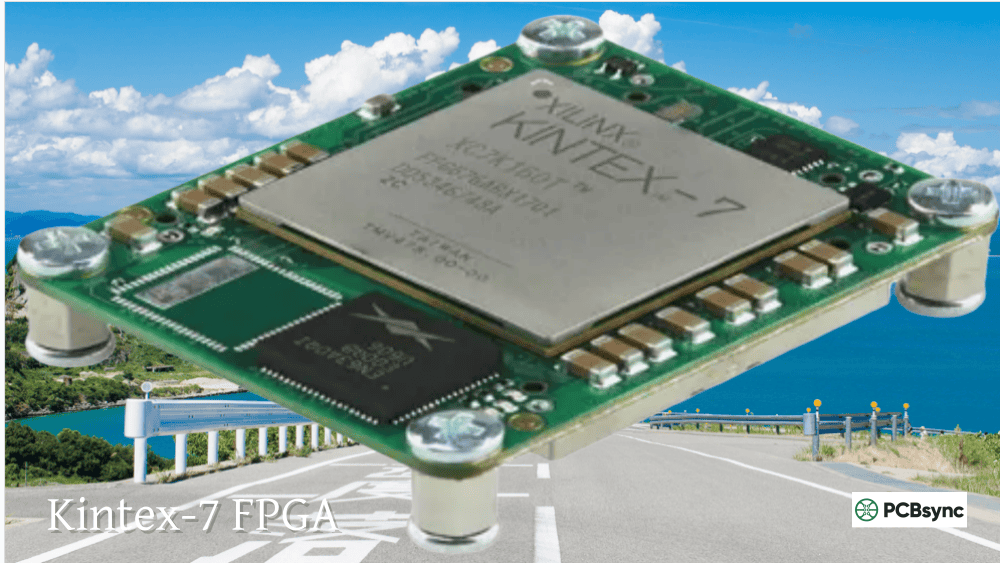
Device migration is supported within the Artix-7 family for footprint-compatible packages. For example, FGG484 packages are consistent across XC7A35T, XC7A50T, XC7A75T, and XC7A100T. This allows you to prototype with a larger device and cost-reduce to a smaller one in production, or scale up if you need more resources. Note that migration between 7 Series families (Artix to Kintex, for example) is not supported due to different pinouts.
Conclusion
The XC7A100T represents a practical choice for engineers who need substantial FPGA resources without enterprise-level pricing. With 100K+ logic cells, 240 DSP slices, and support for modern interfaces like DDR3 and PCIe, it handles real-world industrial and communications applications effectively.
Whether you’re building a software-defined radio, implementing machine vision algorithms, or developing industrial control systems, the XC7A100T provides the flexibility to iterate on your design while staying within budget. The extensive ecosystem support—from free Vivado WebPACK to affordable development boards—makes it accessible for both prototyping and production.
For your next mid-range FPGA project, give the Xilinx Artix-7 XC7A100T serious consideration. It’s earned its reputation as a reliable workhorse in the FPGA world.
Inquire: Call 0086-755-23203480, or reach out via the form below/your sales contact to discuss our design, manufacturing, and assembly capabilities.
Quote: Email your PCB files to Sales@pcbsync.com (Preferred for large files) or submit online. We will contact you promptly. Please ensure your email is correct.
Notes: For PCB fabrication, we require PCB design file in Gerber RS-274X format (most preferred), *.PCB/DDB (Protel, inform your program version) format or *.BRD (Eagle) format. For PCB assembly, we require PCB design file in above mentioned format, drilling file and BOM. Click to download BOM template To avoid file missing, please include all files into one folder and compress it into .zip or .rar format.