Inquire: Call 0086-755-23203480, or reach out via the form below/your sales contact to discuss our design, manufacturing, and assembly capabilities.
Quote: Email your PCB files to Sales@pcbsync.com (Preferred for large files) or submit online. We will contact you promptly. Please ensure your email is correct.
Notes: For PCB fabrication, we require PCB design file in Gerber RS-274X format (most preferred), *.PCB/DDB (Protel, inform your program version) format or *.BRD (Eagle) format. For PCB assembly, we require PCB design file in above mentioned format, drilling file and BOM. Click to download BOM template To avoid file missing, please include all files into one folder and compress it into .zip or .rar format.
Is the ZedBoard Zynq-7000 worth $589? Compare specs, alternatives, and learn why this Xilinx development board remains the top choice for Zynq beginners.
If you’ve been researching FPGA development boards and wondering where to start, the ZedBoard Zynq-7000 keeps coming up for good reason. After spending countless hours debugging designs on various platforms over the years, I can tell you that choosing the right board makes all the difference between actually learning and wanting to throw your computer out the window.
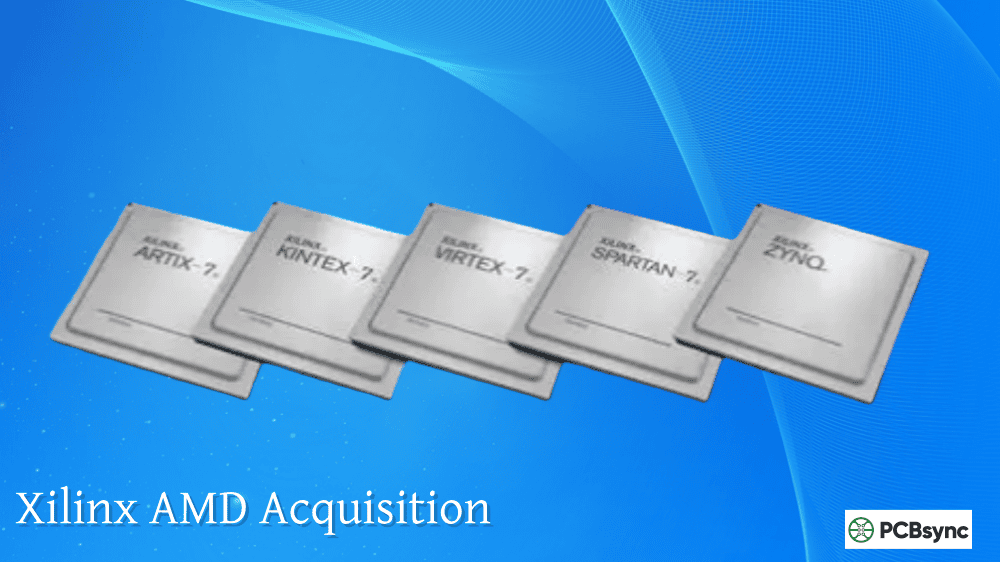
The Xilinx ZedBoard (now AMD after the acquisition) represents one of those sweet-spot development platforms where capability meets accessibility. It’s built around the Zynq-7000 All Programmable SoC, combining a dual-core ARM Cortex-A9 processor with 7-series programmable logic on a single chip. For engineers transitioning from pure microcontroller work or hobbyists stepping into the FPGA world, this combination opens up design possibilities that neither pure ARM nor standalone FPGA boards can match alone.
What Makes the ZedBoard Zynq Special for Beginners?
The ZedBoard Zynq family stands apart because it doesn’t force you to choose between processor-based development and FPGA fabric. When I first started working with hybrid SoC platforms, the learning curve felt overwhelming. The ZedBoard changed that by providing enough on-board peripherals that you can actually build complete projects without immediately hunting down expansion modules.
The Processing System (PS) and Programmable Logic (PL) Architecture
Understanding the Zynq-7000 architecture is fundamental before purchasing any Zynq development board. The chip divides into two main sections that work together through high-bandwidth AXI interconnects.
The Processing System includes the dual ARM Cortex-A9 cores running up to 667 MHz, along with hardened memory controllers, USB, Ethernet, and other typical embedded peripherals. This side handles operating system tasks, user interfaces, and control logic that benefits from software flexibility.
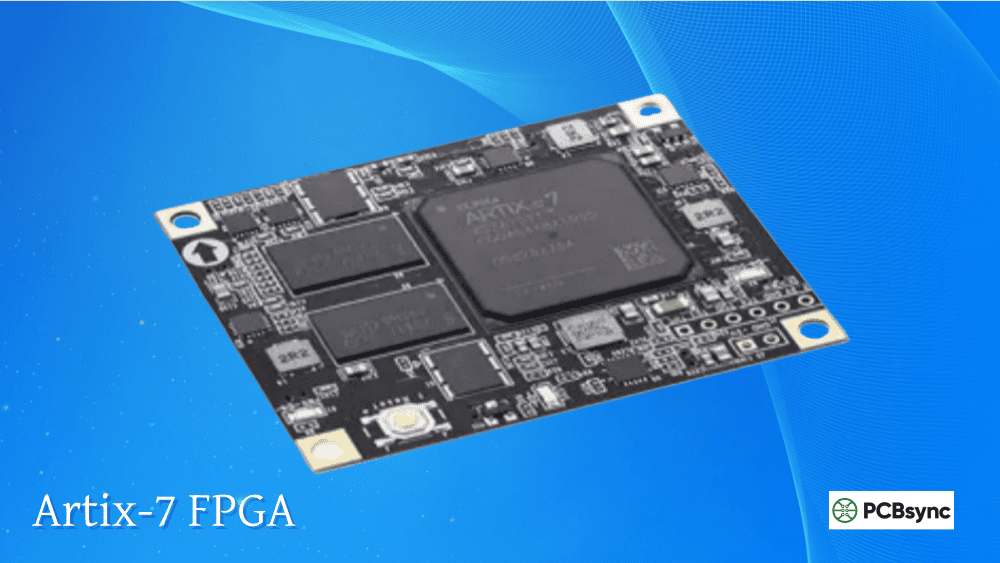
The Programmable Logic portion gives you access to the equivalent of an Artix-7 FPGA with 85,000 logic cells. Here’s where custom hardware accelerators, specialized interfaces, and timing-critical functions live. The real magic happens when these two worlds talk to each other efficiently.
ZedBoard Zynq-7000 Technical Specifications
Before diving deeper, let’s examine what you actually get with this board. The specifications matter because they determine what projects are realistic.
Core Hardware Specifications
Component
Specification
FPGA/SoC
Xilinx Zynq-7000 AP SoC XC7Z020-CLG484
Processor
Dual-core ARM Cortex-A9 @ 667 MHz
Logic Cells
85,000
DSP Slices
220
Block RAM
4.9 Mb
DDR3 Memory
512 MB
Flash Storage
256 MB Quad-SPI
SD Card Slot
Yes (4 GB card included)
Connectivity and Interfaces
Interface
Details
Ethernet
10/100/1000 Mbps (Marvell 88E1518 PHY)
USB
OTG 2.0, USB-UART Bridge
HDMI
1080p Output (ADV7511 Transmitter)
VGA
8-bit Output
Audio
Analog Devices ADAU1761 Codec
Pmod
5 × 12-pin Connectors
FMC
Low Pin Count Connector
OLED
128×32 Pixel Display
User Interface Components
Component
Quantity
LEDs
8 User LEDs
Switches
8 Slide Switches
Push Buttons
5 User Buttons
OLED Display
128×32 Monochrome
ZedBoard Price and Value Comparison
Let’s address the elephant in the room. The current ZedBoard price sits around $589 from Digilent, which isn’t exactly pocket change for a hobby board. However, context matters when evaluating development platform costs.
The ZedBoard commands a premium primarily because of the FMC connector. If you’re thinking “I’ll never need that,” consider this: FMC opens doors to hundreds of expansion cards covering high-speed ADC/DAC, RF front-ends, camera interfaces, and specialized I/O that would otherwise require custom PCB design. For professional prototyping or academic research, that connector alone justifies the price difference.
For pure learning purposes where budget is tight, the Arty Z7 or PYNQ-Z2 provide similar core functionality at lower cost. But if you’re eyeing a path toward professional development or need expansion flexibility, the ZedBoard remains the reference platform that most industry tutorials and examples target.
Setting up your ZedBoard Vivado development environment correctly from the start prevents headaches down the road. I’ve seen too many beginners waste days troubleshooting issues that trace back to improper initial configuration.
Essential Software Setup Steps
The ZedBoard works with AMD’s Vivado Design Suite, and thankfully the free WebPACK edition supports the XC7Z020 device without limitations on design size. Here’s the critical setup sequence:
First, download Vivado from AMD’s website. The installation is substantial (30+ GB for full installation), so plan accordingly. During installation, select the device families you need—including Zynq-7000 at minimum.
Second, install the board support files. This step trips up many beginners. Digilent maintains board definition files on GitHub that tell Vivado about the ZedBoard’s pin assignments and peripheral configurations. Without these files, you’ll manually configure every single connection.
Third, verify your USB-JTAG drivers installed correctly. The ZedBoard includes a Digilent-equivalent JTAG circuit that Windows should recognize automatically, but Linux users may need additional udev rules.
Creating Your First ZedBoard Project
When creating a new project in Vivado, selecting “ZedBoard” from the board list automatically configures the correct device and establishes default pin constraints. This single selection saves enormous time compared to starting with just the raw device.
The traditional first project involves blinking LEDs, but on the Zynq platform, I recommend something slightly more ambitious: controlling LEDs from the ARM processor through the programmable logic. This exercise teaches the PS-PL interaction that makes Zynq unique.
The basic workflow follows this pattern:
Create a block design in Vivado’s IP Integrator
Add the ZYNQ7 Processing System IP block
Run block automation to configure the PS with ZedBoard defaults
Add AXI GPIO blocks connected to LEDs
Generate the bitstream
Export hardware to Vitis (or SDK for older tools)
Write simple C code to toggle GPIO pins
This process seems complex initially, but after two or three iterations, it becomes second nature.
ZedBoard Zynq-7000 Target Applications
Understanding what projects suit this platform helps set realistic expectations. The ZedBoard excels in several domains.
Video and Image Processing
The HDMI output capability combined with sufficient logic resources makes the ZedBoard popular for real-time video processing experiments. Edge detection filters, color space conversions, and basic computer vision algorithms run comfortably in the programmable logic while ARM cores handle frame buffering and control.
Motor Control and Robotics
PWM generation, encoder interfaces, and PID control loops benefit from hardware implementation in the PL side. The ARM cores manage trajectory planning and communication while custom hardware handles precise timing requirements that software loops can’t guarantee.
Software Acceleration
Algorithms with parallelizable structures (matrix operations, FFTs, convolutions) can see dramatic speedups when offloaded to custom hardware. The high-bandwidth connection between PS and PL enables efficient data transfer for acceleration use cases.
Embedded Linux Development
Running PetaLinux or Ubuntu on the ARM cores while maintaining custom hardware interfaces teaches skills directly transferable to production Zynq designs. The 512 MB RAM provides enough headroom for meaningful Linux applications.
Prototyping and Academic Research
The FMC connector allows testing custom daughter cards before committing to full production boards. Many universities standardized on ZedBoard for digital design courses because of its balance between capability and documentation.
Xilinx ZedBoard: Pros and Cons from Real-World Use
After working extensively with this platform, here’s an honest assessment of where it shines and where it frustrates.
Strengths That Matter
The documentation ecosystem surrounding the ZedBoard remains unmatched among Zynq development boards. Digilent maintains comprehensive reference materials, and years of community projects provide examples for almost any peripheral combination you might need.
Board quality feels solid. The PCB layout follows Xilinx reference designs closely, meaning signal integrity issues rarely cause mysterious failures. The included power supply and cables get you running immediately without hunting for compatible accessories.
The peripheral selection hits a sweet spot for learning. Having HDMI, audio, Ethernet, and multiple Pmod connectors on one board means you can explore different application domains without additional purchases.
Limitations Worth Noting
The price barrier is real. Students and hobbyists often find more affordable alternatives that serve their immediate needs adequately.
No HDMI input limits video processing to generated content or SDcard sources without adding FMC modules.
The DDR3 memory interfaces only with the PS side, not the PL directly. This isn’t unique to ZedBoard but affects designs requiring high-bandwidth PL memory access.
Software tool complexity remains challenging regardless of board choice. Vivado and Vitis have steep learning curves that frustrate newcomers expecting microcontroller-like simplicity.
Useful Resources for ZedBoard Development
Getting productive quickly depends on finding quality learning materials. These resources have proven valuable consistently.
Search for “zedboard” to find countless example projects
Recommended Learning Path
For absolute beginners, I suggest this sequence:
Start with basic Vivado operation using simple LED designs that don’t involve the PS. Understand synthesis, implementation, and bitstream generation before adding processor complexity.
Then explore IP Integrator and block design methodology. This graphical approach to connecting IP blocks reflects how most production Zynq designs are actually built.
Next, add the processor and write simple bare-metal C programs. Controlling peripherals from software before running Linux reduces variables when troubleshooting.
Finally, tackle PetaLinux when you’re comfortable with bare-metal development. Linux on Zynq adds powerful capabilities but also significant complexity.
The ZedBoard isn’t the only path into Zynq development. Your specific needs might align better with alternatives.
For Tighter Budgets
The Arty Z7-20 provides nearly identical silicon (same XC7Z020) at $299 with fewer peripherals. If you don’t need FMC expansion, HDMI output, or the audio codec, it delivers core Zynq learning at lower cost.
The PYNQ-Z2 offers an interesting alternative by enabling Python-based FPGA development through Jupyter notebooks. For data scientists or software developers more comfortable with Python than HDL, this platform reduces the initial learning barrier significantly.
For More Capability
If budget allows and you need more resources, Zynq UltraScale+ boards like the Ultra96-V2 provide quad-core ARM Cortex-A53 processors, more logic resources, and modern peripherals including WiFi and Bluetooth.
The Xilinx ZCU102 represents the professional evaluation platform but at a price point (~$2,500) that places it firmly in corporate budgets rather than personal learning.
Frequently Asked Questions
Is the ZedBoard good for FPGA beginners with no prior experience?
The ZedBoard works well for motivated beginners, though the combination of FPGA and processor concepts can feel overwhelming initially. The extensive documentation and community examples help significantly. If pure FPGA learning without processor complexity appeals more, consider starting with a simpler board like the Basys 3 before graduating to Zynq platforms.
Can I run Linux on the ZedBoard Zynq-7000?
Yes, the dual-core ARM Cortex-A9 processors comfortably run Linux distributions. AMD provides PetaLinux tools specifically for building embedded Linux images targeting Zynq devices. The 512 MB DDR3 memory provides adequate space for typical embedded Linux applications, though memory-intensive workloads may require careful optimization.
What’s the difference between ZedBoard and ZC702 evaluation kit?
Both boards use the same XC7Z020 silicon, but the ZC702 is AMD’s official evaluation kit at a higher price point (~$1,000+). The ZC702 offers additional features like 1 GB RAM and two FMC connectors but targets commercial evaluation rather than learning. For educational purposes and hobby development, the ZedBoard provides better value.
Do I need to pay for Vivado to use the ZedBoard?
No. The free Vivado WebPACK edition fully supports the XC7Z020 device on the ZedBoard without design size limitations. You only need paid Vivado licenses for larger devices or certain advanced features not typically needed for learning.
How long does it take to become productive with the ZedBoard?
Expect several weeks of regular practice to become comfortable with basic Vivado workflows and simple designs. Reaching proficiency where you can implement meaningful projects typically takes 3-6 months depending on prior electronics and programming experience. The learning curve is real but manageable with consistent effort.
Common Beginner Mistakes to Avoid
Having mentored several engineers through their first Zynq projects, certain mistakes appear repeatedly. Learning from others’ frustrations saves significant time.
Ignoring Clock Domain Crossings
The PS and PL run on different clocks. Data passing between domains requires proper synchronization. Beginners often connect signals directly, leading to intermittent failures that prove maddening to debug. Always use FIFO buffers or proper clock domain crossing techniques when signals cross between PS and PL.
Underestimating Timing Constraints
Unlike microcontrollers where software timing is flexible, FPGA designs must meet strict timing requirements. Failing timing closure means your design may work sometimes but not always. Check timing reports after every implementation and address violations immediately rather than hoping they don’t matter.
Skipping Simulation
The temptation to jump directly to hardware testing is strong, especially when simulation setup feels tedious. However, finding bugs in simulation takes minutes compared to hours of debugging on actual hardware. Invest time in building proper testbenches early.
Overcomplicating Initial Projects
Ambitious first projects frequently stall. Start simpler than you think necessary. A working LED blink teaches more than an incomplete video processing pipeline. Build complexity incrementally once foundations are solid.
Final Thoughts
The ZedBoard Zynq-7000 earned its reputation as the reference platform for Zynq development through years of community adoption and excellent support infrastructure. While the price exceeds simpler alternatives, the combination of capable hardware, comprehensive expansion options, and extensive documentation makes it a sound investment for serious FPGA learning.
For PCB engineers moving toward FPGA-based designs or embedded developers wanting to add custom hardware acceleration, the ZedBoard provides a realistic sandbox that translates directly to production work. The skills learned transfer seamlessly to other Zynq boards and even to larger UltraScale+ platforms.
That said, evaluate your actual needs before purchasing. If the FMC connector and specific peripherals don’t matter for your projects, more affordable alternatives deliver similar learning value. The best development board is ultimately the one you’ll actually use consistently—and sometimes that means choosing the option that fits your budget comfortably enough to buy without hesitation.
Whatever you choose, welcome to the fascinating world where software flexibility meets hardware performance. The ZedBoard remains one of the best ways to explore that intersection.
Inquire: Call 0086-755-23203480, or reach out via the form below/your sales contact to discuss our design, manufacturing, and assembly capabilities.
Quote: Email your PCB files to Sales@pcbsync.com (Preferred for large files) or submit online. We will contact you promptly. Please ensure your email is correct.
Notes: For PCB fabrication, we require PCB design file in Gerber RS-274X format (most preferred), *.PCB/DDB (Protel, inform your program version) format or *.BRD (Eagle) format. For PCB assembly, we require PCB design file in above mentioned format, drilling file and BOM. Click to download BOM template To avoid file missing, please include all files into one folder and compress it into .zip or .rar format.