Inquire: Call 0086-755-23203480, or reach out via the form below/your sales contact to discuss our design, manufacturing, and assembly capabilities.
Quote: Email your PCB files to Sales@pcbsync.com (Preferred for large files) or submit online. We will contact you promptly. Please ensure your email is correct.
Notes: For PCB fabrication, we require PCB design file in Gerber RS-274X format (most preferred), *.PCB/DDB (Protel, inform your program version) format or *.BRD (Eagle) format. For PCB assembly, we require PCB design file in above mentioned format, drilling file and BOM. Click to download BOM template To avoid file missing, please include all files into one folder and compress it into .zip or .rar format.
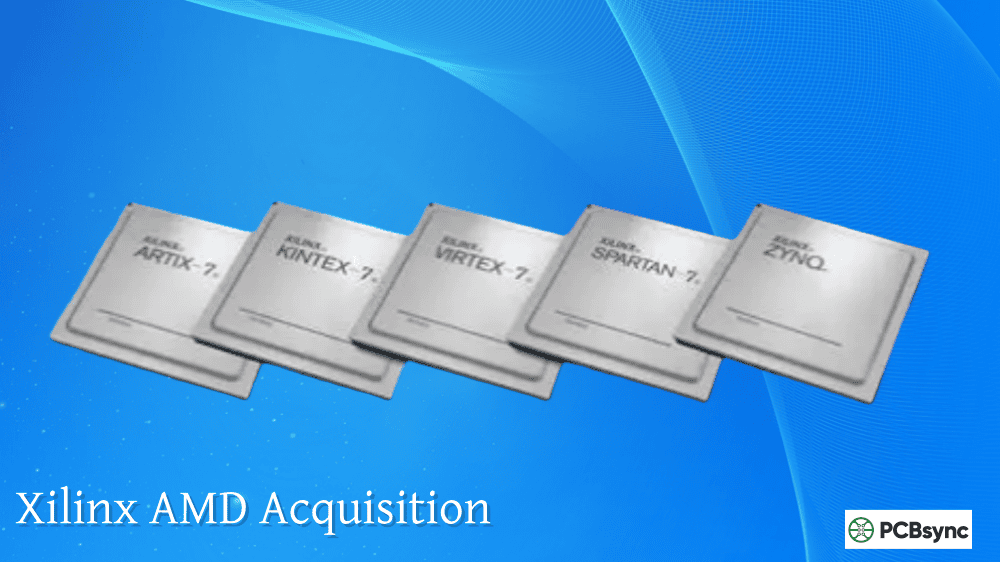
As someone who’s spent years working with high-speed networking hardware and FPGA-based accelerators, I can tell you that the Xilinx SN1000 family represents a significant shift in how we approach network offloading. After AMD acquired both Solarflare and Xilinx, the resulting Xilinx SN1022 SmartNIC became the flagship 100GbE solution that combines proven Solarflare low-latency technology with programmable FPGA fabric. This guide breaks down everything you need to know about the Xilinx Solarflare SmartNIC platform, from hardware specs to real-world deployment considerations.
Traditional NICs are essentially dumb pipes. They move packets from point A to point B, and that’s about it. Even “smart” NICs with fixed ASIC offloads can only handle predetermined tasks. The Xilinx SN1000 takes a fundamentally different approach by combining three distinct compute elements on a single card.
The architecture integrates a high-performance FPGA (the XCU26 based on 16nm UltraScale+ technology), a 16-core ARM Cortex-A72 processor subsystem, and the proven Solarflare network ASIC. This combination gives you hardware-speed packet processing that you can actually reprogram as your requirements evolve.
Core Architecture Components
The Xilinx SN1022 (the first model in the SN1000 family) packs serious hardware into a standard FHHL form factor. The XCU26 FPGA provides over 1 million LUTs of programmable logic. That’s enough fabric to implement complex packet processing pipelines, custom protocols, or specialized offload functions that would be impossible on fixed-function hardware.
The ARM subsystem handles control plane tasks, running a full Linux environment directly on the SmartNIC. This means configuration, monitoring, and management code runs locally on the card rather than consuming host CPU cycles. For data center operators running thousands of servers, this isolation of control and data planes simplifies management considerably.
Xilinx SN1022 Technical Specifications
Before we dive deeper into use cases, let’s look at what the Xilinx SN1022 actually delivers in terms of raw specifications. These numbers matter when you’re designing systems that need to hit specific latency or throughput targets.
Specification
Xilinx SN1022 Value
Full Duplex Throughput
200 Gbps
Packet Rate
100 Mpps
TCP Throughput
100 Gbps
Latency (1/2 RTT)
<3 µs
OVS Performance
100 Gbps
Flow Table Entries
4M Stateful Connections
IPsec Encryption Throughput
100 Gbps
Power Consumption
75W
Form Factor
FHHL
PCIe Interface
Gen 4 x8 or Gen 3 x16
Network Ports
2x QSFP28 (100G each)
FPGA
XCU26 (1M+ LUTs)
ARM Cores
16x Cortex-A72
The sub-3 microsecond latency figure is particularly impressive for a SmartNIC with this level of programmability. That’s getting into territory that was previously reserved for custom ASIC solutions or extremely stripped-down fixed-function NICs.
Understanding the Solarflare Heritage
You can’t really understand the Xilinx SN1000 without appreciating where the Solarflare technology came from. Before the acquisitions, Solarflare had built a reputation in the financial trading world for delivering the lowest possible network latency. Their Onload kernel bypass technology became the de facto standard for high-frequency trading applications.
Xilinx acquired Solarflare in 2019, gaining access to this low-latency networking IP. When AMD subsequently acquired Xilinx in 2022, the combined entity had the silicon expertise, FPGA technology, and networking know-how to build SmartNICs that compete effectively against NVIDIA’s DPU offerings.
Onload Kernel Bypass Technology
The Onload software stack is really the secret sauce that makes Xilinx Solarflare adapters so effective for latency-sensitive applications. Instead of going through the standard Linux kernel networking stack, Onload moves the TCP/IP processing directly into user space.
This approach eliminates context switches, reduces memory copies, and provides more deterministic latency. Applications using Onload can see latency reductions of 30-50% compared to kernel networking, with significant improvements in jitter as well. For trading applications where microseconds matter, this can translate directly into competitive advantage.
The Solarflare product line includes multiple adapter families, and it’s worth understanding where the SN1022 fits relative to other options like the Xilinx X2522 and Xilinx X3522.
Feature
Xilinx X2522
Xilinx X3522
Xilinx SN1022
Speed
10/25 GbE
10/25 GbE
100 GbE
FPGA
No
No
Yes (XCU26)
ARM Cores
No
No
16x Cortex-A72
Primary Use Case
Low-latency trading
Ultra-low-latency trading
Programmable offloads
Onload Support
Yes
Yes
Yes
OVS Offload
No
No
Yes
P4 Programmability
No
No
Yes
Form Factor
HHHL
HHHL
FHHL
When to Choose X2522 or X3522
The Xilinx X2522 remains an excellent choice for applications that need Solarflare’s low-latency stack but don’t require the programmability of an FPGA. Trading firms that have existing Onload-based applications and just need more ports or a hardware refresh often stay with the X2 series.
The Xilinx X3522 offers improved latency compared to the X2522, making it the preferred choice for the most demanding HFT applications. AMD’s testing shows the X3522 delivers approximately 27% lower latency than the X2522 for typical trading workloads.
The SN1022 makes sense when you need the programmability to implement custom offloads, want to consolidate multiple functions onto a single card, or need 100GbE speeds. The FPGA fabric opens up possibilities that simply aren’t available on fixed-function NICs.
Key Use Cases for Xilinx SN1000 SmartNIC
Based on my experience with production deployments, here are the scenarios where the Xilinx SN1000 really shines.
High-Frequency Trading and Financial Services
This is the heritage application for Solarflare technology. The SN1022 combines the proven low-latency networking stack with FPGA programmability for implementing trading algorithms directly in hardware. Instead of receiving market data, processing it on the CPU, and then sending orders back through the NIC, the entire tick-to-trade pipeline can execute on the SmartNIC itself.
Xilinx provides reference designs for CME (Chicago Mercantile Exchange) connectivity that firms can use as starting points. The FPGA fabric handles protocol parsing and order generation at wire speed, achieving sub-microsecond response times that would be impossible with software-only implementations.
Cloud and Data Center Infrastructure
For cloud service providers, the SN1022 can consolidate multiple infrastructure functions. Open Virtual Switch (OVS) acceleration, Virtio offload, and vDPA support mean that virtual machine networking no longer consumes significant host CPU resources. The card handles the overlay network processing, VXLAN/NVGRE encapsulation, and flow table lookups in hardware.
The 4 million stateful connection capacity handles the scale requirements of hyperscale deployments. And because the offload logic is programmable, providers can adapt to new requirements without hardware replacement.
Network Function Virtualization
NFV deployments benefit from the ability to implement network functions directly on the SmartNIC FPGA. Firewalls, load balancers, IPsec gateways, and custom protocol handlers can run at line rate without consuming host resources.
The P4 programmability is particularly valuable here. Network engineers can describe packet processing behavior in a high-level language, then compile it to run on the FPGA fabric. This is far more accessible than traditional RTL development while still achieving hardware-level performance.
Storage Acceleration
The SN1022 supports NVMe over TCP, Ceph RBD client offload, and Virtio-blk acceleration. For storage-intensive workloads, moving the storage networking stack onto the SmartNIC can significantly reduce CPU utilization and improve IOPS.
Programming the Xilinx SN1022
One of the key differentiators for the Xilinx SN1000 platform is the accessibility of the programming model. Traditional FPGA development required deep hardware expertise and expensive toolchains. The SN1022 offers multiple entry points depending on your skill set and requirements.
P4 Programming with Vitis Networking
For network-focused applications, P4 provides the most accessible programming model. The Vitis Networking P4 toolkit compiles P4 programs to run on the SN1022 FPGA. If you’re familiar with programming switches or routers, P4 will feel natural.
You define packet parsing, match-action tables, and forwarding behavior in a domain-specific language designed for networking. The compiler handles mapping this to the underlying FPGA resources.
High-Level Synthesis with Vitis
For more general-purpose offloads, the Vitis HLS flow allows C/C++ functions to be synthesized into hardware accelerators. This opens up possibilities beyond pure packet processing, including cryptographic acceleration, compression, and custom protocol handling.
Traditional RTL Development
For maximum control and optimization, traditional Verilog/VHDL development remains an option. This is typically reserved for organizations with existing FPGA expertise who need to extract every last bit of performance from the hardware.
Software Stack and Driver Support
Getting a SmartNIC up and running involves more than just the hardware. The Xilinx SN1022 has good Linux support, though there are some considerations to be aware of.
Linux Driver Support
The SN1022 is supported by the SFC EFX poll mode driver in DPDK, enabling high-performance userspace networking. The driver supports Linux and FreeBSD, with packages available for major distributions including RHEL, Ubuntu, and SUSE.
For kernel networking, the standard sfc driver provides NIC functionality. This is the appropriate choice for applications that don’t need kernel bypass performance.
Onload Installation
Onload is distributed separately from the base drivers. The installation process involves building kernel modules and userspace libraries. While not overly complex, it does require kernel headers and build tools on the target system.
# Typical Onload installation sequence
tar xzf onload-x.x.x.tgz
cd onload-x.x.x
./scripts/onload_install
modprobe onload
Firmware Updates
The SN1022 firmware can be updated using provided tools. Firmware updates occasionally add new features or fix issues, so keeping current is recommended for production deployments. The update process requires a reboot to take effect.
At 75W TDP, the Xilinx SN1022 draws significantly more power than typical network adapters. This has implications for system design that hardware engineers need to consider.
Cooling Requirements
The SN1022 requires minimum 300 LFM airflow across the heatsink. In rack-mounted servers with front-to-back airflow, this is typically provided by the system fans. However, you should verify that your server’s cooling solution can handle the additional heat load.
Passive cooling is not supported. The card relies on forced air cooling, and insufficient airflow will result in thermal throttling or shutdown.
PCIe Slot Selection
Although the SN1022 uses only 8 electrical lanes at PCIe Gen 4 speeds, it physically occupies a x16 slot. When planning system configurations, ensure you have an appropriate slot available.
For maximum performance, install the card in a slot directly connected to the CPU rather than through a PCIe switch. This minimizes latency for applications where every nanosecond counts.
Migration Path and Product Roadmap
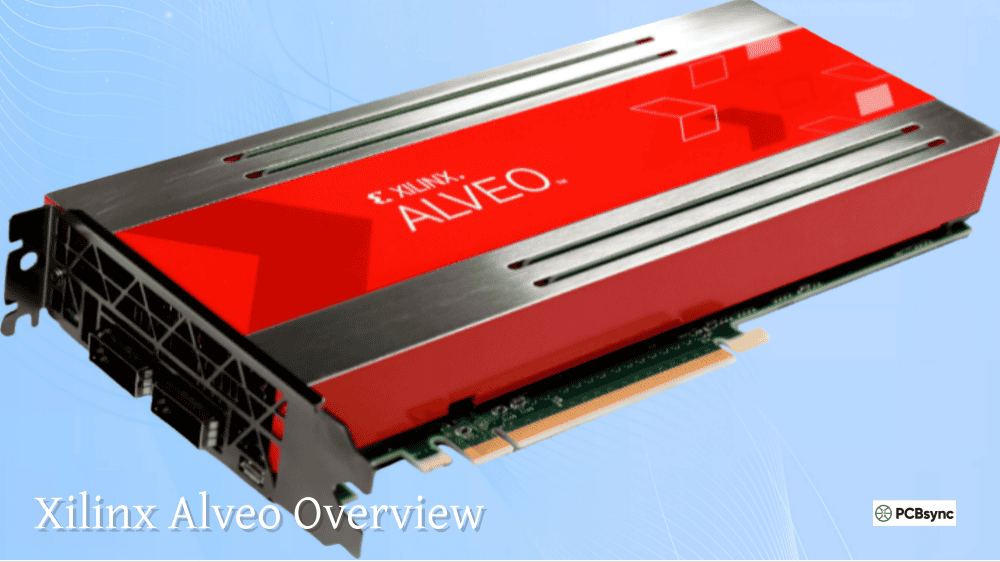
One consideration for new designs is AMD’s stated recommendation that new projects target the Alveo U45 network accelerator rather than the SN1022. The SN1022 remains fully supported for existing deployments, but AMD is steering new development toward the U45 platform.
This is worth factoring into long-term planning decisions. For immediate deployments where the SN1022 meets requirements, the existing support commitment provides stability. For projects with longer development timelines, evaluating the U45 may be appropriate.
Practical Deployment Tips
Based on hands-on experience with these cards, here are some practical recommendations for successful deployments.
BIOS and OS Tuning
For latency-sensitive applications, proper system tuning is essential. This includes:
Disabling C-states and P-states for consistent CPU performance
AMD provides tuning guides that document recommended BIOS settings for different workload types. Following these guides can significantly improve consistency.
Driver and Firmware Matching
Ensure that driver versions, firmware versions, and Onload versions are compatible. Mismatched components can cause subtle issues that are difficult to diagnose. The release notes for each component document tested combinations.
Validation Testing
Before deploying to production, run validation tests that exercise the specific features you need. The DPDK test suite, iperf3 for throughput, and sockperf for latency provide useful baselines.
Useful Resources for Xilinx SN1000 and Solarflare Products
Here are the key resources for working with Xilinx SN1000, Xilinx SN1022, and related Solarflare adapters:
Frequently Asked Questions About Xilinx SN1000 SmartNIC
What is the difference between Xilinx SN1000 and SN1022?
The Xilinx SN1000 is the product family name, while the Xilinx SN1022 is the specific model that was first released. The SN1022 is a 100Gb SmartNIC with dual QSFP28 ports and represents the initial offering in the SN1000 family. Think of it like SN1000 being the series and SN1022 being the model number.
Can the Xilinx SN1022 replace my existing Solarflare X2522?
The Xilinx X2522 and SN1022 serve different purposes. The X2522 is a pure low-latency NIC optimized for trading applications at 10/25GbE speeds. The SN1022 adds FPGA programmability and 100GbE support but at higher power consumption and cost. If you only need the Onload stack for kernel bypass, the X2522 or X3522 may be more appropriate. The SN1022 makes sense when you need programmable offloads or 100GbE connectivity.
What programming languages can I use with the Xilinx SN1022?
The SN1022 supports P4 for network-centric applications through Vitis Networking, C/C++ through Vitis HLS for general-purpose acceleration, and traditional Verilog/VHDL for RTL development. Most users start with P4 for packet processing applications, as it has the gentlest learning curve for network engineers.
Does the Xilinx SN1000 support SR-IOV?
Yes, the Xilinx SN1000 family supports SR-IOV (Single Root I/O Virtualization), allowing the NIC to be partitioned into multiple virtual functions for direct assignment to VMs. This is commonly used in cloud and virtualization deployments where you want to give VMs near-native network performance.
Is Xilinx SN1022 compatible with VMware ESXi?
The SN1022 has VMware ESXi driver support. However, the specific features available depend on the driver version and ESXi release. Onload is not supported on VMware, so kernel bypass functionality requires Linux. For VMware deployments, the card provides standard NIC functionality and OVS offload capabilities.
Conclusion
The Xilinx SN1000 platform, and specifically the Xilinx SN1022 SmartNIC, represents a compelling option for organizations that need programmable network offloading at 100GbE speeds. The combination of Solarflare’s proven low-latency technology with FPGA programmability creates a flexible platform that can adapt to evolving requirements.
Whether you’re building trading infrastructure, cloud platforms, or specialized network appliances, the Xilinx Solarflare SmartNIC family provides options at multiple price and performance points. The Xilinx X2522 and Xilinx X3522 cover lower-speed, latency-optimized use cases, while the SN1022 opens up possibilities for custom offloads that fixed-function NICs simply cannot address.
Understanding when to use each option, and how to configure them properly, is key to getting the best results from these capable pieces of silicon.
Inquire: Call 0086-755-23203480, or reach out via the form below/your sales contact to discuss our design, manufacturing, and assembly capabilities.
Quote: Email your PCB files to Sales@pcbsync.com (Preferred for large files) or submit online. We will contact you promptly. Please ensure your email is correct.
Notes: For PCB fabrication, we require PCB design file in Gerber RS-274X format (most preferred), *.PCB/DDB (Protel, inform your program version) format or *.BRD (Eagle) format. For PCB assembly, we require PCB design file in above mentioned format, drilling file and BOM. Click to download BOM template To avoid file missing, please include all files into one folder and compress it into .zip or .rar format.