Inquire: Call 0086-755-23203480, or reach out via the form below/your sales contact to discuss our design, manufacturing, and assembly capabilities.
Quote: Email your PCB files to Sales@pcbsync.com (Preferred for large files) or submit online. We will contact you promptly. Please ensure your email is correct.
Notes: For PCB fabrication, we require PCB design file in Gerber RS-274X format (most preferred), *.PCB/DDB (Protel, inform your program version) format or *.BRD (Eagle) format. For PCB assembly, we require PCB design file in above mentioned format, drilling file and BOM. Click to download BOM template To avoid file missing, please include all files into one folder and compress it into .zip or .rar format.
overing D-PHY configuration, Vivado IP setup, Linux drivers, and troubleshooting tips for camera interface designs.
Working with camera interfaces on FPGA platforms can feel overwhelming at first. After spending years routing high-speed differential pairs and debugging signal integrity issues, I’ve found that the Xilinx MIPI CSI-2 RX Subsystem and MIPI DSI TX Subsystem are actually well-documented once you know where to look. This guide walks you through the practical aspects of implementing these camera interfaces on AMD/Xilinx FPGAs.
Understanding MIPI Camera Interfaces on Xilinx FPGAs
The Mobile Industry Processor Interface (MIPI) has become the dominant standard for connecting image sensors to processors. If you’ve ever worked with smartphone cameras, automotive vision systems, or embedded imaging platforms, you’ve likely encountered MIPI CSI-2 (Camera Serial Interface) and DSI (Display Serial Interface).
What Makes MIPI D-PHY Different from Other Interfaces
The Xilinx MIPI D-PHY serves as the physical layer foundation for both CSI-2 and DSI protocols. Unlike traditional parallel camera interfaces that required dozens of IO pins, MIPI D-PHY uses high-speed differential signaling with far fewer connections. A typical implementation needs just one clock lane and up to four data lanes.
Here’s what caught my attention when first implementing the Xilinx MIPI D-PHY: the physical layer operates in two distinct modes. Low-power (LP) mode handles control signaling at lower speeds, while high-speed (HS) mode carries the actual pixel data at rates up to 2.5 Gbps per lane on UltraScale+ devices.
Xilinx MIPI CSI-2 RX Subsystem Architecture
The Xilinx MIPI CSI-2 RX Subsystem is not just a single IP block. It’s actually a complete subsystem that bundles several components together:
Core Components of the CSI-2 RX Subsystem
Component
Function
Configuration Interface
MIPI D-PHY RX Core
Physical layer reception
Vivado IP Customization
CSI-2 RX Controller
Protocol processing
AXI4-Lite Registers
Video Format Bridge
AXI4-Stream conversion
Fixed at synthesis
Line Buffer
Clock domain crossing
Parameterized depth
The subsystem captures images from MIPI CSI-2 camera sensors and outputs AXI4-Stream video data. What I appreciate about this architecture is how it separates concerns. The D-PHY handles electrical signaling, the controller manages the packet protocol, and the Video Format Bridge presents clean AXI4-Stream data to your processing pipeline.
Supported Video Formats
When configuring the Xilinx MIPI CSI-2 receiver, you need to understand which pixel formats your sensor outputs. The subsystem natively supports:
Data Type
Bits per Pixel
Common Use Case
RAW8
8
Low-resolution sensors
RAW10
10
Most smartphone sensors
RAW12
12
High-end cameras
RAW14
14
Scientific imaging
RGB888
24
Processed RGB data
YUV422 8-bit
16
Video applications
One practical note: if your sensor outputs YUV422 10-bit, which is technically a secondary format, you can work around this limitation by configuring the subsystem for RAW10 with 2 pixels per clock. The data structure maps correctly even though it’s technically a workaround.
Configuring the Xilinx MIPI CSI-2 RX in Vivado
Step 1: IP Customization Settings
When you add the MIPI CSI-2 RX Subsystem to your block design, the first customization screen presents the fundamental choices. Set your lane count based on your sensor and bandwidth requirements. Most evaluation boards like the ZCU102 support 4 data lanes.
Key Configuration Parameters:
– Number of Lanes: Match your sensor (typically 2 or 4)
– Pixels per Clock: 1, 2, 4, or 8 (affects throughput)
– Pixel Format: Must match sensor output exactly
– Line Rate: Calculate based on resolution and framerate
Step 2: Clock Requirements
This is where many designs stumble. The Xilinx MIPI D-PHY requires specific clock relationships:
Clock
Typical Frequency
Purpose
dphy_clk_200M
200 MHz
D-PHY reference clock
video_aclk
Based on line rate
AXI4-Stream interface
lite_aclk
100-200 MHz
AXI4-Lite control interface
Calculate your video clock based on: Line Rate (Mbps) / 8 = Byte Clock (MHz)
For a 4K30 pipeline at 1500 Mbps line rate, you’d need a 187.5 MHz byte clock. I typically run a 300 MHz stream clock with 2 pixels per clock to maintain margin.
Step 3: Pin Assignment
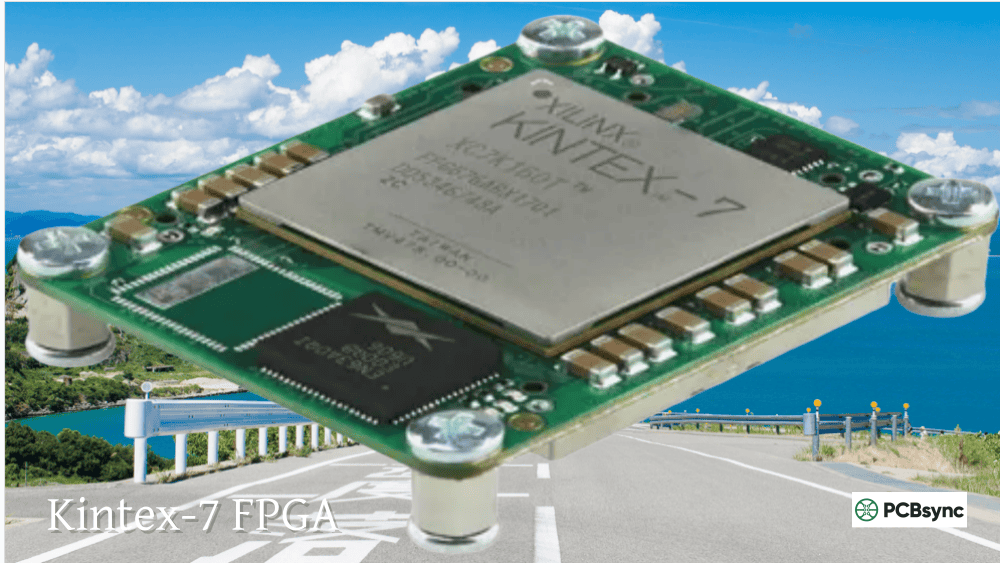
On UltraScale+ devices, MIPI pins must be assigned to HP (High Performance) I/O banks. The Vivado IP includes a Pin Assignment tab that shows which lanes map to which physical pins. For 7-series devices, you’ll need external D-PHY bridges or passive components since native MIPI I/O support isn’t available.
The Xilinx MIPI DSI TX Subsystem handles the display side of MIPI interfaces. It receives AXI4-Stream pixel data and outputs DSI protocol signals through the D-PHY physical layer.
Configuring DSI timing parameters requires understanding your display panel’s requirements. Unlike CSI-2 where the sensor drives timing, DSI requires the transmitter to generate timing signals that match the panel’s expectations.
Timing Calculation Example (1920×1200 @ 60Hz):
– Total line time in pixel clocks = 3030
– Byte clock frequency = 125 MHz (1000 Mbps / 8)
– Horizontal blanking available for HBP + HFP
– Distribute blanking time at 5:1 ratio (HBP:HFP)
The driver software sets these timing registers at runtime through the AXI4-Lite interface. The Xilinx embedded software repository includes example code that handles these calculations.
Building a Complete Video Pipeline
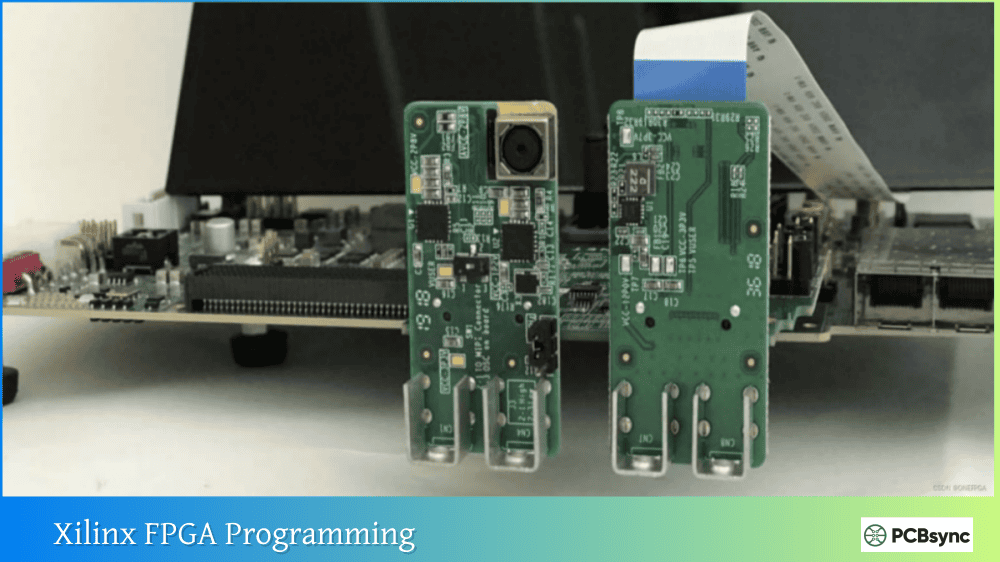
A practical camera-to-display system chains these subsystems together. Here’s a typical pipeline I’ve implemented on the ZCU102:
Between capture and display, you’ll likely need color space conversion and scaling. The VPSS (Video Processing Subsystem) handles:
Function
Purpose
Chroma Resampling
YUV422 to YUV444 conversion
Color Space Conversion
YUV to RGB transformation
Scaling
Resolution adaptation
Deinterlacing
Interlaced to progressive
Memory Architecture Considerations
The Video Frame Buffer Write and Read IPs provide the essential frame buffering between input and output domains. For 4K video with YUV422 10-bit pixels, each frame consumes approximately 16 MB. Triple buffering prevents tearing artifacts but requires 48 MB of dedicated memory bandwidth.
Linux Driver Integration
For embedded Linux systems, Xilinx provides V4L2 (Video4Linux2) drivers for these subsystems. The MIPI CSI-2 RX driver creates a subdev node (/dev/v4l-subdev*) for configuration.
Device Tree Configuration
The device tree node must match your hardware configuration. Key parameters include:
After helping colleagues debug numerous MIPI implementations, these are the issues I see most frequently:
Start of Transmission (SoT) Errors
If you see errsoths = ‘1’ on the D-PHY output, the HS_SETTLE timing parameter is likely mismatched. The default 145ns works for many sensors, but some require adjustment. Check your sensor’s D-PHY timing specifications.
No AXI4-Stream Output
Verify these items in order:
D-PHY PLL is locked (pll_lock signal high)
Clock lane is receiving valid differential clock
Data type value in packet headers matches IP configuration
Virtual channel ID matches (default is 0)
Image Artifacts or Corruption
Clock domain crossing issues typically manifest as jittering pixels or color corruption. Verify:
Line buffer depth is sufficient for your resolution
Stream clock and pixel clock ratios are correct
Frame buffer has adequate bandwidth
Resource Utilization Reference
For planning purposes, here’s typical resource utilization on Zynq UltraScale+ MPSoC:
Configuration
LUTs
FFs
BRAM
CSI-2 RX, 4 lanes, 2PPC
~2,500
~3,200
4
DSI TX, 4 lanes, RGB888
~1,800
~2,400
2
D-PHY RX Core
~800
~1,100
0.5
D-PHY TX Core
~600
~900
0.5
These numbers vary based on configuration options and Vivado synthesis settings.
Useful Resources and Documentation
Official AMD/Xilinx Documentation
Document
Product Guide
Purpose
MIPI CSI-2 RX Subsystem
PG232
Complete receiver reference
MIPI DSI TX Subsystem
PG238
Transmitter configuration
MIPI D-PHY
PG202
Physical layer details
D-PHY Solutions
XAPP894
Hardware implementation guidance
Download Links and Repositories
Xilinx Wiki: xilinx-wiki.atlassian.net – Linux driver documentation and examples
Embedded SW Repository: github.com/Xilinx/embeddedsw – Bare-metal drivers and examples
Yes, but with limitations. 7-series devices lack native MIPI I/O blocks, so you need external D-PHY bridges (like the TI MC2002) or passive component solutions with HP bank I/O. The line rate is also limited compared to UltraScale+ devices. Xilinx Application Note XAPP894 details these implementations.
What’s the maximum resolution and framerate supported?
The theoretical maximum depends on your lane count and line rate. With 4 lanes at 2.5 Gbps each (10 Gbps total bandwidth) and RAW10 format, you could achieve 4K60 or even 8K30. However, practical implementations depend on your specific FPGA device, memory bandwidth, and processing pipeline requirements.
How do I handle multiple camera inputs?
You can instantiate multiple MIPI D-PHY and CSI-2 RX cores. When sharing resources within an I/O bank, configure one D-PHY as the master (includes shared PLL logic) and others as slaves. The master’s clkoutphy signal drives all slave cores. All slaves using the same master must operate at matching line rates if the master exceeds 1500 Mbps.
Why doesn’t my YUV422 10-bit sensor work with the CSI-2 RX?
YUV422 10-bit is classified as a secondary data format and isn’t directly supported. The workaround is configuring the CSI-2 RX for RAW10 at 2 pixels per clock. The byte structure of YUV422 10-bit (YUYV interleaved, 20 bits per pixel pair) maps correctly to RAW10 2PPC. You’ll need appropriate downstream processing to interpret the data correctly.
Do I need a license for these IP cores?
The MIPI CSI-2 RX, DSI TX, and D-PHY cores are included with Vivado starting from the 2020.1 release. Earlier versions may require separate licensing. The embedded software drivers are open source and available in the Xilinx GitHub repository without licensing restrictions.
Conclusion
Implementing MIPI camera interfaces on Xilinx FPGAs requires attention to detail in clock configuration, timing parameters, and signal integrity. The subsystem-based approach simplifies the protocol complexity, but you still need to understand the underlying D-PHY behavior to troubleshoot effectively.
Start with a known-working reference design like the ZCU102 MIPI example, get it running, then modify for your specific sensor and display requirements. The Xilinx Wiki and embedded software examples provide tested configurations that serve as excellent starting points.
———————————————————————————————————————-
Meta Description Suggestion:
Learn how to implement Xilinx MIPI CSI-2 RX and MIPI DSI TX subsystems on FPGAs. Complete tutorial covering D-PHY configuration, Vivado IP setup, Linux drivers, and troubleshooting tips for camera interface designs.
Inquire: Call 0086-755-23203480, or reach out via the form below/your sales contact to discuss our design, manufacturing, and assembly capabilities.
Quote: Email your PCB files to Sales@pcbsync.com (Preferred for large files) or submit online. We will contact you promptly. Please ensure your email is correct.
Notes: For PCB fabrication, we require PCB design file in Gerber RS-274X format (most preferred), *.PCB/DDB (Protel, inform your program version) format or *.BRD (Eagle) format. For PCB assembly, we require PCB design file in above mentioned format, drilling file and BOM. Click to download BOM template To avoid file missing, please include all files into one folder and compress it into .zip or .rar format.