Inquire: Call 0086-755-23203480, or reach out via the form below/your sales contact to discuss our design, manufacturing, and assembly capabilities.
Quote: Email your PCB files to Sales@pcbsync.com (Preferred for large files) or submit online. We will contact you promptly. Please ensure your email is correct.
Notes: For PCB fabrication, we require PCB design file in Gerber RS-274X format (most preferred), *.PCB/DDB (Protel, inform your program version) format or *.BRD (Eagle) format. For PCB assembly, we require PCB design file in above mentioned format, drilling file and BOM. Click to download BOM template To avoid file missing, please include all files into one folder and compress it into .zip or .rar format.
Xilinx FPGA Programming for Beginners: First Project Tutorial
After spending years designing PCBs and working with microcontrollers, I finally took the plunge into Xilinx FPGA programming. Let me tell you, it was both humbling and exhilarating. If you’re standing at the same crossroads I was, wondering how to get started with FPGAs, this guide will walk you through everything from setting up your development environment to blinking your first LED.
Unlike software programming where code executes sequentially, Xilinx FPGA programming requires you to think in parallel. You’re essentially describing hardware circuits using a Hardware Description Language (HDL). This fundamental shift in thinking trips up most beginners, but once it clicks, you’ll appreciate the incredible power these chips offer.
What is Xilinx FPGA Programming and Why Should You Care?
Field Programmable Gate Arrays are semiconductor devices built on a matrix of configurable logic blocks connected through programmable interconnects. When you program a Xilinx FPGA, you’re not writing software that runs on a processor. Instead, you’re configuring the actual silicon to create custom digital circuits.
For PCB designers and embedded engineers, this distinction matters enormously. While a microcontroller processes instructions one at a time (yes, even with pipelining), an FPGA executes everything simultaneously. Need to monitor 50 input signals, perform signal processing, and drive multiple outputs at nanosecond precision? An FPGA handles this effortlessly while your MCU would be gasping for clock cycles.
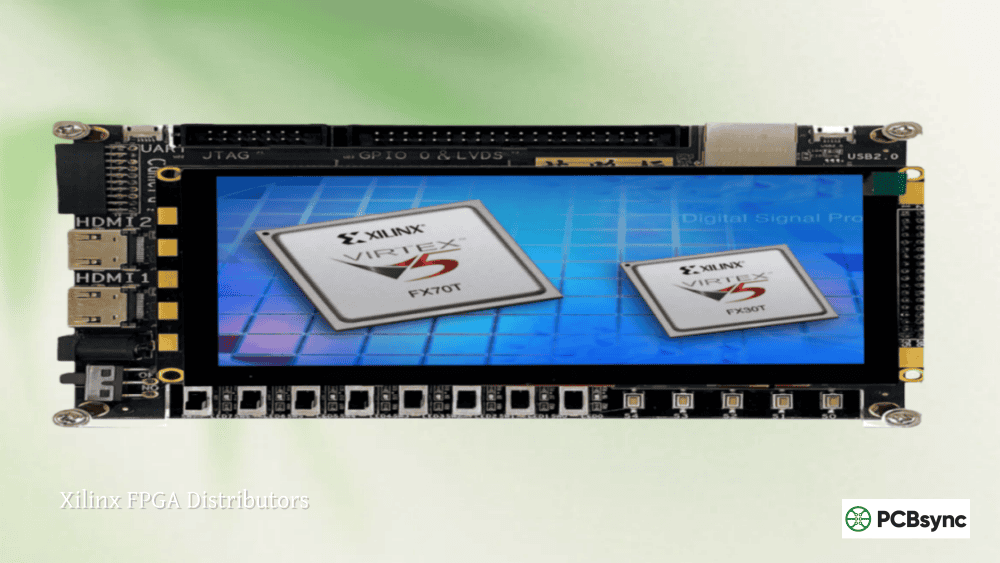
Xilinx, now part of AMD, dominates the FPGA market alongside Intel (formerly Altera). Their devices range from tiny Spartan chips suitable for hobbyist projects to massive Virtex UltraScale+ devices used in data centers and aerospace applications.
Key Advantages of Xilinx FPGA Programming
The flexibility of FPGAs offers several compelling benefits over traditional processors:
True Parallelism: Every logic block operates simultaneously, enabling massive throughput
Reconfigurability: Unlike ASICs, you can reprogram an FPGA as requirements change
Hardware Acceleration: Complex algorithms run orders of magnitude faster than software implementations
Precise Timing Control: Deterministic operation at nanosecond precision
Custom Interfaces: Create any digital interface without waiting for silicon vendors
Essential Tools for Xilinx FPGA Programming
Before touching any hardware, you need the right software environment. Xilinx provides two main development suites depending on your target device family.
Vivado Design Suite
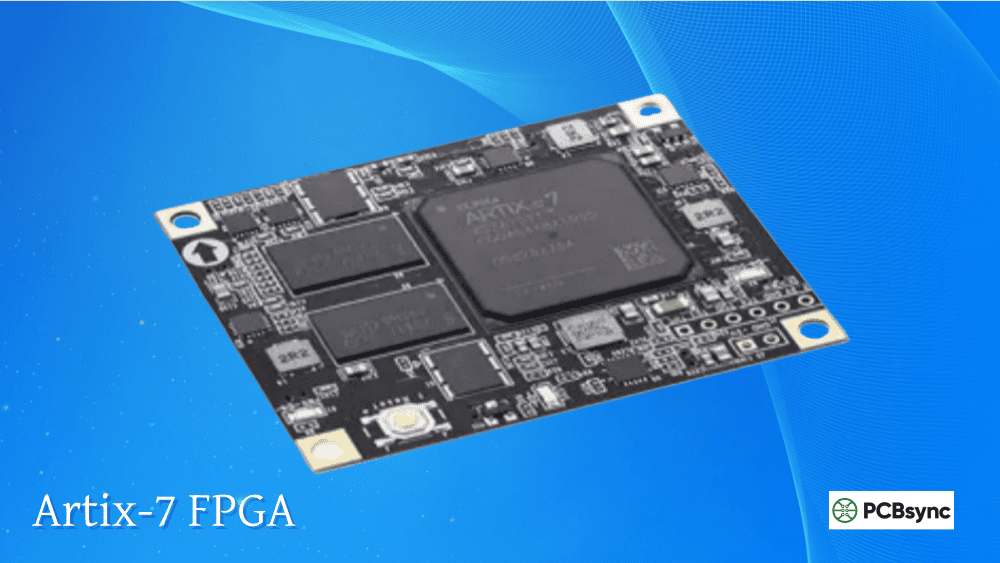
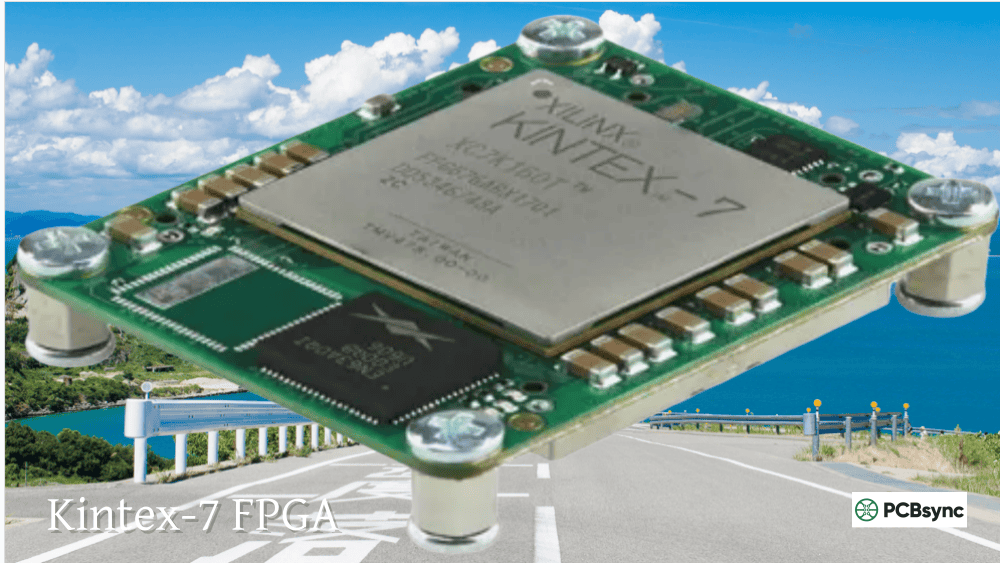
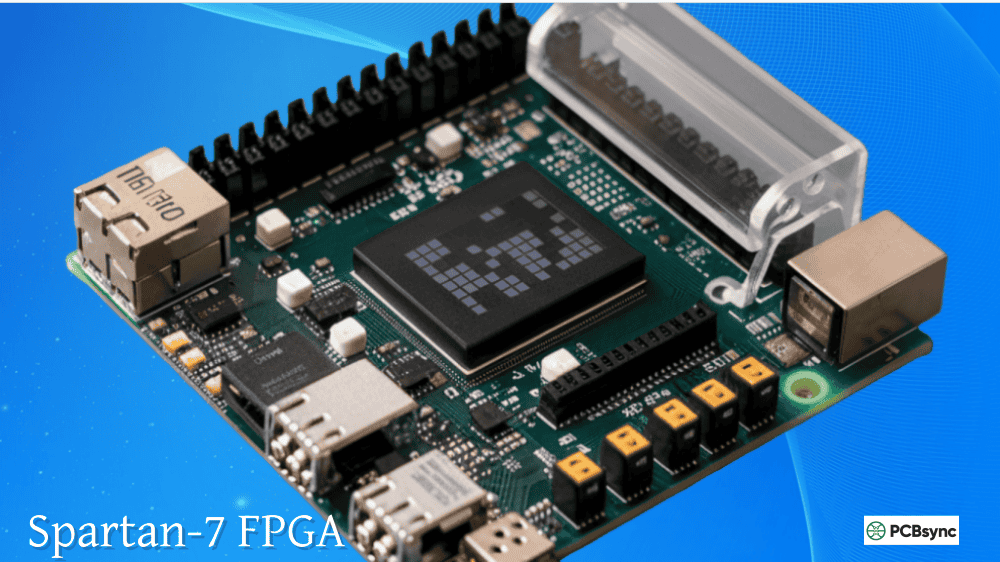
For modern Xilinx devices (Artix-7, Kintex-7, Virtex-7, Zynq, and newer), Vivado is your primary tool. The free WebPACK edition supports most hobbyist-friendly devices and provides everything needed for Xilinx FPGA programming without spending a dime.
Download Vivado from AMD’s website (they acquired Xilinx in 2022). The installer is substantial, typically 30-50GB depending on which device families you select. Choose the WebPACK edition during installation and select only the device families you plan to use.
ISE Design Suite
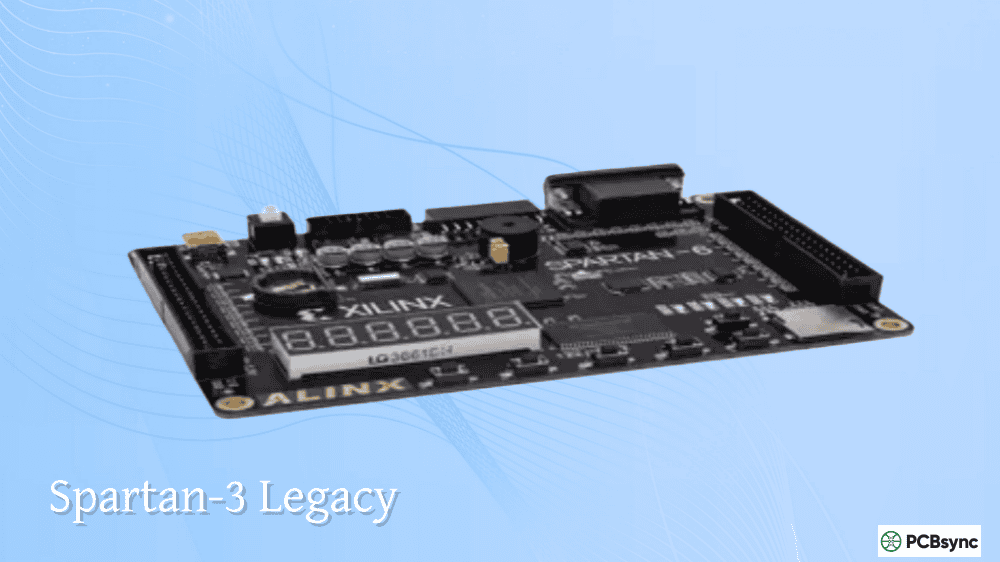
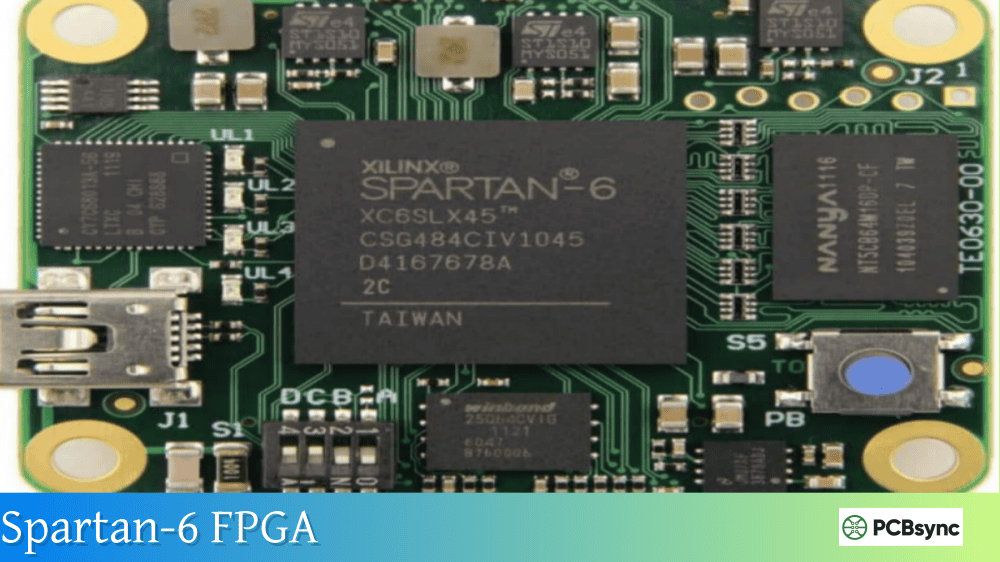
For legacy Spartan-6 and earlier devices, ISE WebPACK remains the development tool. While Xilinx stopped active development on ISE, it’s still available and works fine for learning Xilinx FPGA programming fundamentals.
Recommended Development Boards
Board
FPGA Device
Price Range
Best For
Basys 3
Artix-7 XC7A35T
~$150
Academic learning, first projects
Nexys A7
Artix-7 XC7A100T
~$270
Intermediate projects, more resources
Arty A7
Artix-7 XC7A35T/A100T
~$120-150
Embedded development, MicroBlaze
Zynq Z2
Zynq-7020
~$100-120
ARM + FPGA hybrid designs
Spartan-6 boards
XC6SLX9
~$30-50
Budget learning, legacy experience
For your first project, the Basys 3 or a budget Spartan-6 board works perfectly. Don’t overthink this choice. The concepts transfer across all Xilinx devices.
Understanding Hardware Description Languages
This is where Xilinx FPGA programming diverges sharply from traditional software development. You’ll write code in either VHDL or Verilog to describe your hardware design.
VHDL vs Verilog: Choosing Your First HDL
Aspect
VHDL
Verilog
Syntax Style
Ada/Pascal-like
C-like
Typing
Strongly typed
Weakly typed
Verbosity
More verbose
More concise
Error Detection
Catches errors early
More permissive
Industry Usage
Defense, Europe
Consumer electronics, Asia
Learning Curve
Steeper initially
Faster to prototype
Both languages accomplish the same thing. I started with VHDL because its strong typing caught my mistakes early, crucial when debugging hardware is significantly harder than debugging software. However, Verilog’s C-like syntax feels more familiar to programmers transitioning from embedded systems.
Pick one and stick with it for your first several projects. You’ll eventually need familiarity with both, but attempting to learn both simultaneously just slows progress.
Your First Xilinx FPGA Programming Project: Blinking an LED
Enough theory. Let’s create something tangible. We’ll build the hardware equivalent of “Hello World”: an LED blinker using Vivado and Verilog.
Step 1: Creating a New Vivado Project
Launch Vivado and click “Create Project” from the welcome screen. Follow these steps:
Enter a project name (I used “led_blink”) and select a location without spaces in the path
Choose “RTL Project” and leave “Do not specify sources at this time” checked
Select your target FPGA device or development board
For the Basys 3, search for “xc7a35tcpg236-1” in the Parts selection. If your board appears in the Boards tab, selecting it automatically configures the correct device.
Step 2: Writing the Verilog Module
Create a new source file by clicking “Add Sources” in the Flow Navigator, selecting “Add or create design sources,” then “Create File.” Name it “led_blink.v”.
Here’s the complete Verilog code for our LED blinker:
module led_blink (
input wire clk, // 100 MHz clock input
output wire led // LED output
);
// 24-bit counter for clock division
reg [23:0] counter = 0;
// Increment counter on every rising clock edge
always @(posedge clk) begin
counter <= counter + 1;
end
// Connect bit 23 to LED (toggles approximately every 0.08 seconds)
assign led = counter[23];
endmodule
Let me explain what’s happening here. The 100 MHz clock means 100 million pulses per second. Our 24-bit counter cycles through 16,777,216 values before overflowing and resetting. By connecting bit 23 to the LED, we effectively divide the clock by 8,388,608, making the LED toggle roughly every 84 milliseconds, producing a visible blink.
This illustrates a crucial Xilinx FPGA programming concept: everything happens simultaneously. The counter increments on every clock edge while the LED assignment continuously reflects bit 23’s state. No sequential execution, no interrupt handling, just parallel hardware doing its thing.
Step 3: Creating the Constraints File
Here’s where PCB designers feel at home. The constraints file (XDC format in Vivado) maps your Verilog port names to physical FPGA pins. Without it, the tools have no idea which ball or pad should connect to your LED signal.
Add a new constraint file (Add Sources > Add or create constraints > Create File) named “led_blink.xdc”:
These constraints tell Vivado three things: which physical pin each signal connects to, what I/O standard to use, and the clock period for timing analysis. The pin assignments come from your development board’s schematic or reference manual. Get these wrong, and your design either won’t work or could potentially damage the FPGA.
Step 4: Synthesis and Implementation
With source files ready, run the design flow:
Click “Run Synthesis” in the Flow Navigator. This converts your Verilog into a gate-level netlist.
After synthesis completes, click “Run Implementation.” This maps the netlist onto actual FPGA resources and routes connections.
Click “Generate Bitstream” to create the configuration file that programs the FPGA.
Watch the Messages window during these steps. Warnings are common and often ignorable, but errors halt the process. Common beginner mistakes include typos in port names (constraints reference a port that doesn’t exist in your Verilog) and missing clock constraints.
Step 5: Programming the FPGA
Connect your development board via USB. In Vivado:
Click “Open Hardware Manager” in the Flow Navigator
Click “Open Target” > “Auto Connect”
Right-click on your device and select “Program Device”
Browse to your bitstream file (typically in project_name.runs/impl_1/)
Click “Program”
Within seconds, your LED should start blinking. Congratulations. You’ve successfully completed your first Xilinx FPGA programming project.
Common Xilinx FPGA Programming Mistakes and How to Avoid Them
After years of mentoring engineers transitioning to FPGA development, I’ve seen the same mistakes repeatedly. Here’s what to watch for.
Thinking Like a Software Developer
The biggest mindset hurdle involves understanding that you’re describing hardware, not writing instructions. Every “always” block in Verilog or “process” in VHDL synthesizes to physical flip-flops and combinational logic. When you write:
always @(posedge clk) begin
a <= b;
b <= c;
end
Both assignments happen simultaneously on the clock edge. This isn’t software where “a” gets “b’s” old value and then “b” gets “c”. Both registers capture their new values at the same instant.
Ignoring Timing Constraints
Your design might simulate perfectly and still fail in hardware because of timing violations. The FPGA’s routing adds delays, and if signals don’t stabilize before the next clock edge, you get unpredictable behavior.
Always define clock constraints in your XDC file. After implementation, check the timing reports. A negative slack value means your design runs faster than signals can propagate, requiring either a slower clock or optimized logic.
Asynchronous Logic Pitfalls
FPGAs work best with synchronous designs where everything happens on clock edges. Asynchronous logic creates metastability issues when signals cross clock domains and can cause designs that work sometimes but fail mysteriously.
Use the dedicated clock primitives Xilinx provides. For signals crossing between clock domains, implement proper synchronization using dual flip-flop synchronizers or FIFO buffers.
Underestimating Resource Usage
FPGAs have finite resources: LUTs (Look-Up Tables), flip-flops, block RAM, and DSP slices. Running out means your design won’t fit, requiring either a larger device or optimization.
Keep 10-20% of resources free. This headroom gives the place-and-route tools flexibility to meet timing requirements. A 95% utilized FPGA often exhibits timing failures that a 75% utilized design avoids.
Understanding the Xilinx FPGA Programming Design Flow
Before advancing to complex projects, understanding the complete design flow helps you troubleshoot issues and optimize your workflow. Every Xilinx FPGA programming project follows this fundamental sequence.
Synthesis Phase
Synthesis transforms your HDL code into a technology-independent netlist of logic gates. During this phase, the tools analyze your Verilog or VHDL, infer the intended hardware structures, and optimize logic for area or speed based on your settings.
The synthesis report reveals crucial information about your design. Resource utilization summaries show how many LUTs, flip-flops, and memory blocks your design requires. Warning messages often highlight potential issues like inferred latches (usually unintentional in synchronous designs) or unused signals.
Pay attention to the RTL schematic viewer after synthesis. It shows exactly how the tools interpreted your code. Sometimes what you wrote doesn’t match what you intended, and catching this early saves hours of debugging later.
Implementation Phase
Implementation encompasses three sub-stages: optimization, placement, and routing. Optimization refines the synthesized netlist further. Placement assigns each logic element to specific locations on the FPGA fabric. Routing connects these placed elements using the programmable interconnect.
This phase is where timing becomes critical. The tools calculate signal propagation delays through the actual routing paths and compare them against your timing constraints. Implementation reports detail any paths that fail to meet timing requirements.
Timing closure often requires iteration. Strategies include relaxing clock frequencies, adding pipeline stages to long paths, or providing placement hints to keep related logic physically close.
Bitstream Generation
The final step produces the bitstream file that configures the FPGA. This binary file contains the complete configuration for every programmable element in the device. When loaded into the FPGA’s configuration memory, it transforms the generic silicon into your specific design.
Bitstreams can target the FPGA’s internal SRAM (volatile, lost at power-off) or external configuration flash (persistent across power cycles). Development typically uses SRAM loading for quick iteration, with flash programming reserved for deployment.
Debugging Xilinx FPGA Designs
When your design doesn’t work as expected, debugging hardware requires different techniques than software debugging.
Simulation First
The most efficient debugging happens in simulation before touching hardware. Vivado’s built-in simulator or external tools like ModelSim allow you to observe every signal in your design at every clock cycle.
Write testbenches that exercise your design thoroughly. A testbench is a non-synthesizable HDL file that generates stimulus for your design and optionally checks outputs. Good testbenches catch bugs before they become hardware mysteries.
Integrated Logic Analyzer (ILA)
When simulation passes but hardware fails, Vivado’s Integrated Logic Analyzer lets you observe internal signals in real-time. You insert ILA cores into your design, specifying which signals to monitor and trigger conditions.
After programming the FPGA, the Hardware Manager displays captured waveforms like an oscilloscope for internal signals. This capability is invaluable for debugging state machines, interface timing, and intermittent issues.
Virtual Input/Output (VIO)
VIO cores provide the opposite capability: injecting signals into your running design and observing outputs through the Vivado interface. This allows testing different input conditions without physical switches or external equipment.
LED Debugging
Never underestimate the humble LED for debugging. Connecting critical signals to spare LEDs provides immediate visual feedback. A state machine that should toggle states every second becomes obviously stuck when the LED never changes.
DDR memory interface, Ethernet MAC, signal processing
High-speed design, IP integration, debugging
Working with IP Cores
Xilinx provides extensive Intellectual Property (IP) cores through Vivado’s IP Catalog. These pre-verified blocks handle complex functionality like memory controllers, communication interfaces, and signal processing. Learning to integrate IP accelerates development tremendously.
Building Custom Peripherals
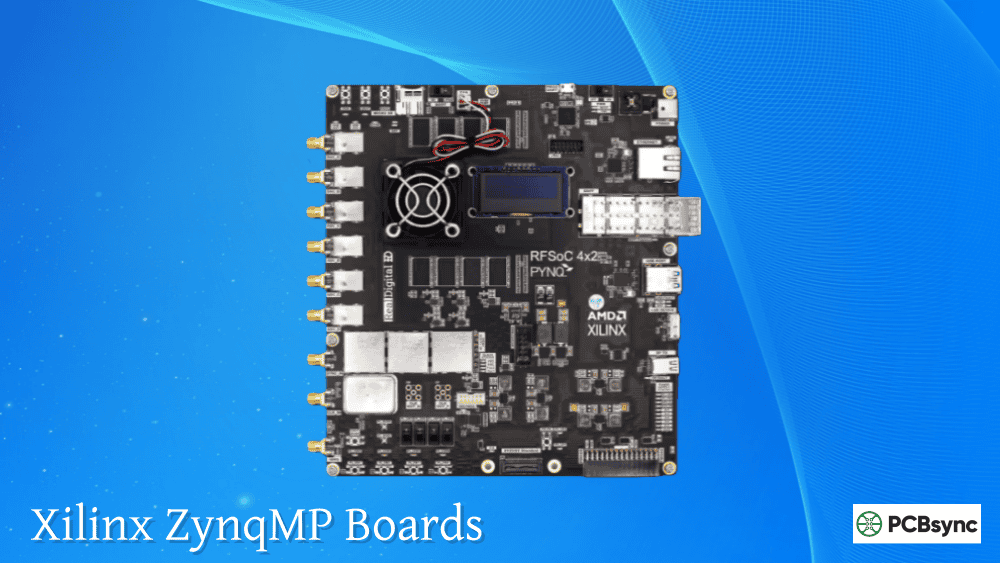
Once comfortable with basic Xilinx FPGA programming, create custom AXI peripherals that interface with processor systems. The Zynq family combines ARM processors with FPGA fabric, enabling hybrid designs where software handles control logic while hardware accelerates data processing.
Hardware-Software Co-Design Considerations
For PCB engineers considering FPGA integration, several hardware factors influence Xilinx FPGA programming success:
Power Supply Design: FPGAs require multiple voltage rails with specific sequencing requirements. The core voltage (typically 1.0V) must stabilize before I/O voltages come up. Brownouts during operation cause configuration loss and unpredictable behavior.
Configuration Storage: Choose between serial flash for cost efficiency or parallel flash for faster configuration. Large designs on big FPGAs take several seconds to configure from serial flash, which may be unacceptable in some applications.
Signal Integrity: High-speed FPGA I/Os demand proper PCB layout practices. Controlled impedance traces, appropriate termination, and short stubs become critical above 100 MHz. The FPGA’s configurable I/O standards must match your external components.
Thermal Management: Complex designs push significant power through the FPGA. Ensure adequate heatsinking or forced airflow for designs approaching the device’s power limits. Vivado’s power estimation tools provide pre-implementation power estimates.
Useful Resources for Xilinx FPGA Programming
Having reliable reference materials accelerates learning. Here are resources I’ve found invaluable:
Resource Type
Name/Link
Description
Official Documentation
AMD/Xilinx Documentation
Device datasheets, user guides, application notes
Free Book
Free Range VHDL
Excellent open-source VHDL introduction
Tutorial Site
Nandland.com
Beginner-friendly HDL tutorials with examples
Tutorial Site
fpga4fun.com
Practical project-based learning
Development Board Files
Digilent XDC Repository
Master constraints files for Digilent boards
Video Tutorials
Xilinx YouTube Channel
Official tutorials and training
Community Forum
AMD/Xilinx Forums
Active community support
Academic Resource
FPGA Tutorial
Comprehensive VHDL tutorials
Frequently Asked Questions About Xilinx FPGA Programming
What programming language do Xilinx FPGAs use?
Xilinx FPGAs use Hardware Description Languages, primarily VHDL and Verilog. These aren’t traditional programming languages but rather describe hardware circuits. Vivado also supports high-level synthesis from C/C++ using Vitis HLS for certain applications.
Is Xilinx FPGA programming difficult to learn?
The learning curve is steep initially because it requires thinking about parallel hardware rather than sequential code. Engineers with digital design background adapt faster, while pure software developers need more time to shift their mental model. Most engineers become productive within 2-3 months of consistent practice.
Can I learn Xilinx FPGA programming without buying hardware?
Yes, Vivado includes a powerful simulator for testing designs virtually. However, real hardware provides invaluable experience with timing, debugging, and practical constraints. Budget boards under $50 offer excellent learning platforms without significant investment.
What’s the difference between Vivado and ISE?
Vivado supports newer Xilinx devices (7-series and beyond) with modern features like timing closure assistance and incremental compilation. ISE supports legacy devices (Spartan-6 and earlier) and remains stable but no longer receives updates. New projects should target Vivado-compatible devices when possible.
How long does it take to complete an FPGA project?
Simple projects like LED blinkers take hours once you understand the tools. Moderate complexity designs (UART, VGA controllers) require days to weeks. Professional designs involving high-speed interfaces or complex signal processing span months. Factor synthesis and implementation time into schedules, as builds can take minutes to hours depending on design size.
Wrapping Up Your First Steps in Xilinx FPGA Programming
You’ve now walked through the essential concepts and created a working Xilinx FPGA programming project. That blinking LED represents your entry into a powerful domain where hardware and software merge.
The journey from here involves patience and practice. Build incrementally complex projects. Study existing open-source designs. Read the device documentation even when it seems overwhelming. Each timing violation you debug and every synthesis error you resolve builds expertise.
Remember that experienced FPGA engineers were once exactly where you are now, staring at a blinking LED and wondering what comes next. The answer: everything. From signal processing to neural network acceleration, from custom communication protocols to real-time control systems, Xilinx FPGA programming opens doors that traditional software development simply cannot.
Start small, stay consistent, and embrace the parallel thinking that makes FPGAs so uniquely powerful. Your PCB designs will never look the same once you realize the incredible capabilities waiting inside these remarkable chips.
Inquire: Call 0086-755-23203480, or reach out via the form below/your sales contact to discuss our design, manufacturing, and assembly capabilities.
Quote: Email your PCB files to Sales@pcbsync.com (Preferred for large files) or submit online. We will contact you promptly. Please ensure your email is correct.
Notes: For PCB fabrication, we require PCB design file in Gerber RS-274X format (most preferred), *.PCB/DDB (Protel, inform your program version) format or *.BRD (Eagle) format. For PCB assembly, we require PCB design file in above mentioned format, drilling file and BOM. Click to download BOM template To avoid file missing, please include all files into one folder and compress it into .zip or .rar format.