Inquire: Call 0086-755-23203480, or reach out via the form below/your sales contact to discuss our design, manufacturing, and assembly capabilities.
Quote: Email your PCB files to Sales@pcbsync.com (Preferred for large files) or submit online. We will contact you promptly. Please ensure your email is correct.
Notes: For PCB fabrication, we require PCB design file in Gerber RS-274X format (most preferred), *.PCB/DDB (Protel, inform your program version) format or *.BRD (Eagle) format. For PCB assembly, we require PCB design file in above mentioned format, drilling file and BOM. Click to download BOM template To avoid file missing, please include all files into one folder and compress it into .zip or .rar format.
When specifying an FPGA platform for a new project, the first decision point is often which xilinx evaluation board to purchase. Do you go with AMD’s official evaluation kit at premium pricing, or opt for a third-party alternative that might save thousands of dollars? Having made this decision dozens of times across various projects, I can tell you the answer depends heavily on your specific requirements and timeline constraints.
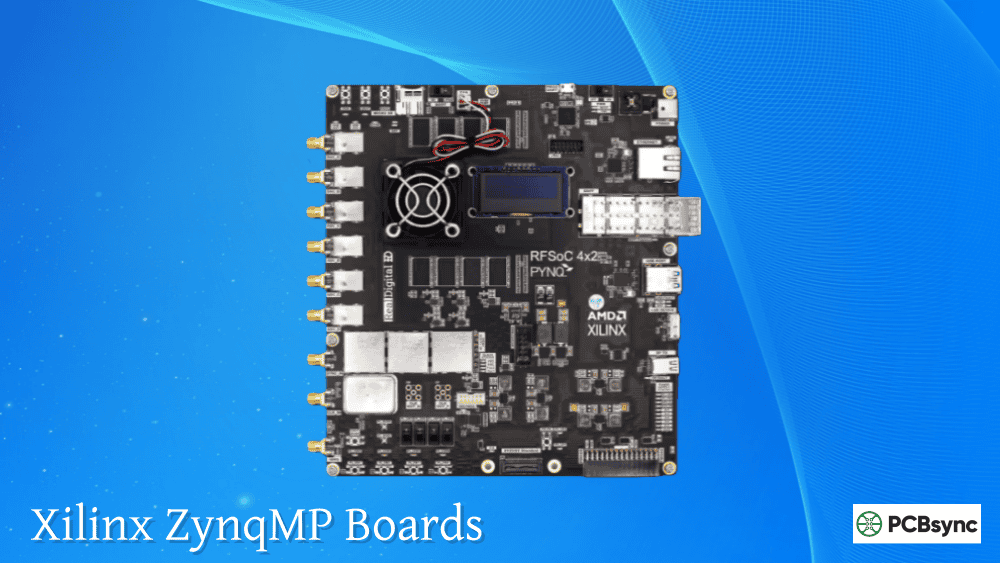
The xilinx fpga evaluation board market has evolved into a tiered ecosystem. AMD (formerly Xilinx) produces comprehensive, feature-complete evaluation kits designed to showcase every capability of their silicon. Meanwhile, partners like Digilent, Avnet, Trenz Electronic, and others fill gaps with cost-optimized and application-specific alternatives.
Understanding the Xilinx Evaluation Board Ecosystem
AMD structures its evaluation board portfolio around two distinct objectives: demonstrating full device capabilities for production evaluation, and enabling accessible development for education and prototyping. This creates natural segmentation between official kits and partner boards.
Official AMD Evaluation Kits
AMD’s own xilinx evaluation board offerings focus on high-end devices where comprehensive peripheral access matters. These kits typically include:
Feature
Official AMD Kits
Device Coverage
Full pin access, all transceivers
FMC Connectors
HPC (High Pin Count) standard
Memory
Multiple DDR4 channels, sometimes HBM
Licensing
Vivado Design Edition voucher included
Documentation
Complete hardware user guides, schematics
Support
Direct AMD technical support
Price Range
$1,500 – $10,000+
Third-Party Partner Boards
Companies like Digilent and Trenz Electronic operate as AMD Adaptive Computing Partners, creating xilinx fpga evaluation board products that complement the official lineup:
The ZCU102 remains AMD’s flagship xilinx evaluation board for Zynq UltraScale+ MPSoC development. At approximately $3,570, it provides complete device access for production-grade evaluation.
Specification
ZCU102 Details
Device
XCZU9EG-2FFVB1156
ARM Cores
Quad Cortex-A53, Dual Cortex-R5F
Logic Cells
600,000
PS Memory
4 GB DDR4 (64-bit with ECC)
PL Memory
512 MB DDR4 (16-bit)
Transceivers
16x GTH @ 16.3 Gb/s
FMC Slots
2x HPC (High Pin Count)
Included License
Vivado Design Edition (node-locked)
The dual FMC HPC connectors justify the ZCU102’s premium for applications requiring high-speed daughter cards. RF frontends, multi-channel ADCs, and optical transceivers typically use FMC form factors, making the ZCU102 essential for these applications.
ZCU104: Vision and Video Focused
For embedded vision applications, the ZCU104 offers a more focused xilinx fpga evaluation board at $1,899.
Specification
ZCU104 Details
Device
XCZU7EV-2FFVC1156
Video Codec
H.264/H.265 @ 4Kp60
Memory
2 GB DDR4
Interfaces
DisplayPort, USB3, FMC LPC
Included
1080p60 USB camera, 4-port USB hub
The integrated video codec is the ZCU104’s distinguishing feature. Applications requiring hardware video encoding or decoding benefit from dedicated silicon rather than consuming FPGA fabric.
Kria Starter Kits: Bridging Official and Partner
AMD’s Kria product line occupies interesting middle ground, providing official xilinx evaluation board products at partner-like price points.
The Kria approach packages Zynq UltraScale+ silicon as System-on-Modules (SOMs) with starter carrier boards. This provides a path from prototyping to production deployment without board redesign.
Digilent has been AMD’s primary partner for educational and cost-optimized boards for over two decades. Their xilinx evaluation board products emphasize accessibility and learning.
Digilent boards consistently provide excellent documentation, including getting-started guides, reference designs, and active community forums. The Pmod ecosystem adds hundreds of sensor and interface modules that plug directly into standardized connectors.
Avnet: Professional and Industrial Applications
Avnet’s boards target professional developers with enterprise support expectations.
Board
Device
Key Features
Price
MiniZed
XC7Z007S
WiFi/BT, Arduino
~$89
MicroZed
XC7Z010/020
SOM format, carrier
~$199
PicoZed
XC7Z015/020/030
Industrial SOM
~$178-$399
Ultra96-V2
XCZU3EG
WiFi/BT, LPDDR4
~$249
The Ultra96-V2 deserves special mention as one of the most cost-effective paths to Zynq UltraScale+ development. Its compact form factor and wireless connectivity make it suitable for IoT edge applications.
Trenz Electronic: Industrial-Grade Modules
Trenz Electronic specializes in system-on-modules designed for production deployment. Their xilinx fpga evaluation board products emphasize industrial reliability and long-term availability.
Trenz differentiates through commitment to product longevity. They maintain component availability as long as AMD produces the silicon and provide clear end-of-life transition paths.
Invest in official xilinx evaluation board products when:
High-speed transceiver access matters. Official kits expose all GTH/GTY transceivers with proper signal integrity. Third-party boards often route only a subset.
FMC daughter card compatibility is required. HPC FMC connectors appear almost exclusively on official kits. If your application requires standard RF, ADC, or optical FMC modules, the ZCU102 or similar becomes necessary.
Production hardware validation is the goal. When evaluating whether a specific FPGA device meets requirements before committing to custom hardware, official kits ensure you’re testing against a known-good reference design.
Support escalation to AMD is anticipated. Official kits include direct AMD support channels. Complex debug scenarios involving silicon-level issues proceed faster with AMD-designed hardware.
When Third-Party Boards Excel
Third-party xilinx fpga evaluation board options make sense when:
Budget constraints exist. A $199 Arty Z7 provides Zynq development capabilities that would cost $500+ with official alternatives.
Learning and education are primary goals. Digilent boards include extensive tutorials optimized for classroom use. The Basys 3 has been deployed in thousands of university courses.
Rapid prototyping with standard interfaces. Pmod, Arduino, and SYZYGY ecosystems provide plug-and-play access to sensors, displays, and communication modules.
Production SOM deployment is planned. Trenz and Avnet modules integrate directly into custom carrier boards, providing a path from prototype to production without board redesign.
WebPACK tool compatibility suffices. Third-party boards typically use devices supported by free Vivado WebPACK, eliminating licensing costs.
Cost Comparison: Total Project Investment
Beyond board prices, consider total development cost:
Cost Factor
Official AMD Kit
Third-Party Board
Board
$1,500 – $10,000
$100 – $2,000
Vivado License
Included (Design Ed.)
WebPACK (free) or purchase
FMC Modules
May require ($500-$5,000)
Pmods available ($10-$100)
Support
Included
Forum/community based
Production Path
Reference design only
SOM integration possible
For a learning project, a $169 Basys 3 with free WebPACK costs under $200 total. A production evaluation with ZCU102, Vivado license, and FMC daughter cards can exceed $10,000.
Are third-party Xilinx evaluation boards compatible with Vivado?
Yes, all third-party boards using AMD (Xilinx) FPGAs work with Vivado Design Suite. Manufacturers provide board definition files that integrate directly into Vivado, enabling automatic pin assignment and constraint generation. Digilent and other major vendors maintain updated board files for each Vivado release, typically available within weeks of AMD’s release schedule.
Do official AMD evaluation boards include Vivado licenses?
Most AMD xilinx fpga evaluation board products include voucher codes for Vivado Design Edition licenses. These are node-locked to your machine and device-locked to the specific FPGA on the evaluation kit. For example, a ZCU102 license only covers the XCZU9EG device. If you need to target different devices or use the license across multiple computers, separate Vivado licensing is required.
Can I use third-party boards for commercial product development?
Absolutely. Many third-party boards, particularly system-on-modules from Trenz Electronic and Avnet, are designed specifically for production integration. These SOMs undergo industrial qualification and maintain long-term availability commitments. Prototype on a starter kit, then deploy the same SOM in your custom carrier board for production.
What’s the practical difference between FMC and Pmod connectors?
FMC (FPGA Mezzanine Card) is an ANSI/VITA 57.1 standard supporting hundreds of high-speed differential pairs. Professional daughter cards for RF, high-speed ADCs, and optical interfaces use FMC. Pmod is Digilent’s simpler 6-pin or 12-pin interface for lower-speed peripherals like sensors, displays, and basic I/O. FMC modules cost $500-$5,000+ while Pmods typically run $10-$100. Choose based on interface speed requirements.
How do I evaluate transceiver performance without expensive official kits?
For basic transceiver evaluation, some third-party boards expose limited GTH/GTY channels. Digilent’s Genesys ZU includes transceivers at lower cost than ZCU102. However, for comprehensive multi-channel transceiver testing at maximum speeds, official kits remain necessary. The signal integrity engineering on official boards ensures you’re measuring silicon capability, not board limitations.
Making the Right Choice
The xilinx evaluation board decision ultimately balances capability against cost. For learning, prototyping, and applications using standard interfaces, third-party boards from Digilent, Avnet, or Trenz provide exceptional value. For production evaluation requiring full device access, high-speed transceivers, or FMC ecosystem integration, AMD’s official kits justify their premium pricing.
Start by defining your project requirements: Which FPGA device family? What interfaces are essential? Is this for learning, prototyping, or production evaluation? What’s the realistic budget including tools and accessories? These answers point toward the appropriate tier of xilinx fpga evaluation board products.
The good news is that the ecosystem provides options at every price point. A hobbyist can start FPGA development for under $200, while an enterprise team can access comprehensive evaluation platforms for production deployment. Choose the level that matches your current needs, knowing you can upgrade as projects demand more capability.
Inquire: Call 0086-755-23203480, or reach out via the form below/your sales contact to discuss our design, manufacturing, and assembly capabilities.
Quote: Email your PCB files to Sales@pcbsync.com (Preferred for large files) or submit online. We will contact you promptly. Please ensure your email is correct.
Notes: For PCB fabrication, we require PCB design file in Gerber RS-274X format (most preferred), *.PCB/DDB (Protel, inform your program version) format or *.BRD (Eagle) format. For PCB assembly, we require PCB design file in above mentioned format, drilling file and BOM. Click to download BOM template To avoid file missing, please include all files into one folder and compress it into .zip or .rar format.