Inquire: Call 0086-755-23203480, or reach out via the form below/your sales contact to discuss our design, manufacturing, and assembly capabilities.
Quote: Email your PCB files to Sales@pcbsync.com (Preferred for large files) or submit online. We will contact you promptly. Please ensure your email is correct.
Notes: For PCB fabrication, we require PCB design file in Gerber RS-274X format (most preferred), *.PCB/DDB (Protel, inform your program version) format or *.BRD (Eagle) format. For PCB assembly, we require PCB design file in above mentioned format, drilling file and BOM. Click to download BOM template To avoid file missing, please include all files into one folder and compress it into .zip or .rar format.
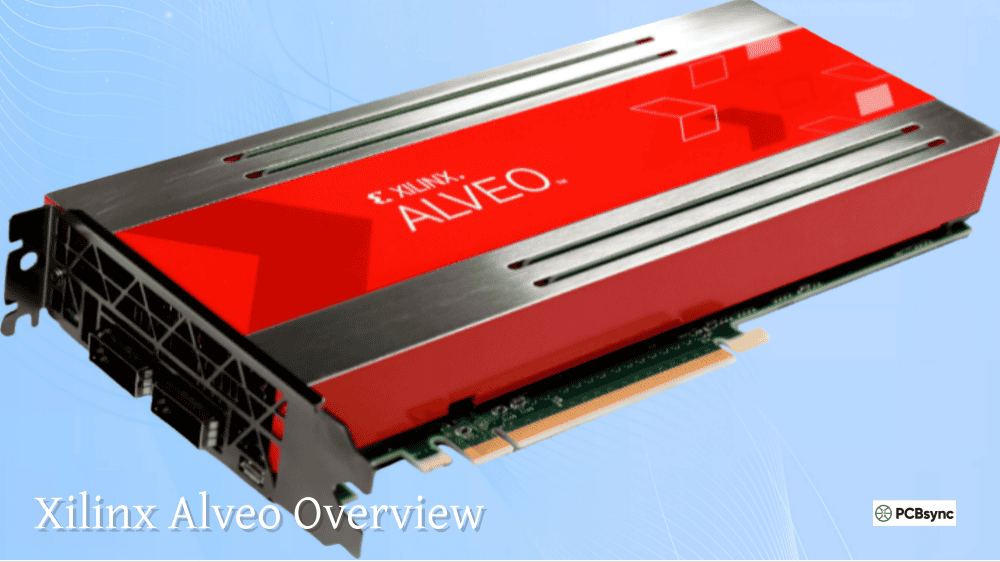
Xilinx Alveo Accelerator Cards: Data Center FPGA Guide
As a hardware engineer who has spent years working with various acceleration platforms in data centers, I can tell you that Xilinx Alveo cards have fundamentally changed how we approach compute-intensive workloads. Whether you are evaluating the Xilinx Alveo price for your budget or trying to understand which card fits your application, this guide covers everything you need to make an informed decision.
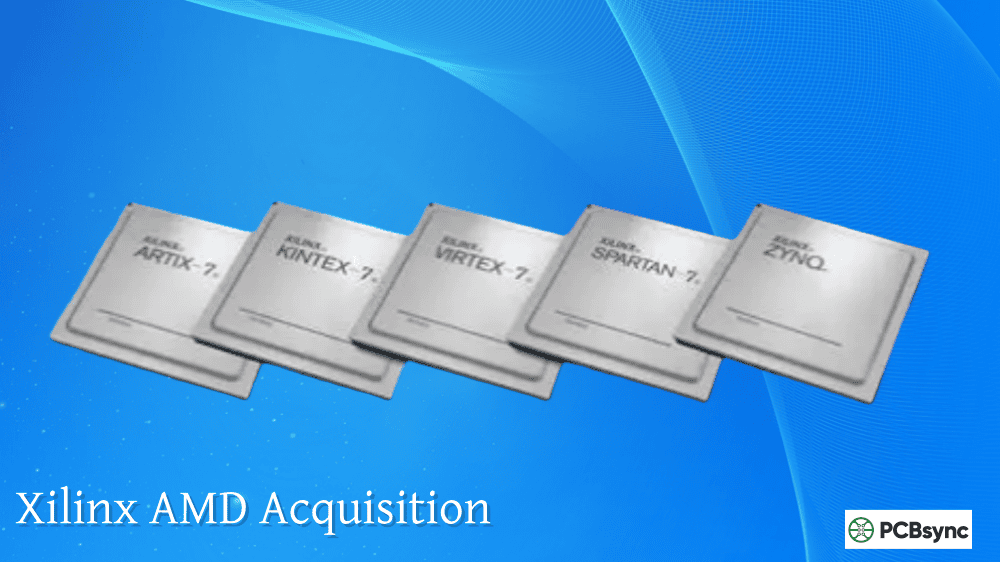
Xilinx Alveo represents a family of PCIe-based FPGA accelerator cards designed specifically for data center deployment. Unlike development boards you might find in a lab, these cards are built for production environments with passive cooling options, server-qualified components, and enterprise support. Since AMD acquired Xilinx in 2022, the Alveo line continues under the AMD branding while maintaining full backward compatibility with existing deployments.
The key differentiator with Xilinx Alveo is adaptability. While GPUs excel at massively parallel floating-point operations and ASICs deliver fixed-function efficiency, FPGAs let you reprogram the hardware itself. This means you can optimize your silicon for the exact workload you are running, whether that is ultra-low-latency trading, real-time video transcoding, or custom machine learning inference.
The Evolution from Xilinx to AMD Alveo
When AMD completed its acquisition of Xilinx, many engineers worried about product continuity. Based on my experience with deployments spanning this transition, I can confirm that AMD has maintained strong support for the Alveo ecosystem. The Vitis development tools, XRT runtime, and deployment shells all continue to receive updates. New cards like the Alveo V80 showcase AMD’s continued investment in the platform.
Why Choose FPGA Acceleration Over GPUs?
Having deployed both GPU and FPGA accelerators in production environments, I have identified several scenarios where Xilinx Alveo outperforms GPU alternatives:
Latency-Critical Applications: FPGAs deliver deterministic sub-microsecond latency, essential for algorithmic trading where every nanosecond counts
Custom Data Types: Unlike GPUs limited to standard floating-point formats, FPGAs handle arbitrary precision and custom number formats efficiently
Power Efficiency: For sustained workloads, Alveo cards often deliver better performance per watt than comparable GPU solutions
Inline Processing: Direct network integration enables wire-speed packet processing without CPU involvement
Xilinx Alveo Card Categories and Models
AMD organizes the Alveo portfolio into distinct categories based on target workloads. Understanding these categories helps narrow down your selection before diving into specific Xilinx Alveo price comparisons.
Compute Accelerators
The compute accelerator lineup targets HPC, analytics, and general-purpose acceleration workloads.
Alveo V80 – Flagship Compute Card
The newest addition to the Xilinx Alveo family, the V80 represents a significant leap in capability. Built on the 7nm Versal HBM adaptive SoC, this card delivers 2.6 million LUTs, 10,848 DSP slices, and 820 GB/s of HBM2e bandwidth. With four QSFP56 ports supporting 4x200G networking and PCIe Gen5 connectivity, the V80 targets the most demanding workloads.
For context, CSIRO (Australia’s national research organization) is replacing 420 previous-generation U55C cards with V80 units and expects to reduce their card count by two-thirds while handling even more complex radio telescope signal processing. That gives you an idea of the generational performance improvement.
Alveo U55C – High Performance Single Slot
The U55C packs serious capability into a half-height, half-length form factor. With 16GB of HBM2 at 460 GB/s bandwidth and dual 100GbE ports, it fits applications demanding high memory bandwidth without consuming multiple PCIe slots. I have seen this card deployed successfully in financial backtesting rigs and genomics pipelines where the HBM bandwidth eliminates memory bottlenecks.
Alveo U50 – Entry Level HBM Card
The U50 represents the entry point into HBM-equipped Alveo cards. Despite its 75W power envelope and single-slot form factor, it delivers 8GB HBM2 with 316 GB/s peak bandwidth and 100GbE networking. PCIe Gen4 support and CCIX capability make it future-ready while maintaining a more accessible Xilinx Alveo price point.
FinTech Accelerators
AMD offers purpose-built cards for financial markets that combine ultra-low latency networking with adaptive compute. These cards target algorithmic trading, risk analysis, and market data distribution. The key differentiator is their optimization for tick-to-trade latency, where sub-microsecond response times create competitive advantages.
Media Accelerators
Alveo U30 – Video Transcoding Workhorse
The U30 takes a different approach than other Alveo cards. Rather than raw FPGA fabric, it integrates two Zynq UltraScale+ MPSoC devices with dedicated H.264/H.265 Video Codec Units. This delivers 112 simultaneous 1080p30 transcodes across a seven-card appliance while consuming just 25W per card. The Video SDK provides FFmpeg and GStreamer integration, making it accessible to developers without FPGA expertise.
Network Accelerators
Alveo U45N – Infrastructure Offload
The U45N targets infrastructure workloads like virtual switching (OVS), IPsec acceleration, and computational storage. With dual 100GbE ports and the OpenNIC reference design, developers can implement custom networking functions while offloading the CPU from packet processing duties.
Understanding Xilinx Alveo price points helps you budget appropriately and compare total cost of ownership against alternative acceleration approaches. Prices vary by distributor and volume, but here are representative figures from authorized channels.
Current Xilinx Alveo Price Comparison Table
Model
MSRP (USD)
HBM
Networking
Best For
Alveo V80
$9,495
32GB HBM2e
4x200G QSFP56
HPC, Large-scale compute
Alveo U55C
$4,747
16GB HBM2
2x100G QSFP28
Financial computing, Analytics
Alveo U50
$2,995
8GB HBM2
1x100G QSFP28
Entry-level HBM workloads
Alveo U45N
$2,770
None
2x100G QSFP28
Network acceleration
Alveo MA35D
$1,864
16GB DDR
None
Media processing, AV1
Note: Prices shown are approximate MSRP from authorized distributors. Volume pricing and academic discounts may significantly reduce these figures.
Understanding Xilinx Alveo Pricing Factors
When evaluating Xilinx Alveo price, consider the total cost of ownership rather than just the card price:
Development Time: Vitis tools reduce development effort compared to raw RTL, but complex applications still require significant engineering investment
Power Costs: Lower TDP cards like the U50 (75W) save on operational costs compared to high-performance GPUs
Server Compatibility: Verify your server supports the required PCIe generation and slot configuration before purchasing
Support Contracts: Enterprise deployments typically require additional support agreements
Xilinx Alveo Technical Specifications
For engineers evaluating specific cards, here is a detailed comparison of key specifications across the Xilinx Alveo lineup.
Specification
V80
U55C
U50
U30
Architecture
Versal HBM
UltraScale+ HBM
UltraScale+ HBM
Zynq UltraScale+
LUTs
2,600K
1,304K
872K
N/A (VCU)
DSP Slices
10,848
5,952
5,952
N/A
Memory Bandwidth
820 GB/s
460 GB/s
316 GB/s
N/A
PCIe Interface
Gen5 x8/x16
Gen3 x16
Gen4 x8
Gen3 x4
TDP
300W
150W
75W
25W
Form Factor
FH¾L Dual
HHHL Single
HHHL Single
HHHL Single
Setting Up Your Xilinx Alveo Development Environment
Getting an Alveo card running involves several components that must work together. Based on dozens of deployments, here is the practical workflow.
Hardware Requirements
Before ordering a Xilinx Alveo card, verify your server meets these requirements:
PCIe Slot: Appropriate generation and width (e.g., Gen3 x16 for U55C)
Understanding real-world applications helps justify the Xilinx Alveo price investment. Here are the primary use cases I have encountered in production deployments.
Machine Learning Inference
Vitis AI provides a complete toolchain for deploying neural networks on Alveo cards. The Deep Learning Processing Unit (DPU) IP enables efficient inference for CNN models like ResNet, VGG, and YOLO. Key advantages include:
Quantization from FP32 to INT8 with minimal accuracy loss
Deterministic latency for real-time inference requirements
Support for TensorFlow and PyTorch frameworks
VMware vSphere validation with near-bare-metal performance
Video Transcoding
The Alveo U30 with Video SDK delivers production-ready transcoding. A single appliance with seven U30 cards handles 112 simultaneous 1080p30 transcodes while consuming a fraction of the power of CPU-based solutions. The SDK integrates with FFmpeg and GStreamer, enabling standard command-line workflows.
Financial Trading
Ultra-low latency is the primary driver for FPGA adoption in finance. Alveo cards achieve tick-to-trade latencies under 500 nanoseconds, compared to microseconds or milliseconds for software implementations. The combination of 100GbE ports and FPGA fabric enables direct market data parsing and order generation without CPU involvement.
High Performance Computing
HPC workloads benefit from the Alveo V80’s massive HBM bandwidth (820 GB/s) and compute density. Applications include molecular dynamics, genomics sequencing, and computational fluid dynamics. The API-driven clustering solution supports 1000+ node deployments using standard Ethernet infrastructure.
Cloud Deployment Options for Xilinx Alveo
Cloud deployment offers an alternative to purchasing hardware when evaluating workloads or handling burst capacity.
AWS EC2 F1 Instances
Amazon F1 instances provide up to eight Virtex UltraScale+ VU9P FPGAs with a combined peak compute capability over 170 TOP/s (INT8). The Vitis development environment enables seamless migration between Alveo U200 cards and F1 instances, allowing on-premise development with cloud deployment.
Microsoft Azure NP Instances
Azure NP instances support up to four Alveo U250 accelerators using the Vitis Unified Software Platform. These instances target database acceleration, data analytics, and machine learning inference workloads.
VMaccel for Evaluation
VMaccel provides hosted access to most Alveo cards for evaluation and development. This option allows testing workloads before committing to hardware purchase and understanding the realistic Xilinx Alveo price-to-performance ratio for your specific application.
What is the difference between Xilinx Alveo and AMD Alveo?
They are the same product line. AMD acquired Xilinx in February 2022, so newer cards and documentation use AMD branding while maintaining backward compatibility with existing Xilinx-branded deployments. The XRT runtime, Vitis tools, and deployment shells work identically regardless of branding on the card.
How does Xilinx Alveo price compare to NVIDIA GPUs for ML inference?
The comparison depends heavily on workload characteristics. An Alveo U50 at around $3,000 can match or exceed an NVIDIA T4 for specific inference workloads while delivering significantly lower latency. However, GPUs typically offer easier development and broader framework support. FPGAs make economic sense when you need deterministic latency, custom precision, or can amortize development costs across many deployments.
Can I use Xilinx Alveo cards with Windows Server?
XRT officially supports Linux distributions including Ubuntu, CentOS, and RHEL. Windows support is limited and primarily targets specific video SDK applications. For production deployments, Linux is strongly recommended. Most data center deployments run on Ubuntu 20.04 or 22.04 LTS.
How long does it take to develop applications for Xilinx Alveo?
Development time varies dramatically based on approach. Using pre-built solutions like the Video SDK, deployment can happen in days. Custom Vitis kernel development typically requires weeks to months depending on complexity. Full RTL development using Vivado requires the longest timeline but delivers maximum optimization. For most teams starting with FPGAs, budget three to six months for initial production deployment.
Which Xilinx Alveo card should I choose for machine learning?
For ML inference with Vitis AI, the Alveo V70 provides the best balance of AI engine performance and cost. If memory bandwidth is critical for large models, the U55C or V80 with HBM deliver superior performance. The U50 works well for smaller models or cost-sensitive deployments. Always benchmark your specific models on target hardware before committing to volume purchases.
Conclusion
Xilinx Alveo accelerator cards represent a mature, production-ready platform for data center acceleration. Whether you are evaluating Xilinx Alveo price options for your first FPGA deployment or expanding an existing infrastructure, the portfolio offers solutions across compute, networking, media, and financial applications.
The key to successful deployment is matching card capabilities to your specific workload requirements. Use cloud instances for initial evaluation, leverage pre-built solutions where available, and plan for appropriate development investment when custom implementations are needed. With AMD’s continued investment in the platform, Alveo remains a solid choice for organizations requiring adaptable hardware acceleration.
Inquire: Call 0086-755-23203480, or reach out via the form below/your sales contact to discuss our design, manufacturing, and assembly capabilities.
Quote: Email your PCB files to Sales@pcbsync.com (Preferred for large files) or submit online. We will contact you promptly. Please ensure your email is correct.
Notes: For PCB fabrication, we require PCB design file in Gerber RS-274X format (most preferred), *.PCB/DDB (Protel, inform your program version) format or *.BRD (Eagle) format. For PCB assembly, we require PCB design file in above mentioned format, drilling file and BOM. Click to download BOM template To avoid file missing, please include all files into one folder and compress it into .zip or .rar format.