Inquire: Call 0086-755-23203480, or reach out via the form below/your sales contact to discuss our design, manufacturing, and assembly capabilities.
Quote: Email your PCB files to Sales@pcbsync.com (Preferred for large files) or submit online. We will contact you promptly. Please ensure your email is correct.
Notes: For PCB fabrication, we require PCB design file in Gerber RS-274X format (most preferred), *.PCB/DDB (Protel, inform your program version) format or *.BRD (Eagle) format. For PCB assembly, we require PCB design file in above mentioned format, drilling file and BOM. Click to download BOM template To avoid file missing, please include all files into one folder and compress it into .zip or .rar format.
When I first started exploring FPGA-based machine learning acceleration, the gap between training a model in Python and actually running inference on hardware felt enormous. Traditional FPGA development meant writing RTL code, understanding timing constraints, and spending weeks on implementation. That changed dramatically with AMD’s Vitis AI platform, which brings xilinx tensorflow and xilinx pytorch workflows together into something that actually makes sense for engineers who aren’t ML specialists.
This guide covers the complete Vitis AI ecosystem, from framework integration to hardware deployment, including how to accelerate computer vision workloads using the xilinx opencv equivalent libraries.
Vitis AI is AMD’s integrated development environment for accelerating AI inference on FPGA and adaptive SoC platforms. Rather than requiring you to design neural network accelerators from scratch, Vitis AI provides a complete toolchain that takes trained models from popular frameworks and deploys them on optimized Deep Learning Processor Units (DPUs).
The platform addresses a real problem: GPUs are power-hungry and expensive, while CPUs lack the throughput for edge AI applications. FPGAs sit in a sweet spot offering customizable acceleration with reasonable power consumption, but the development complexity historically made them impractical for most ML teams.
Core Components of the Vitis AI Stack
Component
Function
Key Benefit
DPU (Deep Learning Processor Unit)
Hardware inference engine
Optimized convolution, pooling, activation
Vitis AI Quantizer
Model compression
FP32 to INT8 conversion
Vitis AI Compiler
Model optimization
Instruction scheduling, layer fusion
Vitis AI Runtime (VART)
Deployment APIs
C++ and Python interfaces
Vitis AI Library
High-level APIs
Pre-built application examples
Model Zoo
Pre-trained models
Ready-to-deploy networks
Xilinx TensorFlow Integration
The xilinx tensorflow workflow in Vitis AI supports both TensorFlow 1.x and TensorFlow 2.x models. If you’ve trained a model using Keras or native TensorFlow, you can deploy it on AMD hardware without retraining from scratch.
Supported TensorFlow Versions
TensorFlow Version
Quantizer Tool
Output Format
TensorFlow 1.x
vai_q_tensorflow
Frozen .pb graph
TensorFlow 2.x
vai_q_tensorflow2
SavedModel or .h5
TensorFlow Quantization Workflow
The quantization process converts 32-bit floating-point weights to 8-bit integers, dramatically reducing memory bandwidth and computational requirements. Here’s what the workflow looks like:
# Activate TensorFlow environment in Vitis AI Docker
conda activate vitis-ai-tensorflow2
# Run quantization with calibration images
vai_q_tensorflow2 quantize \
–input_frozen_graph model.pb \
–input_nodes input \
–output_nodes predictions \
–input_fn utils.input_fn \
–calib_iter 100
The calibration step uses a representative dataset (typically 100-1000 images) to determine optimal quantization parameters. The quantizer analyzes activation distributions and selects scale factors that minimize accuracy loss.
TensorFlow Model Compilation
After quantization, the Vitis AI compiler maps the network to DPU instructions:
For teams using PyTorch, the xilinx pytorch workflow follows a similar pattern but with framework-specific tools. PyTorch’s dynamic graph execution model requires some additional handling compared to TensorFlow’s static graphs.
PyTorch Quantization Process
Step
Tool/Command
Output
Model Preparation
torch.jit.trace or script
TorchScript model
Quantization
vai_q_pytorch
Quantized .xmodel
Compilation
vai_c_xir
Compiled .xmodel
PyTorch Quantization Example
from pytorch_nndct.apis import torch_quantizer
# Create quantizer instance
quantizer = torch_quantizer(
quant_mode=’calib’,
module=model,
input_args=dummy_input,
bitwidth=8,
device=torch.device(‘cuda’)
)
# Run calibration
quantized_model = quantizer.quant_model
for batch in calibration_loader:
quantized_model(batch)
# Export quantized model
quantizer.export_quant_config()
quantizer.export_xmodel(deploy_check=True)
The PyTorch quantizer integrates directly into your training script, making it straightforward to add quantization-aware training (QAT) if post-training quantization doesn’t meet accuracy requirements.
Quantization-Aware Training for PyTorch
When post-training quantization causes unacceptable accuracy drops, QAT simulates quantization effects during training:
quantizer = torch_quantizer(
quant_mode=’qat’, # Changed from ‘calib’
module=model,
input_args=dummy_input
)
# Fine-tune with quantization simulation
for epoch in range(num_epochs):
for batch in train_loader:
loss = criterion(quantizer.quant_model(batch), labels)
loss.backward()
optimizer.step()
This approach typically recovers most or all accuracy lost during standard quantization.
Xilinx OpenCV: The Vitis Vision Library
For computer vision applications, the xilinx opencv functionality comes through the Vitis Vision Library. This library provides FPGA-optimized implementations of common OpenCV functions that can be synthesized directly into hardware accelerators.
Vitis Vision Library Overview
The library contains over 60 functions covering:
Category
Example Functions
Image Filtering
Gaussian blur, bilateral filter, median filter
Geometric Transforms
Resize, remap, warp affine, warp perspective
Feature Detection
Harris corners, FAST, ORB
Color Conversion
RGB to YUV, BGR to grayscale
Arithmetic
Add, subtract, multiply, threshold
Morphological
Erode, dilate, opening, closing
Performance Comparison: CPU vs FPGA
Real benchmark data from Xilinx documentation shows significant speedups for vision operations:
Operation
Image Size
CPU Time
FPGA Time
Speedup
Resize (bilinear)
1920×1080 → 640×360
5.1 ms
4.9 ms
~1x
Resize (bilinear)
1920×1080 → 3840×2160
11.7 ms
6.8 ms
1.7x
Resize + Blur 7×7
1920×1080 → 640×360
103 ms
7.1 ms
14.5x
The interesting result here is that simple operations show modest gains, but pipelined operations demonstrate dramatic improvements. When you chain resize and blur together, the FPGA processes data in a streaming fashion without intermediate memory transfers.
What accuracy loss should I expect from quantization?
For most well-designed models, post-training quantization (PTQ) causes less than 1% accuracy degradation. Models with significant accuracy loss can usually be recovered using quantization-aware training (QAT), which fine-tunes the model while simulating quantization effects. The Model Zoo documentation includes both float and quantized accuracy metrics for reference.
Can I use custom operators not supported by the DPU?
Yes, but with caveats. The Vitis AI compiler automatically partitions graphs, running supported operators on the DPU and falling back to CPU for unsupported ones. For better performance, you can implement custom operators in C++ or use Vitis HLS to create FPGA-accelerated versions. The ONNX Runtime integration (VOE) also provides automated partitioning capabilities.
How does Xilinx OpenCV (Vitis Vision) differ from standard OpenCV?
The Vitis Vision Library provides functionally equivalent implementations of OpenCV functions, but synthesized for FPGA execution. The key difference is that operations run in streaming pipelines at pixel rate rather than frame-by-frame on a CPU. This enables much higher throughput for video processing, especially when chaining multiple operations together.
What’s the difference between edge and data center deployment?
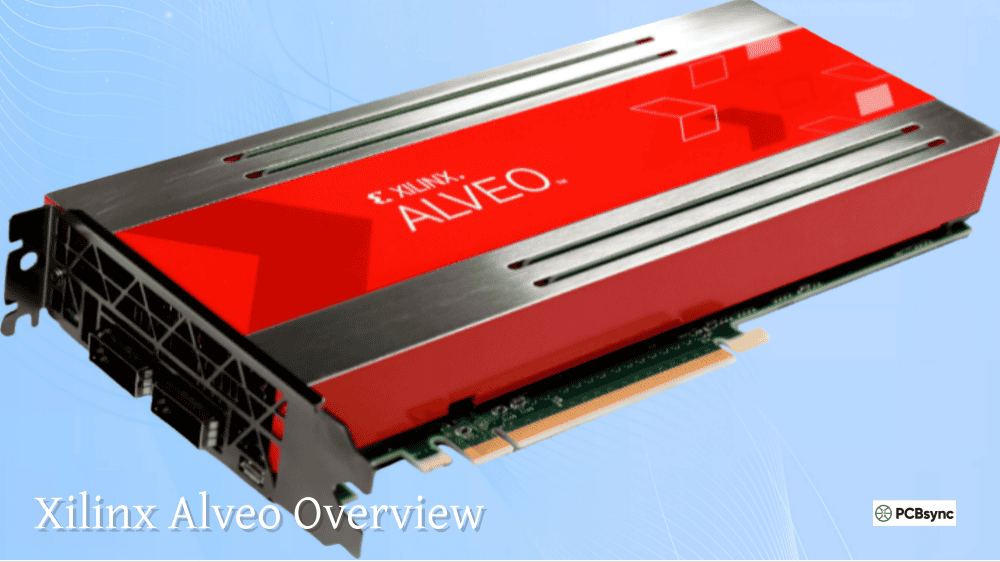
Edge platforms (Zynq-based) integrate ARM processors with FPGA fabric, running Linux with DPU kernels. Data center cards (Alveo) connect via PCIe to a host system, with the host handling application logic and the FPGA accelerating inference. The compilation process differs slightly, but the quantization workflow remains the same.
Do I need to retrain my model for Vitis AI deployment?
No, retraining is not required. The quantization process works on pre-trained models using a calibration dataset (typically 100-1000 representative samples). Only if quantization causes unacceptable accuracy loss would you consider quantization-aware training, which is fine-tuning rather than full retraining.
Troubleshooting Common Deployment Issues
After working with Vitis AI across several projects, I’ve encountered recurring issues that trip up engineers new to the platform. Here’s how to address the most common problems:
Unsupported Layer Errors
When the compiler reports unsupported operators, you have several options:
Operator Issue
Solution
Custom activation function
Replace with supported alternative (ReLU, LeakyReLU, etc.)
Unsupported layer type
Check if newer Vitis AI version adds support
Layer ordering problem
Reorganize to match CONV → BN → ReLU pattern
Dynamic shapes
Convert to fixed input dimensions
The Model Inspector tool helps identify these issues before compilation:
vai_q_pytorch inspect –input_model model.pt
Accuracy Degradation After Quantization
If your quantized model shows significant accuracy loss:
Increase calibration iterations (try 500-1000 instead of 100)
Ensure calibration data represents actual deployment conditions
Check for layers with very different activation ranges
Consider quantization-aware training for sensitive models
Review the quantization configuration for per-channel vs per-tensor options
Memory and Performance Optimization
DPU performance depends heavily on efficient memory access patterns:
Optimization
Impact
Batch processing
Higher throughput, increased latency
Input dimension alignment
Avoid padding overhead
Model pruning
Reduce compute and memory requirements
Layer fusion
Eliminate intermediate activations
The Vitis AI Profiler helps identify bottlenecks:
vaitrace –mode profile ./my_application
Comparing Vitis AI to Other Edge AI Solutions
Understanding where Vitis AI fits in the broader ecosystem helps with platform selection:
Platform
Strengths
Considerations
Vitis AI (AMD FPGA)
Customizable, low latency, moderate power
Development complexity, ecosystem learning curve
NVIDIA Jetson
Strong GPU performance, CUDA ecosystem
Higher power consumption, fixed architecture
Intel OpenVINO
Wide CPU/GPU/VPU support
Less customizable than FPGA
Google Coral TPU
Very low power, fast inference
Limited operator support, fixed precision
ARM NPU (Ethos)
Ultra-low power, integrated
Performance ceiling for complex models
FPGAs excel when you need deterministic latency, custom preprocessing pipelines, or when power constraints rule out GPU-based solutions. The learning curve investment pays off for production deployments requiring optimization beyond what fixed accelerators can provide.
Final Thoughts
The xilinx tensorflow and xilinx pytorch integration through Vitis AI has genuinely simplified FPGA-based AI deployment. What used to require deep hardware expertise now follows a workflow familiar to any ML engineer: train your model, quantize it, compile it, deploy it.
That said, getting optimal performance still requires understanding the hardware constraints. Layer ordering matters for fusion optimizations, input dimensions affect DPU efficiency, and memory bandwidth can bottleneck throughput. The Model Zoo provides excellent reference architectures that demonstrate best practices.
For computer vision applications, combining the xilinx opencv equivalent (Vitis Vision Library) with DPU inference creates complete processing pipelines that dramatically outperform CPU-based alternatives. The streaming architecture eliminates the frame-by-frame processing bottleneck that limits traditional approaches.
Whether you’re building autonomous vehicles, industrial inspection systems, or smart city infrastructure, the combination of framework flexibility, pre-optimized models, and efficient deployment tools makes Vitis AI worth serious consideration for your next edge AI project.
Inquire: Call 0086-755-23203480, or reach out via the form below/your sales contact to discuss our design, manufacturing, and assembly capabilities.
Quote: Email your PCB files to Sales@pcbsync.com (Preferred for large files) or submit online. We will contact you promptly. Please ensure your email is correct.
Notes: For PCB fabrication, we require PCB design file in Gerber RS-274X format (most preferred), *.PCB/DDB (Protel, inform your program version) format or *.BRD (Eagle) format. For PCB assembly, we require PCB design file in above mentioned format, drilling file and BOM. Click to download BOM template To avoid file missing, please include all files into one folder and compress it into .zip or .rar format.