Inquire: Call 0086-755-23203480, or reach out via the form below/your sales contact to discuss our design, manufacturing, and assembly capabilities.
Quote: Email your PCB files to Sales@pcbsync.com (Preferred for large files) or submit online. We will contact you promptly. Please ensure your email is correct.
Notes: For PCB fabrication, we require PCB design file in Gerber RS-274X format (most preferred), *.PCB/DDB (Protel, inform your program version) format or *.BRD (Eagle) format. For PCB assembly, we require PCB design file in above mentioned format, drilling file and BOM. Click to download BOM template To avoid file missing, please include all files into one folder and compress it into .zip or .rar format.
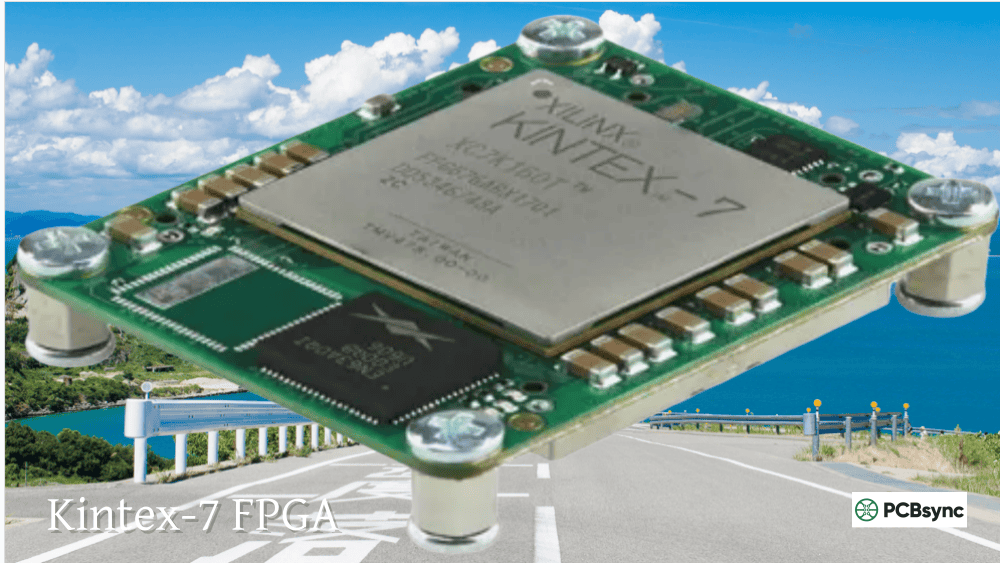
When Xilinx first shipped the Kintex 7 in 2011, it filled a gap that PCB engineers had been complaining about for years. We needed something that delivered Virtex-class performance without the Virtex-class budget. After spending considerable time designing carrier boards and integrating these chips into production systems, I can say the Xilinx Kintex 7 FPGA family genuinely delivers on that promise. This guide covers everything you need to know about the Kintex-7 architecture, popular device variants, development workflows, and real-world applications where these chips excel.
Understanding the Kintex 7 Position in the FPGA Landscape
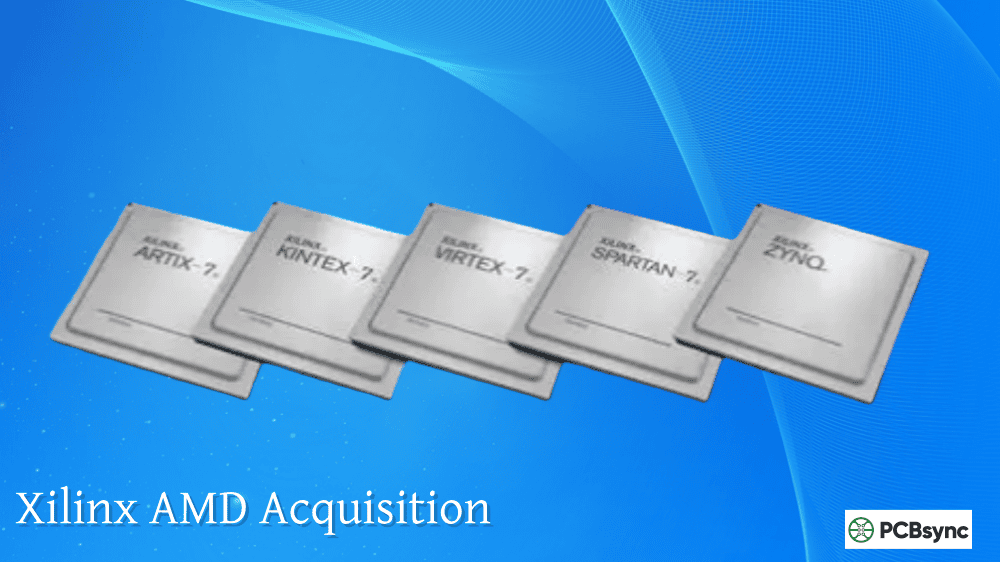
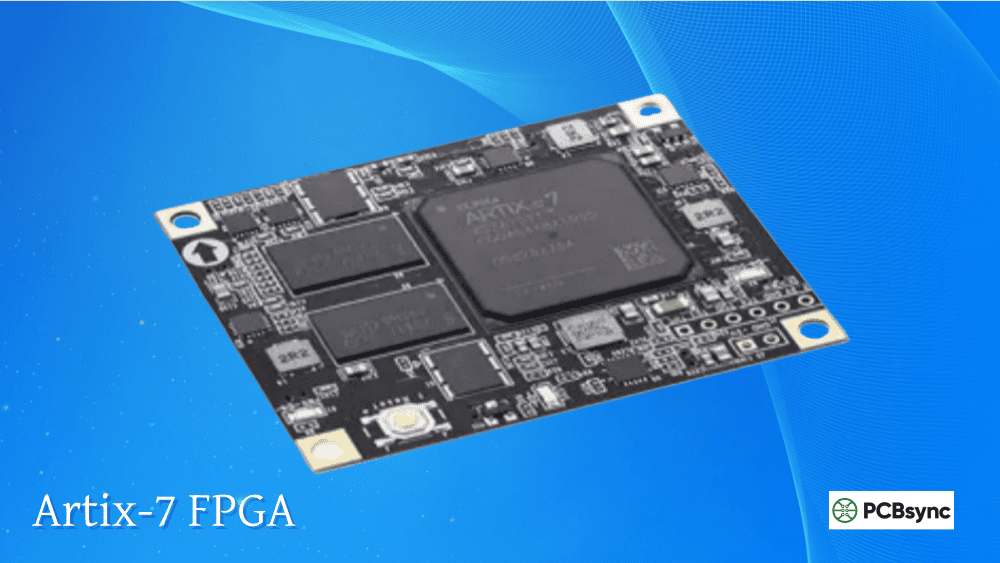
The Kintex 7 sits squarely in the middle of Xilinx’s (now AMD’s) 7 Series lineup. Below it, you have the Artix-7 for cost-sensitive, lower-power applications. Above it, the Virtex-7 handles extreme performance requirements with massive logic density and transceiver counts. The Xilinx Kintex 7 FPGA occupies the sweet spot where you get serious computational muscle without the premium pricing or power headaches of the top tier.
What made this family revolutionary when it launched was the 28nm High-Performance Low-Power (HPL) process technology. Previous FPGA generations forced engineers into a binary choice: high performance with high power consumption, or acceptable power with limited performance. The 28nm HPL process broke that paradigm, delivering what Xilinx claimed was a 2x improvement in price-performance ratio while cutting power consumption by 50% compared to the previous 40nm generation.
AMD (who acquired Xilinx in 2022) has committed to supporting 7 Series FPGAs through 2040. That’s not a typo—you’re looking at 15+ more years of guaranteed availability. For aerospace, industrial, and medical applications where product lifecycles stretch decades, this longevity makes the Kintex-7 a safe bet.
Xilinx Kintex 7 FPGA Family Specifications
The Kintex-7 family spans a range of device sizes, from the compact XC7K70T to the resource-rich XC7K480T. Here’s a breakdown of the key specifications across the most commonly used devices:
Device
Logic Cells
Slices
Block RAM (Kb)
DSP Slices
GTX Transceivers
Max User I/O
XC7K70T
65,600
10,250
2,700
240
8
300
XC7K160T
162,240
25,350
11,700
600
8
400
XC7K325T
326,080
50,950
16,020
840
16
500
XC7K355T
356,160
55,650
25,740
1,440
24
300
XC7K410T
406,720
63,550
28,620
1,540
16
500
XC7K420T
416,960
65,150
30,060
1,680
32
380
XC7K480T
477,760
74,650
34,380
1,920
32
380
A few things stand out from these numbers. The DSP slice count scales aggressively across the family, reaching nearly 2,000 in the XC7K480T. Each DSP48E1 slice contains a 25×18 multiplier, pre-adder, and accumulator, making these devices genuinely capable signal processing engines. At 2,845 GMACs peak DSP performance, the larger Kintex 7 devices compete with dedicated DSP processors for many applications.
Key Architectural Features
Every Xilinx Kintex 7 FPGA shares these fundamental building blocks:
Configurable Logic Blocks (CLBs): Each slice contains four 6-input LUTs and eight flip-flops. Some slices can use their LUTs as distributed RAM or 32-bit shift registers, which is invaluable for implementing small FIFOs without consuming block RAM.
Block RAM: Fundamentally 36Kb units that can operate as dual 18Kb blocks. With true dual-port capability and built-in FIFO logic, these memories handle everything from frame buffers to coefficient storage.
GTX Transceivers: The workhorses for high-speed serial connectivity. GTX transceivers in the Kintex-7 support line rates from 500 Mb/s up to 12.5 Gb/s (device and package dependent). They include out-of-band signaling for protocols like PCIe and SATA/SAS, plus integrated 8B/10B and 64B/66B encoders/decoders.
Clock Management Tiles (CMTs): Each CMT contains one MMCM (Mixed-Mode Clock Manager) and one PLL. The MMCM handles precision frequency synthesis with fractional divide capabilities, while the PLLs provide additional clock multiplication and division.
Integrated PCIe Hard Block: All Kintex-7 devices include at least one integrated block for PCI Express, supporting up to x8 Gen2 configurations. This hard IP dramatically reduces resource consumption compared to soft PCIe implementations while meeting compliance specifications out of the box.
Kintex 7 vs Artix-7 vs Virtex-7: Choosing the Right Device
Selecting between the 7 Series families often comes down to three factors: transceiver requirements, logic density, and budget. Here’s how they compare:
Feature
Artix-7
Kintex 7
Virtex-7
Target Market
Cost-optimized
Balanced performance
Maximum performance
Max Logic Cells
215K
478K
2,000K+
Transceiver Type
GTP (6.6 Gb/s)
GTX (12.5 Gb/s)
GTX/GTH/GTZ (up to 28 Gb/s)
Max Transceivers
16
32
96
DSP Performance
Up to 929 GMACs
Up to 2,845 GMACs
Up to 5,335 GMACs
PCIe Support
Gen2 x4
Gen2 x8
Gen2 x8 / Gen3 x8
Memory Interface
DDR3-1066
DDR3-1866
DDR3-1866
Relative Cost
$
$$
$$$$
The Kintex 7 shines when you need GTX-class transceivers for 10 Gigabit Ethernet, high-speed ADC/DAC interfaces, or multi-lane PCIe without paying Virtex prices. For designs where GTP transceivers suffice and logic requirements stay modest, Artix-7 saves significant board space and power budget. Virtex-7 becomes necessary when you’re stacking transceivers for 100G applications or need stacked silicon interconnect (SSI) technology to exceed single-die capacity limits.
From a PCB design perspective, I find Kintex-7 devices in FFG packages (flip-chip fine-pitch BGA) to be well-behaved. The 1.0mm ball pitch is manufacturable by most mid-tier PCB houses without exotic processes. Power delivery requires attention—you’re managing VCCINT (1.0V), VCCBRAM (1.0V), VCCAUX (1.8V), VCCAUX_IO (1.8V or 2.0V), and multiple VCCO rails depending on your I/O standards—but nothing outside normal practice for modern FPGAs.
Three devices dominate the Kintex-7 landscape based on market availability and application fit:
XC7K325T: The Workhorse
With 326,080 logic cells, 840 DSP slices, and 16 GTX transceivers, the XC7K325T hits a resource balance that suits a remarkable range of applications. It’s the default recommendation for teams moving up from Artix-7 or down from Virtex platforms. Available in FFG676 (25×25mm) and FFG900 (31×31mm) packages, it provides flexibility in balancing I/O count against board area constraints.
The 16.4Mb of block RAM proves sufficient for most video processing applications, including 1080p frame buffers with comfortable margin. In wireless baseband applications, those 840 DSP slices handle LTE/LTE-A signal processing chains efficiently.
XC7K160T: Compact Capability
When the XC7K325T is overkill but Artix-7 falls short, the XC7K160T fills the gap. Its 162,240 logic cells and 600 DSP slices in smaller packages (FBG676 and FBG484) make it popular for industrial control, protocol bridging, and moderate-complexity signal processing.
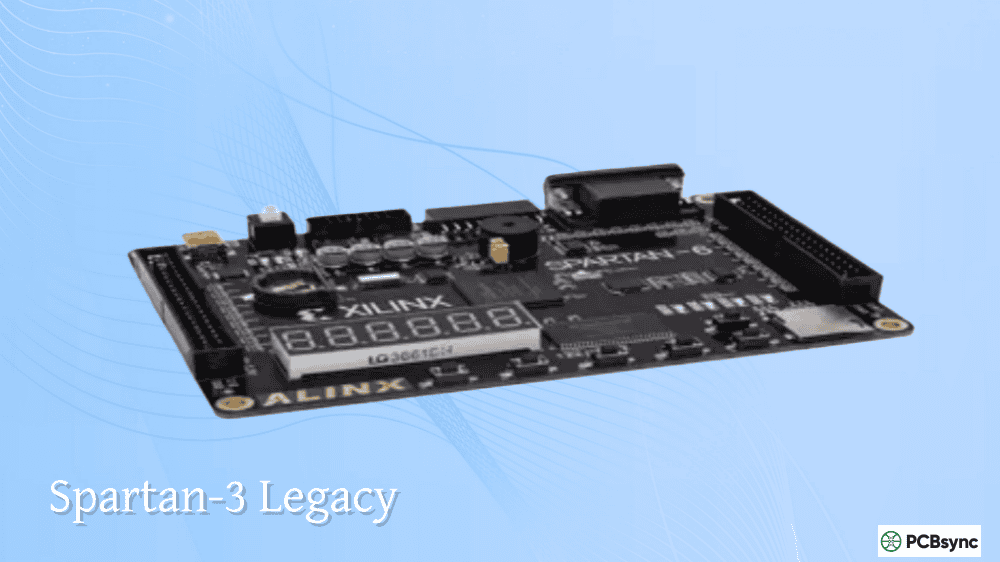
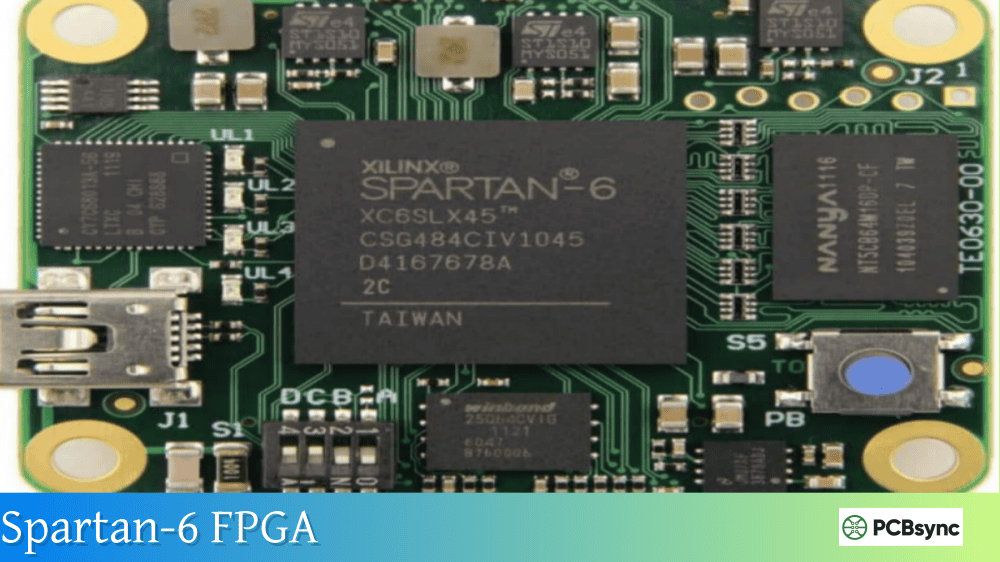
This device particularly appeals to designs migrating from older Virtex-5 or Spartan-6 platforms. You often get equivalent or better performance in a smaller footprint with reduced power consumption.
XC7K410T: Maximum Resources
At the top of the commonly-deployed range, the XC7K410T delivers over 406,000 logic cells and 1,540 DSP slices. It’s the choice when you’re pushing against resource limits in the 325T or need headroom for feature expansion without board redesigns.
The XC7K410T appears frequently in test and measurement equipment, software-defined radio platforms, and high-end medical imaging systems where processing demands justify the premium.
Development Tools and Ecosystem
Vivado Design Suite
The primary development environment for Xilinx Kintex 7 FPGA designs is the Vivado Design Suite. Unlike the legacy ISE tools (which also support Kintex-7), Vivado offers:
Modern synthesis engine with better optimization for 7 Series architectures
Hierarchical design methodology with out-of-context synthesis for faster iterations
Integrated timing analysis that catches problems earlier in the design cycle
IP Integrator for graphical block-based design assembly
Partial reconfiguration support for dynamic design changes in the field
A critical note: the free Vivado WebPACK edition does not support larger Kintex-7 devices like the XC7K325T. You’ll need a Vivado Enterprise or HL Design license. However, AMD provides vouchers with development boards like the KC705, which reduces the initial barrier significantly.
Reference Designs and IP
AMD/Xilinx provides extensive IP libraries for Kintex-7:
IP Category
Key Cores
Memory Interfaces
DDR3/DDR4 controllers, LPDDR2
Connectivity
PCIe Gen2, 10G/40G Ethernet MAC, Aurora
Signal Processing
FFT, FIR filters, DDS, CORDIC
Video
Video processing subsystem, color correction
Embedded Processing
MicroBlaze soft processor, AXI interconnect
The MIG (Memory Interface Generator) deserves special mention. Configuring DDR3 interfaces manually is notoriously error-prone, and MIG handles the complexity of timing calibration, I/O banking rules, and controller logic automatically.
Development Boards for Getting Started
Board
FPGA
Key Features
Approximate Price
KC705 Evaluation Kit
XC7K325T
PCIe Gen2 x8, DDR3 SODIMM, SFP+, FMC HPC
$1,695
Genesys 2 (Digilent)
XC7K325T
HDMI, DisplayPort, DDR3, FMC HPC, Audio codec
$999
Nereid (Numato)
XC7K325T/XC7K410T
PCIe x4, DDR3, QSFP+
$499-699
AX7325B (ALINX)
XC7K325T
DDR3, FMC, Gigabit Ethernet
$400-500
The KC705 remains the gold standard for professional development. Its pre-verified reference designs cover PCIe, DDR3, and Ethernet, significantly accelerating bring-up. The included Vivado license voucher adds considerable value to the package.
For educational or hobby projects, the Digilent Genesys 2 provides exceptional multimedia capabilities at a lower price point. The HDMI and DisplayPort connectivity make it ideal for image processing experimentation.
Real-World Applications for Kintex 7
Wireless Infrastructure and 5G
The Kintex 7 became a standard platform for 4G/LTE base station equipment, and many deployments continue using it for 5G small cells and radio units. The GTX transceivers handle CPRI and OBSAI backhaul protocols, while the DSP slices process complex multi-antenna beamforming algorithms. A single XC7K410T can implement complete digital front-end functionality for a multi-sector base station.
Medical Imaging Systems
Ultrasound, CT, and MRI systems leverage Kintex-7’s parallel processing capabilities for real-time image reconstruction. The XC7K325T is particularly popular in portable ultrasound devices, where its balance of processing power and power efficiency enables battery-operated designs. Block RAM stores acoustic line data while DSP slices perform beamforming calculations with deterministic latency.
Video Processing and Broadcast
From broadcast-grade video routers to industrial machine vision systems, the Xilinx Kintex 7 FPGA handles video processing workloads efficiently. The integrated PCIe block enables video accelerator cards that slot into standard server infrastructure. Supporting formats up to 4K@60Hz becomes straightforward with the available memory bandwidth and logic resources.
Industrial Automation and Control
Multi-axis motor control, high-speed data acquisition, and real-time process control benefit from FPGA determinism that microprocessors cannot match. The wide I/O voltage range support (1.2V to 3.3V in HR banks) simplifies interfacing with industrial sensors and actuators without external level translation.
Aerospace and Defense
The XQ7K325T and XQ7K410T defense-grade variants meet MIL-STD-883 Class B requirements with extended temperature ranges and enhanced radiation tolerance. These devices appear in radar processing, electronic warfare, and avionics systems where reliability and long-term availability are paramount.
PCB Design Considerations for Kintex-7
When laying out a Kintex-7 design, several factors require careful attention:
Power Sequencing: The recommended sequence is VCCINT → VCCBRAM → VCCAUX → VCCAUX_IO → VCCO. Violating this sequence won’t necessarily damage the device, but it can cause excessive current draw during power-up or leave I/Os in undefined states.
Decoupling Strategy: Place 0.1µF and 0.01µF capacitors on each power pin, with bulk capacitance distributed across the board. For GTX transceivers, the MGTAVCC and MGTAVTT rails require dedicated filtering as specified in UG476.
High-Speed Signal Integrity: GTX transceivers can tolerate reasonable trace losses, but improper differential pair routing or impedance discontinuities manifest as increased bit error rates. Maintain 100Ω differential impedance and minimize via stubs through back-drilling or HDI construction.
Thermal Management: Power dissipation varies dramatically with design utilization. A lightly-loaded XC7K325T might dissipate under 2W, while a fully-utilized device with active transceivers can exceed 10W. Use the XPower Estimator (XPE) spreadsheet early in design planning to size heatsinks and airflow appropriately.
Modern PMICs from Texas Instruments, Analog Devices, and Renesas simplify implementing this multi-rail architecture. The TPS65400 was specifically designed for 7 Series FPGAs and handles sequencing automatically.
Useful Resources and Documentation
Resource
Description
Access
DS182
Kintex-7 DC and AC Switching Characteristics
AMD/Xilinx Documentation
DS180
7 Series FPGAs Overview
AMD/Xilinx Documentation
UG476
7 Series FPGAs GTX/GTH Transceivers User Guide
AMD/Xilinx Documentation
UG471
7 Series FPGAs SelectIO Resources User Guide
AMD/Xilinx Documentation
UG586
Memory Interface Solutions User Guide
AMD/Xilinx Documentation
XPE
XPower Estimator Spreadsheet
AMD Power Estimator Tool
Vivado Download
Design Suite Installation
AMD/Xilinx Downloads
Frequently Asked Questions
What is the difference between Kintex-7 and Kintex UltraScale?
Kintex UltraScale uses a 20nm process (versus 28nm for Kintex-7) with a redesigned architecture optimized for higher clock speeds and better routing efficiency. UltraScale devices offer higher logic density, faster transceivers (up to 16.3 Gb/s), and improved power efficiency. However, Kintex-7 remains more cost-effective for applications where UltraScale performance isn’t necessary, and its maturity means better documentation and proven reliability.
Can I use ISE with Kintex-7 devices?
Yes, ISE 14.7 supports Kintex-7 devices. However, Xilinx (AMD) recommends Vivado for all new designs. ISE entered maintenance mode in 2013 and receives no new features or optimizations. Vivado produces better quality-of-results for 7 Series devices in most cases and offers active support.
What speed grade should I select for my design?
Speed grades (-1, -2, -3, with -3 being fastest) affect maximum clock frequencies and transceiver line rates. Start with the -2 grade for most commercial applications—it provides good performance margins at moderate cost. Choose -1 for power-sensitive designs or where timing requirements are relaxed. Reserve -3 for designs with aggressive performance requirements that justify the premium pricing.
How does Kintex-7 compare to Intel (Altera) Arria-10?
Arria-10 uses a 20nm process and generally offers higher raw performance than Kintex-7. However, Kintex-7’s price point, mature ecosystem, and proven reliability make it preferable for cost-sensitive designs or teams with existing Xilinx toolchain expertise. Arria-10 becomes more attractive for designs requiring its hard floating-point DSP blocks or higher transceiver speeds.
Is Kintex-7 still recommended for new designs?
For many applications, yes. AMD’s commitment to support through 2040 makes Kintex-7 viable for products with long lifecycles. The extensive IP library, proven silicon, and competitive pricing maintain its relevance. However, for designs starting today with aggressive performance requirements or where power efficiency is paramount, consider evaluating Kintex UltraScale or Kintex UltraScale+ as well.
Migration Path: Moving to and from Kintex-7
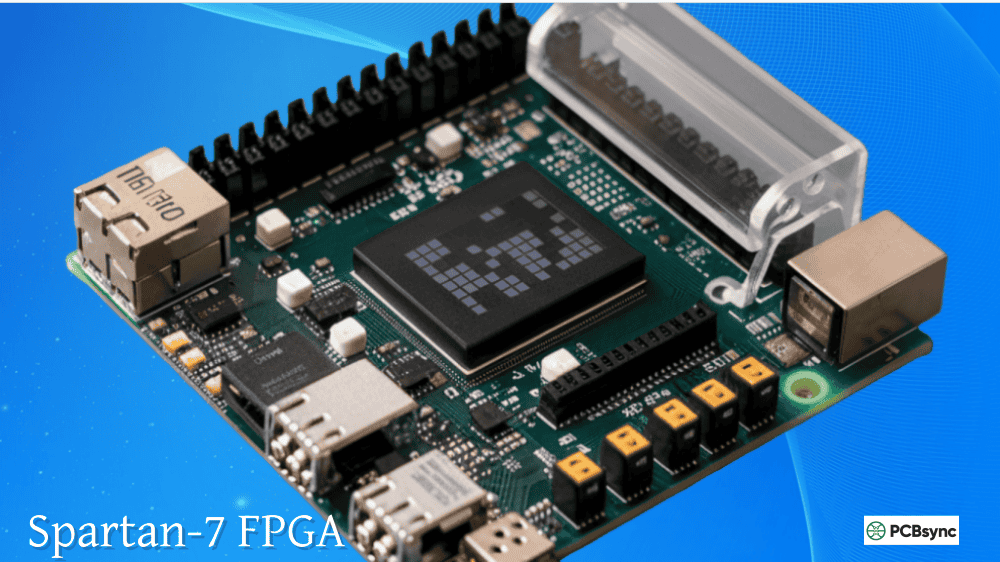
One of the understated advantages of the 7 Series architecture is design portability. All 7 Series devices (Artix-7, Kintex-7, Virtex-7, and Zynq-7000) share identical logic primitives, making IP reuse straightforward across families.
Migrating from Legacy Devices
Teams moving from Virtex-5 or Spartan-6 platforms typically see immediate benefits:
30-50% reduction in dynamic power for equivalent functionality
Improved timing closure due to enhanced interconnect architecture
Smaller package options for space-constrained designs
Better tool support through Vivado versus ISE-only devices
The primary migration challenge involves rewriting UCF constraints to XDC format (Vivado’s constraint syntax) and adapting to AXI-based IP interfaces. Xilinx provides migration guides covering clock resources, SelectIO standards, and memory controller differences.
Scaling Within Kintex-7
Perhaps the most practical migration path is scaling within the Kintex-7 family itself. A design targeting the XC7K160T can typically move to the XC7K325T without HDL modifications—only pin constraints require updates. This allows starting with a smaller, less expensive device for initial prototypes and scaling to larger variants as feature requirements grow.
Moving to UltraScale
When Kintex-7 resources become limiting, Kintex UltraScale provides a natural upgrade path. The core logic primitives (LUTs, DSPs, block RAM) remain functionally compatible, though enhanced versions exist. Transceiver configurations differ more significantly, requiring careful review of channel bonding and clocking strategies during migration.
Conclusion
The Xilinx Kintex 7 FPGA family represents a mature, well-characterized platform that continues delivering value years after its introduction. Its combination of GTX transceivers, substantial DSP resources, integrated PCIe, and reasonable power consumption makes it genuinely versatile. Whether you’re designing a 5G radio unit, a medical imaging system, or industrial test equipment, the Kintex-7 provides the performance headroom to implement sophisticated algorithms while keeping bills-of-materials manageable.
For engineers evaluating FPGA options today, the Kintex 7 deserves serious consideration. Its long-term availability commitment, extensive documentation, and proven track record across demanding applications reduce project risk in ways that newer architectures cannot yet match. Sometimes the best choice isn’t the newest—it’s the one that reliably gets products shipped.
Inquire: Call 0086-755-23203480, or reach out via the form below/your sales contact to discuss our design, manufacturing, and assembly capabilities.
Quote: Email your PCB files to Sales@pcbsync.com (Preferred for large files) or submit online. We will contact you promptly. Please ensure your email is correct.
Notes: For PCB fabrication, we require PCB design file in Gerber RS-274X format (most preferred), *.PCB/DDB (Protel, inform your program version) format or *.BRD (Eagle) format. For PCB assembly, we require PCB design file in above mentioned format, drilling file and BOM. Click to download BOM template To avoid file missing, please include all files into one folder and compress it into .zip or .rar format.