Inquire: Call 0086-755-23203480, or reach out via the form below/your sales contact to discuss our design, manufacturing, and assembly capabilities.
Quote: Email your PCB files to Sales@pcbsync.com (Preferred for large files) or submit online. We will contact you promptly. Please ensure your email is correct.
Notes: For PCB fabrication, we require PCB design file in Gerber RS-274X format (most preferred), *.PCB/DDB (Protel, inform your program version) format or *.BRD (Eagle) format. For PCB assembly, we require PCB design file in above mentioned format, drilling file and BOM. Click to download BOM template To avoid file missing, please include all files into one folder and compress it into .zip or .rar format.
If you’ve been designing high-speed digital boards lately, you’ve probably heard about the XtremeSpeed RO1200 Series from Rogers Corporation. As data rates push toward 112Gbps and beyond, traditional FR-4 just doesn’t cut it anymore. The insertion losses become unbearable, signal integrity falls apart, and suddenly you’re looking at a channel that can’t reliably transmit data.
I’ve spent considerable time working with various high-speed laminates, and the XtremeSpeed RO1200 Series stands out as one of the most capable materials for next-generation networking and computing applications. In this guide, I’ll walk you through everything you need to know about this material—from its core specifications to real-world processing considerations.
The XtremeSpeed RO1200 Series is Rogers Corporation’s answer to the demanding requirements of ultra-high-speed digital circuits. These are ceramic-filled laminates reinforced with woven fiberglass, specifically engineered for applications where signal integrity cannot be compromised.
Unlike standard PTFE materials, the RO1200 combines the surface smoothness of non-woven PTFE laminates (which gives you tighter line etching tolerances) with the mechanical rigidity of woven-glass PTFE. This hybrid approach addresses a common trade-off in the industry: you typically had to choose between electrical performance and ease of handling.
The material family includes both laminates and bondplys, allowing engineers to create homogeneous stackups where the dielectric properties remain consistent across all layers. When you’re routing 56Gbps or 112Gbps PAM4 signals, this consistency matters enormously.
Why Engineers Choose XtremeSpeed RO1200 Series
Several factors make the XtremeSpeed RO1200 Series particularly attractive for high-speed digital designs:
Extremely Low Loss — With a dissipation factor (Df) of just 0.0017 at 10 GHz, this material ranks among the lowest-loss options available for high-speed digital applications. For comparison, standard FR-4 typically has a Df around 0.020 at the same frequency—more than 10x higher.
Low Dielectric Constant — The Dk of 3.05 provides predictable impedance control and reduces propagation delay, which becomes critical when timing margins are tight.
Thermal Stability — With a decomposition temperature (Td) of 500°C, the XtremeSpeed RO1200 Series handles lead-free assembly processes without issue. The low CTE also helps maintain PTH reliability in high layer count designs.
Signal Integrity Benefits — Reduced cross-talk, minimized signal skew, and lower insertion loss all contribute to cleaner eye diagrams at multi-gigabit speeds.
XtremeSpeed RO1200 Series Technical Specifications
Let me break down the key specifications you’ll need for your design work. This data comes directly from the Rogers datasheet and represents typical values measured under standard conditions.
Electrical Properties
Property
Value
Direction
Condition
Test Method
Dielectric Constant (Process)
3.05
Z
10 GHz, 23°C
IPC-TM-650 2.5.5.5
Dielectric Constant (Design)
3.05
Z
1-20 GHz
Differential Phase Length
Dissipation Factor (tan δ)
0.0017 Max
Z
10 GHz, 23°C
IPC-TM-650 2.5.5.5
Volume Resistivity
1.3 × 10⁷ MΩ·cm
Z
C-96/35/90
IPC-TM-650 2.5.17.1
Surface Resistivity
2.5 × 10⁶ MΩ
Z
C-96/35/90
IPC-TM-650 2.5.17.1
Dielectric Strength
630 V/mil
—
—
IPC-TM-650 2.5.6.2
Thermal & Mechanical Properties
Property
Value
Condition
Test Method
CTE (X,Y)
8 ppm/°C
-55°C to 288°C
IPC-TM-650 2.4.41
CTE (Z)
30 ppm/°C
-55°C to 288°C
IPC-TM-650 2.4.24
Thermal Conductivity
0.42 W/mK
Z-axis
ASTM D5470
Decomposition Temperature (Td)
500°C
TGA
IPC-TM-650 2.4.24.6
Time to Delamination @ 260°C
>60 minutes
—
IPC-TM-650 2.4.24.1
Time to Delamination @ 288°C
>60 minutes
—
IPC-TM-650 2.4.24.1
Moisture Absorption
0.03%
E-1/105+D-48/50
IPC-TM-650 2.6.2.1
Density
2.1 g/cm³
C-24/23/50
ASTM D792
Copper Peel Strength
>4.5 lbs/in
1 oz ED Foil
IPC-TM-650 2.4.8
Dimensional Stability
0.22 mil/inch
After etch +E/150
IPC-TM-650 2.4.39
Flammability
V-0
Halogen-Free
UL 94
Available Configurations
Standard Thicknesses:
0.003″ (0.076mm) ± 0.0005″
0.004″ (0.102mm) ± 0.0005″
0.005″ (0.127mm) ± 0.0007″
0.006″ (0.152mm) ± 0.0007″
0.007″ (0.178mm) ± 0.001″
0.008″ (0.203mm) ± 0.001″
0.010″ (0.254mm) ± 0.001″
Standard Panel Sizes:
12″ × 18″ (305 × 457mm)
24″ × 18″ (610 × 457mm)
Additional panel sizes available upon request
Copper Cladding Options:
Reverse Treated Electrodeposited Copper: 2 oz (70µm) S2/S2
Rolled Copper Foil: ½ oz (18µm) AH/AH, 1 oz (35µm) A1/A1
XtremeSpeed RO1200 Bondply Specifications
The RO1200 bondply complements the laminate products by providing a matched dielectric solution for multi-layer constructions. When you need to bond multiple RO1200 cores together, using the bondply ensures a homogeneous dielectric environment throughout your stackup.
Property
Value
Condition
Dielectric Constant
2.99
10 GHz
Dissipation Factor
0.0012
10 GHz
Available Thicknesses
2.5, 3.0, 4.0, 5.0 mils
—
Rogers has successfully demonstrated applications with up to 42 metal layers using the RO1200 laminate and bondply system. That’s the kind of layer count you see in advanced server backplanes and high-end networking equipment.
Key Features and Benefits of XtremeSpeed RO1200 Series
Superior Signal Integrity Performance
The combination of low Dk and ultra-low Df means your signals arrive cleaner at the receiver. At 112Gbps PAM4, you’re operating at roughly 28GHz fundamental frequency, and every fraction of dB/inch matters.
The spread glass construction in the XtremeSpeed RO1200 Series helps reduce fiber weave effects that cause signal skew. If you’ve ever struggled with lane-to-lane skew in a high-speed SerDes interface, you know how frustrating this can be. The RO1200’s glass weave pattern minimizes this issue without sacrificing the mechanical stability you need for handling.
Thermal and Mechanical Reliability
High layer count boards generate heat, and that heat needs somewhere to go. The 0.42 W/mK thermal conductivity helps dissipate heat through the stackup, while the low Z-axis CTE (30 ppm/°C) reduces stress on plated through-holes during thermal cycling.
The Td of 500°C gives you plenty of margin for lead-free assembly processes. Combined with the >60 minute time-to-delamination at 288°C, you can run multiple reflow cycles without worrying about material degradation.
Processing Advantages
Unlike some high-performance PTFE materials that require special handling, the XtremeSpeed RO1200 Series can be fabricated using standard PTFE processing techniques. The woven glass reinforcement provides enough rigidity that the panels don’t warp or flex excessively during handling.
The material is also compatible with most traditional FR-4 prepreg types, opening up possibilities for hybrid constructions where cost-sensitive layers use conventional materials while critical signal layers use RO1200.
Typical Applications for XtremeSpeed RO1200 Series
Core and Edge IP Routers and Switches
As 800G Ethernet becomes mainstream, the switch fabric PCBs require materials that can handle 112Gbps per lane signaling. The RO1200’s low loss makes it possible to achieve adequate channel margins without excessive use of retimers.
Modern data center switches often feature high layer counts (20+ layers) with dense BGA packages. The dimensional stability and low CTE of the XtremeSpeed RO1200 Series help maintain registration across these complex stackups.
High Performance Computing (HPC) Servers
HPC systems push enormous amounts of data between processors, memory, and I/O. The memory channels and interconnects in these systems benefit from the reduced insertion loss and consistent impedance that RO1200 provides.
Storage arrays with NVMe over Fabric also use high-speed digital laminates like RO1200 to maintain signal integrity across backplane connections.
Backplanes
Large backplanes (3U, 6U, and larger) face severe signal integrity challenges. Channel lengths can exceed 20 inches, and at those distances, every fraction of dB/inch adds up. The XtremeSpeed RO1200 Series enables longer channels without requiring additional equalization or retiming.
Automated Test Equipment (ATE)
Test systems need to accurately measure device performance, which means the test fixture itself can’t introduce significant signal degradation. ATE boards commonly use RO1200 for high-speed test channels where measurement accuracy is paramount.
5G Infrastructure
While the RO1200 was designed primarily for high-speed digital applications, its properties also suit 5G baseband and backhaul equipment where digital signals interface with RF subsystems.
XtremeSpeed RO1200 Series vs Competing Materials
How does the XtremeSpeed RO1200 Series stack up against other options? Let’s compare it with some commonly used alternatives.
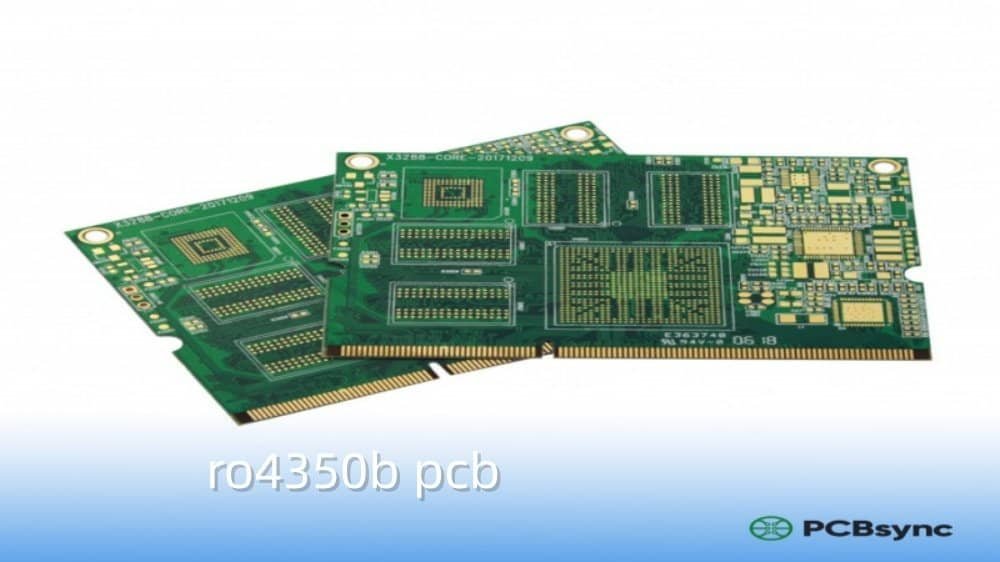
RO1200 vs RO4350B
Property
XtremeSpeed RO1200
RO4350B
Dielectric Constant
3.05
3.48
Dissipation Factor @ 10 GHz
0.0017
0.0037
CTE (Z-axis)
30 ppm/°C
32 ppm/°C
Primary Application
High-speed digital
RF/Microwave
Processing
PTFE techniques
FR-4 compatible
Relative Cost
Higher
Moderate
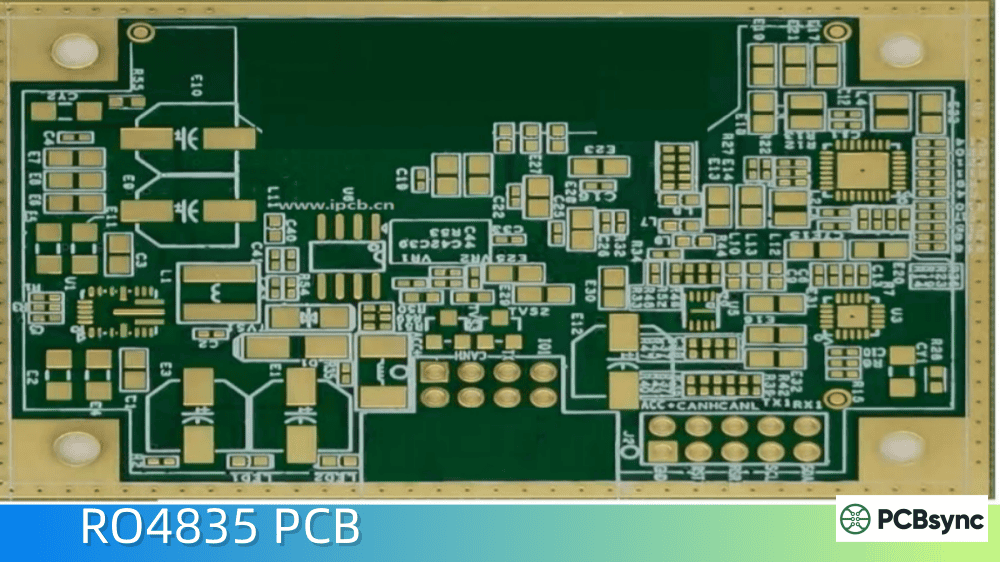
The RO4350B is excellent for RF applications but has roughly 2x the loss of RO1200 at high frequencies. For 56Gbps+ digital channels, this difference becomes significant. However, RO4350B processes more like FR-4, which can reduce fabrication costs.
RO1200 vs Megtron 6
Property
XtremeSpeed RO1200
Megtron 6
Dielectric Constant
3.05
3.3 @ 10 GHz
Dissipation Factor @ 10 GHz
0.0017
0.004
CTE (Z-axis)
30 ppm/°C
~50 ppm/°C
Processing
PTFE techniques
FR-4 compatible
Thickness Options
7 standard
18+ thicknesses
Relative Cost
Higher
Lower
Panasonic’s Megtron 6 offers excellent price-performance for many applications and processes exactly like FR-4. However, the RO1200’s lower Df provides an edge at the highest data rates. Megtron 6’s wider selection of thicknesses and prepregs can simplify stackup development for less demanding applications.
RO1200 vs Megtron 7
Megtron 7 brings the Df down to approximately 0.0015 @ 1GHz, making it more competitive with RO1200. For 400G and 800G switch applications, both materials are viable options. The choice often comes down to supply chain availability and fabricator experience.
Processing Guidelines for XtremeSpeed RO1200 Series
Rogers provides detailed fabrication guidelines in their “XtremeSpeed RO1200 Extremely Low Loss Digital Laminate Quick Reference Processing Guide.” Here’s a summary of the key considerations.
Lamination
The RO1200 is compatible with its matching bondply and most traditional FR-4 prepreg types. Follow the recommendations for your chosen bondply/prepreg system regarding temperature profiles and pressure requirements.
Drilling
Use rigid and supportive entry/exit materials such as pressed phenolic. New drill bits are essential—worn bits will produce poor hole quality. Controlled infeeds, speeds, and retract rates help maintain hole wall quality.
Hole Preparation
Mechanical deburring/scrub is not recommended. If deburring is absolutely necessary, use very light applied pressure. Pressurized water or air purge of holes is acceptable.
Sodium or plasma treatments are required prior to metallization to ensure proper adhesion of the electroless copper.
Plating
Electroless copper deposition works well, with low or regular deposition rates preferred over heavy deposition processes. Direct deposit processes are also compatible.
Surface Finishes
The XtremeSpeed RO1200 Series is compatible with most final metal surfaces and OSPs. Preserve the post-etch surface condition and bake cores prior to lamination for best results.
Routing and Final Operations
Standard routing and punching operations work fine. Ensure material support and use sharp cutting tools throughout mechanical processing.
Design Considerations for XtremeSpeed RO1200 Series
Stackup Planning
When building stackups with XtremeSpeed RO1200 Series materials:
Homogeneous Approach — Using RO1200 laminate cores with RO1200 bondply throughout provides the most consistent dielectric environment. This approach works best for the most demanding 112Gbps channels.
Hybrid Approach — Combining RO1200 on critical high-speed layers with lower-cost materials on power and low-speed signal layers can reduce costs. Make sure your fabricator has experience with mixed-material laminations.
Layer Count — The material supports high layer count designs. Rogers has demonstrated 42-layer constructions using the full RO1200 system.
Impedance Control
The stable Dk of 3.05 across a wide frequency range makes impedance calculations more predictable. Use Rogers’ MWI calculator or your preferred impedance modeling tool with the specific Dk value for your target frequency.
Trace Routing
For 56Gbps and 112Gbps channels, pay attention to trace length matching, via stubs, and reference plane continuity. The low-loss material helps, but poor routing practices will still degrade performance.
Copper Selection
The RO1200 is available with both electrodeposited and rolled copper. Rolled copper provides smoother surfaces, which reduces conductor loss at high frequencies. For the most demanding applications, specify rolled copper on high-speed signal layers.
Where to Source XtremeSpeed RO1200 Series
Rogers Corporation Direct
Rogers maintains a global network of sales offices and technical support. You can request samples directly through their online system at rogerscorp.com. Their technical support hub provides access to design tools, calculators, and application notes.
Authorized Distributors
Many PCB laminate distributors stock Rogers materials or can source them quickly. Check with your regular supplier—they likely have a relationship with Rogers already.
Working with PCB Fabricators
Not every PCB shop has experience with PTFE-based materials like the RO1200. When selecting a fabricator, ask specifically about their experience with Rogers high-speed digital laminates. A shop that regularly builds high-speed networking boards is more likely to have the right processes dialed in.
For more information about working with Rogers PCB materials and finding qualified fabricators, industry resources can help you identify shops with the right capabilities.
Useful Resources and Downloads
Here are some essential resources for engineers working with the XtremeSpeed RO1200 Series:
IPC-4103: Specification for High Speed/High Frequency Base Materials
IPC-TM-650: Test Methods Manual (Referenced test procedures)
Frequently Asked Questions About XtremeSpeed RO1200 Series
What is the dielectric constant of XtremeSpeed RO1200 Series?
The XtremeSpeed RO1200 Series has a dielectric constant (Dk) of 3.05 at 10 GHz. This value remains stable across the 1-20 GHz frequency range when measured using the differential phase length method. The consistent Dk helps maintain predictable impedance control in high-speed digital designs.
Can XtremeSpeed RO1200 Series be processed using standard FR-4 equipment?
Not quite. The XtremeSpeed RO1200 Series requires standard PTFE circuit board processing techniques, which differ from FR-4 fabrication. Specifically, the material needs sodium or plasma treatment before plating, and drilling parameters need adjustment. However, it is compatible with most FR-4 prepregs for hybrid constructions, and many experienced fabricators handle it routinely.
Is the XtremeSpeed RO1200 Series suitable for 112Gbps applications?
Yes. The XtremeSpeed RO1200 Series was specifically engineered for 56Gbps and 112Gbps system architectures. Its ultra-low dissipation factor (0.0017 at 10 GHz) and stable dielectric properties make it one of the best choices for next-generation networking and computing applications operating at these speeds.
What thickness options are available for XtremeSpeed RO1200 Series laminates?
Standard thicknesses range from 0.003″ (0.076mm) to 0.010″ (0.254mm) in seven increments. The bondply is available in 2.5, 3.0, 4.0, and 5.0 mil thicknesses. Bondply plies can be stacked in any combination to achieve desired spacing while maintaining a homogeneous dielectric environment.
How does XtremeSpeed RO1200 Series compare to Megtron 6 for high-speed design?
Both materials serve the high-speed digital market, but they have different strengths. The XtremeSpeed RO1200 Series offers lower loss (Df 0.0017 vs 0.004 at 10 GHz) and better CTE matching to copper. Megtron 6 processes more like FR-4, offers more thickness options, and costs less. For the most demanding 112Gbps channels, RO1200 typically provides better electrical performance. For 56Gbps and below, Megtron 6 may offer a better price-performance balance.
Conclusion
The XtremeSpeed RO1200 Series represents Rogers Corporation’s commitment to enabling next-generation high-speed digital designs. With its ultra-low loss characteristics, stable dielectric properties, and excellent thermal performance, this material addresses the stringent requirements of 56Gbps and 112Gbps system architectures.
For engineers working on core routers, HPC servers, backplanes, and other demanding applications, the RO1200 provides a proven path to achieving reliable signal integrity at extreme data rates. While it requires PTFE-compatible processing and commands a premium price, the performance benefits often justify the investment for critical applications.
As channel speeds continue to increase toward 224Gbps and beyond, materials like the XtremeSpeed RO1200 Series will remain essential tools in the PCB designer’s arsenal. If you’re starting a new high-speed project, take the time to evaluate whether this material fits your performance requirements and work with fabricators who have experience processing it successfully.
Inquire: Call 0086-755-23203480, or reach out via the form below/your sales contact to discuss our design, manufacturing, and assembly capabilities.
Quote: Email your PCB files to Sales@pcbsync.com (Preferred for large files) or submit online. We will contact you promptly. Please ensure your email is correct.
Notes: For PCB fabrication, we require PCB design file in Gerber RS-274X format (most preferred), *.PCB/DDB (Protel, inform your program version) format or *.BRD (Eagle) format. For PCB assembly, we require PCB design file in above mentioned format, drilling file and BOM. Click to download BOM template To avoid file missing, please include all files into one folder and compress it into .zip or .rar format.