Inquire: Call 0086-755-23203480, or reach out via the form below/your sales contact to discuss our design, manufacturing, and assembly capabilities.
Quote: Email your PCB files to Sales@pcbsync.com (Preferred for large files) or submit online. We will contact you promptly. Please ensure your email is correct.
Notes: For PCB fabrication, we require PCB design file in Gerber RS-274X format (most preferred), *.PCB/DDB (Protel, inform your program version) format or *.BRD (Eagle) format. For PCB assembly, we require PCB design file in above mentioned format, drilling file and BOM. Click to download BOM template To avoid file missing, please include all files into one folder and compress it into .zip or .rar format.
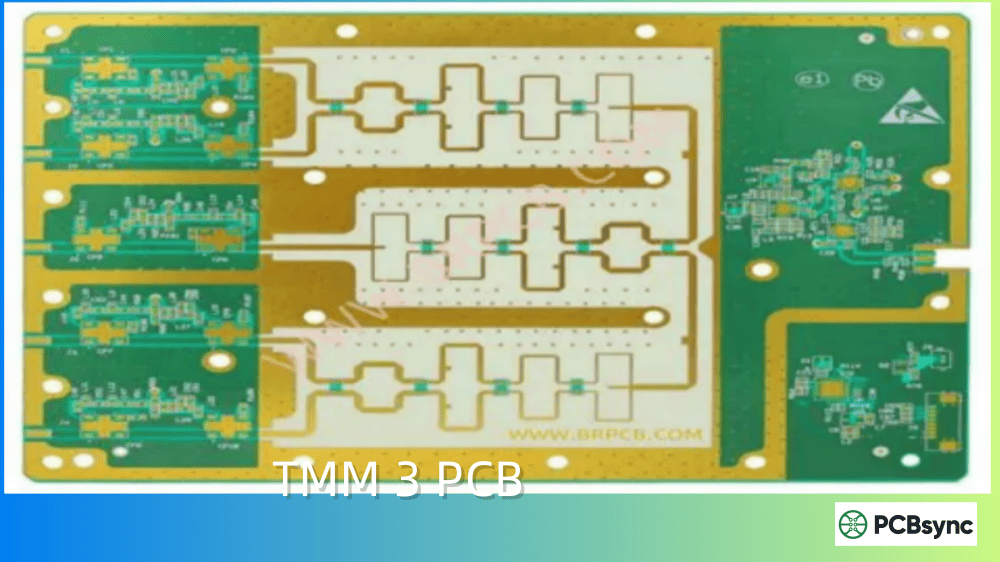
If you’ve been designing RF circuits or microwave boards for any length of time, you’ve probably heard engineers talking about TMM 3 PCB material. There’s a good reason for that. This thermoset laminate from Rogers Corporation has earned its place as a go-to substrate for high-frequency applications where standard FR-4 just doesn’t cut it anymore.
I’ve worked with TMM 3 on satellite antenna projects, GPS systems, and various telecom designs over the years. What consistently impresses me is how this material balances performance with processability. Unlike some exotic PTFE-based laminates that require specialized fabrication techniques, TMM 3 PCB can be manufactured using standard PWB processes. That’s a big deal when you’re trying to meet tight deadlines and keep costs reasonable.
In this guide, I’ll walk you through everything you need to know about TMM 3 laminate, from its core specifications to real-world applications and fabrication tips that will save you headaches down the road.
TMM 3 PCB is a ceramic-filled thermoset polymer composite developed by Rogers Corporation specifically for high-frequency stripline and microstrip applications. The “TMM” stands for Thermoset Microwave Material, and the “3” refers to its nominal dielectric constant of approximately 3.27.
What makes TMM 3 PCB unique is its composition. Rogers combined ceramic fillers with hydrocarbon thermoset resins to create a material that offers the electrical performance you’d expect from ceramic substrates, but with much easier processing characteristics. You get the best of both worlds: excellent high-frequency properties without the brittleness and machining challenges of pure ceramic boards.
The thermoset nature of TMM 3 is particularly important. Unlike thermoplastic materials that soften when heated, thermoset resins maintain their mechanical integrity through multiple thermal cycles. This means you can perform wire bonding operations without worrying about pad lifting or substrate deformation. For anyone who’s dealt with those issues on other materials, that’s a significant advantage.
TMM 3 PCB Material Specifications
Let me give you the numbers that matter. The following table summarizes the key electrical and mechanical properties of TMM 3 laminate based on Rogers Corporation’s published data:
Electrical Properties of TMM 3
Property
Value
Test Condition
Dielectric Constant (Dk)
3.27 ± 0.032
10 GHz
Dissipation Factor (Df)
0.0020
10 GHz
Thermal Coefficient of Dk
+37 ppm/°C
-55°C to +150°C
Volume Resistivity
1.2 × 10⁷ MΩ·cm
Condition A
Surface Resistivity
3.4 × 10⁷ MΩ
Condition A
Thermal Properties of TMM 3
Property
Value
Test Method
Thermal Conductivity
0.70 W/m/K
ASTM C518
CTE (X-axis)
15 ppm/°C
IPC-TM-650
CTE (Y-axis)
15 ppm/°C
IPC-TM-650
CTE (Z-axis)
23 ppm/°C
IPC-TM-650
Td (Decomposition Temperature)
425°C
TGA
Mechanical Properties of TMM 3
Property
Value
Test Method
Peel Strength
6.0 lb/in (1.05 N/mm)
After solder float
Flexural Strength
9,100 psi (62.7 MPa)
IPC-TM-650
Density
1.78 g/cm³
–
Moisture Absorption
0.20%
48 hours @ 50°C
Available Thicknesses for TMM 3 PCB
Thickness (inches)
Thickness (mm)
0.015
0.381
0.020
0.508
0.025
0.635
0.030
0.762
0.050
1.270
0.060
1.524
0.100
2.540
0.125
3.175
0.150
3.810
0.200
5.080
0.250
6.350
0.300
7.620
0.500
12.700
Copper cladding options range from ½ oz/ft² to 2 oz/ft² electrodeposited copper foil. For applications requiring heat spreading, TMM 3 can also be bonded directly to brass or aluminum plates.
Key Features and Benefits of TMM 3 Laminate
After using TMM 3 on dozens of projects, I can tell you the material delivers several tangible benefits that directly impact your design outcomes.
Exceptional Dk Stability Over Temperature
The thermal coefficient of dielectric constant is remarkably low at +37 ppm/°C across the temperature range of -55°C to +150°C. In practical terms, this means your antenna’s resonant frequency or your filter’s center frequency won’t drift significantly when environmental conditions change. For space-borne applications where temperatures swing wildly between sun exposure and shadow, this stability is essential.
CTE Matched to Copper
The X/Y coefficient of thermal expansion at 15 ppm/°C is closely matched to copper’s CTE. This matching prevents the stress-related failures that plague mismatched material systems during thermal cycling. Your plated through-holes remain reliable, and your microstrip traces don’t crack or delaminate after repeated temperature excursions.
Twice the Thermal Conductivity of PTFE
With thermal conductivity of 0.70 W/m/K, TMM 3 PCB dissipates heat roughly twice as efficiently as traditional PTFE or ceramic-filled PTFE laminates. For power amplifier designs where thermal management is critical, this improved heat transfer translates to lower junction temperatures and longer component life.
Standard PCB Processing Compatible
Unlike glass-reinforced PTFE materials that require sodium naphthalate treatment before electroless plating, TMM 3 can be processed using conventional PWB methods. The substrate is resistant to standard etchants and solvents, so your fabricator won’t need special equipment or processes to build your boards.
Thermoset Resin for Reliable Wire Bonding
The thermoset nature of TMM 3 means it won’t soften during wire bonding operations. Pads stay put, substrates don’t deform, and your assemblies maintain mechanical integrity through the entire manufacturing process.
TMM 3 PCB vs FR-4: When to Choose High-Frequency Materials
One question I get asked frequently is when it makes sense to move from standard FR-4 to specialized materials like TMM 3. The answer depends on your operating frequency, performance requirements, and budget constraints.
Performance Comparison: TMM 3 vs FR-4
Parameter
TMM 3
Standard FR-4
Dielectric Constant
3.27
4.2-4.8
Dissipation Factor @ 10 GHz
0.002
0.02-0.025
Dk Stability vs Temperature
+37 ppm/°C
+200-400 ppm/°C
Thermal Conductivity
0.70 W/m/K
0.25-0.30 W/m/K
Maximum Useful Frequency
40+ GHz
~1-2 GHz
Typical Cost Multiplier
5-10×
1× (baseline)
FR-4 works fine for digital circuits and RF applications below about 1 GHz. Once you push above that frequency, the higher loss tangent and Dk instability of FR-4 start causing real problems. Signal integrity degrades, impedance control becomes difficult, and insertion loss climbs rapidly.
TMM 3 PCB shines in applications from 1 GHz up through millimeter-wave frequencies. The low dissipation factor of 0.002 at 10 GHz means minimal signal attenuation, while the stable dielectric constant enables tight impedance tolerances across temperature.
When to Consider TMM 3 PCB
You should evaluate TMM 3 for your design when:
Your operating frequency exceeds 500 MHz and signal integrity is critical. You need tight impedance tolerances (±5% or better) that FR-4 can’t maintain. Your application involves significant temperature variations. Thermal management requirements exceed what FR-4 can handle. You’re designing satellite, aerospace, or defense systems requiring high reliability.
For Rogers PCB materials in general, the decision usually comes down to whether the performance improvement justifies the added cost. In my experience, the answer is almost always yes for anything operating in the microwave frequency range.
TMM 3 vs Other Rogers Materials
Rogers offers an extensive portfolio of high-frequency laminates. Understanding where TMM 3 fits can help you make the right material selection.
Comparison Within the TMM Series
Property
TMM 3
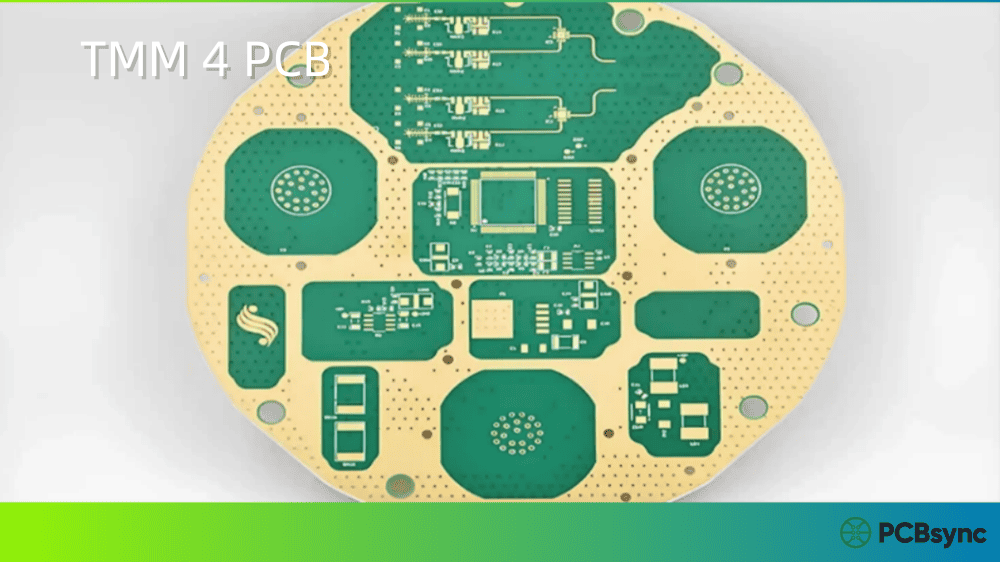
TMM 4
TMM 6
TMM 10
TMM 10i
Dielectric Constant
3.27
4.50
6.00
9.20
9.80
Dissipation Factor
0.002
0.002
0.0023
0.0022
0.0020
Thermal Conductivity (W/m/K)
0.70
0.70
0.72
0.76
0.76
CTE Z-axis (ppm/°C)
23
21
19
20
20
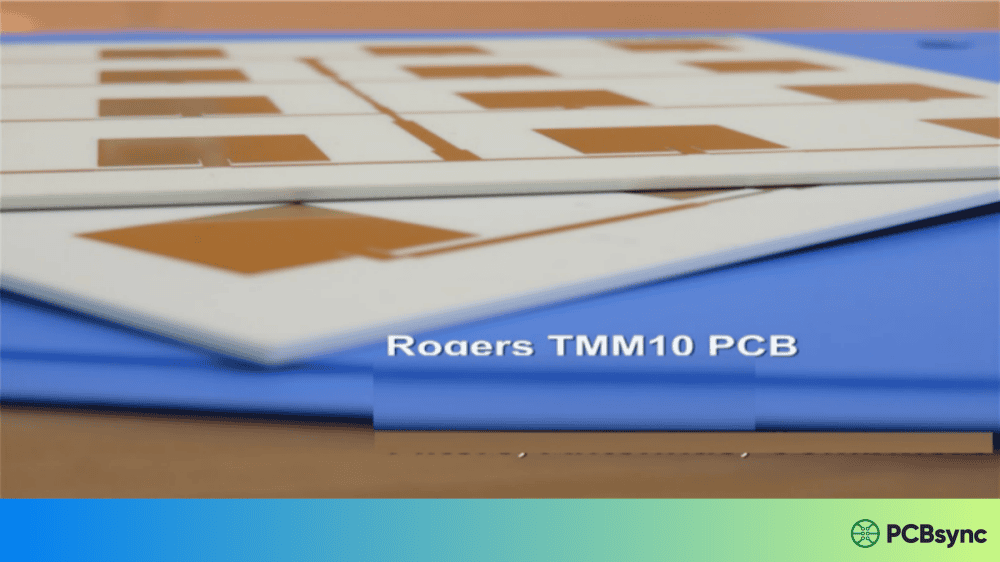
TMM 3 offers the lowest dielectric constant in the TMM family, making it ideal when you need larger circuit features for a given impedance or when you want to minimize circuit size while maintaining reasonable trace widths. Higher Dk materials like TMM 10 allow more compact designs but require finer geometries.
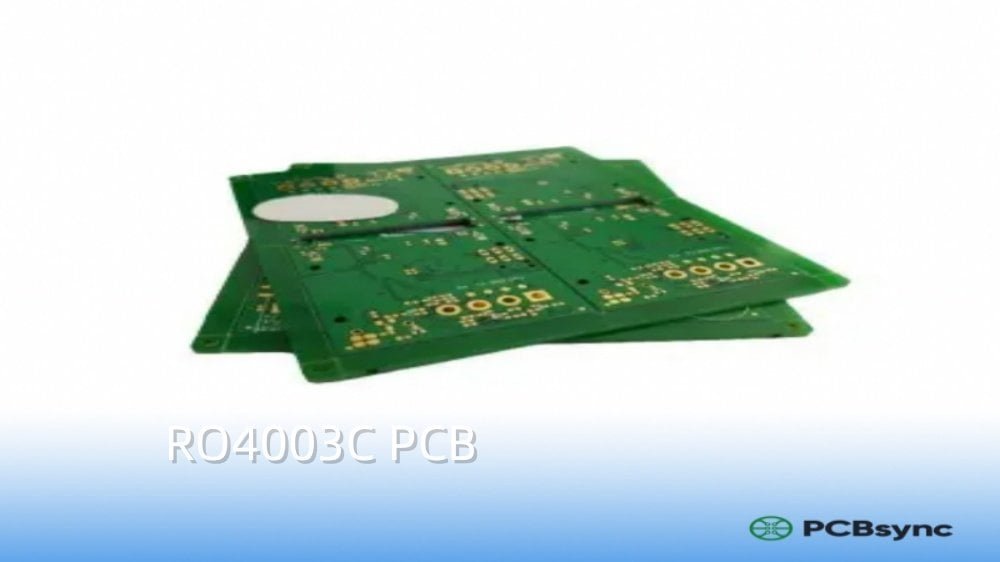
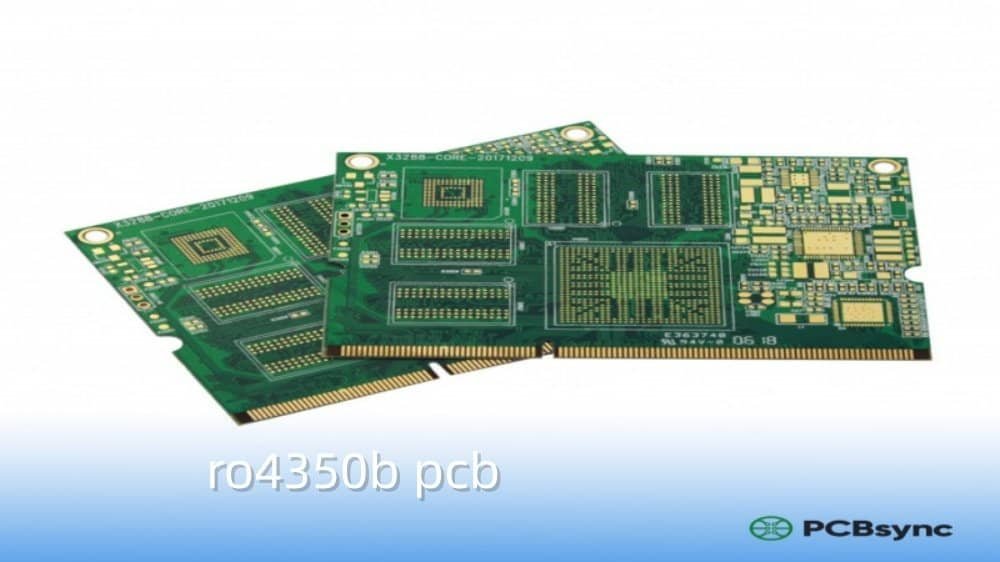
TMM 3 vs RO4003C and RO4350B
Property
TMM 3
RO4003C
RO4350B
Dielectric Constant
3.27
3.38
3.48
Dissipation Factor
0.002
0.0027
0.0037
Thermal Conductivity (W/m/K)
0.70
0.64
0.62
Z-CTE (ppm/°C)
23
46
32
Processing
Standard
Standard
Standard
The RO4000 series is popular for commercial applications due to its excellent balance of cost and performance. TMM 3 edges ahead in thermal conductivity and has a lower Z-axis CTE, which can improve plated through-hole reliability in applications with extreme thermal cycling.
Applications for TMM 3 PCB
TMM 3 has found its way into numerous high-frequency applications across multiple industries. Here are the most common use cases I’ve encountered:
Satellite Communication Systems
The aerospace industry relies heavily on TMM 3 for satellite antenna feeds, LNAs, and transponder circuits. The material’s stability across the -55°C to +150°C temperature range matches the demands of the space environment. TMM 3’s low outgassing characteristics also make it suitable for vacuum applications.
GPS Antennas and Receivers
GPS patch antennas frequently use TMM 3 PCB because the stable dielectric constant ensures consistent antenna performance regardless of temperature. The material’s excellent moisture resistance also helps maintain performance in outdoor installations.
RF and Microwave Circuits
Power amplifiers, filters, couplers, and other RF components benefit from TMM 3’s low loss characteristics. The improved thermal conductivity helps manage heat in power stages, while the low Df minimizes signal degradation in passive networks.
Automotive Radar Systems
Modern vehicles incorporate multiple radar sensors for collision avoidance, adaptive cruise control, and parking assistance. TMM 3’s combination of stable Dk, low loss, and reliable processing makes it suitable for automotive applications operating at 24 GHz and 77 GHz.
Wireless Base Stations
Telecommunications infrastructure requires materials that can handle high power levels while maintaining signal integrity. TMM 3’s thermal properties and electrical stability make it a solid choice for base station power amplifiers and antenna feeds.
Chip Testing Equipment
Semiconductor test fixtures need consistent electrical properties to ensure accurate device characterization. TMM 3’s tight Dk tolerance (±0.032) and low loss tangent provide the predictable performance that test engineers require.
TMM 3 PCB Fabrication Guidelines
One advantage of TMM 3 is that it doesn’t require the specialized processing techniques common with pure PTFE materials. That said, following proper fabrication guidelines will ensure the best results.
Drilling Considerations
TMM 3’s ceramic filler content causes more tool wear than standard FR-4. Based on Rogers’ published guidelines and my own experience, here are the key points:
Expect drill bit life of approximately 120 linear inches for TMM 3 (compared to 250+ inches for higher Dk variants like TMM 10). The ceramic fillers are abrasive, so monitor tool condition closely. Use backing materials appropriate for the substrate thickness. Standard entry and backup materials work well. Recommended spindle speeds range from 15,000 to 25,000 RPM for smaller diameter bits. Keep surface speeds below 400 SFM to minimize tool wear and maintain edge quality.
Routing Parameters
When routing TMM 3 PCB, tools with more flutes generally provide better life and edge quality. Rogers recommends:
Carbide tools designed for standard PWB materials work well (specifically geometries like Precision Carbide R1U, R1D). PTFE-specific tool geometries with smaller cross-sections show shorter life due to the ceramic content. Reduce surface speed if you notice excessive wear or poor edge quality.
Hole Wall Preparation
Unlike PTFE laminates, TMM 3 does not require sodium naphthalate treatment before electroless plating. Chemical preparation of surfaces is preferred over mechanical scrub/deburr. If you must use mechanical preparation, hand scrubbing is recommended.
Chemical desmear can improve hole wall topography after drilling, but etch-back is not recommended. Both electroless copper and direct deposit processes produce acceptable results.
Multilayer Bonding
For multilayer TMM 3 PCB constructions, several bonding options are available:
Rogers SPEEDBOARD C prepreg provides low-loss bonding between layers. FEP (fluorinated ethylene propylene) bonding film works but has a re-melt temperature near lead-free soldering temperatures. Standard FR-4 prepregs can bond TMM 3 to FR-4 layers in hybrid constructions. Always follow the bonding material manufacturer’s lamination temperature and pressure profiles.
Note that when TMM 3 is pressed together with FEP or similar fluoropolymer bonding sheets, sodium etching treatment becomes necessary for proper adhesion of chemical copper to the bond layer.
Design Tips for TMM 3 PCB
Over the years, I’ve learned a few things about designing with TMM 3 that can save you time and improve results:
Impedance Control
TMM 3’s tight Dk tolerance (±0.032 or about ±1%) enables excellent impedance control. However, work with your fabricator to establish realistic trace width and spacing tolerances. The achievable impedance tolerance depends on both material properties and manufacturing capabilities.
Thermal Management
While TMM 3 has better thermal conductivity than PTFE materials, high-power designs may still require additional thermal management. Consider using aluminum or copper backing plates bonded to the substrate for improved heat spreading. TMM 3 can be bonded directly to metal plates without additional adhesive layers.
Hybrid Stackups
For cost optimization, consider hybrid constructions that use TMM 3 only for RF layers while using standard FR-4 for digital and power distribution layers. This approach can significantly reduce material costs while maintaining RF performance where it matters.
Via Design
TMM 3’s CTE matching to copper enables reliable plated through-holes, but proper aspect ratio guidelines still apply. Maintain via diameter to board thickness ratios of at least 1:8 for standard drilling. Smaller ratios may require controlled-depth drilling or laser drilling.
Useful Resources for TMM 3 PCB Design
Here are some resources I’ve found valuable when working with TMM 3:
Official Rogers Corporation Resources
TMM Thermoset Laminate Datasheet (PDF): Contains complete electrical, thermal, and mechanical specifications. Available from Rogers Corporation website.
Fabrication Guidelines for TMM High Frequency Laminates – Drilling: Detailed drilling parameters and recommendations.
Fabrication Guidelines for TMM High Frequency Laminates – Routing: Routing parameters and tool recommendations.
TMM Laminate Quick Reference Processing Guide: Condensed fabrication information for quick reference.
Rogers MWI Calculator: Free online tool for microstrip and stripline impedance calculations using Rogers materials.
Industry Standards and References
IPC-4101: Specification for Base Materials for Rigid and Multilayer Printed Boards.
IPC-TM-650: Test Methods Manual for evaluating laminate properties.
Design Tools
Rogers Corporation Laminate Properties Tool: Online database for comparing properties across Rogers product lines.
AppCAD (Avago/Broadcom): Free RF design software with transmission line calculators.
Polar Instruments Si9000: Commercial impedance calculation software with Rogers material library.
Frequently Asked Questions About TMM 3 PCB
What is the dielectric constant of TMM 3?
TMM 3 has a dielectric constant of 3.27 ± 0.032 when measured at 10 GHz. This value is specified by Rogers Corporation and represents the design Dk value engineers should use for impedance calculations. The tight tolerance of approximately ±1% enables precise impedance control in high-frequency designs.
Can TMM 3 be used with standard PCB fabrication processes?
Yes, TMM 3 PCB can be fabricated using standard printed wiring board processes. Unlike glass-reinforced PTFE materials, TMM 3 does not require sodium naphthalate treatment before electroless plating. The substrate is resistant to common etchants and solvents used in PCB manufacturing. However, fabricators should be aware that the ceramic filler content causes increased tool wear during drilling and routing operations.
What temperature range can TMM 3 PCB withstand?
TMM 3 is rated for continuous operation across a temperature range of -55°C to +150°C. The material maintains stable electrical properties throughout this range, with a thermal coefficient of dielectric constant of only +37 ppm/°C. This stability makes TMM 3 particularly suitable for space-borne applications, automotive radar, and other environments with significant temperature variation.
How does TMM 3 compare to RO4350B for high-frequency applications?
Both materials are excellent choices for high-frequency PCBs, but they have different strengths. TMM 3 offers slightly lower dielectric loss (Df of 0.002 vs 0.0037 for RO4350B), better thermal conductivity (0.70 vs 0.62 W/m/K), and lower Z-axis CTE (23 vs 32 ppm/°C). RO4350B is more widely available and may have shorter lead times. The choice often depends on specific performance requirements and supply chain considerations.
Is TMM 3 suitable for multilayer PCB constructions?
TMM 3 can be used in multilayer constructions using appropriate bonding materials. Rogers SPEEDBOARD C prepreg, FEP bonding film, and other compatible materials enable multilayer builds. Hybrid constructions combining TMM 3 with FR-4 layers are also possible, allowing cost optimization by using high-frequency material only where needed. For multilayer designs, ensure proper lamination parameters are followed to achieve reliable bonding between layers.
Conclusion
TMM 3 PCB material has earned its reputation as a reliable choice for high-frequency circuit applications. The combination of stable electrical properties, excellent thermal characteristics, and standard processing compatibility makes it a practical solution for engineers designing RF and microwave systems.
Whether you’re working on satellite communications, automotive radar, or wireless infrastructure, TMM 3 delivers the performance needed for demanding applications. The key is understanding its properties and working with fabricators who have experience with high-frequency materials.
If you’re considering TMM 3 for your next project, start by reviewing the specifications against your requirements. Consult with your PCB fabricator early in the design process to ensure they can meet your needs. And don’t hesitate to request material samples for prototyping, as hands-on experience with the material will inform your design decisions.
The world of high-frequency PCB design continues to evolve, but materials like TMM 3 remain foundational to pushing the boundaries of what’s possible in RF and microwave engineering.
Inquire: Call 0086-755-23203480, or reach out via the form below/your sales contact to discuss our design, manufacturing, and assembly capabilities.
Quote: Email your PCB files to Sales@pcbsync.com (Preferred for large files) or submit online. We will contact you promptly. Please ensure your email is correct.
Notes: For PCB fabrication, we require PCB design file in Gerber RS-274X format (most preferred), *.PCB/DDB (Protel, inform your program version) format or *.BRD (Eagle) format. For PCB assembly, we require PCB design file in above mentioned format, drilling file and BOM. Click to download BOM template To avoid file missing, please include all files into one folder and compress it into .zip or .rar format.