Inquire: Call 0086-755-23203480, or reach out via the form below/your sales contact to discuss our design, manufacturing, and assembly capabilities.
Quote: Email your PCB files to Sales@pcbsync.com (Preferred for large files) or submit online. We will contact you promptly. Please ensure your email is correct.
Notes: For PCB fabrication, we require PCB design file in Gerber RS-274X format (most preferred), *.PCB/DDB (Protel, inform your program version) format or *.BRD (Eagle) format. For PCB assembly, we require PCB design file in above mentioned format, drilling file and BOM. Click to download BOM template To avoid file missing, please include all files into one folder and compress it into .zip or .rar format.
If you’re designing RF circuits, GPS antennas, or satellite communication systems, you’ve probably encountered the challenge of selecting the right high-frequency laminate. After years of working with various microwave substrates, I can tell you that Rogers TMM 13i PCB material stands out as one of the most reliable options for high-Dk applications requiring exceptional plated through-hole reliability.
In this comprehensive guide, I’ll walk you through everything you need to know about TMM 13i—from its electrical specifications to practical design considerations that will save you headaches in production.
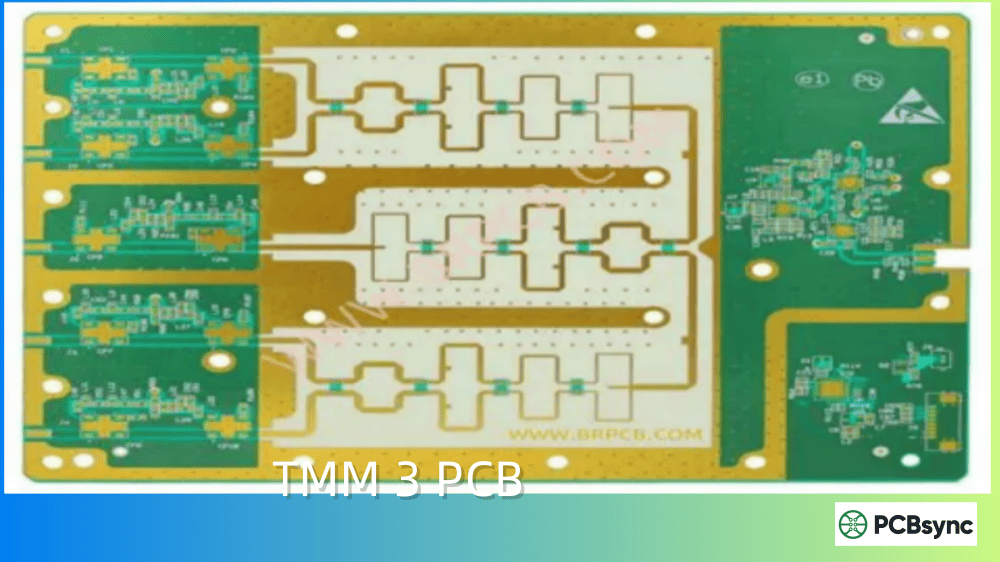
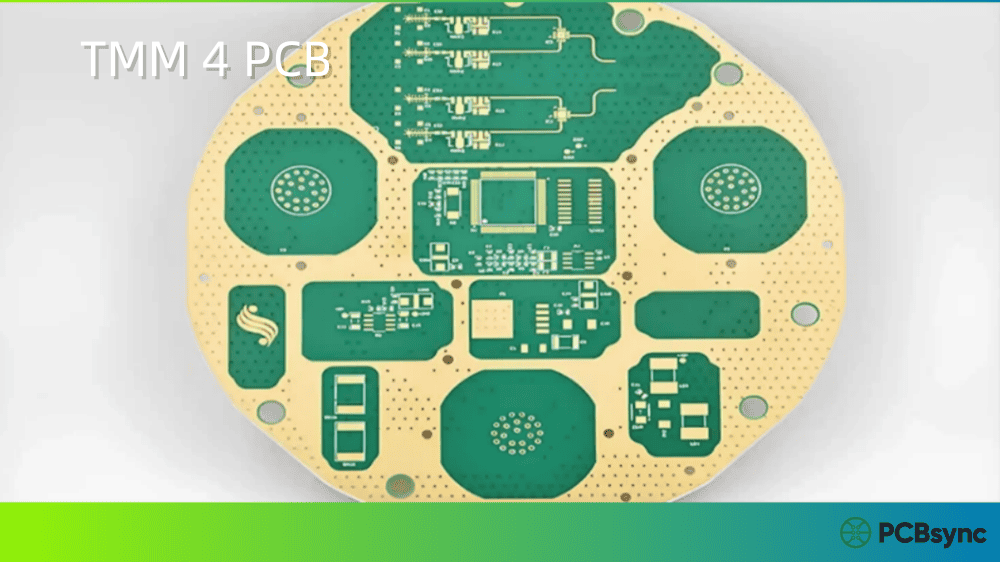
TMM 13i is an isotropic thermoset microwave laminate manufactured by Rogers Corporation. It belongs to the TMM (Thermoset Microwave Material) family, which includes variants ranging from TMM 3 to TMM 13i, each offering different dielectric constants to suit various application requirements.
What makes TMM 13i PCB material particularly interesting is its ceramic-filled thermosetting polymer composition. Unlike PTFE-based materials that can soften during reflow soldering, TMM 13i maintains dimensional stability throughout the assembly process. This thermoset nature means you can perform wire bonding operations without worrying about pad lifting or substrate deformation—a common problem I’ve seen with other high-frequency materials.
The “i” in TMM 13i stands for “isotropic,” indicating that the dielectric constant remains consistent across all three axes (X, Y, and Z). This isotropic behavior is crucial for circuits where electromagnetic fields propagate in multiple directions, such as patch antennas and dielectric resonators.
TMM 13i Key Specifications and Datasheet
Understanding the electrical and mechanical properties of TMM 13i PCB is essential before incorporating it into your design. Here’s a detailed breakdown based on the official Rogers datasheet:
Electrical Properties of TMM 13i
Property
Value
Test Conditions
Test Method
Dielectric Constant (Dk) Process
12.85 ± 0.35
Z-axis, 10 GHz
IPC-TM-650 2.5.5.5
Dielectric Constant (Dk) Design
12.2
8 GHz – 40 GHz
Differential Phase Length
Dissipation Factor (Df)
0.0019
Z-axis, 10 GHz
IPC-TM-650 2.5.5.5
Thermal Coefficient of Dk
-70 ppm/°K
-55°C to +125°C
IPC-TM-650 2.5.5.5
Insulation Resistance
>2000 GΩ
C/96/60/95
ASTM D257
Electrical Strength
213 V/mil
Z-axis
IPC-TM-650 2.5.6.2
The high dielectric constant of 12.85 is what sets TMM 13i apart from lower-Dk options in the series. This high Dk value allows for significant circuit miniaturization—you can achieve the same electrical length with physically smaller traces and patches compared to lower-Dk materials.
Thermal Properties of TMM 13i PCB
Property
Value
Direction
Test Conditions
Decomposition Temperature (Td)
425°C
–
ASTM D3850
CTE (X-axis)
19 ppm/°K
X
0 to 140°C
CTE (Y-axis)
19 ppm/°K
Y
0 to 140°C
CTE (Z-axis)
20 ppm/°K
Z
0 to 140°C
Thermal Conductivity
~0.76 W/m/K
Z
80°C
One aspect I particularly appreciate about TMM 13i is the coefficient of thermal expansion (CTE) matching with copper (approximately 17 ppm/°C). This close match dramatically improves plated through-hole reliability during thermal cycling—something critical for aerospace and defense applications where thermal shock testing is mandatory.
Mechanical Properties
Property
Value
Test Method
Copper Peel Strength (after thermal stress)
4.0 lb/inch (0.7 N/mm)
IPC-TM-650 2.4.8
Specific Gravity
3.0
ASTM D792
Moisture Absorption (0.050″ thickness)
0.16%
ASTM D570
Standard Available Configurations
Parameter
Options
Thicknesses
0.015″ to 0.500″ (±0.0015″)
Panel Sizes
18″ × 12″, 18″ × 24″
Copper Cladding
½ oz (18µm), 1 oz (35µm), 2 oz ED copper
Metal Backing
Brass or aluminum plates available
Why Choose TMM 13i for Your RF PCB Design?
After fabricating hundreds of high-frequency boards using various materials, I’ve found that TMM 13i PCB offers several compelling advantages that make it worth the premium price:
Circuit Miniaturization with High Dk
The dielectric constant of 12.85 enables significant size reduction in patch antennas and resonant structures. For GPS applications operating at 1.575 GHz, a TMM 13i patch antenna can be roughly 50% smaller than an equivalent design on FR-4. This miniaturization is invaluable when designing compact handheld devices or space-constrained aerospace systems.
Exceptional PTH Reliability
The CTE match with copper (19 ppm/°K vs. copper’s ~17 ppm/°K) results in minimal stress on plated through-holes during thermal excursions. In my experience, this translates to significantly better barrel crack resistance during thermal cycling tests from -55°C to +125°C.
I’ve personally seen TMM 13i boards survive 1000+ thermal cycles from -40°C to +125°C without via failures—performance that’s difficult to achieve with many alternative high-Dk materials. This reliability is particularly important for automotive and aerospace applications where thermal cycling is a fact of life.
The Z-axis CTE of 20 ppm/°K is also well-controlled, which prevents the “z-axis pumping” effect that can crack vias in materials with high z-axis expansion coefficients.
Isotropic Dielectric Behavior
Unlike many high-Dk materials that exhibit different Dk values in different axes, TMM 13i maintains consistent dielectric properties in all directions. This isotropic behavior simplifies design calculations for three-dimensional structures like dielectric resonators and lens antennas.
Standard PCB Processing Compatibility
TMM 13i doesn’t require sodium naphthanate treatment before electroless plating—a significant advantage over some PTFE-based materials. You can use standard PWB fabrication processes, which reduces manufacturing costs and lead times. Any reputable Rogers PCB manufacturer should be familiar with processing TMM series materials.
Thermoset Stability for Wire Bonding
Because TMM 13i is based on thermoset resins rather than thermoplastic materials, it won’t soften during soldering or wire bonding operations. This allows direct wire bonding of component leads to circuit traces without pad lifting concerns.
TMM 13i Applications in RF and Microwave Systems
Based on Rogers’ documentation and my own project experience, TMM 13i PCB excels in the following applications:
GPS Patch Antennas
The high Dk value makes TMM 13i ideal for compact GPS antennas. A typical GPS patch designed on TMM 13i achieves approximately 20mm × 20mm dimensions while maintaining proper circular polarization characteristics at 1.575 GHz. The material’s temperature stability ensures consistent antenna performance across automotive and outdoor operating temperature ranges.
When designing GPS antennas on TMM 13i, the patch dimension can be estimated using the formula: L ≈ c / (2f × √εr), where c is the speed of light, f is the operating frequency, and εr is the dielectric constant. With TMM 13i’s high Dk of 12.85, this results in substantially smaller antenna footprints compared to FR-4 (Dk ≈ 4.4) or even standard microwave materials like RO4003C (Dk ≈ 3.55).
The isotropic nature of TMM 13i also benefits circular polarization performance, as the consistent Dk across all axes ensures predictable axial ratio characteristics—a critical parameter for satellite navigation receivers.
Power Amplifiers and Combiners
High-power RF applications benefit from TMM 13i’s thermal conductivity (approximately twice that of traditional PTFE/ceramic laminates) and its ability to handle the thermal stresses associated with high-power operation without substrate deformation.
Microstrip and Stripline Filters
The tight Dk tolerance (±0.35 at 12.85) enables predictable filter performance. For bandpass and lowpass filters operating in the L-band through X-band frequencies, TMM 13i provides the stability needed for repeatable manufacturing yields.
Satellite Communication Systems
Space-qualified applications demand materials that can withstand extreme temperature variations (-55°C to +150°C in some orbits) while maintaining electrical performance. TMM 13i’s low thermal coefficient of Dk (-70 ppm/°K) ensures stable operation across these temperature extremes.
Dielectric Resonator Oscillators (DROs)
The isotropic dielectric properties make TMM 13i suitable for dielectric resonator applications where the electromagnetic field interacts with the material in multiple axes.
Chip Testing Fixtures
High-frequency chip testing requires fixtures with controlled impedance and stable dielectric properties. TMM 13i’s consistency across production lots makes it a reliable choice for test fixture substrates.
Selecting between different Rogers materials requires understanding their relative strengths. Here’s how TMM 13i compares to common alternatives:
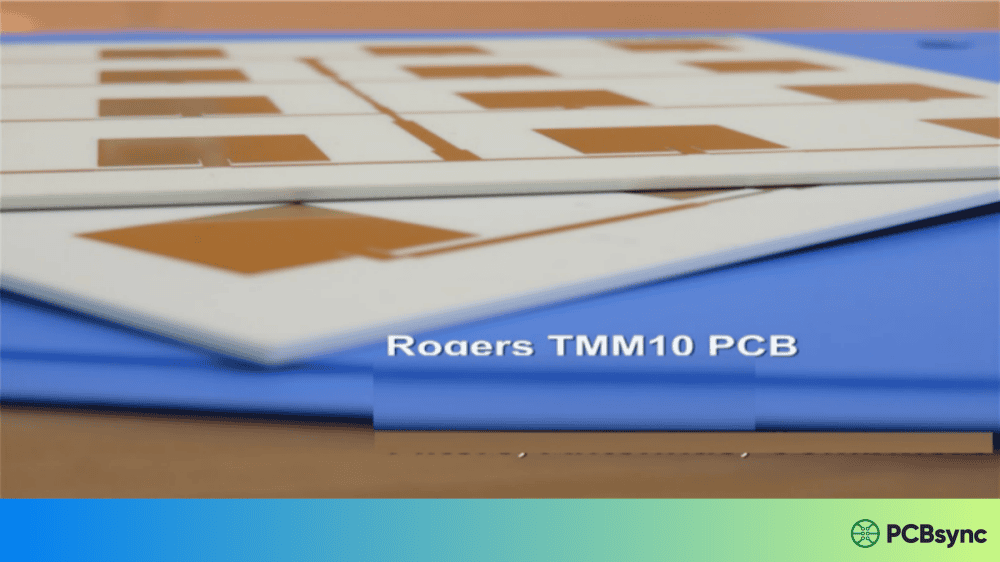
TMM 13i vs TMM 10i Comparison
Property
TMM 13i
TMM 10i
Dielectric Constant
12.85
9.80
Dissipation Factor
0.0019
0.0020
Thermal Coefficient of Dk
-70 ppm/°K
-43 ppm/°K
CTE (X/Y)
19/19 ppm/°K
19/19 ppm/°K
Isotropic
Yes
Yes
Both materials are isotropic, but TMM 13i offers higher Dk for greater miniaturization. TMM 10i has better Dk temperature stability, making it preferable for applications with extreme temperature requirements but less stringent size constraints.
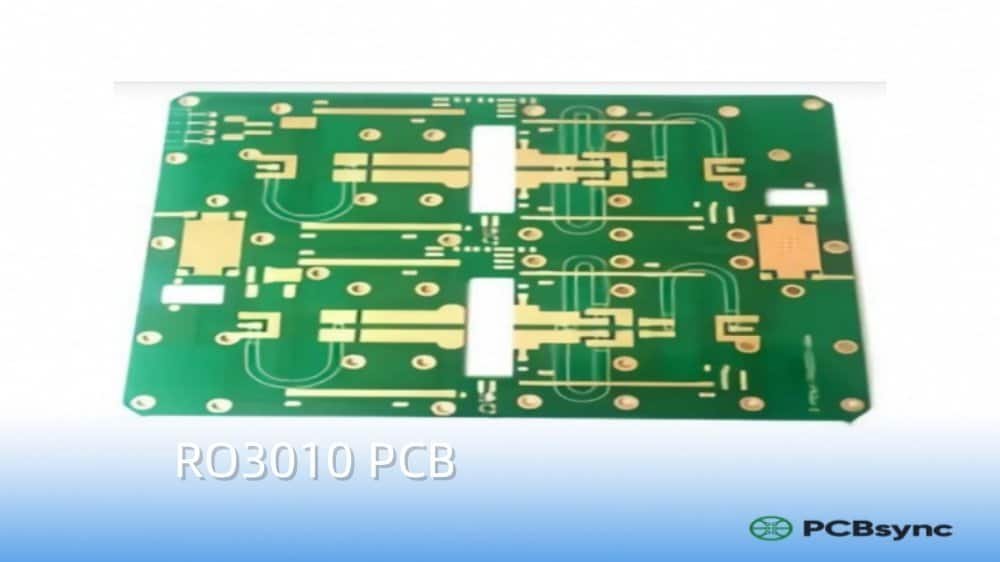
TMM 13i vs RO3010 Comparison
Property
TMM 13i
RO3010
Dielectric Constant
12.85
10.2
Dissipation Factor
0.0019
0.0022
Material Type
Thermoset
PTFE/Ceramic
Processing
Standard PWB
Requires special handling
RO3010 is a PTFE-based laminate that requires more careful handling during fabrication. TMM 13i’s thermoset nature makes it more forgiving in manufacturing environments while offering higher Dk.
TMM 13i vs RT/duroid 6010 Comparison
Property
TMM 13i
RT/duroid 6010
Dielectric Constant
12.85
10.2
Dissipation Factor
0.0019
0.0023
CTE Match to Copper
Excellent
Good
Wire Bonding
Excellent
Requires care
RT/duroid 6010 is another high-Dk option, but its PTFE-based composition means it can soften during thermal processing. TMM 13i’s thermoset base provides superior stability for wire bonding and high-temperature assembly processes.
TMM 13i PCB Design Guidelines
Designing with TMM 13i requires attention to several factors that differ from standard FR-4 design practices. Here are the key considerations I’ve learned through multiple production runs:
Understanding Process Dk vs Design Dk
One of the most common mistakes I see engineers make when first working with TMM 13i is using the wrong dielectric constant value in their calculations. Rogers provides two Dk values:
Process Dk (12.85): Measured at 10 GHz using the clamped stripline resonator method per IPC-TM-650 2.5.5.5. This value represents the material property but doesn’t account for real circuit behavior.
Design Dk (12.2): Measured using the differential phase length method across 8-40 GHz. This value better predicts actual circuit performance and should be used for transmission line calculations.
Using the process Dk for your calculations will result in traces that are too narrow and impedances that are higher than intended. Always verify which Dk value your simulation tool expects and adjust accordingly.
Impedance Control for Microstrip Lines
For 50Ω microstrip on TMM 13i, trace widths will be significantly narrower than on lower-Dk materials. On 0.025″ (0.635mm) thick TMM 13i with 1 oz copper:
Impedance Target
Approximate Trace Width
50Ω
~0.010″ (0.254mm)
75Ω
~0.005″ (0.127mm)
Always verify impedance calculations with your fabricator’s specific stack-up parameters, as the design Dk (12.2) differs from the process Dk (12.85) at different frequencies.
Transmission Line Loss Considerations
While TMM 13i has a low dissipation factor (0.0019 at 10 GHz), the higher Dk value means that for a given impedance, traces will be narrower than on lower-Dk materials. Narrower traces increase conductor loss due to skin effect. This trade-off between size reduction and loss should be evaluated for your specific frequency and loss budget.
For applications above 10 GHz, I recommend performing a full loss budget analysis including both dielectric loss (proportional to frequency and Df) and conductor loss (proportional to √frequency and inversely related to trace width).
Via Design Considerations
Despite TMM 13i’s excellent CTE match to copper, proper via design remains important:
Use via aspect ratios of 8:1 or less for optimal plating reliability
Consider via-in-pad designs for RF transitions where appropriate
Thermal relief patterns help prevent barrel cracking in high-thermal-mass ground planes
Stackup Recommendations for Multilayer TMM 13i PCB
For multilayer constructions, Rogers recommends using compatible bonding materials. PTFE-based bond plies work well, though you should verify compatibility with your fabricator. Mixed-material stackups combining TMM 13i with lower-cost materials for non-critical layers can reduce overall cost while maintaining RF performance where needed.
Thermal Management
While TMM 13i’s thermal conductivity (~0.76 W/m/K) is roughly twice that of traditional PTFE laminates, high-power designs may still require additional thermal management:
Consider copper coin inserts under high-power devices
Use thermal vias beneath power transistors
Metal backing (brass or aluminum) options are available for enhanced heat spreading
Edge Plating and Grounding
For microwave circuits requiring edge-launched connectors or ground plane connections:
TMM 13i machines well using standard carbide tooling
Edge plating can be applied using standard processes
Castellation (half-via edges) works reliably due to the material’s mechanical stability
TMM 13i PCB Manufacturing Process
Understanding the manufacturing considerations helps set realistic expectations for cost and lead time:
Processing Advantages
TMM 13i offers several manufacturing benefits over alternative high-frequency materials:
No sodium naphthanate treatment required before electroless plating
Standard drilling parameters work well with carbide bits
Compatible with all common surface finishes (ENIG, immersion tin, OSP, etc.)
Lead-free process compatible
Surface Finish Options for TMM 13i PCB
Surface Finish
Suitability
Notes
ENIG (Immersion Gold)
Excellent
Preferred for wire bonding applications
Immersion Tin
Good
Cost-effective option
Immersion Silver
Good
Low insertion loss
OSP
Limited
Short shelf life, not recommended for RF
Cost Considerations
TMM 13i commands a premium price compared to FR-4 or even some lower-Dk Rogers materials. Budget accordingly:
Raw material cost: 5-10× FR-4 pricing
Minimum order quantities may apply
Non-standard thicknesses increase lead time
Mixed-material stackups can optimize cost for multilayer designs
Lead Time Expectations
Standard TMM 13i configurations (0.025″, 0.050″ thicknesses with 1 oz copper) typically ship within 2-4 weeks. Custom configurations may require 6-8 weeks or longer.
Useful Resources for TMM 13i PCB Designers
Here are essential resources I recommend bookmarking:
IPC-4103: Specification for High Frequency Material
MIL-PRF-55110: Military specification for printed wiring boards
Frequently Asked Questions About TMM 13i PCB
What is the dielectric constant (Dk) of TMM 13i?
TMM 13i has a process dielectric constant of 12.85 ± 0.35 when measured at 10 GHz using the IPC-TM-650 method 2.5.5.5. For design purposes across 8-40 GHz, Rogers recommends using a design Dk of 12.2. This distinction matters because the differential phase length method used for design Dk better represents actual circuit behavior.
Is TMM 13i PCB material isotropic?
Yes, TMM 13i is specifically formulated to be isotropic, meaning its dielectric constant is consistent across all three axes (X, Y, and Z). This isotropic behavior distinguishes it from standard TMM 10 and TMM 13, which are anisotropic. The isotropic properties make TMM 13i ideal for applications where electromagnetic fields propagate in multiple directions, such as patch antennas and dielectric resonators.
Can TMM 13i be used for multilayer PCB construction?
Yes, TMM 13i can be incorporated into multilayer PCB constructions. Rogers recommends using compatible bonding materials, typically PTFE-based bond plies, for laminating multiple layers. Many designers use hybrid stackups with TMM 13i for RF-critical layers and lower-cost materials for DC and low-frequency layers to optimize cost without sacrificing RF performance.
What surface finishes are compatible with TMM 13i?
TMM 13i is compatible with all common surface finishes including ENIG (Electroless Nickel Immersion Gold), immersion tin, immersion silver, and OSP. For wire bonding applications, ENIG is the preferred choice. For lowest insertion loss, immersion silver performs well. The thermoset nature of TMM 13i means it can withstand the thermal processing required for any standard surface finish.
How does TMM 13i compare to alumina ceramic substrates?
TMM 13i offers several advantages over traditional alumina ceramics: it’s available in larger panel sizes, uses standard PCB processing (no need for thick-film metallization), costs less for equivalent electrical performance, and provides better PTH reliability. While alumina offers higher thermal conductivity, TMM 13i’s thermal performance (approximately 2× that of PTFE laminates) is sufficient for most applications. Rogers specifically notes that TMM 10i and TMM 13i laminates can replace alumina substrates in many applications.
Common Mistakes to Avoid with TMM 13i PCB
Having worked with TMM 13i across numerous projects, here are the pitfalls I see most frequently:
Using Wrong Dk Value in Calculations
As mentioned earlier, using the process Dk (12.85) instead of the design Dk (12.2) in your impedance calculations will result in circuits that don’t meet specification. Always confirm which Dk your design tool expects.
Underestimating Trace Width Tolerances
With narrower traces required for controlled impedance on high-Dk materials, manufacturing tolerances become more critical. A ±0.5 mil tolerance that’s acceptable on FR-4 may represent a significant percentage variation on a 10 mil trace. Work with your fabricator to understand achievable tolerances.
Ignoring Frequency-Dependent Dk Changes
The dielectric constant of TMM 13i varies slightly with frequency. If your design spans a wide frequency range, account for this variation in your simulation models.
Insufficient Ground Via Density
High-Dk substrates support lower-order modes at lower frequencies than low-Dk materials. Ensure adequate ground via fencing to prevent parallel plate mode propagation and unwanted coupling.
Conclusion
TMM 13i PCB material represents an excellent choice for RF and microwave applications requiring high dielectric constant with exceptional reliability. Its thermoset composition, isotropic dielectric behavior, and CTE match to copper address many of the challenges associated with traditional high-frequency substrates.
Whether you’re designing compact GPS antennas, satellite communication systems, or high-reliability aerospace electronics, understanding TMM 13i’s properties and design considerations will help you make informed material selections and avoid common pitfalls during development.
The material truly shines in applications where circuit miniaturization is paramount and where thermal reliability cannot be compromised. For GPS antenna designers, the combination of high Dk for size reduction and isotropic properties for predictable polarization performance makes TMM 13i a natural choice.
For your next high-frequency project requiring Dk values above 10, TMM 13i deserves serious consideration alongside other premium microwave materials. Just remember to factor in the material cost early in your project planning and work closely with a fabricator experienced in processing Rogers high-frequency laminates. The investment in proper design and manufacturing practices pays dividends in first-pass success and production yield.
Inquire: Call 0086-755-23203480, or reach out via the form below/your sales contact to discuss our design, manufacturing, and assembly capabilities.
Quote: Email your PCB files to Sales@pcbsync.com (Preferred for large files) or submit online. We will contact you promptly. Please ensure your email is correct.
Notes: For PCB fabrication, we require PCB design file in Gerber RS-274X format (most preferred), *.PCB/DDB (Protel, inform your program version) format or *.BRD (Eagle) format. For PCB assembly, we require PCB design file in above mentioned format, drilling file and BOM. Click to download BOM template To avoid file missing, please include all files into one folder and compress it into .zip or .rar format.