Inquire: Call 0086-755-23203480, or reach out via the form below/your sales contact to discuss our design, manufacturing, and assembly capabilities.
Quote: Email your PCB files to Sales@pcbsync.com (Preferred for large files) or submit online. We will contact you promptly. Please ensure your email is correct.
Notes: For PCB fabrication, we require PCB design file in Gerber RS-274X format (most preferred), *.PCB/DDB (Protel, inform your program version) format or *.BRD (Eagle) format. For PCB assembly, we require PCB design file in above mentioned format, drilling file and BOM. Click to download BOM template To avoid file missing, please include all files into one folder and compress it into .zip or .rar format.
If you’ve been searching for a high-frequency laminate that delivers consistent performance across demanding RF and microwave applications, the TMM 10i PCB material deserves your attention. I’ve worked with various Rogers laminates over the years, and TMM 10i stands out for its unique isotropic properties and excellent plated through-hole reliability.
In this guide, I’ll break down everything you need to know about TMM 10i—from its electrical specifications to real-world design considerations that can save you headaches during fabrication.
TMM 10i is an isotropic thermoset microwave material manufactured by Rogers Corporation. It belongs to the TMM (Thermoset Microwave Material) family, which includes TMM 3, TMM 4, TMM 6, TMM 10, TMM 10i, and TMM 13i variants.
What makes TMM 10i PCB material special is its ceramic-filled thermoset polymer composite structure. Unlike pure PTFE materials, this composition gives engineers the benefits of both worlds: the electrical performance of ceramic substrates combined with the easier processing characteristics of soft substrates.
The “i” in TMM 10i stands for “isotropic,” meaning the dielectric constant remains consistent across all three axes (X, Y, and Z). This is a critical distinction from the standard TMM 10, which exhibits anisotropic behavior where the Dk value differs depending on measurement direction.
Material Composition and Structure
The TMM 10i laminate consists of a hydrocarbon ceramic thermoset polymer matrix reinforced with ceramic fillers. This hybrid formulation provides several distinct advantages:
Thermoset resin base: Unlike thermoplastic materials, thermoset resins do not soften when heated. This characteristic is essential for reliable wire bonding operations and prevents substrate deformation during high-temperature processes.
Ceramic filler content: The ceramic particles contribute to the high dielectric constant and improved thermal conductivity. However, they also make the material more abrasive during drilling operations.
Hydrocarbon matrix: The organic polymer component provides chemical resistance and mechanical toughness while maintaining excellent electrical properties.
The result is a material that can be processed using standard PCB fabrication techniques while delivering performance characteristics typically associated with more exotic ceramic substrates.
TMM 10i Key Properties and Electrical Specifications
Understanding the datasheet specifications is essential before committing to any laminate for your design. Here’s what the TMM 10i PCB brings to the table:
Electrical Properties of TMM 10i
Property
Value
Test Method
Dielectric Constant (Dk)
9.80 ± 0.245
IPC-TM-650 2.5.5.5 @ 10GHz
Dissipation Factor (Df)
0.0020
IPC-TM-650 2.5.5.5 @ 10GHz
Thermal Coefficient of Dk
-43 ppm/°K
IPC-TM-650 2.5.5.5
Volume Resistivity
2 × 10⁸ MΩ·cm
ASTM D257
Surface Resistivity
4 × 10⁷ MΩ
ASTM D257
Dielectric Strength
267 V/mil
IPC-TM-650 2.5.6.2
Insulation Resistance
>2000 GΩ
ASTM D257
Thermal and Mechanical Properties
Property
Value
Test Method
Coefficient of Thermal Expansion (X/Y)
19 ppm/K
ASTM E831 (0-140°C)
Coefficient of Thermal Expansion (Z)
20 ppm/K
ASTM E831 (0-140°C)
Decomposition Temperature (Td)
425°C
TGA ASTM D3850
Thermal Conductivity
0.76 W/m/K
ASTM C518
Copper Peel Strength
5.0 lb/inch (0.9 N/mm)
IPC-TM-650 2.4.8
Flexural Modulus
1.8 Mpsi
ASTM D790
Specific Gravity
2.77
ASTM D792
Moisture Absorption
0.16% (1.27mm)
ASTM D570
Available Thickness Options
TMM 10i laminates come in various thicknesses to accommodate different design requirements:
Thickness (inches)
Thickness (mm)
0.015
0.38
0.020
0.51
0.025
0.64
0.030
0.76
0.050
1.27
0.060
1.52
0.125
3.18
0.250
6.35
0.500
12.70
Thickness tolerance is maintained at ±0.0015 inches across all options, which is tight enough for most precision RF applications.
TMM 10i vs TMM 10: Understanding the Isotropic Difference
One question I get asked frequently is whether to choose TMM 10 or TMM 10i for a particular application. The answer depends on your circuit topology.
Key Differences Between TMM 10 and TMM 10i
Parameter
TMM 10
TMM 10i
Dielectric Constant
9.20 ± 0.230
9.80 ± 0.245
Dk Behavior
Anisotropic
Isotropic
Thermal Coefficient of Dk
-38 ppm/K
-43 ppm/K
Best For
Standard microstrip/stripline
3D EM field applications
When to choose TMM 10i:
For most microstrip and stripline circuits, the electromagnetic fields propagate primarily through the Z-axis (thickness direction), so the standard TMM 10 works perfectly fine. However, when your design involves electromagnetic fields in the X-Y plane—such as certain antenna configurations, edge-coupled structures, or complex 3D geometries—the isotropic properties of TMM 10i ensure predictable performance regardless of field orientation.
The slight increase in Dk (9.80 vs 9.20) with TMM 10i is the trade-off for achieving isotropic behavior. This higher Dk also enables slightly smaller circuit dimensions for the same characteristic impedance.
TMM 10i vs FR-4: Why Standard Materials Fall Short
Engineers often ask whether they can save cost by using FR-4 instead of specialty high-frequency materials like TMM 10i. While FR-4 remains the workhorse of the PCB industry, it simply cannot match TMM 10i PCB performance above a few hundred megahertz.
Comparison: TMM 10i vs FR-4
Parameter
TMM 10i
FR-4
Dielectric Constant
9.80 (stable)
~4.5 (varies with frequency)
Dissipation Factor
0.002
0.020-0.025
Dk Stability with Temperature
Excellent (-43 ppm/K)
Poor (varies significantly)
Thermal Conductivity
0.76 W/m/K
~0.3 W/m/K
CTE Match to Copper
Yes
Poor
Cost
Higher
Low
The primary issues with FR-4 at high frequencies include:
Signal Loss: FR-4’s dissipation factor is roughly 10 times higher than TMM 10i. At microwave frequencies, this translates to significant insertion loss that can degrade system performance.
Dk Variation: FR-4’s dielectric constant shifts with both frequency and temperature, making impedance control unpredictable in demanding applications.
Thermal Limitations: The glass transition temperature and thermal properties of FR-4 cannot handle the thermal cycling requirements of satellite, aerospace, and high-power RF applications.
When FR-4 Might Still Work
To be fair, FR-4 can work acceptably for certain lower-frequency RF applications:
Consumer WiFi products operating at 2.4 GHz with modest performance requirements
Short transmission line lengths where loss accumulation is minimal
Cost-sensitive products where performance trade-offs are acceptable
Mixed-signal boards where only a small portion operates at RF frequencies (consider hybrid stackups)
However, for professional RF/microwave applications requiring predictable performance, TMM 10i PCB or similar high-frequency laminates remain the appropriate choice.
Beyond FR-4, engineers often compare TMM 10i against other Rogers materials and competitive products:
Material
Dk
Df
Best Application
TMM 10i
9.80
0.0020
High-Dk isotropic applications
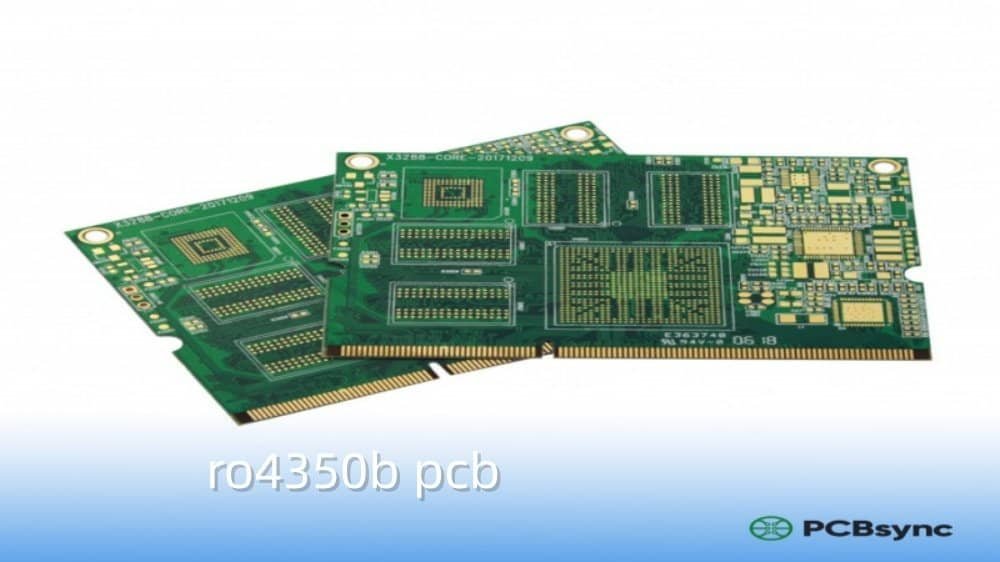
RO4350B
3.48
0.0037
General RF, cost-sensitive
RO3010
10.2
0.0022
Antenna miniaturization
RT/duroid 6010
10.2
0.0023
Aerospace, space applications
TMM 13i
12.85
0.0019
Maximum miniaturization
The choice depends on your specific requirements for Dk value, loss performance, and processing considerations.
TMM 10i PCB Applications in RF and Microwave Design
The unique properties of TMM 10i make it suitable for a range of demanding applications. Based on my experience and industry usage patterns, here are the primary application areas:
Antenna Systems
TMM 10i excels in antenna applications due to its high Dk value and isotropic properties:
Patch Antennas: The high dielectric constant enables compact antenna designs while maintaining efficiency. A patch antenna on TMM 10i can be significantly smaller than the same design on lower-Dk materials, which is crucial for size-constrained applications.
Phased Array Antennas: Consistent Dk across all axes ensures predictable beam steering performance. Military radar systems and 5G base stations increasingly rely on phased arrays where element-to-element consistency is critical.
Conformal Antennas: Isotropic properties are essential when antenna elements wrap around curved surfaces. Aircraft and vehicle-mounted antennas benefit from TMM 10i’s uniform performance regardless of orientation.
Active Electronically Scanned Arrays (AESA): Military and aerospace radar systems benefit from TMM 10i’s temperature stability. These systems must maintain calibration across wide temperature ranges and mechanical stress conditions.
Satellite and Space Communication Systems
The aerospace industry places extraordinary demands on PCB materials. TMM 10i addresses several critical requirements for space applications:
Temperature Cycling: Satellites experience extreme temperature swings between sun exposure and shadow. TMM 10i’s low TCDk (-43 ppm/K) maintains circuit performance across the full temperature range.
Low Outgassing: In the vacuum of space, materials that release trapped gases can contaminate sensitive optical systems and solar panels. Rogers TMM materials exhibit low outgassing characteristics suitable for space qualification.
Radiation Tolerance: While not specifically radiation-hardened, TMM 10i’s thermoset matrix provides better stability than some alternative materials under ionizing radiation.
Long Mission Life: Satellite systems must operate reliably for 15+ years without maintenance. The mechanical stability and chemical resistance of TMM 10i support long-term reliability.
Communication Systems
Power Amplifiers: Low dissipation factor prevents heat buildup in high-power stages. The thermal conductivity of 0.76 W/m/K also helps conduct heat away from active devices.
Low Noise Amplifiers (LNA): Signal integrity preservation is critical in receiver front-ends. Even small amounts of loss at the LNA stage degrade system noise figure.
Filters and Couplers: Tight Dk tolerance enables precise filter tuning. Edge-coupled filters particularly benefit from TMM 10i’s isotropic properties.
Satellite Communication Systems: The material’s stability across extreme temperature ranges (-55°C to +125°C) makes it ideal for space applications
GPS and Navigation
Global Positioning System antennas require materials that maintain consistent performance across varying environmental conditions. TMM 10i PCB material delivers the stability needed for accurate positioning. The high Dk enables compact patch antennas that fit in portable devices while maintaining acceptable gain and bandwidth.
Chip Testing and Semiconductor Applications
The consistent electrical properties make TMM 10i valuable in semiconductor test fixtures where repeatable measurements are essential. Test socket interposers and probe card substrates benefit from the material’s dimensional stability and consistent Dk values.
Design Guidelines for TMM 10i PCB
When designing with TMM 10i, several considerations can make the difference between a successful project and costly respins.
Stackup Considerations
TMM 10i is typically used in 2-layer configurations for most RF applications. A common stackup looks like this:
Layer
Material
Thickness
Top Copper
ED Copper
1 oz (35 μm)
Core
TMM 10i
20 mil (0.508 mm)
Bottom Copper
ED Copper
1 oz (35 μm)
For multilayer designs, TMM 10i can be combined with Rogers bonding materials like CuClad 6700 or RO4450F prepreg. Keep in mind that these bonding materials have different Dk values, which will affect the overall stackup performance.
Copper Foil Options
TMM 10i laminates are available with:
1/2 oz/ft² to 2 oz/ft² electrodeposited copper foil
Direct bonding to brass or aluminum plates for heatsinking applications
Impedance Control Tips
With a Dk of 9.80, transmission line widths will be narrower compared to lower-Dk materials. For a 50Ω microstrip line on 20 mil TMM 10i:
Approximate trace width: 0.6-0.7 mm
Use Rogers’ MWI (Microwave Impedance Calculator) tool for precise values
Always account for process variations in your tolerance analysis
Thermal Management
One advantage of TMM 10i over PTFE materials is its thermal conductivity of 0.76 W/m/K—approximately twice that of traditional PTFE/ceramic laminates. This helps with heat dissipation in power amplifier applications.
The CTE match to copper (19 ppm/K vs copper’s 17 ppm/K) provides excellent plated through-hole reliability even under thermal cycling.
TMM 10i PCB Fabrication Considerations
Working with your Rogers PCB manufacturer on fabrication details upfront can prevent costly delays. Here’s what you need to know:
Drilling Guidelines
TMM 10i contains ceramic filler, which is abrasive to drill bits. Key considerations include:
Keep tool surface speeds under 500 SFM
Maintain chip loads above 0.002″ per revolution
Expect faster drill bit wear compared to FR-4
Adjust hit counts based on hole quality requirements
Electroless Plating
One significant advantage of TMM 10i: no sodium naphthanate treatment is required prior to electroless plating. This simplifies the fabrication process compared to pure PTFE materials.
Routing and Mechanical Processing
TMM 10i can be routed using conventional carbide tools. With proper parameters:
Tool life can exceed 250 linear inches
Routing is the preferred method for final circuitization
Avoid mechanical scrub/deburr if possible; chemical preparation is preferred
Surface Finish Options
TMM 10i is compatible with most common surface finishes:
ENIG (Electroless Nickel Immersion Gold)
Immersion Silver
Immersion Tin
OSP (Organic Solderability Preservatives)
HASL (though not recommended for fine-pitch RF circuits)
Wire Bonding Compatibility
Because TMM 10i is based on thermoset resin, it does not soften when heated. This allows reliable wire bonding of component leads without concerns about pad lifting or substrate deformation—a critical feature for hybrid microwave integrated circuits (MIC).
Cost Factors for TMM 10i PCB Projects
Let’s address the elephant in the room: TMM 10i is not a cheap material. Here are the factors that influence total project cost:
Layer Count: Moving from a 2-layer to 4-layer design roughly doubles the material cost. Going from 4 to 6 layers adds another 50%.
Panel Size: Rogers laminates come in standard panel sizes (typically 12″ × 18″ or 18″ × 24″). Efficient panelization can significantly reduce material waste.
Surface Finish: Premium finishes like ENIG add to the overall cost but may be necessary for wire bonding or long shelf life requirements.
Quantity: Like any specialty material, volume discounts apply. Prototype quantities will carry a significant premium over production volumes.
Manufacturer Experience: Not all PCB fabricators have equal experience with high-frequency materials. Choosing a manufacturer with Rogers material expertise can reduce scrap rates and improve yield.
Useful Resources for TMM 10i PCB Design
Here are the essential resources I recommend bookmarking:
Rogers MWI Calculator: Free online tool for microstrip/stripline impedance calculations
Laminate Properties Tool: Interactive comparison of Rogers materials
Bonding Material Selector: Helps match bonding materials to TMM substrates
Sample Requests
Rogers offers material samples for evaluation. Contact Rogers directly or work through their distribution partners to obtain samples for your qualification testing.
Frequently Asked Questions About TMM 10i PCB
What is the dielectric constant of TMM 10i?
TMM 10i has an isotropic dielectric constant (Dk) of 9.80 ± 0.245 measured at 10 GHz. The isotropic nature means this value remains consistent across all three axes (X, Y, and Z), unlike the anisotropic TMM 10 which has a Dk of 9.20 in the Z-axis but different values in other directions.
Can TMM 10i replace alumina substrates?
Yes, Rogers specifically designed TMM 10 and TMM 10i laminates as alternatives to alumina substrates. TMM 10i offers similar high-Dk performance with significant advantages: easier machining, larger available panel sizes, lower cost, and compatibility with standard PCB processing techniques. The thermoset resin base also enables reliable wire bonding without the brittleness issues of ceramic substrates.
Is TMM 10i RoHS compliant?
Yes, TMM 10i laminates are RoHS compliant and environmentally friendly. The material is also compatible with lead-free soldering processes, making it suitable for applications requiring environmental compliance.
What frequency range is TMM 10i suitable for?
TMM 10i is designed for microwave and RF applications, typically ranging from a few hundred megahertz up through millimeter-wave frequencies. The low dissipation factor of 0.002 maintains signal integrity even at 10 GHz and beyond. The material is commonly used in X-band, Ku-band, and K-band radar and communication systems.
How does TMM 10i handle extreme temperatures?
TMM 10i exhibits excellent temperature stability with a thermal coefficient of dielectric constant (TCDk) of -43 ppm/K across the temperature range of -55°C to +125°C. The decomposition temperature (Td) of 425°C provides ample margin for reflow soldering and other high-temperature processes. These properties make TMM 10i particularly suitable for aerospace, satellite, and outdoor applications where temperature extremes are expected.
Conclusion: Is TMM 10i Right for Your Project?
TMM 10i PCB material occupies a specific niche in the high-frequency laminate landscape. Its combination of high dielectric constant, isotropic properties, excellent temperature stability, and thermoset processing compatibility makes it an excellent choice for demanding RF and microwave applications.
Consider TMM 10i when your project requires:
High Dk for circuit miniaturization
Isotropic behavior for complex EM field patterns
Temperature stability for outdoor or aerospace environments
Wire bonding capability
Replacement for alumina substrates with easier processing
For simpler high-frequency applications where isotropic behavior isn’t critical, the standard TMM 10 or other Rogers materials like RO4350B might offer a more cost-effective solution.
Decision Framework for Material Selection
When evaluating whether TMM 10i is the right choice, consider these questions:
Do you need isotropic Dk? If your EM fields primarily travel through the Z-axis (standard microstrip/stripline), anisotropic TMM 10 works fine. For X-Y plane fields or 3D structures, choose TMM 10i.
What’s your frequency range? Below 1 GHz, lower-cost materials may suffice. Above 5 GHz, TMM 10i’s low loss becomes increasingly valuable.
What are your temperature requirements? For controlled environments, temperature stability matters less. For outdoor, aerospace, or industrial applications, TMM 10i’s low TCDk is essential.
Do you need wire bonding? TMM 10i’s thermoset base enables reliable wire bonding. PTFE-based materials require more care.
What’s your volume and budget? For prototypes and low volumes, material cost is a smaller factor. For high-volume production, every dollar matters.
The key is matching material properties to your specific design requirements. Take time to review your electrical specifications, environmental conditions, and fabrication constraints before committing to any laminate selection. When in doubt, request samples and run qualification tests—the upfront investment is minimal compared to the cost of a failed design.
Final Recommendations
For engineers new to TMM 10i:
Start with the official Rogers datasheet and fabrication guidelines
Use Rogers’ free online calculators for initial impedance estimates
Partner with a PCB fabricator experienced in high-frequency materials
Request samples for material characterization before committing to production
Consider hybrid stackups combining TMM 10i with lower-cost materials for digital sections
With proper design practices and manufacturing partnerships, TMM 10i PCB technology enables RF and microwave circuits that simply wouldn’t be possible with standard materials. The investment in premium materials pays dividends in system performance, reliability, and customer satisfaction.
Inquire: Call 0086-755-23203480, or reach out via the form below/your sales contact to discuss our design, manufacturing, and assembly capabilities.
Quote: Email your PCB files to Sales@pcbsync.com (Preferred for large files) or submit online. We will contact you promptly. Please ensure your email is correct.
Notes: For PCB fabrication, we require PCB design file in Gerber RS-274X format (most preferred), *.PCB/DDB (Protel, inform your program version) format or *.BRD (Eagle) format. For PCB assembly, we require PCB design file in above mentioned format, drilling file and BOM. Click to download BOM template To avoid file missing, please include all files into one folder and compress it into .zip or .rar format.