Inquire: Call 0086-755-23203480, or reach out via the form below/your sales contact to discuss our design, manufacturing, and assembly capabilities.
Quote: Email your PCB files to Sales@pcbsync.com (Preferred for large files) or submit online. We will contact you promptly. Please ensure your email is correct.
Notes: For PCB fabrication, we require PCB design file in Gerber RS-274X format (most preferred), *.PCB/DDB (Protel, inform your program version) format or *.BRD (Eagle) format. For PCB assembly, we require PCB design file in above mentioned format, drilling file and BOM. Click to download BOM template To avoid file missing, please include all files into one folder and compress it into .zip or .rar format.
If you’ve been hunting for a thermally conductive PCB substrate that won’t break the bank or your drill bits, TC350 Plus laminates deserve a spot on your shortlist. After working with dozens of high-frequency materials over the years, I can tell you that this Rogers Corporation product hits a sweet spot that few competitors match.
This guide breaks down everything you need to know about TC350 Plus laminates—from raw technical specifications to real-world fabrication tips that’ll save you headaches in production.
TC350 Plus laminates are ceramic-filled, PTFE-based composite materials reinforced with woven glass fabric. Rogers Corporation developed them specifically for high-power RF and microwave applications where thermal management is critical.
The “Plus” variant builds on the original TC350 formula with an upgraded filler system. This seemingly small change delivers two practical benefits that matter in production: better drilling performance and reduced tool wear. If you’ve ever watched your carbide bits chew through abrasive ceramic-filled substrates, you’ll appreciate this improvement.
Key Material Composition
Component
Function
PTFE (Polytetrafluoroethylene)
Base matrix providing low dielectric loss
Ceramic Fillers
Enhance thermal conductivity
Woven Glass Reinforcement
Improve dimensional stability and mechanical strength
Electrodeposited Copper Foil
Standard cladding with smooth surface (Rq = 1.0 µm)
The combination of PTFE and ceramic fillers creates a substrate with thermal conductivity roughly twice that of standard RT/duroid 6000 products. That’s a significant jump when you’re trying to pull heat away from power transistors.
TC350 Plus Laminates Technical Specifications
Numbers matter when you’re selecting materials. Here’s the complete specification table for TC350 Plus laminates based on Rogers Corporation datasheet values:
Electrical Properties
Property
Value
Test Method
Notes
Dielectric Constant (Dk)
3.5
IPC-TM-650 2.5.5.5 @ 10 GHz
Process direction
Dissipation Factor (Df)
0.0017
IPC-TM-650 2.5.5.5 @ 10 GHz
Low loss performance
Dielectric Strength
650 V/mil
ASTM D149
Z-axis insulation
Volume Resistivity
>10^7 MΩ·cm
IPC-TM-650 2.5.17.1
Condition A
Surface Resistivity
>10^7 MΩ
IPC-TM-650 2.5.17.1
Condition A
Thermal Properties
Property
Value
Test Method
Thermal Conductivity
1.24 W/(m·K)
ASTM E1952
CTE (X-axis)
10 ppm/°C
IPC-TM-650 2.4.41
CTE (Y-axis)
12 ppm/°C
IPC-TM-650 2.4.41
CTE (Z-axis)
38 ppm/°C
IPC-TM-650 2.4.41
Td (Decomposition Temperature)
>500°C
TGA
Mechanical Properties
Property
Value
Test Method
Peel Strength
>6 lb/in
IPC-TM-650 2.4.8
Flexural Strength
>8,000 psi
IPC-TM-650 2.4.4
Moisture Absorption
0.05%
IPC-TM-650 2.6.2.1
Flammability
UL 94 V-0
UL 94
Available Thicknesses
TC350 Plus laminates come in several standard thicknesses to accommodate different design requirements:
Thickness (inches)
Thickness (mm)
Tolerance
0.010″
0.254 mm
±0.0007″
0.020″
0.508 mm
±0.0015″
0.030″
0.762 mm
±0.0020″
0.060″
1.524 mm
±0.0030″
Custom thicknesses can be requested through Rogers Corporation for specialized applications.
Why TC350 Plus Laminates Stand Out
Understanding the technical advantages of TC350 Plus helps justify its use over lower-cost alternatives and positions it against higher-priced aerospace materials.
Superior Thermal Conductivity for High-Power Designs
At 1.24 W/(m·K), the thermal conductivity of TC350 Plus laminates significantly outperforms standard FR-4 (around 0.3 W/(m·K)) and even beats many competing PTFE-based materials. When you’re designing power amplifiers pushing 100W or more, this thermal performance translates directly into lower junction temperatures and longer device life.
I’ve seen too many designs fail thermal testing because engineers picked materials based on electrical specs alone. Heat kills power electronics. TC350 Plus gives you a fighting chance to manage thermal loads without exotic (and expensive) solutions like embedded heat coins.
Practical thermal benefits:
Junction temperature reduction of 20-40°C versus FR-4 at equivalent power levels
Improved thermal spreading reduces hot spots under active devices
The ceramic filler system dispersed throughout the PTFE matrix creates thermally conductive pathways that standard PTFE lacks. This isn’t just marketing—you’ll see measurable temperature differences on the bench.
Low Loss Tangent for Minimal Signal Degradation
The loss tangent of 0.0017 at 10 GHz keeps RF losses manageable across a wide frequency range. This matters for efficiency—every dB of loss in your transmission lines means more heat in your amplifier stages and less power at your output.
For designs operating below 10 GHz, TC350 Plus delivers electrical performance comparable to much more expensive aerospace-grade materials. You’re not leaving performance on the table by choosing a commercial-grade substrate.
Excellent Dimensional Stability
Woven glass reinforcement gives TC350 Plus laminates excellent dimensional stability during thermal cycling. The combination of controlled CTE values and glass fabric prevents the warping and registration issues that plague less stable materials.
This stability directly impacts your yield rates. Boards that stay flat through lamination and assembly solder properly. Boards that warp become scrap.
Improved Drilling Performance
The advanced filler system in TC350 Plus was specifically engineered to reduce abrasion on cutting tools. Compared to the standard TC350 and other ceramic-filled PTFE materials, you’ll see noticeably longer drill bit life.
Rogers suggests the “twelve-inch rule” may apply to TC350 Plus—meaning you can drill approximately 12 inches of substrate before changing tools, versus the “six-inch rule” typical for standard TC350. That’s potentially double the tool life, which adds up fast in volume production.
TC350 Plus Laminates vs. Competing Materials
Choosing the right high-frequency laminate means understanding trade-offs. Here’s how TC350 Plus stacks up against common alternatives used in similar applications.
Comprehensive Comparison Table
Material
Dk @ 10 GHz
Df @ 10 GHz
Thermal Conductivity (W/m·K)
Primary Application
Relative Cost
TC350 Plus
3.5
0.0017
1.24
High-power commercial RF
Medium
TC350 (Standard)
3.5
0.0020
1.15
Commercial high-power
Medium
RO4350B
3.48
0.0037
0.62
Wireless infrastructure
Medium
RO3003
3.00
0.0010
0.50
Commercial microwave
Medium-Low
RT/duroid 5880
2.20
0.0009
0.20
Aerospace/defense
High
RT/duroid 6035HTC
3.50
0.0013
1.44
Aerospace high-power
Very High
FR-4
4.5
0.020
0.30
General electronics
Low
Detailed Material Comparisons
TC350 Plus vs. TC350 (Standard): The Plus variant offers approximately 8% higher thermal conductivity and 15% lower loss tangent. More significantly, the improved filler system doubles potential drill bit life. For new designs, TC350 Plus is the logical choice unless you have existing tooling or qualification tied to standard TC350.
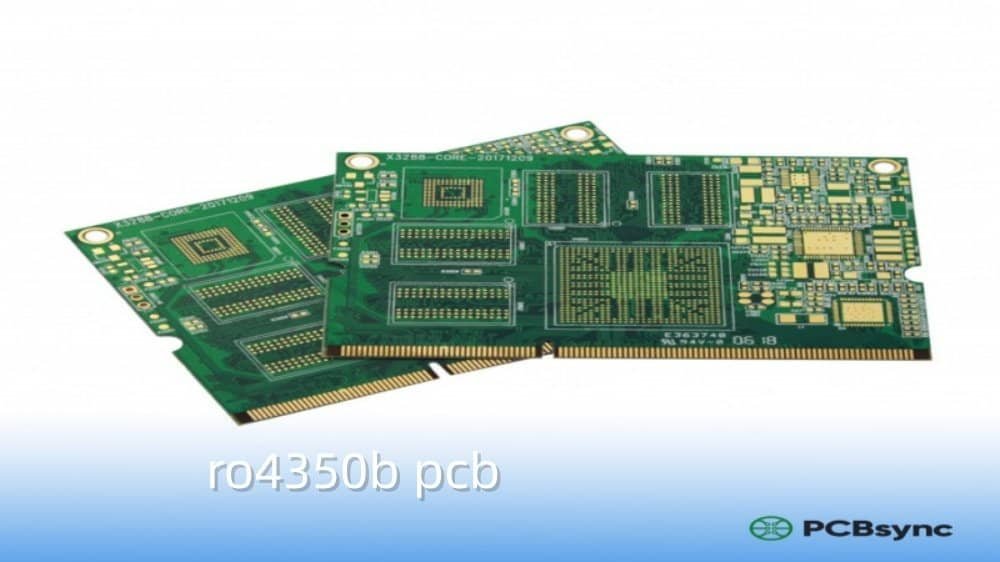
TC350 Plus vs. RO4350B: RO4350B processes more like FR-4, making it attractive for fabricators unfamiliar with PTFE. However, TC350 Plus offers twice the thermal conductivity—a decisive advantage for power amplifiers above 100W. Choose RO4350B for lower-power applications where ease of fabrication matters more than thermal performance.
TC350 Plus vs. RT/duroid 6035HTC: RT/duroid 6035HTC offers slightly better thermal conductivity (1.44 vs. 1.24 W/m·K) and lower loss tangent. It’s the premium choice for aerospace applications where cost is secondary to performance. TC350 Plus provides roughly 80% of the performance at a significantly lower price point—ideal for commercial applications.
Thermal management is critical but aerospace-grade materials exceed your budget
You need better drilling economics than standard ceramic-filled PTFE
Operating frequencies fall between 1 GHz and 10 GHz
UL 94 V-0 flammability rating is required
Lead-free assembly compatibility is necessary
Consider alternatives when:
Budget is extremely tight (FR-4 or RO3003 might suffice)
You need the absolute lowest loss tangent (RT/duroid 5880)
Maximum thermal conductivity is non-negotiable (RT/duroid 6035HTC)
Processing must exactly match FR-4 workflows (RO4350B)
Frequencies exceed 20 GHz (lower Dk materials may be preferable)
Applications for TC350 Plus Laminates
TC350 Plus laminates find their niche in applications where thermal management meets high-frequency performance requirements. Understanding where this material excels helps you make informed design decisions.
Power Amplifiers
Power amplifier design is the flagship application for TC350 Plus. The combination of low loss and high thermal conductivity allows designers to build higher-power stages without excessive thermal derating. Solid-state power amplifiers in wireless infrastructure, industrial heating, and radar systems all benefit from these properties.
Modern solid-state microwave ovens represent an emerging application area. Unlike traditional magnetron-based ovens, solid-state designs offer precise power control and frequency agility—but they generate significant heat that TC350 Plus helps manage effectively. These systems typically operate around 2.45 GHz and can deliver 250W or more per amplifier module.
Power amplifier design benefits:
Lower operating temperatures extend transistor life
Reduced thermal derating allows higher output power from smaller packages
Better thermal uniformity across the substrate improves consistency
Low dielectric loss maximizes amplifier efficiency
RF Passive Components
Several passive component types benefit from TC350 Plus laminates:
Directional Couplers: Thermal stability prevents impedance drift during operation
Power Dividers: Wilkinson dividers handle higher power with better thermal dissipation
Bandpass Filters: Low loss maintains filter selectivity and insertion loss specs
Combiners: High-power combining stages stay cooler and more reliable
Lange Couplers: Wideband performance benefits from consistent dielectric properties
5G and Wireless Infrastructure
Next-generation wireless systems operate at higher frequencies and power levels than their predecessors. TC350 Plus provides a cost-effective substrate for massive MIMO antenna arrays and high-power base station amplifiers where thermal constraints limit design options.
Specific 5G applications include:
Beamforming antenna feeds
High-power distributed antenna systems (DAS)
Small cell base station amplifiers
Millimeter-wave downconverters (with appropriate frequency derating)
Industrial and Scientific Equipment
Industrial heating applications, medical equipment, and scientific instrumentation often require high-power RF circuits operating continuously. TC350 Plus offers the reliability and thermal performance these demanding environments require.
Industrial applications include:
Plasma generators for semiconductor manufacturing
RF heating systems for material processing
Particle accelerator RF systems
Industrial microwave heating equipment
Defense and Aerospace
While aerospace programs often specify higher-cost materials like RT/duroid 6035HTC, TC350 Plus serves well in defense applications where commercial-grade materials are acceptable. Electronic warfare systems, radar components, and communications equipment all represent viable applications.
Defense-related uses include:
Ground-based radar modules
Communication system amplifiers
Electronic countermeasure equipment
Unmanned aerial vehicle (UAV) communications
PCB Fabrication Guidelines for TC350 Plus Laminates
Getting good results from TC350 Plus requires understanding its fabrication characteristics. Here are practical guidelines based on Rogers Corporation recommendations and real-world experience.
Storage and Handling
TC350 Plus is a soft substrate compared to FR-4 or thermoset materials. Handle panels with care to prevent surface damage.
Requirement
Specification
Storage Temperature
Below 35°C preferred
Humidity
Avoid high humidity storage
Panel Stacking
Use interleaving sheets between panels
Shelf Loading
Keep below 50 lbs/ft²
Orientation
Store panels on edge in slotted shelves (>20 mil thickness)
Some copper surface oxidation can occur during storage, particularly in elevated temperature and humidity conditions. This oxidation removes easily during standard microetch processing.
Drilling Parameters
Drilling PTFE composites requires adjusted parameters compared to FR-4. Here are recommended settings for common drill sizes:
Drill Diameter
Surface Speed
Chip Load
Retract Rate (MLB)
0.0135″
150-200 SFM
0.001-0.002″/rev
300-500 IPM
0.020″
175-250 SFM
0.001-0.002″/rev
300-500 IPM
0.030″
200-275 SFM
0.002-0.003″/rev
300-500 IPM
0.040″+
225-300 SFM
0.002-0.003″/rev
300-500 IPM
Key drilling tips:
Use new carbide drills—standard or undercut styles work well
Stack heights for double-sided boards can match flute length
Multilayer boards typically drill in stacks of one
The “twelve-inch rule” provides a starting point for tool life estimation with TC350 Plus. For a 0.060″ thick panel, that translates to roughly 200 holes before changing drills (12″ / 0.060″ = 200).
Surface Preparation
PTFE surfaces require activation before plating. Standard processing follows this sequence:
Chemical cleaning: Remove oxidation and contamination
Plasma treatment: CF4/O2 plasma activates PTFE surfaces for adhesion
Glass etch: Reduces risk of plated nodules (TC Series may require this step)
Electroless copper: Deposit seed layer for subsequent plating
Plating Considerations
Direct metallization processes like graphite or palladium-based systems work with TC350 Plus after proper surface activation. Electroless copper provides excellent adhesion when surfaces are properly prepared.
For multilayer constructions, the adhesive system (not the TC350 Plus itself) may require desmear using permanganate or plasma processes.
Solder Mask and Final Finishes
TC350 Plus is compatible with most LPI solder masks after proper surface preparation:
Rinse in warm or hot water (20-30 minutes)
Bake at 125°C (260°F) for 60 minutes
Vacuum bake preferred if available
Apply solder mask per manufacturer instructions
Standard final finishes including HASL, immersion tin, immersion silver, ENIG, and OSP have all been successfully applied to TC350 Plus laminates. A rinse/bake cycle should precede HASL or reflow operations.
Design Considerations for TC350 Plus PCBs
Impedance Control
With a nominal Dk of 3.5, TC350 Plus allows for reasonable trace widths in 50-ohm designs. For a 0.020″ substrate with 1 oz copper, expect microstrip line widths around 0.047″ (1.2 mm).
Rogers provides the MWI (Microwave Impedance) Calculator—a free online tool that handles impedance calculations for their materials. Use it. Don’t trust generic calculators that don’t account for material-specific characteristics.
Important impedance design notes:
Dk tolerance: ±0.05 typical—factor this into your impedance budget
Process direction matters—specify Dk measurement orientation
Temperature coefficient of Dk: The dielectric constant remains stable across operating temperatures
Surface roughness affects high-frequency loss—the standard smooth copper foil (Rq = 1.0 µm) minimizes this
Layer Stackup Recommendations
For multilayer designs using TC350 Plus, consider these stackup strategies:
Simple 2-Layer Design:
Top: Signal layer (copper)
Core: TC350 Plus laminate (0.020″ typical)
Bottom: Ground plane
4-Layer High-Power Design:
Layer 1: RF signal traces
Core 1: TC350 Plus (0.020″)
Layer 2: Ground plane
Prepreg: Bondply or compatible adhesive
Layer 3: Power distribution
Core 2: FR-4 (for non-critical layers)
Layer 4: Ground/shield
The key principle: place TC350 Plus where you need its thermal and electrical properties. Don’t waste expensive material on layers that could use FR-4.
Thermal Via Design
When heat dissipation from active devices is critical, thermal vias provide a direct path through the substrate. For TC350 Plus designs:
Via diameter: 0.010″-0.015″ typical
Via pitch: 0.030″-0.050″ center-to-center
Fill: Conductive epoxy or copper-plated solid vias for best thermal transfer
Placement: Directly under heat-generating components
Even with TC350 Plus’s excellent lateral thermal conductivity, thermal vias remain the most effective path for removing heat from the PCB.
Hybrid Stackups
Cost-conscious designs often mix Rogers PCB materials with FR-4. TC350 Plus can be incorporated into hybrid multilayer stackups where only critical RF layers use the high-performance material.
Typical hybrid approaches:
TC350 Plus for signal layers carrying high-power RF
FR-4 for power distribution and low-frequency control circuits
Proper bonding films between dissimilar materials
Work with your PCB fabricator to verify compatibility and lamination parameters for hybrid constructions.
Cost and Sourcing Considerations
TC350 Plus laminates occupy the middle ground in high-frequency material pricing—more expensive than FR-4 or basic Rogers materials, but considerably less than aerospace-grade alternatives.
Typical Price Ranges
Configuration
Approximate Price Range (USD)
Standard sheet (18″x24″)
$100 – $300
Thin material (0.010″)
Lower end of range
Thick material (0.060″)
Higher end of range
Custom specifications
Quoted per request
Prices vary significantly based on volume, thickness, copper weight, and market conditions. Request current quotes from authorized distributors for accurate pricing.
Cost Optimization Strategies
Panel optimization: Maximize circuit density per panel to reduce per-unit material cost
Hybrid stackups: Use TC350 Plus only where thermal/electrical requirements demand it
Standard thicknesses: Avoid custom thicknesses unless absolutely necessary
Volume commitments: Higher volumes typically command better pricing
Alternative sourcing: Work with your fabricator—they may have stock or alternative sources
Selecting a TC350 Plus PCB Manufacturer
Not every PCB shop handles high-frequency materials well. Look for these qualifications when selecting a manufacturer:
Essential Qualifications
Requirement
Why It Matters
Rogers authorized fabricator
Ensures proper training and material access
ISO 9001 certification
Quality management system in place
High-frequency material experience
Staff understands PTFE processing requirements
Appropriate drilling equipment
High-speed spindles and proper tooling
Plasma treatment capability
Required for proper surface activation
RF testing capability
Verifies electrical performance
Questions to Ask
How many TC350 Plus (or TC Series) boards have you produced?
What is your typical yield rate on PTFE-based materials?
Do you have plasma treatment capability in-house?
Can you provide RF test data for impedance-controlled designs?
Frequently Asked Questions About TC350 Plus Laminates
What is the difference between TC350 and TC350 Plus laminates?
TC350 Plus features an improved filler system compared to standard TC350. This delivers two main benefits: a slightly higher thermal conductivity (1.24 vs. 1.15 W/m·K) and significantly better drilling performance with reduced tool wear. The electrical specifications remain similar, with TC350 Plus achieving a slightly lower loss tangent (0.0017 vs. 0.0020 at 10 GHz). For most new designs requiring TC Series materials, TC350 Plus is the preferred choice unless specific legacy requirements dictate otherwise.
Can TC350 Plus laminates be processed using standard FR-4 fabrication methods?
TC350 Plus requires modified processing compared to FR-4. While basic operations like imaging and etching are similar, several steps differ significantly. Drilling requires adjusted speeds, feeds, and more frequent tool changes. PTFE surfaces need plasma activation before plating. Desmear processes typically used for FR-4 don’t affect PTFE and are unnecessary unless adhesive systems require them. Work with a fabricator experienced in PTFE-based materials for best results.
What frequency range is TC350 Plus suitable for?
TC350 Plus performs well from DC through approximately 10 GHz, with the loss tangent specification measured at 10 GHz. The material can be used at higher frequencies, though losses increase. For applications above 10 GHz where minimum loss is critical, consider materials like RT/duroid 5880. For most commercial and industrial applications in the 1-10 GHz range, TC350 Plus offers an excellent balance of performance and cost.
How does TC350 Plus compare to RO4350B for power amplifier designs?
Both materials work well for power amplifiers, but they optimize differently. TC350 Plus offers roughly twice the thermal conductivity of RO4350B (1.24 vs. 0.62 W/m·K), making it better suited for high-power applications where heat extraction is critical. RO4350B has lower loss tangent (0.0037 vs. 0.0017) but the thermal penalty becomes significant above 50-100W. For power amplifiers exceeding 100W continuous, TC350 Plus typically provides better overall performance.
Is TC350 Plus RoHS compliant?
Yes, TC350 Plus laminates are RoHS compliant and lead-free assembly compatible. The material meets UL 94 V-0 flammability requirements, making it suitable for commercial applications with regulatory compliance requirements. Verify current compliance status with Rogers Corporation for specific certification requirements.
Conclusion
TC350 Plus laminates represent a practical choice for engineers designing high-power RF circuits who need thermal performance beyond what standard materials offer. The combination of 1.24 W/(m·K) thermal conductivity, low 0.0017 loss tangent, and improved drilling economics makes TC350 Plus a compelling option for power amplifiers, combiners, and other high-power components.
The material isn’t perfect for every application—aerospace programs may require higher-performance alternatives, and cost-sensitive designs might manage with less expensive substrates. But for commercial and industrial high-power RF applications in the 1-10 GHz range, TC350 Plus hits a sweet spot that’s hard to match.
Work with an experienced high-frequency PCB fabricator, follow Rogers Corporation’s processing guidelines, and you’ll get reliable results from this capable material.
Inquire: Call 0086-755-23203480, or reach out via the form below/your sales contact to discuss our design, manufacturing, and assembly capabilities.
Quote: Email your PCB files to Sales@pcbsync.com (Preferred for large files) or submit online. We will contact you promptly. Please ensure your email is correct.
Notes: For PCB fabrication, we require PCB design file in Gerber RS-274X format (most preferred), *.PCB/DDB (Protel, inform your program version) format or *.BRD (Eagle) format. For PCB assembly, we require PCB design file in above mentioned format, drilling file and BOM. Click to download BOM template To avoid file missing, please include all files into one folder and compress it into .zip or .rar format.