Inquire: Call 0086-755-23203480, or reach out via the form below/your sales contact to discuss our design, manufacturing, and assembly capabilities.
Quote: Email your PCB files to Sales@pcbsync.com (Preferred for large files) or submit online. We will contact you promptly. Please ensure your email is correct.
Notes: For PCB fabrication, we require PCB design file in Gerber RS-274X format (most preferred), *.PCB/DDB (Protel, inform your program version) format or *.BRD (Eagle) format. For PCB assembly, we require PCB design file in above mentioned format, drilling file and BOM. Click to download BOM template To avoid file missing, please include all files into one folder and compress it into .zip or .rar format.
After spending fifteen years designing RF power amplifiers and thermal management solutions, I’ve worked with pretty much every laminate material on the market. When clients come to me with high-power microwave applications where heat dissipation is critical, TC350 PCB is consistently one of my go-to recommendations. Let me walk you through everything you need to know about this material, from its core properties to practical design considerations.
TC350 PCB refers to circuit boards manufactured using Rogers Corporation’s TC350 laminate, a ceramic-filled PTFE (polytetrafluoroethylene) composite reinforced with woven fiberglass. This isn’t your everyday FR4 material. The TC350 laminate was specifically engineered to tackle one of the most persistent challenges in high-frequency PCB design: getting heat out of the board efficiently while maintaining excellent electrical performance.
The “TC” in TC350 stands for “Thermal Conductivity,” which tells you exactly what this material is all about. Rogers developed this laminate family to bridge the gap between standard PTFE materials and expensive ceramic substrates, giving designers a cost-effective option for applications where thermal management is mission-critical.
TC350 PCB Material Composition
The material consists of three primary components working together:
PTFE Resin Matrix – Provides the low dielectric loss characteristics essential for RF and microwave applications. PTFE is naturally hydrophobic, which means your TC350 PCB won’t absorb moisture that could degrade performance over time.
Ceramic Fillers – These high thermal conductivity particles are uniformly distributed throughout the matrix. They’re responsible for the material’s impressive heat transfer capabilities, essentially creating thermal pathways through the substrate.
Woven Fiberglass Reinforcement – Adds mechanical strength and dimensional stability. The glass weave pattern also helps the laminate resist warping during thermal cycling, which is crucial for maintaining plated through-hole integrity.
TC350 PCB Technical Specifications
Here’s where the rubber meets the road. I’ve pulled together the key specifications from Rogers’ official datasheet, because getting these numbers right matters when you’re doing impedance calculations or thermal simulations.
Electrical Properties of TC350 PCB
Property
Value
Test Condition
Dielectric Constant (Dk)
3.50
10 GHz, 23°C
Dissipation Factor (Df)
0.0020
10 GHz
TCDk (Temperature Coefficient)
-9 ppm/°C
-40°C to 150°C
Volume Resistivity
7.4 x 10⁶ MΩ·cm
C96/35/90
Dielectric Strength
780 V/mil
Per IPC TM-650
Arc Resistance
>240 seconds
Per IPC TM-650
Thermal Properties of TC350 PCB
Property
Value
Notes
Thermal Conductivity
0.72 W/(m·K)
ASTM D5470
Decomposition Temperature (Td)
520°C
Initial, TGA
Time to Delamination
>60 minutes
T260, T288, T300
CTE (X/Y axis)
7/7 ppm/°C
50°C to 150°C
CTE (Z axis)
23 ppm/°C
50°C to 150°C
Z-axis Expansion
1.2%
50°C to 260°C
Specific Heat
0.90 J/g/K
ASTM D5470
Mechanical Properties of TC350 PCB
Property
Value
Test Method
Copper Peel Strength
7 lbs/in (1.2 N/mm)
After thermal stress
Tensile Strength (MD/CMD)
11/8 kpsi
IPC TM-650 2.4.18.3
Flexural Strength (MD/CMD)
14/10 kpsi
IPC TM-650 2.4.4
Density
2.3 g/cm³
ASTM D792
Moisture Absorption
0.05%
IPC TM-650 2.6.2.1
Flammability
UL 94 V-0
UL certified
Why TC350 PCB Thermal Conductivity Matters
Here’s something that took me a few burned prototypes to fully appreciate early in my career: thermal conductivity isn’t just about keeping components cool. It directly impacts your circuit’s electrical performance, reliability, and even your warranty costs.
TC350 PCB vs. FR4 Thermal Performance
Let me put this in perspective. Standard FR4 has a thermal conductivity of around 0.3 W/(m·K). TC350 PCB comes in at 0.72 W/(m·K). That’s roughly 2.4 times better heat transfer through the substrate.
Parameter
TC350 PCB
FR4
Improvement
Thermal Conductivity
0.72 W/(m·K)
0.3 W/(m·K)
2.4x better
Dielectric Loss (10 GHz)
0.0020
0.015-0.020
7.5-10x lower
Z-axis CTE
23 ppm/°C
60-70 ppm/°C
2.6-3x lower
Moisture Absorption
0.05%
0.10-0.15%
2-3x lower
In a power amplifier running at 50W output, that difference can mean 15-20°C lower junction temperatures. That translates directly into longer component life and fewer field failures.
How TC350 PCB Reduces Hot Spots
The ceramic filler distribution in TC350 PCB creates an isotropic thermal network within the substrate. Unlike materials that only conduct heat well in one direction, TC350 spreads heat both laterally and vertically. This means heat from a high-power transistor doesn’t just sit under the component creating a hot spot, it disperses throughout the board.
I’ve seen designs where switching from FR4 to TC350 PCB eliminated the need for thermal vias entirely in medium-power applications. The substrate itself became an effective heat spreader, simplifying the design and reducing manufacturing costs.
TC350 PCB Comparison with Other Thermal Substrates
When selecting materials for thermal-sensitive applications, engineers often compare TC350 to several alternatives. Here’s how TC350 stacks up against common options:
Metal core boards use aluminum or copper bases with thin dielectric layers. While they offer thermal conductivities of 1-8 W/(m·K), they’re limited to single or double-sided designs. TC350 PCB enables multilayer construction while providing adequate thermal performance for most RF applications. MCPCBs excel in LED applications and very high-power designs where electrical performance is secondary to thermal management.
TC350 PCB vs. Ceramic Substrates
Aluminum oxide (Al₂O₃) and aluminum nitride (AlN) ceramics offer thermal conductivities of 20-200 W/(m·K), far exceeding TC350. However, they cost significantly more and require specialized manufacturing processes. Ceramic substrates shine in the most demanding applications like GaN RF transistor mounting, but TC350 handles most commercial power amplifier requirements at a fraction of the cost.
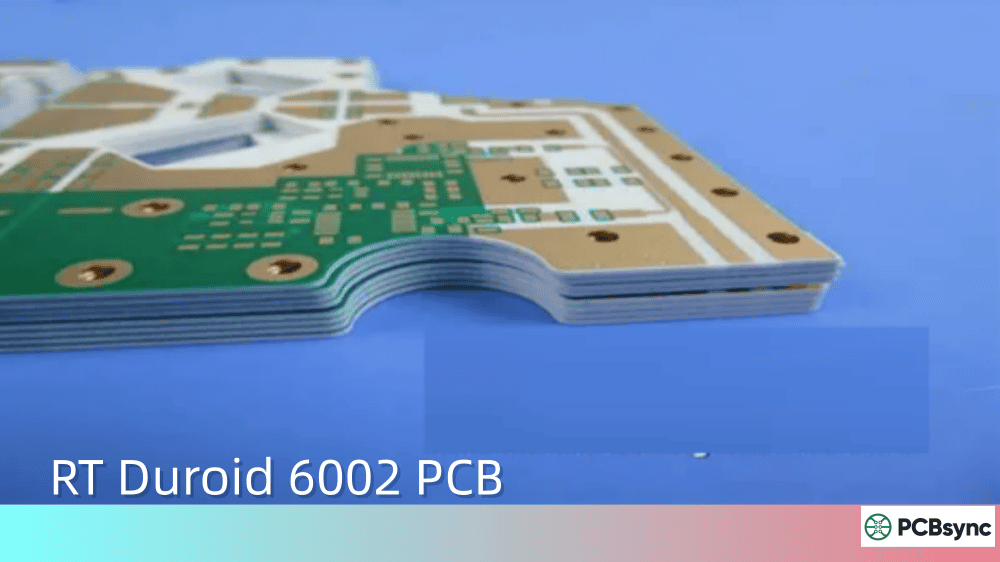
TC350 PCB vs. RT/duroid 6000 Series
Rogers’ RT/duroid 6000 series offers similar dielectric properties but approximately half the thermal conductivity of TC350. For applications where thermal management is the primary concern, TC350 provides better value. RT/duroid materials remain popular for their dimensional stability in extremely demanding environments.
TC350 PCB vs. RO4350B
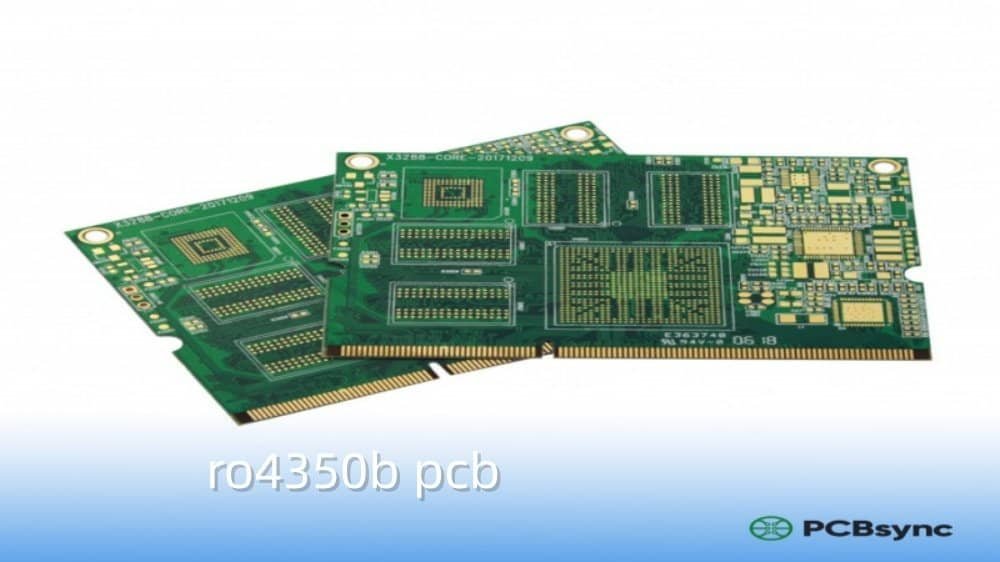
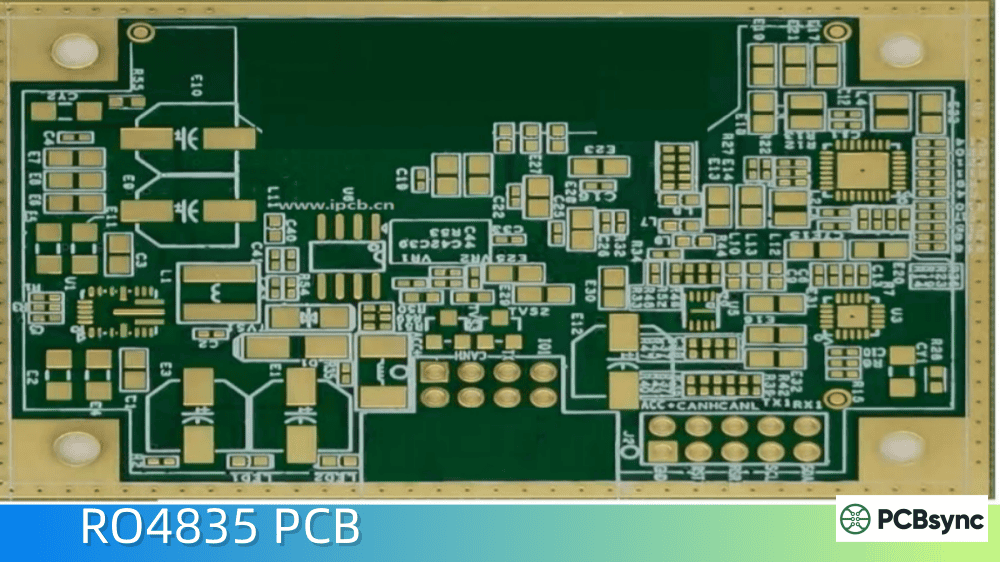
RO4350B is perhaps the most common high-frequency material, with thermal conductivity around 0.62 W/(m·K). TC350 offers approximately 16% better thermal performance with similar electrical properties. For cost-sensitive commercial applications, the choice often comes down to fabricator familiarity and supply chain considerations.
TC350 PCB Applications in Industry
This material has found its way into some demanding applications across multiple industries. Here’s where I see it used most frequently:
Telecommunications Infrastructure
Tower Mounted Amplifiers (TMAs) – These units sit exposed to weather and temperature extremes while amplifying cellular signals. TC350 PCB’s combination of thermal performance and dielectric stability makes it ideal here.
Tower Mounted Boosters (TMBs) – Similar requirements to TMAs, with the added challenge of handling higher power levels for signal boosting.
Base Station Power Amplifiers – The 5G rollout has pushed power densities higher than ever. TC350 PCB helps manage the thermal challenges of GaN-based amplifier designs.
Aerospace and Defense
Radar Systems – Military and civilian radar applications demand materials that maintain performance across wide temperature ranges. TC350 PCB’s low TCDk (-9 ppm/°C) keeps phase response stable as operating conditions change.
Electronic Warfare Systems – High-power jamming equipment generates significant heat. TC350 PCB substrates help maintain reliability under these demanding conditions.
Commercial RF Products
Power Amplifiers – From broadcast equipment to industrial heating systems, TC350 PCB handles the thermal loads of high-power RF designs.
Filters and Couplers – These passive components benefit from TC350 PCB’s stable dielectric properties, maintaining consistent performance regardless of ambient temperature.
Power Dividers and Combiners – In phased array systems, TC350 PCB helps ensure uniform thermal distribution across multiple signal paths.
The rollout of 5G networks has created unprecedented demand for high-performance PCB materials. TC350 PCB has emerged as a preferred choice for several reasons that directly address 5G’s technical challenges.
5G Power Amplifier Requirements
5G base stations operate at higher frequencies than 4G LTE, with sub-6 GHz and mmWave bands becoming standard. These higher frequencies require lower-loss substrates to maintain signal integrity. Simultaneously, the massive MIMO antenna arrays used in 5G require numerous power amplifiers operating in confined spaces, creating significant thermal density challenges.
TC350 PCB addresses both needs. Its low dissipation factor (0.002 at 10 GHz) keeps signal losses manageable at 5G frequencies, while the 0.72 W/(m·K) thermal conductivity helps dissipate heat from densely packed GaN amplifier stages.
Thermal Cycling in Outdoor Installations
5G small cells and macro base stations experience daily temperature swings that can exceed 60°C in some climates. TC350 PCB’s excellent dielectric constant stability (-9 ppm/°C) ensures consistent RF performance regardless of ambient temperature. This stability reduces the need for temperature compensation circuits, simplifying designs and improving reliability.
The material’s low Z-axis CTE (23 ppm/°C) closely matches copper’s thermal expansion characteristics, preventing via barrel cracking that can occur with high-CTE materials during repeated thermal cycling. I’ve seen boards survive thousands of thermal cycles without degradation when properly designed with TC350.
TC350 PCB vs. TC350 Plus: Understanding the Differences
Rogers also offers TC350 Plus laminates, which represent the next generation of this material family. Here’s how they compare:
Specification
TC350 PCB
TC350 Plus
Thermal Conductivity
0.72 W/(m·K)
1.24 W/(m·K)
Dielectric Constant
3.50
3.50
Loss Tangent (10 GHz)
0.0020
0.0017
Z-axis CTE
23 ppm/°C
38 ppm/°C
Available Thickness
0.010″ – 0.060″
0.010″ – 0.060″
TC350 Plus offers approximately 72% higher thermal conductivity and slightly lower loss tangent, making it the better choice for the most demanding 5G power amplifier applications. However, standard TC350 PCB remains the cost-effective workhorse for many commercial applications.
Designing with TC350 PCB: Practical Guidelines
After working with this material on dozens of projects, here are the design considerations I’ve found most important:
Stackup Design for TC350 PCB
TC350 PCB works well in both single-layer and multilayer configurations. For hybrid stackups combining TC350 with other materials:
Mixed Dielectric Designs – TC350 can be bonded to FR4 or other Rogers PCB materials using appropriate prepreg systems. This allows you to place TC350 only where thermal performance is critical, reducing overall material costs.
Thermal Via Integration – While TC350 PCB’s thermal conductivity reduces the need for thermal vias, they still help in high-power applications. The material’s low Z-axis CTE (23 ppm/°C) closely matches copper, providing excellent plated through-hole reliability.
Symmetrical Construction – Like any laminate, TC350 PCB benefits from symmetrical stackups to minimize warping during thermal cycling.
Impedance Control with TC350 PCB
The stable dielectric constant (Dk = 3.50 ±0.04) makes impedance calculations straightforward. Here are typical trace widths for common impedance targets on 20-mil TC350 PCB:
Target Impedance
Microstrip Width
Stripline Width
50Ω
~45 mil
~22 mil
75Ω
~22 mil
~12 mil
100Ω (differential)
~18 mil (10 mil gap)
~10 mil (6 mil gap)
Note: These are approximate values. Always verify with your fabricator’s impedance calculator using their specific process parameters.
Manufacturing Considerations for TC350 PCB
Drilling – One of TC350 PCB’s underrated advantages is its drillability. Unlike some ceramic-filled laminates that require special tooling, TC350 drills cleanly using standard carbide bits. The advanced filler system prevents the excessive wear that plagues other ceramic composites.
Copper Adhesion – TC350 bonds strongly to copper using standard electrodeposited foils. Unlike ceramic hydrocarbon materials that require “toothy” copper profiles for adhesion, TC350 works with smooth, low-profile copper. This results in lower insertion loss due to reduced skin effect at microwave frequencies.
Panel Sizes – Rogers offers TC350 in multiple panel sizes to accommodate different manufacturing setups:
Thickness
Available Panel Sizes
0.010″
18″ × 12″, 18″ × 24″
0.020″ – 0.060″
12″ × 18″, 24″ × 18″
Copper Cladding Options – Standard offerings include 1/2 oz, 1 oz, and 2 oz electrodeposited copper, with both standard and reverse-treated foils available.
TC350 PCB Thermal Management Strategies
Even with TC350 PCB’s enhanced thermal conductivity, proper thermal design remains essential for high-power applications. Here are strategies I use:
Component Placement for Optimal Heat Distribution
Spread high-power components across the board rather than clustering them in one area. TC350 PCB’s isotropic thermal conductivity helps, but physics still applies. Create thermal paths to board edges where heat sinks or chassis contact can occur.
Copper Pour Optimization
Use generous copper pours on both sides of the board, connected with thermal vias. The copper acts as a heat spreader, working with the TC350 substrate to move heat away from hot components. Ground planes should be as solid as possible, with minimal breaks that could create thermal barriers.
Integration with Heat Sinks
TC350 PCB pairs well with coin technology, where copper inserts provide direct thermal paths from components to heat sinks. The material’s CTE compatibility with copper ensures reliable solder joints even under thermal cycling.
TC350 PCB Cost Considerations
Let’s be realistic about cost, because material selection always involves trade-offs. TC350 PCB costs more than FR4 but less than ceramic substrates or metal-core PCBs. Here’s how I think about the economics:
When TC350 PCB Makes Financial Sense:
Power amplifiers where thermal performance affects reliability
Applications where field failures are expensive (telecommunications infrastructure)
Designs requiring both thermal management and high-frequency performance
Products where material cost is small relative to overall system cost
When Other Options Might Be Better:
Low-power circuits where FR4’s thermal performance is adequate
Ultra-high-power applications where aluminum or copper substrates are required
Cost-sensitive consumer products with short life expectations
Applications below 1 GHz where FR4’s electrical properties suffice
TC350 PCB Processing and Storage
Proper handling ensures you get the full performance TC350 was designed to deliver.
Storage Requirements
Store TC350 PCB laminates in a clean, dry environment away from direct sunlight. While the material has low moisture absorption (0.05%), proper storage prevents copper oxidation that could affect adhesion during processing.
Shelf Life Considerations
TC350 doesn’t have a specific expiration date like some materials, but I recommend using stock within 12-18 months of receipt. Before using panels that have been stored longer, inspect the copper for oxidation. Minor surface oxidation can typically be cleaned using standard PCB cleaning procedures.
Process Compatibility
TC350 PCB processes using standard PTFE laminate procedures. It’s compatible with lead-free soldering, which has become increasingly important as RoHS requirements spread globally.
Common Mistakes to Avoid with TC350 PCB
Over the years, I’ve seen several recurring design and manufacturing errors that compromise TC350 PCB performance. Learning from these mistakes can save you significant time and money.
Ignoring Via Placement for Thermal Management
Even though TC350 has better thermal conductivity than FR4, thermal vias remain important for high-power components. I’ve seen designers assume TC350’s enhanced properties eliminate the need for thermal via arrays. While you might need fewer vias than with FR4, strategic placement under high-power components still improves thermal performance by creating low-resistance paths to ground planes and heat sinks.
Over-specifying Material Thickness
Thicker isn’t always better for thermal management. Heat travels through the substrate, and while TC350’s thermal conductivity is good, thinner materials transfer heat faster. For applications where thermal performance is critical, consider using the thinnest TC350 PCB that meets your mechanical requirements. The 0.020″ thickness often provides an excellent balance between thermal performance and handling ease.
Neglecting Copper Pour Connections
Isolated copper pours don’t help thermal management. I regularly see designs with large copper areas that aren’t properly stitched to ground planes or thermal paths. Use via stitching to connect copper pours across all layers, creating three-dimensional thermal paths that leverage TC350’s isotropic conductivity.
Mixing Incompatible Prepreg Systems
In hybrid stackups combining TC350 with other materials, using the wrong prepreg can compromise lamination quality. Always verify that your fabricator has experience bonding TC350 with your chosen secondary materials and uses Rogers-qualified prepreg systems.
Insufficient Edge Clearance
TC350 PCB, like other PTFE-based materials, can be slightly more prone to delamination at board edges if clearances are inadequate. Maintain at least 15 mils of edge clearance for traces and 20 mils for copper pours to ensure long-term reliability.
TC350 PCB Quality and Certifications
Rogers Corporation maintains rigorous quality standards for TC350 production:
UL 94 V-0 Flammability Rating – Required for commercial applications
NASA Outgassing Qualified – Total mass loss of just 0.02%, suitable for space applications
RoHS Compliant – Lead-free compatible for global markets
Useful Resources for TC350 PCB Design
Here are resources I keep bookmarked for TC350 projects:
What is the maximum operating temperature for TC350 PCB?
TC350 PCB can handle continuous operating temperatures well above typical commercial ranges. The decomposition temperature (Td) is 520°C, and time to delamination exceeds 60 minutes even at 300°C. For practical purposes, I recommend keeping operating temperatures below 150°C for long-term reliability, though the material can handle excursions well beyond this during reflow soldering. The glass transition temperature isn’t applicable to PTFE-based materials like TC350 since PTFE doesn’t have a traditional glass transition. Instead, TC350 maintains consistent properties across its entire operating range.
Can TC350 PCB be used in multilayer designs?
Yes, TC350 works well in multilayer configurations. You can create all-TC350 stackups or hybrid designs combining TC350 with FR4 or other Rogers materials. The key is using compatible prepreg systems and maintaining symmetrical constructions to prevent warping. Many manufacturers offer standard multilayer stackups incorporating TC350. For hybrid designs, TC350 is typically placed in the layers where high-power components are located, with less expensive FR4 used for signal routing layers that don’t require enhanced thermal performance.
How does TC350 PCB compare to aluminum-backed PCBs for thermal management?
Aluminum-backed PCBs (IMS or MCPCB) have higher thermal conductivity, typically 1-2 W/(m·K) for the dielectric layer. However, they’re limited to single or double-layer designs and have higher dielectric constant. TC350 PCB offers better electrical performance for RF applications and can be used in multilayer designs. For pure thermal performance in non-RF applications, aluminum-backed boards might be more cost-effective. For RF applications requiring both thermal management and high-frequency performance, TC350 is usually the better choice. The selection often depends on whether your priority is maximum heat dissipation or maintaining RF performance.
What surface finishes are compatible with TC350 PCB?
TC350 PCB is compatible with all standard surface finishes including HASL, ENIG, OSP, and immersion silver. For RF applications, I typically specify ENIG (Electroless Nickel Immersion Gold) because it provides consistent surface properties for wire bonding and maintains good solderability. Immersion gold works well for high-frequency applications where the skin effect makes surface finish critical. For the highest frequency applications above 20 GHz, consider immersion silver, which provides lower conductor losses than ENIG due to gold’s higher resistivity compared to silver.
Is TC350 PCB suitable for flex or rigid-flex applications?
No, TC350 is a rigid laminate and isn’t suitable for flexible circuits. For applications requiring both flex capability and enhanced thermal performance, you’d need to look at other material systems or use TC350 in the rigid sections of a rigid-flex design with appropriate transition materials. Rogers offers other products in their ULTRALAM series for flexible applications, but these don’t match TC350’s thermal conductivity specifications.
How do I specify TC350 PCB for manufacturing?
When ordering TC350 PCB boards, provide your fabricator with clear specifications including: material callout (Rogers TC350), thickness required, copper weight (1/2 oz, 1 oz, or 2 oz), surface finish, and any special requirements like controlled impedance. Include a stackup drawing for multilayer boards. Most experienced RF PCB fabricators have worked with TC350 and can advise on optimal specifications for your application. Request a DFM (Design for Manufacturability) review before finalizing your design to catch potential issues early.
Conclusion
TC350 PCB represents a practical solution for engineers facing the dual challenges of thermal management and high-frequency performance. It’s not the answer to every design problem, but when you need better heat dissipation than FR4 can provide without jumping to expensive ceramic or metal-core substrates, TC350 deserves serious consideration.
The material’s combination of 0.72 W/(m·K) thermal conductivity, stable 3.50 dielectric constant, and excellent processability makes it a reliable choice for power amplifiers, telecommunications equipment, and countless other RF applications. Add in its compatibility with standard manufacturing processes and competitive pricing, and you’ve got a material that delivers genuine value.
Key Takeaways for TC350 PCB Selection
When deciding whether TC350 PCB is right for your project, consider these factors:
Choose TC350 PCB when:
Your application requires RF performance at frequencies above 500 MHz
Thermal management is important but not extreme
You need multilayer capability with enhanced thermal properties
Budget constraints make ceramic substrates impractical
Plated through-hole reliability under thermal stress is critical
Consider alternatives when:
Operating frequencies are below 500 MHz (FR4 may suffice)
Extreme thermal conductivity is required (use MCPCB or ceramic)
Flexibility is needed (TC350 is rigid only)
Cost is the primary driver for low-power applications
Whether you’re designing your first power amplifier or your hundredth, understanding what TC350 PCB can and can’t do helps you make better material choices. And in this industry, better choices mean better products that meet customer expectations, pass certification testing, and survive in the field.
The telecommunications infrastructure supporting 5G, the radar systems keeping aircraft safe, and the industrial equipment powering modern manufacturing all benefit from materials like TC350 that push the boundaries of what’s possible in PCB design. As power densities continue to increase and performance requirements grow more demanding, thermal management materials will only become more important. TC350 PCB provides engineers with a proven, reliable option for meeting these challenges today while remaining cost-effective for commercial deployment.
Inquire: Call 0086-755-23203480, or reach out via the form below/your sales contact to discuss our design, manufacturing, and assembly capabilities.
Quote: Email your PCB files to Sales@pcbsync.com (Preferred for large files) or submit online. We will contact you promptly. Please ensure your email is correct.
Notes: For PCB fabrication, we require PCB design file in Gerber RS-274X format (most preferred), *.PCB/DDB (Protel, inform your program version) format or *.BRD (Eagle) format. For PCB assembly, we require PCB design file in above mentioned format, drilling file and BOM. Click to download BOM template To avoid file missing, please include all files into one folder and compress it into .zip or .rar format.