Inquire: Call 0086-755-23203480, or reach out via the form below/your sales contact to discuss our design, manufacturing, and assembly capabilities.
Quote: Email your PCB files to Sales@pcbsync.com (Preferred for large files) or submit online. We will contact you promptly. Please ensure your email is correct.
Notes: For PCB fabrication, we require PCB design file in Gerber RS-274X format (most preferred), *.PCB/DDB (Protel, inform your program version) format or *.BRD (Eagle) format. For PCB assembly, we require PCB design file in above mentioned format, drilling file and BOM. Click to download BOM template To avoid file missing, please include all files into one folder and compress it into .zip or .rar format.
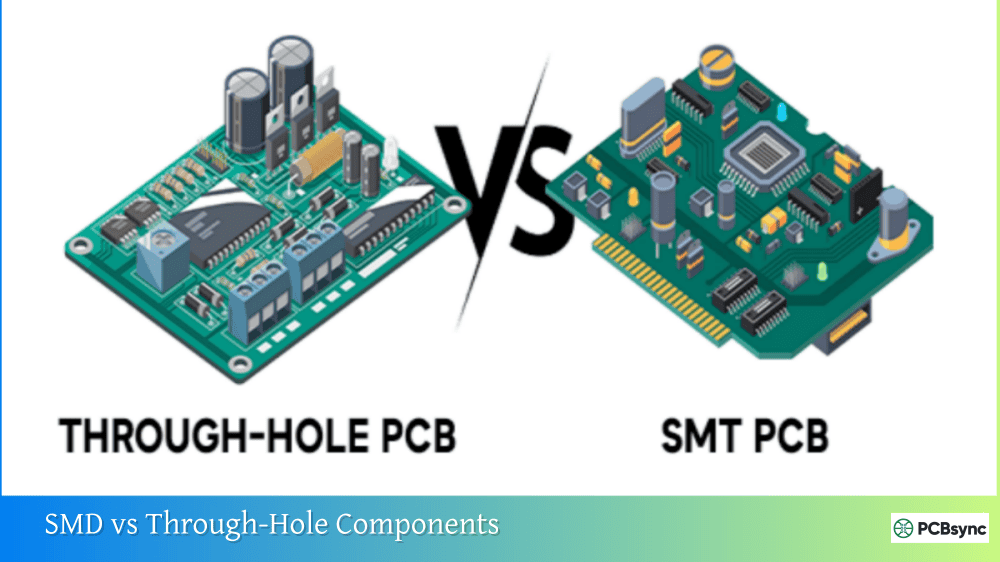
SMD vs Through-Hole Components: Complete Comparison
Every PCB design starts with a fundamental decision: SMD vs through hole components. This choice affects everything from board size and assembly cost to reliability and repairability. Having worked on projects ranging from high-volume consumer electronics to rugged industrial equipment, I’ve learned that neither technology is universally better—the right choice depends entirely on your specific requirements.
This guide breaks down the SMT vs THT comparison across every factor that matters: size, cost, performance, assembly, and reliability. Whether you’re optimizing a new design or deciding how to approach a prototype, understanding these tradeoffs will help you make informed decisions that serve your project well.
Before diving into comparisons, let’s clarify the terminology that often confuses newcomers to PCB design.
What is Surface Mount Technology (SMT)?
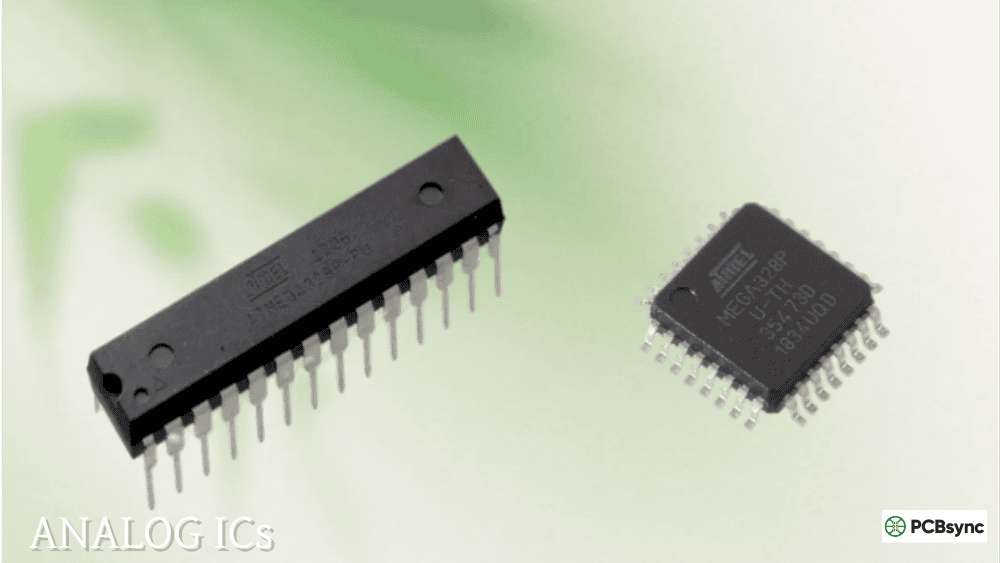
Surface Mount Technology (SMT) is a method of mounting electronic components directly onto the surface of a printed circuit board. Components designed for this process are called Surface Mount Devices (SMD). The terms SMT and SMD are related but distinct: SMT refers to the assembly process, while SMD describes the components themselves.
SMT assembly follows a highly automated workflow: solder paste is applied to PCB pads through a stencil, pick-and-place machines position SMD components onto the paste, and the assembly passes through a reflow oven where the solder melts and creates permanent connections.
What is Through-Hole Technology (THT)?
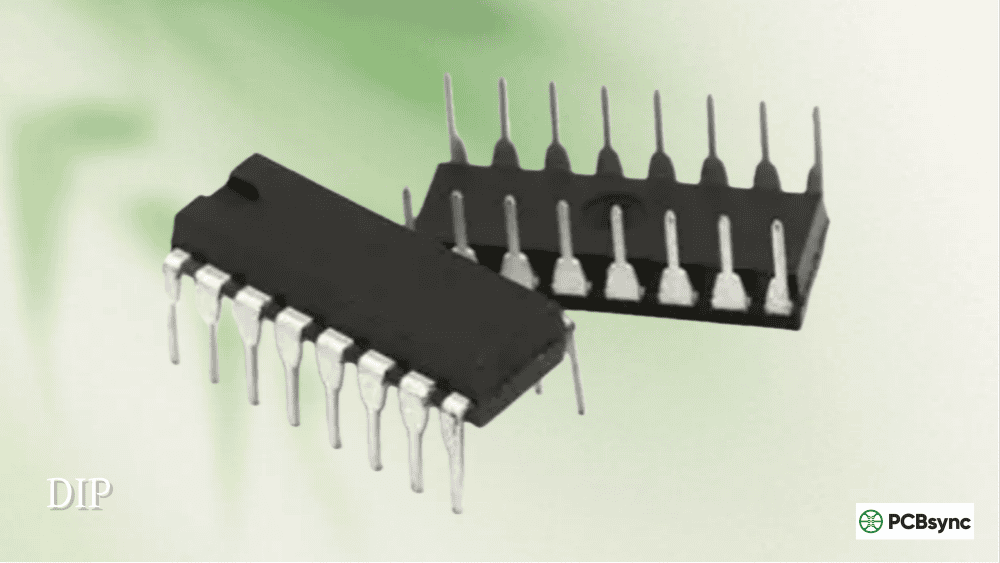
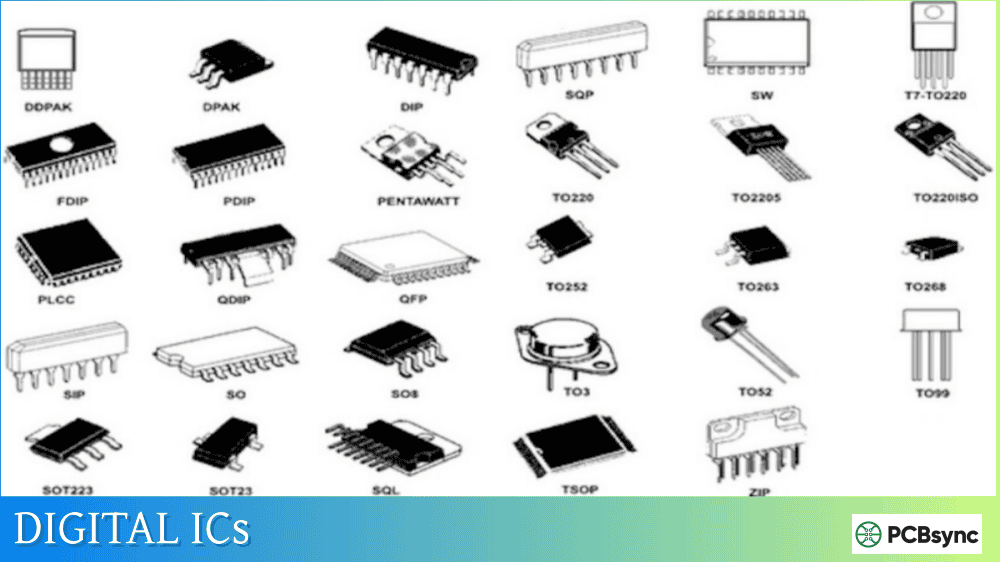
Through-Hole Technology (THT), also called Through-Hole Mounting (THM), involves inserting component leads through holes drilled in the PCB and soldering them on the opposite side. This older technology predates SMT and remains relevant for specific applications.
Through-hole assembly can be manual or semi-automated. Components are inserted into plated through-holes (PTH), then soldered using wave soldering, selective soldering, or hand soldering techniques.
SMD vs Through Hole: Key Differences at a Glance
Factor
SMD Components
Through-Hole Components
Size
Very small (0.4mm to 6mm typical)
Larger (5mm to 50mm+ typical)
Board Area
50-80% less than THT equivalent
Requires more PCB space
Assembly
Fully automated, high-speed
Manual or semi-automated
Assembly Cost (Volume)
Lower
Higher
Mechanical Strength
Moderate
Excellent
Thermal Performance
Limited by small size
Better heat dissipation
High-Frequency Performance
Superior
Limited by lead inductance
Rework/Repair
More difficult
Easier
Prototyping
Requires specialized equipment
Simple with basic tools
Component Density
100+ per square inch possible
~20 per square inch typical
Size and Space Efficiency: SMT vs THT
The most obvious difference in the SMD vs through hole comparison is physical size. SMD components are dramatically smaller than their through-hole counterparts.
SMD Component Sizes
SMD passive components (resistors, capacitors) use standardized size codes. The code represents length and width in hundredths of an inch:
Size Code
Dimensions (Imperial)
Dimensions (Metric)
Power Rating (Resistor)
01005
0.016″ × 0.008″
0.4 × 0.2 mm
0.03W
0201
0.024″ × 0.012″
0.6 × 0.3 mm
0.05W
0402
0.04″ × 0.02″
1.0 × 0.5 mm
0.063W
0603
0.06″ × 0.03″
1.6 × 0.8 mm
0.1W
0805
0.08″ × 0.05″
2.0 × 1.25 mm
0.125W
1206
0.12″ × 0.06″
3.2 × 1.6 mm
0.25W
The 0603 and 0402 sizes dominate modern designs, offering excellent balance between density and manufacturability. Sizes 0201 and smaller require advanced pick-and-place equipment and are typically reserved for smartphones, wearables, and other ultra-compact products.
Through-Hole Component Sizes
Through-hole components use standardized lead pitches rather than body sizes. Common pitches include 2.54mm (0.1″), 5.08mm (0.2″), and 7.62mm (0.3″). A typical through-hole resistor measures 6mm long with 10mm lead spacing—vastly larger than even the biggest SMD alternatives.
Space Impact on PCB Design
SMT enables component placement on both sides of the PCB, effectively doubling available real estate. Through-hole components typically mount on one side only, with leads occupying space on the opposite side. For complex designs, this density advantage often determines whether a design fits on a reasonably sized board.
Assembly Process: SMT vs THT Manufacturing
Assembly methods differ fundamentally between the two technologies, with significant implications for cost, speed, and quality.
SMT Assembly Process
The SMT process is highly automated and efficient:
Solder Paste Application: A precision stencil applies solder paste to PCB pads. Stencil thickness (typically 0.1-0.15mm) and aperture design affect paste volume.
Component Placement: Pick-and-place machines position components at rates of 10,000-50,000+ components per hour. Modern machines achieve placement accuracy of ±0.025mm.
Reflow Soldering: The assembly passes through a controlled temperature profile, typically peaking at 230-250°C for lead-free solder. All joints form simultaneously in a repeatable process.
Inspection: Automated Optical Inspection (AOI) verifies component presence, orientation, and solder quality at production speeds.
Through-Hole Assembly Process
THT assembly involves more manual steps:
Component Insertion: Manual insertion or semi-automated machines place components through PCB holes. Much slower than SMT placement.
Soldering: Wave soldering passes the board over molten solder, or selective soldering targets specific areas. Hand soldering remains common for prototypes and small volumes.
Inspection: Visual inspection is straightforward since joints are visible from the solder side.
Assembly Speed Comparison
The speed difference is dramatic. A modern SMT line processes thousands of components per hour with minimal human intervention. THT assembly, even with automation assistance, processes tens to hundreds of components per hour and often requires significant manual labor.
Cost Analysis: SMD vs Through Hole Economics
Cost considerations vary significantly based on production volume and product requirements.
Low-Volume and Prototype Costs
For prototypes and small batches, THT often costs less overall:
No stencil fabrication required
Simple hand soldering with basic equipment
Easier component handling and placement
Lower rework costs when design changes occur
SMT prototyping requires stencils (or expensive stencil-free techniques) and reflow equipment. However, many PCB assembly services now offer affordable SMT assembly even for small quantities.
High-Volume Production Costs
For production volumes above a few hundred units, SMT wins decisively:
Automated assembly eliminates labor costs
Smaller components cost less
Smaller PCBs reduce material costs
Higher throughput maximizes equipment utilization
Consistent quality reduces inspection and rework
The crossover point depends on board complexity and assembly service rates, but SMT typically becomes more economical above 100-500 units.
Total Cost Considerations
Beyond assembly costs, consider:
PCB Cost: SMT boards may require more layers for routing, but smaller size reduces material cost
Component Cost: Most SMD components cost less than THT equivalents at equivalent specifications
Testing Cost: SMT boards require more sophisticated test fixtures
Rework Cost: THT rework is simpler and cheaper when needed
Electrical Performance: High-Frequency Advantages
When comparing SMT vs THT for electrical performance, SMT holds significant advantages at higher frequencies.
Lead Inductance and Parasitic Effects
Through-hole component leads introduce parasitic inductance (typically 5-15nH per lead) and capacitance that degrade high-frequency performance. These parasitic elements cause:
Signal distortion at high frequencies
Increased noise susceptibility
Reduced bandwidth in analog circuits
EMI issues from longer current loops
SMD components have minimal lead length, reducing parasitic inductance to under 1nH. This makes SMT essential for RF circuits, high-speed digital designs, and precision analog applications.
Frequency Performance Guidelines
Frequency Range
Recommended Technology
DC to 10 MHz
Either THT or SMT acceptable
10-100 MHz
SMT preferred
100 MHz to 1 GHz
SMT required
Above 1 GHz
SMT with careful layout essential
Modern microprocessors, wireless modules, and high-speed interfaces all require SMT assembly for proper operation. For lower-frequency circuits like power supplies and basic digital logic, THT remains viable.
Mechanical Strength and Reliability
Mechanical considerations often determine the SMD vs through hole decision for specific applications.
Through-Hole Mechanical Advantages
THT components excel in mechanically demanding environments:
Stronger Connections: Leads passing through the board and soldered on both sides create robust mechanical bonds
Vibration Resistance: The through-board anchoring resists forces that would shear SMD solder joints
Thermal Cycling: Through-hole joints better tolerate CTE mismatch between PCB and components
SMD Reliability Considerations
SMD connections rely entirely on surface solder joints, which can fail under:
Mechanical shock or drop impacts
Repeated thermal cycling
Board flexing during installation or use
Vibration in automotive or industrial environments
However, proper design mitigates these concerns. Techniques include underfilling critical components, adding mechanical retention features, and selecting appropriate package sizes for the application environment.
Application-Specific Recommendations
Use Through-Hole for:
Connectors subject to insertion forces
Components in high-vibration environments
High-power components requiring heat sinking
Transformers and inductors with significant mass
Military and aerospace applications with extreme reliability requirements
Use SMD for:
General consumer electronics
Space-constrained designs
High-frequency circuits
Cost-sensitive high-volume production
Portable and handheld devices
When designing with Altera FPGA devices, package selection often determines whether SMT-only assembly is possible or whether through-hole connectors require mixed assembly.
Power dissipation capabilities differ significantly between SMD and through-hole components.
Through-Hole Thermal Advantages
Larger through-hole packages can dissipate more power:
More surface area for convection and radiation
Longer leads provide heat paths to the PCB
Easy attachment of external heat sinks
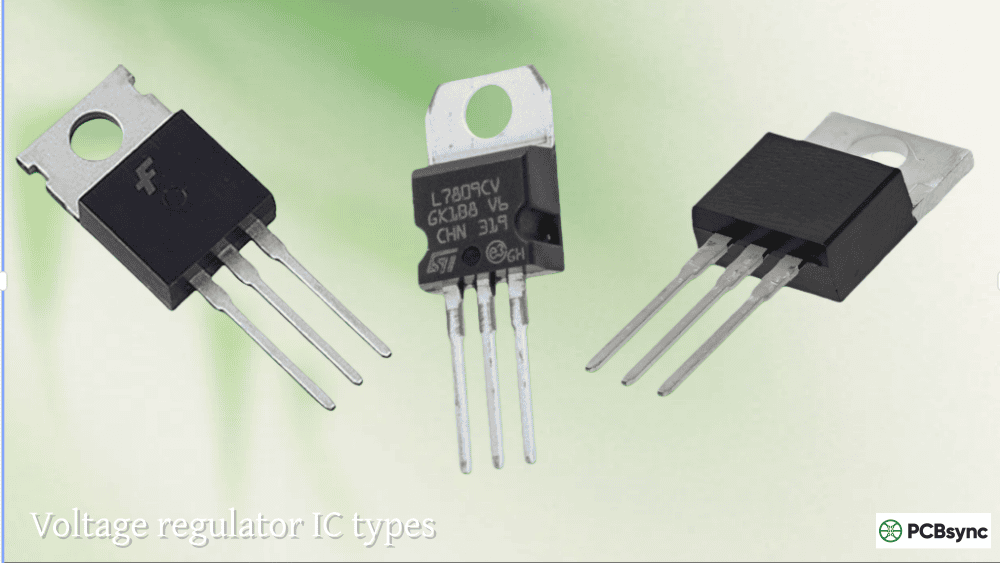
Better suited for power resistors, regulators, and transistors
A standard 1/4W through-hole resistor handles more power than most SMD resistors while running cooler.
SMD Thermal Limitations
Small SMD packages concentrate heat in tiny areas:
Limited surface area restricts convection
Solder joints provide the primary thermal path
Thermal vias and copper pours required for heat spreading
Package power ratings assume ideal PCB thermal design
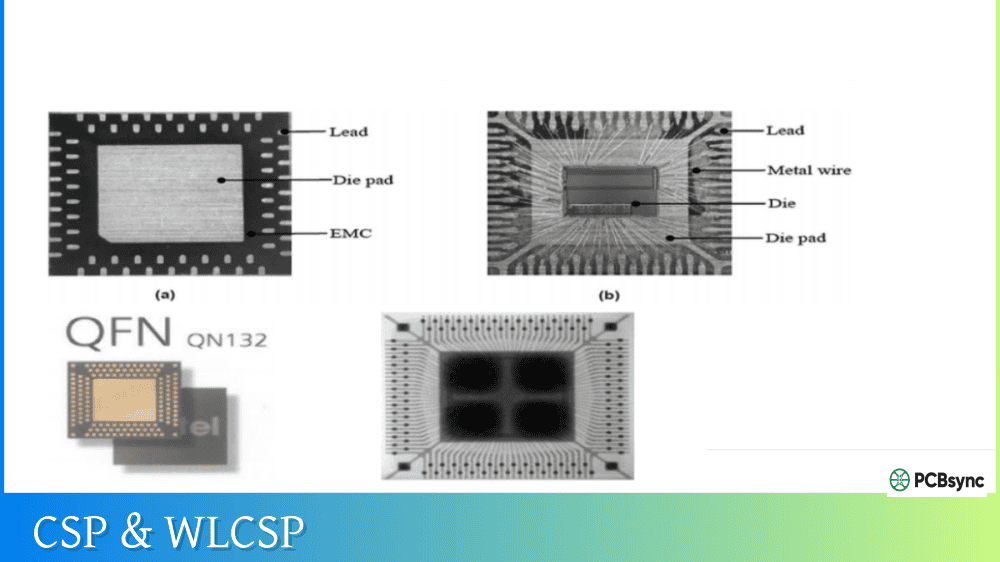
Proper SMD thermal design requires attention to copper areas, thermal vias, and component spacing. Exposed pad packages (like QFN or PowerPAD) significantly improve thermal performance when correctly implemented.
Rework and Repair: Serviceability Comparison
Field serviceability often influences technology selection.
Through-Hole Rework Advantages
THT components are simple to replace:
Accessible from the solder side
Standard soldering iron sufficient
No special equipment required
Technicians can easily identify and replace failed parts
This makes THT attractive for prototyping, field-serviceable equipment, and applications where component replacement is expected.
SMD Rework Challenges
SMD rework requires more skill and equipment:
Hot air rework stations needed for most packages
Fine-pitch components require magnification
Some packages (BGA, QFN) need X-ray inspection
Risk of damaging adjacent components
Specialized tools for each package type
While professional rework of SMD assemblies is routine, field repair by end users is generally impractical.
Mixed Assembly: Combining SMT and THT
Most real-world designs use both technologies, combining their respective strengths.
Common Mixed Assembly Applications
Connectors: THT for mechanical strength
Power Components: THT for thermal dissipation
Signal Processing: SMT for density and performance
User Interface: THT switches and displays for durability
Mixed Assembly Process Considerations
Mixed assembly complicates manufacturing:
SMT components placed and reflowed first
Through-hole components inserted
Selective or wave soldering for THT joints
Multiple thermal exposures stress SMD joints
Design for manufacturing (DFM) becomes more important with mixed assembly. Minimizing THT component count reduces process complexity and cost.
Industry Trends: The Shift Toward SMT
The electronics industry has moved decisively toward SMT over the past three decades. Today, over 90% of PCB assemblies use surface mount components as their primary technology.
Driving Forces Behind SMT Adoption
Several factors accelerated SMT dominance:
Miniaturization demands from smartphones, wearables, and IoT devices pushed designers toward smaller components. A modern smartphone contains thousands of SMD components that simply couldn’t fit using through-hole technology.
Automation benefits made SMT economically compelling. Pick-and-place machines, reflow ovens, and automated inspection systems dramatically reduced labor costs while improving quality consistency.
Component availability increasingly favors SMD. Many new ICs release only in surface mount packages, with through-hole versions never developed. Legacy through-hole parts are gradually discontinued.
Where Through-Hole Persists
Despite SMT’s dominance, through-hole technology maintains important niches:
Power electronics requiring robust thermal management
Industrial equipment designed for decades of service life
Hobbyist and educational projects using breadboard-compatible parts
Military and aerospace applications with stringent reliability requirements
Repair-friendly designs for field service
The future likely sees continued SMT growth, but through-hole technology won’t disappear entirely. Understanding both technologies remains essential for well-rounded PCB design skills.
Useful Resources for Component Selection
When working with SMD and through-hole components, these resources prove valuable:
Component Databases:
DigiKey, Mouser: Parametric search with footprint data
Frequently Asked Questions About SMD vs Through Hole
Is SMD better than through-hole?
Neither technology is universally better—each has optimal applications. SMD excels in high-volume production, compact designs, and high-frequency circuits where small size, automated assembly, and low parasitic inductance matter. Through-hole remains superior for mechanically stressed components, high-power applications, prototyping, and situations requiring field serviceability. Most modern designs use both technologies strategically, selecting the best approach for each component based on its specific requirements.
Can I hand solder SMD components?
Yes, many SMD components can be hand soldered with practice and proper techniques. Components in 0805 and larger packages are manageable with a fine-tip soldering iron and flux. Sizes 0603 work with good technique, while 0402 and smaller require magnification and exceptional skill. Fine-pitch ICs can be soldered using drag soldering techniques. However, some packages like BGA or QFN with hidden pads cannot be hand soldered and require reflow processes.
Why are some components only available in through-hole packages?
Some components remain through-hole only due to physical constraints or performance requirements. High-power components need larger packages for heat dissipation. Transformers require bulky magnetic cores. Some connectors need through-hole mounting for mechanical strength during repeated mating cycles. Certain legacy components continue production only in through-hole form. However, the industry trend pushes toward SMD availability for most components, and SMD versions of previously through-hole-only parts continue appearing.
What is the cost difference between SMT and THT assembly?
For high-volume production, SMT assembly typically costs 30-50% less than equivalent THT assembly due to automation advantages. However, for prototypes or very small batches (under 50-100 units), THT may cost less because it avoids stencil fabrication and works with simpler equipment. The crossover point depends on board complexity, component count, and assembly service pricing. Many designers find that SMT becomes more economical above 100-500 units, though this varies significantly by project.
How do I decide between SMD and through-hole for my design?
Start by identifying components that require through-hole mounting: connectors subject to insertion forces, high-power components needing heat sinks, and any parts only available in through-hole packages. Use SMD for everything else unless you have specific reasons not to. Consider your production volume, required board size, operating frequency, and serviceability needs. For prototyping, SMD works well if you have access to reflow equipment or assembly services. Mixed designs combining both technologies often provide the best overall solution, leveraging each technology’s strengths.
Inquire: Call 0086-755-23203480, or reach out via the form below/your sales contact to discuss our design, manufacturing, and assembly capabilities.
Quote: Email your PCB files to Sales@pcbsync.com (Preferred for large files) or submit online. We will contact you promptly. Please ensure your email is correct.
Notes: For PCB fabrication, we require PCB design file in Gerber RS-274X format (most preferred), *.PCB/DDB (Protel, inform your program version) format or *.BRD (Eagle) format. For PCB assembly, we require PCB design file in above mentioned format, drilling file and BOM. Click to download BOM template To avoid file missing, please include all files into one folder and compress it into .zip or .rar format.