Inquire: Call 0086-755-23203480, or reach out via the form below/your sales contact to discuss our design, manufacturing, and assembly capabilities.
Quote: Email your PCB files to Sales@pcbsync.com (Preferred for large files) or submit online. We will contact you promptly. Please ensure your email is correct.
Notes: For PCB fabrication, we require PCB design file in Gerber RS-274X format (most preferred), *.PCB/DDB (Protel, inform your program version) format or *.BRD (Eagle) format. For PCB assembly, we require PCB design file in above mentioned format, drilling file and BOM. Click to download BOM template To avoid file missing, please include all files into one folder and compress it into .zip or .rar format.
Shunt Resistor: Current Sensing Applications & Selection
If voltage is the “pressure” in an electrical circuit, current is the “flow.” And while measuring pressure is easy—you just tap a line—measuring flow requires you to get in the way.
In the world of PCB design and power electronics, the shunt resistor (or current shunt) is our primary tool for this job. It sounds simple: put a resistor in series, measure the voltage drop, and apply Ohm’s Law ($I = V/R$).
But if you treat a current shunt like a standard resistor, your design will fail. I’ve seen 100A motor controllers melt down because an engineer forgot about the Temperature Coefficient of Resistance (TCR), and I’ve seen battery management systems (BMS) report 50% charge when the battery was empty because of poor PCB layout.
This guide goes beyond the datasheet to explain the physics, the layout strategies, and the selection criteria that make or break a current sensing design.
Technically, a shunt resistor is a high-precision, low-value resistor used to measure current. The term “shunt” comes from the verb “to shunt” (to turn aside or divert), which refers to its historical use in ammeters where the resistor diverted the majority of current around the sensitive moving coil meter.
Today, in modern digital electronics, the term implies a Current Sense Resistor.
Unlike a standard 10kΩ pull-up resistor where 5% tolerance is fine, a shunt often has resistance values in the milliohms (mΩ) or even micro-ohms (µΩ). At these levels, the resistance of the solder joints and the copper traces on your PCB become significant. This is why “shunt engineering” is a specific discipline.
The Core Trade-off
Every shunt design battles a fundamental compromise:
High Resistance: Gives a large voltage signal (Easy to read, good Signal-to-Noise Ratio). BUT, it dissipates massive heat ($P = I^2R$) and causes voltage droop.
Low Resistance: Wastes very little power and runs cool. BUT, the voltage signal is tiny (microvolts), making it susceptible to noise and requiring expensive, high-precision amplifiers.
High-Side vs. Low-Side Sensing
Before you pick a part number, you must decide where to put the resistor. This is the first decision I make in any power supply review.
Low-Side Sensing
You place the shunt between the Load and Ground.
The Good: It is simple. The voltage across the shunt is referenced to Ground (0V), so you can often feed it directly into a microcontroller’s ADC or a cheap Op-Amp.
The Bad: You are lifting the “Ground” of your load. If your shunt drops 100mV, your load’s “Ground” is actually at 0.1V relative to the system Ground. This “Ground Bounce” can cause communication errors (like I2C/SPI) if the load talks to other grounded devices.
Best For: Simple motor drivers, cost-sensitive LED drivers, single-load isolated circuits.
High-Side Sensing
You place the shunt between the Power Source and the Load.
The Good: The load is solidly grounded. This is safer for automotive and industrial systems because you can detect a “short-to-ground” fault (which low-side sensing cannot see).
The Bad: The measurement hardware is floating at the supply voltage (e.g., 48V or 400V). You need a specialized Current Sense Amplifier (CSA) that can handle high “Common Mode Voltage.”
Best For: Battery Management Systems (BMS), Automotive ECUs, Power Distribution Units.
Comparison Table
Feature
Low-Side Sensing
High-Side Sensing
Complexity
Low
High
Cost
Low (Standard Op-Amp)
Moderate/High (Specialized CSA)
Ground Integrity
Poor (Ground Bounce)
Excellent (True Ground)
Fault Detection
Cannot detect Load-to-GND shorts
Can detect Load-to-GND shorts
Common Mode Voltage
Near 0V
Equals Supply Voltage ($V_{bus}$)
Critical Selection Parameters
When you open a DigiKey or Mouser search for “Current Sense Resistors,” the filters can be overwhelming. Here is how an engineer prioritizes them.
1. Resistance Value (The Power Balance)
You want the voltage drop ($V_{sense}$) to be large enough for your amplifier to read accurately, but small enough to minimize power loss.
A common target for modern Current Sense Amplifiers is a full-scale voltage of 50mV to 100mV.
This is where beginners burn boards. A “1 Watt” resistor can technically handle 1 Watt, but it will be scorching hot (often 100°C+).
The Engineering Rule: Always derate by 50%.
If you calculate 1 Watt of dissipation, buy a 2 Watt or 3 Watt resistor. This keeps the component temperature drift lower and prevents solder fatigue over time.
3. Temperature Coefficient of Resistance (TCR)
Resistors change value as they get hot. This is defined by TCR, usually in ppm/°C (parts per million per degree Celsius).
Standard Carbon Resistor: ~5000 ppm/°C (Terrible for sensing).
Thick Film Shunt: ~100-200 ppm/°C (Okay for rough estimation).
Metal Element (Manganin/Zeranin): ~10-50 ppm/°C (Required for precision).
Why it matters: If your shunt heats up by 50°C during operation, a high TCR means your current reading will drift significantly, even if the actual current hasn’t changed. For anything over 1 Amp, stick to Metal Element technology.
4. Thermal EMF (The Seebeck Effect)
When two dissimilar metals touch (like the copper of your PCB and the metal alloy of the resistor), they form a thermocouple. If one side of the resistor is hotter than the other, it generates a tiny voltage (Thermal EMF).
In precision designs, this “ghost voltage” adds to your reading.
Tip: Choose resistors with symmetrical layouts and ensure your PCB thermal design keeps both pads at the same temperature.
The Art of PCB Layout: Kelvin Connections
You can buy a $10, 0.1% tolerance Vishay foil resistor, but if you layout the PCB wrong, it will perform like a 20% junk part.
The secret is the Kelvin Connection (or 4-Wire Measurement).
The Problem with 2-Wire
In a standard 2-wire connection, the current flows through the solder joints and the copper pad to get to the resistor element.
Resistance of a solder joint: ~10-50 µΩ.
Resistance of a copper pad: ~100 µΩ.
If your shunt is 1 mΩ (1000 µΩ), that extra resistance introduces a 10% to 15% error.
The Kelvin Solution
You split the traces into two pairs:
Force (Current) Path: Large traces that carry the high current.
Sense (Voltage) Path: Thin traces that tap directly into the resistor terminals, carrying almost zero current.
By tapping the voltage inside the pads (closest to the resistive element), you bypass the voltage drop across the solder joints.
Layout Best Practices
Tap from the Inside: Route your sense lines from the inner edges of the resistor pads, not the outside where the main current enters.
Differential Pair: Run the two sense lines parallel and close together (like USB data lines) to reject noise.
Keep it Short: Place your Current Sense Amplifier as close to the shunt as possible.
No Vias in Pads: Never put a via in the shunt pad. It sucks solder away (wicking) and creates uneven resistance.
Types of Current Shunts
Surface Mount (SMD)
These are standard for currents up to ~50-100A.
Thick Film: Cheap, higher TCR. Good for low-accuracy general sensing.
Metal Strip / Metal Plate: (e.g., Vishay WSL, Bourns CSS). A solid piece of metal alloy. Excellent surge capability and low TCR. These are the industry standard for power electronics.
Wide Terminal: The connections are on the long side of the resistor. This reduces the distance current travels, lowering inductance (ESL).
Chassis Mount / Busbar Shunts
For currents from 100A to 1000A+, you leave the PCB behind.
These are large brass blocks with Manganin blades. They are bolted directly to busbars or heavy gauge cables.
Standard: 50mV or 75mV full-scale output.
Mounting: They have two large bolts for the current, and two small screws for the “Sense” wires.
Integrating the Sensor: Selecting the Amplifier
The resistor converts Current $\rightarrow$ Voltage. Now you need to read it.
1. General Purpose Op-Amp
Use: Only for Low-Side sensing.
Issue: Standard Op-Amps have “Input Offset Voltage” ($V_{os}$). If $V_{os}$ is 2mV and your shunt signal is only 10mV, you have a 20% error right out of the gate.
Fix: You must use a “Zero-Drift” or “Chopper Stabilized” Op-Amp.
2. Dedicated Current Sense Amplifier (CSA)
(e.g., TI INA240, Maxim MAX4080, ADI AD8210).
These are specialized chips designed specifically for this task.
High CMV: They can tolerate input pins being at 80V while the chip runs on 3.3V.
Fixed Gain: Internal, laser-trimmed resistors give you exact gains (20x, 50x, 100x) without needing external parts.
Zero Drift: They automatically correct for temperature variations.
3. Digital Power Monitors
(e.g., INA219, PAC1934).
These chips have the shunt amplifier and an ADC built-in. They talk I2C/SPI directly to your MCU, giving you a digital readout of Amps, Volts, and Watts. This is the modern way to do it for complex systems.
We can choose a CSA with a fixed gain of 50x or 100x.
If we use 50x: $50 \text{ mV} \times 50 = 2.5 \text{ V}$. This fits nicely within the 3.3V range and leaves headroom for current spikes.
Troubleshooting Common Issues
“My current reading is noisy.”
Cause: Inductive pickup or switching noise.
Fix: Add an RC filter at the input of the amplifier (10Ω resistor + 10nF capacitor). Keep the differential sense traces tight.
“The reading drifts when the board gets hot.”
Cause: High TCR resistor or Thermal EMF.
Fix: Switch from Thick Film to Metal Element (Manganin) resistors. Check if one side of the shunt is near a heat source (like a MOSFET) causing a temperature gradient.
“I see current even when the load is off.”
Cause: Input Offset Voltage ($V_{os}$) of the amplifier.
Fix: Use a better amplifier with lower $V_{os}$, or calibrate it out in software (read the value at 0A and subtract it).
Useful Resources
Here are the databases and tools that professional engineers keep bookmarked:
Vishay Ohmite Calculator: Useful for checking pulse capability.
TI Current Sense Amplifier Selection Tool: Filters amps by common mode voltage and accuracy.
Saturn PCB Toolkit: The gold standard for calculating trace width for high currents (essential for routing the traces to the shunt).
DigiKey Product Index: Search under Resistors -> Chip Resistor – Surface Mount. Filter by “Current Sense” in the Features column.
Frequently Asked Questions (FAQ)
1. Can I use a PCB trace as a shunt resistor?
Technically, yes (it’s called “Trace Sensing”). Copper has resistance. However, copper has a massive TCR (~3900 ppm/°C). As the board heats up, your resistance changes wildly, making your measurement inaccurate by 20-30%. It is only acceptable for very rough “short circuit protection” schemes, not for measurement.
2. What is “Inductance” in a shunt, and why does it matter?
At high switching speeds (like in a GaN or MOSFET inverter), the physical inductance of the resistor resists changes in current ($V = L \cdot di/dt$). This creates voltage spikes that look like current, but aren’t. For high-speed PWM sensing, you must buy “Low Inductance” (Low ESL) shunts, often recognizable by having the terminals on the long side of the chip (reverse geometry).
3. How do I solder a 4-terminal shunt resistor?
Some precision shunts actually have 4 physical legs (2 big ones for current, 2 small ones for sensing). Solder them exactly as they look. The internal construction ensures the Kelvin connection is perfect. These are the best option if you have the budget, as they eliminate layout errors.
4. Why are shunt resistors usually white or green?
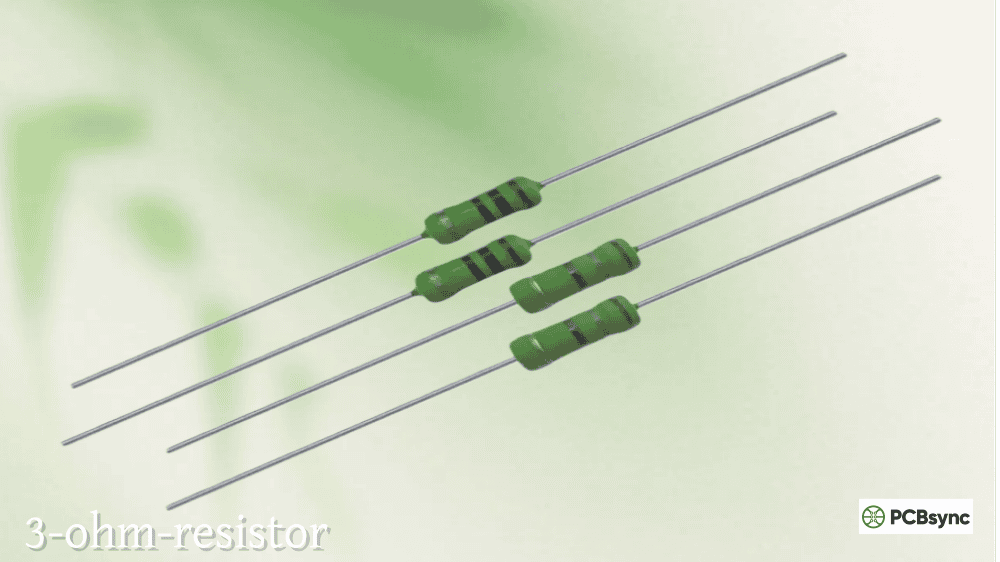
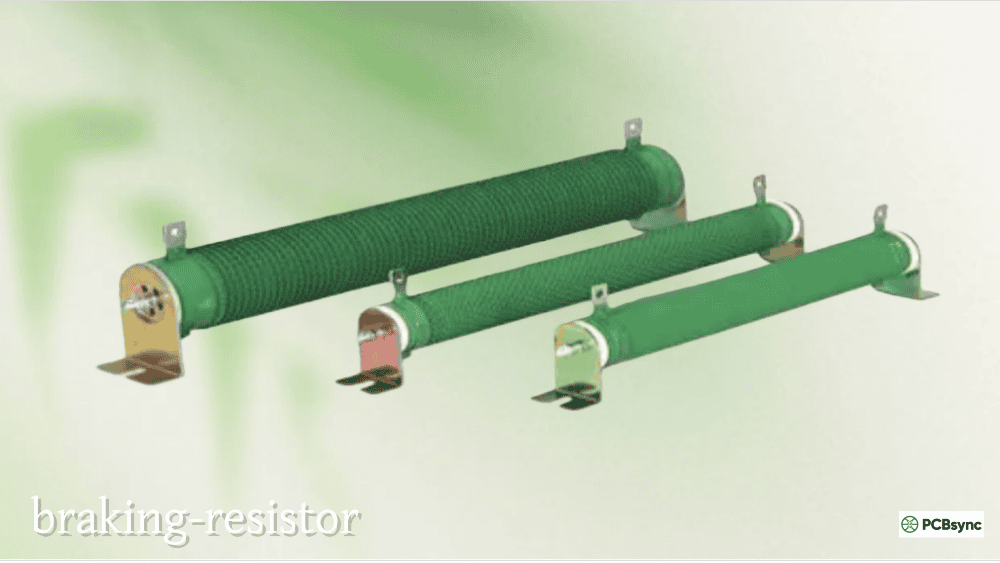
While standard resistors are black, high-power shunts (especially ceramic or molded ones) are often white or green to help with thermal emissivity or to signify their “flameproof” nature. However, most modern metal strip SMDs just look like black chips or bare metal.
5. Can I parallel shunt resistors?
Yes. Engineers often parallel two or three resistors to spread the heat or achieve a non-standard value (e.g., two 10mΩ resistors in parallel = 5mΩ).
Warning: You must route the layout perfectly symmetrically. If the trace to one resistor is shorter than the other, current will hog that path, overheating one resistor while the other runs cool.
Conclusion
The shunt resistor is deceptively simple. It is just a strip of metal, yet it is the gateway to understanding exactly what your power system is doing. By selecting the right material (Metal Strip vs. Film), sizing for power (50% derating), and routing with strict Kelvin connections, you transform a noisy, drifting guess into a precise, reliable measurement.
Whether you are building a precision lab power supply or just trying to stop a motor from stalling, respect the shunt, and it will tell you the truth.
Inquire: Call 0086-755-23203480, or reach out via the form below/your sales contact to discuss our design, manufacturing, and assembly capabilities.
Quote: Email your PCB files to Sales@pcbsync.com (Preferred for large files) or submit online. We will contact you promptly. Please ensure your email is correct.
Notes: For PCB fabrication, we require PCB design file in Gerber RS-274X format (most preferred), *.PCB/DDB (Protel, inform your program version) format or *.BRD (Eagle) format. For PCB assembly, we require PCB design file in above mentioned format, drilling file and BOM. Click to download BOM template To avoid file missing, please include all files into one folder and compress it into .zip or .rar format.