Inquire: Call 0086-755-23203480, or reach out via the form below/your sales contact to discuss our design, manufacturing, and assembly capabilities.
Quote: Email your PCB files to Sales@pcbsync.com (Preferred for large files) or submit online. We will contact you promptly. Please ensure your email is correct.
Notes: For PCB fabrication, we require PCB design file in Gerber RS-274X format (most preferred), *.PCB/DDB (Protel, inform your program version) format or *.BRD (Eagle) format. For PCB assembly, we require PCB design file in above mentioned format, drilling file and BOM. Click to download BOM template To avoid file missing, please include all files into one folder and compress it into .zip or .rar format.
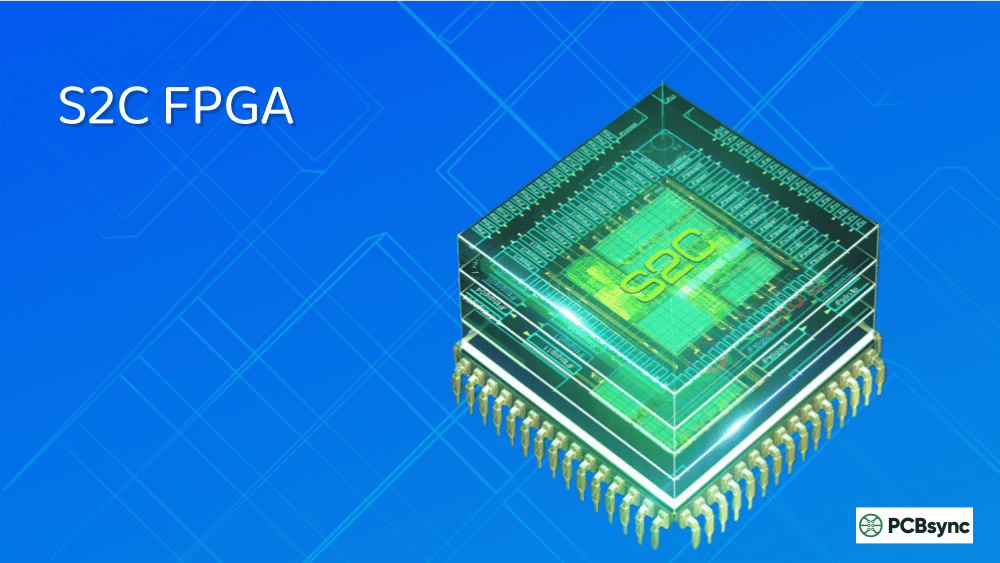
When you’re deep into an SoC development cycle and the simulation runs are taking forever, you start looking for alternatives. I’ve been there, watching clock cycles tick away while software verification crawls along at simulation speeds. That’s exactly where S2C FPGA prototyping comes into the picture, and honestly, it’s changed how many of us approach the verification problem.
S2C has been in the FPGA-based prototyping business since 2003, and they’ve built up quite a reputation. With over 600 customers and more than 4,000 systems deployed globally, they currently hold the second-largest market share in the FPGA prototyping solutions space. Their Prodigy platform series has become a go-to solution for teams working on everything from consumer electronics to automotive systems.
The core value proposition of S2C FPGA prototyping centers on speed and flexibility. Unlike traditional simulation that might run at a few hundred kilohertz, FPGA prototypes can operate between 10 and 50 MHz, with some configurations pushing up to 100 MHz. That speed difference isn’t just a nice-to-have; it means you can boot an operating system in minutes rather than hours.
S2C’s approach combines hardware platforms with software tools designed to work together seamlessly. Their Prodigy Logic Systems support both AMD (Xilinx) and Intel FPGAs, giving design teams flexibility in choosing the silicon that best fits their requirements. The modular architecture means you can start with a single FPGA system and scale up as your design complexity grows.
The Prodigy Platform Ecosystem
The Prodigy family includes several product lines targeting different design scales and requirements:
Platform Series
FPGA Base
Estimated Gate Capacity
Target Applications
Prodigy S8-100
AMD Versal Premium VP1902
Up to 100M ASIC gates per FPGA
AI, HPC, advanced SoCs
Prodigy S7 Series
AMD Virtex UltraScale+ VU19P
Up to 49M ASIC gates
Mainstream SoC development
Prodigy Logic Matrix LX2
AMD Virtex UltraScale+ VU19P
Up to 392M gates (multi-FPGA)
Hyperscale designs, data centers
Stratix 10 Series
Intel Stratix 10 GX 10M
Up to 80M ASIC gates per FPGA
Complex networking, communication
The newest S8-100 series, which started shipping in late 2024, doubles the logic resources compared to its predecessor S7-19P and offers 2.5x the I/O bandwidth. It supports PCIe Gen5 and 400G Ethernet, which are crucial for validating modern high-speed interfaces.
Understanding the S2C FPGA Verification Methodology
From a practical standpoint, S2C FPGA prototyping fits into the verification flow at specific stages where speed matters more than signal visibility. The methodology works best when your design has stabilized past the early bug-hunting phase and you need to run substantial software stacks or perform real-world testing.
When FPGA Prototyping Beats Emulation
Here’s the reality check: emulation and FPGA prototyping serve different purposes, and understanding that distinction saves time and money. Emulation typically runs at around 500 kHz and provides excellent signal visibility for debugging hardware issues. FPGA prototyping sacrifices some debug visibility for raw speed.
Characteristic
FPGA Prototyping (S2C)
Hardware Emulation
Execution Speed
10-100 MHz
100-500 kHz
Setup Time
Weeks
Hours
Cost per Gate
Lower
Higher
Debug Visibility
Limited to probe-based
Full signal access
Best Use Case
Software development, system validation
Hardware debug, early verification
Real-world Testing
Excellent
Limited
The sweet spot for S2C FPGA prototyping is when you need to run millions of regression test cycles, develop firmware with actual hardware response times, or demonstrate functionality to customers before tape-out.
Design Partitioning and Multi-FPGA Scaling
One challenge with FPGA prototyping is fitting large designs across multiple devices. S2C addresses this through their Prodigy Player Pro software, which handles design partitioning automatically. The tool supports RTL-level partitioning, meaning you work at the register-transfer level rather than wrestling with gate-level netlists.
The Player Pro software includes three main components:
Compile Time (CT): Handles design synthesis, partitioning across multiple FPGAs, and bitfile generation. The RTL partitioning feature introduced in recent versions enables parallel synthesis, which significantly reduces compile times for large designs.
Run Time (RT): Manages FPGA configuration, power control, clock management, and remote system monitoring. You can control multiple Logic Modules from a single console, which simplifies managing complex prototype setups.
Debug Time (DT): Provides multi-FPGA debugging with deep trace capture supporting up to 32K probes per FPGA. This addresses one of the traditional weaknesses of FPGA prototyping compared to emulation.
Key Applications for S2C FPGA Prototyping
The practical applications span across industries where complex SoC designs require extensive validation before committing to silicon.
Automotive and ADAS Development
Automotive chips face unique challenges: they must comply with ISO 26262 functional safety standards while handling real-time sensor data. S2C’s Prodigy Cloud Cube and Neuro management software enable regression farms where multiple teams can run parallel validation scenarios. The ability to connect daughter cards for automotive interfaces (CAN, LIN, Ethernet AVB) makes in-vehicle testing feasible before first silicon.
AI and Machine Learning Accelerators
The S8-100 series specifically targets AI chip development, offering the capacity and bandwidth needed for neural processing units. With support for PCIe Gen5 and CXL protocols, designers can validate memory-intensive AI workloads at realistic speeds. Advanced RISC-V cores fit entirely within a single S8-100 system without partitioning, enabling straightforward software development.
5G and Communications Infrastructure
Communication SoCs require extensive protocol testing and real-world RF validation. S2C’s ProtoBridge system provides a high-bandwidth path between host software and the FPGA prototype, enabling transaction-level testing with actual protocol stacks. The compact form factor of Prodigy Logic Systems also makes field testing practical.
The S2C FPGA Software Toolchain
Beyond the hardware, S2C provides a comprehensive software ecosystem that addresses common prototyping pain points.
ProtoBridge for System Co-Modeling
ProtoBridge creates a high-speed communication channel between a host PC and the FPGA prototype using PCIe-to-AXI bridging. This enables several valuable workflows:
Leverage PC memory instead of adding expensive on-board memory to the prototype
Connect commercial or custom verification tools through a C-based API
Stream real-world data (video, sensor inputs, network traffic) to the device under test
Transfer data at up to 4 GB/s using API function calls
Neuro Cloud Management
For organizations with distributed teams and multiple prototype systems, Neuro provides centralized resource management. You can allocate FPGA compute resources across projects and users, optimize utilization by sharing systems across time zones, and leverage both on-premises and cloud-based resources.
Prototype Ready IP Library
S2C maintains a library of over 90 pre-tested daughter cards and interface modules. These plug-and-play accessories support standard interfaces including:
High-speed protocols: PCIe Gen5, 400G Ethernet, USB, SATA
Memory interfaces: DDR5, LPDDR5, HBM3 (through Avery Design Systems partnership)
Frequently Asked Questions About S2C FPGA Prototyping
What is the typical runtime speed improvement of S2C FPGA prototyping compared to simulation?
S2C FPGA prototyping typically runs at 10-50 MHz, with some configurations reaching 100 MHz. This represents a 5x to 100x speed improvement over emulation (which runs at approximately 500 kHz) and thousands of times faster than software simulation. This speed allows operating systems like Linux to boot in minutes rather than hours, making software development on the prototype practical.
How does S2C FPGA compare with hardware emulators for SoC verification?
S2C FPGA prototyping and emulation serve complementary purposes. Emulation provides superior debug visibility and faster setup times (hours vs. weeks), making it ideal for hardware debugging early in the design cycle. S2C FPGA prototyping offers much higher execution speed at lower cost, making it better suited for software development, regression testing, and real-world system validation. Many teams use both technologies at different stages of their verification flow.
What is the maximum design capacity supported by S2C FPGA platforms?
The S2C Prodigy Logic Matrix LX2, when fully populated in a standard server rack configuration with 8 units, supports over 3 billion ASIC gates of prototyping capacity. For single-system deployments, the S8-100 Quad configuration supports up to 400 million gates (4 x 100M per FPGA). This scaling allows S2C solutions to address everything from IP block verification to complete hyperscale SoC validation.
Can S2C FPGA prototyping support modern high-speed interfaces like PCIe Gen5?
Yes, the latest S8-100 series natively supports PCIe Gen5 with 32/56 Gbps transceivers. For platforms that don’t support the absolute latest interface speeds natively, S2C has partnered with Avery Design Systems to provide PCIe and memory speed adapters that can be synthesized into the FPGA prototype. This partnership enables support for up to PCIe 6.0, HBM3, and LPDDR5 protocol interfaces.
What industries commonly use S2C FPGA prototyping solutions?
S2C FPGA prototyping is widely used across semiconductor design industries including: consumer electronics, communications and 5G infrastructure, automotive and ADAS systems, AI and machine learning accelerators, data center and cloud computing, storage systems, medical devices, and defense applications. The company counts 11 of the world’s top 25 semiconductor companies among its customers.
Final Thoughts on S2C FPGA Prototyping
Having worked through various verification approaches over the years, I can say that S2C FPGA prototyping occupies a valuable position in the modern SoC development toolkit. It’s not going to replace simulation for early-stage debugging, and it won’t give you the signal visibility of a dedicated emulator. But when you need to run real software on hardware that behaves like your actual chip, at speeds that make development practical, S2C’s platforms deliver.
The key is understanding where it fits in your workflow. Use simulation and emulation to shake out the hardware bugs early. Then move to S2C FPGA prototyping when you need to bring up the operating system, validate driver software, run extensive test suites, or demonstrate functionality to stakeholders. That’s where the speed advantage really pays off.
The recent partnership announcements with Andes Technology for RISC-V development and the launch of the S8-100 series show that S2C continues to evolve their platforms to meet emerging requirements in AI and high-performance computing. For teams working on complex SoCs in these domains, S2C FPGA prototyping remains a proven path to faster time-to-market.
Inquire: Call 0086-755-23203480, or reach out via the form below/your sales contact to discuss our design, manufacturing, and assembly capabilities.
Quote: Email your PCB files to Sales@pcbsync.com (Preferred for large files) or submit online. We will contact you promptly. Please ensure your email is correct.
Notes: For PCB fabrication, we require PCB design file in Gerber RS-274X format (most preferred), *.PCB/DDB (Protel, inform your program version) format or *.BRD (Eagle) format. For PCB assembly, we require PCB design file in above mentioned format, drilling file and BOM. Click to download BOM template To avoid file missing, please include all files into one folder and compress it into .zip or .rar format.