Inquire: Call 0086-755-23203480, or reach out via the form below/your sales contact to discuss our design, manufacturing, and assembly capabilities.
Quote: Email your PCB files to Sales@pcbsync.com (Preferred for large files) or submit online. We will contact you promptly. Please ensure your email is correct.
Notes: For PCB fabrication, we require PCB design file in Gerber RS-274X format (most preferred), *.PCB/DDB (Protel, inform your program version) format or *.BRD (Eagle) format. For PCB assembly, we require PCB design file in above mentioned format, drilling file and BOM. Click to download BOM template To avoid file missing, please include all files into one folder and compress it into .zip or .rar format.
If you’re designing high-power RF circuits and struggling with thermal management, the RT/duroid 6035HTC PCB material deserves your serious attention. After working with various Rogers laminates over the years, I can tell you that this ceramic-filled PTFE composite stands apart when heat dissipation becomes the limiting factor in your design. Rogers developed the RT/duroid 6035HTC PCB specifically for engineers who need to push power levels without sacrificing signal integrity or board reliability.
In this guide, I’ll walk you through everything you need to know about RT/duroid 6035HTC—from raw specifications to real-world design considerations. Whether you’re building power amplifiers for cellular base stations or designing radar modules for aerospace applications, understanding this material’s capabilities will help you make informed decisions for your next project.
RT/duroid 6035HTC is a high-frequency laminate manufactured by Rogers Corporation, engineered specifically for high-power RF and microwave applications where thermal management is critical. The “HTC” designation stands for High Thermal Conductivity—and that’s not just marketing speak.
The material is a ceramic-filled polytetrafluoroethylene (PTFE) composite. Unlike standard PTFE laminates that rely on glass or random fillers, RT/duroid 6035HTC uses a proprietary ceramic filler system that dramatically improves thermal performance without compromising the electrical properties that make PTFE attractive for RF work.
What makes this material particularly interesting is its thermal conductivity of 1.44 W/m/K—nearly 2.4 times higher than standard RT/duroid 6000 series products. For perspective, compare that to RT/duroid 6002 at 0.6 W/m/K or RT/duroid 6006 at 0.49 W/m/K. That difference becomes critical when you’re dealing with kilowatt-level RF circuits where every degree matters.
The naming convention tells you something about the material’s heritage. “RT/duroid” indicates it belongs to Rogers’ family of reinforced PTFE laminates, while “6035” places it within the 6000 series known for ceramic-filled compositions. The “HTC” suffix explicitly flags its high thermal conductivity focus. Rogers introduced this material to address the growing demand for substrates that could handle the thermal loads generated by modern GaN and LDMOS power transistors while maintaining the low-loss characteristics required for efficient RF design.
RT/duroid 6035HTC PCB Specifications
Before diving into applications, let’s look at the numbers that matter. I’ve pulled these from Rogers’ official datasheet, but I’ve organized them in a way that’s actually useful for design work.
Electrical Properties
Parameter
Value
Test Condition
Dielectric Constant (Dk)
3.50 ± 0.05
10 GHz, 23°C, Clamped Stripline
Design Dk
3.60
For circuit simulation
Dissipation Factor (Df)
0.0013
10 GHz, 23°C
Volume Resistivity
2 × 10⁷ MΩ·cm
C-96/35/90
Surface Resistivity
3 × 10⁷ MΩ
C-96/35/90
The dielectric constant of 3.50 sits in a sweet spot for many RF designs—low enough to minimize signal loss while high enough to keep trace dimensions reasonable. The tight tolerance of ±0.05 is particularly valuable when you’re designing controlled impedance circuits for phased array antennas or precision filters.
Thermal Properties
Parameter
Value
Notes
Thermal Conductivity
1.44 W/m/K
At 80°C
CTE (X-axis)
19 ppm/°C
-55°C to 260°C
CTE (Y-axis)
19 ppm/°C
-55°C to 260°C
CTE (Z-axis)
39 ppm/°C
-55°C to 260°C
Maximum Operating Temperature
260°C
Continuous
Td (Decomposition Temperature)
500°C
TGA
The matched X/Y CTE of 19 ppm/°C is close enough to copper’s thermal expansion that you won’t see significant stress on traces during thermal cycling. This matters a lot in aerospace and automotive applications where temperature swings are severe.
Mechanical Properties
Parameter
Value
Test Method
Peel Strength
≥6.0 lb/in
After solder float
Flexural Strength
4500 psi
ASTM D790
Density
2.98 g/cm³
—
Moisture Absorption
0.02%
24 hours immersion
The low moisture absorption is worth highlighting. At just 0.02%, you’re looking at minimal Dk shift in humid environments—a real concern for outdoor wireless infrastructure or marine applications.
Available Configurations
RT/duroid 6035HTC PCB laminates come in several standard configurations:
Standard Thicknesses:
0.010″ (0.254 mm / 10 mil)
0.020″ (0.508 mm / 20 mil)
0.030″ (0.762 mm / 30 mil)
0.060″ (1.524 mm / 60 mil)
Copper Cladding Options:
½ oz (18 μm) Electrodeposited (HH/HH)
1 oz (35 μm) Electrodeposited (H1/H1)
2 oz (70 μm) Electrodeposited (H2/H2)
½ oz (18 μm) Reverse Treat (SH/SH)
1 oz (35 μm) Reverse Treat (S1/S1)
Standard Panel Sizes:
12″ × 18″ (305 × 457 mm)
24″ × 18″ (610 × 457 mm)
The reverse treat copper options deserve special mention. Rogers specifically matched these foils to the RT/duroid 6035HTC laminate for enhanced peel strength after thermal cycling. If your boards will see repeated high-temperature exposure during operation or assembly, reverse treat copper is worth considering.
Key Benefits of RT/duroid 6035HTC PCB Material
Superior Thermal Management
This is the headline feature, and it’s not hype. In Rogers’ own testing, they compared RT/duroid 6035HTC against standard woven-glass PTFE (WG-PTFE) materials at 4 watts input power. The WG-PTFE showed a temperature rise of 83.6°C. The RT/duroid 6035HTC PCB? Just 35.9°C under identical conditions.
That 47.7°C difference translates directly to component longevity and reliability. For every 10°C reduction in junction temperature, you roughly double the lifespan of active devices. When you’re building equipment that needs to operate for years in the field, that math gets very compelling.
The thermal performance advantage comes from the material’s ability to spread heat laterally through the substrate, not just conduct it vertically. This spreading effect reduces hot spots under power transistors and creates a more uniform temperature distribution across the board. In practical terms, this means smaller heat sinks, potentially no cooling fans, and simpler thermal management overall.
For power amplifier designers, this translates to higher power density—you can pack more RF power into a smaller footprint without triggering thermal runaway. That’s increasingly important as 5G systems demand more output power from compact form factors.
Excellent High-Frequency Performance
The dissipation factor of 0.0013 at 10 GHz means minimal signal loss—crucial when you’re designing long feed networks or multi-stage amplifiers where insertion loss accumulates. Combined with the stable Dk across frequency and temperature, you get predictable performance that matches simulation results.
Outstanding Drill-ability
Here’s something that doesn’t get enough attention: Rogers’ advanced filler system makes RT/duroid 6035HTC significantly easier to drill than traditional high-thermal-conductivity laminates that use alumina fillers.
Alumina is extremely hard and abrasive. It wears out drill bits quickly, increases drilling costs, and can cause micro-cracks around via walls. The ceramic filler in RT/duroid 6035HTC is gentler on tooling while still delivering superior thermal performance. Your fabricator will thank you, and your per-board costs will reflect the easier processing.
Long-Term Thermal Stability
The copper foils paired with RT/duroid 6035HTC PCB maintain stable peel strength through multiple thermal cycles. Rogers tested 0.125″ copper trace widths through repeated 60-second exposures to 288°C (550°F) solder—well beyond what you’d see in typical reflow processes—and the copper adhesion remained strong.
For applications involving high-temperature storage or repeated thermal cycling (think automotive radar or industrial equipment), this stability prevents delamination failures that can plague other materials.
Choosing the right laminate often comes down to trade-offs. Here’s how RT/duroid 6035HTC compares to other popular Rogers materials:
Material
Dk
Df @ 10GHz
Thermal Conductivity
Best For
RT/duroid 6035HTC
3.50
0.0013
1.44 W/m/K
High-power RF, thermal-critical
RT/duroid 6002
2.94
0.0012
0.60 W/m/K
Low-loss, space applications
RT/duroid 6006
6.15
0.0019
0.49 W/m/K
Antenna miniaturization
RT/duroid 6010.2LM
10.2
0.0023
0.89 W/m/K
High-Dk circuits
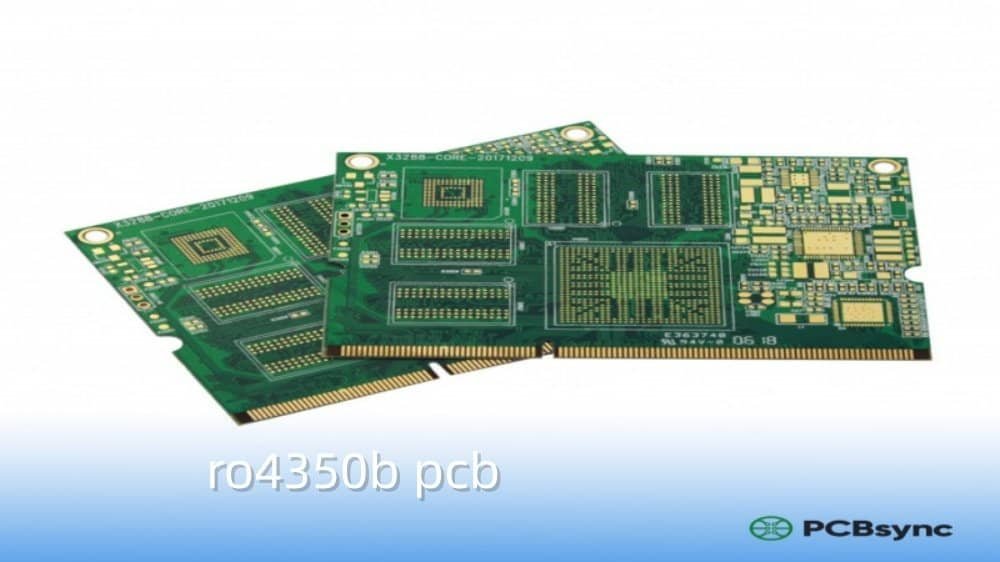
RO4350B
3.48
0.0037
0.69 W/m/K
Cost-sensitive, moderate power
RO4003C
3.55
0.0027
0.71 W/m/K
General RF, good economy
When to Choose RT/duroid 6035HTC PCB
Pick RT/duroid 6035HTC when:
Power levels exceed what standard materials can handle thermally
Operating temperature ranges are extreme (-55°C to 150°C+)
Long-term reliability in harsh environments is essential
You need PTFE electrical performance with enhanced thermal characteristics
Drilling costs for traditional HTC materials are a concern
When Other Materials Might Be Better
Consider alternatives when:
Cost is the primary driver and power levels are moderate (RO4350B)
You need the absolute lowest Dk for space-constrained antennas (RT/duroid 5880)
Higher Dk is required for size reduction (RT/duroid 6006 or 6010.2LM)
Standard thermal conductivity is sufficient and budget is tight
RT/duroid 6035HTC PCB Applications
The applications for RT/duroid 6035HTC PCB span industries where high-frequency performance meets demanding thermal requirements. Let’s examine where this material makes the most impact.
High-Power RF Amplifiers
Power amplifiers are the poster child application for RT/duroid 6035HTC. Whether you’re building solid-state power amplifiers (SSPAs) for satellite uplinks or final-stage amplifiers for cellular base stations, managing heat from the active devices is half the battle.
The material’s high thermal conductivity helps move heat from transistor flanges through the substrate to heat sinks, while the low Df ensures minimal power is wasted as heat in the transmission lines themselves.
Modern GaN-based power amplifiers are particularly demanding. These devices can achieve 70% efficiency or better, but the remaining 30% becomes heat concentrated in a tiny area. A 100W amplifier stage still dissipates 30+ watts of heat. RT/duroid 6035HTC helps manage that thermal load while maintaining the impedance matching and low-loss performance that maximizes amplifier efficiency.
Radar Systems
Modern radar systems—whether for air traffic control, weather monitoring, or automotive collision avoidance—operate at increasingly higher frequencies and power levels. RT/duroid 6035HTC PCB provides the thermal stability radar designers need for consistent performance across temperature ranges and extended operating hours.
Phased array radar applications particularly benefit from the tight Dk tolerance, which ensures uniform phase characteristics across array elements. When you’re steering a radar beam electronically, even small Dk variations between elements create beam squint and reduced accuracy. The ±0.05 Dk tolerance helps maintain beam integrity across large arrays.
Ground-based radar installations face additional challenges from environmental exposure. The low moisture absorption of RT/duroid 6035HTC prevents Dk drift that could degrade performance over time in outdoor installations.
Aerospace and Defense Electronics
Military and aerospace systems face some of the most demanding environmental conditions: extreme temperatures, vibration, humidity, and altitude changes. RT/duroid 6035HTC’s combination of stable electrical properties, low moisture absorption, and robust thermal performance makes it a natural fit.
Applications include electronic warfare systems, satellite communication transponders, and airborne radar modules. The material is RoHS compliant and compatible with lead-free soldering processes.
For space applications, outgassing characteristics become critical. RT/duroid 6035HTC exhibits low outgassing properties suitable for many spacecraft applications, though specific mission requirements should be verified against NASA ASTM E595 testing data. The material’s ability to withstand wide temperature swings without Dk drift is essential for equipment that cycles between sunlight and shadow in orbit.
Telecommunications Infrastructure
5G base stations and wireless backhaul equipment push increasingly higher power through increasingly smaller form factors. The thermal management benefits of RT/duroid 6035HTC help telecom equipment designers pack more capability into limited space without overheating.
Power combiners, dividers, and filter banks handling multiple carriers benefit from both the thermal and electrical characteristics.
The transition to massive MIMO architectures with 64 or more antenna elements creates new thermal challenges. Each element requires power amplification, and the aggregate heat from dozens of amplifiers in close proximity demands materials that can handle the thermal load. RT/duroid 6035HTC PCB enables the power density these systems require.
Remote radio heads (RRHs) mounted on cell towers face particular thermal challenges. Without easy access to building HVAC systems, these units must manage their own thermal environment. Better substrate thermal conductivity reduces reliance on active cooling, improving reliability and reducing maintenance costs.
Automotive Radar
The automotive industry’s push toward autonomous driving has created massive demand for reliable, high-frequency radar sensors. These devices must function flawlessly through temperature extremes—from frozen winters to desert summers—and the RT/duroid 6035HTC PCB delivers the stability required.
Applications include adaptive cruise control, blind-spot detection, and forward collision warning systems operating at 77 GHz.
Automotive applications impose stringent reliability requirements. Components must survive 15+ years of operation through constant temperature cycling, vibration, and potential moisture exposure. The matched CTE characteristics of RT/duroid 6035HTC help prevent solder joint failures and trace cracking that can cause intermittent faults—particularly dangerous in safety-critical radar systems.
The material also meets automotive industry AEC-Q100 and similar qualification requirements when processed by appropriately certified fabricators.
Industrial and Energy Applications
Beyond traditional RF applications, RT/duroid 6035HTC finds use in:
Power electronics for hybrid and electric vehicles
High-voltage rail transit traction systems
Laser driver circuits
Wind and solar energy conversion equipment
Any application where high-frequency switching generates significant heat can benefit from this material’s thermal properties.
RT/duroid 6035HTC PCB Design Guidelines
Getting the most from RT/duroid 6035HTC requires attention to design details that may differ from standard FR-4 or even other PTFE materials. Here are the key considerations from years of working with this material.
Stackup Considerations
For most applications, a simple 2-layer stackup with RT/duroid 6035HTC as the core is sufficient. The standard approach uses the material between 1 oz copper layers on top and bottom.
For more complex designs requiring additional layers, consider hybrid stackups combining RT/duroid 6035HTC for signal layers with FR-4 or lower-cost materials for non-critical layers. This approach reduces costs while maintaining high-frequency performance where it matters.
When designing hybrid stackups, pay attention to the different Dk values between materials. Transition areas where signals pass between material types may require impedance matching consideration. Use Rogers’ impedance calculator tools to verify transmission line dimensions for each layer material.
The material’s CTE characteristics also affect multilayer design. While the matched X/Y expansion simplifies horizontal concerns, the Z-axis CTE of 39 ppm/°C differs from copper. For thick boards or those seeing extreme thermal cycling, this mismatch can stress vias. Consider via fill or other reinforcement for critical interconnects.
Trace and Space Guidelines
The minimum trace/space achievable depends on your fabricator’s capabilities, but 5/5 mil (0.127 mm) patterns are routinely produced on RT/duroid 6035HTC. For impedance-controlled designs, work with your fab shop early to ensure they have accurate Dk data for your specific thickness.
Conductor losses in high-frequency designs depend heavily on copper surface roughness. RT/duroid 6035HTC is available with both standard electrodeposited and reverse-treat copper. The reverse-treat options offer lower profile (smoother) surfaces that reduce skin-effect losses at frequencies above a few GHz. If you’re designing for mmWave applications (>30 GHz), the copper selection significantly impacts insertion loss.
Ground plane design also matters. Continuous ground planes provide the best thermal spreading and electrical reference. If ground plane cutouts are necessary, position them away from power devices and high-frequency signal paths.
Via Design for Thermal Management
Thermal vias play an important role in getting heat from components down to ground planes or heat sinks. With RT/duroid 6035HTC’s better thermal conductivity, you may need fewer thermal vias than with standard PTFE materials, but don’t eliminate them entirely.
A typical approach uses filled vias directly under power transistor die attach pads, with via-in-pad construction if component density demands it.
Surface Finish Options
RT/duroid 6035HTC PCB is compatible with standard surface finishes including:
ENIG (Electroless Nickel Immersion Gold)
Immersion Silver
Immersion Tin
HASL (Hot Air Solder Leveling)
OSP (Organic Solderability Preservative)
For high-frequency applications above 10 GHz, ENIG or immersion silver typically provide better results than HASL due to surface roughness considerations.
RT/duroid 6035HTC PCB Manufacturing Tips
Drilling Parameters
Despite the improved drill-ability compared to alumina-filled materials, RT/duroid 6035HTC still requires attention to drilling parameters. Key recommendations:
Use carbide drill bits designed for PTFE materials
Maintain spindle speeds around 50,000-80,000 RPM for small holes
Keep feed rates moderate to avoid smearing
Use vacuum dust removal to prevent buildup
Lamination Considerations
Standard lamination processes work well with RT/duroid 6035HTC. For multilayer constructions, Rogers offers compatible prepreg materials. Work with your fabricator to ensure proper cycle parameters for your specific stackup.
Plasma Treatment
For optimum via plating adhesion, plasma treatment of hole walls is recommended before metallization. This step roughens the PTFE surface and promotes copper adhesion during the plating process.
Handling and Storage
Store RT/duroid 6035HTC laminates in their original packaging until use. While the material’s low moisture absorption means it’s less sensitive to humidity than some alternatives, keeping it sealed prevents contamination that could affect processing.
RT/duroid 6035HTC PCB Cost Considerations
Let’s be direct: RT/duroid 6035HTC is not a budget material. It’s positioned at the premium end of Rogers’ product line, and the price reflects the advanced filler technology and processing required to achieve its thermal performance.
However, cost evaluation should consider the complete picture:
Material Cost: Higher than standard PTFE and significantly higher than FR-4, but competitive with other high-thermal-conductivity specialty materials.
Processing Cost: Lower than alumina-filled alternatives due to better drill-ability. Reduced drill bit consumption and faster processing can offset some material premium.
System Cost: The ability to eliminate or reduce heat sinking, fans, or other thermal management solutions can result in net cost savings at the system level.
Reliability Cost: Higher upfront material cost often pays back through reduced field failures and warranty claims.
For high-volume applications, contact Rogers directly or work with authorized distributors to discuss pricing. For prototypes and small runs, expect lead times of 4-6 weeks for standard configurations. If you’re evaluating materials for a new Rogers PCB design, request samples through Rogers’ online sample system to validate performance before committing to production.
Useful Resources for RT/duroid 6035HTC PCB
Here are the key resources for engineers working with RT/duroid 6035HTC:
Official Documentation:
Rogers RT/duroid 6035HTC Datasheet: Available at rogerscorp.com under Advanced Electronics Solutions
Laminate Properties Tool: Interactive comparison tool at Rogers website
Application Notes: Technical papers on thermal management and high-power design
Design Tools:
Rogers Microwave Impedance Calculator (MWI): Free online tool for transmission line calculations
Rogers Design Calculator: Web-based tool for various RF calculations
Sample Requests:
Rogers Sample Request System: Request laminates through rogerscorp.com for evaluation
Technical Support:
Rogers Technical Support: Direct access to applications engineers for design questions
Rogers Corporation Global Headquarters: Contact for specifications and custom requirements
Frequently Asked Questions
What is the maximum operating frequency for RT/duroid 6035HTC PCB?
RT/duroid 6035HTC maintains its specified electrical properties well into the millimeter-wave range. The material is routinely used in applications up to 77 GHz (automotive radar) and beyond. The limiting factors at higher frequencies are typically trace roughness and manufacturing tolerances rather than the material’s inherent properties. For applications above 10 GHz, work closely with your fabricator to optimize copper roughness and minimize insertion loss.
Can RT/duroid 6035HTC be used in multilayer PCB designs?
Yes, RT/duroid 6035HTC supports multilayer construction using Rogers bonding materials and prepregs. For hybrid stackups combining different materials, ensure compatible processing parameters and verify Dk matching at layer interfaces if controlled impedance is critical. Many designers use RT/duroid 6035HTC for the signal layers closest to high-power components while using lower-cost materials for less thermally demanding layers.
How does RT/duroid 6035HTC handle lead-free soldering?
RT/duroid 6035HTC is fully compatible with lead-free soldering processes. The material withstands the higher reflow temperatures required for SAC (tin-silver-copper) alloys without degradation. The matched copper foils maintain adhesion through multiple reflow cycles at temperatures up to 288°C (550°F). Ensure your reflow profile follows standard lead-free guidelines with appropriate preheat and peak temperature zones.
What certifications does RT/duroid 6035HTC carry?
RT/duroid 6035HTC is RoHS compliant and meets UL 94 V-0 flammability requirements for flame retardant applications. Rogers Corporation maintains ISO 9001 certification for quality management. For aerospace applications requiring AS9100 compliance, verify with your fabricator that they hold appropriate certifications for processing the material.
How do I request samples of RT/duroid 6035HTC?
Samples of RT/duroid 6035HTC can be requested directly through Rogers Corporation’s online sample request system at rogerscorp.com. Specify the thickness, copper weight, and panel size needed for your evaluation. Lead times for samples typically run 2-4 weeks. For production quantities, work with Rogers authorized distributors who may have standard configurations in stock.
Conclusion
RT/duroid 6035HTC PCB material fills a specific need in the RF designer’s toolkit: high-frequency performance with exceptional thermal management. When power levels push beyond what standard materials can handle, and reliability demands don’t allow for compromises, this ceramic-filled PTFE composite delivers.
The 2.4x thermal conductivity advantage over standard RT/duroid 6000 series isn’t just a specification—it translates to real benefits in operating temperature, component longevity, and system reliability. Combined with excellent electrical properties, good processability, and proven performance in demanding applications, RT/duroid 6035HTC earns its place in power amplifiers, radar systems, and aerospace electronics worldwide.
Is it the right choice for every RF design? No. Cost-sensitive applications with modest power levels may do perfectly well with RO4350B or similar materials. But when thermal management becomes the limiting factor in your design, RT/duroid 6035HTC is worth the investment.
If you’re starting a new high-power RF project, request samples early in your design phase. Validate the material’s performance in your specific application before committing to production. And when you’re ready to move forward, partner with a fabricator experienced in processing PTFE materials—the difference in quality and yield is substantial.
The thermal demands on RF systems aren’t getting easier. Materials like RT/duroid 6035HTC give designers the tools to meet those demands while maintaining the signal integrity that high-frequency systems require.
Inquire: Call 0086-755-23203480, or reach out via the form below/your sales contact to discuss our design, manufacturing, and assembly capabilities.
Quote: Email your PCB files to Sales@pcbsync.com (Preferred for large files) or submit online. We will contact you promptly. Please ensure your email is correct.
Notes: For PCB fabrication, we require PCB design file in Gerber RS-274X format (most preferred), *.PCB/DDB (Protel, inform your program version) format or *.BRD (Eagle) format. For PCB assembly, we require PCB design file in above mentioned format, drilling file and BOM. Click to download BOM template To avoid file missing, please include all files into one folder and compress it into .zip or .rar format.