Inquire: Call 0086-755-23203480, or reach out via the form below/your sales contact to discuss our design, manufacturing, and assembly capabilities.
Quote: Email your PCB files to Sales@pcbsync.com (Preferred for large files) or submit online. We will contact you promptly. Please ensure your email is correct.
Notes: For PCB fabrication, we require PCB design file in Gerber RS-274X format (most preferred), *.PCB/DDB (Protel, inform your program version) format or *.BRD (Eagle) format. For PCB assembly, we require PCB design file in above mentioned format, drilling file and BOM. Click to download BOM template To avoid file missing, please include all files into one folder and compress it into .zip or .rar format.
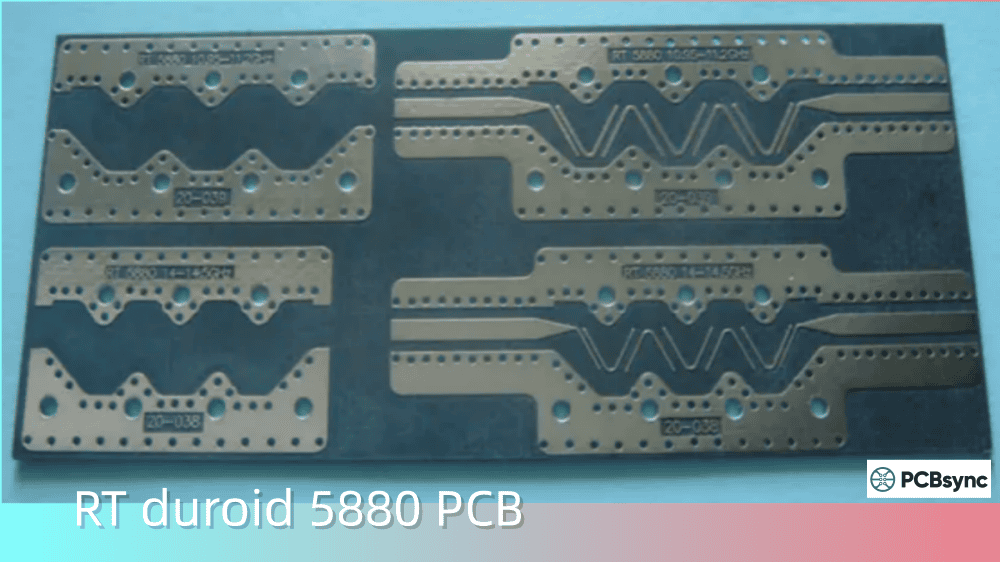
When you’re working on high-frequency circuit designs, material selection can make or break your project. After years of designing RF and microwave circuits, I can tell you that RT/duroid 5880 has earned its reputation as a go-to substrate for demanding applications. Whether you’re developing radar systems, 5G infrastructure, or satellite communications equipment, understanding this material’s capabilities is essential for achieving optimal performance.
This guide covers everything you need to know about RT/duroid 5880 PCB—from its core specifications and practical benefits to fabrication guidelines and real-world design considerations. Let’s dive into what makes this PTFE-based laminate stand out in the crowded field of high-frequency materials.
RT/duroid 5880 is a glass microfiber reinforced PTFE (polytetrafluoroethylene) composite laminate manufactured by Rogers Corporation. The material was specifically engineered for precision stripline and microstrip circuit applications where consistent electrical performance across wide frequency ranges is non-negotiable.
What sets RT/duroid 5880 apart from conventional PCB materials is its composition. The randomly oriented glass microfibers within the PTFE matrix create an isotropic structure, which translates to uniform dielectric properties regardless of signal direction. This isotropy is something you won’t find in many woven-glass reinforced laminates, where the weave pattern can introduce directional variations in electrical performance.
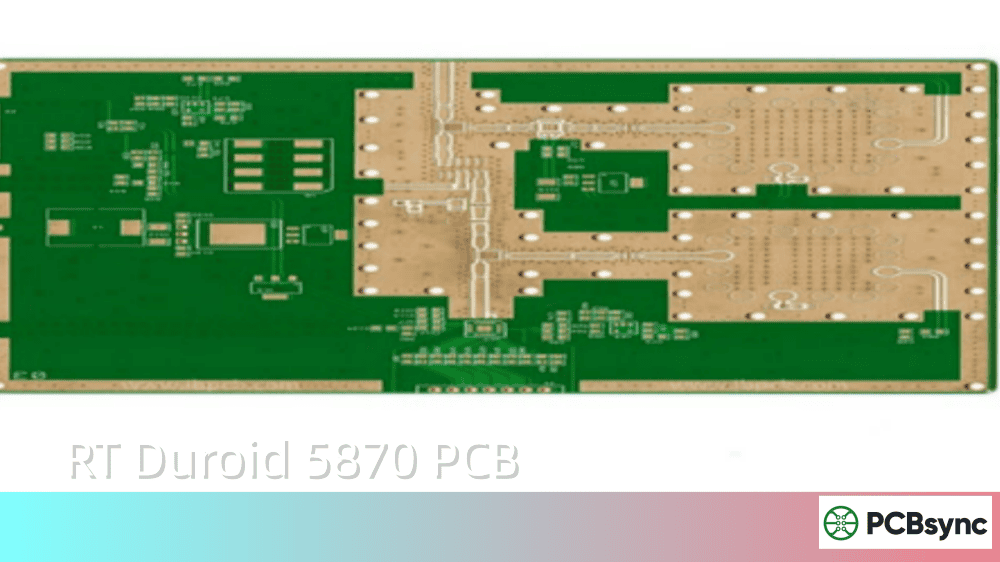
The material belongs to Rogers’ RT/duroid family, which also includes RT/duroid 5870—a close relative with slightly different dielectric characteristics. Both materials share the same fundamental composition but are optimized for different frequency bands and application requirements.
RT/duroid 5880 Technical Specifications
Understanding the exact specifications of RT/duroid 5880 is critical for accurate circuit modeling and simulation. Here’s a comprehensive breakdown of the material’s properties based on the official Rogers datasheet:
Electrical Properties
Property
Value
Test Condition
Test Method
Dielectric Constant (Dk)
2.20 ± 0.02
10 GHz, 23°C
IPC-TM-650 2.5.5.5
Dissipation Factor (Df)
0.0009
10 GHz
IPC-TM-650 2.5.5.5
Thermal Coefficient of Dk
-125 ppm/°C
-50 to 150°C
IPC-TM-650 2.5.5.5
Volume Resistivity
2 × 10⁷ MΩ·cm
C96/35/90
IPC-TM-650 2.5.17.1
Surface Resistivity
2 × 10⁷ MΩ
C96/35/90
IPC-TM-650 2.5.17.1
The dielectric constant of 2.20 is one of the lowest available among reinforced PTFE laminates. This low Dk value enables faster signal propagation and allows for wider trace widths at a given impedance—a significant advantage when you’re trying to reduce conductor losses in microstrip designs.
Mechanical Properties
Property
Typical Value
Test Method
Tensile Strength
16 MPa (2300 psi)
IPC-TM-650 2.4.19
Flexural Strength
34 ksi
IPC-TM-650 2.4.4
Density
2.2 g/cm³
ASTM D792
Coefficient of Thermal Expansion (X/Y)
31 ppm/°C
ASTM D3386
Coefficient of Thermal Expansion (Z)
48 ppm/°C
ASTM D3386
Thermal Properties
Property
Value
Test Condition
Thermal Conductivity
0.20 W/m/K
—
Glass Transition Temperature (Tg)
260°C
IPC-TM-650 2.4.25
Maximum Operating Temperature
260°C
—
Decomposition Temperature (Td)
>315°C
—
The high Tg of 260°C makes RT/duroid 5880 compatible with lead-free soldering processes—an important consideration for RoHS-compliant manufacturing.
Available Thickness Options
RT/duroid 5880 comes in various standard thicknesses to accommodate different design requirements:
Copper cladding options typically range from ½ oz to 2 oz per square foot, with both electrodeposited and rolled copper foil available depending on your application requirements.
Key Benefits of RT/duroid 5880 for High-Frequency PCB Design
Ultra-Low Dielectric Loss
The dissipation factor of 0.0009 at 10 GHz is exceptionally low—even among high-frequency laminates. This translates directly to reduced signal attenuation, which becomes increasingly important as you move into millimeter-wave frequencies. I’ve seen projects where switching from standard FR-4 to RT/duroid 5880 reduced insertion loss by 50% or more at frequencies above 5 GHz.
Consistent Dk Across Frequency Bands
One of the most frustrating aspects of working with conventional laminates is the variation in dielectric constant across different frequencies. RT/duroid 5880 maintains its Dk of 2.20 from 1 MHz through 40+ GHz with minimal variation. This consistency simplifies broadband design and makes simulation-to-fabrication correlation much more predictable.
Excellent Moisture Resistance
With a moisture absorption rate of just 0.02%, RT/duroid 5880 is practically impervious to humidity. This characteristic is critical for applications in aerospace, marine, and outdoor environments where moisture ingress can degrade electrical performance over time. The stable dielectric properties under varying humidity conditions also reduce the need for hermetic packaging in many applications.
Superior Chemical Resistance
The PTFE composition makes RT/duroid 5880 highly resistant to the solvents and etchants used in PCB fabrication. This resistance extends the material’s compatibility with standard processing chemicals, though special surface treatments are still required for proper metallization adhesion.
Dimensional Stability
The glass microfiber reinforcement provides excellent dimensional stability during thermal cycling. This is particularly important for multilayer constructions and designs where tight registration tolerances are required between layers.
The versatility of RT/duroid 5880 has established it as the substrate of choice across numerous high-frequency industries. Understanding these applications helps engineers recognize where this premium material delivers genuine value versus where alternatives might suffice.
Aerospace and Defense Systems
Military radar systems have relied on RT/duroid 5880 for decades, and for good reason. The material’s low loss and consistent performance under temperature extremes make it ideal for airborne radar, missile guidance systems, and electronic warfare applications. I’ve worked on phased array antenna projects where RT/duroid 5880’s isotropic properties were essential for maintaining beam steering accuracy across wide scan angles.
The low outgassing characteristics also qualify it for space applications where material volatility is a concern. Vacuum exposure can cause some materials to release gases that contaminate optical components or sensitive electronics—RT/duroid 5880’s PTFE composition minimizes this risk. Flight-qualified boards using this substrate have accumulated millions of hours of operation in satellite payloads.
Specific aerospace applications include T/R (transmit/receive) modules for active electronically scanned arrays, flight termination receivers, IFF (identification friend or foe) systems, GPS anti-jam antennas, and communication links for unmanned aerial vehicles.
5G and mmWave Communications
The rollout of 5G networks has created massive demand for high-frequency PCB materials. RT/duroid 5880 is widely used in base station antennas, small cells, and millimeter-wave front-end modules. Its performance at 28 GHz and 39 GHz bands—key frequencies for 5G deployments—is well-documented through extensive deployment experience.
The material’s low loss becomes particularly critical at mmWave frequencies, where every fraction of a dB in insertion loss translates to reduced link budget and coverage area. Base station array antennas using RT/duroid 5880 achieve efficiency levels that directly impact network performance and operational costs.
Fixed wireless access (FWA) terminals, customer premises equipment (CPE), and small cell units all benefit from RT/duroid 5880’s consistent performance. The material’s moisture resistance is particularly valuable for outdoor equipment exposed to varying environmental conditions throughout their operational lifetime.
Automotive Radar (ADAS)
Modern vehicles increasingly rely on radar sensors for adaptive cruise control, collision avoidance, and autonomous driving features. RT/duroid 5880 supports the 24 GHz and 77 GHz frequencies used in automotive radar applications while withstanding the temperature cycling and vibration environments found in vehicles.
The automotive industry presents unique challenges: operating temperatures from -40°C to +125°C, exposure to automotive fluids, and stringent reliability requirements over 15+ year vehicle lifespans. RT/duroid 5880’s dimensional stability and consistent electrical properties across temperature extremes address these demands effectively.
Specific automotive radar applications include forward collision warning, blind spot detection, lane change assist, parking assist sensors, and cross-traffic alert systems. As vehicles progress toward full autonomy, the performance demands on radar substrates continue increasing.
Satellite Communications
From low-earth orbit constellations to geostationary satellites, RT/duroid 5880 finds extensive use in satellite communication systems. The material’s radiation resistance and stable performance in vacuum conditions make it suitable for space-qualified designs. Satellite transceivers benefit from the low-loss characteristics that maximize power efficiency—a critical parameter when every watt must come from limited solar panel capacity.
Ground-based satellite terminals also utilize RT/duroid 5880 for high-performance earth station antennas and maritime VSAT systems where reliability in harsh marine environments is essential.
Test and Measurement Equipment
High-precision RF test fixtures and calibration standards often utilize RT/duroid 5880 to ensure accurate and repeatable measurements. The material’s consistent properties minimize measurement uncertainty in vector network analyzer calibrations and similar applications.
Probe stations for on-wafer device characterization, power meter calibration standards, and precision attenuators all benefit from RT/duroid 5880’s predictable behavior. When you’re trying to characterize devices with fractional-dB accuracy, substrate consistency becomes paramount.
Medical Electronics
RF ablation systems, MRI coils, and wireless medical devices benefit from RT/duroid 5880’s biocompatibility and low-loss performance. The material’s chemical resistance also makes it suitable for sterilization processes commonly used in medical environments.
Wireless patient monitoring systems operating in ISM bands use RT/duroid 5880 for antenna elements requiring reliable performance over extended deployment periods. The material’s stable properties ensure consistent signal quality critical for medical data transmission.
Design Best Practices for RT/duroid 5880 PCB
Successful RT/duroid 5880 designs require attention to both electrical and mechanical considerations. Here are the proven practices I’ve developed through numerous high-frequency projects using this material.
Stackup Design Considerations
When designing multilayer stackups with RT/duroid 5880, symmetry is your friend. Use balanced constructions with equal lamination ratios on either side of the center to minimize warpage. Rogers recommends following their published lamination guidelines for optimal results.
For hybrid designs—combining RT/duroid 5880 with other materials like RO4003C or FR-4—careful attention to CTE matching and bonding compatibility is essential. The RO4000 and RO3000 series bondply adhesives work well with RT/duroid 5880 for multilayer constructions.
A typical hybrid stackup might use RT/duroid 5880 for RF signal layers where loss is critical, combined with lower-cost materials for power distribution and digital routing layers. This approach optimizes both performance and cost, placing premium material only where it delivers genuine benefit.
Layer count selection also impacts manufacturing yield and cost. While RT/duroid 5880 supports constructions exceeding 30 layers, most RF applications utilize 2-6 layer stackups. Higher layer counts increase registration challenges and lamination complexity.
Trace Width and Spacing Guidelines
The low dielectric constant of RT/duroid 5880 allows for wider traces at a given impedance compared to higher-Dk materials. While this can reduce conductor losses, it also means that designs migrated from other substrates may require resizing.
For a 50Ω microstrip line on 20-mil RT/duroid 5880 with 1 oz copper, trace width calculates to approximately 62 mils—significantly wider than the same impedance on FR-4 (approximately 38 mils on the same thickness). This wider trace reduces conductor loss but requires more board real estate.
Maintain at least 3× the dielectric thickness as spacing between conductors for adequate leakage control. For controlled impedance lines, allow ±8% tolerance in your specifications to account for fabrication variations.
When routing differential pairs, maintain consistent spacing throughout the run and avoid abrupt bends. The low-loss properties of RT/duroid 5880 make it particularly sensitive to discontinuities that might be tolerable on higher-loss substrates.
Via Design for High-Frequency Performance
Plated-through holes in RT/duroid 5880 require careful attention to surface preparation. The PTFE surface must be chemically or plasma treated before metallization to ensure adequate adhesion. Sodium naphthalene treatment is commonly used, though plasma processes offer advantages for direct metallization.
Via aspect ratios should generally not exceed 10:1 for reliable plating. For thicker boards, consider using sequential lamination with buried vias to achieve the required interconnect density without excessive aspect ratios.
Ground vias placed around RF signal vias help control the via’s characteristic impedance and reduce radiation losses. A common practice is surrounding each RF via with four to six ground vias spaced less than λ/8 apart at the highest operating frequency.
For multilayer boards, thermal vias placed under high-power components help manage heat dissipation despite the relatively low thermal conductivity of the material. Via patterns with 15-20% fill density provide effective thermal transfer without compromising electrical isolation.
Impedance Control Strategies
The stable dielectric properties of RT/duroid 5880 help maintain tight impedance tolerances across the board. However, accurate impedance calculations require using the correct design Dk value—typically 2.20 for microstrip configurations at 10 GHz. For stripline constructions, the effective Dk may differ slightly due to the presence of adjacent dielectric layers.
Copper surface roughness impacts high-frequency performance more than many designers realize. At frequencies above 10 GHz, skin effect confines current flow to the conductor surface, making surface roughness a significant loss contributor. Specifying rolled copper foil or low-profile electrodeposited copper can reduce this effect.
Simulation tools like AWR Microwave Office, Keysight ADS, or free alternatives like QucsStudio can import Rogers material models for accurate electromagnetic simulation. Always verify critical dimensions with first-article prototypes before committing to production quantities.
Thermal Management Approaches
RT/duroid 5880’s thermal conductivity of 0.20 W/m/K is lower than some alternatives, requiring careful thermal design for power amplifier applications. Strategies for managing heat include using thick copper (2 oz or heavier) for power planes, incorporating thermal vias under power devices, and considering metal-backed constructions where heat sinking to a metal chassis is required.
For high-power applications, hybrid stackups using RT/duroid 5880 for RF layers combined with higher-thermal-conductivity materials for heat spreading can provide an effective compromise.
RT/duroid 5880 vs Alternative High-Frequency Materials
Selecting the right substrate involves balancing performance, cost, and manufacturability. Here’s how RT/duroid 5880 compares to commonly used alternatives:
Material
Dk
Df (10 GHz)
Thermal Conductivity
Processing
Relative Cost
RT/duroid 5880
2.20
0.0009
0.20 W/m/K
Requires PTFE processing
High
RT/duroid 5870
2.33
0.0012
0.22 W/m/K
Requires PTFE processing
High
RO4003C
3.38
0.0027
0.71 W/m/K
FR-4-like processing
Medium
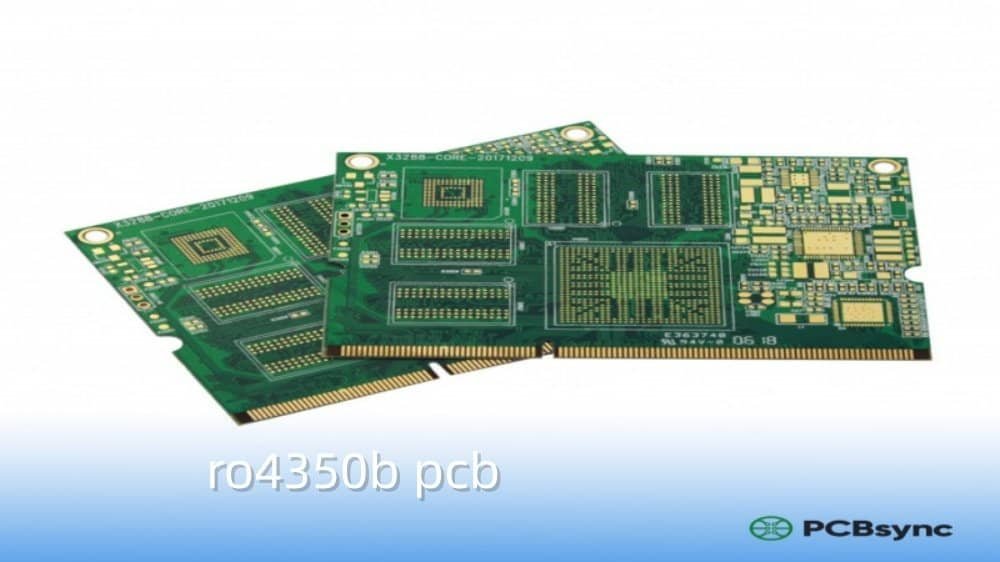
RO4350B
3.48
0.0037
0.69 W/m/K
FR-4-like processing
Medium
FR-4
4.3-4.7
0.02
0.30 W/m/K
Standard processing
Low
When to Choose RT/duroid 5880
Choose RT/duroid 5880 when you need the absolute lowest loss at frequencies above 10 GHz, consistent performance across extremely wide bandwidths, applications in humid or harsh environments, or space and aerospace-grade reliability.
When to Consider Alternatives
If your application operates below 6 GHz and doesn’t require ultra-low loss, materials like RO4003C or RO4350B may offer better value. These hydrocarbon-ceramic laminates process more like FR-4, reducing fabrication complexity and cost while still providing excellent high-frequency performance.
For a comprehensive understanding of different Rogers PCB materials and their applications, consulting manufacturer datasheets and application notes is essential for making informed material selections.
Fabrication Guidelines for RT/duroid 5880
Drilling Considerations
RT/duroid 5880’s soft PTFE composition requires specific drilling parameters to avoid smearing. Use carbide drills with a 130° included lip angle and maintain surface speeds of 150-250 SFM. Stack heights should not exceed 0.240 inches (6.1mm), and phenolic backup boards are recommended for clean hole breakout.
Undercut-style drills with reduced flute diameter can help minimize redeposited smear in hole walls. If smearing does occur, vapor honing or plasma treatment can dislodge debris before metallization.
Surface Treatment for Metallization
The PTFE surface is inherently non-wettable, which creates adhesion challenges for plating and soldermask. Sodium naphthalene treatment is the most effective method for creating a bondable surface, though it requires careful handling of hazardous chemicals.
Plasma treatment using H₂/N₂, NH₃, or N₂ gases provides an alternative, particularly when paired with direct metallization processes. The treatment should be performed immediately before metal deposition for best results.
Etching and Routing
Standard etchants (ferric chloride, ammonium persulfate, cupric chloride) work well with RT/duroid 5880. Typical etch factors range from 1.5-2.0 for 1 oz copper and 2.0-2.5 for 2 oz copper.
For routing, carbide double-fluted spiral-up endmills are preferred. Avoid diamond-cut or multi-fluted chipbreakers, which can clog with PTFE resin. Surface speeds of 150 SFM and feed rates of 0.002 inches per revolution provide clean edge quality.
Multilayer Bonding Options
RT/duroid 5880 supports both fusion bonding and adhesive bonding for multilayer construction:
Fusion Bonding: Multiple sheets of RT/duroid 5880 can be fused together under heat and pressure without adhesives. This approach provides the best electrical performance but limits flexibility in layer-to-layer material combinations.
Adhesive Bonding: Rogers’ RO4000 and RO3000 series bondply, as well as FEP and PTFE adhesive films, enable hybrid constructions combining RT/duroid 5880 with other materials.
Useful Resources for RT/duroid 5880 PCB Design
Official Documentation
RT/duroid 5870/5880 Datasheet: Available from Rogers Corporation website (rogerscorp.com)
Fabrication Guidelines: Rogers publication on processing RT/duroid materials
Design Calculator: Rogers’ online impedance calculator for material property inputs
Rogers Design Dk Values: Technical paper on dielectric properties for design purposes
Simulation Models: S-parameter models available for major EDA platforms
Industry Standards
IPC-4103: Specification for Base Materials for High Frequency Applications
IPC-TM-650: Test methods referenced in material specifications
MIL-PRF-55110: Performance specification for printed wiring boards (military)
Cost Considerations and ROI Analysis
RT/duroid 5880 commands a premium price compared to standard FR-4—typically 10-15× higher for raw material costs. However, evaluating the total cost of ownership reveals a different picture for high-frequency applications.
Hidden Costs of Lower-Performance Materials
Using inadequate substrates in RF designs often leads to extended prototype cycles due to simulation-to-hardware discrepancies, field failures from moisture absorption or thermal cycling, and increased system complexity to compensate for substrate losses.
When Premium Materials Pay Off
For production volumes in aerospace, defense, and medical applications, the higher material cost is usually justified by reduced system complexity, improved reliability, and lower total cost per unit of performance.
Commercial applications require more careful analysis. If your design can meet specifications with RO4003C or similar materials, the cost savings may outweigh the marginal performance improvement of RT/duroid 5880.
Frequently Asked Questions About RT/duroid 5880 PCB
What is the maximum operating frequency for RT/duroid 5880?
RT/duroid 5880 performs exceptionally well through Ku-band (12-18 GHz) and remains effective into millimeter-wave frequencies up to 40+ GHz. The material’s ultra-low loss tangent of 0.0009 extends its usefulness to applications that other PTFE laminates cannot adequately serve. For frequencies beyond 77 GHz, consulting Rogers’ applications engineering team for specific guidance is recommended.
Can RT/duroid 5880 be used for flexible PCBs?
No, RT/duroid 5880 is a rigid laminate not suitable for continuous flexing applications. While it offers good flexural strength for rigid constructions, designers requiring high-frequency flex circuits should consider Rogers’ FlexWave series or other polyimide-based substrates specifically engineered for flexibility.
How does RT/duroid 5880 handle lead-free soldering processes?
RT/duroid 5880’s glass transition temperature of 260°C and decomposition temperature exceeding 315°C make it fully compatible with lead-free soldering profiles required for RoHS compliance. Proper baking before reflow (30-90 minutes at 120-150°C) helps prevent delamination during the thermal stress of lead-free assembly.
What surface finishes work best with RT/duroid 5880?
Common surface finishes including ENIG (Electroless Nickel Immersion Gold), immersion silver, immersion tin, and OSP can all be applied to RT/duroid 5880 after proper surface preparation. ENIG is particularly popular for RF applications due to its consistent surface quality and solderability. The key requirement is ensuring adequate PTFE surface treatment before any metallization steps.
Is RT/duroid 5880 suitable for space applications?
Yes, RT/duroid 5880 is widely used in space-qualified designs. Its low outgassing characteristics, radiation resistance, and stable performance in vacuum conditions make it appropriate for satellite systems, launch vehicles, and other aerospace applications. For formal space qualification, specific lot testing and documentation may be required depending on mission requirements.
Conclusion
RT/duroid 5880 remains one of the premier choices for high-frequency PCB applications demanding the lowest possible dielectric loss and consistent performance across wide frequency bands. Its combination of ultra-low Dk, exceptional moisture resistance, and proven reliability in demanding environments has made it a standard material in aerospace, defense, 5G, and automotive radar applications.
While the material requires specialized fabrication techniques and commands premium pricing, the performance advantages often justify the investment for applications where signal integrity is paramount. Understanding the material’s specifications, proper design practices, and fabrication requirements enables engineers to fully leverage RT/duroid 5880’s capabilities in their high-frequency designs.
For projects where RT/duroid 5880’s specifications exceed requirements, considering alternatives like RO4003C or RO4350B can provide excellent high-frequency performance at more accessible price points. The key is matching material capabilities to actual application requirements rather than defaulting to either the cheapest or most expensive option.
Inquire: Call 0086-755-23203480, or reach out via the form below/your sales contact to discuss our design, manufacturing, and assembly capabilities.
Quote: Email your PCB files to Sales@pcbsync.com (Preferred for large files) or submit online. We will contact you promptly. Please ensure your email is correct.
Notes: For PCB fabrication, we require PCB design file in Gerber RS-274X format (most preferred), *.PCB/DDB (Protel, inform your program version) format or *.BRD (Eagle) format. For PCB assembly, we require PCB design file in above mentioned format, drilling file and BOM. Click to download BOM template To avoid file missing, please include all files into one folder and compress it into .zip or .rar format.