Inquire: Call 0086-755-23203480, or reach out via the form below/your sales contact to discuss our design, manufacturing, and assembly capabilities.
Quote: Email your PCB files to Sales@pcbsync.com (Preferred for large files) or submit online. We will contact you promptly. Please ensure your email is correct.
Notes: For PCB fabrication, we require PCB design file in Gerber RS-274X format (most preferred), *.PCB/DDB (Protel, inform your program version) format or *.BRD (Eagle) format. For PCB assembly, we require PCB design file in above mentioned format, drilling file and BOM. Click to download BOM template To avoid file missing, please include all files into one folder and compress it into .zip or .rar format.
If you’ve been designing multilayer RF circuits lately, you’ve probably encountered the challenge of finding the right inner-layer material that balances performance with manufacturability. That’s exactly where RO4835T PCB laminate comes into play. As someone who’s worked with various high-frequency materials over the years, I can tell you that Rogers really hit a sweet spot with this one.
In this guide, we’ll dive deep into everything you need to know about RO4835T—from its core specifications to real-world design considerations. Whether you’re working on 5G infrastructure, automotive radar, or mmWave antenna systems, understanding this material will help you make better design decisions.
RO4835T is a low-loss, spread glass reinforced, ceramic-filled thermoset laminate manufactured by Rogers Corporation. It belongs to the RO4000® series, which has become something of an industry standard for high-frequency applications that require predictable electrical performance without breaking the bank.
What makes RO4835T particularly interesting is its intended use case. Rogers designed it specifically as an inner-layer material for multilayer board (MLB) constructions. Think of it as the complement to RO4835—when your stackup calls for thinner cores in the inner layers, RO4835T PCB is your go-to option.
The material uses a proprietary filler system combined with a flame-retardant dielectric that delivers consistent performance across a wide frequency range. The spread glass reinforcement isn’t just for structural integrity—it also helps minimize the “fiber weave effect” that can cause signal integrity issues at higher frequencies.
Available Thickness Options
RO4835T comes in three standard core thicknesses:
2.5 mil (0.064 mm)
3 mil (0.076 mm)
4 mil (0.102 mm)
These thin profiles make it ideal for high-layer-count designs where overall board thickness is a concern, particularly in applications like phased array antennas and compact radar modules.
RO4835T Key Specifications and Properties
Let’s get into the numbers that matter. When you’re selecting materials for a high-frequency design, these specifications will determine whether RO4835T PCB is the right fit for your application.
Electrical Properties
Property
Value
Test Condition
Dielectric Constant (Dk)
3.33 ± 0.05
10 GHz, 23°C
Dissipation Factor (Df)
0.0030
10 GHz, 23°C
Dielectric Constant (Process)
3.37
Clamped Stripline
Volume Resistivity
1.7 × 10¹⁰ MΩ·cm
C-96/35/90
Surface Resistivity
4.2 × 10⁹ MΩ
C-96/35/90
The 3.33 Dk value at 10 GHz is particularly noteworthy. This relatively low dielectric constant allows for wider trace geometries at a given impedance, which improves manufacturing yield and reduces conductor losses. The tight Dk tolerance (±0.05) ensures consistent impedance control across your production run—something that’s critical when you’re building precision RF circuits.
Thermal and Mechanical Properties
Property
Value
Test Method
Coefficient of Thermal Expansion (X-axis)
14 ppm/°C
IPC-TM-650 2.4.41
Coefficient of Thermal Expansion (Y-axis)
16 ppm/°C
IPC-TM-650 2.4.41
Coefficient of Thermal Expansion (Z-axis)
35 ppm/°C
IPC-TM-650 2.4.41
Glass Transition Temperature (Tg)
>280°C
IPC-TM-650 2.4.25
Thermal Conductivity
0.62 W/m·K
ASTM D5470
Decomposition Temperature (Td)
390°C
TGA
That Tg value above 280°C is significant. It means the material maintains dimensional stability through multiple reflow cycles—important for lead-free assembly processes where peak temperatures can exceed 260°C. The low Z-axis CTE (35 ppm/°C) compared to standard FR-4 (around 60-70 ppm/°C) improves plated through-hole reliability in your RO4835T PCB designs.
Flame Retardancy and Compliance
Property
Rating/Compliance
Flammability Rating
UL 94 V-0
RoHS Compliance
Yes
Lead-Free Process Compatible
Yes
The UL 94 V-0 flame retardant rating is achieved using RoHS-compliant technology, which matters if you’re designing for markets with strict environmental regulations.
RO4835T vs RO4835: Understanding the Differences
One question I get asked frequently is: “When should I use RO4835T versus RO4835?” The answer comes down to your stackup requirements.
Thickness and Application
RO4835 is available in thicker cores (6.6 mil to 30 mil) and is typically used for outer layers or standalone RF boards. It’s your workhorse for single-layer and simple two-layer high-frequency designs.
RO4835T PCB material, with its thinner profiles (2.5-4 mil), is optimized for inner layers in complex multilayer constructions. When you need to build up a stackup with many RF layers while keeping the total thickness manageable, RO4835T is the logical choice.
When to Use Each Material
Design Scenario
Recommended Material
Single or double-sided RF board
RO4835
Inner layers of MLB design
RO4835T
Outer layers of hybrid stackup
RO4835
High layer-count antenna arrays
RO4835T (inner) + RO4835 (outer)
Thin, compact radar modules
RO4835T throughout
Material Compatibility
Both materials share the same resin chemistry, which means they’re fully compatible in hybrid stackups. You can combine RO4835T inner layers with RO4835 outer layers and RO4450T or RO4450F prepregs without worrying about delamination or CTE mismatch issues.
Choosing between RO4835T PCB and other popular RF materials requires understanding the trade-offs. Here’s how it stacks up against common alternatives.
Comparison with FR-4
Parameter
RO4835T
Standard FR-4
Dk @ 10 GHz
3.33
4.2-4.8
Df @ 10 GHz
0.0030
0.020-0.025
Dk Variation with Frequency
Minimal
Significant
Dk Variation with Temperature
±0.05
±0.20+
Cost
Higher
Lower
Processing
FR-4 compatible
Standard
The key advantage of RO4835T is its dramatically lower loss tangent—about 8x better than FR-4. This translates directly to lower insertion loss in your signal paths. At 77 GHz (automotive radar frequencies), the difference between FR-4 and RO4835T can mean the difference between a working design and one that doesn’t meet specification.
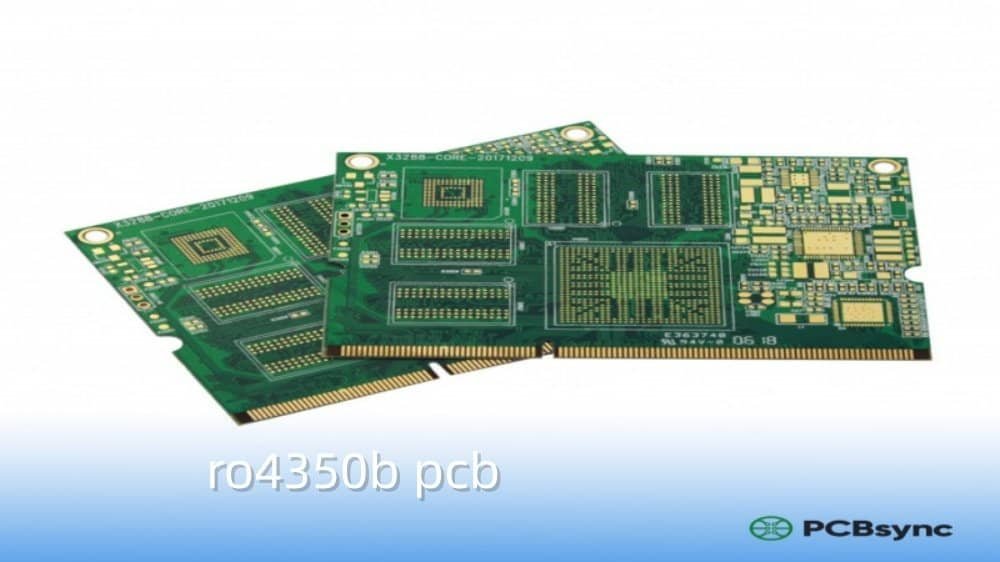
Comparison with RO4350B
RO4350B is perhaps the most widely used Rogers laminate. Here’s how RO4835T compares:
Parameter
RO4835T
RO4350B
Dk
3.33
3.48
Df
0.0030
0.0037
Oxidation Resistance
Enhanced
Standard
Thinnest Available Core
2.5 mil
4 mil
Designed For
MLB inner layers
General RF
RO4835T offers slightly better loss performance and superior oxidation resistance, making it preferable for designs that will see elevated temperatures over extended periods. If you’re working on a Rogers PCB project that requires thin inner layers, RO4835T is often the better choice.
Comparison with PTFE Materials
Parameter
RO4835T
PTFE (e.g., RT/duroid)
Dk Stability
Excellent
Excellent
Df
0.0030
0.0012-0.0020
Processing
FR-4 compatible
Specialized
Dimensional Stability
Better
Moderate
Cost
Moderate
Higher
PTFE materials offer lower losses but require specialized fabrication processes. RO4835T provides a compelling middle ground—better than FR-4, processable like FR-4, and significantly less expensive than PTFE systems.
Applications of RO4835T PCB
The real value of any material becomes clear when you understand where it excels. RO4835T PCB has found its way into numerous demanding applications.
5G Wireless Infrastructure
The rollout of 5G networks has created massive demand for high-frequency materials. Base station antennas, particularly massive MIMO arrays operating at 28 GHz and 39 GHz bands, require materials that can deliver consistent performance across many identical elements.
RO4835T’s tight Dk tolerance makes it ideal for these applications. When you’re building an antenna array with 64 or 128 elements, material consistency directly impacts beam-forming accuracy. The thin cores allow designers to create compact feed networks without compromising signal integrity.
Automotive Radar Systems
Modern vehicles use multiple radar sensors operating at 77 GHz (long-range) and 79 GHz (short-range). These systems demand materials with:
Stable dielectric properties up to 81 GHz
Good thermal performance (-40°C to +125°C operating range)
Consistent batch-to-batch properties for automotive-grade reliability
RO4835T PCB meets all these requirements. Its enhanced oxidation resistance is particularly valuable in under-hood applications where temperatures can cycle repeatedly over the vehicle’s lifetime.
At these frequencies, even small variations in dielectric constant can cause significant phase errors. The spread glass construction of RO4835T minimizes the fiber weave effect that can plague woven glass materials at mmWave frequencies.
Aerospace and Defense
Military and aerospace applications have used Rogers materials for decades. RO4835T finds use in:
Phased array radar systems
Electronic warfare (EW) systems
Satellite communication systems
Unmanned aerial vehicle (UAV) data links
The material’s stability under thermal cycling and resistance to moisture absorption makes it suitable for these demanding environments.
Power Amplifiers and RF Front-Ends
High-power RF applications benefit from RO4835T’s thermal properties. Power amplifier circuits generate significant heat, and the material’s thermal conductivity helps dissipate this heat more effectively than standard FR-4.
RO4835T PCB Stackup Design Considerations
Designing a successful multilayer board with RO4835T requires attention to several factors.
Recommended Stackup Materials
For optimal results, Rogers recommends combining RO4835T PCB with compatible materials:
Layer Type
Recommended Material
Notes
Outer signal layers
RO4835
6.6-30 mil cores
Inner signal layers
RO4835T
2.5-4 mil cores
Bonding layers
RO4450T or RO4450F
Prepreg options
Copper foil
CU4000 or CU4000 LoPro
ED or reverse-treated
Copper Foil Selection
The copper foil choice impacts both electrical and mechanical performance:
CU4000 LoPro (low-profile copper): Recommended for applications above 10 GHz. The smooth copper surface reduces conductor losses at high frequencies where skin effect becomes significant.
Standard ED copper: Acceptable for lower frequencies where cost is a primary concern.
Stackup Example: 8-Layer Automotive Radar Board
Here’s a practical stackup example for a 77 GHz automotive radar application:
Layer
Material
Thickness
Function
L1
Copper (LoPro)
0.5 oz
Top signal
RO4835
5 mil
Core
L2
Copper
1 oz
Ground
RO4450T
3 mil
Prepreg
L3
Copper
0.5 oz
Signal
RO4835T
3 mil
Core
L4
Copper
1 oz
Ground
RO4835T
3 mil
Core
L5
Copper
1 oz
Power
RO4450T
3 mil
Prepreg
L6
Copper
0.5 oz
Signal
RO4835
5 mil
Core
L7
Copper
1 oz
Ground
RO4450T
3 mil
Prepreg
L8
Copper (LoPro)
0.5 oz
Bottom signal
Sequential Lamination Considerations
RO4835T PCB is well-suited for sequential lamination processes. The fully cured RO4000 products can withstand multiple lamination cycles without degradation—important for designs requiring blind or buried vias.
When planning sequential laminations:
Use consistent thermal profiles across lamination cycles
Allow adequate cooling time between cycles
Consider via reliability when determining via aspect ratios
Work closely with your fabricator to optimize the process
Fabrication and Processing Guidelines
One of RO4835T’s biggest advantages is its compatibility with standard FR-4 processing. This means your fabricator doesn’t need specialized equipment or drastically different processes.
Drilling Recommendations
Parameter
Recommendation
Entry material
Standard aluminum entry
Backup material
Phenolic or composite backup
Drill speeds
Standard for glass-reinforced materials
Chip load
0.001-0.003 inches per revolution
Stack height
2-3 panels typical
The ceramic filler content does increase tool wear compared to pure epoxy materials, so factor in higher drill bit consumption when estimating costs.
Plating Considerations
RO4835T PCB materials accept plating well. For best results:
Use desmear processes appropriate for thermoset materials
Plasma desmear provides excellent results
Standard electroless copper deposition works well
Monitor plating thickness in high aspect ratio vias
Solder Mask and Surface Finish
The material is compatible with:
LPI (Liquid Photo-Imageable) solder mask
ENIG (Electroless Nickel Immersion Gold)
HASL (Hot Air Solder Leveling)
OSP (Organic Solderability Preservative)
Immersion silver and tin
For high-frequency applications, ENIG is typically preferred due to its flat surface and consistent skin effect performance.
Lead-Free Assembly Compatibility
RO4835T is fully compatible with lead-free soldering processes. The high Tg (>280°C) and Td (390°C) provide adequate margin for peak reflow temperatures up to 260°C.
Impedance Control and Signal Integrity
Getting impedance control right on RO4835T PCB designs requires understanding a few nuances that differ from standard FR-4 work.
Design Dk vs Process Dk
Rogers specifies two Dk values for RO4835T:
Design Dk (3.33): Use this for initial impedance calculations and simulations
Process Dk (3.37): Accounts for the resin-rich regions around traces in actual fabricated boards
For the most accurate impedance predictions, start with the process Dk value and work with your fabricator to fine-tune based on their specific process data. Most experienced RF fabricators have developed correlation data for Rogers materials that improves first-pass yield.
Trace Width Calculations
At higher frequencies, conductor losses become increasingly important. The lower Dk of RO4835T PCB allows for wider traces at a given impedance compared to FR-4:
Target Impedance
RO4835T Trace Width
FR-4 Trace Width
50Ω microstrip (5 mil core)
~11 mil
~9 mil
50Ω stripline (6 mil total)
~7 mil
~5.5 mil
Values are approximate and depend on copper thickness and specific stackup
Wider traces mean lower conductor losses and improved manufacturing yield—a double benefit that’s particularly valuable at mmWave frequencies.
Managing Fiber Weave Effects
Even with RO4835T’s spread glass construction, fiber weave effects can impact performance above 30 GHz. Consider these mitigation strategies:
Route at angles: Running traces at non-orthogonal angles to the fiber weave pattern averages out the local Dk variations
Use wider traces: Wider conductors average over more fiber weave periods
Specify spread glass: RO4835T already uses spread glass, but confirm with your fabricator
Differential pairs: Tight coupling helps both traces see similar effective Dk
Via Design for High Frequencies
Via transitions become critical above 10 GHz. When using RO4835T PCB in your stackup:
Back-drill signal vias: Removes the via stub that causes resonances
Use via fencing: Ground vias around signal vias improve isolation
Consider blind/buried vias: Eliminates stubs entirely but adds cost
A via stub resonance frequency can be estimated as: f(GHz) ≈ 75 / stub_length(mm). For a 60 mil stub, resonance occurs around 50 GHz—right in the automotive radar band.
Thermal Management Strategies
While RO4835T PCB has reasonable thermal conductivity (0.62 W/m·K), proper thermal design ensures long-term reliability.
Heat Spreading Techniques
For power amplifier and other high-power applications:
Thermal vias: Arrays of plated vias under hot components conduct heat to inner ground planes
Copper pours: Maximize copper on inner layers to spread heat laterally
Component placement: Distribute heat-generating components across the board
Heatsink attachment: Plan for thermal interface materials and mechanical mounting
Via Array Calculations
A rough estimate for thermal via array thermal resistance:
For an n×n array of 10 mil diameter vias with 1 oz plating through a 62 mil board:
Thermal resistance ≈ 50 / n² °C/W (approximate)
This helps size via arrays for specific thermal dissipation requirements.
Temperature-Dependent Dk Considerations
RO4835T’s Dk changes minimally with temperature, but for precision applications, account for this variation:
Typical Dk temperature coefficient: approximately 40 ppm/°C
Over a 100°C temperature swing, expect ~0.4% Dk change
This translates to approximately 0.2% impedance variation
For most applications, this is negligible, but phased array designs with tight beam-pointing requirements may need to account for it.
Oxidation Resistance: A Key Differentiator
One aspect that often gets overlooked in material selection is long-term stability. All hydrocarbon-based thermoset materials can oxidize over time, particularly at elevated temperatures. This oxidation gradually increases both Dk and Df, potentially affecting circuit performance.
Rogers developed RO4835T PCB with enhanced oxidation resistance specifically to address this concern. The proprietary formulation maintains stable electrical properties even after extended exposure to high temperatures.
This matters most in applications where:
Operating temperatures consistently exceed 85°C
Product lifetime requirements exceed 10 years
Reliability testing includes high-temperature operating life (HTOL) testing
Field returns due to electrical drift are unacceptable
Automotive radar is a prime example. These systems must function reliably for 15+ years while experiencing temperature swings from -40°C to over 100°C. RO4835T’s oxidation resistance provides confidence that the radar won’t drift out of specification over the vehicle’s lifetime.
How to Source RO4835T Laminates
Sourcing considerations for RO4835T PCB material:
Through PCB Fabricators
Most designers don’t purchase laminate directly. Instead, they work with PCB fabricators who maintain relationships with Rogers distributors. When requesting quotes:
Specify RO4835T by name in your fabrication drawing
Include the required thickness (2.5, 3, or 4 mil)
Note any specific copper foil requirements
Mention if you need low-profile copper for high-frequency applications
Rogers Authorized Distributors
For direct material purchases or large-volume procurement:
Contact Rogers Corporation directly for regional distributor information
Major electronics distributors stock popular configurations
Lead times vary from stock to 8-12 weeks for custom configurations
Material Availability Notes
Standard configurations (3 mil core with 0.5 oz copper) typically have better availability than custom builds. For prototype work, check with multiple fabricators to find one with the specific configuration in stock.
Cost Considerations and Design for Manufacturability
Understanding the cost drivers helps optimize your RO4835T PCB design for both performance and budget.
Material Cost Factors
RO4835T costs more than standard FR-4 but less than PTFE alternatives. Key cost drivers include:
Factor
Impact on Cost
Mitigation Strategy
Raw material cost
5-10x FR-4
Minimize RF layer count
Copper foil type
LoPro adds 15-25%
Use LoPro only where needed
Core thickness
Standard sizes lower cost
Use 3 mil (most common)
Panel utilization
Larger panels more efficient
Design for standard panel sizes
Layer count
Each RF layer adds cost
Optimize stackup carefully
Hybrid Stackup Strategies
One effective cost optimization technique is hybrid stackup design. Not every layer needs RO4835T PCB:
Use FR-4 for power and ground: No RF performance needed
Use RO4835T only for signal layers: Where loss matters
Consider mixed-material zones: Different materials in different board regions
A well-designed hybrid stackup can reduce material costs by 30-50% compared to all-Rogers construction while maintaining RF performance where it counts.
Panelization Tips
Work with your fabricator on panelization early:
Standard panel sizes: 12×18″ or 18×24″ are common
Tooling borders: Account for handling areas
Array spacing: Allows for routing and V-scoring
Orientation: Align to grain direction for consistent properties
First-Article Testing Recommendations
For critical applications, invest in thorough first-article testing:
TDR measurements: Verify impedance control
Insertion loss testing: Confirm RF performance
Cross-sectioning: Validate layer registration and plating
Dk measurement: Compare actual vs. specified values
This upfront investment prevents costly field failures and production delays.
Useful Resources for RO4835T PCB Design
When working with RO4835T, these resources will help:
Official Documentation
Resource
Description
Access
RO4835T Data Sheet
Complete specifications
Rogers Corporation website
Fabrication Guidelines
Processing recommendations
Available from Rogers
MWI Calculator
Impedance and loss calculations
Rogers online tool
Design DK Calculator
Process Dk estimation
Rogers online tool
Design Tools
Rogers provides several free online tools:
MWI-2017: Microwave impedance calculator with loss estimation
Rogers offers application engineering support for complex designs. Don’t hesitate to reach out if you’re pushing the material to its limits or working on a novel application.
Frequently Asked Questions About RO4835T PCB
What is the dielectric constant (Dk) of RO4835T?
The dielectric constant of RO4835T is 3.33 at 10 GHz under design conditions. The process Dk (measured using clamped stripline method) is 3.37. Both values include tight tolerance control of ±0.05, ensuring consistent impedance across production lots.
Is RO4835T compatible with standard FR-4 fabrication processes?
Yes, RO4835T PCB can be fabricated using standard epoxy/glass (FR-4) processes. This includes drilling, plating, etching, and lamination. The material was specifically designed to enable high-frequency performance without requiring specialized fabrication equipment.
What thickness options are available for RO4835T?
RO4835T is available in three standard core thicknesses: 2.5 mil (0.064 mm), 3 mil (0.076 mm), and 4 mil (0.102 mm). These thin profiles are optimized for inner-layer use in multilayer board designs where overall thickness must be minimized.
Can RO4835T be used for automotive radar applications?
Absolutely. RO4835T is well-suited for automotive radar operating at 77 GHz and 79 GHz. Its stable Dk across temperature (-40°C to +125°C typical automotive range), enhanced oxidation resistance for long-term reliability, and low loss at mmWave frequencies make it an excellent choice for these applications.
What prepreg materials should I use with RO4835T?
Rogers recommends RO4450T or RO4450F prepreg for bonding RO4835T PCB cores together. These prepregs have matched Dk values and thermal properties, ensuring consistent electrical performance and reliable lamination. The combination creates a material system designed to work together in demanding multilayer applications.
Conclusion
RO4835T PCB laminate represents a thoughtful solution to a real design challenge: how to build high-layer-count RF boards without sacrificing performance or paying PTFE prices. Its combination of low loss, tight Dk tolerance, FR-4-compatible processing, and enhanced oxidation resistance makes it a compelling choice for demanding applications from 5G to automotive radar.
If you’re designing multilayer RF circuits and need thin inner-layer materials that won’t compromise your signal integrity, RO4835T deserves serious consideration. Work with a fabricator experienced in Rogers materials, use the recommended prepregs and copper foils, and you’ll have a solid foundation for your next high-frequency design.The RF and microwave world continues to push toward higher frequencies and more complex multilayer structures. Materials like RO4835T make these advances possible while keeping manufacturability and cost in check. That’s the kind of engineering trade-off that makes our jobs as designers just a little bit easier
Inquire: Call 0086-755-23203480, or reach out via the form below/your sales contact to discuss our design, manufacturing, and assembly capabilities.
Quote: Email your PCB files to Sales@pcbsync.com (Preferred for large files) or submit online. We will contact you promptly. Please ensure your email is correct.
Notes: For PCB fabrication, we require PCB design file in Gerber RS-274X format (most preferred), *.PCB/DDB (Protel, inform your program version) format or *.BRD (Eagle) format. For PCB assembly, we require PCB design file in above mentioned format, drilling file and BOM. Click to download BOM template To avoid file missing, please include all files into one folder and compress it into .zip or .rar format.