Inquire: Call 0086-755-23203480, or reach out via the form below/your sales contact to discuss our design, manufacturing, and assembly capabilities.
Quote: Email your PCB files to Sales@pcbsync.com (Preferred for large files) or submit online. We will contact you promptly. Please ensure your email is correct.
Notes: For PCB fabrication, we require PCB design file in Gerber RS-274X format (most preferred), *.PCB/DDB (Protel, inform your program version) format or *.BRD (Eagle) format. For PCB assembly, we require PCB design file in above mentioned format, drilling file and BOM. Click to download BOM template To avoid file missing, please include all files into one folder and compress it into .zip or .rar format.
When you’re designing PCBs for industrial radar applications operating in the 60 to 81 GHz frequency range, material selection becomes absolutely critical. One wrong choice and you’ll be dealing with excessive signal loss, unreliable performance, and radar systems that can’t detect objects at the ranges you need. After working with various high-frequency materials over the years, I’ve found that Rogers’ RO4835IND LoPro Laminates stand out as a genuinely practical solution for short-range industrial radar designs. This guide breaks down everything you need to know about this material from a real-world engineering perspective.
RO4835IND LoPro Laminates are specialized thermoset circuit materials developed by Rogers Corporation specifically for 60-81 GHz short-range (under 30 meters) industrial radar applications. The “IND” designation indicates this material is optimized for industrial use cases rather than automotive applications.
These laminates belong to the RO4000 series family of hydrocarbon ceramic materials. What makes them particularly useful for radar design is the combination of stable electrical properties at millimeter-wave frequencies, excellent Dk uniformity, and compatibility with standard FR-4 fabrication processes. You don’t need to invest in specialized PTFE processing equipment to work with this material, which significantly reduces manufacturing complexity and cost.
The LoPro designation refers to Rogers’ proprietary reverse-treated electrodeposited (ED) copper foil. This foil type features a smoother copper surface compared to standard ED copper, which directly translates to lower conductor losses at high frequencies. At 60 GHz and above, conductor surface roughness becomes a dominant loss mechanism because the skin depth shrinks to just a few micrometers.
Key Technical Specifications of RO4835IND LoPro Laminates
Understanding the specifications helps you determine whether this material fits your design requirements. Here’s a comprehensive breakdown of the electrical and mechanical properties:
Electrical Properties
Property
Value
Test Condition
Test Method
Dielectric Constant (Dk) Process
3.48 ± 0.05
10 GHz/23°C
IPC-TM-650 2.5.5.5
Dielectric Constant (Dk) Design
3.48
60 GHz
Microstrip Differential Phase Length
Dielectric Constant (Dk) Design
3.49
77 GHz
Microstrip Differential Phase Length
Dissipation Factor (Df)
0.0037
10 GHz/23°C
IPC-TM-650 2.5.5.5
Dissipation Factor (Df)
0.0031
2.5 GHz/23°C
IPC-TM-650 2.5.5.5
Transmission Line Loss
2.13 dB/inch
60 GHz
Microstrip Differential Phase Length
Transmission Line Loss
2.75 dB/inch
77 GHz
Microstrip Differential Phase Length
Mechanical and Thermal Properties
Property
Value
Test Method
Glass Transition Temperature (Tg)
>280°C
IPC-TM-650 2.4.24.3 (TMA)
Decomposition Temperature (Td)
390°C
ASTM D3850 (TGA)
Dimensional Stability
<0.5 mm/m
IPC-TM-650 2.4.39A
Moisture Absorption
0.05%
ASTM D570 (48 hrs, 50°C)
Copper Peel Strength
0.88 N/mm (5.0 pli)
IPC-TM-650 2.4.8
Flammability Rating
UL 94 V-0
UL 94
Standard Product Availability
Parameter
Options
Thickness
0.004″ (0.102mm) ± 0.0007″
Panel Sizes
12″×18″, 24″×18″, 24″×36″, 48″×36″
Copper Cladding
LoPro Reverse Treated ED Copper, ½ oz (18μm) TH/TH
Lead-Free Compatible
Yes
Why Choose RO4835IND LoPro for Industrial Radar?
Several factors make RO4835IND LoPro Laminates particularly well-suited for industrial radar sensor applications. Let me walk through the key advantages based on actual design considerations.
Excellent Insertion Loss Performance
The 2.13 dB/inch insertion loss at 60 GHz might not seem impressive until you compare it to standard FR-4, which simply isn’t viable at these frequencies due to excessive dielectric losses. For short-range radar where you need reliable detection up to 30 meters, every fraction of a dB matters. The LoPro copper foil contributes significantly here by reducing conductor losses that become dominant at millimeter-wave frequencies.
Dk Uniformity and Stability
Radar antenna performance depends heavily on consistent dielectric properties across the board. The expanded weave fiber construction in RO4835IND LoPro provides excellent Dk uniformity, while Rogers’ tight quality control maintains low Dk variation from lot to lot. When you’re manufacturing hundreds or thousands of radar sensor modules, this consistency becomes crucial for maintaining production yields and performance repeatability.
FR-4 Process Compatibility
This is where RO4835IND LoPro really shines from a manufacturing economics perspective. Unlike conventional PTFE-based high-frequency materials that require specialized via preparation processes like sodium etch, RO4835IND LoPro can be processed using standard epoxy/glass fabrication techniques. Your existing Rogers PCB manufacturer can work with this material without significant equipment investments, leading to higher fabrication yield rates and lower per-board costs compared to PTFE alternatives.
Environmental Reliability
Industrial radar sensors often operate in challenging environments with temperature fluctuations, humidity exposure, and vibration. The low moisture absorption (0.05%) ensures minimal RF performance drift when the board is exposed to humid conditions. The robust copper peel strength maintains reliable interconnections through thermal cycling and mechanical stress.
The high glass transition temperature (above 280°C) provides substantial margin above typical operating temperatures, preventing material softening that could cause dimensional changes or delamination. The 390°C decomposition temperature ensures the material remains stable through all standard manufacturing and assembly processes.
Oxidation Resistance
One often-overlooked advantage of the RO4835 family is its enhanced oxidation resistance compared to standard hydrocarbon thermoset materials. Rogers engineered this material with additives that provide approximately 10 times better oxidation resistance than traditional thermoset laminates. This matters for applications requiring long-term stability at elevated operating temperatures, where oxidation can gradually degrade dielectric properties over the product lifetime.
Thermal Performance
While not a high-thermal-conductivity material, RO4835IND LoPro provides adequate heat spreading for typical industrial radar applications. The thermal conductivity is comparable to standard FR-4, which is sufficient when radar sensors operate at moderate power levels. For higher-power designs or applications with constrained thermal dissipation, consider hybrid stackups that incorporate thermally conductive materials in non-RF layers.
Signal Integrity at Millimeter-Wave Frequencies
At 60-81 GHz, maintaining signal integrity requires attention to every aspect of the signal path. RO4835IND LoPro’s stable Dk across temperature and frequency helps maintain consistent phase relationships in radar systems where phase accuracy directly impacts measurement precision. The material’s low Dk tolerance (±0.05) ensures that boards fabricated from different material lots will perform consistently, reducing production variability.
Industrial Radar Applications for RO4835IND LoPro Laminates
The 60-81 GHz frequency range opens up several compelling industrial applications where RO4835IND LoPro Laminates excel.
Automated Guided Vehicles (AGVs)
Modern warehouse operations increasingly rely on AGVs for material transport. These vehicles need reliable obstacle detection and navigation sensors that can operate in dusty, variable-lighting conditions where optical sensors struggle. Millimeter-wave radar at 60-77 GHz provides excellent range and velocity detection capabilities in a compact antenna form factor.
Autonomous Mobile Robots (AMRs)
Unlike AGVs that follow predetermined paths, AMRs navigate dynamically using onboard sensors. Radar provides critical data for collision avoidance, object detection, and localization. The compact antenna sizes possible at 60+ GHz allow integration without significantly impacting robot footprint or aesthetics.
Warehouse and Logistics Sensing
From proximity detection at loading docks to inventory monitoring systems, industrial radar sensors enable automation throughout logistics facilities. The ability to detect objects reliably through dust, fog, and varying lighting conditions gives radar significant advantages over camera-based systems in industrial environments.
Port Terminal Automation
Container ports represent extreme operating environments with salt air, heavy equipment vibration, and large metal structures creating multipath interference. Radar sensors built on RO4835IND LoPro Laminates can provide the reliability and performance needed for automated crane systems, vehicle guidance, and collision avoidance in these demanding applications.
Level Sensing and Tank Monitoring
At 77 GHz, radar sensors can achieve very high range resolution, allowing accurate measurement of liquid or solid levels in storage tanks. The narrow beamwidth possible with compact antennas reduces interference from tank walls and internal structures, improving measurement accuracy. The 60-81 GHz frequency band enables sensors that can “measure to the last drop,” minimizing dead zones at both the bottom and top of tanks.
Last-Mile Delivery Vehicles
Autonomous delivery robots and drones increasingly incorporate millimeter-wave radar for navigation and obstacle avoidance. The compact antenna sizes achievable at 60+ GHz allow radar integration without significantly impacting vehicle payload capacity. RO4835IND LoPro’s consistent performance across temperature variations suits outdoor delivery applications where thermal cycling is common.
Industrial Safety Systems
Manufacturing facilities use radar sensors for collision prevention between automated equipment and personnel. Unlike camera systems, radar operates reliably regardless of lighting conditions, dust levels, or visual obstructions. The 60-77 GHz frequency range provides sufficient resolution to distinguish between people and machinery while maintaining reliable detection ranges for safety applications.
RO4835IND LoPro Laminates vs. Alternative Materials
Selecting the right high-frequency laminate requires understanding how different materials compare. Here’s how RO4835IND LoPro stacks up against common alternatives.
RO4835IND LoPro vs. Standard RO4835 LoPro
The RO4835IND LoPro and standard RO4835 LoPro share identical material specifications. The “IND” designation primarily indicates that Rogers has characterized and validated this specific product configuration for industrial radar applications. The standard RO4835 offers more thickness options and is positioned for broader RF applications, while RO4835IND is optimized specifically for the 60-81 GHz industrial radar market segment with focused thickness and panel size offerings.
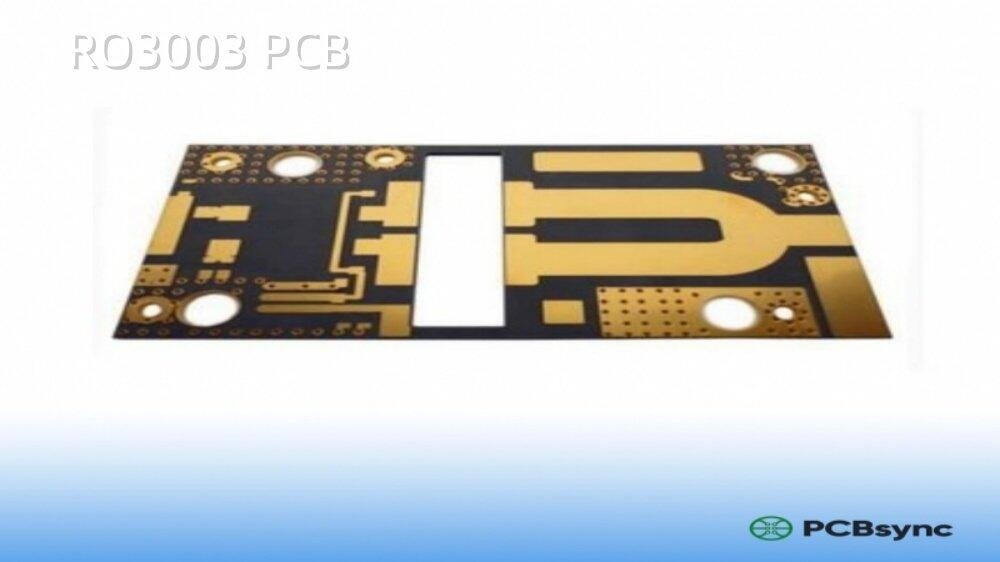
RO4835IND LoPro vs. RO3003 PTFE Laminates
RO3003 represents Rogers’ PTFE-ceramic laminate family and offers even lower loss characteristics than RO4835IND LoPro. At 10 GHz, RO3003 has a dissipation factor of just 0.0013 compared to 0.0037 for RO4835IND. However, RO3003 requires specialized PTFE fabrication processes including sodium etch hole preparation, which increases manufacturing complexity and cost. For many industrial radar applications where the loss difference doesn’t significantly impact system performance, RO4835IND LoPro’s FR-4 process compatibility provides better overall economics.
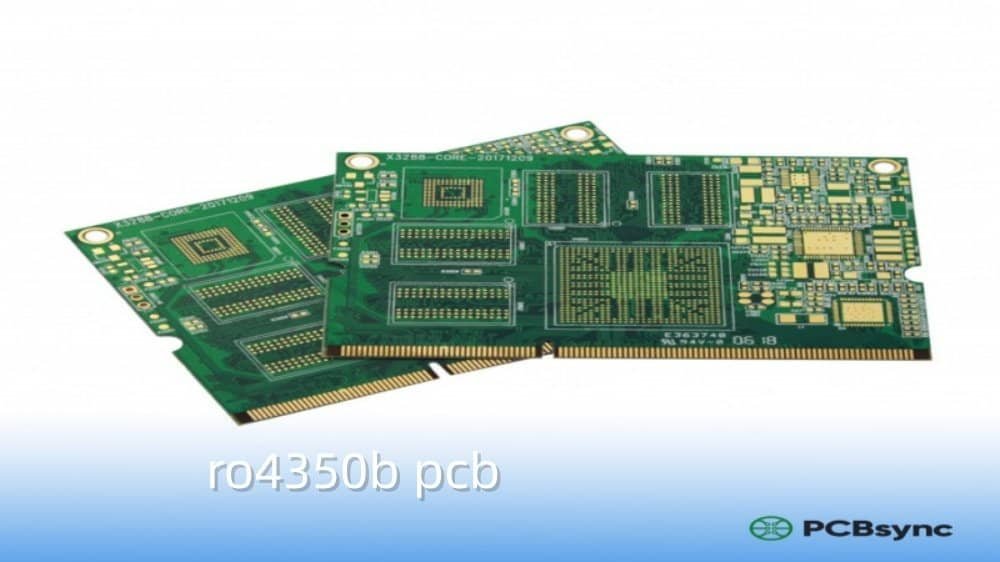
RO4835IND LoPro vs. RO4350B LoPro
RO4350B is perhaps the most widely used Rogers material for RF applications. While it shares similar FR-4 process compatibility with RO4835IND, the RO4835 family (including RO4835IND) offers improved oxidation resistance compared to RO4350B. This matters for applications requiring long-term stability at elevated temperatures. Additionally, RO4835 materials are specifically optimized for higher frequency operation, with better-characterized performance data in the millimeter-wave bands.
Comparison Summary Table
Parameter
RO4835IND LoPro
RO3003
RO4350B LoPro
Dk @ 10 GHz
3.48
3.00
3.48
Df @ 10 GHz
0.0037
0.0013
0.0037
FR-4 Process Compatible
Yes
No (PTFE)
Yes
Optimized Frequency Range
60-81 GHz
Up to 77 GHz
Up to 40 GHz
Oxidation Resistance
10x improved
N/A (PTFE)
Standard
Relative Cost
Medium
Higher
Medium
Cost-Performance Analysis
When evaluating materials for industrial radar, total cost of ownership extends beyond raw material pricing. RO4835IND LoPro’s FR-4 process compatibility typically results in fabrication costs 20-40% lower than PTFE-based alternatives. Combined with higher fabrication yields due to the material’s rigidity and dimensional stability, the overall board cost advantage can be significant in volume production.
However, if your radar system’s link budget is marginal, the extra loss of RO4835IND LoPro compared to RO3003 might require additional RF gain, potentially adding component cost and power consumption. Run a complete system-level analysis before finalizing material selection.
Glass Weave Considerations
At millimeter-wave frequencies, the glass weave pattern in reinforced laminates can cause localized Dk variations that affect circuit performance. RO4835IND LoPro uses expanded weave fiber construction that minimizes this “glass weave effect.” The more uniform resin distribution provides better Dk consistency across the board surface, which is particularly important for antenna arrays where element-to-element consistency affects beam patterns.
For comparison, standard glass-reinforced FR-4 materials exhibit significant Dk variations depending on whether a transmission line runs over a glass fiber bundle or a resin-rich area. This variation can cause phase errors and impedance discontinuities that become more pronounced at higher frequencies.
PCB Design Guidelines for RO4835IND LoPro Laminates
Getting the best performance from RO4835IND LoPro requires attention to design details specific to millimeter-wave applications.
Stackup Considerations
RO4835IND LoPro works effectively as both a cap layer on multilayer FR-4 boards and as inner layers in all-high-frequency multilayer designs. For hybrid constructions, the material is compatible with SpeedWave 300P Prepreg, 2929 Bondply, RO4450T prepreg, RO4450F prepreg, and standard FR-4 prepreg.
When designing multilayer stackups, maintain consistent dielectric thickness in critical RF sections to ensure impedance control. The 4-mil standard thickness works well for 50-ohm microstrip lines at typical millimeter-wave frequencies.
Transmission Line Design
At 60+ GHz, microstrip and grounded coplanar waveguide (GCPW) are the most common transmission line structures. For microstrip designs, use the design Dk values (3.48 at 60 GHz, 3.49 at 77 GHz) rather than the process Dk for accurate impedance calculations. The slight Dk increase at higher frequencies is important to account for in your EM simulations.
GCPW structures offer better isolation and can provide lower loss in some configurations, but require careful attention to via fence spacing and ground plane continuity. The LoPro copper’s smooth surface benefits both transmission line types by reducing conductor losses.
Antenna Integration
Patch antennas and array structures for 60-77 GHz radar are typically implemented directly on the RF laminate. The excellent Dk uniformity of RO4835IND LoPro helps maintain consistent antenna impedance and radiation pattern characteristics across the array. For high-gain array antennas, pay attention to the feed network design since any losses multiply across the array.
Via Design and Transitions
At millimeter-wave frequencies, vias can introduce significant discontinuities if not designed carefully. Use smaller via diameters where possible and consider blind/buried vias to minimize stub lengths. Back-drilling can help reduce via stub resonances in multilayer designs.
Layer transitions should be designed with proper ground via fencing to maintain signal integrity and prevent mode coupling. The material’s good dimensional stability helps maintain precise via registration through the fabrication process.
Ground Plane Design
Continuous, low-impedance ground planes are essential for millimeter-wave performance. Any gaps or slots in the ground plane can cause radiation, mode coupling, and impedance discontinuities. For designs using GCPW transmission lines, maintain consistent spacing between the signal trace and coplanar ground and use dense via stitching to connect the coplanar ground to the bottom ground plane.
The LoPro copper’s smooth surface contributes to consistent ground plane characteristics, reducing losses in the return current path that becomes increasingly important at 60+ GHz frequencies.
Electromagnetic Simulation Considerations
Accurate electromagnetic simulation is critical for millimeter-wave designs. When setting up simulations, use the design Dk values from the datasheet rather than process Dk values. Include copper surface roughness effects in your loss calculations, as the Huray or Hammerstad-Jensen models provide reasonable approximations for LoPro foil characteristics.
Mesh density requirements increase significantly at millimeter-wave frequencies. Plan for longer simulation times and ensure your mesh adequately resolves both the smallest features and the shortest wavelengths in your design.
Impedance Control and Tolerances
Manufacturing tolerances have a more significant impact on impedance at higher frequencies. A 50-ohm microstrip line on RO4835IND LoPro typically requires trace widths in the 8-10 mil range for the 4-mil thickness. Given typical manufacturing tolerances of ±0.5-1 mil on trace width, expect impedance variations of several ohms.
Design with adequate margin and consider using impedance-controlled manufacturing where tight specifications are required. The excellent dimensional stability of RO4835IND LoPro (less than 0.5 mm/m after etch) helps maintain consistent trace dimensions across the panel.
Manufacturing and Fabrication of RO4835IND LoPro Laminates
Working with RO4835IND LoPro follows standard high-frequency PCB manufacturing practices with a few important considerations.
Process Compatibility
The thermoset resin system allows processing with standard epoxy/glass equipment and techniques. Unlike PTFE materials, no special via preparation processes are required. Standard oxide or alternative treatments work well for copper surface preparation in multilayer lamination.
Drilling Considerations
The ceramic-filled resin system requires appropriate drill selection and parameters. Use carbide drills designed for high-frequency laminates and follow Rogers’ recommended drill parameters to prevent delamination or excessive hole wall roughness.
Plating and Surface Finish
Standard electroless copper and electrolytic plating processes work well with RO4835IND LoPro. For millimeter-wave applications, consider ENIG or ENEPIG surface finishes to maintain consistent conductor surface characteristics. The surface finish choice can impact insertion loss at 60+ GHz, so evaluate options based on your specific performance requirements.
Lead-Free Assembly
RO4835IND LoPro is fully compatible with lead-free soldering processes, including the higher reflow temperatures required for SAC alloys. The high Tg (>280°C) and Td (390°C) provide adequate thermal margin for modern assembly processes.
Quality Control and Inspection
Millimeter-wave boards require more stringent inspection than lower-frequency designs. Visual inspection should verify trace edge quality, since rough or ragged edges increase conductor losses. Automated optical inspection (AOI) systems should be configured with appropriate resolution for fine-line features typical of 60+ GHz designs.
Cross-sectioning representative samples helps verify plated through-hole quality, copper thickness uniformity, and layer-to-layer registration. For critical applications, consider TDR (Time Domain Reflectometry) testing to verify impedance consistency across the board.
Storage and Handling
RO4835IND LoPro Laminates should be stored in their original packaging until use. While the material has excellent moisture resistance, prolonged exposure to high humidity can affect copper surface conditions. Handle panels by the edges to avoid contaminating the copper surfaces with fingerprints or other residues that can affect photoresist adhesion or copper plating.
For best results, bake panels before imaging if they have been stored for extended periods or exposed to humid conditions. Standard bake cycles for high-frequency laminates (typically 2-4 hours at 120-150°C) remove absorbed moisture and improve process consistency.
Panel Utilization Optimization
The standard panel sizes (12″×18″, 24″×18″, 24″×36″, 48″×36″) should be considered early in the design phase to maximize material utilization. At millimeter-wave frequencies, board dimensions are typically small, so panel layouts can often accommodate many parts per panel. Work with your fabricator to optimize array configurations and minimize material waste.
Useful Resources for RO4835IND LoPro Laminates
Here are essential resources for engineers working with RO4835IND LoPro Laminates:
Official Documentation
RO4835IND LoPro Datasheet: Direct download from Rogers Corporation containing complete specifications, processing guidelines, and typical values
RO4000 Series Laminate Data Sheet: Comprehensive data for the broader RO4000 family including RO4835 variants
Rogers Technology Support Hub: Access to technical papers, calculators, and engineering support
Design Tools
Rogers Impedance Calculator: Web-based tool for transmission line impedance calculations using accurate Rogers material properties
Laminate Properties Tool: Interactive database for comparing Rogers materials by electrical, thermal, and mechanical properties
Bonding Material Properties Tool: Helps identify compatible prepregs and bondplys for multilayer designs
Technical Papers
Rogers publishes extensive technical documentation on millimeter-wave design topics including Dk extraction methods, copper roughness effects, and GCPW design considerations. These papers are freely available through the Technology Support Hub.
Distributor Resources
Major distributors like Digi-Key, Mouser, and specialized RF distributors like Richardson RFPD stock RO4835IND LoPro Laminates or can provide quick-turn samples for prototyping.
Frequently Asked Questions About RO4835IND LoPro Laminates
What is the difference between RO4835IND LoPro and RO4835 LoPro?
The materials share identical specifications. RO4835IND LoPro is specifically designated and characterized for 60-81 GHz industrial radar applications with a focused product offering (4-mil thickness, specific panel sizes). Standard RO4835 LoPro offers broader thickness options for general RF applications. For industrial radar design, either material will provide equivalent electrical performance.
Can RO4835IND LoPro Laminates replace PTFE materials in my design?
In many industrial radar applications, yes. While PTFE-based materials like RO3003 offer lower absolute loss, RO4835IND LoPro provides adequate performance for short-range radar with significant manufacturing cost advantages. Evaluate your link budget requirements. If RO4835IND LoPro’s 2.13 dB/inch loss at 60 GHz meets your system needs, the fabrication simplicity and cost benefits make it an attractive alternative.
What panel sizes are available for RO4835IND LoPro Laminates?
Standard panel sizes include 12″×18″, 24″×18″, 24″×36″, and 48″×36″. Additional sizes may be available through Rogers’ custom options. For high-volume production, larger panel sizes improve material utilization and reduce per-board costs.
Is RO4835IND LoPro suitable for automotive radar applications?
While the material can technically work in automotive radar designs, Rogers positions RO3003G2 and RO4830 specifically for automotive ADAS applications where they offer optimized performance characteristics. RO4835IND is specifically designated for industrial radar where application requirements and qualification processes differ from automotive standards.
How does moisture affect RO4835IND LoPro performance?
The 0.05% moisture absorption is among the lowest for thermoset high-frequency laminates. In practical terms, humidity exposure causes minimal change in Dk and insertion loss, maintaining stable radar performance across varying environmental conditions. This makes RO4835IND LoPro well-suited for industrial environments where humidity control is limited.
Conclusion
RO4835IND LoPro Laminates represent a well-engineered solution for 60-81 GHz industrial radar PCB applications. The combination of stable electrical properties at millimeter-wave frequencies, FR-4 process compatibility, and cost-effective fabrication makes this material particularly attractive for AGV, AMR, and warehouse automation radar sensors.
For engineers designing industrial radar systems, understanding the material’s capabilities and limitations enables better design decisions. The 2.13 dB/inch insertion loss at 60 GHz, excellent Dk uniformity, and robust environmental performance address the key requirements for reliable short-range radar operation. When combined with proper PCB design practices and manufacturing process control, RO4835IND LoPro Laminates deliver the performance industrial radar applications demand without the complexity and cost of traditional PTFE-based alternatives.
Whether you’re prototyping a new radar sensor or scaling up for volume production, RO4835IND LoPro deserves serious consideration in your material selection process. The balance of performance, manufacturability, and economics makes it a compelling choice for the growing industrial radar market.
Inquire: Call 0086-755-23203480, or reach out via the form below/your sales contact to discuss our design, manufacturing, and assembly capabilities.
Quote: Email your PCB files to Sales@pcbsync.com (Preferred for large files) or submit online. We will contact you promptly. Please ensure your email is correct.
Notes: For PCB fabrication, we require PCB design file in Gerber RS-274X format (most preferred), *.PCB/DDB (Protel, inform your program version) format or *.BRD (Eagle) format. For PCB assembly, we require PCB design file in above mentioned format, drilling file and BOM. Click to download BOM template To avoid file missing, please include all files into one folder and compress it into .zip or .rar format.