Inquire: Call 0086-755-23203480, or reach out via the form below/your sales contact to discuss our design, manufacturing, and assembly capabilities.
Quote: Email your PCB files to Sales@pcbsync.com (Preferred for large files) or submit online. We will contact you promptly. Please ensure your email is correct.
Notes: For PCB fabrication, we require PCB design file in Gerber RS-274X format (most preferred), *.PCB/DDB (Protel, inform your program version) format or *.BRD (Eagle) format. For PCB assembly, we require PCB design file in above mentioned format, drilling file and BOM. Click to download BOM template To avoid file missing, please include all files into one folder and compress it into .zip or .rar format.
When you’re designing multilayer RF boards or high-speed digital circuits, the bonding material you choose can make or break your project. I’ve worked with dozens of prepreg options over the years, and the RO4400/RO4400T Series Bondply from Rogers Corporation consistently stands out for high-frequency applications where signal integrity matters.
This guide covers everything you need to know about this bondply family—from electrical properties and processing parameters to real-world applications. Whether you’re evaluating materials for a new design or troubleshooting lamination issues, you’ll find practical information here that goes beyond what’s in the datasheet.
The RO4400 series is a family of high-frequency thermoset prepregs designed specifically to complement RO4000 series laminates. Unlike standard FR-4 prepreg, these materials use a hydrocarbon/ceramic-based resin system that delivers significantly lower dielectric loss at microwave frequencies.
Rogers developed this bondply family to solve a common problem: how do you build reliable multilayer boards when your RF layers need high-performance materials but your power and ground layers don’t justify the cost? The answer is hybrid construction—and RO4400 bondply makes that possible with FR-4-compatible processing temperatures.
Key Product Variants in the RO4400 Family
The series includes four main grades, each targeting specific design requirements:
Grade
Dk (10 GHz)
Df (10 GHz)
Glass Style
Best For
RO4450B
3.54 ± 0.05
0.004
Standard
Legacy designs
RO4450F
3.52 ± 0.05
0.004
Standard
Improved flow, difficult fill
RO4450T
3.23-3.35 ± 0.05
0.0038-0.004
Spread glass
High layer count, flexibility
RO4460G2
6.15 ± 0.15
0.004
Standard
High-Dk bonding layer
The “T” designation in RO4400T refers to spread glass reinforcement, which provides better thickness control and resin distribution—particularly useful when you’re stacking 8+ layers and need consistent dielectric spacing.
RO4400 vs RO4400T: Understanding the Difference
This is one of the most common questions I get from engineers new to Rogers materials. Here’s the straightforward answer:
RO4400 (standard grades) uses conventional woven glass reinforcement. The resin-to-glass ratio creates predictable flow characteristics during lamination, and these grades have been the workhorse of the industry for years.
RO4400T grades incorporate spread glass technology. The glass fibers are more uniformly distributed, reducing the “knuckle effect” you see in standard weaves. This matters when you’re working with:
Applications where surface roughness affects insertion loss
For most 4-6 layer designs, RO4450F handles the job perfectly. Once you’re dealing with 8+ layers or tight thickness budgets, RO4450T becomes worth the premium.
Technical Specifications: RO4400 Series Bondply Properties
Let me break down the specs that actually matter for your design decisions.
Electrical Properties
Property
RO4450F
RO4450T (4 mil)
RO4460G2
Test Method
Dielectric Constant (Dk)
3.52 ± 0.05
3.35 ± 0.05
6.15 ± 0.15
IPC-TM-650 2.5.5.5
Dissipation Factor (Df)
0.004
0.004
0.004
IPC-TM-650 2.5.5.5
Volume Resistivity
8.93 × 10⁸ MΩ-cm
1.4 × 10⁹ MΩ-cm
9.1 × 10⁸ MΩ-cm
IPC-TM-650 2.5.17.1
Surface Resistivity
1.03 × 10⁷ MΩ
1.0 × 10⁷ MΩ
1.53 × 10⁸ MΩ
IPC-TM-650 2.5.17.1
Electrical Strength
1000 V/mil
1040 V/mil
1000 V/mil
IPC-TM-650 2.5.6.2
That Df of 0.004 is where these materials really shine. Compare that to standard FR-4 prepreg at 0.02-0.025, and you’re looking at roughly 5-6x lower dielectric loss. At 10 GHz, that difference translates directly to better signal integrity.
Thermal Properties
Property
RO4450F
RO4450T
RO4460G2
Notes
Glass Transition (Tg)
>280°C
270°C
170°C
TMA method
Decomposition Temp (Td)
390°C
395°C
405°C
5% weight loss
Z-axis CTE (below Tg)
46 ppm/°C
50 ppm/°C
60 ppm/°C
Critical for PTH reliability
Z-axis CTE (above Tg)
205 ppm/°C
194 ppm/°C
245 ppm/°C
Sequential lamination consideration
Thermal Conductivity
0.6 W/m·K
0.6 W/m·K
0.66 W/m·K
–
The high Tg (>280°C for RO4450F) is crucial if you’re doing sequential lamination. Fully cured RO4400 bondply can handle multiple lamination cycles without degradation—something that trips up engineers who don’t realize their material choice limits their fabrication options.
Mechanical Properties
Property
RO4450F
RO4450T (4 mil)
RO4460G2
Peel Strength
6.0 lb/in
4.0 lb/in
6.0 lb/in
Flexural Strength (MD)
18 kpsi
12 kpsi
16 kpsi
Flexural Modulus (MD)
1600 kpsi
1100 kpsi
2000 kpsi
Moisture Absorption
0.06%
0.05%
0.05%
Available Thicknesses
Grade
Available Thickness
Sheet Size
RO4450B
0.0036″ (0.091 mm)
24″ × 18″
RO4450F
0.0040″ (0.101 mm)
24″ × 18″
RO4450T
3/4/5 mil (0.076/0.101/0.127 mm)
24″ × 18″
RO4460G2
0.0040″ (0.101 mm)
24″ × 18″
Thickness tolerance runs ±0.0006″ based on Rogers’ lamination parameters. Your actual results depend on how planar your inner layers are—heavily etched patterns with significant copper variation will see more thickness deviation.
One of the main advantages of RO4400 bondply is its compatibility with the broader RO4000 family. You can build hybrid constructions using:
RO4003C — Dk 3.38, the economy option for less critical RF layers
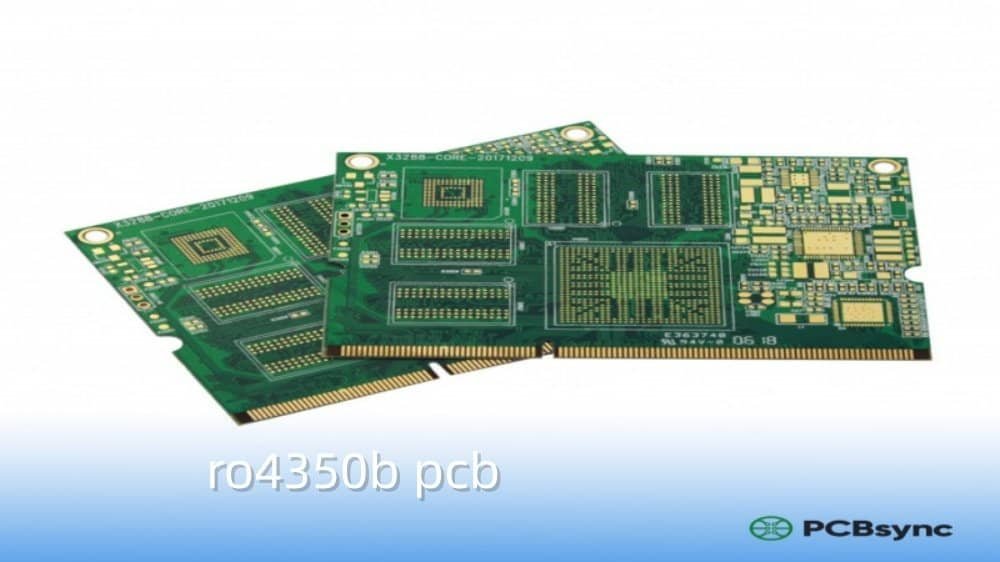
RO4350B — Dk 3.48, the industry standard for RF/microwave
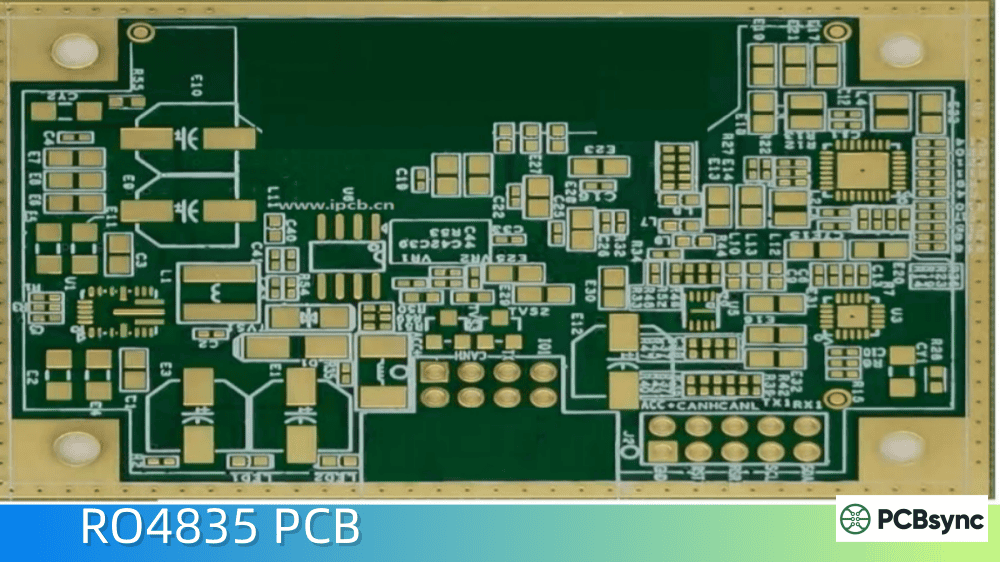
RO4835/RO4835T — Higher Tg version with improved oxidation resistance
RO4360G2 — Dk 6.15, matches RO4460G2 bondply for high-Dk designs
RO4000 LoPro — Low-profile copper for reduced conductor loss
The beauty of this system is that you can also combine RO4400 bondply with low-flow FR-4 prepreg in a single bond cycle. This lets you use Rogers PCB materials only where you need them (RF signal layers) while keeping costs down on power distribution and mounting layers.
Example Stackup Configuration
Here’s a typical 6-layer hybrid design I’ve used for radar front-ends:
Layer
Material
Thickness
Purpose
L1 (Signal)
RO4350B
0.020″
RF traces, patch antennas
Prepreg
RO4450F
0.004″
Bonds L1 to L2
L2 (Ground)
Copper
1 oz
RF ground reference
Core
FR-4
0.020″
Low-cost core
L3 (Power)
Copper
1 oz
Power distribution
Prepreg
Low-flow FR-4
0.004″
Bonds L3 to L4
L4 (Ground)
Copper
1 oz
Digital ground
Core
FR-4
0.014″
Low-cost core
L5 (Signal)
Copper
0.5 oz
Digital control signals
Prepreg
Low-flow FR-4
0.004″
Bonds L5 to L6
L6 (Signal)
FR-4
0.014″
Component mounting
This approach puts high-performance materials where they matter and keeps fabrication cost reasonable.
Processing Guidelines for RO4400 Series Bondply
Getting consistent results with RO4400 requires attention to detail during fabrication. Here’s what works based on Rogers’ guidelines and practical experience.
Storage and Handling
Requirement
Specification
Temperature
10°C to 30°C (50°F to 85°F)
Humidity
Protect from moisture
Light Exposure
Avoid UV and high radiation
Shelf Life
6 months from shipment when properly stored
Storage Method
Keep in heat-sealed packaging; reseal with tape if opened
Never store bondply under vacuum—it changes the resin distribution. Use a first-in-first-out inventory system to prevent using expired material.
Lamination Parameters
This is where most fabrication problems originate. The RO4400 resin system reaches minimum viscosity between 100°C and 120°C (210°F-250°F). Spending adequate time in this temperature window is critical for proper fill.
Recommended Lamination Profile:
Phase
Temperature
Ramp Rate
Duration
Pressure
Initial Ramp
RT to 107°C
Rapid (up to 4°C/min)
–
Contact
Low Viscosity
107°C to 120°C
1°C/min
20 min in window
200-300 PSI
Final Ramp
120°C to 175°C
2.8-4°C/min
–
200-500 PSI
Cure
175°C (350°F)
Hold
60-90 min
Full pressure
Cool Down
175°C to <100°C
Controlled
–
Maintain pressure
Challenging Designs (heavy copper, opposing planes): Increase pressure to 650-750 PSI and extend the low-viscosity dwell time.
Inner Layer Preparation
Surface Treatment: Oxide treatment is required for proper adhesion. Reduced black oxide, brown oxide, or additive/subtractive alternatives all work.
Pre-bake: Bake inner layers for 15-30 minutes at 115-125°C immediately before layup.
Dielectric Surfaces: Do not mechanically or chemically alter etched dielectric surfaces before bonding.
Copper Fill Capability
Each ply of RO4450F or RO4460G2 bondply can fill up to 0.0018″ (45 μm) of total copper thickness—whether that copper is on one side or split between both sides of the adhesive layer.
For designs exceeding this fill requirement:
Add additional bondply plies
Use vertically offset (non-stacking) copper dot patterns in flow/venting areas
Ensure proper venting around panel perimeter
Applications for RO4400/RO4400T Series Bondply
The combination of low loss, thermal stability, and CAF resistance makes RO4400 bondply suitable for demanding applications across multiple industries.
RF and Microwave Communications
This is the primary application space. RO4400 bondply enables multilayer construction for:
Base station antennas and power amplifiers
Point-to-point microwave links
Satellite communication terminals
Low-noise amplifiers (LNAs) and frequency converters
The low Df (0.004) minimizes insertion loss through via transitions between layers—a critical factor when your signal path crosses multiple planes.
5G Infrastructure and Devices
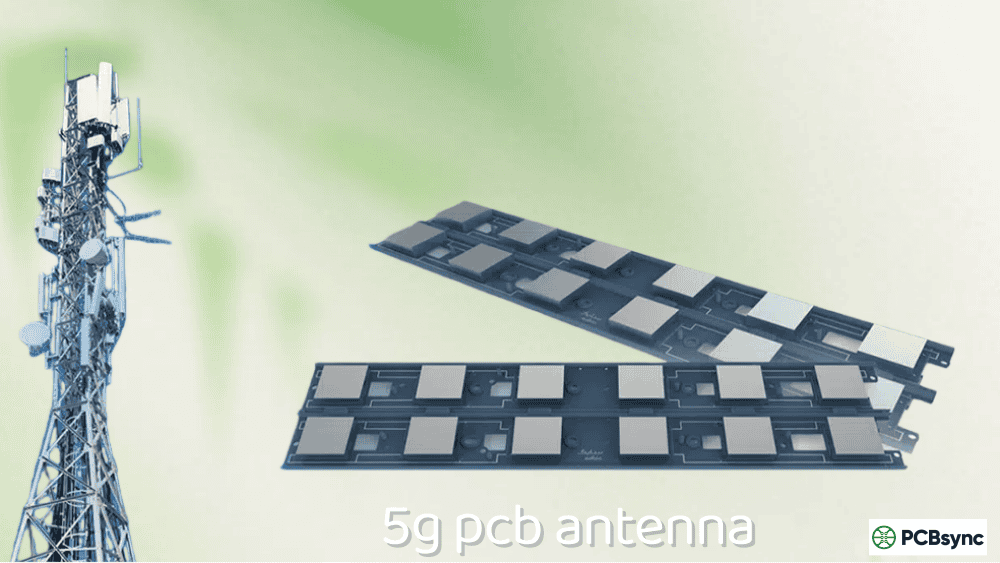
5G networks operating in FR1 (sub-6 GHz) and FR2 (mmWave) bands demand consistent dielectric properties. RO4400 bondply provides:
Stable Dk across temperature variations
Low-loss signal transmission for mmWave frequencies
Tight Dk tolerance for consistent antenna performance
Low z-axis CTE for plated through-hole reliability during thermal cycling
CAF resistance for humid operating environments
Military and Aerospace
Defense applications leverage the material’s compliance with stringent reliability requirements:
Sequential lamination capability for complex multilayer builds
Lead-free process compatibility
UL 94 V-0 flame rating
MIL-PRF-55342 Class 1M compatible constructions
High-Speed Digital
While primarily an RF material, RO4400 bondply also serves high-speed digital designs where signal integrity matters:
Backplane interconnects running at 25+ Gbps
High-performance computing systems
Network switching equipment
Benefits of Using RO4400 Series Bondply
Let me summarize why this material family deserves consideration for your next design:
Signal Integrity: The low dissipation factor (0.004) reduces dielectric loss significantly compared to FR-4, preserving signal quality through multilayer transitions.
Process Compatibility: FR-4-compatible lamination temperature (177°C/350°F) means standard fab equipment works without modification. This is a major cost advantage over PTFE-based systems.
Design Flexibility: Multiple Dk options (3.23 to 6.15) let you match bondply properties to your laminate selection or create intentional impedance transitions.
Reliability: Low z-axis CTE (43-60 ppm/°C) reduces stress on plated through-holes during thermal cycling, improving long-term reliability.
CAF Resistance: Conductive Anodic Filament resistance prevents copper migration between adjacent vias—increasingly important as via pitch shrinks.
Sequential Lamination: High Tg allows multiple lamination cycles without property degradation, enabling complex buildup structures.
Useful Resources and Downloads
For detailed technical specifications and fabrication guidance, these resources are essential:
Official Rogers Corporation Resources
RO4400 Series Bondply Datasheet (RO4450F & RO4460G2): Direct PDF from Rogers containing complete electrical, thermal, and mechanical specifications
RO4400T Series Bondply Datasheet (RO4450T): Spread glass variant specifications
Processing Guidelines for RO4450B, RO4450F, and RO4460G2: Detailed lamination parameters and troubleshooting guidance
Rogers Bondply Selector Tool: Interactive tool on rogerscorp.com for matching bondply to laminate requirements
Design Resources
Rogers MWI Calculator: Microwave impedance calculator supporting RO4000 series materials
IPC Slash Sheet Reference: UL file number E102763B for regulatory documentation
Sample Request: Available through Rogers’ online request system for evaluation
Technical Support
Rogers maintains regional technical support centers. For North America, contact their Advanced Connectivity Solutions division in Chandler, AZ (480-961-1382).
Frequently Asked Questions
What’s the difference between RO4450B and RO4450F bondply?
RO4450F offers improved lateral flow capability compared to RO4450B. If you’re working with designs that have challenging fill requirements—heavy copper, tight via pitch, or opposing plane layers—RO4450F handles these situations better. For most new designs, RO4450F is the recommended starting point; RO4450B mainly supports legacy designs where direct replacement isn’t necessary.
Can I use RO4400 bondply with FR-4 cores in a hybrid stackup?
Yes, this is one of the key advantages. RO4400 bondply and low-flow FR-4 prepreg can be combined in non-homogeneous multilayer constructions using a single bond cycle at 177°C (350°F). This lets you place Rogers materials only on RF-critical layers while using cost-effective FR-4 elsewhere.
What’s the shelf life of RO4400 bondply?
When properly stored (10-30°C, protected from moisture and UV light, in original sealed packaging), RO4400 bondply maintains its properties for 6 months from the shipment date. Use first-in-first-out inventory management to ensure you’re working with fresh material.
Is RO4400 series compatible with lead-free soldering processes?
Yes. All RO4400 grades carry UL 94 V-0 flame rating and are compatible with lead-free assembly processes. The high Tg (>280°C for RO4450F) provides adequate thermal margin for lead-free reflow temperatures.
How do I choose between RO4450F and RO4450T?
For designs with 6 or fewer layers and standard impedance tolerances, RO4450F works well. Choose RO4450T when you’re working with high layer counts (8+ layers), need tighter thickness control, or require the multiple thickness options (3/4/5 mil) that RO4450T provides. The spread glass reinforcement in RO4450T also reduces surface roughness variation, which matters at mmWave frequencies.
Common Fabrication Challenges and Solutions
After working with RO4400 bondply across numerous projects, I’ve compiled the issues that catch engineers off guard and how to address them.
Poor Fill and Voids
Symptoms: Air pockets visible in cross-section, inconsistent dielectric thickness, delamination during thermal stress.
Root Causes and Solutions:
Problem
Likely Cause
Solution
Voids near heavy copper
Insufficient dwell time at low viscosity
Extend time at 100-120°C to 25-30 minutes
Edge delamination
Inadequate venting
Add copper dot patterns at panel perimeter
Center voids
Pressure too low
Increase to 500-750 PSI for challenging designs
Inconsistent fill
Temperature overshoot
Verify thermocouple accuracy; don’t exceed 120°C during dwell
Dimensional Instability
When your finished board dimensions don’t match design intent:
Pre-bake all inner layers before lamination (15-30 min at 115-125°C)
Maintain consistent copper distribution across panels when possible
Account for material shrinkage in your design rules—Rogers provides shrinkage factors in technical bulletins
Copper Adhesion Issues
Low peel strength typically traces back to surface preparation:
Ensure oxide treatment covers all copper surfaces uniformly
Verify surface cleanliness—RO4400 is packaged in dust-free environment for a reason
Check that bondply hasn’t exceeded shelf life
Comparing RO4400 to Alternative Bonding Materials
Understanding where RO4400 fits in the broader material landscape helps you make informed selections.
RO4400 vs. Standard FR-4 Prepreg
Characteristic
RO4400 Series
FR-4 Prepreg
Dk (10 GHz)
3.23-6.15
4.2-4.7
Df (10 GHz)
0.004
0.020-0.025
Cost
8-15× higher
Baseline
Processing
FR-4 compatible
Standard
Best Application
RF/microwave, high-speed
Digital, power, low-frequency
The cost premium for RO4400 is significant, which is why hybrid constructions make economic sense. Use it where signal integrity demands it; don’t waste it on power planes.
RO4400 vs. PTFE-Based Bondplys
PTFE materials like Rogers 2929 or COOLSPAN offer even lower loss, but at significant processing complexity:
Characteristic
RO4400 Series
PTFE Bondplys
Processing Temp
177°C (standard)
Requires special handling
Copper Adhesion
Excellent
Requires surface treatment
Dimensional Stability
Good
Can be challenging
Cost
High
Very high
Best Application
General RF/microwave
Ultra-low loss, mmWave
For most applications below 40 GHz, RO4400 delivers sufficient performance without PTFE processing headaches.
RO4400 vs. SpeedWave 300P
Rogers’ SpeedWave 300P is a newer ultra-low loss prepreg option:
Characteristic
RO4400 (RO4450F)
SpeedWave 300P
Dk
3.52
3.0
Df
0.004
0.0017
Target Application
RF multilayer
High-speed digital, 112G PAM4
SpeedWave targets the cutting edge of high-speed digital where every fraction of dB matters. For traditional RF work, RO4400 remains the proven choice.
Design Tips for RO4400 Series Bondply
A few practical guidelines from production experience:
Impedance Calculations: Use the actual pressed thickness, not nominal bondply thickness. RO4450F at 4 mil nominal presses to approximately 4 mil between flat surfaces, but this changes with copper distribution.
Via Design: The low z-axis CTE (46-60 ppm/°C) is your friend for PTH reliability, but don’t push aspect ratios beyond 10:1 without consulting your fabricator.
Copper Balance: Unbalanced copper distribution causes bow and twist. Plan your copper pours to achieve reasonable balance across the stackup.
Panel Utilization: Sheet size is 24″ × 18″ standard. Plan your panel array to minimize waste—Rogers materials aren’t cheap.
Moisture Sensitivity: Though moisture absorption is low (0.05-0.06%), boards should still be baked before assembly if stored in uncontrolled environments.
Industry Standards and Certifications
RO4400 series bondply meets relevant industry certifications:
UL Recognition: File number E102763B, UL 94 V-0 flame rating
IPC Compliance: Tested per IPC-TM-650 methods as documented in datasheets
RoHS/REACH: Lead-free process compatible
Automotive: Suitable for IATF 16949 quality management systems when procured through qualified channels
For military applications, verify that your specific construction meets MIL-PRF-31032 or applicable slash sheet requirements through qualification testing.
Conclusion
The RO4400/RO4400T Series Bondply fills an important niche in high-frequency PCB design—providing low-loss bonding materials that work with standard fabrication processes. Whether you’re building 5G base stations, automotive radar modules, or high-speed digital backplanes, understanding these materials helps you make better design decisions.
The key takeaways: match your bondply grade to your laminate selection, pay attention to lamination parameters (especially that low-viscosity temperature window), and leverage hybrid constructions to balance performance against cost.
Material selection is only part of the equation—proper fabrication execution determines whether your boards meet specification. Work with fabricators experienced in Rogers materials, and don’t hesitate to run pilot builds before committing to production volumes.
For specific design questions or material recommendations, Rogers’ technical support team is genuinely helpful—they’ve seen most of the failure modes and can point you toward solutions faster than trial-and-error allows.
Inquire: Call 0086-755-23203480, or reach out via the form below/your sales contact to discuss our design, manufacturing, and assembly capabilities.
Quote: Email your PCB files to Sales@pcbsync.com (Preferred for large files) or submit online. We will contact you promptly. Please ensure your email is correct.
Notes: For PCB fabrication, we require PCB design file in Gerber RS-274X format (most preferred), *.PCB/DDB (Protel, inform your program version) format or *.BRD (Eagle) format. For PCB assembly, we require PCB design file in above mentioned format, drilling file and BOM. Click to download BOM template To avoid file missing, please include all files into one folder and compress it into .zip or .rar format.