Inquire: Call 0086-755-23203480, or reach out via the form below/your sales contact to discuss our design, manufacturing, and assembly capabilities.
Quote: Email your PCB files to Sales@pcbsync.com (Preferred for large files) or submit online. We will contact you promptly. Please ensure your email is correct.
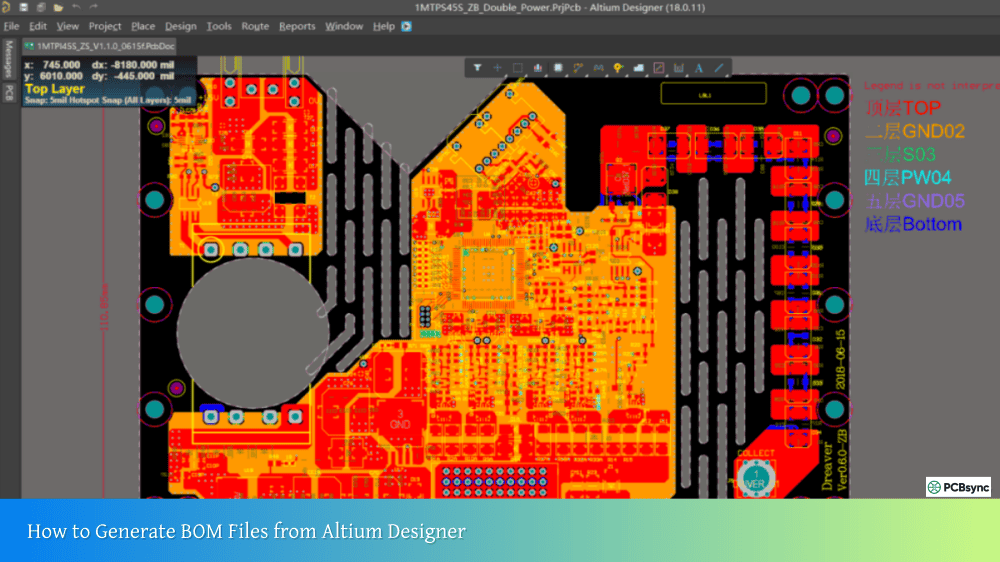
Notes: For PCB fabrication, we require PCB design file in Gerber RS-274X format (most preferred), *.PCB/DDB (Protel, inform your program version) format or *.BRD (Eagle) format. For PCB assembly, we require PCB design file in above mentioned format, drilling file and BOM. Click to download BOM template To avoid file missing, please include all files into one folder and compress it into .zip or .rar format.
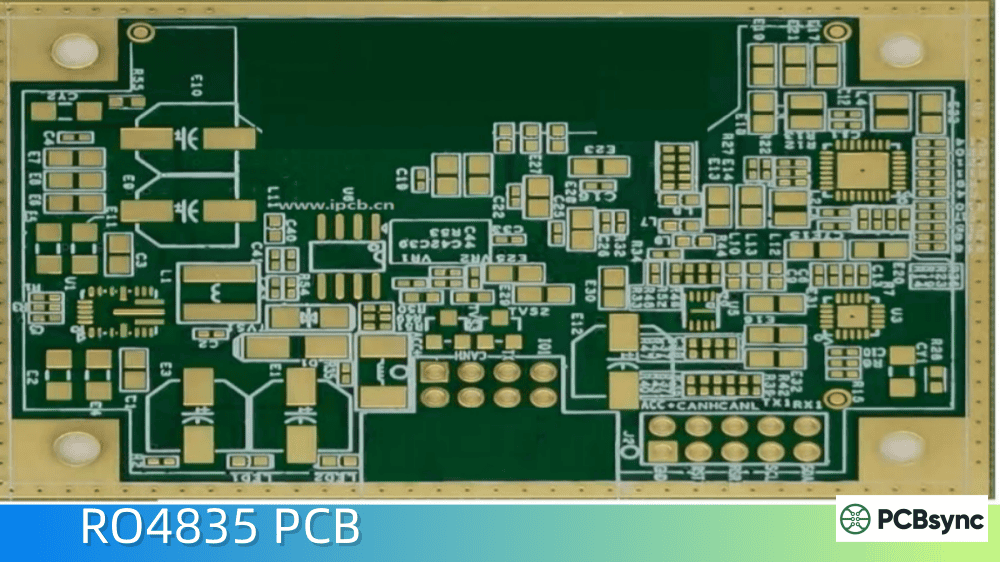
If you’ve spent any time designing RF or microwave circuits, you’ve probably heard engineers mention RO4350B. There’s a good reason this Rogers Corporation laminate keeps coming up in conversations about high-frequency PCB design – it sits in a sweet spot that most other materials can’t touch.
I’ve worked with dozens of PCB substrates over the years, and RO4350B consistently delivers where it counts: stable electrical performance without the fabrication headaches that come with traditional PTFE materials. This guide breaks down everything you need to know about RO4350B PCB material, from raw specifications to practical design strategies that actually work in production.
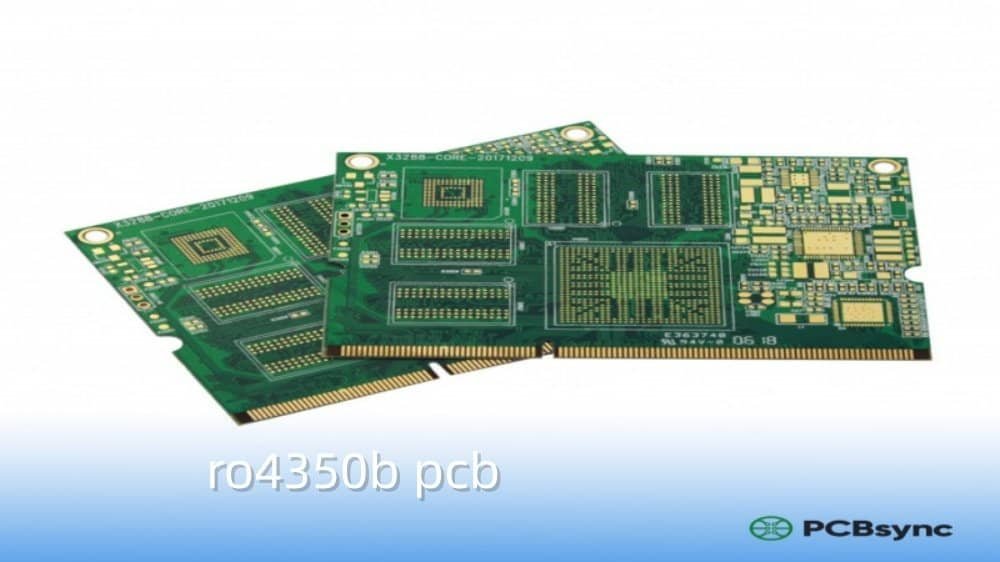
RO4350B is a high-frequency laminate developed by Rogers Corporation specifically for RF, microwave, and high-speed digital applications. Unlike standard FR4 that struggles above a few gigahertz, RO4350B maintains consistent electrical properties from 500 MHz well into the millimeter-wave range.
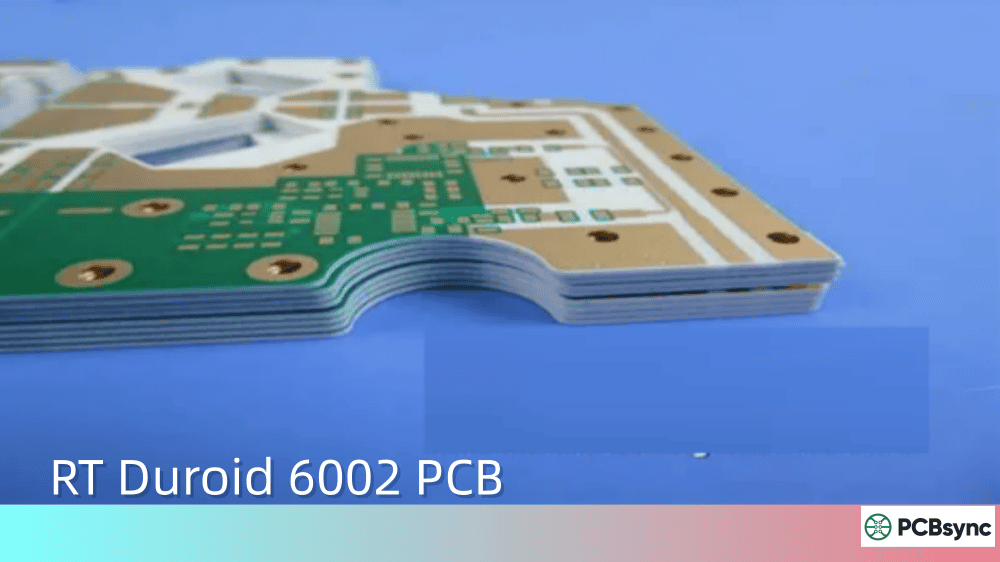
The material composition is what makes it special. RO4350B uses a proprietary hydrocarbon/ceramic formulation reinforced with woven glass fabric. This gives you the electrical characteristics approaching PTFE-based materials, but with processing that mirrors standard epoxy/glass laminates.
What does this mean practically? You can run RO4350B through the same fabrication lines as FR4 boards without special through-hole treatments or handling procedures. For production managers, that translates directly to lower costs and faster turnaround times.
Understanding what goes into RO4350B helps explain its performance characteristics. The laminate combines several key elements:
Hydrocarbon resin system – The base material uses a thermoset hydrocarbon resin rather than the epoxy found in FR4. This resin maintains stable dielectric properties across frequency and temperature ranges where epoxy-based materials start to drift.
Ceramic filler – Ceramic particles distributed throughout the resin matrix enhance thermal conductivity and dimensional stability. The filler also helps achieve the tight dielectric constant tolerance that RF designs demand.
Woven glass reinforcement – E-glass fabric provides mechanical strength and helps control the coefficient of thermal expansion. The glass transition temperature exceeds 280°C, which means RO4350B handles lead-free soldering without degradation.
Key RO4350B Specifications and Datasheet Parameters
When selecting materials for a Rogers PCB project, the datasheet specifications tell most of the story. Here are the critical parameters for RO4350B:
Electrical Properties
Parameter
Value
Test Condition
Dielectric Constant (Dk)
3.48 ± 0.05
10 GHz
Dissipation Factor (Df)
0.0037
10 GHz
Volume Resistivity
1.7 × 10¹⁰ MΩ·cm
Condition A
Surface Resistivity
4.2 × 10⁹ MΩ
Condition A
Electrical Strength
31.2 kV/mm
IPC-TM-650
The dielectric constant of 3.48 remains stable across a wide frequency range. This stability matters because Dk variations translate directly into impedance variations – something you cannot afford in precision RF circuits.
Thermal Properties
Parameter
Value
Notes
Glass Transition Temperature (Tg)
>280°C
DSC
CTE (X, Y axis)
10-12 ppm/°C
TMA
CTE (Z axis)
32 ppm/°C
Below Tg
Thermal Conductivity
0.69 W/m·K
80°C
Decomposition Temp (Td)
390°C
TGA
The low Z-axis CTE deserves attention. At 32 ppm/°C, RO4350B experiences significantly less through-hole stress during thermal cycling compared to standard FR4 (which typically runs 60-70 ppm/°C). This directly impacts long-term reliability.
Available RO4350B Thicknesses and Configurations
RO4350B comes in multiple standard thicknesses to accommodate different design requirements:
Thickness (in)
Thickness (mm)
Common Applications
0.004
0.101
Thin microstrip, tight coupling
0.010
0.254
General RF applications
0.020
0.508
Standard microwave boards
0.030
0.762
Power handling applications
0.060
1.524
Thick substrates, structural needs
RO4350B vs FR4: When to Make the Switch
The question comes up constantly: when does the extra cost of RO4350B justify itself over standard FR4? The answer depends on your specific requirements.
Performance Comparison
Parameter
RO4350B
FR4
Impact
Dielectric Constant
3.48 ± 0.05
4.2-4.8 ± 0.3
Impedance
Loss Tangent (10 GHz)
0.0037
0.015-0.025
Signal loss
Dk Stability vs Freq
Excellent
Poor >1 GHz
Broadband
Moisture Absorption
0.06%
0.15-0.25%
Stability
Processing
Standard
Standard
Cost
Choose RO4350B when:
Operating frequency exceeds 2-3 GHz
Tight impedance tolerance (±5% or better) is required
Design includes broadband transmission lines
Temperature stability matters (-50°C to +150°C range)
UL 94 V-0 flame rating is required
RO4350B vs RO4003C: Choosing Within the Rogers Family
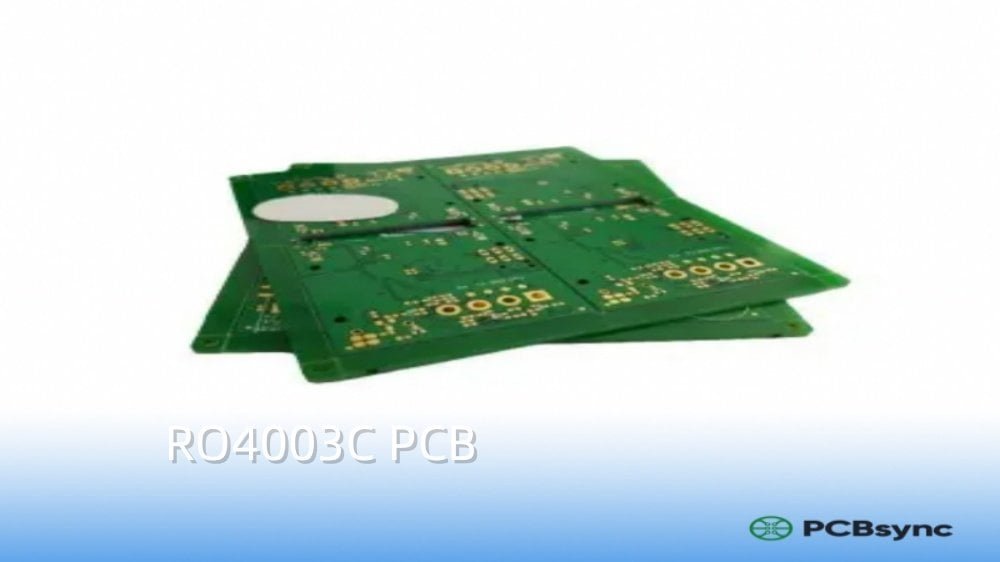
Both materials come from Rogers’ RO4000 series, and the specifications look similar at first glance. The key differences:
Parameter
RO4350B
RO4003C
Dielectric Constant
3.48 ± 0.05
3.38 ± 0.05
Loss Tangent (10 GHz)
0.0037
0.0027
Z-axis CTE
32 ppm/°C
46 ppm/°C
UL 94 Flame Rating
V-0
Not Rated
For most commercial products, RO4350B wins because the UL rating is often mandatory. RO4003C makes sense for applications where every fraction of a dB matters and flame retardancy isn’t a compliance requirement.
RO4350B PCB Design Guidelines
Getting the most from RO4350B requires attention to several design factors. These guidelines come from both manufacturer recommendations and hard-won production experience.
Impedance Control
RO4350B’s tight Dk tolerance enables precise impedance control, but you need to use the right numbers in your calculations.
Design Dk vs Process Dk: Rogers specifies a “design Dk” of 3.66 for circuit calculations. This accounts for the effects of copper roughness and differs from the material Dk measured in a controlled lab setting. Using 3.48 in your impedance calculator will give you traces that are too narrow.
Transmission Line Considerations
Microstrip: The most common topology for RO4350B designs. Keep ground plane continuous beneath all RF traces.
Stripline: Better isolation but requires careful layer stackup planning. RO4350B works well in mixed-material stackups.
GCPW: Excellent choice for tight spacing and good isolation. Ground coplanar elements add tolerance to dielectric thickness variations.
RO4350B Hybrid Stackups with FR4
One of RO4350B’s major advantages is compatibility with hybrid constructions. You can combine RO4350B for critical RF layers with FR4 for power, ground, and low-frequency routing. This approach optimizes both performance and cost.
Typical Hybrid Stackup Example (6-Layer)
Layer
Material
Function
L1 (Top)
RO4350B 0.020″
RF signals, microstrip
L2
Copper
Ground plane
L3
FR4 Core
Power plane
L4
Copper
Ground plane
L5
FR4 Core
Digital routing
L6 (Bot)
RO4350B 0.020″
RF signals
RO4350B PCB Applications
RO4350B sees deployment across diverse high-frequency applications:
5G Infrastructure
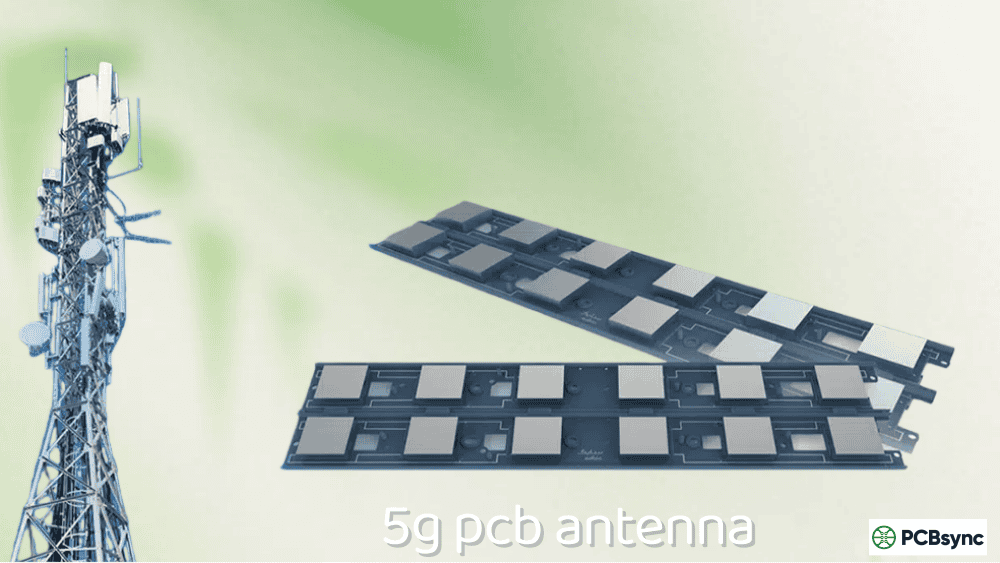
Base station antennas, power amplifiers, and beamforming networks rely on RO4350B’s stable performance at 24-39 GHz frequencies.
Automotive Radar
Both 24 GHz and 77 GHz automotive radar systems use RO4350B extensively. The material’s temperature stability (-50°C to +150°C) matches automotive requirements.
Aerospace and Defense
Radar systems, satellite communications, electronic warfare equipment, and military radio systems leverage RO4350B for mission-critical applications.
Quality Control and Testing for RO4350B PCB
When receiving RO4350B boards from your fabricator, several verification steps ensure you’re getting what you specified.
Incoming Inspection Checks
Visual inspection: Look for delamination, measling, or surface defects
RO4350B has a dielectric constant (Dk) of 3.48 ± 0.05 when measured at 10 GHz. For circuit design calculations, Rogers recommends using a “design Dk” of 3.66 to account for copper foil roughness effects.
Can RO4350B be used with FR4 in hybrid stackups?
Yes, RO4350B is specifically designed for hybrid construction with FR4. This is one of its key advantages over PTFE-based materials. The thermal expansion characteristics and processing compatibility allow RO4350B to be laminated with standard FR4 prepregs.
Is RO4350B suitable for 5G and millimeter-wave applications?
RO4350B performs well up to approximately 40 GHz with excellent results. For applications at 77 GHz and above, Rogers offers the RO4350B VF variant. Standard RO4350B is widely used in 5G applications at both sub-6 GHz and 24-39 GHz frequency bands.
What makes RO4350B different from PTFE-based materials?
RO4350B uses a hydrocarbon/ceramic formulation rather than PTFE. This means it can be fabricated using standard FR4 processes without special through-hole treatments or handling procedures. The result is lower fabrication costs and faster turnaround times.
Does RO4350B require special handling during PCB fabrication?
No, this is one of RO4350B’s primary advantages. Unlike PTFE-based laminates that require plasma treatment and special cleaning processes, RO4350B uses standard epoxy/glass fabrication procedures. Standard carbide drill bits, conventional etching processes, and typical lamination parameters all work without modification.
Final Thoughts on RO4350B PCB Material
After working with RO4350B across numerous projects, I keep coming back to it for a simple reason: it works. The material delivers predictable, repeatable results without the manufacturing drama that comes with more exotic substrates.
Is it the best material for every high-frequency application? No. At 77 GHz and above, you may need specialized materials. But for the vast majority of RF and microwave designs operating from UHF through Ka-band, RO4350B hits the target.The combination of excellent electrical properties, FR4-compatible processing, UL 94 V-0 flame rating, and competitive pricing makes RO4350B the default choice for good reason. When your design needs to work the first time and manufacture reliably in production, that’s exactly what you want from a substrate material.
Inquire: Call 0086-755-23203480, or reach out via the form below/your sales contact to discuss our design, manufacturing, and assembly capabilities.
Quote: Email your PCB files to Sales@pcbsync.com (Preferred for large files) or submit online. We will contact you promptly. Please ensure your email is correct.
Notes: For PCB fabrication, we require PCB design file in Gerber RS-274X format (most preferred), *.PCB/DDB (Protel, inform your program version) format or *.BRD (Eagle) format. For PCB assembly, we require PCB design file in above mentioned format, drilling file and BOM. Click to download BOM template To avoid file missing, please include all files into one folder and compress it into .zip or .rar format.