Inquire: Call 0086-755-23203480, or reach out via the form below/your sales contact to discuss our design, manufacturing, and assembly capabilities.
Quote: Email your PCB files to Sales@pcbsync.com (Preferred for large files) or submit online. We will contact you promptly. Please ensure your email is correct.
Notes: For PCB fabrication, we require PCB design file in Gerber RS-274X format (most preferred), *.PCB/DDB (Protel, inform your program version) format or *.BRD (Eagle) format. For PCB assembly, we require PCB design file in above mentioned format, drilling file and BOM. Click to download BOM template To avoid file missing, please include all files into one folder and compress it into .zip or .rar format.
As an RF engineer who has spent the better part of a decade designing millimeter-wave circuits, I’ve watched the RO3003G2 material become the go-to choice for 77GHz automotive radar applications. This isn’t marketing fluff—it’s what happens when a material genuinely solves the problems we face daily in high-frequency PCB design.
In this guide, I’ll walk you through everything you need to know about RO3003G2: its specifications, why it matters for ADAS systems, how it compares to its predecessor RO3003, and the practical fabrication considerations you’ll encounter in real-world production.
RO3003G2 is a ceramic-filled PTFE (polytetrafluoroethylene) laminate developed by Rogers Corporation specifically for millimeter-wave automotive radar applications. The “G2” designation indicates this is a second-generation enhancement of the original RO3003 platform—and the improvements are substantial.
Rogers launched RO3003G2 at IPC APEX EXPO 2019 after extensive collaboration with automotive radar OEMs and Tier-1 suppliers. The material addresses a critical industry need: as vehicles move toward autonomous driving, radar sensors operating at 77GHz require PCB substrates that can maintain signal integrity while minimizing insertion loss.
The RO3003G2 laminate belongs to Rogers’ RO3000 Series, which has been the industry standard for high-frequency circuits for over two decades. What sets RO3003G2 apart is its combination of optimized ceramic filler content, refined resin formulation, and Very Low Profile (VLP) electrodeposited copper—all engineered to reduce signal loss at frequencies where every 0.1dB matters.
Why 77GHz Radar Demands Premium PCB Materials
Before diving into specifications, it’s worth understanding why material selection is so critical at 77GHz. At millimeter-wave frequencies, the physics of signal propagation become unforgiving.
The Challenge of Millimeter-Wave Frequencies
At 77GHz, the wavelength in free space is approximately 3.9mm. On a PCB substrate with a dielectric constant of 3.0, this shrinks to about 2.25mm. This means:
Trace widths for 50Ω impedance become extremely narrow
Surface roughness that’s negligible at 10GHz becomes a significant loss mechanism
Dk (dielectric constant) variations that seemed acceptable at lower frequencies now cause phase errors that degrade radar performance
Insertion loss accumulates rapidly, reducing detection range
For automotive ADAS applications like adaptive cruise control, forward collision warning, and blind spot detection, these performance metrics directly translate to safety. A radar sensor with excessive insertion loss has reduced range. Dk variation causes antenna pattern distortion. Neither is acceptable when lives are at stake.
Understanding Signal Loss at 77GHz
Signal loss in PCB transmission lines at millimeter-wave frequencies comes from three primary sources:
1. Conductor Loss (αc) At 77GHz, the skin depth in copper is approximately 0.24μm. This means signal current concentrates in an extremely thin layer at the conductor surface. Surface roughness on the same order of magnitude as skin depth causes current to travel a longer path, dramatically increasing loss.
RO3003G2’s VLP (Very Low Profile) ED copper has typical Rz roughness ≤ 2.0μm, compared to standard ED copper at Rz ≈ 5-7μm. This seemingly small difference reduces conductor loss by 15-25% at 77GHz.
2. Dielectric Loss (αd) Dielectric loss is proportional to frequency and the material’s dissipation factor (Df). At 77GHz, even small differences in Df become significant. RO3003G2’s Df of 0.0011 at 10GHz (which remains low at 77GHz) minimizes this loss component.
3. Radiation Loss Poorly designed transmission line discontinuities and substrate mode coupling can cause radiation loss. RO3003G2’s stable Dk helps maintain impedance matching through transitions, minimizing radiation from discontinuities.
Six Critical Material Parameters for 77GHz PCB Design
Based on years of mmWave design experience and guidance from Rogers Corporation’s application engineers, these are the six material parameters that matter most:
Parameter
Why It Matters at 77GHz
RO3003G2 Performance
Dk Tolerance
Phase accuracy in arrays
±0.04 (excellent)
Df (Loss Tangent)
Dielectric loss component
0.0011 (best-in-class)
Copper Surface Roughness
Conductor loss
VLP ED (Rz ≤2μm)
Dk Thermal Stability
Performance over temperature
-35 ppm/°C
Water Absorption
Dk shift in humid environments
0.06% (very low)
Glass Weave Effect
Dk variation across board
None (no glass)
RO3003G2 excels in all six parameters, which is why it has become the dominant material choice for 77GHz automotive radar.
What Makes RO3003G2 Different
Rogers engineered RO3003G2 to address these specific challenges. The material offers:
Insertion loss of just 1.3dB/inch at 77GHz (measured on 5 mil laminate)
Dk variation minimized through homogeneous construction
VLP ED copper with typical roughness of Rz ≤ 2.0 μm
Small, rounded ceramic filler particles enabling smaller via diameters
These aren’t incremental improvements—they represent meaningful performance gains for radar sensor designers.
Let me break down the key specifications that matter for your design work. I’ve compiled this from Rogers’ official datasheet and verified against production boards I’ve worked with.
Electrical Properties
Property
Value
Test Condition
Dielectric Constant (Dk)
3.00 ± 0.04
10 GHz, Process
Design Dk
3.07
77 GHz
Dissipation Factor (Df)
0.0011
10 GHz
Thermal Coefficient of Dk
-35 ppm/°C
-50°C to +150°C
Volume Resistivity
1.4 × 10⁹ MΩ·cm
Typical
Surface Resistivity
2.6 × 10⁸ MΩ
Typical
The Dk of 3.00 at 10GHz rising to 3.07 at 77GHz is important for simulation accuracy. Many engineers make the mistake of using the 10GHz Dk value for 77GHz designs—this leads to impedance mismatches and shifted antenna center frequencies. Always use the frequency-appropriate Dk for your simulations.
Thermal and Mechanical Properties
Property
Value
Notes
Thermal Conductivity
0.43 W/m·K
@ 50°C per ASTM D5470
CTE (X-axis)
16 ppm/°C
-55°C to 288°C
CTE (Y-axis)
17 ppm/°C
-55°C to 288°C
CTE (Z-axis)
18 ppm/°C
-55°C to 288°C
Density
2.15 g/cm³
Typical
Water Absorption
0.06%
D48/50
Peel Strength (1 oz ED foil)
12.0 lbs/in (30 N/mm)
Typical
The CTE values deserve special attention. At 17 ppm/°C in the X-Y plane, RO3003G2 closely matches copper’s CTE (approximately 17 ppm/°C). This is critical for multilayer board reliability and ensures minimal dimensional shift during thermal cycling—a must for automotive applications that see temperature swings from -40°C to +125°C.
The Z-axis CTE of 18 ppm/°C is particularly impressive for a ceramic-filled PTFE material. This value is close to copper, which translates to highly reliable plated through-holes (PTHs) even under thermal stress.
For 77GHz radar antenna designs, the 5 mil (0.127mm) thickness is most common. This thickness provides a good balance between manufacturing feasibility and the narrow trace widths required for proper impedance control at millimeter-wave frequencies.
RO3003G2 vs RO3003: Understanding the Evolution
If you’ve worked with the original RO3003, you’re probably wondering what specifically changed in the G2 version. The differences are more significant than the similar naming suggests.
Key Improvements in RO3003G2
Parameter
RO3003
RO3003G2
Improvement
Insertion Loss (77GHz, 5mil)
~1.5-1.6 dB/inch
1.3 dB/inch
~15-20% lower
Dk Variation (board-to-board)
Standard
Reduced
Tighter process control
Copper Profile
Standard ED
VLP ED
Lower conductor loss
Filler System
Standard
Enhanced (small rounded particles)
Better via capability
Dielectric Porosity
Standard
Reduced
More consistent Dk
The most significant improvement is the insertion loss reduction. At 77GHz, losing 1.3dB/inch versus 1.5dB/inch might not sound dramatic, but in a typical radar antenna with 2-3 inches of transmission line, you’re looking at 0.4-0.6dB of recovered signal. In radar terms, that’s meaningful detection range improvement.
When to Choose RO3003G2 Over RO3003
Choose RO3003G2 when:
Operating frequency is above 60GHz
Application is automotive radar requiring maximum detection range
Board-to-board Dk consistency is critical (production volume)
Design requires small-diameter vias (≤8 mil)
The original RO3003 remains a solid choice for lower frequency applications (below 40GHz) where the cost premium of RO3003G2 may not be justified.
RO3003G2 vs Other High-Frequency Laminates
Understanding how RO3003G2 compares to other commonly used high-frequency materials helps you make informed material selection decisions.
Material
Dk @ 10GHz
Df @ 10GHz
Best Frequency Range
Typical Use Case
RO3003G2
3.00
0.0011
40-100+ GHz
77GHz automotive radar
RO3003
3.00
0.0013
10-60 GHz
General mmWave
RO4350B
3.48
0.0037
DC-20 GHz
Cost-sensitive RF
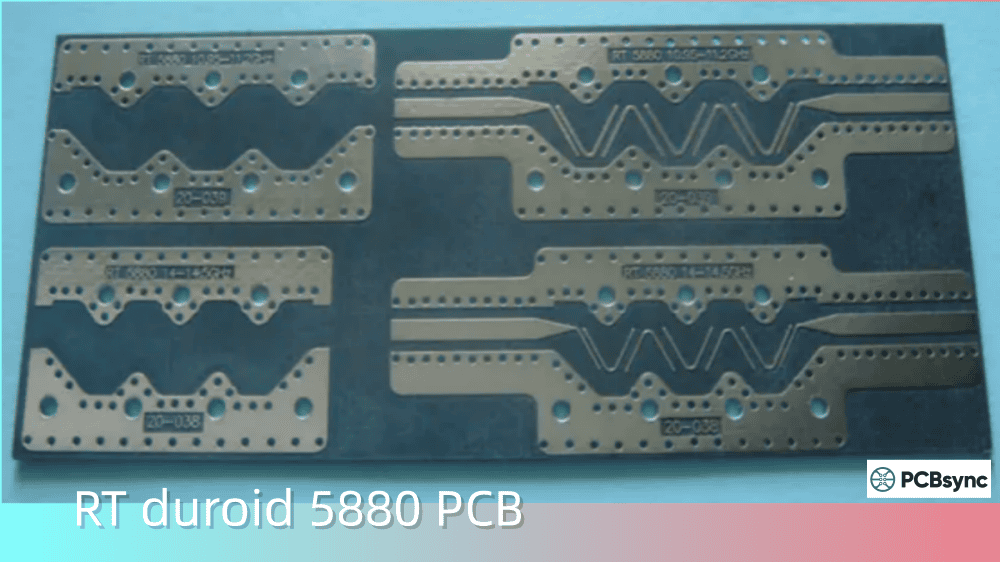
RT/duroid 5880
2.20
0.0009
40-100+ GHz
Aerospace, low-Dk
Taconic TLY-5
2.20
0.0009
40-77 GHz
Alternative low-Dk
Panasonic R5515
3.40
0.0025
40-77 GHz
Automotive radar
Key Takeaways from This Comparison:
RO3003G2 offers the best balance of Dk value (3.0) and loss performance (Df 0.0011) for 77GHz applications. Materials with lower Dk like RT/duroid 5880 offer slightly lower loss but require wider traces for impedance matching, which can complicate antenna array layouts where spacing is critical.
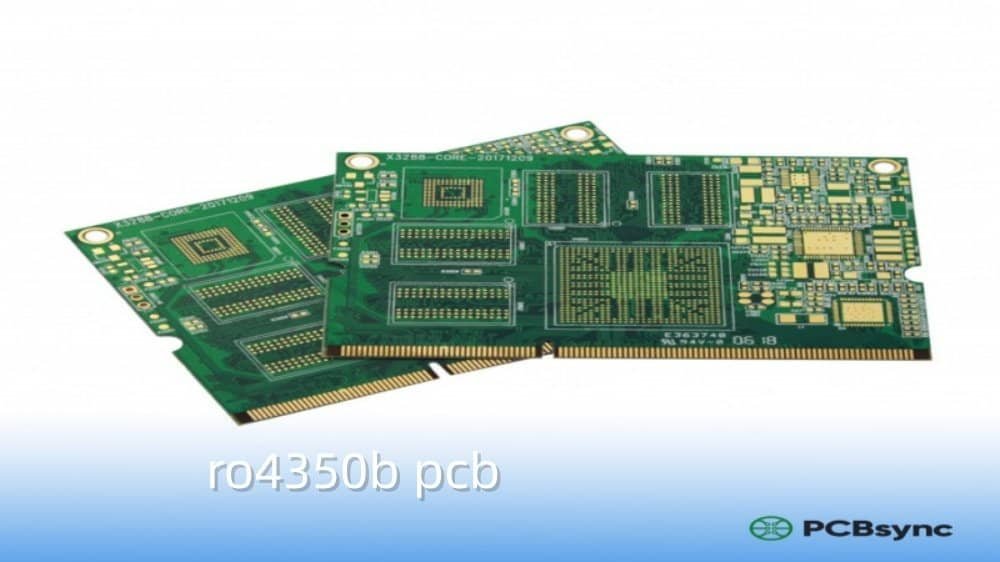
RO4350B is popular for applications below 20GHz due to its excellent processability and lower cost, but its higher Df makes it unsuitable for mmWave frequencies where every fraction of a dB matters.
Panasonic R5515 is a competitive alternative to RO3003G2 in the automotive radar space, with some OEMs qualifying both materials for their platforms.
Applications: Where RO3003G2 Excels
Automotive Radar and ADAS Systems
RO3003G2 was developed with automotive radar as the primary target application. The material is used extensively in:
Long-Range Radar (LRR): Forward-facing sensors operating at 76-77GHz for adaptive cruise control and forward collision warning. These systems require maximum range (200m+) and benefit directly from RO3003G2’s low insertion loss.
Short-Range Radar (SRR): Corner and side-mounted sensors at 77-81GHz for blind spot detection, lane change assist, and parking assistance. The wider 4GHz bandwidth in this frequency range demands stable Dk across frequency.
Mid-Range Radar (MRR): Sensors bridging the gap between LRR and SRR applications, used for cross-traffic alert and rear collision warning.
Specific ADAS functions enabled by RO3003G2-based radar sensors include:
Adaptive Cruise Control (ACC)
Forward Collision Warning (FCW)
Automatic Emergency Braking (AEB)
Lane Change Assist
Traffic Jam Pilot
Parking Pilot
Blind Spot Detection
Rear Cross-Traffic Alert
Why 77GHz Dominates Automotive Radar
The automotive industry is transitioning from 24GHz radar to 77GHz for several compelling reasons that directly impact RO3003G2 demand:
Higher Range Resolution: 77GHz radar with 4GHz bandwidth provides range resolution of approximately 4cm, compared to 75cm for 24GHz systems. This allows the radar to distinguish between a pedestrian and a vehicle in adjacent lanes—a critical capability for autonomous driving.
Better Velocity Resolution: Higher RF frequency means better Doppler resolution for velocity measurement, crucial for accurate speed estimation of surrounding objects.
Smaller Antenna Size: For equivalent antenna gain, a 77GHz antenna array is approximately 1/3 the size in each dimension compared to 24GHz. This enables sleek integration into vehicle fascia without visible bulges.
Regulatory Compliance: The 77GHz band (76-81GHz) is globally harmonized for automotive radar, simplifying worldwide vehicle platform development.
Major Automotive Radar Chipset Manufacturers
RO3003G2-based PCBs are typically paired with radar transceiver ICs from leading semiconductor companies:
Manufacturer
Example Part Numbers
Typical Use
Texas Instruments
AWR1843, AWR2944
Corner radar, parking
Infineon
RASIC™ family
Front/corner radar
NXP
MR3003, TEF82xx
Full radar portfolio
Analog Devices
Various mmWave solutions
Industrial/automotive
These chipsets handle the complex signal processing while the RO3003G2 PCB provides the RF substrate for antenna elements and transmission lines.
5G Infrastructure
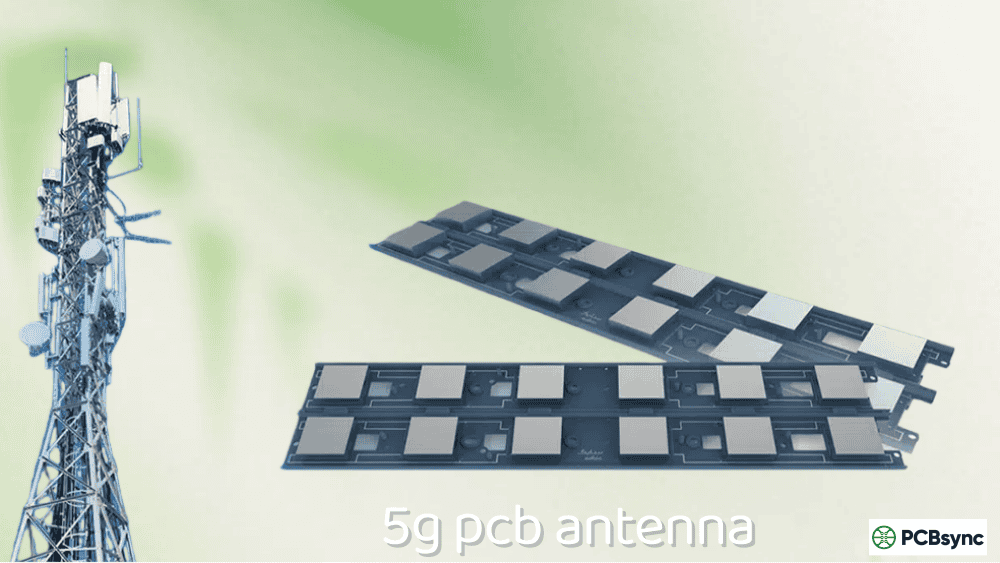
While automotive is the primary market, RO3003G2 also finds use in 5G mmWave infrastructure equipment operating at frequencies from 24GHz to 40GHz, where its low loss and stable electrical properties provide design margin.
Aerospace and Defense
The material’s performance at millimeter-wave frequencies makes it suitable for military radar systems, satellite communications, and electronic warfare applications where PTFE-based materials have traditionally dominated.
RO3003G2 PCB Design Guidelines
Having designed several 77GHz radar boards using RO3003G2, I can share some practical guidelines that will save you debug time.
Impedance Control Considerations
For microstrip designs on 5 mil RO3003G2:
Impedance
Approximate Trace Width
Notes
50Ω
0.30mm (11.8 mil)
Microstrip, 1 oz copper
75Ω
0.14mm (5.5 mil)
Microstrip, 1 oz copper
100Ω differential
0.10mm/0.10mm gap
Edge-coupled
Always run your own impedance calculations using the actual Dk at your operating frequency. The 77GHz Dk of 3.07 should be used, not the 10GHz value.
Via Design and Transition
RO3003G2’s enhanced filler system with small, rounded particles enables smaller via diameters compared to RO3003. This is critical for mmWave designs where signal transitions must be kept compact.
Recommended via parameters:
Minimum via diameter: 0.2mm (8 mil) – achievable with good yield
Via-to-trace transition: Use tapered transitions to minimize discontinuity
Via backdrilling: Required for stub elimination in multilayer constructions
Antenna Layout Tips
For patch antennas and antenna arrays at 77GHz:
Grid spacing: λ/2 spacing (approximately 1.95mm in air, ~1.13mm on substrate)
Feed network: Minimize transmission line length; every millimeter adds loss
Ground via fencing: Critical for surface wave suppression
Copper selection: VLP ED copper is essential; rolled copper adds 0.1-0.2dB/inch at 77GHz
Stack-Up Recommendations
For hybrid multilayer constructions combining RO3003G2 with lower-cost materials:
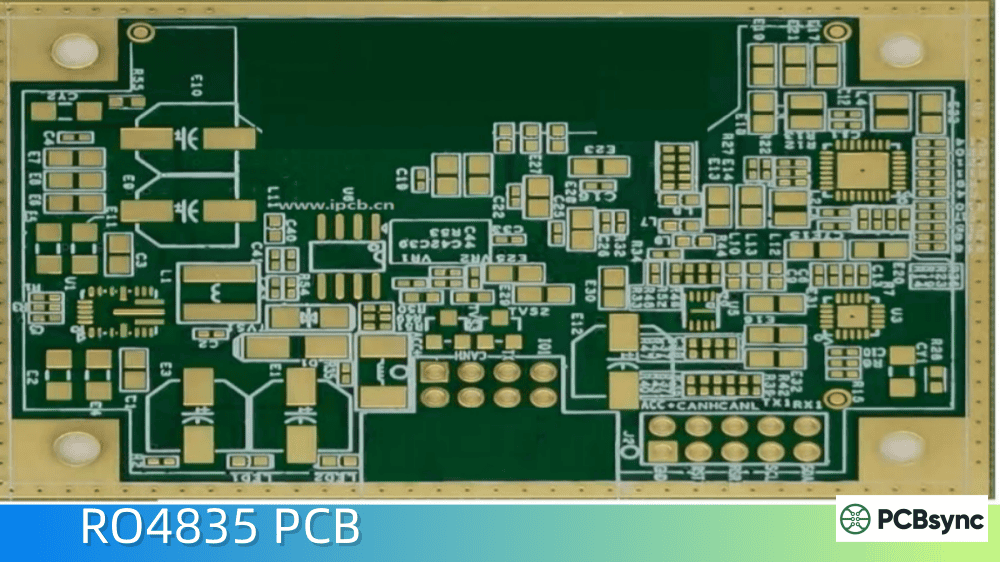
Layer 1: RO3003G2 5 mil (RF layer – antenna)Layer 2: Ground planeLayer 3: Rogers RO4835T or similar (signal routing)Layer 4: Shengyi S1000-2 or FR-4 (digital/power)
This approach uses RO3003G2 only where its performance is needed, reducing overall board cost while maintaining RF performance.
RO3003G2 PCB Fabrication Guidelines
PTFE-based materials require modified fabrication processes compared to standard FR-4. Here’s what you and your PCB vendor need to know.
Drilling
RO3003G2 drills cleanly, but ceramic-filled PTFE materials create unique challenges:
Use carbide drill bits with 130° point angle
Reduce drill speeds compared to FR-4 (surface feet per minute around 300-400)
Stack heights: Maximum 2 panels for small holes (<0.3mm)
Backup material: Aluminum entry and phenolic backup recommended
Desmear and PTH Preparation
PTFE materials don’t respond to permanganate desmear chemistry. Plasma treatment is required:
Plasma type: CF4/O2 mixture
Treatment time: 3-5 minutes per side
Purpose: Etch back PTFE and activate surface for electroless copper adhesion
This is non-negotiable. Skipping plasma treatment will result in PTH reliability failures.
Copper Plating
Standard electroless and electrolytic copper processes work well with RO3003G2, provided plasma treatment was performed correctly. The VLP ED copper cladding provides excellent adhesion (12 lbs/in peel strength), but the copper-to-PTFE interface must not be compromised by contamination.
Lamination (Multilayer)
For multilayer constructions:
Use RO3003G2-compatible bondply materials (Rogers 3001, 2929, or similar)
Lamination temperature: 350-380°F (177-193°C)
Pressure: 200-300 psi
Cycle time: 1-2 hours depending on stackup complexity
Routing and Scoring
Use diamond-coated router bits for clean edges
Avoid heat buildup that can cause copper delamination
Routing speed: 75-100 inches per minute typical
Cost Considerations and ROI Analysis
Let’s address the elephant in the room: RO3003G2 is expensive. Depending on volume and configuration, you’re looking at 15-30× the cost of FR-4 per square foot of material.
Cost Breakdown Factors
Factor
Impact on Cost
Raw material (PTFE + ceramic filler)
High base cost
VLP ED copper
Premium over standard ED
Manufacturing complexity
Specialized equipment required
Volume
Limited compared to FR-4 ecosystem
Lead time
Often 4-8 weeks for custom configurations
When the Premium is Justified
RO3003G2’s cost is justified when:
Performance is non-negotiable: Safety-critical ADAS applications where reduced detection range is unacceptable
RF performance enables system savings: Lower insertion loss means smaller power amplifiers and simpler compensation circuits
Development time savings: Well-characterized material with proven fabrication processes reduces design iterations
Cost Optimization Strategies
Use RO3003G2 only for RF layers in hybrid stackups
Optimize panel utilization with your fab house
Consider long-term agreements (LTAs) with material distributors
Minimize design iterations through thorough simulation
Quality and Reliability Considerations
Automotive Quality Standards
RO3003G2 is manufactured in Rogers’ ISO 9001 and IATF 16949 certified facilities. For automotive applications, this certification chain is essential for supply chain qualification.
Key quality metrics for automotive-grade RO3003G2:
Quality Parameter
Specification
Test Method
Dk Lot-to-Lot Variation
±2%
Internal process control
Thickness Tolerance
±10%
IPC-TM-650
Copper Peel Strength
≥8 lbs/in minimum
IPC-TM-650
Moisture Absorption
≤0.10%
IPC-TM-650 2.6.2
Flammability
UL94 V-0
UL certification
Thermal Reliability Testing
Automotive radar modules must survive harsh environmental conditions. RO3003G2-based PCBs are typically qualified through:
Thermal Shock Testing: -40°C to +125°C, 1000 cycles minimum. RO3003G2’s matched CTE (17 ppm/°C in X-Y plane) ensures PTH integrity through repeated thermal cycling.
HAST (Highly Accelerated Stress Test): 130°C, 85% RH, 96 hours. The low water absorption (0.06%) of RO3003G2 prevents Dk shift and delamination under humidity stress.
Vibration Testing: Per automotive vibration profiles. The ceramic-filled PTFE construction provides mechanical robustness superior to unfilled PTFE materials.
Lot Traceability
For automotive applications, complete lot traceability from laminate to finished radar module is typically required. Rogers provides lot-specific test reports including Dk, thickness, and copper peel strength measurements.
Frequently Asked Questions About RO3003G2
What is the maximum operating frequency for RO3003G2?
RO3003G2 has been successfully used in applications beyond 100GHz. For automotive radar at 77GHz, it’s well within the material’s sweet spot. The material doesn’t have a hard frequency limit—performance gradually degrades at higher frequencies due to increasing conductor and dielectric losses. For applications above 100GHz, you may want to evaluate alternatives like liquid crystal polymer (LCP) substrates.
How does RO3003G2 cost compare to standard FR-4?
RO3003G2 costs approximately 20-30× more than FR-4 on a per-square-foot basis. However, this comparison isn’t entirely fair since FR-4 cannot meet the electrical requirements of 77GHz designs. A more relevant comparison is against other high-frequency laminates: RO3003G2 is priced similarly to other premium PTFE materials and offers better mmWave performance than hydrocarbon-based alternatives like RO4350B.
Can RO3003G2 be used in lead-free assembly processes?
Yes. RO3003G2 is fully compatible with lead-free soldering processes. The material maintains stability through peak reflow temperatures of 260°C (500°F) and multiple reflow cycles. Rogers specifies lead-free process compatibility in the datasheet, and I’ve personally run boards through 5+ reflow cycles without degradation.
What surface finishes work best with RO3003G2?
For 77GHz applications, ENIG (Electroless Nickel Immersion Gold) and immersion silver are the most common choices. OSP can work but provides less protection for the fine traces typical of mmWave designs. Avoid HASL—the uneven surface topology degrades high-frequency performance. Immersion gold over direct copper (without nickel) is sometimes used for the lowest possible loss, though it’s less common due to manufacturing complexity.
Is RO3003G2 suitable for flexible or flex-rigid applications?
No. RO3003G2 is a rigid laminate. For applications requiring flexibility, consider Rogers ULTRALAM 3850 or similar flexible high-frequency materials. That said, most 77GHz radar designs don’t require flexibility—the antenna module is typically a rigid PCB mechanically mounted to the vehicle structure.
Resources and Downloads for RO3003G2
Here are the essential resources every engineer working with RO3003G2 should bookmark:
SDS (Safety Data Sheet): Available in multiple languages from Rogers website
Sample Requests
Rogers provides samples for evaluation. Visit the Rogers Sample Request Portal to request material samples for your development projects.
Conclusion: Is RO3003G2 Right for Your 77GHz Design?
After working extensively with RO3003G2, my assessment is straightforward: if you’re designing 77GHz automotive radar or any mmWave circuit where insertion loss and Dk stability are critical, RO3003G2 should be your baseline material choice.
The combination of low insertion loss (1.3dB/inch at 77GHz), tight Dk control, excellent thermal properties (17 ppm/°C CTE), and proven automotive reliability makes it the industry standard for good reason. Yes, it costs more than alternatives. But in safety-critical ADAS applications, the performance margin RO3003G2 provides isn’t a luxury—it’s a requirement.
For designs operating below 40GHz or in non-critical applications, more cost-effective alternatives exist. But for the demanding world of 77GHz radar, RO3003G2 has earned its place as the material that lets engineers sleep at night knowing their design has the performance headroom to work in the real world.
Inquire: Call 0086-755-23203480, or reach out via the form below/your sales contact to discuss our design, manufacturing, and assembly capabilities.
Quote: Email your PCB files to Sales@pcbsync.com (Preferred for large files) or submit online. We will contact you promptly. Please ensure your email is correct.
Notes: For PCB fabrication, we require PCB design file in Gerber RS-274X format (most preferred), *.PCB/DDB (Protel, inform your program version) format or *.BRD (Eagle) format. For PCB assembly, we require PCB design file in above mentioned format, drilling file and BOM. Click to download BOM template To avoid file missing, please include all files into one folder and compress it into .zip or .rar format.