Inquire: Call 0086-755-23203480, or reach out via the form below/your sales contact to discuss our design, manufacturing, and assembly capabilities.
Quote: Email your PCB files to Sales@pcbsync.com (Preferred for large files) or submit online. We will contact you promptly. Please ensure your email is correct.
Notes: For PCB fabrication, we require PCB design file in Gerber RS-274X format (most preferred), *.PCB/DDB (Protel, inform your program version) format or *.BRD (Eagle) format. For PCB assembly, we require PCB design file in above mentioned format, drilling file and BOM. Click to download BOM template To avoid file missing, please include all files into one folder and compress it into .zip or .rar format.
ReTerminal Review: Industrial HMI Powered by Raspberry Pi
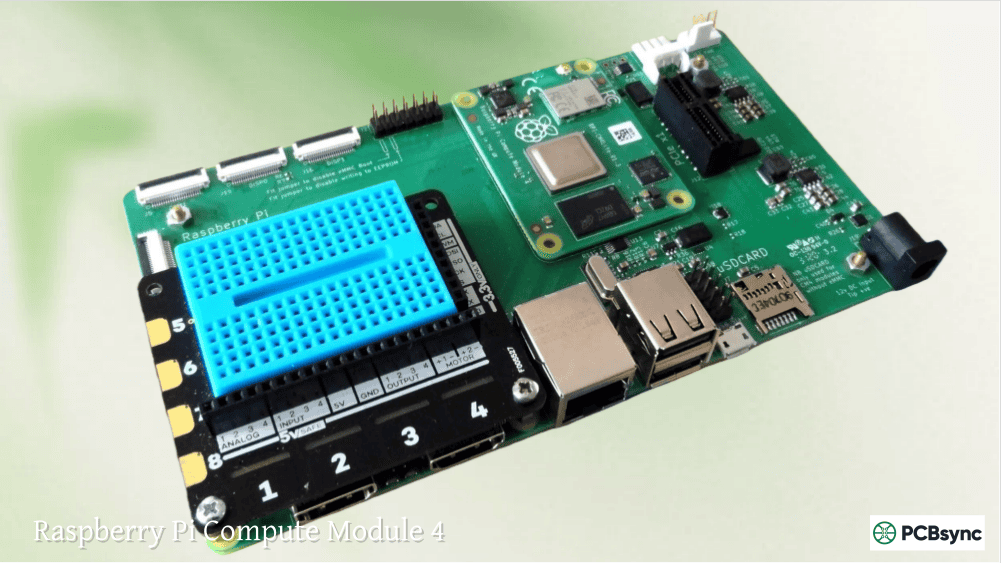
As someone who has spent years designing PCBs and embedded systems, I’m always on the lookout for hardware that bridges the gap between prototyping and production-ready solutions. The ReTerminal from Seeed Studio caught my attention as an all-in-one Human Machine Interface (HMI) built around the Raspberry Pi Compute Module 4. After months of hands-on testing in my workshop, here’s my honest assessment of what this device brings to the table for engineers and makers alike.
The ReTerminal is a compact HMI device that integrates a 5-inch IPS touchscreen with a Raspberry Pi CM4 module inside a rugged industrial enclosure. Unlike cobbling together a Pi, display, case, and various breakout boards, Seeed Studio delivers everything pre-assembled and ready to deploy.
What struck me first was the build quality. This isn’t your typical maker-grade hardware wrapped in 3D-printed plastic. The aluminum heatsink design, solid construction, and thoughtful port placement reflect genuine industrial design thinking. When I pulled the unit out of the box, I immediately noticed it was smaller than expected from the product photos. It fits comfortably in one hand while feeling substantial enough for permanent installation.
The device ships with Raspberry Pi OS pre-installed on the 32GB eMMC storage. Power it up via USB-C, and you’re greeted with a functional desktop environment within seconds. No SD card fumbling, no driver installations, no hunting for compatible displays.
ReTerminal Hardware Specifications
Understanding the underlying hardware helps determine if the ReTerminal fits your project requirements. Here’s the complete specification breakdown:
ReTerminal vs ReTerminal DM: Which One Do You Need?
Seeed Studio offers two main variants in the ReTerminal product line. Choosing between them depends on your deployment environment and interface requirements.
Feature
ReTerminal (5-inch)
ReTerminal DM (10.1-inch)
Display Size
5 inches
10.1 inches
Resolution
1280 x 720
1280 x 800
IP Rating
None
IP65 (front panel)
Industrial Interfaces
Basic GPIO
RS485, RS232, CAN bus, 4DI/4DO
Power Input
5V USB-C
12V-24V DC, PoE optional
Operating Temperature
0°C to 50°C
-10°C to 50°C
Node-RED
Manual installation
Natively integrated
Price Range
~$195-$225
~$329-$459
Best For
Development, prototyping, light industrial
Production deployment, harsh environments
For bench development and smaller installations, the standard ReTerminal provides excellent value. If you’re deploying in manufacturing environments where dust, moisture, and industrial protocols matter, the ReTerminal DM justifies its higher price point with proper IP65 protection and native support for RS485, RS232, and CAN bus.
Getting Started with Your ReTerminal
Initial Setup Process
Setting up the ReTerminal takes about five minutes. Connect the included USB-C cable to a 5V/3A power supply, and the system boots directly into Raspberry Pi OS. The initial configuration wizard walks through language selection, Wi-Fi setup, and password changes.
A few practical notes from my setup experience:
The touchscreen works flawlessly out of the box, but the 1280×720 resolution on a 5-inch display means UI elements are quite small. I recommend connecting a mouse for extended configuration sessions. The on-screen keyboard works, but typing credentials using touch alone tests your patience.
Flashing Custom OS Images
If you need a fresh installation or want to run Ubuntu, you’ll need to flip the boot mode switch hidden inside the enclosure. This requires removing four screws and accessing the internals.
The process involves:
Installing rpiboot on your computer
Connecting the ReTerminal via USB while holding the boot switch
Using Raspberry Pi Imager to write your chosen image to the eMMC
One quirk worth noting: after running standard system updates with apt upgrade, the display drivers occasionally break. The Seeed Studio wiki provides reinstallation instructions, but this caught me off guard initially.
Real-World Industrial Applications
Building Automation and Energy Management
The ReTerminal excels as a centralized control panel for building management systems. I deployed one unit to monitor HVAC status, lighting controls, and energy consumption across a small office building. The always-on display shows real-time data while the touchscreen allows quick adjustments without pulling out a phone or laptop.
Manufacturing Line HMI
On factory floors, operators need quick access to machine status and control functions. The ReTerminal’s compact form factor, four programmable buttons, and industrial expansion options make it practical for mounting at workstations. The hardware security module (ATECC608A cryptographic co-processor) addresses concerns about securing production data.
Home Automation Dashboard
Running Home Assistant on the ReTerminal transforms it into a dedicated smart home control center. The integration with Node-RED enables sophisticated automation flows that go beyond basic scheduling. I’ve set up flows that adjust HVAC based on occupancy sensors, manage irrigation based on weather data, and coordinate lighting scenes across multiple rooms.
Edge AI and Computer Vision
The CM4’s processing capability handles lightweight machine learning inference surprisingly well. Paired with a USB camera or the MIPI camera interface, the ReTerminal can run object detection, defect inspection, or people counting at the edge without cloud dependencies.
Thermal Performance and Overclocking
The passive heatsink design impressed me during extended load testing. Running the Phoronix Test Suite’s x264 benchmark at stock 1.5GHz, temperatures stayed around 55°C with no throttling observed.
Pushing the overclock to 2.1GHz with over_voltage=6, the heatsink became noticeably warm but still prevented throttling. Even at an aggressive 2.2GHz overclock with over_voltage=8, the system maintained stability with peak temperatures around 66°C, well below the 82°C thermal throttle threshold.
This thermal headroom matters for applications involving sustained computation. Most CM4 carrier boards require active cooling to maintain overclocked frequencies, but the ReTerminal’s substantial heatsink handles it passively.
Software Ecosystem and Development
Operating System Support
The ReTerminal runs any operating system compatible with the Raspberry Pi CM4:
Raspberry Pi OS (32-bit and 64-bit)
Ubuntu Desktop and Server
Custom Yocto-based distributions
SenseCraft Edge OS (Seeed’s industrial-focused option)
The official Seeed Studio images include pre-configured drivers for the display, touchscreen, buttons, and onboard sensors. Starting with the stock image saves troubleshooting time.
Node-RED for Industrial Automation
Node-RED comes pre-installed on the ReTerminal DM and installs easily on the standard model. This flow-based programming environment dramatically simplifies building automation logic, data dashboards, and system integrations.
For engineers more comfortable with Python or C than visual programming, Node-RED might feel foreign initially. However, for quickly wiring together MQTT messages, database queries, API calls, and device controls, nothing matches its productivity.
Integration with Industrial Platforms
The ReTerminal ecosystem supports integration with established industrial platforms including N3uron, Ignition Edge, and various SCADA systems. This matters when deploying into existing infrastructure where specific protocols and software standards are mandated.
Thoughtful industrial design: The physical construction reflects actual deployment requirements rather than bench prototype aesthetics. Mounting holes align with standard VESA patterns. The port placement keeps cables organized.
Complete integration: Everything works together out of the box. Display drivers, touch calibration, wireless connectivity, and sensor access require no configuration.
Expansion capability: The high-speed PCIe interface opens possibilities for NVMe storage, additional networking, or custom peripheral boards. Seeed Studio’s E10-1 expansion module adds M.2 SSD support and additional connectivity.
Security features: The integrated cryptographic co-processor enables hardware-based authentication and encrypted storage, addressing requirements for industrial IoT deployments.
Limitations to Consider
No analog inputs: The Raspberry Pi CM4 lacks ADC capabilities, so reading analog sensors requires external modules. This limitation affects applications needing direct voltage or current measurements.
PWM constraints: Only a single PWM channel is available, limiting motor control and LED dimming applications without additional hardware.
Display resolution trade-off: While 1280×720 on a 5-inch screen provides sharp visuals, touch targets become quite small. Custom interfaces need careful UI design to remain usable.
Battery operation: There’s no built-in battery or native power management. Portable applications require external battery packs and additional circuitry.
Ecosystem lock-in: While expansion modules were promised early on, the ecosystem has grown slowly. You’re somewhat dependent on Seeed Studio’s roadmap for future accessories.
Useful Resources for ReTerminal Development
Resource
Description
Link
Official Wiki
Getting started guides, driver installation, hardware documentation
wiki.seeedstudio.com/reTerminal
Seeed Studio Forum
Community discussions, troubleshooting, project ideas
forum.seeedstudio.com
GitHub Drivers
Official display and peripheral drivers
github.com/Seeed-Studio
Node-RED Documentation
Flow-based programming resources
nodered.org/docs
Raspberry Pi Documentation
CM4 technical reference
raspberrypi.com/documentation
Home Assistant Integration
Smart home platform documentation
home-assistant.io/integrations
OS Images
Official Raspberry Pi Imager and custom Seeed images
raspberrypi.com/software
Pricing and Value Assessment
The standard ReTerminal with 4GB RAM sells for approximately $195-225 depending on the retailer. The 8GB variant commands a modest premium. Comparing this against building an equivalent system from discrete components:
Raspberry Pi CM4 (4GB/32GB): ~$65-75
CM4 IO Board: ~$35
5-inch IPS touchscreen: ~$40-60
Enclosure with heatsink: ~$30-40
Miscellaneous cables and assembly: ~$15-20
The components alone approach $185-230 before accounting for assembly time, potential compatibility issues, and the lack of integrated sensors and security features. The ReTerminal premium essentially pays for integration, testing, and industrial design work.
For production deployments, the ReTerminal DM at $329-459 competes against traditional industrial HMI panels that often cost $500-1500+ for comparable functionality. The open-source software ecosystem and Raspberry Pi compatibility add value that proprietary HMI systems cannot match.
FAQs About ReTerminal
Can I replace the Raspberry Pi CM4 module inside the ReTerminal?
Yes, the CM4 module is socketed and can be replaced or upgraded. This requires opening the enclosure and carefully removing the existing module. Replacement allows upgrading to 8GB RAM variants or swapping a failed module without replacing the entire unit.
Does the ReTerminal work with standard Raspberry Pi HATs?
Not directly due to the form factor. The 40-pin GPIO header is accessible but the physical orientation doesn’t accommodate standard HATs. Ribbon cable extensions can bridge the connection, or you can use the high-speed expansion interface for dedicated accessories.
How long does the ReTerminal last in continuous industrial operation?
Seeed Studio rates the display backlight for 30,000 hours, roughly 3.4 years of continuous use. The CM4 module itself has no specific lifespan rating, but proper thermal management extends component longevity significantly. For critical applications, plan for periodic replacement cycles.
Can I run the ReTerminal purely headless without the display?
Yes. The display can be disabled in software while using the device as a headless gateway. This seems to waste the integrated screen, but some deployments use the ReTerminal primarily for its form factor and connectivity while accessing it remotely.
Is the ReTerminal suitable for outdoor installation?
The standard ReTerminal lacks environmental protection ratings and shouldn’t be exposed to weather or temperature extremes. The ReTerminal DM offers IP65 front panel protection and extended operating temperatures (-10°C to 50°C), making it more suitable for protected outdoor enclosures.
Final Verdict
The ReTerminal from Seeed Studio occupies a thoughtful middle ground between maker prototypes and expensive industrial HMI systems. It delivers genuine production-ready quality while maintaining the flexibility and cost-effectiveness of the Raspberry Pi ecosystem.
For engineers tired of wrestling with display drivers, hunting for compatible enclosures, and explaining to procurement why they need seventeen different components for a simple HMI, the ReTerminal offers a compelling shortcut. The integration work has been done competently, the documentation is thorough, and the community support continues growing.
If your project demands specific industrial certifications, extensive analog I/O, or maximum customization, traditional industrial controllers may still fit better. But for the vast majority of monitoring, control, and edge computing applications, the ReTerminal delivers impressive capability in a compact, well-engineered package.
Meta Description Suggestions:
“ReTerminal review: Hands-on testing of Seeed Studio’s Raspberry Pi CM4-powered industrial HMI. Specs, comparisons, real applications, and honest assessment from a PCB engineer.”
“In-depth ReTerminal review covering Seeed Studio’s industrial HMI based on Raspberry Pi CM4. Hardware specs, ReTerminal vs DM comparison, setup guide, and practical project ideas.”
“Engineering review of the Seeed Studio ReTerminal: industrial HMI built on Raspberry Pi CM4 with 5-inch touchscreen. Complete specifications, thermal testing, and deployment guidance.”
Inquire: Call 0086-755-23203480, or reach out via the form below/your sales contact to discuss our design, manufacturing, and assembly capabilities.
Quote: Email your PCB files to Sales@pcbsync.com (Preferred for large files) or submit online. We will contact you promptly. Please ensure your email is correct.
Notes: For PCB fabrication, we require PCB design file in Gerber RS-274X format (most preferred), *.PCB/DDB (Protel, inform your program version) format or *.BRD (Eagle) format. For PCB assembly, we require PCB design file in above mentioned format, drilling file and BOM. Click to download BOM template To avoid file missing, please include all files into one folder and compress it into .zip or .rar format.