Inquire: Call 0086-755-23203480, or reach out via the form below/your sales contact to discuss our design, manufacturing, and assembly capabilities.
Quote: Email your PCB files to Sales@pcbsync.com (Preferred for large files) or submit online. We will contact you promptly. Please ensure your email is correct.
Notes: For PCB fabrication, we require PCB design file in Gerber RS-274X format (most preferred), *.PCB/DDB (Protel, inform your program version) format or *.BRD (Eagle) format. For PCB assembly, we require PCB design file in above mentioned format, drilling file and BOM. Click to download BOM template To avoid file missing, please include all files into one folder and compress it into .zip or .rar format.
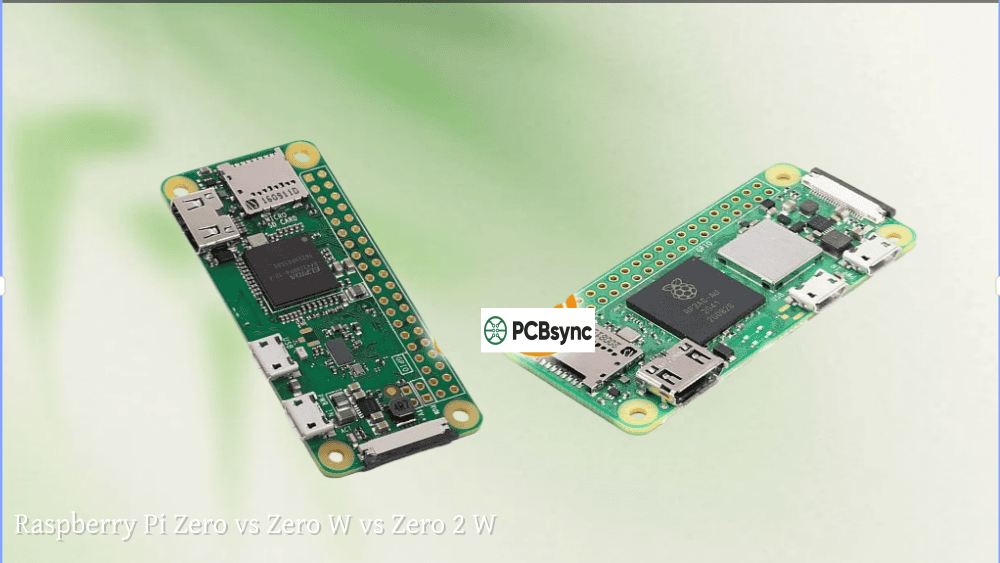
Raspberry Pi Zero vs Zero W vs Zero 2 W: Complete Comparison
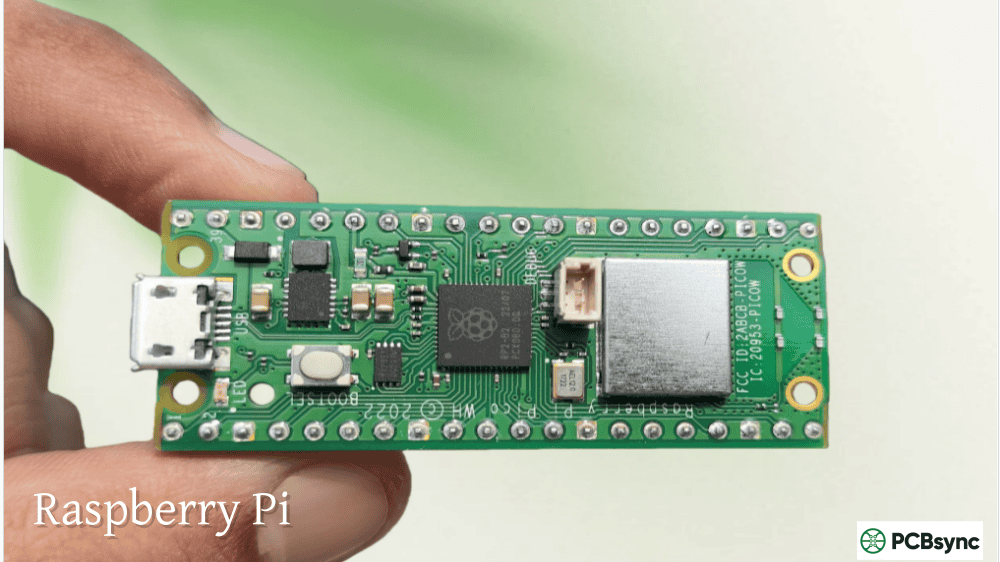
The Raspberry Pi Zero series has carved out a unique niche in embedded computing. These credit-card-sized boards pack genuine Linux capability into packages small enough to disappear inside projects where full-sized Pis simply won’t fit.
But choosing between the original Raspberry Pi Zero, the Pi Zero W, and the newer Zero 2 W isn’t straightforward. Each board targets different use cases, and the right choice depends on your project’s specific requirements for processing power, connectivity, and power consumption.
Having integrated all three variants into production designs—from battery-powered environmental sensors to compact media streamers—I can tell you the differences matter more than the spec sheets suggest.
The Pi Zero W and its siblings share an identical 65mm x 30mm footprint, making them mechanically interchangeable. This wasn’t accidental. The Raspberry Pi Foundation specifically designed each generation to fit existing enclosures and accessories, protecting your investment in custom housings and carrier boards.
However, identical dimensions hide significant internal differences. The progression from Zero to Zero W to Zero 2 W represents genuine generational leaps in capability.
Raspberry Pi Zero: The Original Ultra-Compact Board
Released in November 2015 at a remarkable $5 price point, the original Raspberry Pi Zero stripped the platform to its essentials. No WiFi, no Bluetooth—just raw computing capability in the smallest possible package.
The single-core BCM2835 processor runs at 1GHz, providing adequate performance for dedicated tasks like GPIO control, basic data logging, or serving as a lightweight network device (with a USB Ethernet adapter).
Pi Zero W: Adding Wireless Connectivity
The Pi Zero W arrived in February 2017, adding integrated 802.11n WiFi and Bluetooth 4.1 while maintaining the same $10 price point as the wireless-enabled competition would have cost anyway. The “W” designation became shorthand for wireless capability across the Pi ecosystem.
This addition transformed the Zero into a genuine IoT platform. Suddenly, wireless sensor networks, remote monitoring systems, and headless automation projects became practical without hanging dongles off the USB port.
Raspberry Pi Zero 2 W: The Performance Upgrade
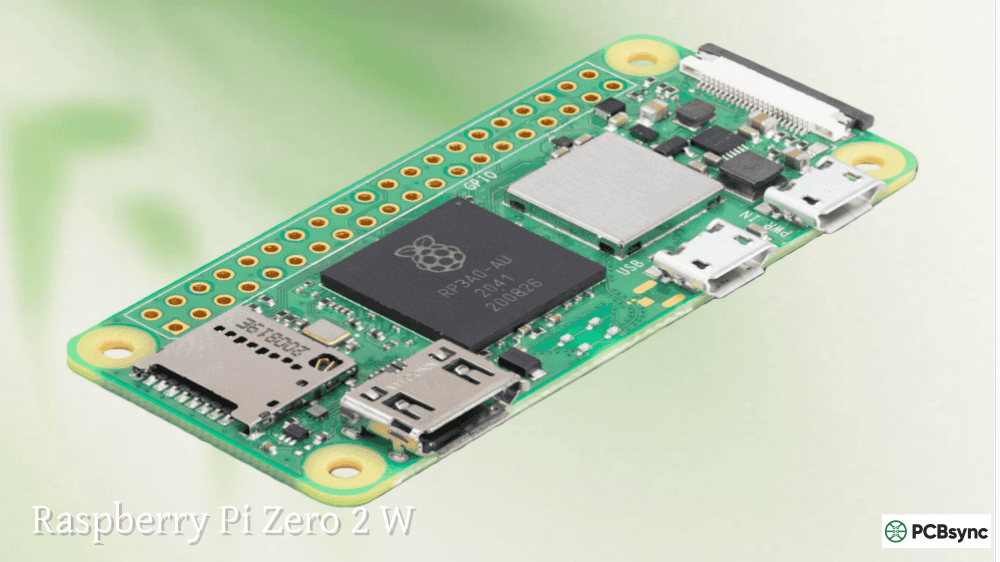
October 2021 brought the Zero 2 W with its quad-core BCM2710A1 processor—the same silicon found in the Raspberry Pi 3, albeit clocked slightly lower at 1GHz. The performance improvement is dramatic: approximately 5x faster in multi-threaded workloads.
Importantly, the form factor remained unchanged. Your existing cases, pHATs, and mounting solutions work without modification.
Complete Raspberry Pi Zero Specifications Comparison
Specification
Pi Zero
Pi Zero W
Pi Zero 2 W
Release Date
Nov 2015
Feb 2017
Oct 2021
Processor
BCM2835
BCM2835
BCM2710A1
CPU Architecture
ARM11
ARM11
Cortex-A53
CPU Cores
1
1
4
CPU Speed
1 GHz
1 GHz
1 GHz
Architecture
32-bit
32-bit
64-bit
RAM
512 MB
512 MB
512 MB
WiFi
No
802.11n
802.11n
Bluetooth
No
4.1 BLE
4.2 BLE
USB Ports
1 Micro USB OTG
1 Micro USB OTG
1 Micro USB OTG
Video Output
Mini HDMI
Mini HDMI
Mini HDMI
Storage
MicroSD
MicroSD
MicroSD
GPIO
40-pin (unpopulated)
40-pin (unpopulated)
40-pin (unpopulated)
Camera Interface
CSI (mini)
CSI (mini)
CSI (mini)
Dimensions
65 x 30 x 5 mm
65 x 30 x 5 mm
65 x 30 x 5 mm
Price (MSRP)
$5
$10
$15
Performance Benchmarks: Real-World Differences
The spec sheet tells part of the story, but actual benchmark data reveals the practical implications of choosing between these raspberry zero variants.
CPU Performance Comparison
Benchmark
Pi Zero / Zero W
Pi Zero 2 W
Improvement
Multi-thread (sysbench)
~2,100 events/sec
~10,500 events/sec
5x faster
Single-thread
~530 events/sec
~800 events/sec
1.5x faster
Boot time (to desktop)
~45 seconds
~30 seconds
33% faster
7-zip compression
Baseline
4.8x faster
Significant
The quad-core architecture of the Zero 2 W particularly shines in multi-threaded applications. Tasks like compiling code, running containerized applications, or processing sensor data in parallel see the full 5x improvement.
Single-threaded tasks—still common in many embedded applications—see more modest 1.5x gains. The Cortex-A53 cores are simply more efficient than the older ARM11 architecture.
Storage Performance
All three boards share the same microSD card interface, so storage performance depends primarily on your card choice. However, the Zero 2 W’s faster CPU reduces overhead, improving effective I/O throughput by 15-20% in practical scenarios.
For projects requiring fast storage, consider adding USB storage (with an adapter) or NVMe via a USB-to-NVMe enclosure on the Zero 2 W, where the CPU can actually keep up with faster media.
Power Consumption: Critical for Battery Projects
Power consumption often determines which raspberry pi zero variant fits your project. Battery-powered devices live or die by milliamp-hours, and these boards differ significantly.
Power Draw Comparison
State
Pi Zero
Pi Zero W
Pi Zero 2 W
Idle (headless, WiFi off)
80 mA
100 mA
100 mA
Idle (WiFi connected)
N/A
120 mA
120 mA
Single-core load
140 mA
150 mA
200 mA
Full CPU load
160 mA
180 mA
500 mA
Shutdown (zombie)
30 mA
40 mA
45 mA
The original Pi Zero remains the power-sipping champion. Without wireless radios drawing current, it can run headless tasks on remarkably little power—ideal for solar-powered or battery-backed deployments where every milliamp counts.
The Zero 2 W’s quad-core processor draws significantly more power under load. Running all four cores at 100% pushes consumption to nearly 500mA—roughly 3x what the original Zero draws under similar conditions.
However, the Zero 2 W often completes tasks faster, potentially using less total energy despite higher instantaneous draw. A task taking 5 seconds on Zero 2 W versus 25 seconds on Zero W may actually consume less total watt-hours.
Optimizing Power Consumption
For battery-powered projects on the Zero 2 W, consider these power-saving techniques:
Disable HDMI output when running headless
Turn off the activity LED via config.txt
Disable WiFi when not actively needed
Reduce CPU frequency during idle periods
Use appropriate sleep states between active periods
With optimization, a Zero 2 W can idle below 75mA—approaching the original Zero’s efficiency while offering dramatically better burst performance when needed.
Connectivity and Expansion Options
All three boards share the same physical connectivity: one micro USB OTG port, one micro USB power port, mini HDMI, and an unpopulated 40-pin GPIO header.
Wireless Capabilities
The Pi Zero W and Zero 2 W include identical 2.4GHz 802.11n WiFi and Bluetooth connectivity. Neither supports 5GHz bands, which can be limiting in congested wireless environments.
For projects requiring better wireless performance, you have options:
USB WiFi dongles with 5GHz support
External WiFi modules via GPIO/UART
Ethernet via USB adapter
The original Pi Zero requires external adapters for any network connectivity, consuming the single USB port unless you add a hub.
GPIO and Hardware Interfaces
The 40-pin GPIO header maintains full compatibility across the Zero family. All standard Pi HATs and pHATs work correctly, though some may require soldering headers onto the board.
Available interfaces include:
SPI, I2C, UART serial
PWM outputs
GPIO with interrupt capability
CSI camera interface (mini connector, requires adapter cable)
The Zero 2 W’s faster processor benefits applications like bit-banged protocols, software PWM, or high-frequency GPIO operations where CPU overhead previously limited performance.
Choosing the Right Raspberry Zero for Your Project
Choose the Original Pi Zero When:
Maximum power efficiency is critical
Your project has no wireless requirements
Budget is extremely constrained
You’re building dedicated, single-purpose devices
Heat dissipation is severely limited
The original Zero excels in scenarios where you need minimal Linux capability in the smallest, lowest-power package possible. Weather stations, basic data loggers, or simple automation controllers often don’t need more.
Choose the Pi Zero W When:
WiFi or Bluetooth connectivity is essential
Power consumption must remain low
Processing demands are modest
You’re deploying IoT sensors or remote monitors
Cost matters but connectivity is non-negotiable
The Pi Zero W hits the sweet spot for many IoT applications. The wireless capability transforms what’s possible, while the modest processor handles typical sensor polling, data transmission, and basic automation without issue.
Choose the Raspberry Pi Zero 2 W When:
Multi-threaded performance matters
You need faster boot times
Running containers or heavier applications
Camera processing or machine learning inference
Desktop-like responsiveness in a compact form
The Zero 2 W opens possibilities previously requiring a full-sized Pi. Retro gaming emulation, lightweight computer vision, and responsive GUI applications become practical on the compact platform.
Thermal Considerations
The Zero 2 W’s increased performance comes with increased heat generation. The board incorporates thick internal copper layers for heat spreading, but sustained heavy loads can still cause thermal throttling without additional cooling.
For passive operation, the Zero 2 W handles most typical workloads without issue. Sustained 100% CPU utilization—compiling, transcoding, stress testing—benefits from a small heatsink or case with thermal coupling.
The original Zero and Zero W rarely require thermal management outside of enclosed, poorly-ventilated installations.
Useful Resources for Pi Zero Projects
Official Documentation
Raspberry Pi Zero Getting Started Guide
GPIO pinout reference at pinout.xyz
Official Raspberry Pi Camera documentation
Community Resources
Tom’s Hardware Pi Zero 2 W Review: Comprehensive benchmarks
Jeff Geerling’s Pi benchmarks: Detailed performance comparisons
Raspberry Pi Forums: Active troubleshooting community
Frequently Asked Questions About Raspberry Pi Zero
Can I use Pi Zero W accessories with the Zero 2 W?
Yes, in almost all cases. The Zero 2 W maintains the same physical dimensions and connector positions as the Zero W. Cases, pHATs, and accessories designed for the Zero W work with the Zero 2 W. The only exception involves some tightly-fitted enclosures that may have clearance issues with the slightly different component placement on the Zero 2 W’s PCB.
Which Raspberry Pi Zero is best for battery-powered projects?
The original Pi Zero offers the lowest power consumption, making it ideal for battery-powered deployments where every milliamp matters. The Zero W adds about 20-40mA for wireless connectivity. The Zero 2 W draws significantly more under load but can complete tasks faster, potentially reducing total energy consumption for burst workloads. Analyze your duty cycle to determine the best fit.
Can the Zero 2 W run as a desktop computer?
Technically yes, but expectations should be modest. The 512MB RAM limitation constrains browser tabs and multitasking. The Zero 2 W provides a noticeably smoother desktop experience than older Zero models, with faster application launches and better responsiveness. For actual desktop use, a Raspberry Pi 4 remains the better choice.
Why doesn’t Raspberry Pi make a Zero 2 without WiFi?
The Raspberry Pi Foundation hasn’t released a non-wireless Zero 2 variant. The added cost of wireless capability is minimal in their manufacturing process, and demand for wireless-free versions remains low compared to connected applications. For projects requiring no wireless, you can disable WiFi in software to reduce power consumption slightly.
Is the Pi Zero suitable for running Home Assistant or Pi-hole?
Pi-hole runs well on any Zero variant—it’s primarily a DNS filter with modest resource requirements. Home Assistant technically runs on Zero hardware but struggles with the limited RAM and processing power; a Pi 3 or Pi 4 provides a much better experience. The Zero 2 W handles Pi-hole comfortably and can manage basic Home Assistant installations with patience.
Final Thoughts
The Raspberry Pi Zero family offers genuine choices rather than simple upgrade paths. The original Zero remains relevant for ultra-low-power applications where wireless isn’t needed. The Pi Zero W continues to serve IoT and headless applications admirably. The Zero 2 W extends what’s possible in the compact form factor, enabling projects that previously demanded larger hardware.
For new projects without specific constraints, the Zero 2 W generally makes the most sense—the performance improvement justifies the $5 premium over the Zero W in most scenarios. But don’t dismiss the older variants: their lower power consumption and proven reliability make them the right choice for many deployments.
The best raspberry pi zero for your project depends on your specific balance of performance, power, connectivity, and cost requirements.
Inquire: Call 0086-755-23203480, or reach out via the form below/your sales contact to discuss our design, manufacturing, and assembly capabilities.
Quote: Email your PCB files to Sales@pcbsync.com (Preferred for large files) or submit online. We will contact you promptly. Please ensure your email is correct.
Notes: For PCB fabrication, we require PCB design file in Gerber RS-274X format (most preferred), *.PCB/DDB (Protel, inform your program version) format or *.BRD (Eagle) format. For PCB assembly, we require PCB design file in above mentioned format, drilling file and BOM. Click to download BOM template To avoid file missing, please include all files into one folder and compress it into .zip or .rar format.