Inquire: Call 0086-755-23203480, or reach out via the form below/your sales contact to discuss our design, manufacturing, and assembly capabilities.
Quote: Email your PCB files to Sales@pcbsync.com (Preferred for large files) or submit online. We will contact you promptly. Please ensure your email is correct.
Notes: For PCB fabrication, we require PCB design file in Gerber RS-274X format (most preferred), *.PCB/DDB (Protel, inform your program version) format or *.BRD (Eagle) format. For PCB assembly, we require PCB design file in above mentioned format, drilling file and BOM. Click to download BOM template To avoid file missing, please include all files into one folder and compress it into .zip or .rar format.
Raspberry Pi PoE HAT Setup Guide: Power Over Ethernet Explained
As someone who has spent years designing PCBs and implementing embedded systems, I can tell you that Power over Ethernet is one of those technologies that completely changes how you approach project deployment. The Raspberry Pi PoE HAT eliminates the headache of running separate power cables to remote installations, and after setting up dozens of these boards for various projects, I want to share everything you need to know to get yours running smoothly.
Whether you’re building a surveillance system, setting up a cluster of headless servers, or deploying IoT sensors in hard-to-reach locations, understanding the PoE HAT and PoE+ HAT options will save you time and frustration.
What is Power Over Ethernet and Why Does It Matter?
Power over Ethernet (PoE) is a technology that transmits both electrical power and data over standard Cat5e or Cat6 Ethernet cables. Instead of running two cables to your Raspberry Pi—one for network connectivity and one for power—you run a single cable that handles both.
From a practical engineering standpoint, this solves several problems at once. You eliminate the need for power outlets near your device, reduce cable clutter, and gain centralized power management through your PoE switch. When I deploy Raspberry Pis in rack environments or remote locations, PoE is almost always my first choice.
The technology works by injecting power onto the unused pairs in an Ethernet cable (or using phantom power on the data pairs). The receiving device—in this case, your PoE HAT—extracts that power and converts it to the 5V DC your Pi requires.
Understanding IEEE 802.3af vs 802.3at PoE Standards
Before you purchase a Raspberry Pi PoE HAT, you need to understand the difference between PoE standards. This isn’t just technical jargon—it directly affects whether your setup will work reliably under load.
PoE Standards Comparison Table
Standard
Common Name
Max Power at PSE
Power Available at Device
Typical Applications
IEEE 802.3af
PoE
15.4W
12.95W
Basic Pi setups, simple IoT
IEEE 802.3at
PoE+
30W
25.5W
Pi 4 with USB peripherals
IEEE 802.3bt Type 3
PoE++
60W
51W
High-power devices
IEEE 802.3bt Type 4
PoE++
100W
71W
Very high-power devices
The original Raspberry Pi PoE HAT uses the 802.3af standard, delivering around 13W to your device. This works fine for a Raspberry Pi 4 running light workloads. However, once you start connecting USB SSDs, multiple peripherals, or running CPU-intensive tasks, you’re pushing the limits.
The PoE+ HAT (released in 2021) implements the 802.3at standard, providing up to 25W of power. This gives you significant headroom for USB devices, overclocking, and demanding applications.
Backward Compatibility
The good news is that the PoE+ HAT is backward compatible with 802.3af switches. If you connect it to an older PoE switch, it will still work—you’ll just be limited to the 15.4W the switch can provide. This means you can invest in the PoE+ HAT now and upgrade your network infrastructure later without replacing the HAT.
PoE HAT vs PoE+ HAT: Which Should You Choose?
Having worked with both versions extensively, here’s my breakdown of the key differences:
Technical Specifications Comparison
Feature
PoE HAT (Original)
PoE+ HAT
IEEE Standard
802.3af
802.3af/at
Max Power Output
5V DC @ 2.5A (12.5W)
5V DC @ 4A (20W)
Input Voltage
37-57V DC
37-57V DC
Transformer Type
Wire-wound
Planar
Rectifier
Diode bridge
Ideal diode (Microchip PD70224ILQ)
Fan Size
25mm
25mm
Fan Airflow
2.2 CFM
2.4 CFM
Weight
~20g
~40g
Price
$20
$20
The PoE+ HAT replaced the traditional wire-wound transformer with a planar transformer from Bourns. This change, combined with the ideal diode rectifier, significantly reduces heat dissipation. From a PCB design perspective, planar transformers are more efficient and offer better thermal characteristics—something you’ll appreciate in enclosed installations.
When to Choose PoE+ HAT
In my experience, the PoE+ HAT is the better choice in almost every scenario today. The original PoE HAT faces supply constraints due to the global semiconductor shortage, and the price is identical. Unless you’re maintaining compatibility with existing deployments, go with the PoE+ variant.
Hardware Installation Guide for Raspberry Pi PoE HAT
Installing a PoE HAT isn’t complicated, but there are some details that can trip you up if you’re not careful.
Compatible Raspberry Pi Models
Model
PoE HAT Compatible
PoE+ HAT Compatible
Notes
Raspberry Pi 5
No
No
Requires Waveshare PoE HAT (F) or similar
Raspberry Pi 4 Model B
Yes
Yes
Full support
Raspberry Pi 3 Model B+
Yes
Yes
Full support
Raspberry Pi 3 Model B
No
No
Lacks PoE header
Earlier models
No
No
Lacks PoE header
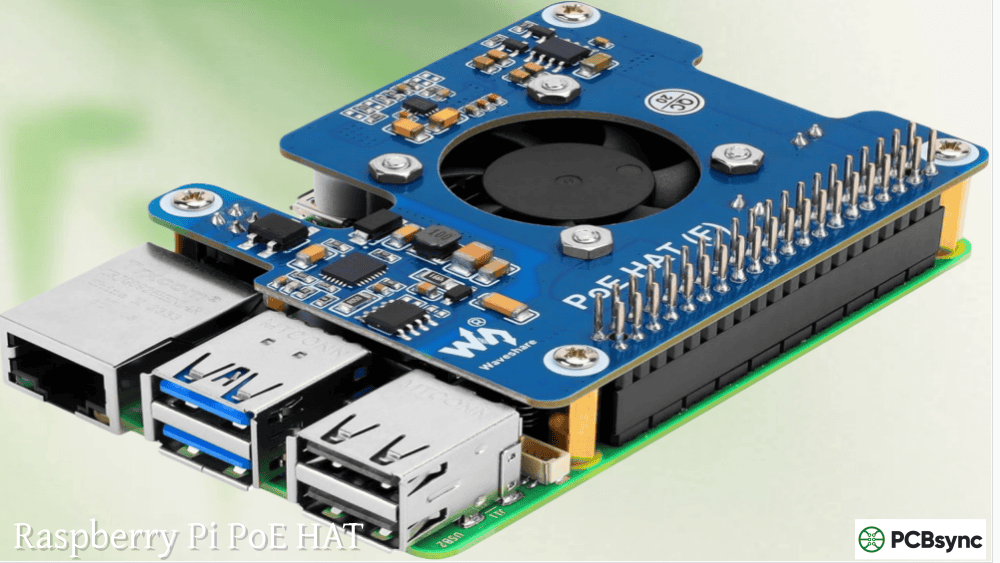
The Raspberry Pi 5 moved the PoE header location, making it incompatible with HATs designed for the Pi 3/4 generation. Third-party manufacturers like Waveshare now offer Pi 5-specific PoE HATs.
Step-by-Step Installation Process
Step 1: Gather Your Components
You’ll need:
Raspberry Pi 3B+ or 4 Model B
Official PoE HAT or PoE+ HAT
Four M2.5 standoffs (included with HAT)
M2.5 screws (included with HAT)
microSD card with Raspberry Pi OS
Cat5e or Cat6 Ethernet cable
PoE switch or PoE injector
Step 2: Attach Standoffs to the HAT
Before connecting anything, screw the four standoffs into the corner holes of the PoE HAT. These standoffs serve two purposes: they provide mechanical support and create clearance between the HAT and the Pi’s components.
One critical note from my experience: check the clearance around your Pi’s HDMI connector if using a Pi 3B+. Some early production runs had tight tolerances that could cause shorts. Adding a small piece of electrical tape on the HDMI connector is a worthwhile precaution.
Step 3: Align and Connect the HAT
The PoE HAT connects via two headers:
The 40-pin GPIO header (same as all HATs)
A 4-pin PoE header (located near the top-right mounting hole)
Carefully align both connectors and press down firmly but evenly. The 4-pin PoE header is surface-mounted and somewhat fragile—I’ve had to resolder these on more than one occasion after careless removal.
Step 4: Secure with Screws
Once the HAT is seated, flip the assembly over and secure the standoffs to the Pi’s mounting holes using the provided screws.
Step 5: Insert SD Card and Connect Ethernet
Insert your microSD card with Raspberry Pi OS, then connect the Ethernet cable to both your Pi and your PoE switch or injector.
Step 6: Power On
When you connect the Ethernet cable to a PoE source, the negotiation process begins. Don’t be alarmed if it takes 1-2 minutes for the Pi to boot—the PoE negotiation and power delivery aren’t instantaneous.
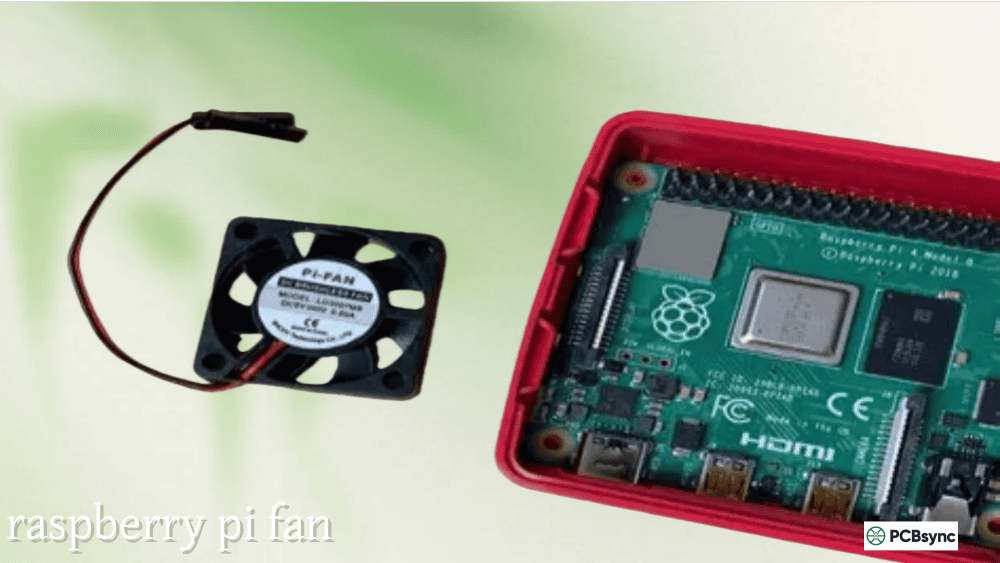
The PoE HAT includes a small brushless fan controlled via I2C. Out of the box, this fan runs on a conservative temperature profile that many users find annoying—it kicks in at 40°C, runs for a few seconds, then shuts off as the temperature drops. This constant cycling creates an audible whine that’s distracting in quiet environments.
Customizing Fan Temperature Thresholds
You can adjust the fan behavior by editing /boot/firmware/config.txt (or /boot/config.txt on older Raspberry Pi OS versions). Add the following lines before any section headers:
These values are in millicelsius (so 65000 = 65°C). The hyst parameters set the temperature drop required before the fan slows down or stops—this hysteresis prevents rapid on/off cycling.
Fan Control Parameter Reference
Parameter
Description
Default Value
Recommended Value
poe_fan_temp0
Temperature for fan stage 1
50000 (50°C)
65000 (65°C)
poe_fan_temp0_hyst
Hysteresis for stage 1
5000 (5°C)
5000 (5°C)
poe_fan_temp1
Temperature for fan stage 2
55000 (55°C)
70000 (70°C)
poe_fan_temp1_hyst
Hysteresis for stage 2
5000 (5°C)
5000 (5°C)
poe_fan_temp2
Temperature for fan stage 3
N/A
75000 (75°C)
poe_fan_temp3
Temperature for fan stage 4
N/A
80000 (80°C)
After editing, reboot your Pi with sudo reboot for the changes to take effect.
Disabling the Fan Entirely
If you’re running a low-power workload in a well-ventilated enclosure, you can disable the fan completely:
disable_poe_fan=1
I wouldn’t recommend this for most use cases, but it’s an option when absolute silence is required.
Practical Applications for Raspberry Pi PoE HAT
Security Camera Systems
This is probably the most popular use case I encounter. A Raspberry Pi with camera module, powered via PoE, makes an excellent IP camera that you can customize with motion detection, facial recognition, or integration with home automation systems.
Kubernetes Clusters and Server Racks
When building a Raspberry Pi cluster, PoE eliminates the need for a power distribution unit with individual power supplies. I’ve deployed clusters of 4-5 Pis per 1U of rack space, with a single PoE switch providing both power and networking.
Remote Sensor Deployments
Agricultural monitoring, environmental sensors, building automation—any scenario where you need a networked device in a location without convenient power access benefits from PoE.
Digital Signage
Mounting a display behind a wall or ceiling becomes much simpler when you only need to run a single cable to the driving Raspberry Pi.
Troubleshooting Common PoE HAT Issues
Pi Won’t Power On
Check your PoE source: Not all Ethernet switches support PoE. You need either a PoE-enabled switch or a separate PoE injector between your standard switch and the Pi.
Verify cable quality: PoE requires good electrical contact across all eight wires. Damaged or poorly-terminated cables can cause intermittent power delivery.
Confirm compatibility: Remember that only the Pi 3B+ and Pi 4 have the PoE header. Earlier models won’t work.
Fan Runs Constantly or Won’t Respond to Settings
Update your firmware: The fan control parameters require up-to-date firmware. Run:
sudo apt update && sudo apt full-upgrade
Check config.txt location: On recent Raspberry Pi OS versions, the config file has moved to /boot/firmware/config.txt. Your edits might be in the wrong location.
Third-party HATs may differ: The rpi-poe overlay only works with the official Raspberry Pi PoE HAT. Third-party alternatives like Waveshare HATs may require different configuration approaches or run the fan at fixed speeds.
System Unstable Under Load
If your Pi crashes or shows undervoltage warnings when running CPU-intensive tasks with USB devices attached, you’re likely exceeding the power budget.
With the original PoE HAT on an 802.3af switch, you have roughly 13W available. A Pi 4 at full load uses about 9W, leaving only 4W for everything else. USB 3.0 SSDs can draw 3W each.
Solutions:
Upgrade to the PoE+ HAT with an 802.3at switch
Reduce USB peripheral power draw
Use powered USB hubs for demanding devices
Useful Resources and Downloads
Official Documentation
Resource
URL
Description
Raspberry Pi PoE HAT Product Page
raspberrypi.com/products/poe-hat
Official specs and documentation
Raspberry Pi PoE+ HAT Announcement
raspberrypi.com/blog
Design details and comparison
Raspberry Pi Config Reference
raspberrypi.com/documentation
Full config.txt options including PoE
Third-Party Resources
Resource
Description
Jeff Geerling’s PoE+ Review
Detailed thermal and power testing
Waveshare Wiki
Documentation for third-party PoE HATs
Raspberry Pi Forums
Community support and troubleshooting
Recommended Hardware
Component
Use Case
Unifi Switch with PoE
Enterprise-grade PoE switching
TP-Link TL-SG1005P
Budget 5-port PoE gigabit switch
Single-port PoE Injector
Adding PoE to existing network
Cat6 Ethernet Cable
Recommended for longer runs
Frequently Asked Questions About Raspberry Pi PoE HAT
Can I use the PoE HAT with Raspberry Pi 5?
No, the official Raspberry Pi PoE HAT and PoE+ HAT are not compatible with the Raspberry Pi 5. The Pi 5 relocated the PoE header to a different position near the moved Ethernet jack. You’ll need a Pi 5-specific PoE HAT, such as the Waveshare PoE HAT (F) which was designed specifically for the new header location.
Do I need a special Ethernet cable for PoE?
Standard Cat5e or Cat6 cables work perfectly for PoE. The key is cable quality—ensure all eight conductors have good connections. For longer runs (over 50 meters), Cat6 provides better performance. There’s no need for special “PoE cables” despite what some vendors claim.
Can I power the Raspberry Pi from both PoE and USB-C simultaneously?
This is not recommended and should be avoided. Running dual power sources can cause current backfeeding and potentially damage your Pi or PoE HAT. When PoE is connected, do not connect a USB-C power supply.
How much power does the PoE HAT itself consume?
The PoE HAT circuitry consumes approximately 1-2W converting from the ~48V PoE input to 5V output. This overhead means if your PoE switch shows 6W consumption, your Pi is actually receiving around 4-5W. The efficiency varies based on load and input voltage.
Why does my fan make a high-pitched whine when turning on?
The small 25mm fans used in PoE HATs can generate audible noise, especially during startup and at certain RPM ranges. This is normal behavior. You can reduce this by adjusting the temperature thresholds to prevent frequent cycling, or by raising the minimum fan speed to skip the noisiest operating points.
Wrapping Up
The Raspberry Pi PoE HAT and its successor, the PoE+ HAT, are essential accessories for anyone deploying Pis in professional or semi-permanent installations. The ability to power and network your device through a single cable simplifies installation, improves reliability, and enables deployments that would otherwise require complex electrical work.
For new projects, I recommend the PoE+ HAT without hesitation. The improved power delivery, better thermal management, and identical price point make it the obvious choice. Pair it with a quality PoE+ switch, and you’ll have a robust system that handles demanding workloads without undervoltage concerns.
Just remember to configure your fan thresholds after installation, and you’ll avoid the one legitimate complaint about these otherwise excellent add-on boards.
Inquire: Call 0086-755-23203480, or reach out via the form below/your sales contact to discuss our design, manufacturing, and assembly capabilities.
Quote: Email your PCB files to Sales@pcbsync.com (Preferred for large files) or submit online. We will contact you promptly. Please ensure your email is correct.
Notes: For PCB fabrication, we require PCB design file in Gerber RS-274X format (most preferred), *.PCB/DDB (Protel, inform your program version) format or *.BRD (Eagle) format. For PCB assembly, we require PCB design file in above mentioned format, drilling file and BOM. Click to download BOM template To avoid file missing, please include all files into one folder and compress it into .zip or .rar format.