Inquire: Call 0086-755-23203480, or reach out via the form below/your sales contact to discuss our design, manufacturing, and assembly capabilities.
Quote: Email your PCB files to Sales@pcbsync.com (Preferred for large files) or submit online. We will contact you promptly. Please ensure your email is correct.
Notes: For PCB fabrication, we require PCB design file in Gerber RS-274X format (most preferred), *.PCB/DDB (Protel, inform your program version) format or *.BRD (Eagle) format. For PCB assembly, we require PCB design file in above mentioned format, drilling file and BOM. Click to download BOM template To avoid file missing, please include all files into one folder and compress it into .zip or .rar format.
Raspberry Pi Pico vs Pico W: Which One Should You Choose?
When the Raspberry Pi Pico launched in January 2021, it disrupted the microcontroller market with a $4 board powered by custom silicon. Eighteen months later, the Pico W arrived with wireless connectivity, and suddenly the decision got more interesting. After spending considerable time with both boards on my workbench, I can tell you the choice isn’t always obvious.
This comparison breaks down exactly what separates these two Raspberry Pi microcontrollers, helping you pick the right board for your specific project needs.
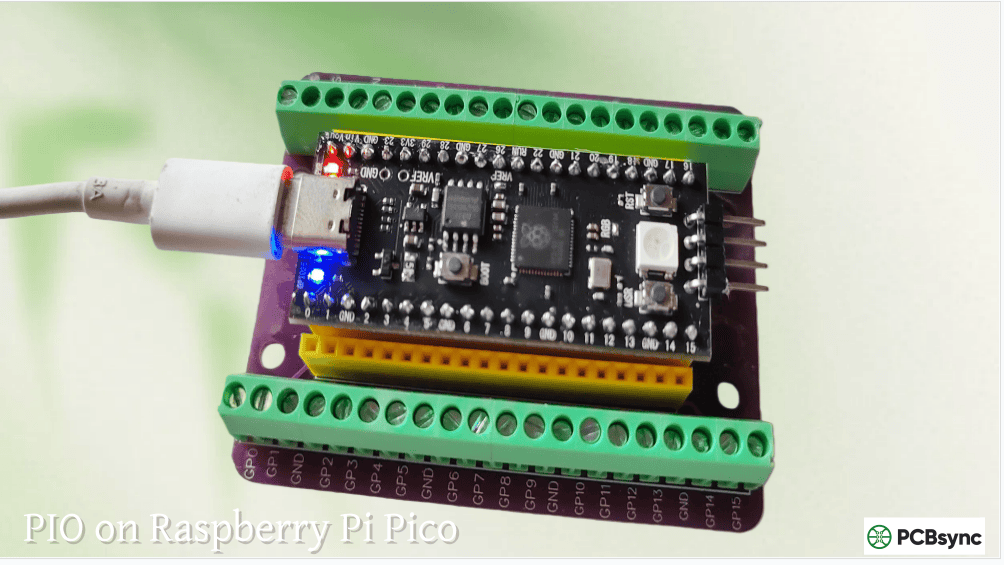
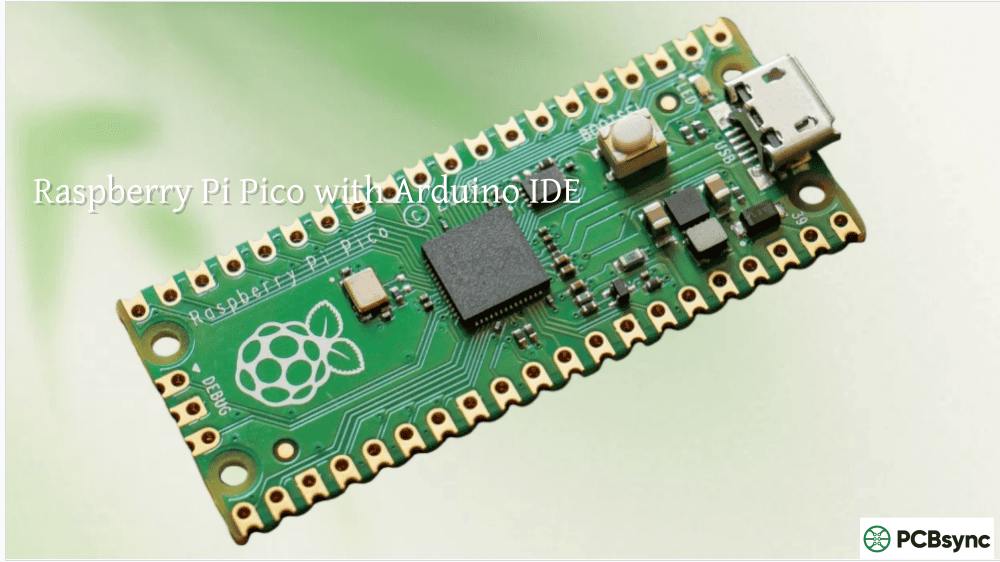
Before diving into specifics, let’s establish what we’re comparing. The Raspberry Pi Pico and Raspberry Pi Pico W belong to the Pico 1 family, both built around the RP2040 microcontroller designed by Raspberry Pi in the UK.
Unlike traditional Raspberry Pi single-board computers that run full operating systems, these are microcontrollers. They execute code directly without an OS layer, making them ideal for dedicated tasks, sensor reading, and hardware control. Think of them as sophisticated Arduino alternatives with significantly more processing power.
The family also includes the Pico H and Pico WH variants, which add pre-soldered headers and a new debug connector to their respective base models.
Raspberry Pi Pico vs Pico W: Complete Specifications Comparison
The core hardware remains identical between these boards, with one major exception. Here’s the detailed breakdown:
Specification
Raspberry Pi Pico
Raspberry Pi Pico W
Microcontroller
RP2040
RP2040
CPU
Dual-core ARM Cortex-M0+ @ 133MHz
Dual-core ARM Cortex-M0+ @ 133MHz
RAM
264KB SRAM
264KB SRAM
Flash Storage
2MB QSPI
2MB QSPI
GPIO Pins
26 multi-function
26 multi-function
ADC Channels
3× 12-bit (500 ksps)
3× 12-bit (500 ksps)
PWM Channels
16
16
Wireless
None
802.11n Wi-Fi + Bluetooth 5.2
Wireless Chip
N/A
Infineon CYW43439
Operating Temp
-20°C to +85°C
-20°C to +70°C
USB
Micro-USB (1.1 Host/Device)
Micro-USB (1.1 Host/Device)
Dimensions
51 × 21mm
51 × 21mm
Price
$4
$6
The $2 price difference buys you the Infineon CYW43439 wireless module with integrated PCB antenna. That’s remarkable value when you consider competing Wi-Fi-enabled boards often cost $15-27.
Physical Design Differences Between Pico and Pico W
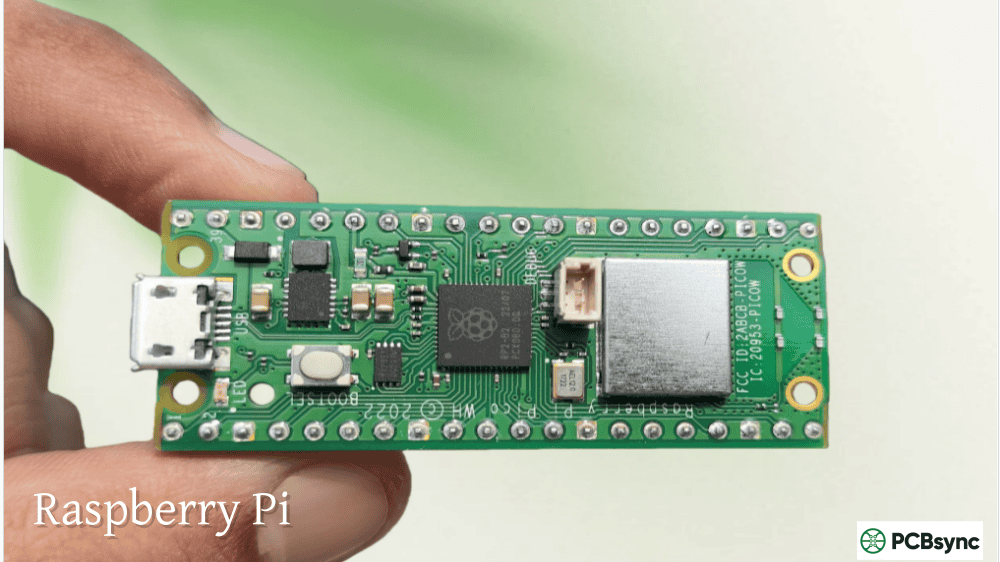
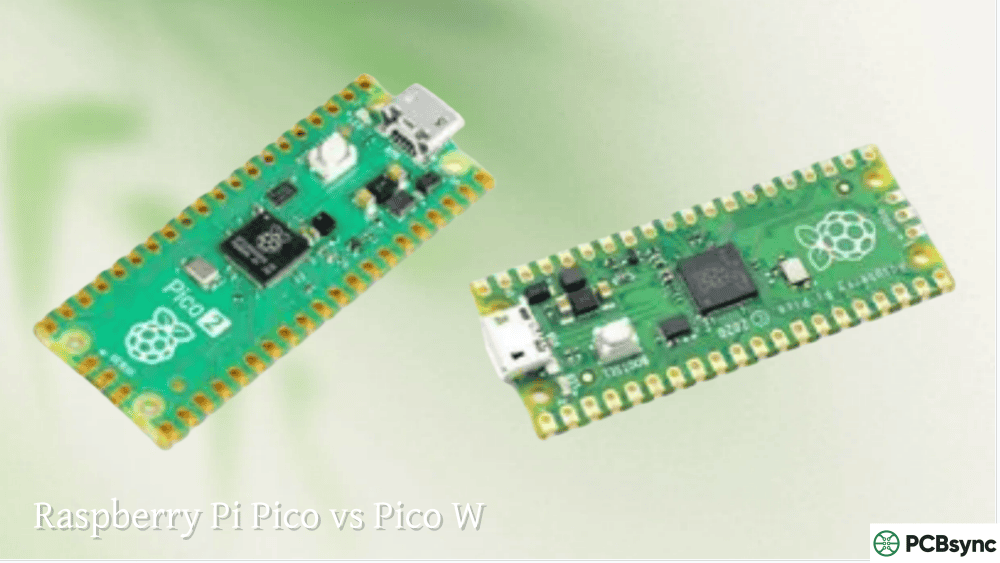
From a PCB design perspective, the Raspberry Pi Pico W required thoughtful engineering compromises to maintain pin compatibility while adding wireless capability.
Antenna Placement
The most visible change is the integrated antenna occupying the lower edge of the board. This ceramic antenna, licensed from ABRACON, requires careful placement considerations in your enclosure design. Metal objects near the antenna degrade wireless performance significantly.
Debug Header Relocation
To accommodate the wireless circuitry, the three-pin Serial Wire Debug (SWD) header moved from the board edge to the center. Most hobbyist projects won’t notice this change, but production environments using automated programming jigs may need fixture adjustments.
Power Supply Redesign
The wireless module increases power demands, requiring an upgraded switching regulator. The original Pico uses the RT6150B from Richtek, while the Pico W employs the RT6154A with higher current capability. The additional passive components around the power section reflect this upgrade.
Mounting Hole Changes
An interesting detail: the bottom mounting holes on the Pico W feature plated-through construction compared to the original Pico. This likely provides additional ground shielding for the wireless interface, demonstrating attention to RF signal integrity.
The Internal GPIO Situation
Here’s something that catches developers transitioning from Pico to Pico W: internal GPIO allocation changed to support the wireless interface.
Function
Raspberry Pi Pico
Raspberry Pi Pico W
User LED
GPIO25
WL_GPIO0 (via CYW43439)
Power Save Mode
GPIO23
WL_GPIO1
VBUS Detect
GPIO24
WL_GPIO2
GPIO pins 23, 24, 25, and 29 on the RP2040 now communicate with the Infineon wireless chip via SPI. They’re no longer available for general use. The external breakout pins remain identical between both boards, but any code controlling the onboard LED needs modification.
This is the most common porting issue. A simple LED blink program that works perfectly on Pico will fail on Pico W unless you change the pin definition from GPIO25 to the wireless module’s GPIO.
Wi-Fi and Bluetooth Capabilities on Pico W
The Infineon CYW43439 provides:
Wireless Feature
Specification
Wi-Fi Standard
802.11b/g/n (2.4GHz only)
Wi-Fi Security
WPA3 support
Soft Access Point
Up to 4 clients
Bluetooth Version
5.2 (BLE supported)
Antenna
Integrated PCB antenna
Interface Speed
33MHz SPI to RP2040
Bluetooth support arrived later than Wi-Fi. Initial firmware releases only enabled Wi-Fi, with Bluetooth Low Energy (BLE) functionality added in subsequent MicroPython updates. Classic Bluetooth remains unavailable.
The Wi-Fi implementation handles most home and office networking scenarios competently. Initial connection times can occasionally be slow (sometimes 20+ seconds), particularly with mesh networks or routers that dynamically switch between 2.4GHz and 5GHz bands. Disabling mesh features typically resolves connection issues.
Programming Options for Both Boards
Both Raspberry Pi Pico variants support identical programming environments:
MicroPython
The recommended starting point for beginners. Drag-and-drop the UF2 firmware file, and you’re writing Python code in minutes using Thonny IDE. The Pico W requires a specific firmware build that includes wireless drivers.
CircuitPython
Adafruit’s friendly fork of MicroPython with extensive library support for sensors and displays. Great documentation and beginner-friendly approach.
C/C++ SDK
Maximum performance and hardware access. The official Raspberry Pi Pico SDK provides comprehensive low-level control. Requires more setup but delivers the best results for production applications.
Arduino IDE
The Earle Philhower Arduino core brings familiar Arduino syntax to the RP2040 platform. Excellent for Arduino users transitioning to more capable hardware.
The original Raspberry Pi Pico remains the better choice for several scenarios:
Offline-Only Projects
Weather stations logging to SD cards, LED controllers, motor drivers, and similar applications that never need network connectivity work perfectly without the wireless overhead.
Wider Operating Temperature
The Pico handles temperatures from -20°C to +85°C, while the Pico W maxes out at 70°C. Industrial environments, outdoor enclosures, or automotive applications may require that extra thermal headroom.
Simpler Power Management
Without the wireless module drawing current, battery-powered projects last longer. The base Pico typically consumes 25-30mA during active operation, with lower sleep current than its wireless sibling.
Lower Cost at Scale
For production runs of hundreds or thousands of units, that $2 difference adds up. If your product doesn’t require connectivity, there’s no reason to pay for unused hardware.
Maximum GPIO Predictability
When every internal GPIO matters for your specific application, the standard Pico provides cleaner hardware access without the wireless module consuming pins.
When to Choose the Raspberry Pi Pico W
The Raspberry Pi Pico W becomes essential when connectivity matters:
IoT Sensor Networks
Remote temperature monitoring, environmental sensing, home automation sensors—any application transmitting data over Wi-Fi benefits from integrated wireless.
Web-Based Control Interfaces
The Pico W can host lightweight web servers, providing browser-based control panels for your projects without external networking hardware.
Over-the-Air Updates
Deploying firmware updates across multiple devices without physical access requires network connectivity that only the Pico W provides.
Bluetooth Peripherals
BLE-enabled sensors, HID devices, and smartphone-controlled projects need the CYW43439’s Bluetooth capability.
MQTT and Cloud Services
Connecting to AWS IoT, Azure IoT Hub, or MQTT brokers for centralized data collection demands wireless capability.
Wireless Data Logging
Pushing sensor readings directly to databases, spreadsheets, or dashboards eliminates SD card management and physical data retrieval.
Raspberry Pi Pico W Project Ideas
The wireless capability enables entirely new project categories:
Project Type
Description
Wi-Fi Weather Station
Upload temperature, humidity, and pressure readings to cloud dashboards
Smart Home Controller
Control lights, switches, and appliances via web interface or MQTT
Both boards are manufactured by Raspberry Pi and will remain in production until at least January 2036—exceptional longevity commitment for embedded platforms.
My Recommendation
After extensive testing, here’s my practical guidance:
Buy the Pico W by default unless you have specific reasons not to. The $2 premium provides options you might need later, even if your initial project doesn’t require connectivity. Adding Wi-Fi to a Pico-based project later means redesigning around new hardware.
Buy the standard Pico when building purely offline devices, operating in high-temperature environments, optimizing production costs at scale, or specifically needing those internal GPIO pins for other purposes.
The Raspberry Pi Pico W transformed a capable microcontroller into a genuine IoT platform. For most hobbyist and educational projects, that wireless capability opens doors worth the extra two dollars.
Frequently Asked Questions About Raspberry Pi Pico and Pico W
Can I use the same code on both Raspberry Pi Pico and Pico W?
Mostly yes. Both boards run identical firmware (MicroPython, CircuitPython, or C/C++) and share the same GPIO pinout. The main exception is the onboard LED, which uses GPIO25 on the Pico but requires accessing WL_GPIO0 through the wireless module on the Pico W. Any code controlling the user LED needs modification when porting between boards.
Does the Raspberry Pi Pico W support 5GHz Wi-Fi?
No. The Infineon CYW43439 wireless chip only supports 2.4GHz 802.11b/g/n networks. This is common among low-cost IoT devices and typically provides sufficient range for most home and office applications. If your router auto-switches between 2.4GHz and 5GHz, consider setting up a dedicated 2.4GHz network for IoT devices.
Is Bluetooth fully supported on the Pico W?
Bluetooth Low Energy (BLE) is supported through MicroPython and C/C++ SDK. Classic Bluetooth (BR/EDR) is not enabled. BLE support arrived after the initial launch, so ensure you’re using firmware that specifically includes Bluetooth functionality. The CYW43439 chip hardware supports Bluetooth 5.2.
How much power does the Pico W consume compared to the standard Pico?
The Pico W consumes more power due to the wireless module. During active Wi-Fi operation, expect 25-30mA baseline with spikes during transmission. The standard Pico draws less current without the wireless overhead. For battery-powered applications where every milliamp matters, calculate your power budget carefully or disable Wi-Fi when not actively transmitting.
Can I use Raspberry Pi Pico accessories with the Pico W?
Yes. The Pico W maintains identical physical dimensions and GPIO breakout pinout, ensuring compatibility with existing HATs, breakout boards, and carrier PCBs designed for the original Pico. The only consideration is ensuring adequate clearance around the antenna area for optimal wireless performance.
This comparison reflects testing and research conducted through late 2024. Pricing and availability may vary by region. Both Raspberry Pi Pico and Pico W remain excellent choices for microcontroller projects—the right choice simply depends on your specific connectivity requirements.
Inquire: Call 0086-755-23203480, or reach out via the form below/your sales contact to discuss our design, manufacturing, and assembly capabilities.
Quote: Email your PCB files to Sales@pcbsync.com (Preferred for large files) or submit online. We will contact you promptly. Please ensure your email is correct.
Notes: For PCB fabrication, we require PCB design file in Gerber RS-274X format (most preferred), *.PCB/DDB (Protel, inform your program version) format or *.BRD (Eagle) format. For PCB assembly, we require PCB design file in above mentioned format, drilling file and BOM. Click to download BOM template To avoid file missing, please include all files into one folder and compress it into .zip or .rar format.