Inquire: Call 0086-755-23203480, or reach out via the form below/your sales contact to discuss our design, manufacturing, and assembly capabilities.
Quote: Email your PCB files to Sales@pcbsync.com (Preferred for large files) or submit online. We will contact you promptly. Please ensure your email is correct.
Notes: For PCB fabrication, we require PCB design file in Gerber RS-274X format (most preferred), *.PCB/DDB (Protel, inform your program version) format or *.BRD (Eagle) format. For PCB assembly, we require PCB design file in above mentioned format, drilling file and BOM. Click to download BOM template To avoid file missing, please include all files into one folder and compress it into .zip or .rar format.
Best Raspberry Pi HATs in 2026: Expand Your Pi’s Capabilities
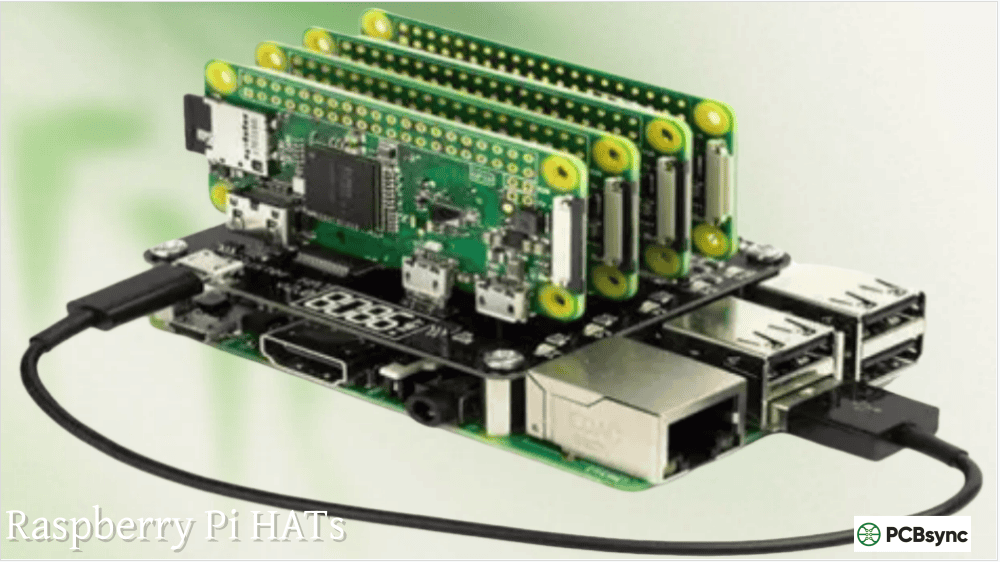
The raspberry pi hat ecosystem has exploded since the HAT specification launched in 2014. What started as a handful of add-on boards has grown into hundreds of options covering everything from audio processing to industrial automation. After designing custom HATs professionally and testing countless commercial options, I’ve compiled this guide to the best pi hats available in 2026.
A well-chosen raspberry hat transforms your Pi from a general-purpose computer into a specialized tool. Need audiophile-quality sound? There’s a HAT for that. Industrial motor control? Covered. PoE power delivery, cellular connectivity, AI acceleration—the HAT ecosystem has matured to address virtually every expansion need.
HAT stands for “Hardware Attached on Top,” and it’s more than just a naming convention. The Raspberry Pi Foundation established a formal HAT specification that defines mechanical dimensions, electrical requirements, and most importantly, automatic configuration through an onboard EEPROM.
The HAT Specification Explained
A true raspberry pi hat must conform to specific requirements:
Specification
Requirement
Purpose
Board Dimensions
65mm x 56mm
Matches Pi board outline
Mounting Holes
4 holes, 2.75mm diameter
Aligns with Pi mounting
GPIO Connector
40-pin extended female header
Electrical connection
EEPROM
24C32 or equivalent
Auto-configuration
Identification
Vendor/Product ID in EEPROM
Device detection
The EEPROM is what distinguishes a proper HAT from generic add-on boards. When your Pi boots, it reads the EEPROM data to automatically load appropriate device tree overlays and configure GPIO pins. This “plug and play” functionality eliminates manual configuration for properly designed HATs.
HAT vs pHAT vs Bonnet
You’ll encounter these terms when shopping for raspberry hat accessories:
HAT: Full-size boards matching the Pi’s 65x56mm footprint with all required features including EEPROM.
pHAT: Smaller boards designed for the Pi Zero’s compact dimensions (65x30mm). Most pHATs lack the EEPROM but use the same GPIO pinout.
Bonnet: Adafruit’s term for their smaller add-on boards, typically pHAT-sized without EEPROM requirement.
For this guide, I’ll focus primarily on full-size HATs compatible with Pi 3, Pi 4, and Pi 5 boards, though many recommendations also have pHAT variants for Zero projects.
Categories of Raspberry Pi HATs
Power and PoE HATs
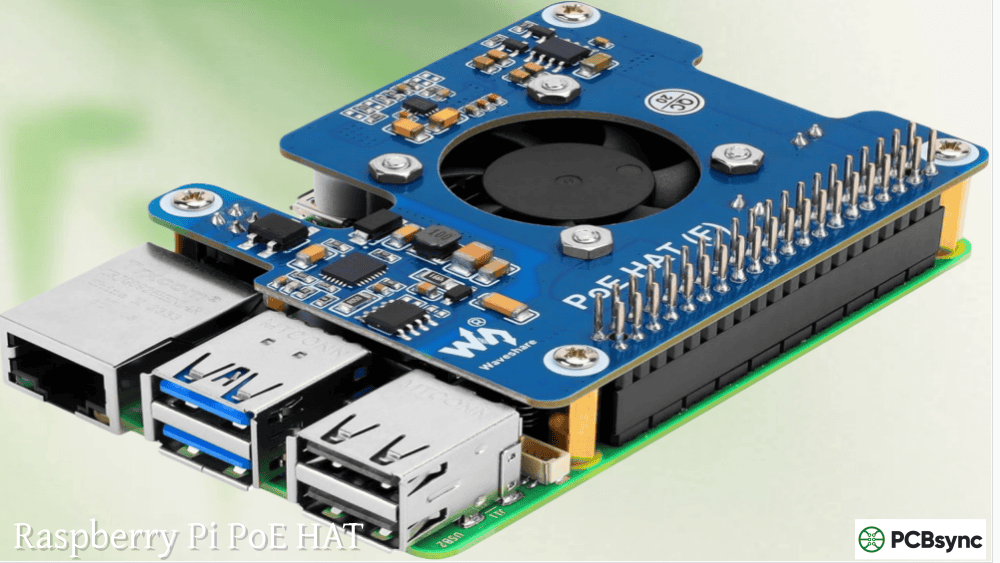
Power over Ethernet (PoE) HATs eliminate separate power supplies by drawing power through your Ethernet cable. For rack deployments and professional installations, PoE dramatically simplifies cabling.
PoE HAT Model
PoE Standard
Max Output
Pi Compatibility
Price Range
Official PoE+ HAT
802.3at (PoE+)
5V/4A (20W)
Pi 3B+, Pi 4, Pi 5
$20-25
Waveshare PoE HAT (C)
802.3af/at
5V/3A (15W)
Pi 3B+, Pi 4
$15-20
UCTRONICS PoE HAT
802.3af
5V/2.5A (12.5W)
Pi 3B+, Pi 4
$18-22
PiJuice HAT
N/A (Battery)
5V/2.5A + UPS
Pi 3, Pi 4
$50-70
My Recommendation: The official PoE+ HAT delivers the cleanest power with lowest ripple, which matters for audio applications and sensitive analog circuits. The integrated fan can be noisy, but PWM control through software helps.
Audio DAC and Sound HATs
The Pi’s built-in audio is mediocre at best—a PWM-generated signal that serious audio applications can’t tolerate. Audio raspberry pi hat options range from basic improvement to true audiophile quality.
Audio HAT
DAC Chip
Resolution
Output Type
Price Range
Best For
HiFiBerry DAC2 HD
PCM1796
24-bit/192kHz
RCA line out
$60-70
High-fidelity playback
IQaudio DAC Pro
PCM5242
24-bit/192kHz
RCA + 3.5mm
$35-45
Balanced quality/price
JustBoom DAC HAT
PCM5122
24-bit/384kHz
RCA line out
$35-40
Streaming audio
HiFiBerry Digi2 Pro
WM8804
S/PDIF output
Optical/Coax
$40-50
External DAC connection
Pimoroni Audio Amp SHIM
MAX98357A
Class D amp
Speaker out
$15-18
Compact speaker projects
My Recommendation: For most users building media centers or streaming systems, the IQaudio DAC Pro offers the best value. The HiFiBerry DAC2 HD justifies its premium only for critical listening environments where you’d notice the difference.
Motor Control and Robotics HATs
Robotics projects need proper motor drivers—attempting to drive motors directly from GPIO pins is a fast path to a fried Pi. Motor raspberry hat options provide the current handling, protection, and interface circuitry your projects need.
Motor HAT
Motor Channels
Motor Types
Max Current
Features
Price Range
Adafruit Motor HAT
4 DC or 2 Stepper
DC, Stepper
1.2A/channel
I²C stacking
$20-25
Waveshare Motor Driver
2 DC
DC motors
3A/channel
PWM control
$15-18
Pololu Dual MC33926
2 DC
DC motors
3A/channel
Current sensing
$35-40
PiMotor v2
4 DC or 2 Stepper
DC, Stepper
600mA/channel
Simple interface
$15-20
Servo HAT (Adafruit)
16 Servo
Servos
Per-channel
PWM driver
$18-22
My Recommendation: The Adafruit Motor HAT’s I²C stacking capability lets you control up to 64 motors from a single Pi by daisy-chaining boards. For high-current applications, the Pololu board’s current sensing prevents motor stalls from damaging your system.
Display and Touch Screen HATs
While HDMI displays are common, raspberry pi hat displays enable compact all-in-one builds. These range from small status screens to full touch interfaces.
Display HAT
Resolution
Size
Interface
Touch
Price Range
Official Pi Display
800×480
7 inch
DSI
Capacitive
$70-80
Pimoroni HyperPixel 4.0
800×480
4 inch
DPI
Capacitive
$55-60
Waveshare 3.5″ LCD
480×320
3.5 inch
SPI
Resistive
$20-25
Pimoroni Display HAT Mini
320×240
2.0 inch
SPI
No
$25-30
Inky Impression
600×448
5.7 inch
SPI
No (e-ink)
$65-75
My Recommendation: The HyperPixel 4.0 is my go-to for embedded interfaces—it uses the DPI interface for smooth 60fps display without consuming SPI or blocking other HATs. For always-on information displays, the Inky Impression e-ink HAT draws zero power maintaining its image.
Storage Expansion HATs
The Pi 4 and Pi 5’s improved I/O makes NVMe storage practical through PCIe HATs. These best pi hats for storage transform your Pi into a capable NAS or fast boot device.
Storage HAT
Interface
Speed
Form Factor
Power
Price Range
Pimoroni NVMe Base
PCIe 2.0 x1
~400MB/s
M.2 2230/2242
From Pi
$15-20
Geekworm X1001
PCIe 2.0 x1
~400MB/s
M.2 2280
From Pi
$20-25
Argon ONE M.2 Case
USB 3.0/SATA
~400MB/s
M.2 SATA
From Pi
$45-55
SATA HAT (Radxa)
USB 3.0 to SATA
~350MB/s
2.5″ SATA
External
$25-30
Wiretrustee Cluster Board
Multiple
Varies
Multi-drive
External
$50-70
My Recommendation: For Pi 5, the Pimoroni NVMe Base offers the cleanest PCIe implementation. Pi 4 users should consider the Argon ONE M.2 case which integrates storage into the enclosure rather than stacking HATs.
Sensors and Environmental Monitoring HATs
Environmental monitoring is a core Pi use case, and dedicated sensor raspberry hat boards simplify deployment.
Sensor HAT
Sensors Included
Interface
Accuracy
Price Range
Official Sense HAT
Gyro, Accel, Mag, Temp, Humidity, Pressure, 8×8 LED
I²C
Moderate
$35-40
Enviro+
PM2.5, Temp, Humidity, Pressure, Light, Gas
I²C/SPI
High
$50-60
BME688 Breakout
Temp, Humidity, Pressure, Gas (AI)
I²C
High
$20-25
Automation HAT
ADC, Relay, Inputs, Outputs
I²C/GPIO
Industrial
$30-35
My Recommendation: For air quality monitoring, the Enviro+ with its particulate sensor is unmatched. For general-purpose sensing and education, the official Sense HAT’s combination of sensors plus LED matrix makes it versatile despite somewhat limited accuracy.
Communication and Networking HATs
Expand your Pi’s connectivity with cellular, LoRa, CAN bus, and other communication raspberry pi hat options.
Communication HAT
Technology
Range/Speed
Use Case
Price Range
Sixfab 4G/LTE HAT
LTE Cat 4
150Mbps down
Remote connectivity
$80-120
RAK2245
LoRaWAN Gateway
15km+
IoT networks
$100-150
Waveshare SIM7600
4G LTE
150Mbps
Cellular IoT
$60-80
PiCAN 2
CAN bus
1Mbps
Automotive
$45-55
RS485 CAN HAT
RS485 + CAN
Industrial
Industrial comm
$20-25
My Recommendation: For reliable cellular connectivity, the Sixfab HAT’s carrier aggregation support and proper antenna design outperform cheaper alternatives. The PiCAN 2 is the standard for automotive projects—its isolation prevents ground loops from damaging your Pi.
AI and Machine Learning HATs
Edge AI acceleration through dedicated best pi hats transforms the Pi into a capable inference machine.
AI HAT
Accelerator
Performance
Frameworks
Price Range
Google Coral TPU
Edge TPU
4 TOPS
TensorFlow Lite
$60-75
Intel NCS2
Movidius VPU
1+ TOPS
OpenVINO
$70-90
Hailo-8L M.2
Hailo-8L
13 TOPS
Multiple
$70-100
Pi AI Kit (Official)
Hailo-8L
13 TOPS
Multiple
$70-80
My Recommendation: The official Pi AI Kit with Hailo-8L acceleration is now my default for vision AI projects. At 13 TOPS, it handily outperforms the Coral TPU while maintaining reasonable power consumption. For TensorFlow Lite workflows, the Coral remains a solid choice with excellent community support.
Best Raspberry Pi HATs for Common Projects
Media Center Build
For a complete media center, combine these HATs:
Component
Recommended HAT
Why
Audio
HiFiBerry DAC2 HD or IQaudio DAC Pro
Audiophile-quality output
Power
Official PoE+ HAT
Clean single-cable installation
IR Control
FLIRC USB (alternative)
Remote control support
Storage
NVMe Base (Pi 5)
Fast local media storage
Home Automation Hub
Build a comprehensive smart home controller:
Component
Recommended HAT
Why
Zigbee/Z-Wave
ConBee II or RaspBee II
Direct protocol support
Display
Pimoroni HyperPixel 4.0
Touch interface for control
Power
PiJuice HAT
UPS backup during outages
Sensors
Automation HAT
Relay control for legacy devices
Weather Station
Professional-grade environmental monitoring:
Component
Recommended HAT
Why
Sensors
Enviro+
Comprehensive air quality
Display
Inky Impression
Always-on e-ink display
Power
Solar + PiJuice
Off-grid operation
Communication
RAK LoRaWAN
Long-range data transmission
Robotics Platform
Complete mobile robotics foundation:
Component
Recommended HAT
Why
Motors
Adafruit Motor HAT (stacked)
Multiple motor control
Sensors
Sense HAT
IMU for orientation
AI Vision
Pi AI Kit
Object detection
Power
LiPo SHIM
Battery operation
HAT Compatibility and Stacking Considerations
GPIO Pin Conflicts
The biggest challenge when combining multiple raspberry pi hat boards is GPIO pin conflicts. Each HAT claims specific pins, and overlap prevents stacking.
Interface
GPIO Pins Used
HATs Using
I²C
GPIO 2, 3
Most sensor HATs
SPI0
GPIO 7-11
Display HATs, ADCs
SPI1
GPIO 16-21
Secondary SPI devices
UART
GPIO 14, 15
GPS, cellular HATs
PWM
GPIO 12, 13, 18, 19
Audio, motor HATs
PCIe
Dedicated
NVMe HATs (Pi 5)
Before purchasing multiple HATs, map out GPIO requirements. Resources like pinout.xyz help visualize conflicts.
Stacking Headers and Extenders
Physical stacking requires planning:
Standard Stacking: Use stacking headers (female-to-female with extended pins) to create space between HATs. This works for 2-3 HATs maximum before mechanical stability suffers.
I²C Multiplexing: For multiple I²C HATs with address conflicts, an I²C multiplexer (like TCA9548A) allows connecting devices with identical addresses.
Ribbon Cable Extension: Some HATs support ribbon cable connection, placing the HAT beside rather than above the Pi. This solves clearance issues in tight enclosures.
Power Budget Calculations
Every raspberry hat draws power through the GPIO 5V pins or its own supply. Calculate your total power budget:
HAT Type
Typical Draw
Peak Draw
Sensor HATs
10-50mA
100mA
Display HATs
100-300mA
500mA
Motor HATs
500mA-2A
3A+ (motor dependent)
Audio HATs
50-200mA
300mA
Communication HATs
200-500mA
1A (transmitting)
The Pi’s GPIO header can supply approximately 500mA total across all attached HATs. Beyond this, HATs need independent power sources or the main Pi supply needs upgrading.
Proper raspberry hat installation prevents damage and ensures reliable operation:
Power off completely: Unplug power before attaching or removing HATs. Hot-plugging GPIO can destroy both the HAT and Pi.
Align carefully: The 40-pin connector must seat fully and evenly. Misaligned pins cause shorts.
Use standoffs: Always install the mounting standoffs. They prevent PCB flex that stresses solder joints.
Check clearances: Some HATs have components on the bottom that can contact Pi components. Verify adequate spacing.
Manage cables: Route ribbon cables and wires away from heat sources and moving parts.
Software Configuration
Well-designed HATs with EEPROM auto-configure, but many require manual setup:
Device Tree Overlays: Add appropriate overlays to /boot/config.txt. For example:
Audio HATs: dtoverlay=hifiberry-dacplus
PoE HAT fan: dtoverlay=rpi-poe
SPI devices: dtparam=spi=on
I²C Enabling: Most sensor HATs need I²C enabled:
dtparam=i2c_arm=on in config.txt
sudo raspi-config → Interface Options → I²C
Python Libraries: Install manufacturer-provided libraries for HAT-specific functionality. Most are available through pip or apt.
Useful Resources for Raspberry Pi HAT Projects
Official Documentation
Resource
Description
Access
HAT Design Guide
Official HAT specification
raspberrypi.com/documentation
GPIO Pinout
Complete pin reference
pinout.xyz
Device Tree Overlays
Configuration reference
/boot/overlays/README
EEPROM Programming
HAT identification setup
GitHub raspberrypi/hats
Manufacturer Resources
Manufacturer
Product Range
Support Quality
Documentation
Pimoroni
Broad selection
Excellent
pimoroni.com/learn
Adafruit
Robotics, displays
Excellent
learn.adafruit.com
Waveshare
Budget options
Good
waveshare.com/wiki
HiFiBerry
Audio focused
Excellent
hifiberry.com/docs
SparkFun
Sensors, education
Excellent
learn.sparkfun.com
Community Resources
Resource
Type
Best For
r/raspberry_pi
Reddit community
General advice, project ideas
Pi Forums
Official forum
Technical support
Hackaday.io
Project sharing
Inspiration, tutorials
Instructables
Step-by-step guides
Beginner projects
Frequently Asked Questions About Raspberry Pi HATs
Can I stack multiple HATs on one Raspberry Pi?
Yes, you can stack multiple raspberry pi hat boards if they don’t have GPIO pin conflicts and total power draw stays within limits. Use stacking headers to create physical space between boards. Practically, 2-3 HATs stack reliably—beyond that, mechanical stability and power delivery become challenging. Always check GPIO pin usage before purchasing multiple HATs to ensure compatibility.
Do all Raspberry Pi HATs work with all Pi models?
Not all raspberry hat boards work with every Pi model. HATs designed for the 40-pin GPIO header (Pi 2, 3, 4, 5, and corresponding Zeros) are generally cross-compatible, but some exceptions exist. Pi 5 changed some GPIO behaviors, and certain HATs need updated software. PoE HATs specifically require Pi 3B+, Pi 4, or Pi 5 which have the PoE header pins. Always verify compatibility with your specific Pi model before purchasing.
What’s the difference between a HAT and a pHAT?
A full raspberry pi hat measures 65x56mm to match the Pi’s footprint and includes an EEPROM for automatic configuration. A pHAT (petit HAT) measures 65x30mm for Pi Zero compatibility and typically lacks the EEPROM. Functionally, both work similarly—the main differences are size and auto-configuration capability. pHATs require manual device tree overlay configuration while proper HATs configure automatically.
How do I know if a HAT will conflict with another HAT?
Check the GPIO pin usage of each best pi hats you plan to combine. Most manufacturers document which pins their HAT uses. Resources like pinout.xyz show pin assignments visually. Common conflicts include: SPI displays conflicting with SPI sensors, multiple I²C devices sharing addresses (solvable with multiplexers), and audio HATs claiming PWM pins needed by motor drivers. When in doubt, contact the manufacturer before purchasing.
Are Raspberry Pi HATs worth the cost versus DIY alternatives?
Commercial raspberry hat boards cost more than building equivalent circuits yourself, but offer significant advantages: tested designs, proper PCB layout, EEPROM configuration, manufacturer support, and time savings. For one-off projects or learning electronics, DIY makes sense. For deployments where reliability matters or your time has value, commercial HATs are almost always worth the premium. A $40 audio HAT costs less than the components alone would at retail, plus hours of design and debugging time.
Choosing the Right HAT for Your Project
The raspberry pi hat ecosystem offers solutions for virtually every expansion need. The key to successful HAT selection is matching capabilities to requirements rather than buying the most feature-packed option.
For audio projects, don’t overspend on a DAC2 HD if your speakers can’t reveal the difference—the IQaudio DAC Pro serves most users perfectly. For motor control, size your driver to your actual motors rather than buying maximum capacity you’ll never use. For sensors, consider whether integrated multi-sensor HATs serve you better than specialized breakout boards.
The best pi hats are the ones that solve your specific problem reliably and affordably. Start with clear requirements, verify GPIO compatibility if stacking, calculate your power budget, and choose from established manufacturers with good documentation. Your Pi’s expansion capabilities are limited only by the 40 GPIO pins—and creative engineers find ways around even that constraint.
Whether you’re building a media center, robot, weather station, or industrial controller, there’s a raspberry hat designed for your application. The ecosystem continues growing, with new HATs appearing regularly to address emerging use cases like AI inference and high-speed storage. Keep exploring, keep building, and keep pushing what’s possible with these remarkably capable little boards.
Inquire: Call 0086-755-23203480, or reach out via the form below/your sales contact to discuss our design, manufacturing, and assembly capabilities.
Quote: Email your PCB files to Sales@pcbsync.com (Preferred for large files) or submit online. We will contact you promptly. Please ensure your email is correct.
Notes: For PCB fabrication, we require PCB design file in Gerber RS-274X format (most preferred), *.PCB/DDB (Protel, inform your program version) format or *.BRD (Eagle) format. For PCB assembly, we require PCB design file in above mentioned format, drilling file and BOM. Click to download BOM template To avoid file missing, please include all files into one folder and compress it into .zip or .rar format.