Inquire: Call 0086-755-23203480, or reach out via the form below/your sales contact to discuss our design, manufacturing, and assembly capabilities.
Quote: Email your PCB files to Sales@pcbsync.com (Preferred for large files) or submit online. We will contact you promptly. Please ensure your email is correct.
Notes: For PCB fabrication, we require PCB design file in Gerber RS-274X format (most preferred), *.PCB/DDB (Protel, inform your program version) format or *.BRD (Eagle) format. For PCB assembly, we require PCB design file in above mentioned format, drilling file and BOM. Click to download BOM template To avoid file missing, please include all files into one folder and compress it into .zip or .rar format.
Best Cameras for Raspberry Pi: From Budget to Professional
After integrating dozens of camera modules into embedded systems over the years, I’ve learned that choosing the right Raspberry Pi camera can make or break a project. The difference between a blurry security feed and crystal-clear footage often comes down to understanding sensor specifications, lens optics, and matching the module to your specific use case.
Whether you’re building a wildlife monitoring station, designing a quality control system for a production line, or simply want a better webcam for video calls, this guide breaks down every PiCam option from budget-friendly to professional-grade solutions. I’ve tested many of these modules firsthand and consulted extensively with the maker community to bring you practical recommendations that go beyond marketing specifications.
Before diving into specific models, let’s establish what makes a Raspberry Pi camera tick. All official camera modules connect to your Raspberry Pi through the Camera Serial Interface (CSI) port, which provides high-bandwidth data transfer directly to the GPU. This dedicated connection offers significantly better performance than USB webcams, though it does limit cable length to about 30cm with standard ribbon cables.
The CSI interface handles raw sensor data efficiently, allowing the Pi’s VideoCore GPU to process images without heavily loading the CPU. This architectural advantage is why a modest Pi Zero can stream 1080p video while remaining responsive for other tasks.
Key Specifications That Actually Matter
When evaluating any Raspberry Pi kamera module, focus on these practical specifications rather than marketing numbers:
Sensor Size determines light-gathering capability. Larger sensors capture more photons per pixel, producing cleaner images in challenging lighting. The HQ Camera’s 7.9mm diagonal sensor dwarfs the Camera Module 3’s 6.4mm sensor, explaining its superior low-light performance despite similar megapixel counts.
Pixel Pitch measures the physical distance between pixels. Larger pixels (like the Global Shutter Camera’s 3.45µm) collect more light individually but reduce total resolution. Smaller pixels pack more resolution but may produce noisier images in dim conditions.
Field of View affects what your camera captures. Standard modules offer 66-75 degrees horizontal FOV, while wide-angle variants push to 102-120 degrees. Wider isn’t always better—more distortion creeps in at the edges, and subjects appear smaller.
Official Raspberry Pi Camera Module Lineup
The Raspberry Pi Foundation maintains several official camera modules, each targeting different use cases. These modules benefit from extensive software support and guaranteed long-term availability.
Complete Specifications Comparison Table
Camera Model
Sensor
Resolution
Focus Type
FOV (H)
Price
Best For
Camera Module 3
Sony IMX708
11.9MP
Autofocus (PDAF)
66°
$25
General purpose, streaming
Camera Module 3 Wide
Sony IMX708
11.9MP
Autofocus (PDAF)
102°
$35
Security, monitoring
Camera Module 2
Sony IMX219
8MP
Fixed
62°
$20
Budget projects
HQ Camera
Sony IMX477
12.3MP
Manual (lens)
Varies
$50
Photography, professional
Global Shutter Camera
Sony IMX296
1.6MP
Manual (lens)
Varies
$50
Machine vision, fast motion
Raspberry Pi Camera Module 3: The New Standard
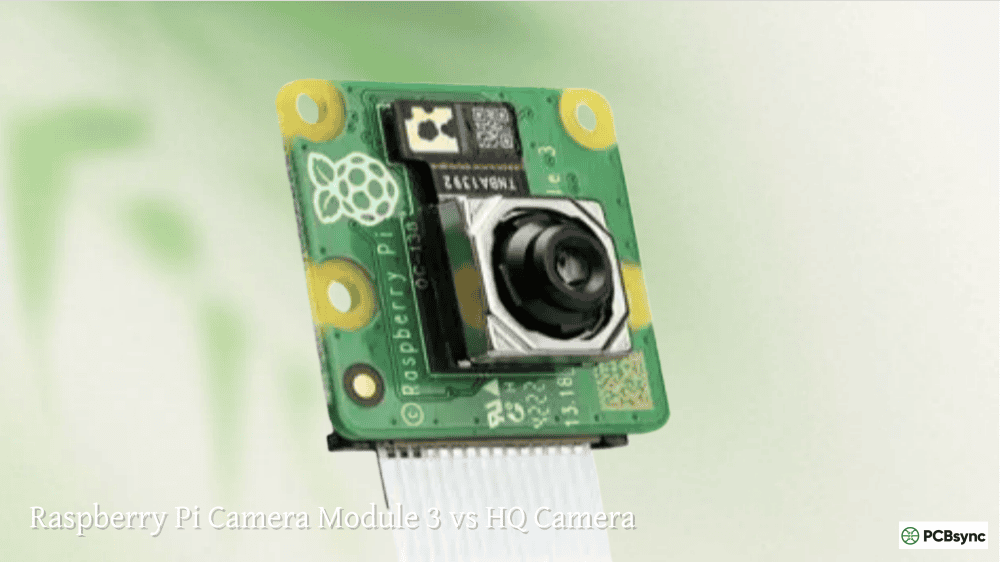
The Camera Module 3 represents the most significant upgrade in the PiCam lineup since the original 2013 release. Built around Sony’s IMX708 sensor with back-illuminated technology, it delivers smartphone-quality images with a feature that previous official modules lacked entirely: autofocus.
The phase-detection autofocus system responds quickly to scene changes, making the Module 3 dramatically more versatile than its fixed-focus predecessors. In my testing, focus acquisition takes roughly 200-400ms depending on lighting conditions—not instantaneous, but acceptable for most applications.
The Module 3 comes in four variants: standard, wide-angle, and NoIR versions of each. The wide-angle model uses a 120-degree lens that captures nearly everything in front of it, though barrel distortion becomes noticeable at the frame edges. For security applications where coverage matters more than optical perfection, this tradeoff is worthwhile.
HDR mode deserves mention, though it reduces output resolution to approximately 3 megapixels. The dynamic range improvement is noticeable in high-contrast scenes like windows on sunny days, but most users will prefer the full-resolution standard mode.
High Quality Camera: Professional Imaging on a Budget
The HQ Camera targets users who need interchangeable lenses and maximum image quality. Its 12.3-megapixel Sony IMX477 sensor sits behind a C/CS lens mount, accepting everything from wide-angle security lenses to telephoto options for wildlife photography.
The larger 7.9mm sensor diagonal translates to meaningfully better low-light performance compared to the Module 3. Each pixel measures 1.55µm compared to the Module 3’s 1.4µm pixels, capturing approximately 22% more light per pixel. This difference becomes apparent when shooting in dimly lit environments or using faster shutter speeds.
One practical consideration: the HQ Camera ships without a lens. Budget at least $25-50 for a basic CS-mount lens, or more for quality C-mount glass. The 6mm wide-angle lens commonly bundled with the HQ Camera works adequately but shows significant barrel distortion and softness toward frame edges. For sharper results, consider the 16mm telephoto or invest in better third-party optics.
Global Shutter Camera: Specialized Excellence
The Global Shutter Camera occupies a unique niche. Its Sony IMX296 sensor reads all pixels simultaneously, eliminating the “rolling shutter” distortion that plagues conventional sensors when capturing fast-moving subjects.
If you’ve ever photographed spinning propellers or conveyor belts and noticed the strange warping effect, you’ve experienced rolling shutter artifacts. The Global Shutter Camera eliminates this problem entirely, making it essential for machine vision applications where accurate shape detection matters.
The tradeoff is resolution: just 1.6 megapixels. For machine vision, this limitation rarely matters since high-resolution images require downsampling before neural network processing anyway. For general photography, look elsewhere.
The camera’s 30-microsecond minimum exposure time enables freezing extremely fast motion with adequate lighting, useful for scientific applications and high-speed photography experiments.
Third-Party Raspberry Pi Camera Options
The official camera modules cover mainstream needs, but third-party manufacturers fill important gaps with specialized features.
Top Third-Party Camera Modules
Camera
Manufacturer
Resolution
Key Feature
Price Range
16MP Autofocus
Arducam
16MP
Motorized AF, IMX519
$30-40
64MP Autofocus
Arducam
64MP
Ultra-high resolution
$35-50
OV5647 NOIR
Various
5MP
Budget IR-capable
$8-15
Motorized IR-CUT
Arducam
5MP
Auto day/night switching
$25-35
Fisheye Wide
Various
5MP
175° FOV
$10-20
Arducam 16MP Autofocus Camera
Arducam’s 16MP module based on the Sony IMX519 sensor offers higher resolution than any official camera while maintaining autofocus capability. The 4656×3496 pixel output provides exceptional detail for applications like document scanning or detailed inspection.
The autofocus mechanism differs from the Module 3’s phase-detection system, using a motorized lens assembly instead. Focus acquisition may take slightly longer, but the ability to focus from 10cm to infinity covers most practical scenarios.
One caveat: third-party cameras require additional software configuration compared to official modules. The kernel drivers and ISP tuning may not be as polished, potentially requiring manual parameter adjustment for optimal results.
Budget Night Vision Options
For surveillance and wildlife monitoring, night vision capability often matters more than daytime resolution. Several third-party options address this need at remarkably low prices.
The most practical approach combines a NoIR (no infrared filter) camera with external IR illuminators. The camera’s sensor sees infrared light that’s invisible to humans, while the illuminators provide “invisible” lighting for nighttime viewing.
More sophisticated modules integrate motorized IR-CUT filters that automatically switch between day and night modes. During daylight, the filter blocks infrared to produce accurate colors. At night, the filter retracts to enable infrared sensitivity. This automation eliminates the pink color cast that plagues always-on NoIR cameras during daytime operation.
Choosing the Right PiCam for Your Project
Different applications demand different camera characteristics. Here’s my practical guidance based on real-world testing.
Best Cameras by Application Type
Use Case
Recommended Camera
Why This Choice
Security/Surveillance
Camera Module 3 Wide + IR
Wide coverage, autofocus, night capability
Wildlife Monitoring
HQ Camera + telephoto lens
Subject distance, low-light sensitivity
3D Printing Monitor
Camera Module 3 Standard
Autofocus adapts to changing layer heights
Machine Vision
Global Shutter Camera
Eliminates motion distortion
Video Conferencing
Camera Module 3 Standard
Autofocus, good low-light, compact
Document Scanning
Arducam 16MP
High resolution for text clarity
Time-Lapse
HQ Camera
Manual exposure control, lens flexibility
Security and Surveillance Installations
For security applications, the Camera Module 3 Wide offers the best balance of features. The 120-degree field of view covers large areas with a single camera, while autofocus maintains sharpness as subjects move through the scene at varying distances.
Adding night vision requires a NoIR variant paired with IR illuminators. The Module 3 NoIR Wide provides both wide coverage and infrared sensitivity. External IR LEDs rated for 850nm wavelength work well with Pi cameras, though higher-powered units may require separate power supplies rather than drawing from the Pi’s GPIO.
For professional installations, consider Arducam’s motorized IR-CUT options that automatically switch between color daytime and IR nighttime modes without manual intervention or software complexity.
Machine Vision and Industrial Applications
Industrial machine vision demands specific characteristics that consumer-oriented cameras often lack. The Global Shutter Camera addresses the most critical requirement: distortion-free capture of moving objects.
Conveyor belt inspection, quality control systems, and robotics applications benefit enormously from global shutter technology. Even at moderate conveyor speeds, rolling shutter artifacts can confuse edge-detection algorithms and produce false readings.
The 1.6-megapixel resolution, while low by photography standards, typically exceeds what machine learning inference pipelines can process in real-time anyway. Most models expect input images around 224×224 to 640×640 pixels after preprocessing.
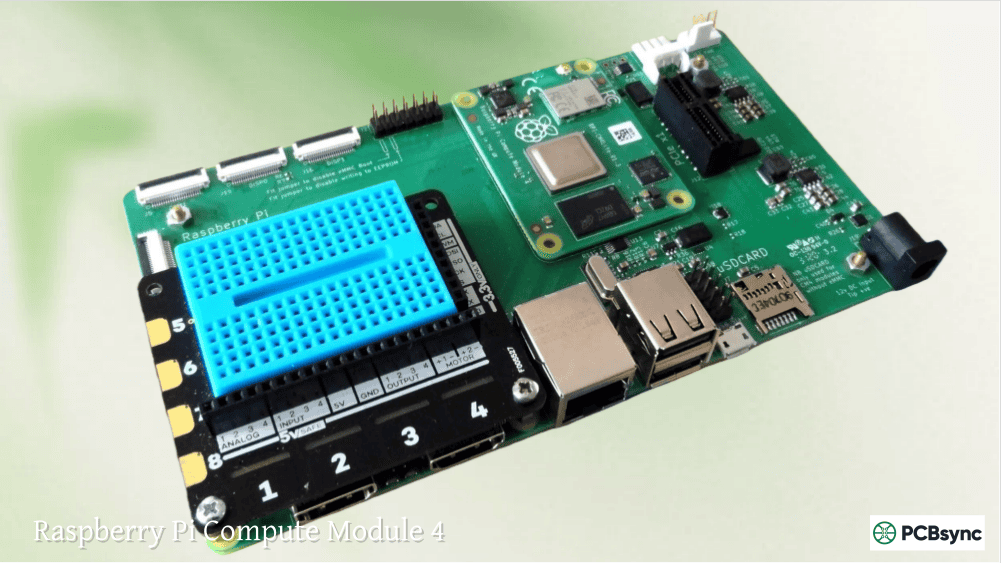
For multi-camera synchronized capture, the Raspberry Pi Compute Module 4 IO Board provides two CSI connectors. Two Global Shutter Cameras can capture frames simultaneously, enabling stereo vision applications for depth perception.
Proper software configuration maximizes image quality regardless of which camera you choose.
Getting Started with libcamera
Modern Raspberry Pi OS versions use the libcamera stack, replacing the legacy raspistill/raspivid commands. Update your system before connecting any camera:
sudo apt update
sudo apt full-upgrade
sudo reboot
Basic image capture uses libcamera-still:
libcamera-still -o test.jpg
For video recording:
libcamera-vid -t 10000 -o test.h264
The Picamera2 Python library provides programmatic control for custom applications, supporting all current camera modules including the newest Module 3 variants.
Optimizing Image Quality
Default automatic settings work reasonably well, but manual tuning often improves results:
Exposure compensation (-2 to +2 range) brightens or darkens the overall image when automatic exposure produces unsatisfactory results.
White balance presets (daylight, tungsten, fluorescent, etc.) correct color casts under different lighting conditions more reliably than automatic white balance.
Sharpening and noise reduction parameters trade detail for smoothness. Reduce noise reduction in good lighting for maximum sharpness; increase it in dim conditions to minimize grain.
Frequently Asked Questions About Raspberry Pi Cameras
Which Raspberry Pi camera is best for beginners?
The Camera Module 3 Standard offers the best starting point for most users. Autofocus eliminates manual focusing complexity, software support is excellent, and the $25 price point doesn’t sting if you discover a different camera better suits your needs later. The 12-megapixel resolution handles everything from video calls to photography experiments.
Can I use multiple cameras simultaneously on one Raspberry Pi?
Yes, but with limitations. The Raspberry Pi 5 and Compute Module 4 support two cameras natively through dual CSI connectors. Standard Pi models require USB cameras or specialized multiplexer boards for multiple camera setups. Software support for synchronized capture varies, making this approach more suitable for advanced users.
Do Raspberry Pi cameras work in complete darkness?
Not without assistance. NoIR camera variants see infrared light but still require IR illumination sources. External IR LED boards provide this illumination invisibly to human eyes while enabling the camera to capture clear footage. Effective range depends on IR LED power—typical small modules reach 3-5 meters, while more powerful units extend to 10+ meters.
What’s the maximum cable length for Raspberry Pi cameras?
Standard ribbon cables work reliably up to about 30cm. Longer distances require specialized solutions. Arducam’s HDMI adapter kit converts the CSI signal to HDMI for runs up to several meters using standard HDMI cables, then converts back to CSI at the camera end. This approach adds cost and complexity but solves long-distance installation challenges.
Why does my Camera Module 3 hunt for focus during video recording?
The autofocus system continuously evaluates focus during video capture, occasionally “hunting” when scenes lack clear contrast edges. Locking focus manually before recording eliminates this behavior. Use libcamera-vid with the –autofocus-mode manual option after setting initial focus with –autofocus-on-capture. Alternatively, update to the latest Raspberry Pi OS release, as firmware updates have improved autofocus stability.
Final Recommendations
For most makers and hobbyists, the Camera Module 3 delivers exceptional value. Autofocus transforms the user experience compared to previous fixed-focus modules, and the image quality rivals budget smartphones.
When image quality matters most and you’re willing to invest in lenses, the HQ Camera opens doors to truly impressive results. The interchangeable lens system allows optimizing for specific scenarios rather than compromising on a fixed optic.
Specialized applications like machine vision, scientific imaging, or high-speed capture call for the Global Shutter Camera. Its unique capabilities justify the resolution tradeoff for users who understand what they’re gaining.
Budget-conscious projects can still achieve excellent results with third-party OV5647 modules under $15, though expect to spend more time on configuration and accept some compromises in image quality and software polish.
Whatever PiCam you choose, the Raspberry Pi ecosystem provides remarkable imaging capability for embedded projects that would have seemed impossible a decade ago at these price points.
Inquire: Call 0086-755-23203480, or reach out via the form below/your sales contact to discuss our design, manufacturing, and assembly capabilities.
Quote: Email your PCB files to Sales@pcbsync.com (Preferred for large files) or submit online. We will contact you promptly. Please ensure your email is correct.
Notes: For PCB fabrication, we require PCB design file in Gerber RS-274X format (most preferred), *.PCB/DDB (Protel, inform your program version) format or *.BRD (Eagle) format. For PCB assembly, we require PCB design file in above mentioned format, drilling file and BOM. Click to download BOM template To avoid file missing, please include all files into one folder and compress it into .zip or .rar format.