Inquire: Call 0086-755-23203480, or reach out via the form below/your sales contact to discuss our design, manufacturing, and assembly capabilities.
Quote: Email your PCB files to Sales@pcbsync.com (Preferred for large files) or submit online. We will contact you promptly. Please ensure your email is correct.
Notes: For PCB fabrication, we require PCB design file in Gerber RS-274X format (most preferred), *.PCB/DDB (Protel, inform your program version) format or *.BRD (Eagle) format. For PCB assembly, we require PCB design file in above mentioned format, drilling file and BOM. Click to download BOM template To avoid file missing, please include all files into one folder and compress it into .zip or .rar format.
Rogers Radix Printable Dielectric: Complete Guide to 3D-Printed RF Materials for mmWave & Antenna Applications
An in-depth technical guide for RF engineers on Rogers Corporation’s Radix Printable Dielectric—the industry’s first UV-curable 3D printing resin purpose-built for high-frequency applications, GRIN lenses, and millimeter-wave antenna systems.
What is Radix Printable Dielectric?
If you’ve been designing RF circuits for any length of time, you know the frustration of material constraints. Traditional laminate sheets work fine for planar designs, but the moment you need complex 3D geometries—gradient index lenses, conformal antennas, volumetric circuits—you hit a wall. That’s exactly the problemRadix Printable Dielectric was created to solve.
Developed by Rogers Corporation in partnership with Fortify, Radix Printable Dielectric is a ceramic-filled, UV-curable polymer specifically engineered for DLP (Digital Light Processing) and SLA (stereolithography) 3D printing. Unlike generic photopolymers that are an order of magnitude more lossy than what RF work demands, Radix delivers electrical properties comparable to Rogers’ traditional high-frequency laminates—except now you can print it into virtually any shape you need.
The material launched at IPC APEX EXPO 2022 and has since been qualified for use on Fortify’s FLUX Series printers and BMF’s microArch precision 3D printers. For RF engineers working on 5G infrastructure, satellite communications, automotive radar, or aerospace systems, this represents a genuine paradigm shift in what’s manufacturable.
Consider the traditional workflow: you design a planar circuit on a Rogers laminate, send it out for fabrication, wait weeks for prototypes, then iterate. For simple circuits that’s manageable. But what happens when your antenna design would benefit from a non-planar substrate? Or when you need a lens with continuously varying dielectric properties? Before Radix, your options were limited to expensive machining operations, multi-layer bonded assemblies with inherent interface losses, or compromising your design to fit available manufacturing capabilities.
Radix Printable Dielectric fundamentally changes that calculus. You can now go from CAD model to functional RF part in days rather than weeks, iterate rapidly on complex geometries, and manufacture structures that were previously impossible at any cost.
The technical specifications of Radix Printable Dielectric position it squarely for demanding mmWave applications. Here’s what the datasheet tells us—and what it means for your designs.
Electrical Properties of Radix Printable Dielectric
Property
Value
Test Frequency
Test Method
Dielectric Constant (Dk)
2.8
10 GHz / 24 GHz
IPC-TM-650 2.5.5.5
Dissipation Factor (Df)
0.0043 @ 10 GHz
10 GHz
IPC-TM-650 2.5.5.5
Dissipation Factor (Df)
0.0046 @ 24 GHz
24 GHz
IPC-TM-650 2.5.5.5
Volume Resistivity
1.9 × 10¹⁵ ohm-cm
—
ASTM D257
Dielectric Strength
446 V/mil
—
IPC TM-650 2.5.6.2
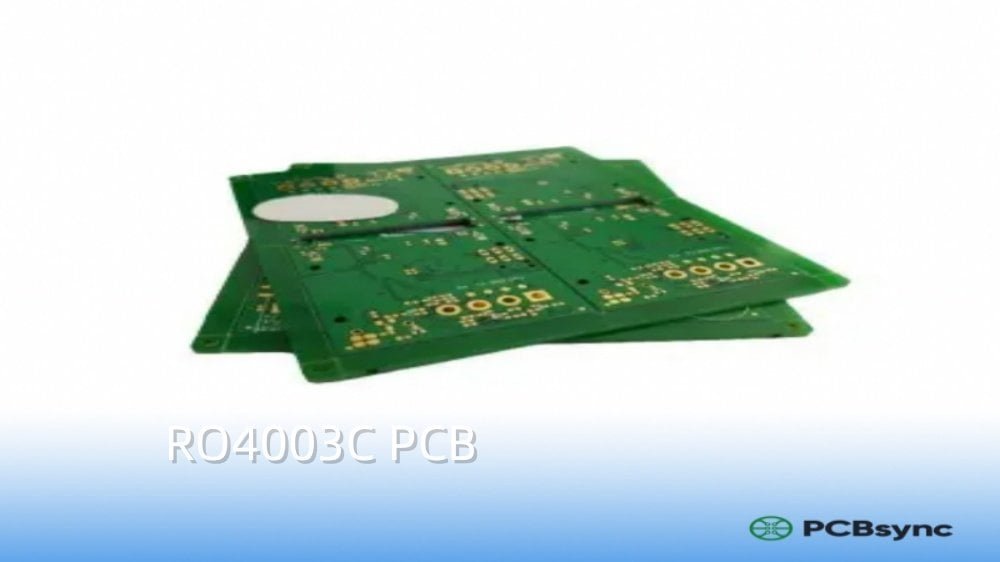
That Dk of 2.8 is particularly useful—it’s low enough for efficient high-frequency operation while still providing meaningful dielectric loading for antenna miniaturization. The loss tangent of 0.0043 at 10 GHz places Radix in the same ballpark as traditional Rogers laminates like RO4003C, which is remarkable for a 3D-printable resin.
Thermal and Mechanical Properties
Property
Value
Notes
Decomposition Temperature (Td)
313°C
5% weight loss
CTE (XY plane, -50 to +50°C)
76 ppm/°C
Isotropic behavior
CTE (Z-axis, -50 to +50°C)
75 ppm/°C
Near-isotropic
Thermal Conductivity (Z-axis)
0.3 W/mK
—
Moisture Absorption
0.08 wt.%
Critical for outdoor use
The decomposition temperature of 313°C means the printed parts can survive standard soldering processes—a practical necessity if you’re integrating metallized traces or mounting components. The near-isotropic CTE (75-76 ppm/°C in both XY and Z directions) is a direct benefit of the DLP printing process, where layer-by-layer curing produces more uniform material properties than nozzle-based methods.
Low moisture absorption (0.08 wt.%) is another standout characteristic. In high-humidity environments, water absorption can shift Dk and increase loss tangent, degrading RF performance over time. Radix’s resistance to moisture makes it viable for outdoor and marine applications where environmental exposure is unavoidable.
Compatible 3D Printing Technologies for Radix Printable Dielectric
Radix isn’t compatible with just any 3D printer. The material is a highly viscous, ceramic-filled photopolymer that tends to settle if not properly managed. Two printing platforms have been specifically qualified for Radix processing.
Fortify FLUX Series Printers
Fortify’s FLUX Core and FLUX One printers use a proprietary technology called Continuous Kinetic Mixing (CKM). This subsystem keeps the ceramic particles uniformly suspended in the resin throughout the print process, preventing the agglomeration and settling that would occur in standard DLP vats. The CKM system also enables processing of much higher viscosity materials than traditional DLP platforms can handle.
From a practical standpoint, Fortify’s platform offers high resolution and excellent surface quality—critical factors when you’re printing fine-featured RF structures where surface roughness directly impacts conductor loss.
BMF microArch Printers
Boston Micro Fabrication (BMF) qualified Radix for their microArch series printers in late 2023. BMF’s technology specializes in micro-precision 3D printing with feature resolutions down to 2 microns—significantly finer than what Fortify’s platform achieves. This makes BMF printers particularly suited for applications requiring extremely small, intricate RF structures: microelectronics packaging, miniaturized sensors, and high-density interconnects.
Printer Selection Considerations
Fortify FLUX: Better for larger parts, production-scale throughput, and applications where moderate resolution (tens of microns) is sufficient
BMF microArch: Better for micro-precision applications, semiconductor packaging, and situations requiring sub-10-micron features
The real value of Radix Printable Dielectric becomes apparent when you consider the applications it enables—designs that were either impossible or prohibitively expensive with traditional manufacturing.
Gradient Index (GRIN) Lens Antennas
GRIN lenses represent arguably the most compelling application for Radix. Unlike homogeneous lenses that refract only at air-dielectric interfaces, GRIN lenses have a continuously varying refractive index throughout the lens body. This allows electromagnetic rays to bend continuously as they pass through the material, enabling wider fields of view, reduced sidelobe levels, and more compact form factors than traditional lens designs.
The challenge has always been manufacturing. Creating a true gradient requires either stacking multiple discrete dielectric layers (time-consuming and introduces interface discontinuities) or machining complex shapes from bulk material (expensive and limited in achievable geometries). With Radix, you can vary the effective dielectric constant by changing the infill density during printing—essentially creating a continuously graded structure in a single print operation.
Fortify has demonstrated Luneburg-style lenses with these techniques, achieving gradient profiles that would be impractical to manufacture any other way. Applications include SATCOM terminals requiring wide-angle scanning and 5G beam-steering systems where passive lenses can reduce reliance on expensive phased array electronics.
The mathematics behind GRIN lenses is well established—these concepts date back decades. What’s changed is manufacturability. A Luneburg lens, for instance, requires a radially symmetric permittivity profile that ranges from about 2.0 at the outer surface down to 1.0 at the center. Creating this gradient with discrete material layers means stacking 10, 20, or more individual shells, each requiring precise machining and alignment. With Radix, you define the gradient in your CAD model and let the printer handle the complexity.
Fortify’s work with the U.S. Army on 5G GRIN lens technology demonstrates the military’s interest in this capability. Tactical communications systems need compact, wide-bandwidth antennas that can operate reliably in challenging environments—exactly the kind of application where 3D-printed dielectric lenses can provide decisive advantages.
Millimeter-Wave (mmWave) Components
At mmWave frequencies (30-300 GHz), wavelengths shrink to the millimeter and sub-millimeter scale, making traditional PCB fabrication increasingly challenging. Feature tolerances that were acceptable at 10 GHz become sources of significant phase error at 77 GHz. Radix’s combination of low loss through mmWave frequencies and high-resolution printability addresses both concerns.
Automotive radar systems operating at 77 GHz are a prime example. These systems require compact antenna arrays with precise beam characteristics—applications where the design freedom of 3D printing can yield performance improvements that justify the material cost.
Satellite Communications (SATCOM)
SATCOM-on-the-move (SOTM) applications demand antennas that can maintain connectivity while the platform is in motion—think maritime vessels, aircraft, and military vehicles. Traditional mechanically-steered dishes are bulky and slow. Electronically-steered arrays solve the speed problem but are expensive and power-hungry.
GRIN lens-augmented antenna systems offer a middle path: passive dielectric lenses can extend the scan range and improve the gain-at-angle performance of smaller, simpler active arrays. Radix enables the complex lens geometries these systems require.
Volumetric 3D Circuits
Beyond pure dielectric applications, Radix can be combined with additive metallization techniques to create true three-dimensional circuit structures. Imagine traces that don’t just run across a planar surface but wrap around complex geometries, embed within dielectric volumes, or connect layers through arbitrary via patterns.
This capability opens doors for conformal antennas that follow the contours of aircraft fuselages or vehicle body panels, integrated electromagnetic shielding structures, and high-density interconnects that exploit the third dimension for routing.
Aerospace and Defense Applications
The aerospace industry has stringent requirements for weight, reliability, and performance that align well with Radix’s capabilities. Traditional antenna systems often add significant weight and aerodynamic drag. Conformal antennas that integrate into existing structures can reduce both while maintaining or improving RF performance.
For defense applications, the rapid prototyping capability is particularly valuable. Military programs often require custom antenna solutions for specific platforms, and the ability to quickly iterate on designs can compress development timelines significantly. Additionally, the low moisture absorption makes Radix suitable for naval applications where salt spray and high humidity are constant challenges.
Consumer Electronics Miniaturization
As consumer devices incorporate more wireless capabilities—5G connectivity, WiFi 6E, ultra-wideband positioning—antenna real estate becomes increasingly constrained. BMF’s micro-precision printing capability combined with Radix’s low-loss properties enables miniaturized RF structures that would be impossible to manufacture any other way. While consumer electronics typically demand lower costs than Radix currently supports for mainstream products, high-value applications in premium devices may find the technology compelling.
Radix Printable Dielectric vs. Traditional Rogers PCB Materials
How does Radix stack up against Rogers’ established product lines? The comparison isn’t quite apples-to-apples—they’re designed for different manufacturing paradigms—but understanding the tradeoffs helps you decide when each approach makes sense.
Characteristic
Radix Printable
RO4003C
RT/duroid 5880
Dk
2.8
3.55
2.2
Df @ 10 GHz
0.0043
0.0027
0.0009
Form Factor
3D Printable
Sheet Laminate
Sheet Laminate
Geometric Freedom
Unlimited 3D
Planar only
Planar only
GRIN Capability
Native via infill
Requires stacking
Requires stacking
The takeaway: if you need the absolute lowest loss and are working with planar geometries, traditional laminates still win on raw electrical performance. But if your design demands complex 3D structures, gradient dielectrics, or rapid prototyping of custom geometries, Radix Printable Dielectric opens possibilities that simply don’t exist with sheet materials.
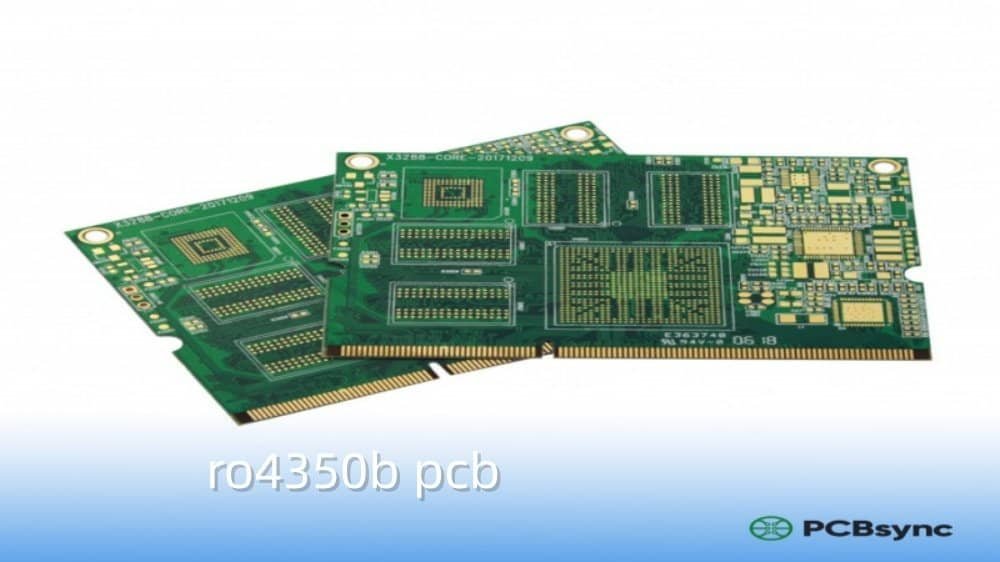
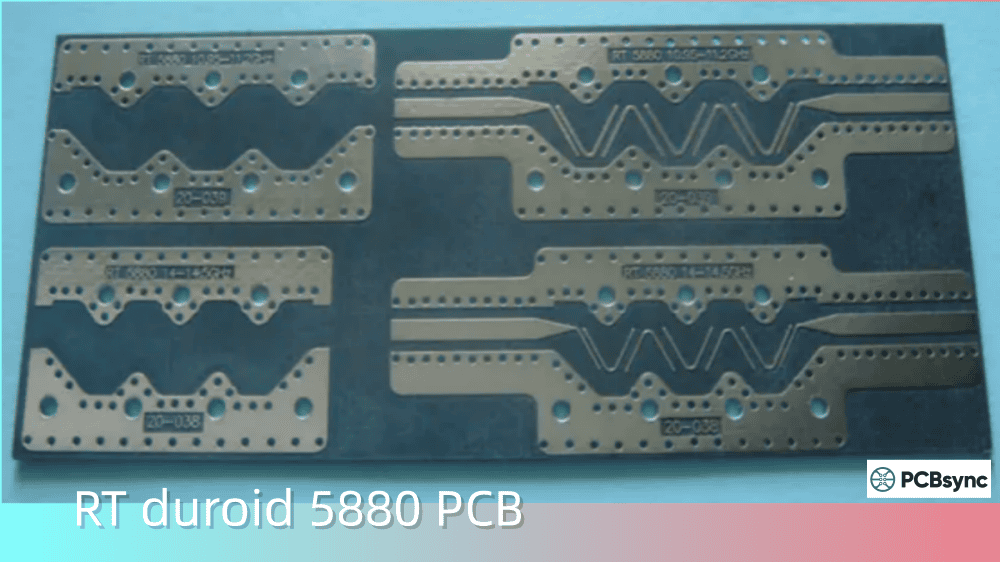
It’s worth noting that Radix isn’t trying to replace the RO4000 or RT/duroid product lines—it’s addressing a different market segment. Think of it as expanding the design space rather than directly competing. A phased array designer might still use RO4350B for their feed network PCBs while using Radix for gradient lenses that augment the array’s scan performance. The materials are complementary rather than interchangeable.
From a cost perspective, Radix parts are currently more expensive than equivalent designs fabricated from sheet laminates—when such fabrication is even possible. But the relevant comparison isn’t always cost-per-part. If a 3D-printed lens enables a smaller, lighter antenna system that uses fewer expensive RF components, the total system cost may decrease even as the lens cost increases. Evaluate the technology in the context of your complete system architecture, not just isolated component pricing.
Metallization Options for Radix Printable Dielectric
Pure dielectric applications like GRIN lenses don’t require metallization, but many RF designs need conductive traces, ground planes, or antenna elements. Several metallization approaches have been validated for Radix substrates.
Aerosol Jet and Inkjet Printing
Nanoparticle or reactive silver inks can be deposited using aerosol jet or inkjet printing systems, then sintered to achieve conductivity approaching bulk silver. These additive techniques are well-suited to conformal 3D circuit geometries where traditional photolithography can’t reach.
Laser-Activated Plating
For applications requiring bulk copper conductivity, laser-activated plating processes (like those offered by Averatek) can deposit electroplated copper onto Radix substrates. Fortify has demonstrated microstrip circuits on 30-mil Radix substrates with insertion loss performance comparable to traditional copper-clad laminates.
The metallization technology is still maturing relative to the pure dielectric applications, but early results are promising. For production applications, expect to work closely with metallization partners to optimize the process for your specific geometry and performance requirements.
Design Considerations for Radix Printable Dielectric
Designing for 3D-printed dielectrics requires some adjustment if you’re coming from traditional PCB workflows.
Effective Dk Through Latticing
One of the most powerful techniques for Radix designs is latticing—creating internal structures with varying air/material ratios to tune the effective dielectric constant. A gyroid unit cell, for example, can produce effective Dk values anywhere from near-air (close to 1.0) up to the bulk material value of 2.8, all within a single printed part.
Surface Roughness
For metallized applications, surface roughness matters. Fortify’s testing shows that parts printed parallel to the build plate generally achieve lower surface roughness than perpendicular orientations—a factor to consider when orienting your parts for printing.
Post-Processing
Printed parts require UV post-curing to achieve full mechanical properties. Follow the recommended cure profiles to ensure consistent electrical performance across your production run.
Simulation and Modeling
Your electromagnetic simulation workflow will need some adaptation for Radix designs. Traditional EM simulators assume homogeneous, planar substrates. For GRIN structures with spatially varying permittivity, you’ll need to import actual CAD geometry and assign material properties accordingly. Tools like CST Microwave Studio, HFSS, and COMSOL can handle this, but setup is more involved than a simple planar model.
For initial design iterations, analytical methods can help. The permittivity profile for a Luneburg lens, for example, follows well-known mathematical relationships. You can calculate the required gradient, determine infill densities to achieve that gradient, and then verify with full-wave simulation before committing to a print.
Prototyping Strategy
One of Radix’s underappreciated advantages is prototyping speed. Traditional RF fabrication cycles can stretch to 4-6 weeks between design iterations. With 3D printing, you can turn around new parts in days. This accelerates learning and enables more aggressive design optimization. If you’re uncertain whether a particular geometry will perform as expected, print it and test it. The cost of a failed print is far lower than the cost of waiting months to validate your simulation predictions.
Where to Source Radix Printable Dielectric
Radix Printable Dielectric is available through two channels:
Rogers Corporation directly — Contact Rogers’ sales team for material specifications, pricing, and volume availability
3D printing partners — Fortify and BMF can supply both the material and printing services, which may be more practical for organizations without in-house printing capabilities
For most engineering teams, starting with a printing partner makes sense. This lets you validate your designs without the capital investment of a qualified printer, then bring the process in-house if volumes justify it.
Frequently Asked Questions About Radix Printable Dielectric
Can I print Radix on a standard consumer DLP/SLA printer?
No. Radix is a heavily loaded, high-viscosity resin that requires specialized mixing systems to keep particles suspended during printing. Standard consumer printers lack this capability, and the material will settle and produce inconsistent parts. Currently, only Fortify FLUX Series and BMF microArch printers are qualified for Radix processing.
What’s the maximum operating frequency for Radix Printable Dielectric?
Radix maintains low-loss characteristics through mmWave frequencies. Datasheet values are provided at 10 GHz and 24 GHz, and applications up to 77 GHz (automotive radar) and beyond have been demonstrated. The primary limitation is typically your printer’s resolution capability rather than the material’s electrical properties.
How does Radix compare to FFF/FDM printed dielectrics?
FFF-printed dielectrics typically suffer from higher loss (due to air gaps and interface defects) and lower resolution than DLP-printed Radix parts. FFF can be useful for prototyping and lower-frequency applications, but for production mmWave components, Radix’s combination of material properties and achievable resolution is substantially better.
Yes. The decomposition temperature of 313°C exceeds typical lead-free soldering temperatures (around 260°C peak), so properly cured Radix parts can withstand standard assembly processes. However, always verify your specific thermal profile against the material’s specifications.
Is Radix suitable for high-volume production?
Radix was designed with scalable manufacturing in mind. The DLP printing process is inherently faster than nozzle-based 3D printing, and Fortify’s platform can produce multiple parts per build. For high-volume applications, work with Fortify or Rogers to discuss production capacity and lead times. The material is still more expensive than traditional laminates, so it’s best suited for applications where the design freedom justifies the cost premium.
Conclusion: The Future of RF Component Manufacturing
Radix Printable Dielectric represents a genuine inflection point for RF engineering. For the first time, designers can access a 3D-printable material with electrical properties suitable for production mmWave components. The ability to create gradient index structures, conformal geometries, and complex 3D circuits opens design spaces that simply weren’t accessible with traditional manufacturing methods.
Is it a universal replacement for traditional laminates? No. For planar circuits where raw electrical performance is paramount and geometric complexity is limited, RO4000, RO3000, and RT/duroid materials still offer lower loss. But for the growing category of applications that demand what only additive manufacturing can provide—GRIN lenses, volumetric antennas, embedded components, rapid prototyping—Radix Printable Dielectric is the current state of the art.
As mmWave applications continue to proliferate in 5G, automotive radar, and satellite communications, expect demand for these capabilities to grow. Engineers who familiarize themselves with the technology now will be better positioned to exploit its advantages as the ecosystem matures.
The material’s low moisture absorption, thermal stability through soldering temperatures, and demonstrated compatibility with additive metallization processes mean that Radix Printable Dielectric isn’t just a prototyping material—it’s ready for production applications where its unique capabilities justify the investment. For your next complex RF design challenge, it may well be the enabling technology you’ve been waiting for.
Inquire: Call 0086-755-23203480, or reach out via the form below/your sales contact to discuss our design, manufacturing, and assembly capabilities.
Quote: Email your PCB files to Sales@pcbsync.com (Preferred for large files) or submit online. We will contact you promptly. Please ensure your email is correct.
Notes: For PCB fabrication, we require PCB design file in Gerber RS-274X format (most preferred), *.PCB/DDB (Protel, inform your program version) format or *.BRD (Eagle) format. For PCB assembly, we require PCB design file in above mentioned format, drilling file and BOM. Click to download BOM template To avoid file missing, please include all files into one folder and compress it into .zip or .rar format.