Inquire: Call 0086-755-23203480, or reach out via the form below/your sales contact to discuss our design, manufacturing, and assembly capabilities.
Quote: Email your PCB files to Sales@pcbsync.com (Preferred for large files) or submit online. We will contact you promptly. Please ensure your email is correct.
Notes: For PCB fabrication, we require PCB design file in Gerber RS-274X format (most preferred), *.PCB/DDB (Protel, inform your program version) format or *.BRD (Eagle) format. For PCB assembly, we require PCB design file in above mentioned format, drilling file and BOM. Click to download BOM template To avoid file missing, please include all files into one folder and compress it into .zip or .rar format.
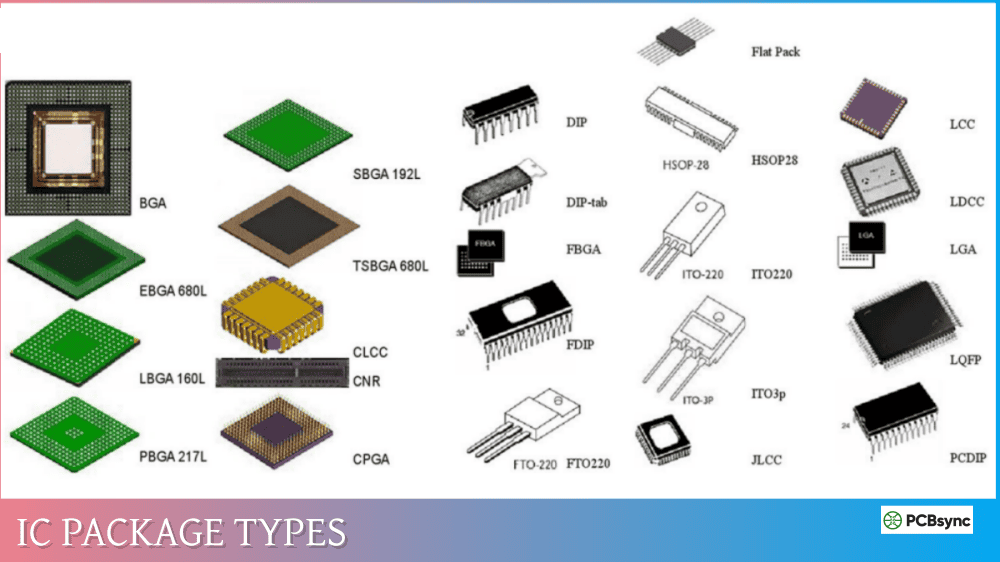
Choosing between QFP vs QFN packages is one of the most common decisions PCB engineers face when selecting microcontrollers, FPGAs, and other complex ICs. Both belong to the quad flat package family, but their fundamental design differences create distinct advantages and challenges. I’ve worked with both package types across hundreds of designs, and the “right” choice always depends on your specific priorities—whether that’s thermal performance, ease of assembly, inspectability, or board space.
This comparison covers everything you need to make an informed decision: structural differences, thermal and electrical performance, PCB design requirements, and assembly considerations. By the end, you’ll know exactly when to choose each quad flat package type.
The quad flat package family encompasses surface mount IC packages with connections on all four sides. Unlike dual-row packages (SOIC, SOP), quad packages accommodate higher pin counts in compact footprints. The two dominant variants—QFP and QFN—take fundamentally different approaches to the same goal.
What is a QFP (Quad Flat Package)?
QFP stands for Quad Flat Package. This surface mount IC package features gull-wing leads extending outward from all four sides of a rectangular or square plastic body. The leads bend downward to contact PCB pads, creating visible solder joints that can be inspected and reworked.
QFP packages have been industry workhorses since the 1980s, available in pin counts from 32 to over 300. They dominate applications requiring high I/O density with straightforward assembly and repair capabilities.
Common QFP variants include:
Variant
Full Name
Key Characteristics
LQFP
Low-profile QFP
1.4mm height, most common today
TQFP
Thin QFP
1.0mm height, space-constrained designs
PQFP
Plastic QFP
2.0-3.8mm height, original format
BQFP
Bumpered QFP
Corner bumpers protect leads
FQFP
Fine-pitch QFP
0.4-0.5mm lead pitch
What is a QFN (Quad Flat No-Lead)?
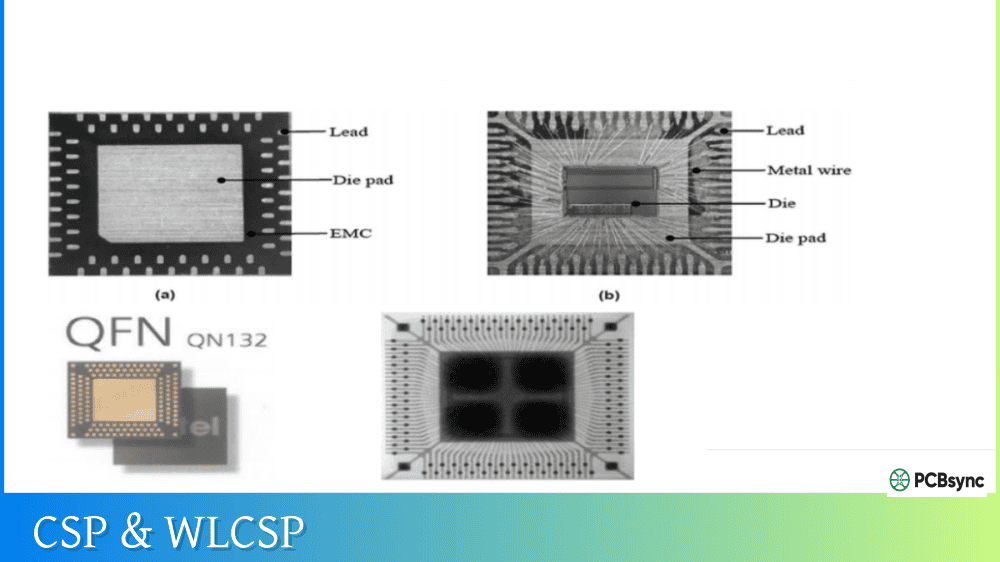
QFN stands for Quad Flat No-lead. As the name indicates, this package eliminates the protruding gull-wing leads entirely. Instead, exposed metal pads on the package bottom make direct contact with PCB lands during reflow soldering.
Most QFN packages include an exposed thermal pad (also called die attach pad or EPAD) in the center, which dramatically improves heat dissipation when properly soldered to a corresponding PCB thermal pad with via connections.
QFN packages are also known by various manufacturer-specific names: MLF (Micro Lead Frame), SON (Small Outline No-lead), and LPCC (Leadless Plastic Chip Carrier).
QFP vs QFN: Key Structural Differences
Understanding the fundamental structural differences between these quad flat package types reveals why they perform differently across various criteria.
Characteristic
QFP Package
QFN Package
Lead Type
Gull-wing leads extending outward
Flat pads on bottom surface
Lead Visibility
Fully visible from sides
Hidden underneath package
Body Size (32-pin)
7×7mm to 9×9mm typical
5×5mm typical
Height
1.0-3.8mm depending on variant
0.75-1.0mm typical
Thermal Pad
Some variants (exposed pad QFP)
Standard on most packages
Lead Pitch
0.4mm to 1.0mm
0.4mm to 0.65mm typical
Pin Count Range
32 to 300+
8 to 100+ (practical limit)
The leadless design of QFN creates a fundamentally different assembly and inspection challenge compared to QFP’s visible leads. This single difference drives most of the practical tradeoffs between these packages.
Thermal Performance: QFN’s Major Advantage
Thermal management represents one of the most significant differences in the QFP vs QFN comparison. For power-hungry ICs, this often becomes the deciding factor.
QFN Thermal Characteristics
QFN packages excel at heat dissipation thanks to their exposed thermal pad. This large metal surface on the package bottom connects directly to the die inside, creating a low-resistance thermal path to the PCB.
When properly designed, QFN thermal performance achieves:
Thermal resistance (θJC): 2-5°C/W typical
Thermal resistance (θJA): 15-40°C/W with proper PCB design
2-3× better thermal performance than equivalent QFP
The thermal pad requires a matching PCB land connected to internal ground planes through thermal vias. Optimal designs use via arrays with 0.3mm diameter vias on 1.0mm spacing, though specific requirements vary by pad size and thermal load.
QFP Thermal Characteristics
Standard QFP packages rely on their gull-wing leads for heat transfer, which provides limited thermal path area. Heat must travel through thin lead frames to reach the PCB, resulting in:
Thermal resistance (θJA): 35-70°C/W typical
Significantly higher than equivalent QFN packages
Exposed-pad QFP variants (EQFP, PowerPAD) improve thermal performance by adding a center thermal pad similar to QFN. These variants bridge the thermal gap but add assembly complexity.
Thermal Design Implications
For ICs dissipating more than 1-2W, QFN’s thermal advantage becomes significant. Power management ICs, motor drivers, and high-performance microcontrollers often require QFN packaging to maintain acceptable junction temperatures without bulky heat sinks.
Electrical Performance Comparison
High-frequency and high-speed digital designs benefit significantly from QFN’s electrical characteristics.
Lead Inductance and Parasitic Effects
Parameter
QFP Package
QFN Package
Lead Inductance
2-5nH per pin
<1nH per pin
Lead Resistance
Higher (longer path)
Lower (shorter path)
Parasitic Capacitance
Higher
Lower
Frequency Performance
Good to 100-200MHz
Excellent to 1GHz+
QFN’s leadless design creates extremely short electrical paths between the die and PCB. This minimizes parasitic inductance and capacitance, which directly improves:
Signal integrity at high frequencies
Power supply decoupling effectiveness
EMI/EMC performance
Ground path impedance
Application Frequency Guidelines
Frequency Range
Recommended Package
DC to 50MHz
Either QFP or QFN acceptable
50-200MHz
QFN preferred
200MHz to 1GHz
QFN strongly recommended
Above 1GHz
QFN required
For RF applications, wireless modules, and high-speed digital interfaces, QFN’s electrical performance often proves essential. Lower-frequency applications like general-purpose microcontrollers can use either package successfully.
Size and Board Space Considerations
Board real estate is increasingly precious, making package footprint a critical selection factor.
Footprint Comparison
QFN packages occupy significantly less PCB area than QFP equivalents:
Pin Count
QFP Footprint
QFN Footprint
Space Savings
32 pins
7×7mm to 9×9mm
5×5mm
~35-50%
48 pins
9×9mm to 12×12mm
7×7mm
~40%
64 pins
12×12mm to 14×14mm
9×9mm
~35%
100 pins
14×14mm to 16×16mm
12×12mm
~30%
The space savings come from eliminating the lead span that extends beyond QFP body dimensions. This allows tighter component placement and smaller overall board sizes.
Height Profile
QFN packages also provide lower profiles (0.75-1.0mm typical) compared to most QFP variants. For designs with strict height constraints—wearables, thin laptops, compact IoT devices—this advantage compounds the footprint benefits.
Assembly and Soldering Considerations
Assembly process differences between QFP vs QFN significantly impact manufacturing decisions.
QFP Assembly Process
QFP assembly follows standard SMT practices with relatively forgiving tolerances:
Solder Paste Application: Standard stencil printing works well
Rework: Straightforward with hot air or soldering iron
QFP’s visible leads make it forgiving of minor misalignment—surface tension during reflow helps self-center the package. This tolerance makes QFP attractive for prototyping and lower-volume production.
QFN Assembly Challenges
QFN assembly demands more precision and specialized techniques:
Stencil Design Requirements:
Thermal pad apertures require windowed or crosshatch patterns (50-80% coverage)
Solid thermal pad apertures cause excessive solder, floating, and bridging
Web spacing of 0.3mm minimum between stencil windows
Standard 0.125mm stencil thickness for 0.5mm pitch packages
Thermal Via Considerations:
Vias in thermal pad can cause solder wicking to board backside
Wettable Flank Variants: Some QFN packages offer side-visible fillets for partial optical inspection
Rework Comparison
Rework Aspect
QFP
QFN
Equipment Required
Hot air station or iron
Hot air rework station
Skill Level
Moderate
High
Adjacent Component Risk
Lower
Higher
Success Rate
High
Moderate
Time Required
Minutes
More complex process
For prototype development, field service, or applications where component replacement is expected, QFP’s rework advantages carry significant weight. Production environments with full X-ray capability find QFN’s inspection challenges manageable.
Analog Devices: QFN assembly and PCB design guidelines
Design Tools:
IPC-7351 Land Pattern Calculator
Manufacturer-specific footprint generators
Thermal simulation tools for pad/via optimization
Frequently Asked Questions About QFP vs QFN
What is the main difference between QFP and QFN packages?
The fundamental difference is lead structure. QFP (Quad Flat Package) features gull-wing leads extending outward from all four sides, creating visible solder joints. QFN (Quad Flat No-lead) eliminates protruding leads entirely, using flat metal pads on the package bottom that solder directly to PCB lands. This structural difference drives all other tradeoffs: QFN offers smaller size, better thermal performance, and superior high-frequency characteristics, while QFP provides easier inspection, simpler rework, and more forgiving assembly.
Can I replace a QFP with a QFN package for the same IC?
Not directly—they require different PCB footprints. The pad arrangements differ fundamentally: QFP uses peripheral pads matching gull-wing lead positions, while QFN uses bottom-surface pads plus a central thermal pad. If a chip is available in both packages, you must design your PCB for the specific package you’ll use. Some designs include dual-footprint patterns that accommodate both, but this adds complexity and compromises optimal layout for either package.
Why does QFN require X-ray inspection?
QFN solder joints form underneath the package body, making them invisible from any external viewing angle. The critical thermal pad joint is especially hidden. Without X-ray inspection, you cannot verify solder joint quality, detect voids in the thermal pad connection, or identify defects like bridging or insufficient solder. While some newer QFN variants include wettable flanks for partial optical inspection, comprehensive quality verification still requires X-ray. High-reliability applications absolutely mandate X-ray inspection for QFN assemblies.
Which package is better for prototyping?
QFP is generally better for prototype development. Its visible leads allow quick visual inspection of solder joints without specialized equipment. Rework is straightforward with standard hot air or soldering tools, enabling easy component replacement when debugging circuits. If you place a QFP incorrectly or need to test multiple chip variants, changes are simple. QFN prototyping is possible but requires more careful process control and ideally X-ray access to verify proper soldering, especially of the thermal pad.
How much board space can I save by switching from QFP to QFN?
Typical space savings range from 30-50% for equivalent pin counts. A 32-pin LQFP occupying 7×7mm to 9×9mm (including leads) can be replaced by a 5×5mm QFN-32. For 48-pin packages, footprint might shrink from 12×12mm to 7×7mm. The savings come primarily from eliminating the gull-wing lead span extending beyond the package body. However, QFN thermal pad requirements may offset some savings if extensive via arrays or copper pours are needed for thermal management.
Inquire: Call 0086-755-23203480, or reach out via the form below/your sales contact to discuss our design, manufacturing, and assembly capabilities.
Quote: Email your PCB files to Sales@pcbsync.com (Preferred for large files) or submit online. We will contact you promptly. Please ensure your email is correct.
Notes: For PCB fabrication, we require PCB design file in Gerber RS-274X format (most preferred), *.PCB/DDB (Protel, inform your program version) format or *.BRD (Eagle) format. For PCB assembly, we require PCB design file in above mentioned format, drilling file and BOM. Click to download BOM template To avoid file missing, please include all files into one folder and compress it into .zip or .rar format.